Sailing Away

Out on the open water on a sailboat large enough to be categorized as a sloop.  We’re on the Hudson River learning about both sailing and the environment.  I’m here with a a Girl Scout troop, otherwise I wouldn’t have known about the sloop Clearwater at all.  The origins of the Clearwater go back to Pete Seeger, who, apart from being a famous folk artist, was also an environmentalist.  Based in Beacon, New York, the Clearwater is used in educational programs and it represents the only time I’ve been on an actual sailing ship.  Call me Ishmael.  Or not.  You see, I was there as a volunteer.  Specifically, a driver.  My daughter’s troop had scheduled the trip and I was afforded free passage as chauffeur.  I’d pretty much tucked this away into old memory banks until recent reading brought it to the surface.

Photo by by Anthony Pepitone; under the Creative Commons Attribution 3.0 Unported license, via Wikimedia Commons

I support environmental causes in the ways a guy in my position can.  We compost in our back yard.  We recycle anything that we can figure out how to.  We throw away one thirteen-gallon garbage bag every two weeks, and that’s sometimes half-empty.  Being vegan helps.  We don’t have a lot of money to give away, but lifestyle is the biggest way to try to help the planet.  So I’m out here soaking up my Melville vibes on a river wide enough to be a lake.  The Hudson, like all rivers, is worth saving.  I used to cross under it daily through the Lincoln Tunnel, trying not to think of all that water flowing above my head.  There was a reason I read on that long commute.

This blog, I guess, has become a repository for much of my past.  I’m grateful to you indulgent readers who find any of this interesting.  Still, I find human connections to places fascinating.  While I’ve never considered the Hudson home, some of my early relatives likely did (more likely Hessians than Dutch, but I’m told we fought on the right side during the Revolutionary War).  When I’ve had the opportunity to gaze out over the river without being in a rush, I’ve always felt a sense of belonging.  An artwork I made from artifacts I gathered awaiting our turn to board the Clearwater now hangs in our front hall.  Suddenly those twenty-something years feel like so long ago.  Even so, the Hudson suggests something homey to me.  Maybe it’s time to hire out a sloop again, go out on the river, and dream about belonging.


Latter-Day Scouts

Physically strong, mentally awake, and morally straight. And prepared. That’s what Boy Scouts are supposed to be. My attempts to become an Eagle Scout were about like my attempts to become a priest—fraught with peril from the beginning. As a child I wasn’t physically strong, for one thing. The runt of the litter, I was scrawny and often sick. Mentally awake remains a reasonable goal, as does morally straight. Such are the realities of life. Then why are the Mormons parting ways with the Scouts? In a recent Washington Post story by Samantha Schmidt, the Latter-Day Saints are formally separating from the organization now known as Scouts. Whether it’s because they now allow girls to join, or if it’s because they’ve openly permitted gays, the Scouts are no doubt becoming accommodationistic in the eyes of some. In a pluralistic world it’s the only way to survive.

Girl Scouts, on the other hand, have historically not raised the question of sexual orientation. When the social dynamics of a society disadvantage girls, it’s natural that an organization to help build confidence and positive self-attitudes should exclude boys. They have no official affiliation with any religious group. I didn’t realize until reading this article that Mormon boys were automatically part of the group formerly known as Boy Scouts. It fits the image, though. If you’ve ever been on a Boy Scout retreat, however, you know that image and reality aren’t the same thing. I dropped out of Troop 3 after frequent leadership changes frustrated me from getting beyond Tenderfoot. Besides, church was taking over more and more of my life at the time. I guess I was headed for morally straight. Our troop, after all, met in a church basement.

This is about symbolism, of course. To be a Boy Scout meant you were making an effort to be good. In fact, it was kind of hard to grow up thinking you could be good without that guidance. Boy Scouts, they used to say, helped the elderly across the street. Apparently what they do behind closed bedroom doors raises the specter of morality. When I was a kid the issue seemed to be more the mentally awake aspect. The Scouts I knew were like everybody else. There was no special purity there. I never knew anyone who made it all the way to Eagle. The Boy Scout law was like a twelve-step program: trustworthy, loyal, helpful, friendly, courteous, kind, obedient, cheerful, thrifty, brave, clean, and reverent. I wasn’t a Mormon, but the church had proved itself a rival. Especially for the reverent part.


Credo

One of my seminary professors, who shall remain nameless, averred in class that Christianity in the first centuries was popular because it was exclusive. Like a country club. If just anybody can get in, why would you want to join? I’ve come to disagree with said professor’s analysis, but I have to admit there are cases where the idea does apply. Country clubs, for example. Organizations that intend to improve society, however, have it in their best interest to have doors as wide open as possible. Otherwise it’s a kind of hypocrisy. If Christianity wanted to make a better world, it soon realized, all takers should be welcome. That paradigm broke down fairly quickly, but at the beginning, I have the sense that all were welcome. So I was pleased to hear that the Boy Scouts have dropped their ban on gay troop leaders. Making a group that sets out to do a good deed a day exclusive heterosexual seems awfully backward. After all, gay leaders are nothing new. Why try to be exclusive?

Of course, the Scouts continue to disallow atheists. This is a fairly common, if medieval, marker of personal integrity. The Elks, last I heard, had few entrance requirements. One of the few stipulations, however, is that you have to believe in God. I don’t know how that plays out for Hindu Elks. Perhaps the more the merrier. Somehow, I doubt it. Exclusive belief entry requirements are a way of weeding out questions before they’re raised. Sheltering those inside from baleful influence among hoi polloi. We are better because we are different. Granted, these organizations go back to a time when theism, of sorts, was virtually a given in American society. Times have changed. Boy Scouts, it seems, are dragged into the future kicking and screaming.

I’ve always been impressed, by contrast, with the Girl Scouts’ openness. No creedal requirements are in place. Atheist girls, Buddhist girls, girls who climb on rocks, any girls are allowed to join. The last three presidents (including Obama) have been Boy Scouts. Two prior presidents have been as well. You might think the organization could meet its pedigree requirements with ease. In my view, they might look to the girls to take a cue on how to make the world a better place. When I was growing up, I knew no atheists. I remember attending a funeral of a family friend who hadn’t been a church goer, and that was pretty traumatic. As an adult I know many atheists and I trust them as much, if not more than, some of the religious I know. Would they be able to lead Boy Scout troops well? I have a suggestion—why not ask the Girl Scouts and find out?

IMG_2405


Accept Cookies

You have probably noticed it. As expected as the warmer days of spring are also the Girl Scout cookies. A symbol of wholesome fundraising, Girl Scout cookies have some dedicated buyers, and many imitators. Like any human organization, the Girl Scouts have their troubles, but I can’t help but compare them with the Boy Scouts in which I grew up. Well, at least for a few years. We’ve watched as the media have declared on the excluding of various demographics from the Boy Scouts. To rise to the top you must not deviate from the mythic model of the perfect man. Meanwhile, as an article in Tablet notes, Girl Scouts have been tolerant of difference from the beginning. In a day when being Jewish was still suspect in the wider community, Girl Scouts were founded with early troop leaders who were Jewish, and this was in the days before the First World War and the ensuing tragedy of the Holocaust during the Second. From those early days, Girl Scouts have continued to have a policy of acceptance of those who differ in religious outlook. It erects no barrier.

The success of social progress depends on how we train our young. Prejudice has to be learned. Children are accepting of those with differences until they learn not to be. Radical groups have to recruit constantly. Fear of strangers is natural, but when it becomes a paradigm it is a pathology. One of my professors once claimed that early Christianity thrived because it was exclusive. Only true members could join, like a country club, making it desirable among hoi polloi. Further research has demonstrated the falsity of this view. There were many varieties of Christianities in antiquity. Only by declaring itself uniquely correct, and convincing Constantine of the same, did one sect become dominant. And dominance was what it was about.

Society is all about getting along. We have come together around money to build the tallest structures on the planet. The tallest buildings used to be in the United States. Then China, Malaysia, Taiwan, Saudi Arabia, the United Arab Emirates. A tower serves no purpose without a collective to take pride in it. Religions, unfortunately, often measure themselves by those who stand outside. Taking the view that it only feels good to be right if others are wrong, it is easy for such thinking to slip into a prejudice that promotes and rewards exclusivity. One percent, anyone? Many aspire to such menial goals as getting more money. For me, a life that has a box of Girl Scout cookies available is enough. And I’ll take a tall glass of tolerance with that, and hope that others will feel free to share.

DSCN5045


Religion Is Fundamental

One of the books on my shelf growing up was a cheap paperback entitled How to Be a Christian without Being Religious. The idea appealed since having to do all that “religious” stuff seemed kind of like Catholicism or some other formal system of behavior rather than a kind of organic relationship with God. Ironically now, fast forward an indeterminate number of years, and the “spiritual but not religious” demographic is quickly rising. From the secular side. As a sign of this new direction society seems to be turning is the Hart and Crescent Award, designed for Girl and Boy Scouts who are members of a nature religion. Perhaps the most widely recognized religion of this category is Wicca, the modern incarnation of witchcraft, according to some, simple nature religion according to others. The award, according to the website, is open to any young person who completes the requirements to learn about the earth and earth religion.

762px-Shaman_tableau

Also worthy of note is a story in last week’s Time magazine about atheist churches. Ministers from a number of traditions, disenchanted with belief systems that just don’t match what we know of reality are starting to form congregations of unbelievers. This may distress some materialists who find no reason to be spiritual, but the fact is, people naturally are. The article cites, for example, Bill Maher who stands against the idea. There is security in numbers, and in a society where people find themselves increasingly isolated from others, joining together on a Sunday morning for time with likeminded non-believers may not be such a bad thing.

One aspect of Josh Sanburn’s article has me a little puzzled, however. He notes that Richard Dawkins has torn religion apart in his books, and yet, here it is. Dawkins and Maher and other vocal atheists seem to believe that religion has brought us nothing but evil. How quick we are to forget that civilization itself is typically defined as having a formal concept religion, as well as several other components of what it means not to be “savage” or “barbarian.” That religion may not be Christianity. It may be Wicca. It may be the Houston Oasis and its atheistic system. People need common cause. Reason is great, indeed marvelous as far as it goes. People, however, are not entirely rational. They can be spiritual without being religious. And they can be religious without being believers. If you persist in it, your Scout can even earn an award for caring for the earth. And that should be no cause for complaint.


Treasure Hunting

It is raining in Midtown. On my lunch hour I’m in a deserted public square down on my knees with an umbrella over my head. My free hand is reaching under a piece of outdoor furniture feeling for something. At least this one is not located in the private regions of a metallic stag. What in the world am I doing here?

One of my sometime passions is Geocaching. Many years ago we started this as a family activity but with schedules changing and families being forced apart by work and school, I’ve taken to caching alone. For those not familiar with Geocaching, you many not be aware that in millions of places around the world tiny containers are hidden from view. There is likely one not too far from you. They are listed on different websites, but Geocaching.com is the main source. You set up a free account, get ahold of a GPS device and go looking. Some of the containers have goodies for the kids, while others are very, very small and your only reward is signing your name and logging the find online. As a family we found nearly 400 caches over the years. Since I spend my days in Manhattan I’ve been urban caching. Urban caches are very small and stealth must be used because those who don’t know about Geocaching who find the containers often take them, not realizing that they have a purpose. So that’s why I’m on my knees in the rain in the middle of New York City.

I raise Geocaching as a topic because of a recent article on NBC about Scouting. Girl and Boy Scouts often know about Geocaching. This is similar to what used to be called (probably still is) orienteering—learning how to find your way around. The NBC story, however, focuses on a different kind of finding your way around. Over the past several years, non-faith-based alternatives to the Scouts have been enjoying some measure of success. Not that Girl or Boy Scouts are explicitly Christian, but they did emerge from that social context. The article specifically cites the Spiral Scouts, a Wiccan-based group, as well as several secular, and even some overtly faith-based alternatives. Yes, it looks like many groups, regardless of religion, want to get kids used to the great outdoors.

DSCN2484

Some might fear that alternative movements signal a rend in the social fabric. I think the social fabric ought to be more like a quilt. If sewn properly, a quilt is just as functional as whole cloth, but much more interesting to look at. Girls, boys, gays, straights, Christians, Pagans, Jews, Buddhists, Muslims, Hindus—what is wrong with that? I think that after being out in the rain, I might just curl up under a quilt when I get home, and I’ll be thankful for all the diversity I see comforting me under the gray skies.


Guiding Girls

Girl Guides are the British equivalent to the Girl Scouts. I first learned about them during the three years that I lived in the UK, although, as far as I know, they don’t sell cookies. An article in the Huffington Post last week announced that the Girl Guides have decided to drop God from their pledge, as a move toward inclusiveness. I’ve often pondered the place god holds in various social societies. At my daughter’s Girl Scout bridging ceremony a couple weeks back, I noticed God in the pledge. In New Jersey, where diversity is synonymous with breathing, I wondered how this antiquated oath felt to those who maybe grew up without the concept. Stretching my mind back a few years, when my daughter was in Middle School, she was awarded a good student prize by the Elks. As I sat in the tastefully decorated meeting room, with only a very faint tinge of beer in the air, I wondered if I might ever join a fraternal order. One of the officers stood to welcome us, inviting applications for membership. Democratically, she was a woman in a “fraternal” organization. She reeled off the requirements. As an afterthought she said, “and you have to believe in god.”

How does one measure belief in divinity? It has been my experience that many beliefs fluctuate with time. I can decide to believe, but in many ways, belief decides me. As a mantra to modern society, on the old X-Files series Fox Mulder’s famous poster read, “I Want to Believe.” To join the Girl Scouts, the Boy Scouts, or the Elks, you have to say you believe. Nobody’s going to hook you up to a polygraph machine, but you need to make your public declaration. At least in the last case, beer come later.

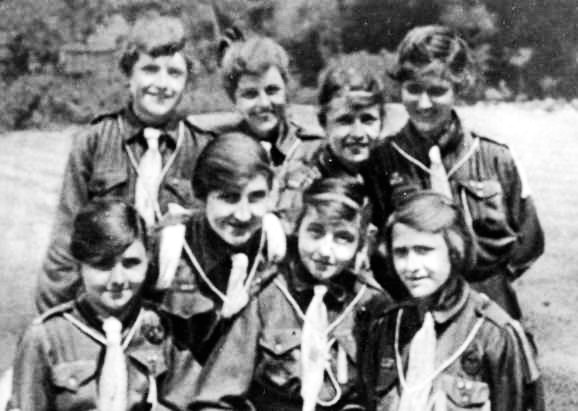
Religious diversity is a reality of our lives. From the invention of the steam engine, it became inevitable. Our world was going to grow smaller as we met people who had previously been isolated from us by distance. In 1893 the World Columbian Exposition was held in Chicago. As part of it, the Parliament of the World’s Religions introduced many Americans to the religions of the world for the first time. Hinduism, once an exotic strain quaintly captured in the archaic spelling “Hindoo,” became a sudden fascination. Buddhism was a curiosity. How had it been that the United States seemed only to know about Christianity, Judaism, and Islam (in that order) when other belief systems existed? How could we have missed them? More importantly, what were we going to do now that we knew about them? We couldn’t unknow them, like you can unfriend someone on Facebook. We were going to have to learn to live together. After all, we all have just one planet to share. Social organizations are great places for introducing tolerance. You can be moral without being Judeo-Christian. And if our social organizations want to promote equality of membership, maybe the Girl Guides are truly living up to their name.

1918_girl_guides


Girls Rising

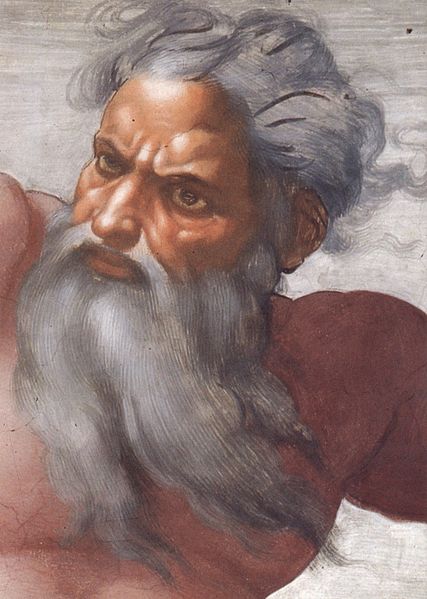
While I was home watching Bruce Almighty, my wife was attending a local screening of the documentary Girl Rising. (There was a good reason for this discrepancy; you’ll need to trust me on this one.) Chances are that many readers haven’t heard of Girl Rising; I know that if I weren’t the husband and father of Girl Scouts, I’d likely have missed it myself. Isn’t that part of the problem? Why does our society make females invisible, unless sex objects? Tabby Biddle has a thoughtful observation about this in the Huffington Post. She notes the importance of the film, but laments that the only way to make it through to the masculine mind is to pose the argument that educating girls will increase the GDP of less fortunate nations. Girls should be educated for their very humanness, Biddle suggests, but our view of a masculine God often prevents this from happening. While Biddle may have fallen a little under the spell of Marija Gimbutas, she makes a very valid point: there is no human reason that girls should not receive equal opportunities with boys. The fact that I even have to write that in the twenty-first century saddens me. It is not just “Third World” girls that have to struggle to gain what is rightfully theirs.

In my career I have been passed over more than once so that a woman might take the advertised position. (I have even been informed of this fact by friends on search committees.) Somehow I can’t find any injustice in this situation, as much as it has personally disappointed my hopes and dreams. Men have been frustrating female hopes and dreams for millennia. Maybe the matriarchy that Gimbutas envisioned never really existed, but the concept is sound: women and men both contribute to this thing we call civilization. Our religions, as they developed in our societies, have held the mirror up to the might-makes-right paradigm from the very beginning. Wouldn’t a male god with a more muscular upper body shove a fair, and giving goddess out of the way every time? Just ask Zeus. Or Odin. Or El. Divine civilization is only human projection, and we just can’t relate to a genderless God. So he becomes the excuse for female repression.

The face of divinity?

The face of divinity?

We’ve firmly entered a new millennium, and, looking at our treatment of half of our species, we still have an incredibly long way to go. In much of the western world, traditional religion has lost its grip, but I’m a little frightened by what I see taking its place. There are a few pockets of female-friendly religions awaking, but there are many more backlashes from the traditional male preserves of conservatism, patriarchy, and free enterprise. It is time for all men to consider that none of us would be here without our real-life goddesses. Some may rail against unorthodoxy, but unfair structures must be imploded for a new, and true, orthodoxy to be established. Women and men—not women for men, not women for profit—that is the only right teaching. So we should promote Girl Rising, and we should seek to move beyond the mere financial benefits for a free market to find the divine spark that masculine interest seems to have lost.


Parsing God

Being married to a Girl Scout leads to many benefits beyond just the cookies. Not that cookies are unimportant, of course. Having been a Boy Scout briefly back in the 1970’s, I recall three-finger salutes, rambunctious meetings, and the occasional camping trip complete with the rabbit coming out of the hole, going around the tree and then something else. I’m sure there was a Boy Scout pledge, but I can’t remember it. Like most group activities, Boy Scout meetings served mainly to remind me of my own inferiority, and so my mind does not often enjoy visiting those places. Having attended a few Girl Scout meetings over the years as my daughter was growing up, I heard the Girl Scout promise a few times, and was a little surprised that the phrase, “To serve my God” has remained unaltered, even with the changing face of the population. When I attended an event hosted by the Elks, the civic organization, the presenter began by explaining the rules for who might join. It too, is limited to theists. The reason for such admission requirements has me pondering if there was a time God was an endangered entity in the United States. If not, why insist on this proviso?

I’ve been reading about religion’s role in society. Something that those who seek primarily the deep, personal and experiential aspect of religion may not realize is that religion is a form of social order. Scientific knowledge about God, if God be incorporeal, non-material, and beyond space and time, is impossible. Religions don’t prove God’s existence, but they serve to reinforce the sanction of the sacred for human society. They have an essential role in that drama. By limiting membership to believers organizations such as the Elks are merely asserting their belief in the working of the system. Of course, from the beginning those who do not believe risk little by claiming they do believe.

But what of the doubter, who may be the truest believer of all? Some Girl Scout literature has a footnote, parsing God: “The word ‘God’ can be interpreted in a number of ways, depending on one’s spiritual beliefs.” Belief is a form of commitment more than a mental certainty. In the Hebrew Bible belief was not as strong a suit as obedience; and thus it had been for the history of organized religion. Starting perhaps as early as Jeremiah, a shift began to take religion more toward a matter of internal commitment. In the face of utter loss, Jeremiah (or one of his fans) suggested that belief was more important that unthinking obedience. Belief is very subtle but vitally powerful. Lives are staked, and sometimes lost, on it. So while you’re enjoying another cookie, try parsing your belief. Me? I’m still trying to figure out when that rabbit goes back in the hole.


Lost Purpose

In a move that demonstrates its love of Inquisitions, the U. S. Conference of Catholic Bishops is officially investigating the Girl Scouts. Seemingly forgetful of the fact that a bunch of unmarried men with a record of protecting pedophiles is not above scrutiny itself, the Catholic Church now seems to think it has the right to police other organizations. The concern these men show for what goes on in other people’s underwear is beyond perverse—WWJD indeed? Both my daughter and my wife are Girl Scouts, and so I know it is not a perfect organization. I also know that it lives up to its goal of offering girls the chance to gain self-confidence and become empowered women. Women who are not trodden under the heavy feet of doctrine are tied to stakes and burnt, in good old-fashioned Christian charity. And why the fuss among our Roman companions? They’re afraid because of demonstrably false allegations that Girl Scouts “associates with” organizations to which the church also objects.

I was a Boy Scout for a few years. Already in those days jokes of homosexual leaders—and a few actual cases—were de rigueur. Where was the Catholic Church? Yet this year alone they have made strident moves against their own nuns and now, again, against the Girl Scouts. Where two or three women are gathered together, the Catholic bishops will begin to pick up stones. Better not read what Jesus is scribbling in the dirt. Some of my readers have problems with my biblical interpretation. I will now ask if anyone can produce a biblical prooftext for the church’s mandate to oversee the organizational structure of secular, non-profit, non-religious associations. What does the Bible say about that? Clearly what the Bible does allow sexually favors men. Where your testosterone lies, there will be your heart also.

All of this belies a lost of purpose for the church. Like the empire whose epithet it shares, the Roman Catholic Church is perceiving paranoid threats from every quarter. The purpose of Christianity, at least according to a guy called Jesus, was to help the poor and underprivileged and to love all people. Even those who crucify you. Now the message the headlines declare is that any organization offering women sexual autonomy will be investigated by the bishops. It matters not whether any allegations have a basis in fact. Christianity’s purpose? To assert male authority. To prevent any organization of women from achieving confidence or equality. To subjugate an entire half of the human race to the will of a single man. Does that sound like the true purpose of religion to you?


Cookie Time

All right, who wants to be the big meanie now? The fact that politics manage to besmirch just about any human enterprise, no matter how noble, is a lesson many of us learn on our slow trek to adulthood. I sadly came to realize that the church is incredibly political, and that universities could rival congress for the backstabbing and posturing that goes on. In the midst of all this politicking, one of the truly good NGOs left in the world is Girl Scouts. Sure, there will always be some councils with personality issues, and some troops will have a difficult scout or parent with which to cope, but the organization is based on the principle of giving girls the confidence and assurance they need to be successful in life. What could be wrong with that?

My wife pointed out a story on Salon.com that reveals some anti-abortion groups are now claiming that Girl Scouts supports Planned Parenthood. This is patently not true. Even if it was, it would hardly be a crime to teach girls reproductive options (after all, when is the last time a Pope or President carried a pregnancy to term?), but since people don’t think with precision, it seems best to keep girls in the dark. Some right-wing groups are boycotting Girl Scout cookies as if the devil himself were the baker. Not to be outdone in perceived self-righteousness, some Catholic Churches are kicking out Girl Scout troops for supporting abortion! All of this based on a lie. The road to the unconscionable position of the Catholic Church toward reproduction has been long and mentally torturous. Anyone who has taken the trouble to trace the church’s strange love affair with the fetus may be surprised to learn how recent the concern became an issue and how very androcentric it is. The church’s claims here rely on nothing more than good old testosterone-generating glands and the love thereof. To punish the Girl Scouts for a fictitious association with an unapproved organization shows just how mature the largest church in the world truly is.

The male bias in the majority of the world’s societies is bad enough. The United States likes to hold itself up as an icon of fairness and equality. It is the spirit upon which this nation was founded. Except when it comes to females. We don’t want our girls to have reproductive autonomy because that might make men look somehow less masculine. As for those wimpy guys who like to read, the Bible backs them up completely on this issue. God is a guy, and made guys to be in charge. No matter how much education you offer, you won’t be able to change that one-book-fits-all outlook. What will we have lost if we seriously and honestly treat both genders equally (and even those intersexed individuals)? Only the apparently fragile male sense of superiority. I say, in the spirit of America vote for equality! Buy Girl Scout cookies!

Deliver us from evil.


Crossing Over

The periodic reforms that have swept through the church like so many Massachusetts tornadoes have often whirled around the matter of ceremony. Certainly there have been disputes over obtuse points of esoteric doctrine for which there is no final arbiter, but frequently the rancor involves what the faithful do when they meet together. In keeping with ancient templates, religion is generally a matter of what people do more than of what they believe. I personally had my love of ceremony beaten out of me by its plangent and perpetual repetition at an institution so enamored of it that humans and their needs were viewed as mere obstacles to sacerdotal perfection. Nevertheless, as the school year winds down, ceremony is all around us: graduations, awards dinners, rites of social passage. Last night I attended a Girl Scout bridging ceremony. Bridging is the symbolic crossing of a bridge to indicate a new level of commitment and integration into the larger Girl Scout community.

It's just a bridge.

As I sat staring at the bridge, waiting for the celebration to begin, it occurred to me that this was very much like a religious service. A group of spectators had gathered to watch a ritual unfold—a ritual that involved everyday objects invested with a new significance by the context. The bridge is just a small arch bridge over artificial water; before the ceremony kids run and jump over it with no fear of divine reprisal. Once the correct words are spoken, however, crossing the bridge becomes a solemn act. The ceremony opened with a kind of invocation, a creed (the Girl Scout law), a kind of Scripture reading—complete with exegesis of what that “Scripture” means and a reference to God as creator of all—a sacramental act of transformation, and even a hymn or two. The main difference I felt between this ceremony and most religious events was that the Girl Scouts are far more accepting and affirming than most religious conglomerations. Of course, there is the matter of gender distinction, but what is a church without any exclusivity?

I have great admiration for the Girl Scouts. In the face of a community that continues to act out male supremacy as a matter of God-given right, the Girl Scouts (and other similar organizations) offer a place for young women to assert their sense of belonging. Religion has just as often been used to suppress aspirations as it has been to uplift them. Life is difficult enough without God breathing down our necks. Human institutions that encourage thoughtful regard for those who are different, or underprivileged, or simply overlooked, often fill the gaps that religions callously leave behind. Yes, some religious institutions still display a social conscience, but if we wait for the religious to solve the suffering of the world, it is good to have groups like the Girl Scouts around who actually put their beliefs behind their ceremonies into action.


Golden Eagles

I used to be a Boy Scout. Not a very good one, but I did try. Eventually, before even reaching the rank of “Tenderfoot” I dropped out. I often wonder what life would be like if I’d gone on to be an Eagle Scout, like Gerald Ford. Would I have made president? Or at least Assistant Professor? Last night I attended a workshop for Girl Scouts. My daughter is about to embark on the program that leads to the Gold Award, the highest honor a girl can attain in the organization. I want her to succeed where Dad failed. Maybe earn herself a better life.

Girl Scouts are as organized as Methodists and as legalistic as Jesuits. As we sat listening to the requirements, I was stunned by the degree of technicality. You can do this, but not that, that, or that. I remember now that I didn’t make Eagle Scout. What struck me as most intriguing, however, is the fact that certain projects are disallowed for theological reasons. In order to earn a Gold Award, the Scout must conceive, lead, and implement a social service project. It is a noble goal. In society many people are hurting and in need, and governors, representatives, and senators do not seem to notice. Yet, the leader of the meeting noted – if the project involves “controversial” issues, it will be declined. Controversial issues are things like abortion (i.e., women’s rights), or gay rights.

While I agree, it is not safe to put girls in the line of fire, I thought about these issues. The reasons that they are controversial is that Evangelical Christianity has made them so. Evangelicalism is a strain of Christianity that has a trajectory that went on the offensive in the 1960s. Charging the emotions of regular Americans with the terrors of gay love and dead fetuses, it raised these issues to national consciousness and made them a part of every political campaign in the latter part of the last millennium and into this one. These are points of great human suffering. The answers are not easy, but the fact remains – neither is a biblical issue. Yet girls are prevented from taking on issues that may have the most solid and tangible impact on their future. I was saddened.

I have no complaints with the Girl Scouts. It is a shining example of an organization that gives girls the confidence and tools they need in a hostile environment. I am disappointed, however, that a small but vocal cross-section of Christianity has made certain topics – topics that need to be addressed – off-limits for concerned young women.