Blob Blog

Those who actually know something about movies occasionally complain that Hollywood seems to provide us with diminishing returns. How many movies have been remade? Can anyone even count all the sequels, prequels, and just plan quels? A similar trend is evident in publishing. A teen-vampire novel takes off and every publisher faces a twilight of the profits if it doesn’t spin off its own version. Sometimes I end up becoming familiar with a movie through its remake before ever viewing the original. The Blob is one example of this. I’ve seen the thirty-year remake 1988 version a few times. Just this weekend I saw the original 1958 version for the first time. It seems to me that teen movies of the late fifties and early sixties tried a little too hard to get the snappy, sassing dialogue of teens on the brink of the incredible cultural changes that were about to take effect after the extreme conservatism of the McCarthy Era. At times it is so hip that I can hardly stand it.

The_Blob_posterThe Blob falls into that category. A young Steve McQueen trades ripostes with his chums who think a drag race and a Bela Lugosi movie with your gal are pretty daring behaviors. Buried in all that innocence, however, I found a hidden warning tone. When I watch scary movies, I always keep an eye out for religious themes. Sometimes they fail to materialize. The Blob is about as secular as they come. I didn’t even spot a church or a priest (unlike the 1988 remake) in the typical American town. Just a bunch of kids that, Archie-like, try to convince the adults that they’re serious. A blob from space really is loose in town, and nobody has an idea how to stop it. All the adult men wear ties and the ladies all wear dresses. It is a world that follows the rules.

What of this warning tone I mentioned? Well, the blob itself is, apart from its disruptive raison-d’être, hardly more threatening than the stifling culture it attacks. It can’t be shot or burned, and nobody has any other ideas. It is unstoppable. Except for cold. And here’s the chilling part. As the carbon-dioxide drenched blob is airlifted to the Arctic by the military, Lieutenant Dave declares the world safe once more. Steve (Andrews, i.e., McQueen) chimes in with, “Yeah, as long as the Arctic stays cold.” The film ends with a trademark horror question-mark (this one literal) as the blob is parachuted onto a snow-covered landscape. Global warming was a future monster in 1958. The optimistic world could see nowhere but forward. Now, over 50 years later, our future looks a lot less cold. With politicians and some religious leaders decrying global warming as just another liberal myth, we might do well to remember The Blob. Something up there on our melting ice caps is waiting for us to return to the 1950s to begin its sequel of terror.
Implausible Deniability

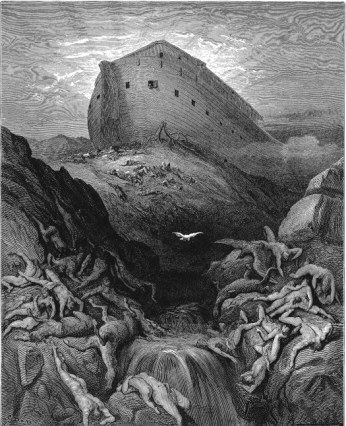
Sandy gave us a little taste of dampness under the gunnel. You see, people live by the water because it beckons to us. That was actually Rachel Carson’s idea, but nevertheless, we do find ourselves drawn to the sea around us. Historically our great cities grew in the littoral because communication across the big water was, prior to jet travel and trans-oceanic cables, the best way to stay in touch. Have a business meeting in London, but live in New York? No problem. We can get you there in two-to-three weeks. And the ship sets sail. Since that day we’ve become more electronic. Those of us who experienced Sandy near New York City know that one of the biggest problems was that salt water and electrified trains don’t mix. Of course, conservative lobbies have insisted that Congress and the White House keep their eyes firmly shut about the possibility that a more unstoppable flood is coming. We may not need an ark, but we’re going to have to take some steps back.

A story on the Weather Channel shows the “smoking gun” of global warming. Oh wait, that’s just a myth. Industrialists tell us so. But what a devastating myth! The Gulf Stream waters of yore have kept the climate mild in northern latitudes. While in Scotland we spent a wonderful weekend with some friends on the Island of Arran in the Hebrides. Palm trees growing in Scotland? Yes! The warm Gulf Stream means that much of the British Isles remains relatively temperate despite their latitude. The Gulf Stream, due to climate change, is slowing. In less than a century, climatologists now predict, the oceans will rise three feet. Looks like I’ll need to wear my gaiters to work. We’ve known for about half of my life that we’ve been changing our environment. And not for the better. Those who are too wealthy stand to lose a little so we do what we can to protect them, the poor dears. The rest of us had better learn to swim.

We don’t worry when the people of some Indonesian island point out that their entire world may submerge. Put a little ocean water in the subway and, well, that’s an entirely other story. How are the peons to get to work? Let them wear hip-boots. Word from the top one percent is that there is no global warming. If the Gulf Stream is slowing down it’s because it’s lazy. What a moocher! Suppose it will be wanting a health plan next. That’s the problem with the weather—it changes like, uh, the weather. Unlike the minds of some people that are already made up and never change, no matter what the facts. When the one-percenters start speaking, I’m glad I’m wearing my hip-boots after all.

Where can I get me one of those?

Where can I get me one of those?


No Year’s Eve

So the world’s supposed to end tomorrow. Again. These apocalypses have been coming thick and fast lately; it’s getting so that each end of the world is within sight of the previous end. Of all the strange ideas that religions have given us, the end of the world is the most insidious. While some may choose not to believe it, many politicians of record have actively attempted to provoke the end of time to force the divine hand at bringing a little bit of heaven to earth. Scary thing is, some of them had the power to annihilate us all in the process. Unlike past eschatons, however, this one derives from the interpretation of Mayan artifacts, strangely making it more believable to some people. Those exotic peoples of the past! They just knew so much more about worlds ending than we do. And I know otherwise intelligent people who believe that this is the last day of the earth.

Of course, if we take the earth’s temperature there does seem to be some cause for alarm. That’s not the Mayans’ fault, though. Some of these self-same fracking politicians have insisted that since the Second Coming is near it is alright to destroy the ecosystem that supports all life on the planet. Those are pretty high stakes if they turn out to be wrong. Oh, but they can make a healthy profit margin on the side, so at least they can go out in style. But what would a Mayan apocalypse mean to the firmly committed Christian? It would be very hard to recover from that, should Q’uq’umatz be behind it all.

The events of the past week have been more than a little rough. And the self-same politicians line up on the side of the NRA as they campaign for Jesus’ early return plan. The overall prognosis seems iffy at best. It is like the feeling the dinosaurs must’ve had on the evening of the asteroid. Some of them had brains the size of walnuts, an allegory too plain to require spelling out. What these eschatological episodes teach us is that human life is fragile. Madmen with guns remind us of the same point. I’m expecting, however, that things will be pretty much the same as ever tomorrow morning. I’ll be expected at work, the wheels of the sluggish economy will turn ever so slowly, and politicians will keep doing what they do best. Those counting on Mayan counting will find themselves in the company of Jehovah’s Witnesses and Harold Camping. All of us will find ourselves in a world where religion is perhaps the only power actually capable of total destruction. But if we wake up with aliens swarming the planet tomorrow we’ll honestly be able to say that we’d been warned.

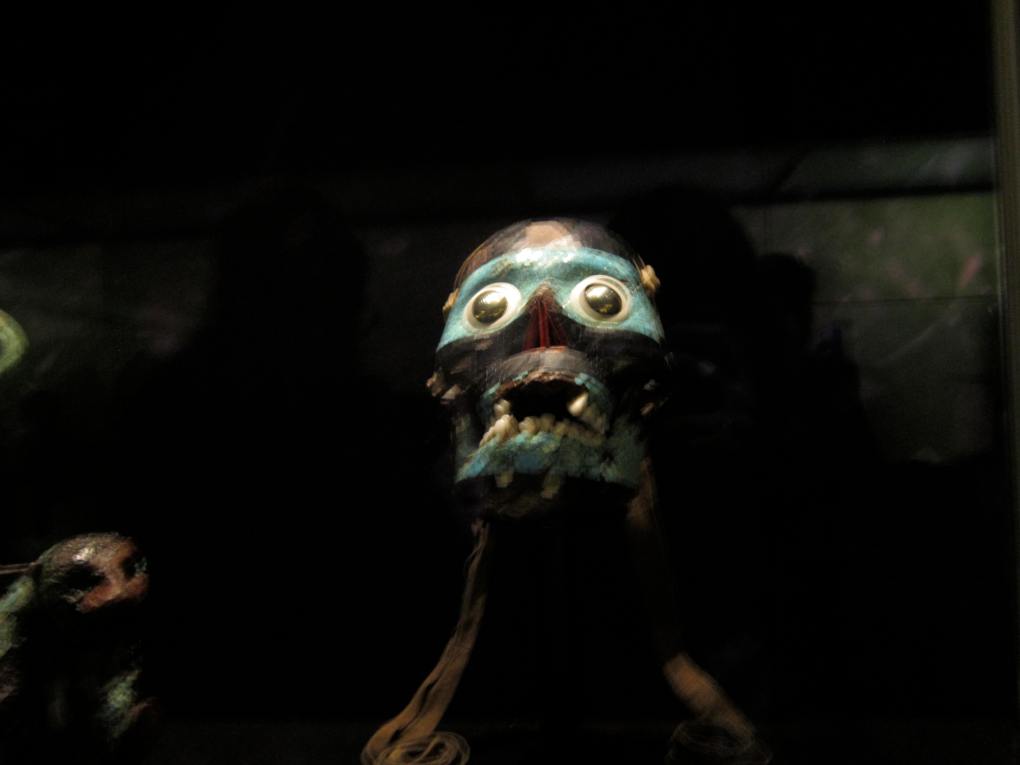
The face of things to come?

The face of things to come?


New Prometheus

Nothing portends the wrath of the Almighty like an unseasonal storm. The late season Hurricane Sandy, now dubbed the Frankenstorm because of its potential hookup with two wintery systems making their way east and south, is poised to make an apocalyptic scenario on the east coast, we’re told. Well, it is 2012, the year of apocalypses, after all. In an interesting shift, however, this storm is named after not a divine character, but Frankenstein’s monster, the human-made nightmare. I first read Mary Wollstonecraft’s Frankenstein back in high school, and I was immediately subdued. The story, undoubtedly frightening when first heard, is unremittingly sad. The “monster,” like all of us, finds himself in a cold and lonely world where he is rejected because he is different. It is cruel and Republican kind of world. All the monster seeks is companionship, acceptance. I found the story so sad that I’ve had trouble reading it ever since.

The naming of a storm after a terror created by humanity may be prescient, in a regrettable way. Only the most gullible (read “greedy”) believe that industrialization had nothing to do with it. We toasted our own planet for a buck or two. In biblical terms we have sowed the wind, for which there is only one kind of produce. Hurricanes are quite natural, and although the irregular weather of 2012 may prove simply a meteorological anomaly, it may be the result of our tinkering with the baubles of divinity. They certainly seem to be getting bigger than they used to be.

I have to admit to having a persistent fear of those doing the cobbling. Too often their motivation appears to be flat and green and indigestible. And nothing like stockpiling it makes a person somehow less human. Mary Wollstonecraft wrote Frankenstein not for money, but for love of words. The modern chimeras we construct are mere carnival side-shows by comparison. And like Victor Frankenstein we have engineered beyond our capability to understand. Our best option may be to stand silently and wonder at the forces that hold us enthralled. For in the novel, at least, the real monster is not the cadaver stitched together underneath the sheet.


Endorsement

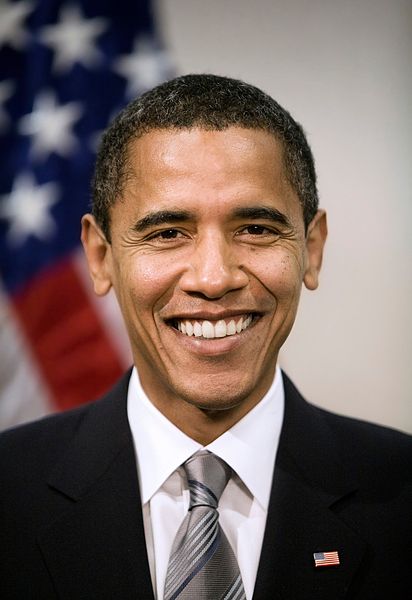
Since a blog is a variety of media, and since media endorse their candidates, Sects and Violence in the Ancient World endorses Barack Obama for President of the United States. I endorse Obama for the working class, for those who think clearly, and for those whom society doesn’t give a chance.

Working class credentials are at a premium these days among politicians who want to appear to be just like the most of us. Often it is, in the words of Bruce Springsteen, “a rich man in a poor man’s shirt.” Some of us, many of us, maybe most of us, have grown up in the working class. We are fed a theologically conservative line by our clergy and sometimes they make efforts to wrap it loosely around political conservatism as well. I don’t buy it. I grew up working class and that mentality has never changed. This is something Obama understands. He may not be perfect, but in this working world, none of us are. Empathy is still currency.

Bemusement would be my reaction to the factual gaffs made by not only Mitt Romney but also most presidential candidates from the GOP over the last two decades, were they not so serious. They show a loss of touch not only with the average person, but with reality itself. In their world of corporate-level wealth and extreme privilege they don’t even have to obey the laws of climate change as long as their obsequious sycophants are willing to change the facts for them. I am amazed at how easily the wool is pulled over the eyes of the American public. Does anybody really listen to what these guys are saying? Does anybody bother to try to add it all up? No, not even a slide rule will help.

The economy was not fixed over night. Too many years of too much greed have dug us deep, deep in a rut. From their armored cars speeding along in the midst of motorcades maybe the politicians don’t see the homeless I walk past every day on my way to work in the richest city in the nation. Maybe they don’t see the utter lack of hope, the death of possibility in the eyes of those who, through no fault of their own, society deems useless. I’ve been unemployed, even though I played by the rules. I learned there are no rules, save one. Those with wealth will do whatever it takes to keep it.

I think Barack Obama understands all these points. As for the honorable opposition, I think his diamond-lens glasses may have grown too thick to read clearly what the tablets say. And those tablets, I’m told, are made of gold.


Seedtime and Harvest

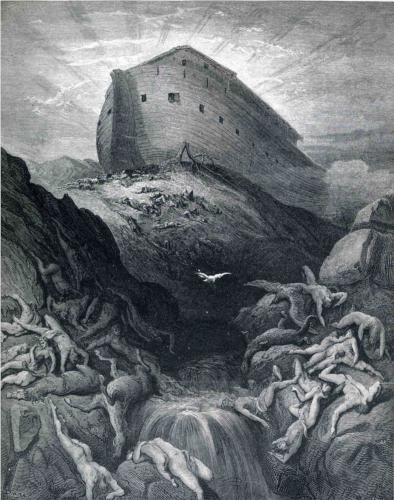
With the drought deepening over about half the United States, it is with not inconsiderable irony that I am reading the story of Noah’s flood. I have been tweeting the Bible for some months now and am just reaching the end of the fascinating account of the deluge. The difference in the case of the drought is obvious, but similar. Having spent some time in the Midwest, I came to know how intimately and intensely many of the citizens trust God’s providential care (this is true elsewhere, of course, but I noticed it more in that region). When disasters come, however, just like an animist would suggest, answers will be sought in the divine world. “While the earth remaineth, seedtime and harvest, and cold and heat, and summer and winter, and day and night shall not cease.” Genesis 8.22 rounds out God’s plan for the perpetuity of nature’s cycles, stating in just the previous verse that he knows people to be wicked and will never punish them for it again, as he did in the flood. Such biblical assurances, however, do little to allay fears when crops are dying in the field.

The problem in looking for answers in nature is their ambiguity. Just consider the record number of church picnics that haven’t been rained out this year—the number of prayers I’ve heard for the staying of rain for human convenience is surely a reflection of how intimate divine interaction with the workings of nature is supposed to be. One of the benefits of science has been its ability to straighten out all the cards in the deck, tapping them on the table-top and squeezing them into line. How would God weigh prayers for no rain so that an outdoor wedding of a devout couple could take place versus the prayers of a backslidden farmer for much needed precipitation (without hail)? Are decisions made by majority request? Wouldn’t that be excessively dangerous, given humanity’s track record of deciding what is good for itself?

The drought is a serious concern, and I do not mean to suggest otherwise or make light of the situation. What concerns me is the human tendency to look for a divine bailout. Many politicians of certain persuasion (usually the greenback kind) tell us that the climate is just fine. Our greenhouse gasses are not unduly affecting it. Now that a drought is upon us—and even a child can understand that all weather is related—the focus shifts to God. This dancing around the elephant in the room is tiring and dizzying. We can spend billions of dollars making bombers that are almost invisible to radar and so oddly shaped that they get reported as UFOs and yet we can’t get politicians to consider our impact on the very skies they fly in on their bombing missions. The atmosphere is larger than us all and it is warming up. And when we bake ourselves out of existence isn’t it a comforting thought that seedtime and harvest will continue, at least until our sun burns out?


Divine Fury

“It was like Armageddon,” a woman in Colorado Springs told a reporter, according to CNN, after seeing the wildfires raging down the mountains onto the city. The article opens with a reference to Godzilla. The story is a wrenching reminder of how helpless humans are in the face of disaster. When facing danger far bigger than ourselves, language of God is never far behind. The things we control—the future we engineer—is bright in prospect. We’ve impacted our own chances for the better in a steady surge since the Middle Ages. Of course, there have been notable blips along the way where we’ve fallen victim to our own paranoias, but generally, things are better. Controlling fire was among the first of human innovations that eventually led to civilization. Humans took a natural force and put it to work for us. It is easy to forget that fire serves no master. Until nature reminds us.

Earth, wind, fire, and water. The ancient Greek philosophers had narrowed the basic environment down to four features. Each of them holds profound dangers for a small species like our own. No wonder the ancients ascribed each of these elements a guardian deity or two. On driving trips to the west, I have gone past fires whose intense heat could be felt hundreds of yards away in the air-conditioned comfort of our car. Still, I shuddered. In this day of advanced transportation, most people can drive themselves away from the danger of wildfires. The problem is that material goods take up space, and in a world that values material goods above all things, well, you still can’t take it with you. My heart goes out to those who tell their stories of impossible decisions of what to take. What in our lives can’t be replaced? What do we truly value?

Funny thing is, we’ve known since I was in high school at least, that our own actions were changing the climate. The wildfires may not be directly related—I don’t know—but I do know that we’ve been in deep denial. We’ve been caught in a sin so black that the only way out is to lie until we’re even deeper in it. We’ve been destroying our own environment for money. Money with which to buy material possessions. Earthquake, hurricane, wildfire, and flood. None of the four elements are safe. We can put our material goods in a secure house in a mountain stronghold and still lose everything. It is the fate of a culture that puts too much faith in material goods. Colorado is beautiful and peaceful, much of the time. But nature respects no human. Yet we put our faith in material things. Maybe she was right after all, it is like Armageddon.

Friend and foe.


Tortured Gospel

Tornadoes? I don't see any tornadoes.

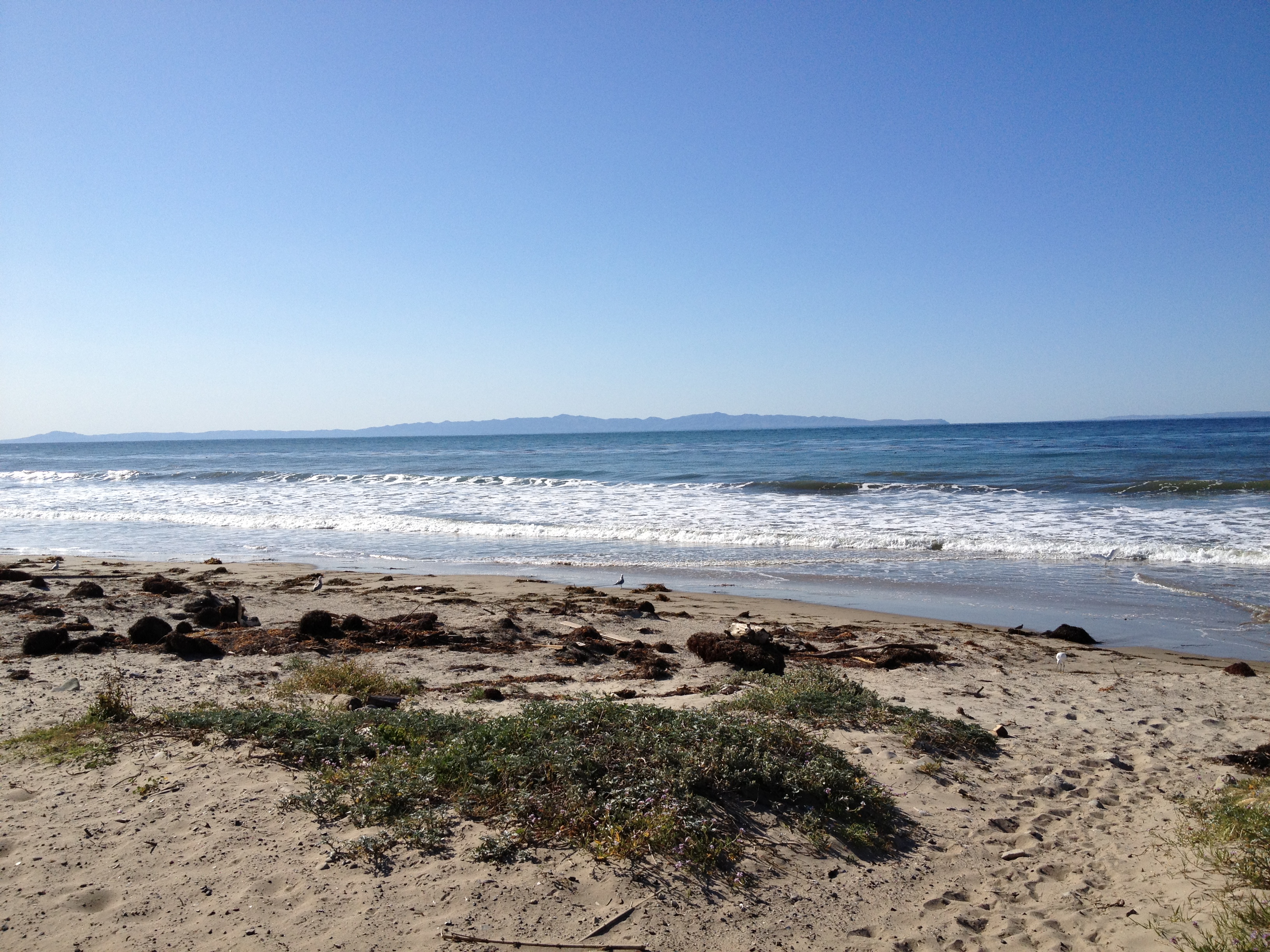
It is a little difficult to force yourself to think of tornadoes when you’re in sunny California. On my flight into Santa Barbara I could see the tail end of the gray whale migration from a few thousand feet in the air. Outside the tiny municipal airport (with its full-body scanner) I see palm trees swaying in the wind. The air smells like flowers. Life is too easy in California for me ever to live here. I need more angst in my diet. I can’t come to the sunny coast, however, without the Eagle’s “Hotel California” replaying endlessly in my head. It was the running joke at Nashotah House that the real Hotel California was located in the woods just outside Delafield, Wisconsin. The haunting lyrics by Don Felder, Don Henley, and Glenn Frey managed to capture the witch’s brew of mind control, humiliation, and desire that laced that little, gothic seminary in the woods. Yet even sitting in California with its full greenery in March, I see that Pat Robertson is blaming the devastation of the recent tornadoes on lack of prayer.

Blaming the victim is a classic fascist technique, and it is very easy to proclaim one’s own righteousness when not in harm’s way. Herein lies the darkest sin of the self-justified; they think themselves specially blessed and therefore not responsible to help the victims. While flying over the Santa Ynez Mountains, seeing the smoke from California wildfires climbing like the terminal flames of Babylon, I could hear a voice like a choir of fascists singing, “Alleluia And her smoke rose up for ever and ever.” Schadenfreude fuels too much of the evangelical worldview. According the Gospel writers, when Jesus foresaw the destruction of Jerusalem, he wept. WWJD, Rev. Robertson?

Tornadoes look so much like divine judgment that it is almost understandable how a naïve believer might see them as coming from God. We, however, are the gods destroying our own planet with the accompanying degradation of the weather. Neo-cons deny the fact of global warming. It is not a myth or a theory, there is inconvertible proof that it is happening. Still, it is more convenient to blame God. After all, chances of him showing up to deny false charges, as history repeatedly shows, are very slim. Ask any innocent woman tied to a stake in Medieval Europe accused of being a witch. Apparently the divine calendar is too full to worry about the troubles of hundreds of thousands, or even a few millions who are falsely accused. Why not send some terror from the sky? It is hard to think of such things in sunny California. Yet as the “good news” of the televangelists spreads to the ends of the earth, even those forever in the sun will need to stand in judgment before a very capricious deity.


Timing God

Two weeks in a row now God has made it into the pages of Time magazine. You’d think he was Rick Perry or something (no insult to God intended). This week’s Commentary, written by Harvard physicist Lisa Randall, argues for the importance of believing what science forces us to conclude. The world is warming up, ice caps are melting, and those in low-lying regions are in hot water. I am fully in agreement with her sentiments, but it’s the practicality that bothers me. Not the practicality of listening to science—that’s just common sense—but the practicality of doing so in a world where religion reigns. Despite cries of oppression and suppression and repression—just about any pression you choose—religions dominate the world. What particular brand you prefer does not matter; the fact is most people are religious. Randall believes that religion and science must learn to live together. Her problem is that she is looking at it rationally.

Science has given us excellent leads on tracing the origins of religion itself. Between psychology, anthropology, sociology, and biology we’ve got a fair idea how religion came about. The same brain that shows us the way, however, has evolved with religion still intact. In short, it has learned to accept the unlearned. With our brains acting like dogs chasing their own tails, is it any wonder that as a species we are confused? We see only what we choose to. In the great, artificial landscape of Manhattan many very wealthy people traverse the streets. Every day I see suits that would cost my entire paycheck casually strolling up Madison Avenue. I also see the beggars in the same doorways day after day, blending in with their surroundings. The solution of choice is to pretend they aren’t there, to not accept the evidence of our eyes. The wealthy have a knack for it, it seems. And when they work their way into politics their vision doesn’t improve much.

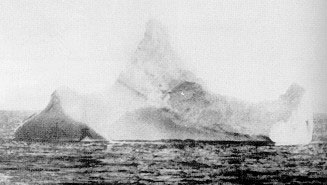
The problem that Randall points out is very real and deadly serious. Trouble is, those who pretend not to see are among the best actors on the planet. Faced with incontrovertible evidence the rational mind has no choice but to acquiesce. Religion, however, offers the perfect escape clause. If global warming discomforts you too much try fanning yourself with a Bible. Soon the excess degrees will simply melt away. And when the religious enemies of science find themselves sitting on the ocean floor like the victims of the Titanic, they too will have the satisfaction of knowing that they were privileged above all people for the time they had on earth. Everyone wins. The insatiably greedy and the abjectly poor both share a spot on an overheated planet. And if the pattern holds true we’ll evolve eyes to read under water, along with our gills, so that we can continue to read our waterlogged Bibles to find out what’s coming next.

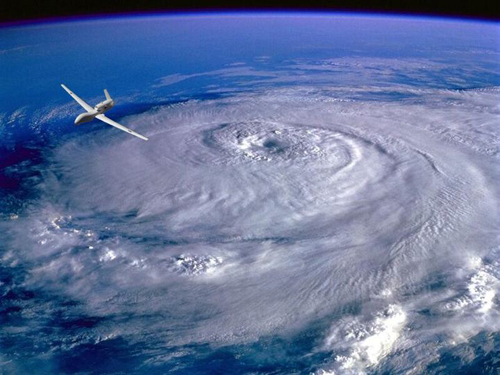
Iceberg? What iceberg?


Friend of Jonah

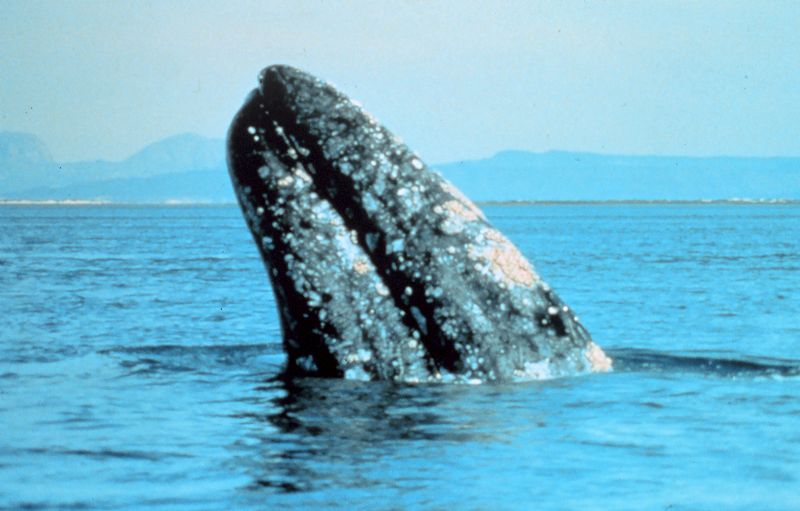
Last year a gray whale was spotted off the coast of Herzliya in Israel. As in the days of Jonah. Actually, we need to turn the clock back a little further. According to Arthur Max of the Associated Press, the gray whale was hunted to extinction in the Atlantic already in the eighteenth century. This whale, therefore, had to travel north of Canada from the Pacific Ocean through channels that are normally frozen. Global warming has opened these passageways and plankton last seen in the north Atlantic 800,000 years ago have begun to reappear. If Jonah was smart, he’d have stayed in that whale and would’ve just kept going.

Big business stands to lose the most from cleaning up the environment. It cuts into the bottom line. Happily, if brainlessly, joining the laissez-faire coven are many of the “Religious Right” who see destruction of the environment as part of God’s plan. So much for “and behold, it was very good.” When free market economists first met the conservative evangelicals it seemed that they had little in common beyond similar haircuts and a desire to turn time back to the 1950s. Since then they’ve joined to become a very powerful force in American politics, preventing any headway to improving the globe for others, even if it isn’t a personal concern of theirs. So much for “do unto others as you would have them do unto you.”

Each year in my Prophets class I have students that are far more concerned that a literal Jonah was swallowed by a literal whale rather than hearing the message Jonah proclaimed: repent or face destruction. If we turn the thermostat up a few degrees more each year maybe Jesus will finally jump on that white stallion and split the Mount of Olives. You can’t quite see the Mediterranean from there, but if you could you might spot a lonely gray whale. You don’t need to look for the little man inside. That whale is the sign of Jonah.

Wave to Jonah for me!


Return of the Frost Giants

We have ceased believing in the gods, but we still feel their wrath. The recent winter storms encompassing much of the nation demonstrate our arrogance in the face of the uncontrollable. It has long been my contention that the chief god is a personification of the weather. No matter how many HAARPs we put into place or how many satellites we hurl over our heads, the atmosphere remains a chaotic system. Global warming triggers unpredictable weather and extreme conditions. Yet people claim the moderate level of snow in the northeast is proof against the facts. I say the gods are laughing. How quickly we forget the ice ages.

As a child Norse mythology was among my favorite pagan religious systems. Obviously those responsible for naming our weekdays felt the same. The struggles and weaknesses of Odin, Thor, and Loki are far more honest than claims of pristine intention on the part of the majority of gods. The most captivating aspect was the eventual victory of the frost giants at a kind of Ragnarök. In Scotland, so close to the landfall of many a Viking, I took advantage of indulging in Viking sagas and myths. My understanding remains that of a curious layman, but I sense a deep wisdom at work here.

A recent email from a university dean on a particularly treacherous weather morning admonished all instructors that classroom presence was a commodity that paying students have a right to expect. Deans, with their six-figure salaries, are not accustomed to not getting their own way. How hard it is to admit that the gods have bested us! There are those who’ve not bothered to study global warming but nevertheless like to make pronouncements about it. They claim such weather disproves that the world is heating up, despite the global warming models that predict erratic and localized colder weather. We have released the frost giants. The more we mess with them the more dangerous they become. So, what is my solution to the dilemma of too much weather? Well, I’m morally obligated not to say until I receive my six-figure salary.

The little wolf laughed to see such sport


Hunting Vampires

The Mercer Museum in Doylestown, Pennsylvania is a treasure trove of Americana from the turn of the last century. Henry Chapman Mercer, in addition to being wealthy, had the foresight to realize that society was rapidly changing, even back then. He undertook the collection of everyday artifacts from many human industries, poured himself another castle-like concrete building, and housed the baubles there. It is a fascinating walk through nineteenth-century America. And if you visit on a cold day it feels as well as looks like Currier and Ives have just passed through. My main draw, however, was a vampire hunting kit.

If only I had a polaroid lens...

Prominently displayed, the kit includes a Victorian Protestant’s tool chest for any blood-sucking eventuality. A cross (sans corpus), a pistol with “silver” bullets, glass vials with various apotropaic ingredients, even a little stake, all in custom-cut green velvet. Unfortunately, the kit is believed to be a forgery, although the items in it are from the Victorian era. The silver bullets are, for example, pewter. As the placard notes, vampires do not exist, but that doesn’t mean people didn’t believe they might have existed. The museum, naturally enough, hoped that the Victorian era kit might be authentic. Scientific analysis has revealed otherwise despite the fact that many people continue to believe in something that has no basis in reality.

Belief constitutes reality. Otherwise, how could it be that thousands, if not millions, of people don’t accept the fact of global warming? Brash barons of unhindered industrial progress insist that humans can’t harm the planet – it’s just too big. We can suck out all the resources that billions of years have deposited in intricate recesses and that nature has sprouted right on the surface. For, they say, God has given them to us. They believe that. If we held a mirror up to them, what would we see? Maybe we would be forced to change our minds and go after that vampire-hunting kit after all.


Hadad in Copenhagen

Let us talk plainly about the weather. Global warming is a reality, and yet the issue is clouded by religious conservatism. To be precise, it is difficult to determine whether it is really greed or the religious right that stands so firmly behind free-market capitalism that is driving this chariot of the sun. The strange and unholy alliance between religious and political conservatism, however, has become a force daily striving against reality and its proponents want to be on the top of the pile when the whole thing collapses.

I can not speak to the political end of this continuum; I am not a political scientist or economist. As a “religionist,” however, I recognize a deeply disturbing trend that I have followed since my youth. Fundamentalists have consistently taught their young that the “Second Coming” is only minutes, possibly seconds, away. Undaunted by the two-millennium delay in wish-fulfillment, they suppose the words supposedly uttered by Jesus indicate a kind of divine “I’ll be right back” just before pushing off from the Mount of Olives. The signs of the times given in the Bible describe the then current condition, yet modern-day Fundamentalists wish to force the almighty hand, call the bluff of the Texas Hold-‘em expert above. If the general in the sky said wars would come, well, we’ll make wars. If the only way to get his attention is by destroying the planet around us, so be it. Deny global warming for the sake of the religious right, since their world is about to end.

Baal in Copenhagen?

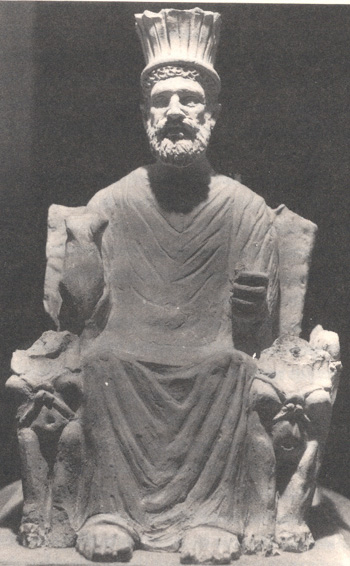
The rest of us might want to stick around for a while. Ancient meteorologists believed that particular gods controlled the weather. At Ugarit Baal, or Hadad, took responsibility for drought and plenty. If there was a problem, they knew just to whom to offer a sacrifice. In our monotheistic western world, we’ve pared the gods down to a single man. Not everyone agrees on his mood or character, but some are convinced that he has his bead trained right on this planet and they want to help from here below. Others believe — o the heresy! — that natural processes control the weather and that we can do something to make our situation better. We might be in a better place if those who believe the gods control the weather were relegated to theology classes rather than political offices.