Books and Mormons

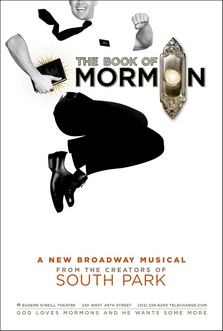
Some time ago we went to see Book of Mormon on tour.  I really knew very little about it other than it was consistently praised as being very funny.  I’m always a little concerned about poking fun at anyone else’s religion because I know people take their beliefs very seriously.  As I reflect on the show (which was quite funny) it seems that it wasn’t so much poking fun at the Latter-day Saints so much as it was poking fun at religion itself.  That’s less problematic as it’s not singling anyone out for ridicule.  It’s a system that’s being made light of.  Or at least any religion that is an effort to convert others.  There’s a kind of violence to it.  And if Book of Mormon is about anything, it’s about missionaries.  Amid the laughs it makes some valid points—trying to convert people without first trying to understand their culture is a fraught activity.

People want religious specialists who thoroughly understand their tradition.  I can say from experience, both as an erstwhile seminary student and a seminary professor, that the time given to become an expert is insufficient.  The older I’ve grown the wider the perspective I’ve tried to step back to see.  To be an expert on a religion really requires some facility with understanding other religions.  To understand, say, Methodism, you need to understand Anglicanism.  To understand Anglicanism, you need to understand Catholicism.  To understand Catholicism, you need to understand early Christianities.  To understand early Christianities, you need to understand Judaism.  And so the widening concentric circles go.  Nobody can be an expert in all of them, and each of these religions mentioned has, in its own right, sub-specializations that have their own experts.  Who has time to learn the religion of those they intend to convert?

Any religion that makes supernatural claims (and many of them do; it’s their nature) makes extraordinary allegations.  Those allegations, when examined closely, reveal some improbable elements.  Trey Parker and Matt Stone, two of the authors (most famous for South Park) apparently said that they had no intention of making fun of anyone’s religion and a spokesperson for the Latter-day Saints indicated that no real offense was taken, acknowledging that it’s parody and parody is only offensive if it’s taken seriously.  Many religions have thin skin when it comes to parody or satire.  The serious part is that some religions, in real life, take conversion of all others with a zeal that could (and does) become dangerous.  Still, this musical is very funny, as long as it’s not taken too seriously.


Who Owns It?

Who owns the Bible?  No, you can put your hands down.  I mean who owns the concept of the Bible?  This question occurred to me while thinking about the Apocrypha.  Does the Apocrypha belong or does it not?  This became a polarizing issue with the Reformation and subsequent Protestant ownership of the concept of the Bible.  The Apocrypha was mostly written by Jews, but has never been part of the Hebrew Bible.  The process of narrowing down the books to include wasn’t straightforward and since God hasn’t spoken on the topic, has never really been settled.  The books of the Apocrypha circulated with the Bible, as did a few other books.  Sometimes they were even bound together inside one cover with the standard Protestant 66 books.  Obviously I’m discussing the Christian canon here.

I’m sure you’ve known someone this has happened to, if it hasn’t happened to you personally.  This person is an actual expert on a topic.  S/he goes to a place where an unexpected discussion on their specialization breaks out but nobody asks them to speak to it.  This person then becomes offended, sometimes even speaking out, loudly, that this is their area, they have expert knowledge of it and should be consulted, at the very least.  More likely than not, their opinion should be considered definitive.  This is the image I have in my head with Protestants and the Bible.  Sure, the Catholics had it long before, but they didn’t encourage individual study.  In fact, they discouraged laity from reading it.  Only when they, the Protestants, came along did anyone really pay attention to the Bible, and, it must be admitted, they do have a point.  All the Bible study that goes on today, no matter what faith tradition (if any) would not have happened without the extreme Protestant reverence for the Good Book.

But still, there are other branches of Christianity that disagree.  There are more Catholics than any single sect of Protestants.  And a great many Orthodox Christians as well.  Some of the latter include the books of 1 Enoch and Jubilees in their Bibles.  Even so, any publisher that wishes to make inroads on selling the Bible must defer to the Protestant canon.  This is the case even though the King James Bible included the Apocrypha.  So as I ponder who it is that owns the image of the Bible, my mind keeps coming back to the same place.  Those who make the loudest, and most prolonged claim are the Protestants.  They own the Bible, in the public eye.


Non-Saints

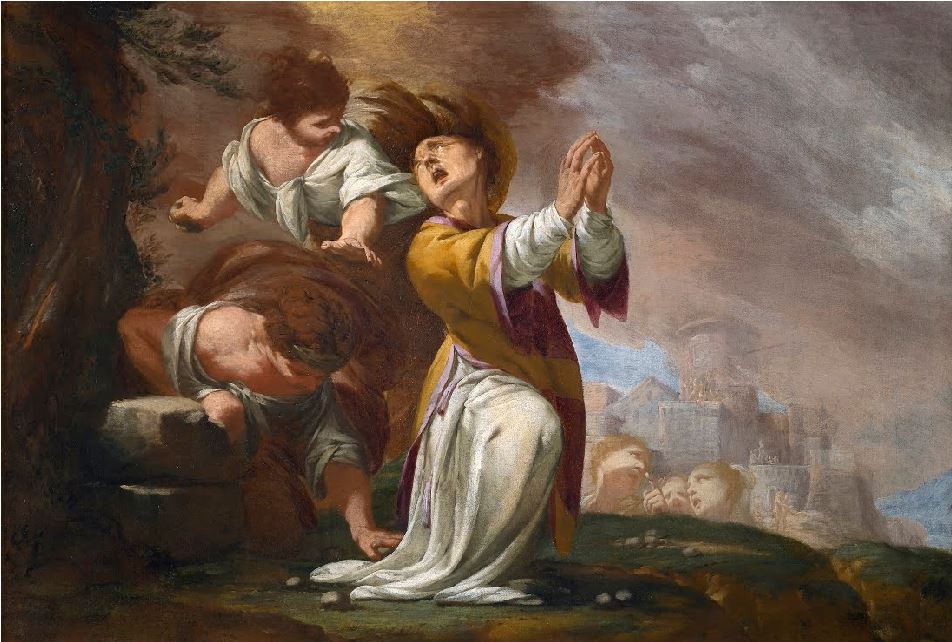
It was an epiphany.  My wife has, on more than one occasion, accused me of playing the martyr.  I know very well that I let other people step all over me.  The epiphany came when I was reading about Stephen’s martyrdom in the Acts of the Apostles (in the New Testament).  Unbidden by me, a memory—more of a distinct impression, a deeply planted feeling—arose.  I started reading the Bible at a young age.  The story of Stephen is disturbing to a child.  The thought of being stoned to death for saying what you believe is a species of horror.  The memory, or impression, was of my mother pointing out how good it would be to be like Stephen.  He is not technically my namesake, but since there were no male role models in my family, I subconsciously made the connection: Stephen the martyr, Steve the martyr.

Giovanni Battista Lucini – Martyrdom of St. Stephen, public domain. Source: https://artsandculture.google.com/asset/martyrdom-of-st-stephen/twGNCf3waLKDvA via Wikimedia Commons

It’s strange to realize this suddenly after half a century of not consciously recollecting it.  What we teach our children stays with them.  If we tell them that it’s good to die for your beliefs, well, we shouldn’t be surprised when they grow up with strong convictions.  (My brother tells me that Virgos think they’re always right and that’s why we’re stubborn; is it the stars or is it the Good Book?)  The Bible puts a positive spin on Stephen’s death.  Formal sainthood isn’t a biblical concept, but he dies forgiving his murderers.  It struck me there in the middle of a working day.  Some of my subconscious personality traits floated to the surface.

My deep desire to avoid Hell also formed my young outlook.  Although my beliefs have to be held accountable to what I’ve learned over decades of study, that fear never departs.  This too was planted in me before I had any real concept to absorb it.  When I grew old enough, the horror became academic, but nonetheless real for it.  I’d studied the history of Hell and I knew New Testament secrets.  To avoid the bad place, be like Stephen.  The dilemma is that as life goes on, we continue to learn.  Young parents don’t know as much as old ones do.  And since we have to teach our children not to run out into the street, or not eat that thing they found, we cast ourselves as The authority.  And that includes things religious.  If we live an examined life, we see shades of nuance where once there was only certainty.  And sometimes we have epiphanies.


The Sin of Syncretism

Syncretism may not be dead, but it should be.  What is it?  Well, in my field it means a religion that has been “corrupted” by the adoption of some element(s) of another religion.  The term was all the rage while I was working on my doctorate which involved, of course, comparative religions.  By the time I was being edged out of academia, there was a recognition afoot that the concept of syncretism was itself corrupt.  It depends on the idea that there is a “pure” form of a religion and that foreign elements debase it.  There is no pure form of any religion, and the more we learn of the history of religions the more obvious it is that religions influence each other, and have always done so.

What prompts this post is that I increasingly see clergy using the term “syncretism.”  Now, clergy tend to run behind scholars by a fair pace.  Those of us out there trying to figure out what religion is and how it works have a daily duty to analyze and reassess and theorize.  Clergy have many other things to do and read scholarly tomes as time permits.  Syncretism is now only used by conservative scholars who believe a religion (usually the form of their religion that they personally happen to believe) is pure.  Other religions are corruptions.  Ironically, I once heard a Unitarian Universalist minister use the term.  For a religion that accepts all other religions as valid, it struck me as odd.

Photo by Noah Holm on Unsplash

As I used to tell my students, nobody knowingly believes “the wrong religion.”  By far the majority of people accept the religion that their parents taught them.  Often without question.  I know I did.  Then I studied religion.  I began to realize things weren’t as simple as “that old time religion” pretended they were.  Fundamentalism borrows from other religions just as much as any other tradition does.  Religions don’t have sharp boundaries.  There are fuzzy edges between them.  Those edges are permeable and quite wide.  Syncretism was a concept that religion scholars used, often in the context of monotheistic religions, to show where impurities entered.  The thing is, impurities were there from the conception on.  If one religion were born fully grown from the head of Yahweh, it would be obvious, wouldn’t it?  The Bible describes the religion of Israel and how it borrowed and adapted from other traditions.  Thus it was in the beginning, is now, and ever shall be.  The world would be a much better place if we made our peace with this and buried syncretism in the graveyard of obsolete ideas.


Naming Names

I recently saw a story suggesting that Elon Musk was named after the leader of a Martian colony in an unpublished novel written by none other than Wernher von Braun.  Now, I don’t know if this is true or not, but it did get me to thinking about names.  The awesome responsibility that parents have in naming their kids.  I suppose many people don’t think much of it, but I remember asking, at a young age, why I was named “Steve.”  (There’s no “n” at the end, despite what people throughout my life have tried to “correct.”)  An old belief suggests that children might emulate those they’re named after.  Of course, some of us just can’t let things go.  Nobody else in my family was named “Steve,” and being very Protestant, I wasn’t named after no saint.  (Besides, he was Stephen.)

My mom told me a couple of things.  First of all, she wanted to name me after her father, Homer.  As an adult I think it might’ve been worth the childhood beatings I’d have to have taken, but my father vetoed it.  “Steve” was taken from a character in a Dick Tracy cartoon.  Mom liked the sound of it and my father didn’t object.  I’ve never read Dick Tracy—I’m not much of one for newspapers in general—but I did see that Warren Beatty movie back when it came out.  Once I tried to find a character named Steve in the cartoon line-up and I did find that there was a criminal by that name at one point.  Mom never told me this and I only found it as an adult, after I’d already decided against a life of crime.  But still, names sometimes inspire behaviors.  Influence choices.  Don’t they?

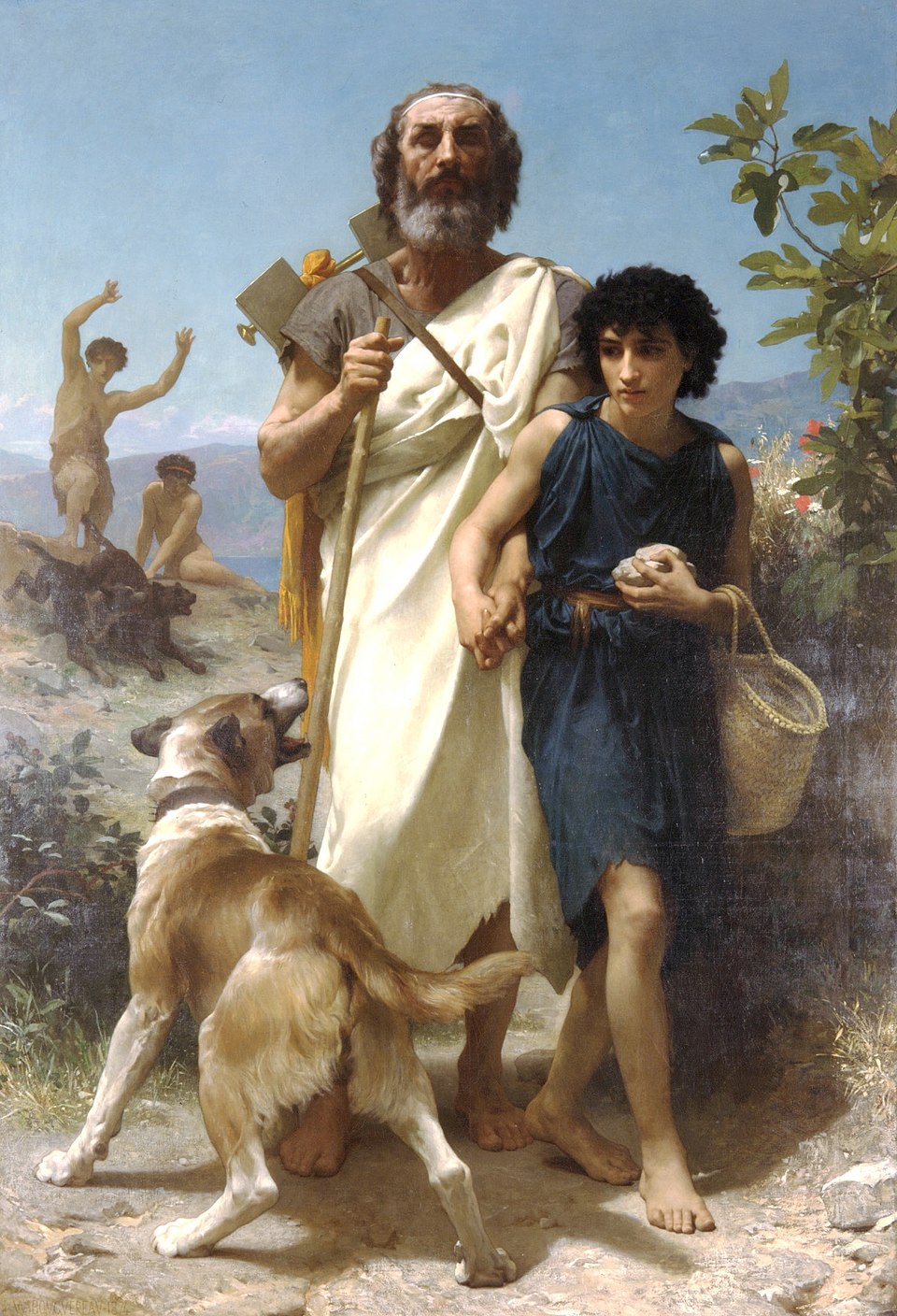
Homer and His Guide: Image credit: William-Adolphe Bouguereau, public domain, via Wikimedia Commons

Children named after their parents sometimes follow in their footsteps.  Or those named after a great person in history use that in their internal monologue as they try to attain similar things.  Now, I haven’t researched this—I’m just guessing here.  But for many years it was unusual to find a German boy named Adolf.  There are also names that are retired for someone being, say, the son of God.  Mom swore it was wrong to name a boy “Jesus,” even in admiration.  She didn’t know that the Anglicized Hebrew name was actually “Joshua,” common then as it is today.  Homer was a pagan, and I wondered how my great-grandparents came up with that name.  The best I can figure is that they were from upstate New York and there’s a town called Homer in Cortland County.  And I wonder if he ever asked his parents why he was named that way.


What You Believe

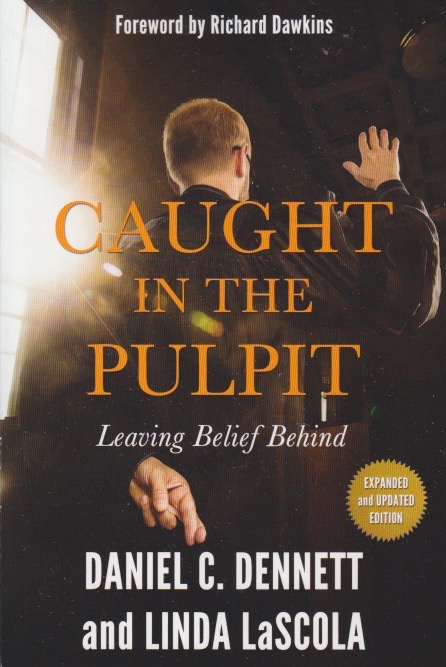
This is an important and frustrating book.  I just can’t figure out if the black-and-white thinking is disingenuous or if it was really believed.  I don’t mean about the subjects of Daniel Dennett and Lisa LeScola’s Caught in the Pulpit.  I wonder that about the near-arrogance of the model they propose while exploring the very real problem of, as their subtitle says Leafing Belief Behind (for clergy).  You see, I’ve read, and even walked a little way with the “new atheists” (my private beliefs are private but one thing I will say is that beliefs constantly change for anyone who seriously seeks the truth.  If you want to know them, get to know me).  This book, which explores clergy and other religious folk who’ve lost their faith, addresses something very real and very important.  It’s just that the framing feels wrong.  I appreciate that the authors exhibit such sympathy for their subjects—it is difficult to change the religion in which you were raised.  But it it’s not black-and-white.

Apart from the “either/or” outlook, there’s also the fact that what many people interviewed lost was not so much a belief in God as it was a belief in the Bible.  These are different things.  No doubt, our love of Bible has caused quite a lot of damage.  Since many believe the Bible to be a magic book, losing that particular lens can make things blurry.  I guess that’s what I missed in this book—a sense of blurriness.  Scientism is a belief system just as fundamentalism is.  Interestingly, I keep coming back to something that should be obvious to scientists—our brains did not evolve to learn “the truth.”  Our brains evolved to help us survive.  There is much we still don’t know.  What’s wrong with being humble about it?  Perhaps it’s sour grapes since I was ousted from a religious career just when this study was taking place, but I didn’t qualify because I believed.  Not that they’d have found me, in any case.

Many clergy, I know, do not believe what their congregations think they believe.  As you go into theological education some things are revealed that it is in nobody’s best interest to broadcast.  It might be good, however, if it weren’t atheists trying to lead the charge.  I was pleased to see Dennett himself suggest this in the book.  I was also glad to see him admit that “the new atheists” do not struggle with the very real issues raised by theological education (whether in formal settings, or through private reading).  There is a very real disconnect here, and this book serves a valuable function in bringing it to public attention.  What’s missing is a solution.


A Christmas Parable

And it came to pass in those days, that there went out a decree from Donald Trump that all the world should be taxed.  2 (And this taxing was first made when American troops were pulled from Syria.)  3 And all were to be taxed, every one to help build a wall.

4 And Joseph had just bought a house in Nazareth, but had to go into the IRS office, unto the city of record, which is called Bethlehem; (because he was of the county of Northhampton:)  5 To be taxed with Mary his espoused wife, being great with child but no insurance.  6 And so it was, that, while they were there, the days were accomplished that she should be delivered at St. Luke’s. 7 And she brought forth her firstborn son, and wrapped him in swaddling clothes, and laid him under a bridge; because there was no housing for them in Bethlehem.

8 And there were in the same country soldiers abiding in their bases, keeping watch over their radar by night.  9 And, lo, drones appeared before them, and the glory of aliens shone round about them: and they were sore afraid.  10 And the ETI said unto them, Fear not: for, behold, I bring you good tidings of great joy, which shall be to all people.  11 For unto you is born this day in the city of Bethlehem a Democrat, which is the Prince of Peace.  12 And this shall be a sign unto you; Ye shall find the babe wrapped in swaddling clothes, lying under a bridge in Bethlehem. 13 And suddenly there was with the UFO a multitude of the heavenly host praising democracy, and saying,  14 Glory to the American ideal in the highest, and on earth peace, good will toward women and men.

15 And it came to pass, as the drones were gone away from them into heaven, the soldiers said one to another, Let us now go even unto Bethlehem, and see this thing which is come to pass, which the ETI hath made known unto us.  16 And they came with haste, and found Mary, and Joseph, and the babe lying under a bridge.  17 And when they had seen it, they made known abroad the saying which was told them concerning this child.  18 And all they that heard it wondered at those things which were told them by the soldiers.  19 But Mary kept all these things, and pondered them in her heart.

20 And the soldiers returned, glorifying and praising democracy for all the things that they had heard and seen, as it was told unto them.

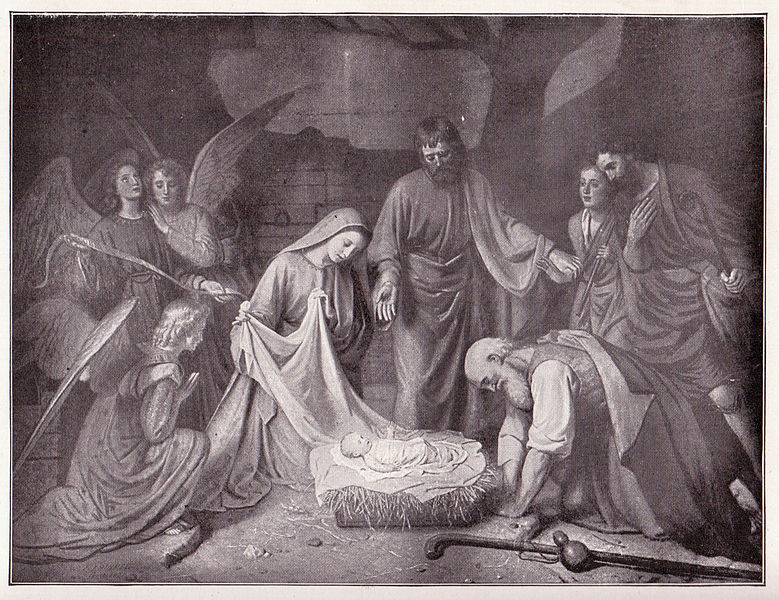
Image credit: The Harmsworth Monthly Pictorial Magazine, Volume 1 1898-9; public domain via Wikimedia Commons

Consciousness Conscience

Not so long ago—remember, I read old books—living to 60 was considered a full life.  I’ve passed that and while I’m in no hurry to shuffle off this mortal coil, I often think of how improved medical practice has prolonged many lives.  This is a good thing, but it does make death a more difficult fact to deal with.  If there is any good that came from my Fundamentalist upbringing, it was that it taught me early on to think about death with some frequency.  I’m not a particularly morbid person, but since we all have to face this, avoidance seems to lead to grief, shock, and acute mental pain.  I tend to consider watching horror movies a spiritual practice.  Little reminders, in case I forget to consider my own mortality today.

Our faith in science is a little bit misplaced.  Sure, it helps enormous numbers of people live longer, healthier lives.  But it may also detract from the necessity of attending to our spiritual lives.  I don’t care if you call it consciousness, your soul, psyche, or mind, but we have a life we’re accountable to, and it’s not all physical.  Since consciousness feels neutral enough, let’s go with that.  We don’t know what happens to our consciousness after death.  There are plenty of theories and ideas about it, but no certain knowledge.  There may be faith, and there may even be some evidence, but it is always disputed.  It does seem to me that facing death squarely on may help take care of at least some of the anxiety.  Fear of the unknown is probably the greatest fear our species possesses, so pondering it may take the edge off a bit.

Some people claim to remember past lives.  Sometimes I wonder if they might be tapping into the great unknown: consciousness.  Perhaps consciousness survives without a physical body.  Perhaps it’s large—expansive—and encompasses far more than we can imagine.  Maybe some people can access part of that consciousness that includes the past lives of others.  We have no way of knowing, but it seems worth thinking about on this All Souls Day.  Of course, I have the advantage of having lived what used to be considered a full life.  In it I have set aside at least a little time each day to consider what happens after this.  Do I have a definitive answer?  No.  I do have faith and I do have beliefs.  And I’m always reflective on All Souls Day.

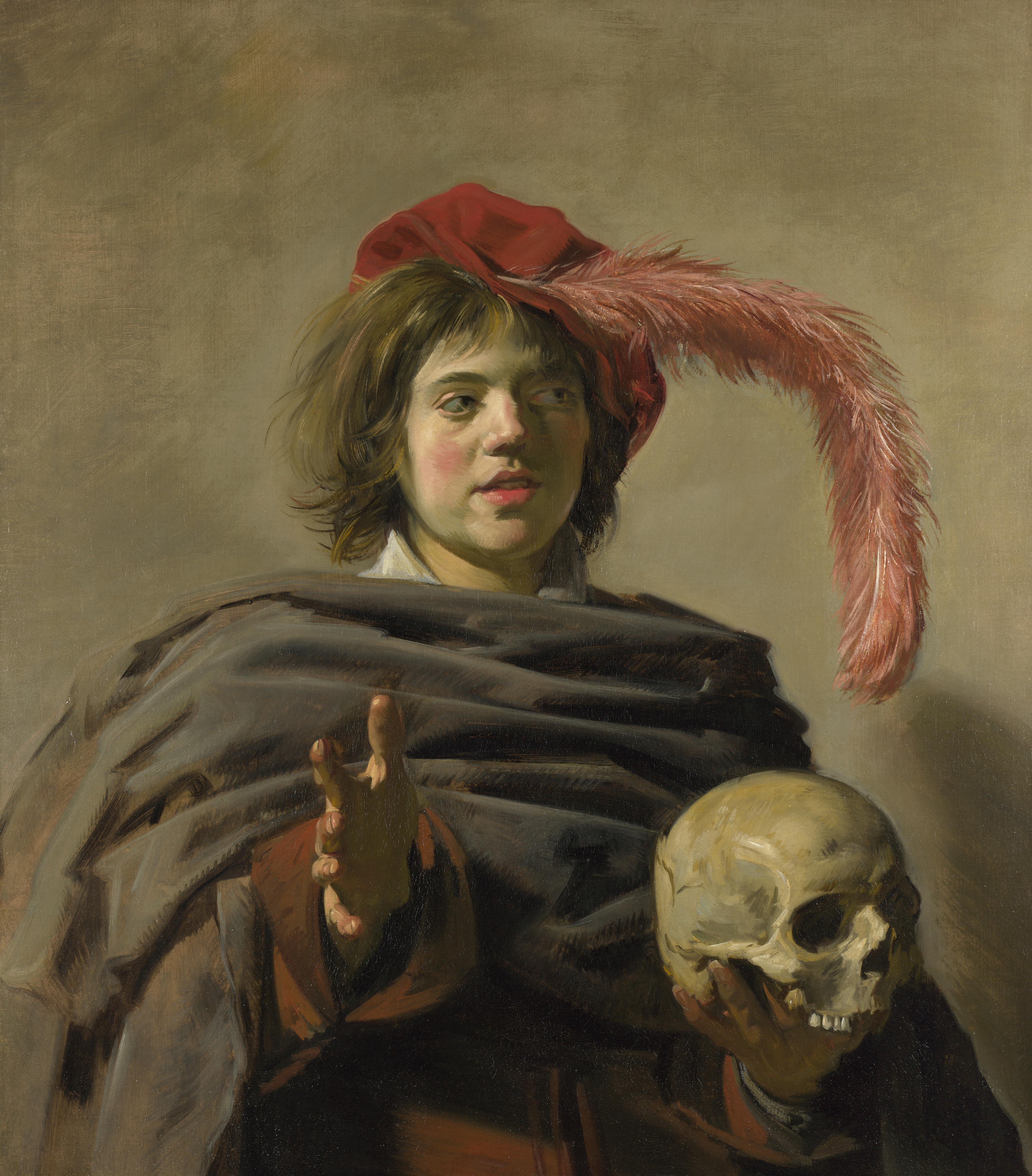
Frans Hals, Young Man holding a Skull (Vanitas), public domain via Wikimedia Commons


Pan Pandering

The Greek god Pan has had a rough go of it.  And I don’t mean that his name is a homophone for an essential kitchen item in English.  No, Pan was mistreated by early Christians, made evil, and then good, before finally being largely forgotten.  We’ll start with the bad and move to the good.  As I discuss in one of my publications, Pan was considered evil by medieval Christians for a few reasons, apart from being a “foreign god.”  First, he was associated with nature.  Early Christians weren’t naturalists.  They were looking to escape the world (a trait that continues to be manipulated by politicians even today).  Not only that, but Pan had goat legs and horns.  While horns could be used to represent any deity, including Yahweh, the combination with goat legs suggested Pan might be demonic.

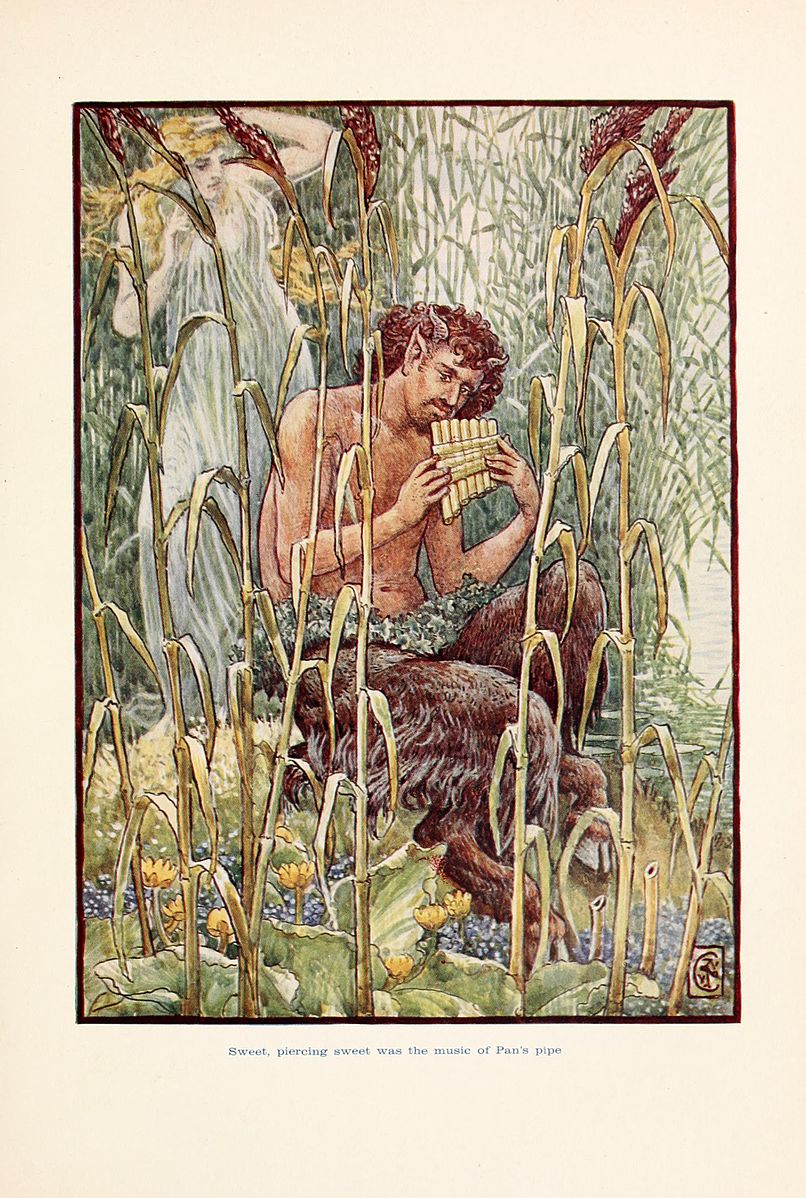
Image credit: Walter Crane, public domain via Wikimedia Commons

Nobody knew what demons looked like.  They are incorporeal, after all.  As I point out in Nightmares with the Bible, the fact that the rarely used Hebrew word for demons is roughly translated to “hairy ones” added to Pan’s sins.  This was a common Hebrew phrase for goats, and over the course of many centuries, when people had the irresistible urge to draw the invisible, they gave Satan the Pan treatment.  Goat lower half and horns on his head.  In many esoteric groups the goat, i.e., Pan, became a symbol of demons.  All of this has a rich and detailed history and it literally demonized Pan.  Yes, he was all for free love, but he was a musician, after all.  Then something interesting happened.  

When the King James Version of the Bible was first printed, the biblical books each began with an illuminated letter.  The book of Psalms began with an L.  This letter was inscribed with an image of Pan.  What the devil was he doing in the Good Book?  Well, by 1611 Pan was considered a type (or foreshadowing, if you will) of the good shepherd.  And we all know who the Good Shepherd is, right?  Not only that but his name, “Pan,” translates to “all” in English.  Since Jesus is “all” to Christians, it was appropriate that he be symbolized by Pan.  This ancient force of nature had gone from being the Devil to representing God.  Indeed, he could, at the same time, be symbolic of both.  Now this is quite an accomplishment for any entity, let alone a rustic god who was never an Olympian.  Pan isn’t much discussed in Christianity today, but he had a fascinating place in its view toward goats, both bad and good.


From God’s Mouth

If book banners would actually read the book they claim to protect, the Bible, they would run across the account of Jehoiakim and Jeremiah.  It’s in Jeremiah 36, if you care to follow along.  Jeremiah was not a popular prophet.  In fact, he was often in trouble for speaking what God told him to say.  He wasn’t wearing a “Make Israel Great Again” cap.  In fact, his message was that the kingdom of Judah had to fall in order to be restored.  So in chapter 36 he dictates his message, straight from God, to Baruch, his secretary.  Baruch reads the words in the temple and this comes to the notice of the royal staff.  They arrange for a private reading and it scares them like a good horror novel.  One of them reads the scroll to the king, Jehoiakim, who cuts off a few columns at a time and burns them in the fire.

My favorite part of this story has always been the coda: “Then took Jeremiah another roll, and gave it to Baruch the scribe, the son of Neriah; who wrote therein from the mouth of Jeremiah all the words of the book which Jehoiakim king of Judah had burned in the fire: and there were added besides unto them many like words.”  Many like words.  So we have book banners around the nation trying to stop children from reading.  The hope is they will become unreading adults because reading expands your mind.  Jehoiakim was a book banner—a book burner, in fact.  But the response from God himself is to write the whole thing over and add many similar words.  

The Bible has been, and still is, fairly constantly abused.  What it seems to be is unread, at least by those who use it to stop other books from being read.  I came to believe, while majoring in religion in a conservative college, that if literalism was truly from God there would be no way to stop it.  I took a route unlike my classmates, who tended to go to the most conservative seminary they could find to have their minds further closed.  I figured that if it was true then testing it by reason couldn’t hurt it.  It’s pretty obvious the way that turned out.  I don’t stand with book banners.  This is Banned Book Week.  Read a banned book.  Stand up to those who do the banning.  And if you need something to convince them that their tactics don’t meet with divine approval, point them to Jeremiah 36.


Spirit Storm

Some time ago, we experienced quite a windstorm.  More than wind, there was a dump of rain, thunder, hail, and all that.  My wife and I were attending a Tibetan singing bowls sound-bath with some others in the cancer support community.  I’ve described this practice before, here.  In any case, the meditation is held in a large room with a tin roof—the kind of place you don’t want to be during a tornado.  We’d just got inside when the gust front hit and knocked out the power.  The instructor still went through the meditation, but the storm sounds blended with those of the singing bowls.  Afterwards my wife asked about Job.  Specifically, God speaking from the whirlwind.  I told her that was God on a bad day, but I understood what she was getting at—there’s a spirituality to the weather.  (I was going to suggest Elijah instead, but “but the Lord was not in the wind.”  Alas.

I thought of Weathering the Psalms.  My contribution to biblical studies, had I been allowed to remain in academia, would’ve been further explorations of weather terminology in the Bible.  But the Lord was not in the wind.  I wrote that book because I noticed the juxtaposition of severe weather with daily chapel at Nashotah House.  We were required to attend, no matter what the weather.  (Such is life on a fully residential campus.)  We were reciting the Psalms one day when a storm blew the power out.  It may have happened more than once, since we’re getting on past two decades hence my memory’s a touch imprecise on the point.  In any case, the spirituality of the power of the storm fascinated me.

It still does.  The next morning, out for my jog, I marveled at the number of branches down.  Thousands in the Lehigh Valley were without power.  This is probably why the ancients considered the storm god chief of the rest.  The violence of nature is something that suggests divinity.  Other primates have been observed screeching back at the sky during thunderstorms.  It’s deep in our DNA.  That doesn’t make it any less spiritual.  There’s a lot of weather in the Bible.  I only explored a tiny piece of it by trying to tackle the Psalms.  The Good Book, however, doesn’t say much about the spirituality of weather.  It’s there nevertheless.  Anything that can snap a tree a foot in diameter like a toothpick has a spiritual message for us.  I mused on the way home—we had to take a detour because of downed trees—that had the storm claimed us as victims, dying while meditating is probably not the worst way to go.  Now I wonder, what might God’s nice words from the whirlwind be?


Mystic Thoughts

Those who know me primarily from my writings on horror are perhaps whiplashed when I muse about spiritual matters.  I don’t mean just religion, but spirituality—the two are quite different.  If life had unfolded differently I would likely have ended up as a mystic.  The problem is “rational mystic” is an oxymoron in most minds.  Either you’re one or you’re the other.  To become a proper mystic, in any case, you can’t be bothered with such things as secular work.  Mysticism—direct encounters with the divine—requires development and practice.  You can’t always control when a trance or vision might hit you.  What if it comes during a meeting?  Say your performance and development review at work?  You see the problem.

I seriously considered becoming a monastic as a young man but I had a problem.  I was a Protestant.  Protestantism was based on the idea that Catholic practices, such as monasticism, were wrong by default.  Miracles don’t happen—haven’t done since New Testament times—and God is a biblical literalist.  Why spend valuable church funds, then, on establishing monasteries?  Still, mystical experiences happened to me.  (You’ll have to get to know me personally to find out more about that.)  I talked to my (Protestant) professors.  “You don’t want to become a mystic,” I was told.  “They always have trouble with the church.”  Eventually I became an Episcopalian, a tradition that was more open to mysticism.  It became clear in 2005, however, that the Episcopal Church wanted nothing more to do with me.  Besides, I’m a family man.

Monasteries for married folk is an idea whose time has come.  Monasticism is based on the idea that you need to isolate yourself from the world’s distractions to grow spiritually.  To me, as I noted recently regarding sacraments, the “distraction” of marriage isn’t the problem.  It’s the constant need to earn money.  More and more money.  Monasteries became wealthy because other people were glad to pay money so that someone else could do the spiritual heavy lifting for them.  You can get into Heaven on borrowed virtue.  (Even Protestants believe that.  If you doubt it, get a degree or two in theology and you’ll see.)  So why not provide monasteries for those poor souls that just don’t fit into the capitalistic ideal?  I have the vision that such places would become havens for artists of all stripes.  And that, with the goodwill of society, locations where your needs were met for an exchange of goods—building good spiritual karma for a world where most people are content with trying to get rich—might just work.  It’s an idea whose time has come.  Who’s with me?

Photo by Luís Feliciano on Unsplash

Saint Material

Miracles don’t often make the New York Times.  The Gray Lady was reluctant to release stories about verified UFO cases, for crying out loud.  But the story about a twenty-first century saint made me pause.  Well, Carlo Acutis isn’t technically a saint yet (at least he wasn’t at the time of the story), but you can’t become a saint without miracles.  Miracles are difficult situations for which to set up a control group.  Often they involve human beings and we really don’t understand ourselves well enough to say what might be supernatural from time to time.  All we know, at least from the “educated” establishment, is that materialism accounts for everything so miracles don’t happen.  QED.  That’s why I found the account of Carlo Acutis so interesting.  A story about a young person dying from leukemia is always sad, but this report doesn’t end there.

In his brief life, Acutis tried to bring good into the world via the internet.  In this shadowy realm where trolls and hatred thrive, here was a young man trying to spread positive things through this collective of anybody who can afford connectivity.  That does make a remarkable news story in and of itself, but that miracle.  Two, in fact.  Catholic practice is not to assign sainthood without out two very carefully studied miracles.  The Vatican has been involved with science for many decades.  The idea of the Big Bang, after all, derived from Georges Lemaître, a Catholic priest and physicist.  Controls are set up for miracles, and the church even used to use Devil’s advocates to try to disprove miracles in such cases.  Skepticism was an essential part of the process.  In its own way this is the scientific study of miracles.

The miracle that may put Acutis over the top, according to the Times, is a spontaneous remission of a brain hemorrhage after a prayer was made to the young man.  Such things happen and doctors can’t explain them.  We as human beings have no way to determine what actually causes such unconventional healings—miracles—often deemed impossible by medical science.  A saint is as good an explanation as any other.  What’s fascinating here is that this miraculous recovery in all likelihood would’ve been overlooked by the New York Times, had it not been for this pending sainthood case.  Such cases as this aren’t everyday occurrences, but they reflect realities that modern people may be very slow to acknowledge.  They still do happen, whether they make the papers or not.  Perhaps our world would be a bit better if they did get reported a little more often.


Monopoly by Statute

The Bible is an odd book.  It is foundational for the modern world, no matter how much we might want to deny it.  Even so it’s a strange book.  The King James Version (KJV) of the Bible is a masterpiece of English literature.  There’s not one King James Version, however, as several variants exist.  Nevertheless, the KJV remains quite popular among some religious groups and it is still studied in English Departments as part of our cultural heritage.  It is also in the public domain, which means anyone can print and sell it.  Unless, of course, you wish to do so in the United Kingdom.  Here’s where the story gets interesting.

Because of England’s troubled religious history—remember the whole Catholic v. Protestant monarch thing?—the printing of religious books became a contentious issue shortly after the adoption of the printing press.  In 1577 a monopoly on Bible printing went to one man, Christopher Barker, the Royal Printer.  Ostensively to control the version of the Bible approved for use in the Church (of England), this royal privilege became law.  In perpetuity.  Now rights, as commodities, can be bought and sold.  And this happened from time to time.  Cambridge University, however, had been granted a royal charter earlier—also perpetual—to print “all manor of” books.  Since this arguably included the Bible (a lucrative business) it wasn’t prevented from printing them as well.  Oxford University was granted a similar charter some years later and so the two ancient universities and the Royal Printer were the only ones allowed to print the Bible for sale in the United Kingdom (except Scotland, but that’s a story for a different time).

Image credit: Daniel Nikolaus Chodowiecki, public domain via Wikimedia Commons

This privilege, which still exists on the books, did not apply to later versions of the Bible.  The KJV became wildly popular and really wasn’t challenged much for over two centuries.  By the nineteenth century British lawmakers, presumably, had better things to do than argue about who could print the Bible.  Meanwhile other translations divided and conquered the profits coming in from the sale of what had been, in essence “the” English Bible.  As late as 1990 the Royal Printer status landed with Cambridge University, so the sale of rights continues.  A similar story accompanied the Book of Common Prayer, which has always been in the public domain but can only be printed in the UK by the two major university presses.  The story of the Bible is a fascinating one, and since it has shaped western civilization, it seems appropriate to give it the last word: “where your treasure is, there will your heart be also.”


As We Know It

The end of the world, as we know it, is really more recent than we think.  Yes, Christians of a certain stripe have been looking for the second coming since the first leaving, but that detailed map of how we’re living in the end times, courtesy Hal Lindsey, is a new thing.  Here are the fast facts.

First and second centuries, Common Era: early Christians tended to think Jesus would “be right back.”  When that didn’t happen they began to look in the Bible for reasons why and started to develop theologies to cover the bases.

Late Antiquity to the Middle Ages: settled in for the long haul, theologians developed eschatology.  Although that sounds like a disease, it’s actually a system for thinking about how the end of the world will come down.  There were conflicting theories.  The two main flavors were premillennialism and amillennialism.

Early Modernism: Protestants came along and searched the Bible for minute clues to make into a system.  In response, postmillennialism became a thing.  Now there were three options.  Various phases were discussed: tribulation, resurrection of the dead, and the already-met millennium.

1820s: William Miller, a Baptist minister, began number-crunching and figured the end of the world would take place by 1843.  His followers, “the Millerites,” continued on after what was called “the Great Disappointment.” 

1830s: John Nelson Darby, a Plymouth Brethren leader, came up with Dispensationalism, a scheme that divides history into eras, or “dispensations.”  He thought we were living near the end of that scheme about 200 years ago.  The idea of “the rapture” was added to the other phases.

1917: Cyrus I. Scofield, published the Scofield Reference Bible.  A man with little formal education (and a “colorful” background), he applied Darby’s dispensations in his Bible, giving the United States a road map to the end times.

1970: Hal Lindsey, a seminary educated evangelical, published The Late, Great Planet Earth.  It became the best selling book (classified as nonfiction) for the entire decade.  New ideas, such as “the Rapture” and “the Antichrist” began to be read back into the Bible.  The book was made into a movie.

1976: David Seltzer, a Jewish screenwriter, penned The Omen.  The movie made use of Lindsey’s adaptation of Scofield’s adaptation of Darby’s ideas.  The wider public, seeing it on the big screen, believed it was about to happen.

2000: the world still didn’t end, either with a second coming or Y2K, as many predicted.  Round numbers will do that to people.  It didn’t stop predictions of the end of the world.

2012: the Mayan calendar gave out.  A movie was made.  People believed. Apocalypse averted.

2024: you fill in the blanks.

Image credit: Albrecht Dürer