Hellish Fears

Aporripsophobia, the fear of rejection, and the fear of punishment (mastigophobia, or as I prefer, “spankophobia”) are closely related.  They define me.  Much of this comes from the fear of Hell, which I internalized early in life, along with the Calvinistic theology that backed it.  Some have thought that I’m “thin skinned” or afraid of criticism.  That’s not quite it.  I’m afraid of what criticism implies—I did something wrong and therefore may be punished for it.  What brings this on, all of a sudden?  Well, as I was getting ready to jog the other day a police car stopped in front of our house on a routine traffic violation.  My immediate thought was that I had done something wrong.  They were here for me, not the guy whose car they were attending.  Then this brought back that time in Boston.

I moved to Boston on my own, with all I had in a VW Beetle (old style).   I know now that the headache I had after that long drive was a migraine.  (I’ve had maybe a half-dozen in my lifetime, and they’re unmistakable.)  I parked the car, stumbled into my new apartment and went to bed.  The next morning I had a ticket for parking with the left tires to the curb (against the law in Boston).  I didn’t know it was illegal.  Even with a migraine I would’ve not parked that way had I known.  The receptionist at the police station actually said to me “Ignorance of the law is no excuse.”  That terrified me.  I thought it was only something Gilligan said.  If you don’t know all the laws how can you possibly avoid punishment?  And isn’t punishment rejection?

Some think I always have to be right.  They may not know the underlying cause—being wrong is to be subject to punishment.  And punishment leads to Hell.  When I was in Kindergarten the first time, I was held back partially because I was four but partially because I colored the triangle in the left corner purple instead of yellow, opposite to the verbal instructions.  It was because I don’t know my right from my left—I still don’t.  To me that first ever school correction was seared forever into my gray matter.  I’d done something wrong.  I was held back in school.  More likely than not, I was going to Hell.  I’ve known people to suggest, as does Richard Dawkins, that raising a child in a religion is child abuse.  I understand parents’ motivation, however.  You don’t want your child to go to Hell.  If they end up living in it all their lives I guess it’s a small price to pay.

Photo by Vadim Bogulov on Unsplash

Bigger Picture

One of the quirks of my thought process is that I tend to look for the bigger picture.  I’ve always done this and I suspect it drives some people batty when they ask me a question and I begin to answer from what seems to be a tangent.  (I also think this is why I performed well in the classroom.)  So, when I saw the article by Eric Holloway on Mind Matters, titled “Why Is Theology the Most Important Empirical Science,” I had to take a look.  Mostly a series of bullet-points that point out some of the religiously-motivated ideas that led to scientific discoveries, the article is useful.  My penchant for the big picture goes a bit broader, however.  The entire worldview in which the scientific process was born, and thus its underlying presuppositions, are religious.  Science and religion are the dogs and cats of the thought world but I’ve seen dogs and cats live happily together.

Science has always been with us.  Early peoples weren’t benighted troglodytes.  They observed, hypothesized, drew conclusions.  Science as we understand it, however, began in the Middle Ages in Europe, drawing on observations from earlier thought in the Arab world.  The context in that Arab world was solidly Muslim.  The Middle Ages in Europe were solidly Christian.  None of this discounts the contributions of Jews to the whole, it’s merely an observation regarding the larger cultural outlook.  Many of the principles of science even today (for example, that people are categorically different from other animals) are based on those religious worldviews.  We seldom go back to question whether we might’ve gotten something fundamentally wrong.  Meanwhile, the dogs began to chase the cats.

College as a religion major involved a lot of discussions about basic presuppositions.  Then questioning them.  Not much of this went on in the classroom (Grove City was, and is, a conservative Christian school).  The wonderful thing about higher education is the bringing together of people with different outlooks.  It was those after-hours conversations that helped form my questing nature.  I’d already started asking bigger questions when I was a child, annoying my parents and, I suspect, sometimes vexing clergy.  A single human mind is too limited to grasp it all, but it seems to me to deny religion a place at the table is to leave out massive amounts of human experience.  Of course, economics, the dismal science, seems well on the way to eliminating the study of religion in higher education.  And we will have lost, if this happens, a large piece of the bigger picture.

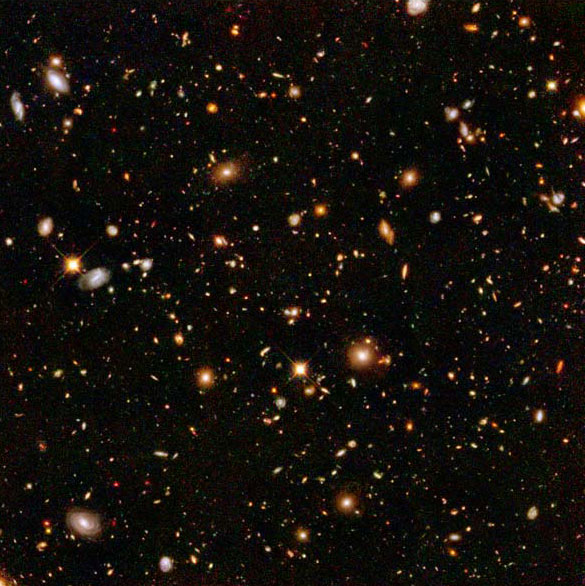
Photo credit: NASA

Look Both Ways

One of the things I miss the most about my teaching career is learning from the young.  While some professors in my experience believed the learning only went one way, I always found a kind of reciprocity in it.  I passed on what I learned from taking classes and having my face in a book all the time, and they taught me about popular culture.  Academics don’t get out much, you see.  It’s a basic issue of time—we all have a limited amount of it and research, if done right, takes an incredible chunk.  In fact, when hot on the trail of an idea, it’s difficult to think of anything else.  Pop culture, on the other hand, is what the majority of people share.  Now it’s largely mediated by the internet, a place that some academics get bored.

Speaking to a young person recently, I was initially surprised when he said that his generation was more interested in the Devil than in God.  Parents have always been concerned that their children not go astray, but this was, it seemed to me, more of an intellectual curiosity than any kind of devotion.  God, he averred, was thought of as aloof, pious, self-righteous; in a word, Evangelical.  The internet can be downright ecclesiastical in its affirmation that our inclinations can be what used to be called “sinful.”  Not that these things are always bad, but they are the kinds of things we’re taught to feel guilty about.  The divine response?  Anger.  Displeasure.  Shaming.  Young people, my interlocutor thought, found the Devil more understanding.

Perhaps this is the ultimate result of Evangelical thinking.  We’re watching in real time as the party of Jesus is becoming the party of intolerance for anyone different than ourselves.  Rather than turning the other cheek, it’s fire when ready.  Eager to retain the “brand” of “Christianity,” they slap the secular label on any outlook different than their own, although their own faith is without form and void.  It used to be that this was the realm of the Devil.  This sheds a different perspective on what my young colleague was saying.  Instead of bringing people to God, the Evangelical movement is driving them away.  Traditionally, the Devil was after the destruction of human souls.  That seems to be one of the new values of the right wing of the church.  There’s quite a bit to think about in this observation by this young one.  I’m glad to know that traffic still moves both directions on this street.


On a Wager and a Prayer

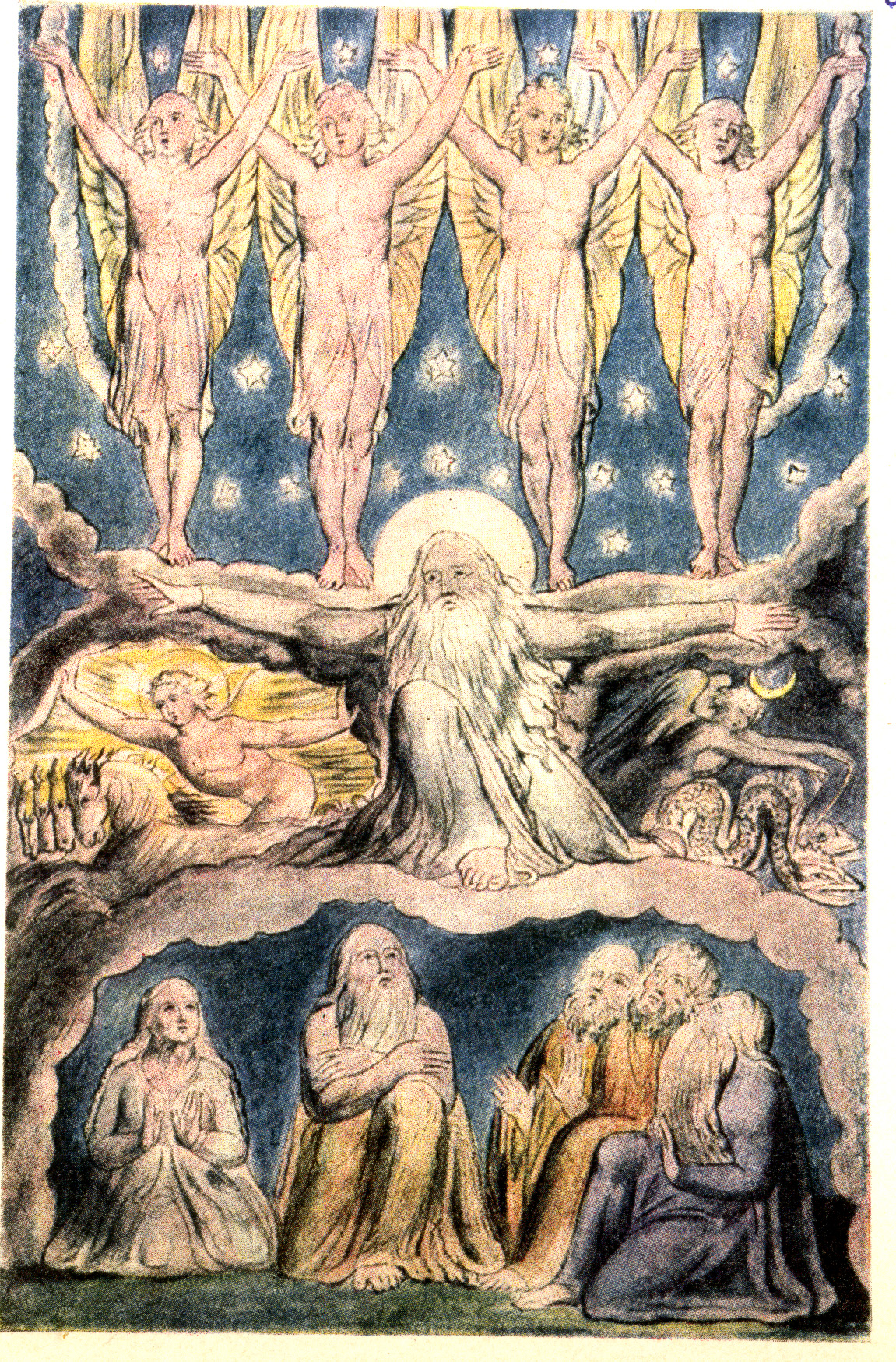
I’ve been thinking about Job a lot lately. Not my job, but the biblical book. Way back when I was preparing my initial classnotes on Job, I remember a commentator—I forget who—stating, as commentators are wont to do, that people have strong reactions to Job. Either they love it or they hate it. I have enough imagination to consider some people being somewhat ambivalent about it, but I have observed many people over the years revealing powerful reactions to this Wisdom book. One of the reasons, I suspect, is that God doesn’t come off looking particularly good in this story. This was recently reintroduced to my awareness in Steven Cahn’s God, Reason and Religion. The reader, unlike Job, knows the real reason for Job’s suffering. It was a divine wager, instigated by God, that Job would not curse him even if allowed GBH by the Satan. We know, however, and we are culpable for that knowledge. It puts a burden on the reader.

BlakesJob

When God does explain to Job why he shouldn’t question God’s acts, as Cahn points out, the answer rings hollow in the knowledge of the truth. God can’t admit to Job that he was playing fast and easy with his health and the death of his ten righteous children. A roll of the dice and Job is vulture-bait. The book of Job should make us squirm. We base our morality, we are often told, on the ideals of the Bible. If we were Job, who ends the book never knowing about the bet, we might be content. But the author, with a sly wink to those who face life squarely, points out that this is all a charade to justify God’s confidence in one of his many carroms. I suppose that might be small comfort to the pawns.

For Job there is no answer given to why he suffers. He doesn’t even really ask why—God’s right on that count, Job is very good. Yet the reader is not so lucky. How can we gain any comfort knowing that God sometimes lays us on that altar, not for any just cause, but as a wager against the divine prosecutor? No, the Satan in Job is not the Devil. He too is a divine character, an attorney borrowed from Zoroastrian mythology. He’s just doing his job. His Job. He is present to make us feel our guilt. And if Job, who the Bible itself says is perfect, can barely restrain his soul from cursing, how much of a chance do the rest of us have? There are many who hate the book of Job. I am not one of them. A more honest book I have a difficult time imagining. If it comes to justice in this world, however, I wouldn’t bet on it.


Rational Religion

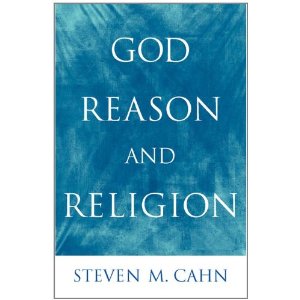
GodReasonReligionGod, Reason and Religion, the title of Steven M. Cahn’s book, fit uneasily together. Or so it would seem. Cahn, a philosophy professor, collected together in this little book a set of sixteen short, provocative essays keyed to major topics of the philosophy of religion. I’m always skeptical when I see Reason and Religion together on a book cover. It seems like an unholy plotting is going on. Perhaps it’s because those of us who study religion are often classed together with those who use slipshod techniques to “study” a subject they’ve already made up their minds about. Any scientist who’s seriously tried to learn Akkadian might have to reevaluate that premise. Happily, Cahn is not trying to promote such an idea. He states in the introduction, “My conclusions may be surprising, for although I am not a traditional theist, I find much to admire in a religious life, so long as its beliefs and practices do not violate the methods and results of scientific inquiry.” For books with Reason and Religion on the cover, that can be quite a concession.

One of the biggest faults of religions is their lack of introspection. That is a gross generalization, I know, but there is truth in it. Most religions have been severely challenged by the empirical method. Reason, it turns out, can explain most of what required one—or a multitude of—god(s) to accomplish. At the same time, religion makes people feel secure and happy. My experience of science has often been enlightening, but decidedly prickly. I’m sure I’m not the only one. Nevertheless, Cahn takes the reader through a maze of ways to think about religions from different angles. What is the tie between religion and ethics? How do we tell a good deity from a bad one? What is faith and is it a safe bet? Do miracles happen? These kinds of questions, when viewed rationally, don’t always have the dreadful results so often feared. So maybe the laws of physics aren’t violated, but that doesn’t mean you have to stop praying. Did I mention that Cahn makes concessions?

We are the cultural children of our logical, Greek forebears. They taught us to trust our reason and we’ve developed that to a high skill. Yet reason has its limits. Consider the Republican Party, for instance. Or Snooki. In life not everything adds up. Facing their final moments, few have the fortitude to keep their thoughts purely on the rational. What lies beyond we just don’t know. Science has no way of answering. So Reason and Religion should get along. There may be more than one way of knowing, and some things in our world may bridge that deep gulf between Reason and Religion. That bridge may sometimes be difficult to find. If you decide to seek it out, however, I would recommend taking Cahn along for some good reading. Even the most serious search must offer some concessions.


Religious Democracy, Media Style

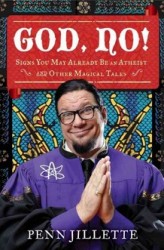
A delightfully witty book review appeared in yesterday’s newspaper introducing Penn Jillette’s book God, No! Signs You May Already Be an Atheist and Other Magical Tales. Having just learned of the book I’ve not yet read it, but I am intrigued. Penn Jillette is best known as the talking portion of the magic-debunking duo Penn and Teller. Having forged a career of exposing false claims to the supernatural mystique of stage magic, Penn and Teller delight in bucking the orthodoxy of the guild and showing that anyone clever enough can fool many people into believing what they know can’t be true. They are exploiting, of course, a phenomenon that neuroscientists have been exploring for a number of years: human brains retain belief even in the face of disproving evidence. Many religious believers call it “faith.” According to Hank Gallo, author of the review, Jillette uses his book to endorse atheism as the only real option for a thinking person. The book is generally categorized as humor.

Although Bill Maher’s Religulous makes many good points from a similar perspective, one of the haunting realities poised for religious specialists is almost a chiaroscuro with excessive contrast. It takes no special training to be a religious specialist. That is hard news to hear for those of us who’ve spent over a decade of our lives and thousands of dollars learning the trade. Comedians and others who are famous will impact far more people than this little blog ever will. Rick Perry can call together thousands to pray to pave his way to the White House. Maher and Jillette can poke fun at religious yokels and scholars will sit at their desks ignoring the crude efforts of those who have no training. There is no doubt, however, as to which will reach a wider audience.

Harry Houdini famously debunked spiritualists in his day. Like Penn and Teller, he was a stage magician who recognized that people could be easily fooled. He was able to expose mediums that scientists and academics of his day failed to uncover. It seems that those with access to the most basic of human desires—the will to believe—gain credibility more readily than an erudite yet obtuse specialist with several odd initials after his or her name and several obscure books to his or her credit. Those in the media have direct access to the mind of the public. If the tent is big enough the whole town will show up for the circus. The truth may be out there, but the minds of the public are won over by those who entertain, not those who bury themselves in dusty tomes and seldom see the light of day. The fact is people want to believe. Until a better alternative is offered, we might prepare ourselves for a long round of Texas Hold’em and a Tea Party or two.


Inventing God

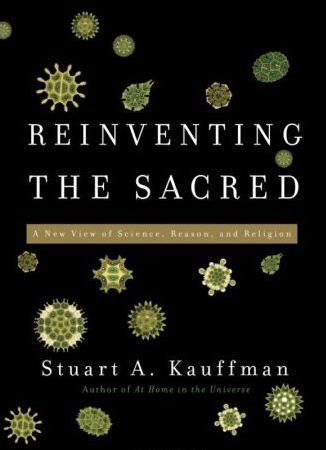
Reductionism has been a hallmark of science for many years with the most extreme forms suggesting a kind of cold determinism in the universe. Having known since my undergraduate days that science is the key to knowing, yet having the experience of believing as well, I wondered how they fit together. If they fit. I have just finished reading a very important book on the topic – Stuart A. Kauffman’s Reinventing the Sacred. A theoretical biologist, Kauffman has come to the conclusion that reductionism cannot account for many aspects of the world we actually experience. Evolution, biologically as well as culturally, demonstrates again and again a creativity that cannot be predicted, no matter how much data is acquired. Kauffman suggests that this non-reducible creativity is what might properly be called “God.” Not a believer in a transcendent creator God, Kauffman does not wish to remove the God meme from our psychological vocabulary, but to reinvent it.

In many ways, I found Kauffman’s work to be some of the most affirming science writing I’ve ever read. He believes there is a place for creativity in the overall human experience of knowing and being. Values are not simply arbitrary points selected by people, nor are they imposed on us from a personified God. Values and beauty are emergent phenomena. As Kauffman argues, they are clearly and blatantly real, but not reducible to physics. He also demonstrates that economics falls into the same category of real but non-reducible. As a researcher in complex systems, Kauffman quickly left me in the dust when he reached the more theoretical material. I am not equipped to assess his scientific conclusions. Overall, however, his book possesses a rare sort of urgency for a scientific exploration, and it values the whole of the human experience.

Demonstrating that ethics emerge not from “on high” but from a human sense of value and “right,” Kauffman suggests that we desperately need a global ethic to realize our full potential. In the ongoing debate between science and religion, Kauffman is a voice of both reason and compassion. Science is the way we know – there is no point in debating that. If you are reading this on a computer, Q.E.D. If you are a human being, then you have also experienced the phenomenon of believing, whether or not it is religious. Kauffman has addressed the question directly and has given both specialists in science and in religion a trenchant analysis of an intractable issue. His irenic approach is to be applauded, and hopefully, widely read.