For the Eyes

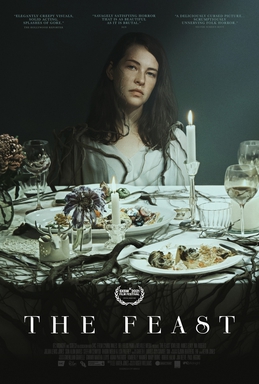
A Welsh horror film?  Lately Euro-horror has caught my attention.  European sensibilities give horror a distinctive flavor, and The Feast doesn’t pull the usual horror tricks.  And reading the subtitles keeps you on your toes.  It’s more a slow build that manages to be unnerving from the start.  A family of four—parents and two boys in their late teens or early twenties—is hosting a feast.  A local girl, Cadi, is hired to help cater the affair.  The family is really seeking to get a neighbor to allow exploratory mineral drilling on her land.  She refuses, horrified when they mention that they’ll only drill on the rise.  The neighbor, aghast, says they know better because they’ll awaken “her.”  The unnamed her is a goddess who is within the rise and who’s been disturbed by the family’s drilling on the land adjacent to their neighbors’ property.

A number of aspects push this beyond Euro-horror.  The goddess, treated as superstition by the family, introduces religion into the horror.  (Cadi, as it turns out, died on her way to the house and the goddess inhabited her body.)  The remote location and role of the countryside also bring this into the folk horror realm.  Having an underlying ecological message, the film is eco-horror as well.  As such it has a positive message, even as all those at the feast, apart from the uncompromising neighbor, die before the evening is out.  Gods will express their wrath.  Although there’s gore, the concept is intelligent and possessed Cady’s unwillingness to speak throughout much of the film adds to the tension.

Horror films with subtitles sometimes don’t work, but The Feast manages pretty well.  Much of the disturbing atmosphere comes from the house.  A modern construction, built over what had formerly been the family’s farm, stands in stark contrast to the natural world all around.  As is often the case in eco-horror, the land is waiting to take its revenge.  It’s a message appropriate for a time when we fail to live up to our own environmental standards, and consider the checks and balances of nature itself as “superstition.”  Maybe a goddess will not awaken and kill everyone at the dinner party, but the wealthy will not be spared, as the movie prophesies.  We share the planet and the earth allows us to survive.  There’s a sense that we deserve to be reminded that living on a finite planet requires careful stewardship of it all.  If you’re going to throw a feast, at least make sure it’s not at the expense of nature.  Some goddesses are best not aroused.


Forgotten Goddess

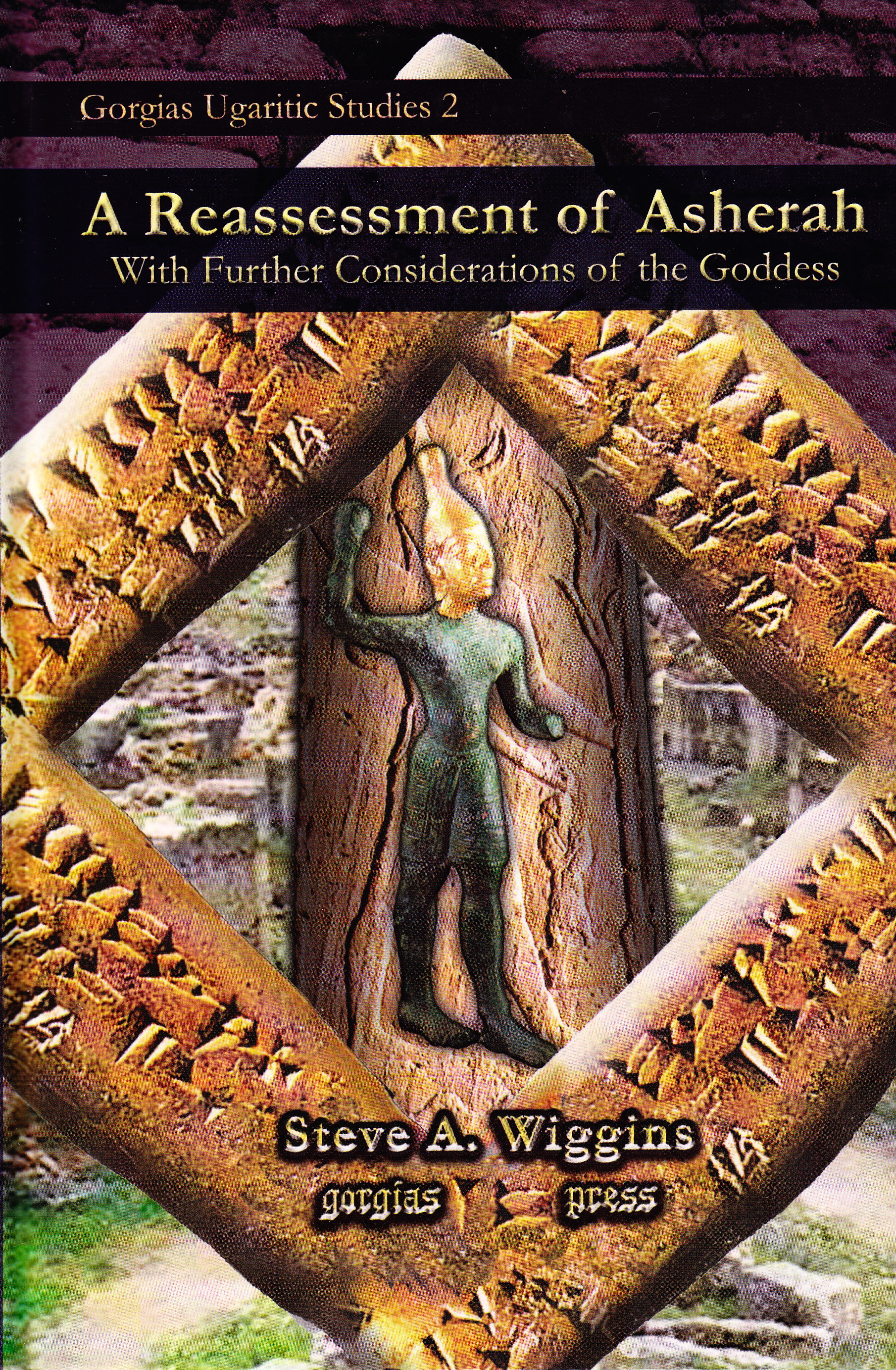
It’d’ve been nice if someone had told me.  If you’re not a professor, though, you’ve lost your importance.  I’ve only written a book on the subject, after all.  Grousing aside, the headline from the Israeli newspaper Haaretz (“The Land”) read “7,500-year-old Burial in Eilat Contains Earliest Asherah.”  Since my dissertation and first book and several articles were on Asherah, I do still have an interest in the old girl.  I’m curious when new material shows up, even since I wrote my book.  Professors, you see, have the time and resources to keep up with things like that.  When your job is acquiring books in a different field, well, who has the time?  I do keep an eye out for headlines, though.  Skimming a newspaper article now and again I can still manage.

So what’s going on in the resort town of Eilat?  According to the article by Viktoria Greenboim Rich, a rescue operation for expansion going on in the city, led to the discovery of a pre-Israelite burial site.  Among the artifacts discovered was the stump of a juniper tree, upright in what appears to be a cultic setting.  In case your chronology’s even rustier than mine, the Israelites show up on the scene roughly 3,300 years ago.  This sanctuary has been carbon dated to nearly twice that age.  We don’t know a ton about what asherahs (lower case) were, other than that they were made of wood, they stood upright in sanctuaries, and they angered Yahweh.  So was this an asherah that was found?  Are they really that old?

It’s an intriguing question.  Writing hadn’t really been invented that long ago.  There were some rudimentary efforts in that direction, perhaps, but Sumerian, the earliest attested written language, wouldn’t show up for a couple of millennia yet.  That means artifacts are unlabeled and there aren’t any texts to describe what they are when we find them.  Did Asherah have a prehistory that early?  We just don’t know.  The trend even since before I was researching the goddess has been to suggest any upright wooden object found in a cultic context is an asherah.  You can hardly blame archaeologists for suggesting that, since wooden objects don’t survive that well in the levantine climate.  We naturally like to fill the gaps.  If this is an asherah then it would’ve been called by a name we don’t know.  Hebrew hadn’t yet evolved by then, as far as we’re aware.  But why else, so the thinking goes, would anyone stick a tree in the ground before telephone poles (those modern asherim) had even been invented?


The Price of Monotheism

Before Christianity (I’m not convinced by Marija Gimbutas’ matriarchy hypothesis, as much as I like it) many cultures recognized mother goddesses.  No disrespect to Gimbutas, but our knowledge of early culture, particularly pre-literate varieties, is sketchy.  There is evidence and we build cases, but we only see part of the picture.  One thing we clearly see is they venerated women.  Early people recognized the divine power in females.  Women gave life and nurture in an otherwise hard and uncertain world.  The earliest art, as far as we can reconstruct, is representation of women.  While we can’t know it, it’s reasonably inferred that such artworks are goddesses.  We do know that by the time the earliest religions appear in writing goddesses were as fully present as gods.  The two “halves” (at the risk of being accused of being a binaryist) of the human experience were fundamental.

Patriarchy casts a ominous hue over the monotheistic enterprise.  In a world where only one deity reigns, it must be thought of as gendered.  This is the human condition, right Xenophanes?  While it didn’t take monotheism to move society in that direction—that seems to be the fault of testosterone—over time male gods dominated.  We’ve been stuck in that world ever since.  I was reminded of this while reading about Danu, the Celtic “earth goddess.”  Danu gave her name to the Danube River, in the Celtic homeland.  She was venerated as the mother of the gods and the mother, in a sense, of us all. 

The point is that Danu wasn’t unique.  Many cultures had similar figures.  Although monotheism didn’t start the decline of mother goddesses, it pretty much spelled their end.  Human religious imagination can only go so far, and gods will always reflect what we think about ourselves.  Monotheistic religions all present themselves as revealed, which is to say they seem to be aware that logic regarding their claims breaks down at some point and then they can invoke the mystery of limited human minds in a landscape with divine knowledge which the cognoscenti claim they alone possess.  Over time these religions inevitably become masculine in orientation.  They may declare their god sexless, but males will always benefit from the legislation.  Claims about the goddess will be branded heresy and offensive to the sexless male true god.  Analysts of religion, generally male, used to claim that, of course monotheism is superior.  This system must be protected with laws and theology.  Others secretly know there is a better way, equally revealed.


Naming Easter

Today, for some, it’s Easter.  Others call the day Pascha, after the Hebrew word pasach, or “Passover.”  At its deepest roots it is a spring celebration timed around the vernal equinox.  The name “Easter,” however, has an interesting story.  All the more so for having missing parts.  There was apparently an Anglo-Saxon goddess named Eostre.  Since these Teutonic peoples didn’t have their own archives we only learn about the April festival dedicated to this dawn goddess from the Venerable Bede.  Being venerable, we tend to trust him.  He tells us that what is called Pascha used to be called Easter because of the goddess and her celebrations.  We’re often left, however, with not enough information about the deities of old Europe because, ironically, literacy had not come to them.

As we move into what publishers are calling post-literary culture, I have to wonder at the losses that will mean for the future.  We all know, deep down, that electronic media are ephemeral.  We just hope our bank accounts stay viable until we die so we don’t run out of money.  In any case, Easter is a good illustration of what historians and those interested in the development of ideas have to do when few written records exist.  We look at artifacts and images and make our best guess.  This is clearly evident in the field of studies of another goddess—Asherah—upon whom I lavished my dissertation.  We do have some written records, but for many scholars they aren’t enough.  We guess that this or that image might be of her, although they’re not labelled.  A similar problem applies to Eostre.

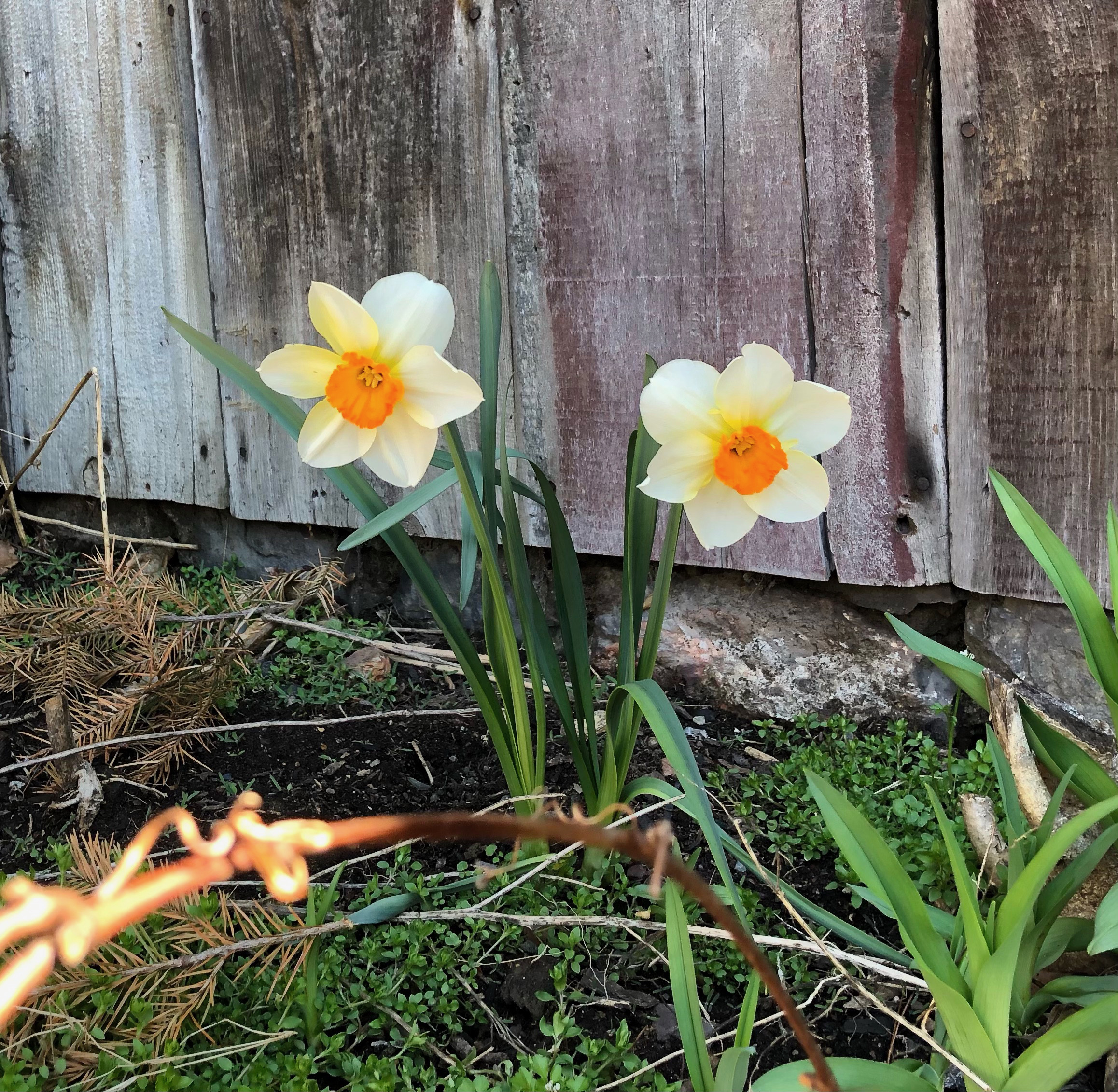
There is little doubt that a goddess named Eostre existed.  It makes perfect sense that she would be celebrated in April.  Before Daylight Saving Time was invented, it was light around 5 a.m. this time of year.  For early birds (historically we were in the majority) it would’ve been obvious.  The goddess of the dawn is coming back to us.  Shining in our eyes as we try to pry a little more slumber from a shortening night.  Early Christians tended to adapt rather than to reject  non-Christian celebrations.  The name of Easter is yet another of those conveniences.  Although it snowed a little around here on what some call Maundy Thursday, today Easter is here to remind us of resurrection.  Life does return and our daffodils, although they may be shivering, have bravely broken through the sod to greet the dawn.


Learning To Fly

It’s perhaps the most deeply rooted human dream.  Flying.  Women Who Fly, by Serinity Young, is a fascinating book.  Subtitled Goddesses, Witches, Mystics, and Other Airborne Females, the book covers all of these and more.  The dream of flying is played out in many ways here, but often the narrative comes back to how patriarchy imprisons women.  Is it any wonder they want to fly?  Very wide in historical scope, the book can’t cover all cases in equal depth.  It nevertheless demonstrates how pervasive the idea is.  Beginning with ancient female figurines bearing bird-like features, Young moves through the related concepts of captivity, transcendence, sexuality, and immortality, showing how female characters are related to these idea in universal and unrelenting ways in the form of flying females.

There are many lenses through which to view patriarchy.  It can be explained as a consequence of settled agricultural existence with its subsequent division of labor.  Such a scenario raises questions of whether women dreamed of flight before that, and I believe the answer must be yes.  For as long as we’ve observed birds and associated the sky with gods we have longed for flight.  Although birds make it look easy, it is an incredibly difficult and costly adaptation.  Still, women dream of travel without obstacles (let the reader understand) to the realms where deities dwell.  It is difficult to summarize a book that covers so much historical territory.  Young doesn’t limit herself to western religions but also spends a fair bit of time among Buddhist, Hindu, and Daoist ideas of flying women.  She covers mythical, folkloristic, human, and historical flying females all the way up to modern astronauts.

As I was coming to the close of the book the real message hit me—I can be thick at times, although much of my own writing is metaphorical—men have actively tried to clip women’s wings for a long time.  Often under the auspices of religion.  Think of it: for centuries of existence the major monotheistic traditions have refused female leadership.  The one (inevitably male) god has set up a boys’ club of sacerdotal leadership.  As Young points out, even the named angels in the Bible are male.  I used to comfort myself with the explanation that male leaders were simply too self-centered to consider others, but it is becoming clearer, the more I read, that men have always had a tendency to try to keep women down.  And thus they fly.  There’s much in this book for both women and men to ponder.


Aging Goddesses

While not a woman, I am over fifty and I have both a personal and professional interest in goddesses.  Some friends recently asked how I came to write a dissertation on a goddess, and thinking about that has revealed some aspects about my outlook, but those will need to wait a little.  We read Goddesses in Older Women by Jean Shinoda Bolen because my wife wanted my opinion on it.  We read books together while washing dishes—we’ve been doing this since we married over thirty years ago—and despite my not requiring the subtitle, Becoming a Juicy Crone, I was game.  I have been curious about the experience of others since I was quite young.  Since half the others in the world are female, it makes sense to be in dialogue and to be willing to learn.

Bolen uses classical goddesses as Jungian archetypes to help post-menopausal women sort out their feelings and spirituality in what has been called the “crone” phase of life.  This is part of an antique triad that many would rather dismiss: virgin, mother, crone.  Still, Bolen embraces it as fairly common in women’s experience.  Men, although they can be elected to the White House while doddering old fools, don’t pass through such distinctive stages.  In fact, some never mature.  Women’s lives are defined by reproductive capabilities in ways men’s simply aren’t.  Instead of dismissing half of human experience as irrelevant, we should listen to the accumulated wisdom of women.  Bolen, who is an M.D., isn’t an historian of religion, but her remarks about the various goddesses explored (Asherah isn’t one of them) are insightful.  I listened as my wife read, and this was quite a learning experience.

We have, as a species, often failed our females.  Males, using that “might makes right” physiology and theology, have often assumed masculine agendas are the only ones that matter.  Look around the world today and see where that’s gotten us.  We’re killing our own planet in the name of greed and ignorance just so that nobody can be richer than me.  I think it’s time we let the women have a chance to run things.  Even though ancient mythologies often reflect the patriarchies under which they were written, many allow women more powerful and authentic roles than they currently have.  Even El, the head of the Ugaritic pantheon, could change his mind when approached by Asherah.  I learned much from this book, just as we learn so very much by listening to those who differ from ourselves.  And the goddesses, almost always, are the ones who possess true wisdom.


Goddess Lore

From where I sit to write this blog in this particular season (when it’s too cold to sit in an unheated attic) I watch Venus rise in the eastern sky.  While it is still dark, I notice a bright yellow glow appearing over the top of a business located on the eastern side of the block.  It hovers there a moment before disappearing briefly behind various rooftop accoutrements of the building across the street, appearing again minutes later on the other side.  The planet rises rapidly before sunrise, and with the unnatural markers of human structures, it’s fairly simple to keep track of her progress with occasional glances out the window.  Venus is, as I’ve mentioned before, both the morning and evening “star” of antiquity.  We now know her identity as a planet rather than a goddess, but we’re becoming more attuned to planets’ roles as mothers, or at least we should be.

Some ancient peoples considered our own earth as a mother.  It is the womb in which we gestate as living beings.  Without the warmth she gives we could not survive, and even our forays into nearby space are possible only with the replication of her body heat through artificial means.  It may be metaphor, yes, but metaphors may be truer than bald statements of chemical compositions and mathematical formulas.  Scientist, politician, or theologian, none of us survive without our planetary nurture.  This thought is sobering in the light of government policies over the past two years, which have denied that human pillaging of nature is problematic.  The Republican Party, which collectively lacks respect for our earthly home, has followed thoughtlessly in the tracks of a man proud of his refusal to read.  And so I look to Venus.

Venus is beautiful.  We know, however, that her surface is hot enough to melt lead.  Soviet-era probes landed there and melted.  Planets, it seems, can unleash fury that mere humans can’t hope to withstand.  One of the forgotten graces of nature, it seems, is the warning sign.  Even as the rattlesnake warns before striking, our mother has been sending messages that we’ve been going too far.  Hurricanes are growing stronger and threaten to scour us off the very face of the land we disrespect and exploit.  Venus, it turns out, is too hot to handle.  Mars, whom the ancients feared for his propensity to irrational war, is too cold.  It’s difficult to imagine where politicians think we might go when our own mother turns us out.  I would invite them over to watch Venus perform her morning dance outside my window, but to see it you must first believe in goddesses.


Upstate Goddesses

Goddesses give you connections. Here in Ithaca, all kinds of specialty shops abound. University towns are like that. This one had lots of goddesses. Ever since writing my dissertation on Asherah I’ve been interested in female divinities. Part of the reason for this is that I fail to understand how many men don’t see the power of women in their lives and insist that men should rule. Goddesses remind us that women have as much to contribute as do men, and they should be honored and respected just the same. Deities, after all, are projections of humanity. In any case, I found myself in a shop with many goddesses. The proprietor noticed my interest and struck up a conversation. This was ironic because where I live no one asks about my academic background; I have to travel to find interested takers, I guess.

She told me of an upcoming conference that would like to hear my thoughts on the topic of Asherah. Since my book on the goddess has been plagued with high prices, it remains hidden down three or four pages on Amazon, while lower priced dissertations easily float above it. My conversation with this stranger brought out that I had planned to write on other goddesses. A friend had done his dissertation on Anat, so I began working on book on Shapshu, the Ugaritic goddess associated with the sun. Some cultures made the sun male, the people of Ugarit, however, knew the true nature of brightness. I was going to make an academic career of goddesses.

Every great once in a while an academic will ask me about Asherah. Chances are their book or article will fail to cite my work, but they do seem to know to make queries. In my hopes to get a job beyond Nashotah House I followed the advice of colleagues to write a biblical book before finishing another book on “pagan” deities. In the career vicissitudes that followed, goddesses had to fall by the wayside. Although there can be money in deities, as this shop in which I stood proved, they aren’t really a marketable commodity in the realm of making an academic living. Now that I’ve found my way back to writing books again, perhaps I’ll return to my goddesses. That brief encounter in an Ithaca store resurrected some of the fascination of learning about the inner lives of divine women. The need to remind the world, it appears, has only become greater since I first wrote about Asherah decades ago.


Mother Divine

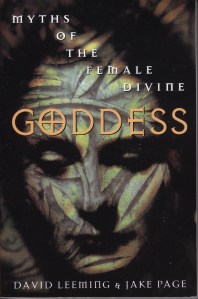
GoddessReligions, by nature, exercise a distribution of power. That power is perceived to be on several axes at once, the “vertical” is intended to represent the power of deities over humanity, and the “horizontal” is that of humans over humans. Historically all we can know is the latter dimension, and during the time of written records, that has been a male-dominated plane. Several years ago a theory developed which would be wonderful, were it true. The goddess hypothesis suggested that before male dominated civilizations took over, culture was run in a more egalitarian way and the goddess was the main deity. Since this theory sets itself before recorded history, artifacts had to be interpreted as evidence, and certainly such bits and pieces of past times have emerged. The goddess interpretation has, however, has faced severe criticism, and not just from male scholars. There are still those who find it tenable, and one such pair is David Leeming and Jake Page. Goddess: Myths of the Female Divine was a book intended to demonstrate the commonality of goddesses, but it didn’t always rise to the challenge.

No doubt, the motivation behind the book was noble. It is important to show that goddesses have been just as important as gods in the history of mythology. The problem emerges when the evidence is forced into a mold it doesn’t fit. “Goddess” is not a singular figure, any more than “woman” implies that all women are the same. Each chapter retells stories of various goddesses, and again this is problematic. Specialists in any one tradition are sure to spot errors and oversimplifications that suggest descriptions of other goddesses may not be completely trusted. There’s an overcompensation here. Men, at least some men, wish to show their support of women by suggesting that women once held esteemed places in the cult as well as in the throne room. What we know of history, however, gainsays this concept since, in one form or another, might has always made right.

Goddess is one of those little reference books whose main value lies in bringing previously disparate characters together to show some commonality. There is utility in placing goddesses side by side to form a phalanx of resistance to a hierarchy that has established itself as normative, backed by a more powerful male deity (or deities) in the sky. Goddesses have been part of religious thinking from the beginning. The early abstractions of natural powers, reason would seem to dictate, would have involved both masculine and feminine powers. We don’t know how such societies were organized, but the divine female was clearly present. By consciously acknowledging what we know, and creatively applying such knowledge, there may be a hope for the future of religions that is far more certain than a reconstructed past.


The Fate of Goddesses

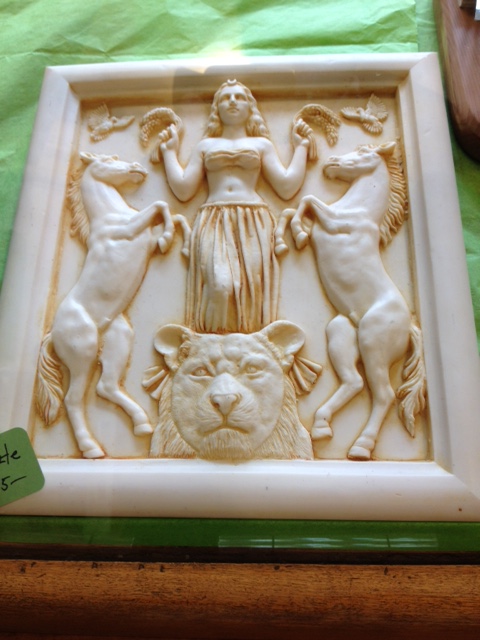
The goddesses Asherah and Astarte are sometimes confused, even by experts. Astarte, also known as Ashtart, Ashtarte, Athtart, and Astaroth, among other names, is the lesser attested of the two among the Ugaritic texts. Indeed, to read some accounts of the latter goddess, she becomes dangerously close to being labelled generic, the sort of all-purpose female deity embodying love and war, and sometimes horses. In the Bible Astarte lived on to become the bad-girl of Canaanite goddesses. Her corrupting ways were a conscious danger to the orthodox (as much as that is read back into the texts). She became, over time, literally demonized. It seems that originally she, like most goddesses, had a soft spot for humans. Since she wasn’t the one true (male) God, however, she had to be made evil. It is an unfortunate pattern as old as monotheism. One of my original interests in studying Asherah (not Astarte) was precisely that—the obviously benevolent divine female seems to have been chucked wholesale when the divine masculine walked into the room. Why? Well, many explanations and excuses have been given, but whatever the ultimate cause, Astarte lingered on.

IMG_1620

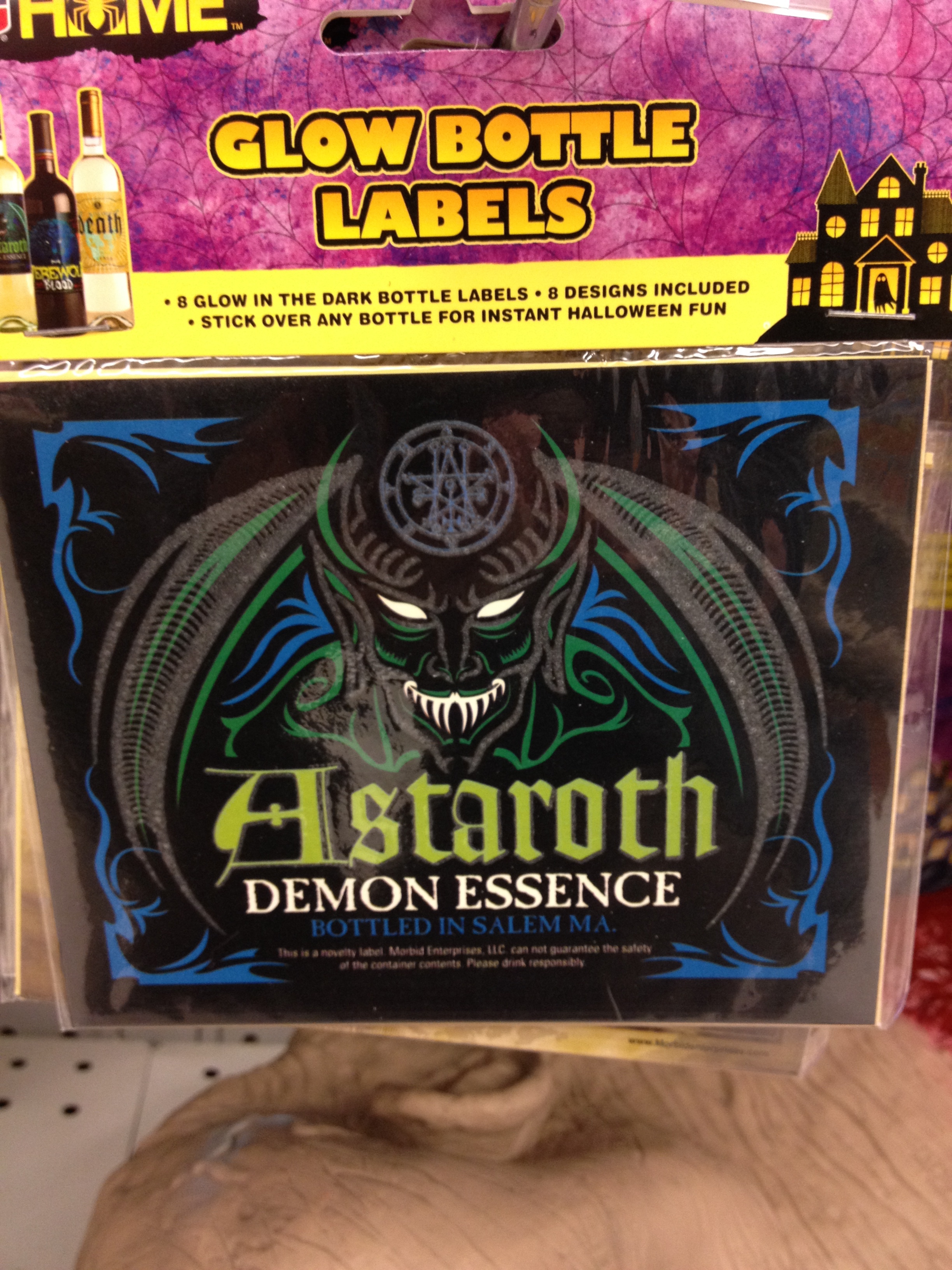
In a local pharmacy the other day, I was looking over the Halloween tchotchkes. Amid the usual assortment of pumpkins, skeletons, and ghosts, I found bottle labels reading “Ashtaroth Demon Essence.” Although I’ve spent a good deal of my life cloistered in academia, I was not surprised by this. I know that in popular culture the goddesses of antiquity live on as supernatural powers, sometimes good, sometimes evil. Astarte, once depicted as the friend to at least some of the humans devoted to her, is now commonly a demonic force. The image on the bottle label, however, was most unflattering. I know, this is just kid’s stuff. Still, as I stood there among last-minute costume seekers and distracted parents, I knew that I was witnessing the influence of ancient religions in an unexpected way. Did any of the goddesses survive as a force for good? How could they when the only god was male?

We know very little about ancient Astarte beyond the fact that she took away some of the luster of the omnipotent (as now conceived) deity of the Bible. A jealous God, as Holy Writ readily admits, visiting iniquity down to the third and fourth generation. (That might explain a lot.) Prior to monotheism benevolence and malevolence could arise from goddesses as well as gods. Compassion, it was believed, was largely a feminine trait. Monotheism decided for the jealous male instead. We won’t find a bottle label for the Almighty, although the accouterment of the arch-enemy are everywhere evident this time of year. And speaking of the diabolical, the Ashtaroth Demon Essence, I noted, was available at a steep discount.


The Goddess

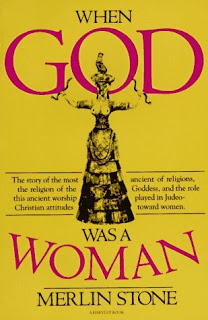
WhenGodWasAWomanMerlin Stone was a sculptor and an artist. I met her only once, a few years back when I was still recognized as an “authority” on ancient goddesses. At one of the many Society of Biblical Literature annual meetings I attended, she came and introduced herself to me, thanking me for my work. Of course I knew who she was—the author of When God Was a Woman, one of the books that was most influential in the revived goddess movement of the 1980s. I have always appreciated those women who have dared to take on the often amorphous patriarchal power structures of society to raise the necessary questions of fairness and justice. Stone was one of those women. Her book, while based on sometimes questionable historiography, nevertheless highlights some of the issues that many male scholars have chosen simply to ignore.

One of the biggest problems faced by authors like Merlin Stone and Marija Gimbutas has been the shifting sands of history. I recently had a deep conversation with a couple of feminist friends of mine where the issue of truth emerged. Truth, as I came to realize, may be a temporary phenomenon. What is true today (the earth is the center of the universe) may not be true tomorrow. It is always contingent. Historians reconstruct a past to which they do not have direct access, and further discoveries will often detail the errors made along the way. When God Was a Woman was originally published in 1978. Some of the historical constructs that Stone uses have since crumbled, but the main point of the book remains firm—women have as real a claim on the divine as do men. (I can’t help but wonder if there is some connection between this and the recent trend towards prominent male thinkers declaring themselves atheists.)

Although I can’t agree with everything Stone wrote, one of her ideas dropped a hook in my brain. In describing the sexuality that apparently attended worship of “the goddess,” she notes how male scholars came to refer, always derisively, to the such religions as “fertility cults.” Turning this phrase about, Stone wonders whether far distant future analysts will look at monotheistic religions that decry sexuality as “sterility cults.” Not that the goddess is all about sex. Religions, however, always weigh in when such spiritually significant activities as sex take place. Men, who are often eager participants, are the ones to construct religions condemning what should be a most obviously sacred human activity.

Merlin Stone may have died just over two years ago, but her book will stand as a yad vashem to half of the human race who have been religiously subjected to the other half. And perhaps there is a goddess out there yet who will bring about liberty and justice for all.


Esoteric Goddesses

250px-Statuette_Goddess_Louvre_AO20127One of the nice things about the internet is that you can indulge your unorthodox interests and nobody will much care (except, of course, the US government). The other day, while reading about monsters, I found a fellow WordPress site, EsoterX. More specifically, I found a blog post on Ashtaroth. Those who have more than a passing interest in my background know that I spent a few years of my life writing about the goddess Asherah. Asherah and Ashtaroth are sometimes easily confused by anyone not reading about them in the original languages, but I settled on Asherah because we simply don’t have much textual information on Ashtaroth. Ashtaroth has gone by a number of names over time: Athtart, Astarte, and, as I just learned from EsoterX, Lord Treasurer of Hell. I won’t try to repeat the clever observations of EsoterX, but I can’t help myself add my own two shekels’ worth.

Ashtaroth is clearly one of the bad girls of the Hebrew Bible. She tempts the upright astray, and she seems to have been a perennial favorite among the less-than-orthodox Israelites. The Bible doesn’t take much care to flesh her out fully, and she appears only in minor roles in the Ugaritic texts. Some in the ancient world easily associated her with Ishtar, and their names do seem to bear some kind of relationship. Ashtaroth is connected to the planet Venus, as was the latter goddess Aphrodite—named, appropriately enough by the Romans, as Venus. Ashtaroth was also a militaristic goddess associated with horses. That girl got around.

Unfortunately, in the literature that survives from the earliest period, we are left with only the sketchiest of outlines of this once important goddess. Many of the Semitic deities have been revived in popular mythology of the modern age, and Ashtaroth, with her sexy, yet belligerent nature, is always appealing to the puerile imagination of pubescent boys. She was taken with great seriousness long ago, however, although her origins are lost to history and her attributes have become general enough to fit just about any old generic goddess. I’m glad to see that EsoterX has given her a shout-out and has traced a brief history of the goddess through the ages. Maybe someday we’ll find some accurate information on her early days. If we do, will somebody please give me a poke? I will probably be busy reading EsoterX.


To a Fallen Goddess

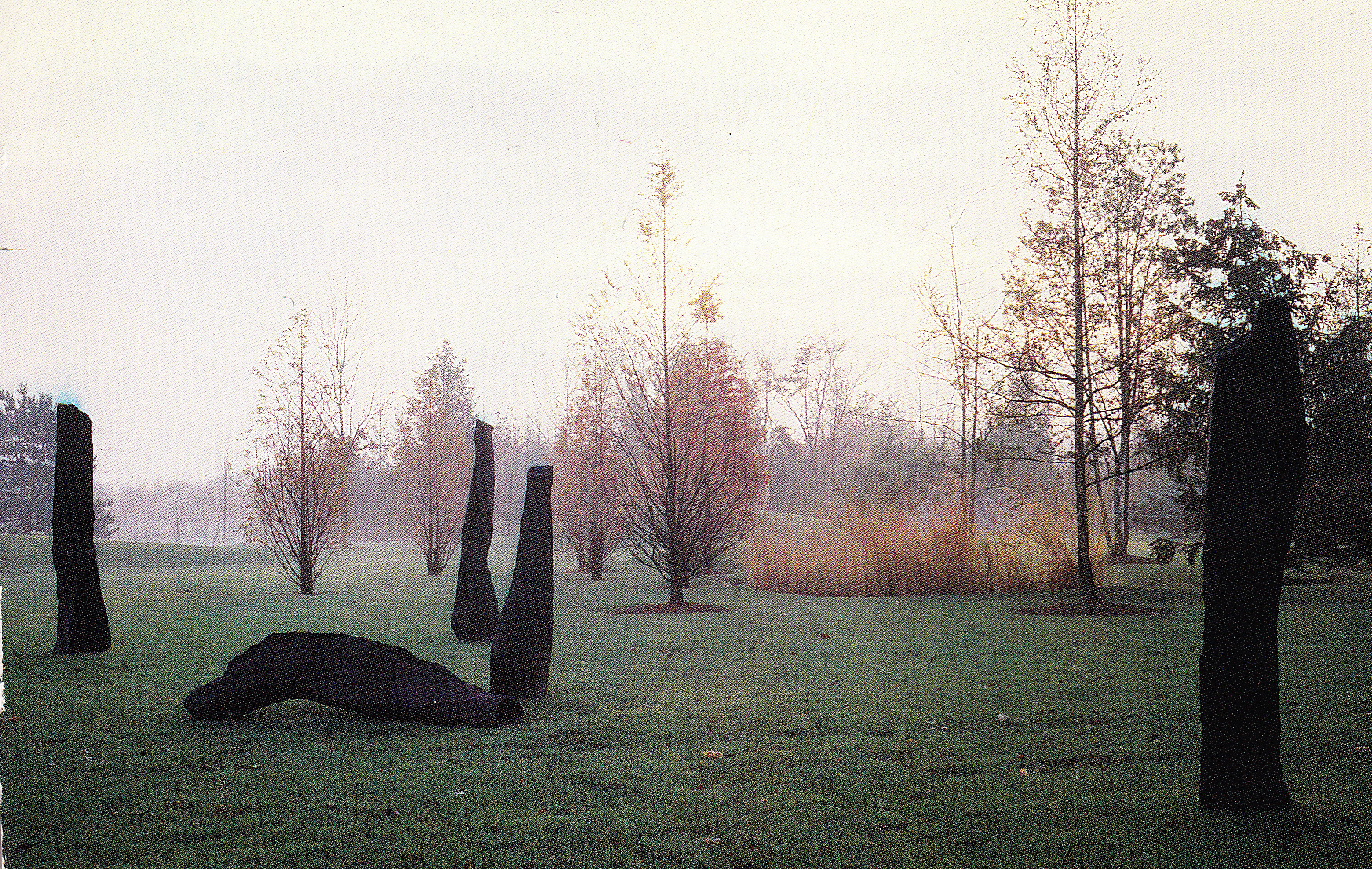
One of my favorite places to visit in New Jersey is Grounds for Sculpture. Over the past several years that we’ve domiciled here, we’ve had the opportunity to take several friends and family members to see the whimsical, creative, and inspirational park over in Hamilton. When my daughter graduated from high school, she requested a visit to Grounds for Sculpture, and, since family were near at hand, we took the opportunity to see it again.

I’ve always been aware of the religious aspect of creativity. Perhaps it is because I like to flatter myself into thinking that I’m the creative sort, despite my years of academic training, or perhaps it is the kind of pipe dream for which the liberal-minded are easily accused. In either case, I have always found that the best art evokes something similar to a religious experience. There is an element of wonder, emotion, and awe here. Not every piece of art conjures it, just as a single god isn’t sufficient for the whole of humanity. As I wander the grounds, I grow convinced that this or that sculpture had a vision akin to what I’d call religion, that led to the creation of such a trenchant piece. I always leave feeling blessed.

Photo credit: Grounds for Sculpture, postcard

Photo credit: Grounds for Sculpture, postcard

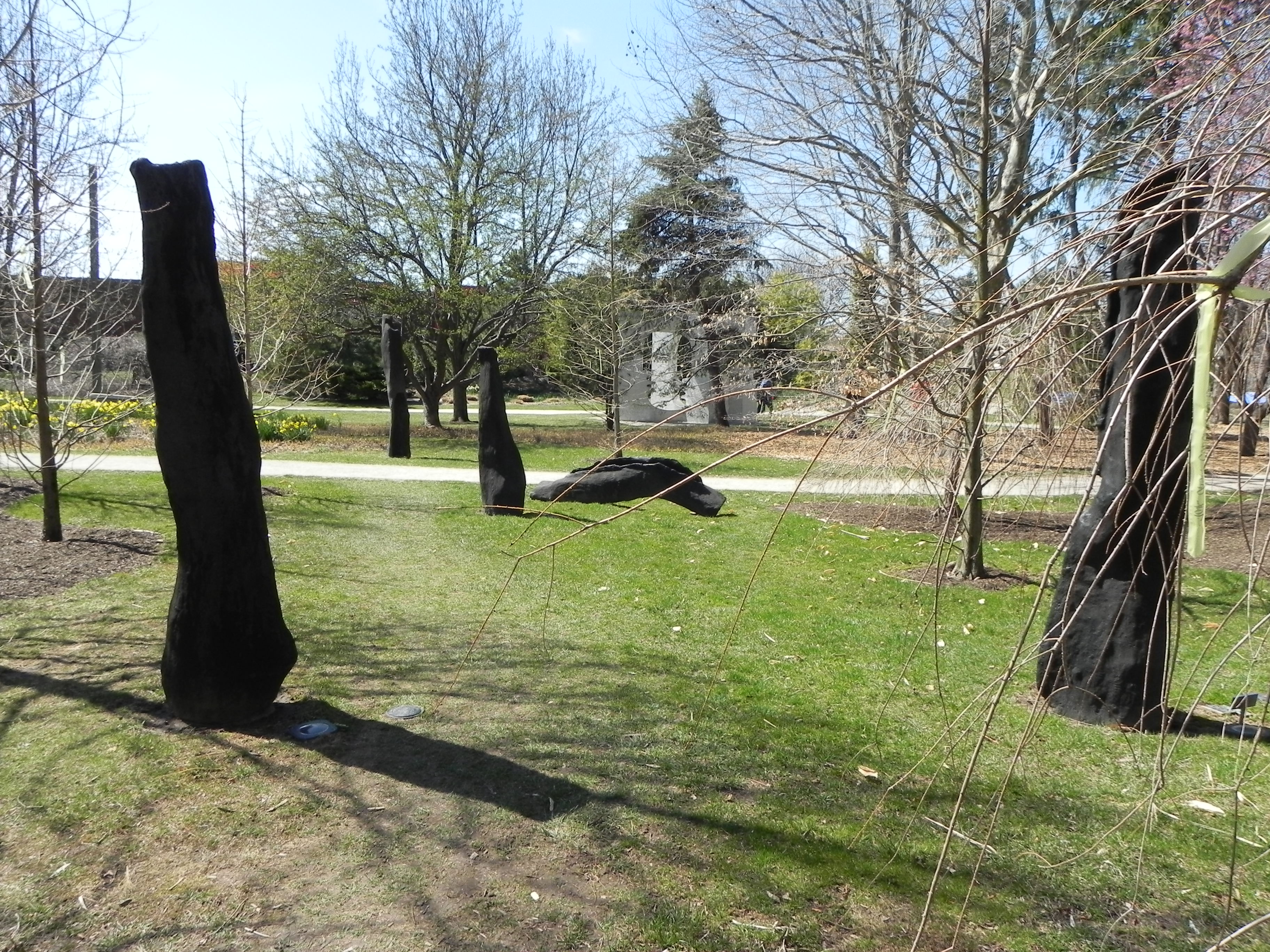
On this most recent visit, a very conscientious relative found, and later sent, a postcard of a sculpture I’d never seen. (It is possible that the sculpture is not currently on display, as the Grounds are continually evolving.) The piece is entitled “Excerpts of a Lost Forest: Homage to Ashera,” by Tova Beck-Friedman. Several of my relatives have me to blame for their awareness of Asherah; she is, after all, a relatively obscure goddess in the Hebrew Bible. The sculpture, however, speaks to me of the continuing ability of even extinct gods to inspire artists. Just as Asherah occupied several years of my academic life, I suspect she also haunts the work of sculptors who’ve come to realize that not all gods must be male, and not all gods must be real to be important. Quite the contrary, the collective deities of our heritage may still be found where art thrives.


International Women’s Day

So it’s International Women’s Day, and I’m thinking about what various religions might do to celebrate it. How about equality? True equality. With rare exceptions religions have been spawned and gestated in masculine wombs. Increasing the asperity, monotheism had to, by definition, introduce a single-gendered god to match at least half of the human race’s expectations. No surprise he is a deity with a Y chromosome. For whatever reason, religions nearly always promote male experience as normative and female experience as supportive. If you disagree, well, talk to the man upstairs.

In those few precious moments when I’m allowed the luxury of a daydream, I wonder how differently the world would’ve developed without the mythology of the alpha male god. If god had been conceived as feminine in the beginning, would it have made a difference? Would the rules be more or less stringent? More humane?

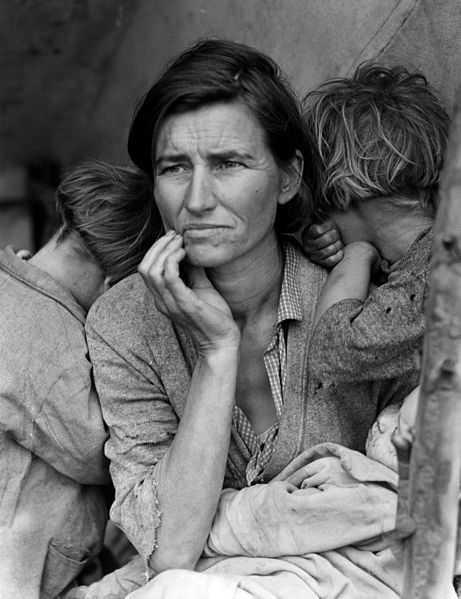
Lange-MigrantMother02

Polarities are a funny way to view the world. As evolved, gender-differentiated animals, we easily slip woman and man into that category of natural polarities. Over time, however, it has become clear that reality is more complex than X or O (or I and O, or X and Y—where the male is missing something the female secretly possesses). What if the overall category were simply “human?” As we’ve evolved, we’ve learned to keep many animalistic tendencies in check. Our vast and complex societies, unique only in degree, have demonstrated that it is possible. To judge half of the human race as less able to provide spiritual leadership is an exploitation well past due for extinction. With all eyes on the Vatican over the past couple of weeks, the largest Christian denomination in the world doesn’t seem ready to shift even a nanometer on this one. Mother Mary, pray for us.

In a world where conception was a mystery (which it still is, to a point), women were the sole life givers. Men had the role of sustainers, the help-meets who brought home the meats. Somewhere along the sociological lines the order somehow switched. Might it have been religion itself that led to the subordination of the god-like ability to give life that only women possessed? By attributing the origin of life to a being, generally male, outside the realm of normal reality, religion bestowed a foreign primacy upon the human race. We became the victims of our own longing for transcendence. So celebrate International Women’s Day. If it weren’t for a woman, a goddess in her own right, you wouldn’t be reading this right now.


Be Neith It All

Goddesses have lately been on my mind. Both an occupational hazard and an avocation, study of the divine feminine deflects the trajectory that traditional monotheism traced and places us in the realm of the empowered female. This week my mythology class considered Athena, perhaps the truest embodiment of divinity in classical Greece. I regularly mention that in the ancient world even Plato suggests a connection between Athena and the Egyptian goddess Neith, one of the most ancient of the gods of Lower Egypt. When a friend coincidentally emailed a question about Neith, I realized the goddess was calling out for a blog post.

Neith is difficult to define partially because of the nature of Egyptian religion and its evidence, but also because of her great antiquity. She is a predynastic goddess, dating from before the founding of a united Egypt (back in the days when Egypt was united). She is represented by symbols of both weaponry and weaving (thus associated with Athena), and since she is so ancient, she became a creator. She is occasionally regarded as the mother of the gods. A question that naturally arises for all creators is from whence did they come – the classic chicken-or-the-egg conundrum. Mythology offers a number of options for self-generation, but most often creator gods simply bring themselves into being without many details being supplied. After all, no one was there to witness the miracle of the first birth.

Like most Egyptian creator gods, Neith represented preexistence and creation. She is occasionally androgynous – a necessary precondition for being an initial creator – and is said, by Proclus to have claimed, “I am all that has been and is and will be.” In short, nobody knows where she originated. Like many pre-biblical gods, Neith practices creation by speaking aspects of the world into existence, a technique called creation by divine fiat. This is something that Yahweh will later borrow in Israel. Although the Egyptian myths do not directly address the coming into being of Neith, she represents what every observer of nature knows: monotheism loses an essential element when it supplants one gender instead of embracing both.