The Return of the Goddess

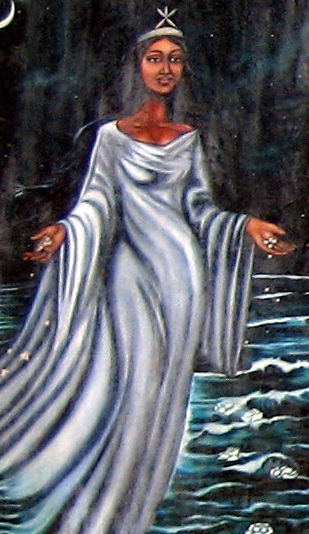
When the coalescence of events points in a single direction, it is worth paying attention. Goddesses, it seems, are once again on the move. Not Asherah this time, although she seldom sits still, but the creator goddesses. The notion that creation is a female prerogative seems only natural, and the concept is in the ascendant. In a local setting, the Alvin Ailey American Dance Theater troop is performing “Dancing Spirit,” a piece by Ronald K. Brown. The dance features a move that Brown attributes to Yemaya, the Yoruba goddess of creation.

WikiCommons' Yemaya

Now I have to confess to knowing little of Yemaya and Yoruba – African mythology beyond ancient Egypt has fallen outside my limited scope – but from the little I know I can see that she represents a fascination with feminine power. A dance to celebrate the power of the creatrix feels appropriate. Worlds created by masculine deities always go awry. Perhaps the power struggles built into images of strength and domination will always lead to conflict and suffering. The mother is here to protect.

Despite its flaws, Avatar also shares in this image of the protecting mother. Eywa may be a fictional deity devised to give the Na’vi a central focus, but her mythological profile is sound. It is the mother who gives life and protects that life. The father disciplines and starts wars. These are not universal archetypes, but rather coalescences. Religions involve worship and worship may derive from fear or from love. I suspect that the goddesses engender the latter. I suggest that we could learn much from the creator goddesses.


We Still Need Asherah

A very prominent documentary-making company contacted me today. It is in the research stage of planning a documentary on Asherah. I am overwhelmed that I have been asked for advice and that the old girl has finally received some public interest. Scholars are generally accustomed to spinning in smaller and smaller circles of specialization that have little draw for the wider public. Having said that, Asherah is, my own interests aside, a most fascinating deity.

One of the greatest obstacles to modern readers on ancient religion is the fact that gods don’t neatly fit into predetermined categories. We like to think of deities as the “god/goddess of –” where the blank is filled by some natural phenomenon. This is a fallacy that I once whimsically coined the “divine genitival construct.” It is easy to think of Baal as the god of rain, but he is so much more than that! I tell my students that they must think of deities as “persons” first; they are fictional characters, and like good fictional characters they have many aspects to their personalities. They are complex, multilayered, and often conflicted. This is especially the case with Asherah. She is a goddess who represents the royal female. Kind of hard to picture. Not queenship, but the power behind the throne. She is more familiar in the form of Hera in Greek mythology – the primary spouse who tries to keep a philandering husband in line. She is, however, a powerful goddess. She is mother of the gods, the character without whom no other lesser deities would exist. By extension, she is the producer of the gods who make our world possible.

Publications continue to emerge claiming all manner of hypostases for Asherah, many of which are unfounded. I believe it is because we all need the sacred mother, the female authority figure. Our society, still hopelessly patriarchal, yearns for the goddess who understands. Unfortunately, that is not this historical Asherah, it is the Asherah of the modern imagination. If she helps to assuage some of life’s inequities, however, even a mythical Asherah may still serve a valuable function today.

Not Asherah, unless you need her to be


Virgin Goddesses and Human Fathers

Several years ago today I became a father. I try not to say much about my family online because I am old enough to be cautious about this brave, new, virtual world I post in just about every day; yet being a father is a life-changing experience like no other. The absentee father – something I personally experienced – sacrifices one of the most fulfilling aspects of life. Unless you’ve been there, you can’t understand it.

Today’s paper raises the question of whether celibacy is related to the continuing scandal of sexually transgressing priests that continue to come to light. Men who are not fathers but are called “Father.” Men, sworn by duty never to give in to human nature, appointed as spiritual guides to the masses who have succumbed to the dictates of biology and society. The church denies any connection. Could it do any differently? Two thousand years of frustrated men might storm heaven itself!

Among the most admired deities of the ancient Greeks were the virgin goddesses Hestia, Athena, and Artemis. Their divinity radiated through their self-sufficiency and self-determination; no god needed complete them. Goddesses had an integrity that few gods ever attained. We don’t read of virgin gods; Zeus was famous for his affairs, as were most masculine divinities. Many gods kidnapped or deceived women to slake their lust. Yet the virgin goddesses were formidable and truly worshipped. By restoring the virginity of Mary, the church constructed its own virgin goddess as a paragon for all to emulate. Priests were to be like the mythically chaste Joseph, longsuffering and self-abnegating. But they are mere mortals. Why not let religious leaders truly become fathers? It has forever changed my life for the better. Perhaps it would be healthier than chasing mythical virgin goddesses?

Athena, most chaste


Patriarchal Goddesses

My fascination with goddesses began when I decided to research Asherah. Having grown up in a monotheistic milieu, goddesses were strangely, but not surprisingly, irrelevant. I had, of course, read about them in mythology classes, but they seemed less defined than the gods who had strong, striking characteristics. Now that I’m revisiting many classical goddesses in the course of preparing my class on Mythology, I’m discovering a renewed appreciation for the feminine divine and its contribution to the ancient world.

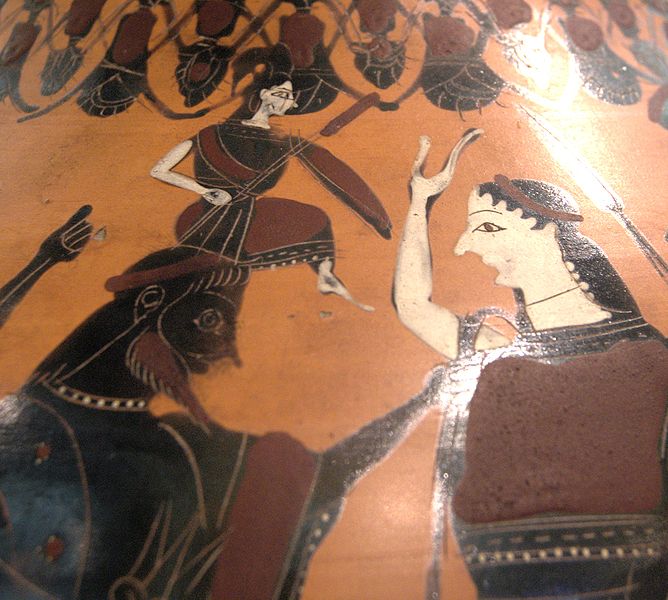
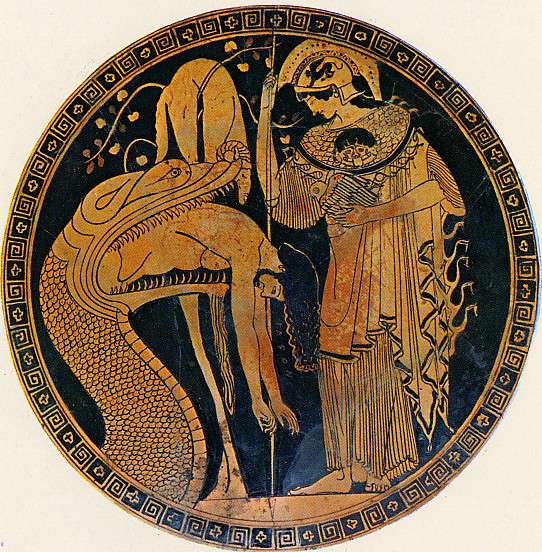
Athena saves a hero

Athena and Artemis have been on my mind for the past several weeks. Among the Olympian deities they are among the strongest female figures (Aphrodite, of course, provides her own feminine form of power, and Hera, although mighty, remains largely in the background). Perhaps what creates such a striking form for Athena and Artemis is that they blend the traditional masculine and feminine roles in a way that the ancient Greeks were prescient to devise – they both possess weaponry and strength that frequently brings mortal men to their demise. They don’t wile with “feminine charms” like Aphrodite; instead they meet men on their own tuft – hunting and warfare, bravery and muscle. They are virgins, not needing male approval. Together they form the basis of many ancient aspects of divine nobility.

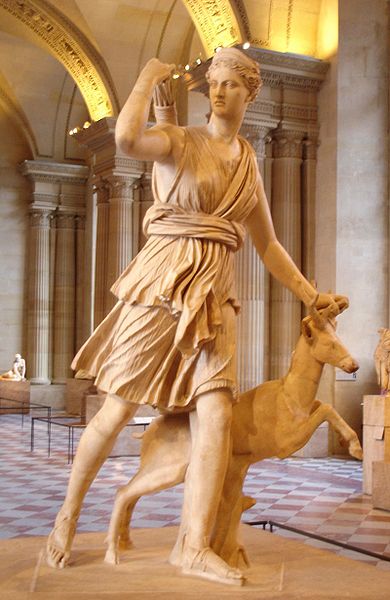
Artemis and her man-dog

Today, however, when we think of Olympians Zeus and Poseidon come to mind almost immediately as the two major figures. No one disputes the unstoppable power of Zeus’ thunderbolt or Poseidon’s earthquake. The goddesses, however, display their power on the human level. They may set the fortunes of armies going to war or individuals out for personal glory or fame. They touch the characters on a more human level. They also have their counterparts, unfortunately often eclipsed, in the world of the ancient Near East. Astarte is still poorly understood, and Anat, although more fully fleshed out at Ugarit, largely remains an enigma. The importance of Athena and Artemis thus stands out in sharper relief for having survived the overly acquisitive masculine ego to remind people everywhere that goddesses also will have their due. Given enough time, perhaps even the gods will understand.


Evolution of Egyptian Cats

The Egyptians were the first people to “domesticate” cats. Perhaps taking their cue from their pets, they very early venerated cats as divine. Cats were, however, working animals that controlled vermin and poisonous creatures that violated the principle of stability that the Egyptians so valued. From the earliest records of the Old Kingdom we find the goddess Mafdet portrayed as a cat. Her name translates to “swift runner” and she was protector of Pharaoh, and thus of all Egypt. She was also associated with justice, a role reprised by Puss-in-Boots in Shrek 2. The hearts of evildoers were ripped out by Mafdet and brought, like a dead bird or mouse, to the Pharaoh.

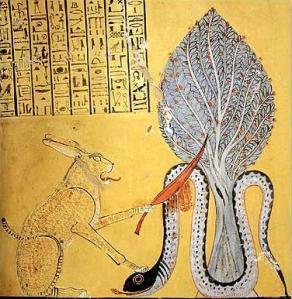
Mafdet? (Don't give your kitty knives!)

Mafdet? (Don't give your kitty knives!)

Mafdet’s fame declined with the rise of Bast, or Bastet. Bast (“devourer”) was also an early goddess, associated with the sun, and like Mafdet, she was a fierce protector. Her cult was centered in Bubastis, a city named for her. The guardian of Lower Egypt, she kept the kingdom safe from cobras, scorpions, and presumably hair-balls. Unlike the gentle kitties of today, she was also represented as a lion, a goddess of war.

Bast, all grown up

Bast, all grown up

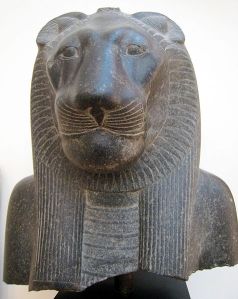
Bast’s fortunes faded with the rise of Sekhmet, the warrior goddess of Upper Egypt. With a name translating to “powerful,” Sekhmet was yet a third feline protector. She was also a lion-shaped goddess whose breath created the desert. (I have worked for human beings who could justifiably make that same claim.) Like Bast, she wore the sun on her head and became Egypt’s version of the violent goddess. Ancient peoples all feared the raging goddess, no matter what name or shape she took. Perhaps they always expected bad behavior from men, so when female deities got in on the act it was all the more powerful.

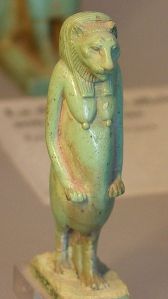
Sekmet with the breath that sank a thousand ships

Sekmet with the breath that sank a thousand ships

Where does evolution go from there? Is it merely coincidence that the Ashera Cat is part African Serval (as was perhaps the original Mafdet) and that it is being billed as the royal cat? I think not! Cats have a long pedigree with the divine, and from what I’ve been reading, Ceiling Cat has a very wide following. Evolution of the Egyptian cat, it seems, takes us from the Old Kingdom right up to Lolcats.