Stupid Burnt Lizard

The kaiju monster film has evolved significantly, as my post on Godzilla Minus One may indicate.  Monster boomers grew up with Saturday afternoon kaiju, although we never heard that word.  (Or at least I didn’t.)  Godzilla was the most famous, but some people trace the origins of the idea to King Kong.  The kaiju, or “strange beast,” genre features outsized monsters that, when they come in contact with civilization, wreak havoc.  Many are primarily symbols of atomic fear, and after watching Godzilla again, I settled down one uncomfortably hot summer afternoon to watch Monster from a Prehistoric Planet, a wildly misleading title for a movie also called Gappa, which is more accurate but less eye-catching.  A gappa is a “triphibian beast” that does equally well on land, water, or in the air.  I do have to wonder if Michael Crichton saw this film before coming up with the idea for Jurassic Park.
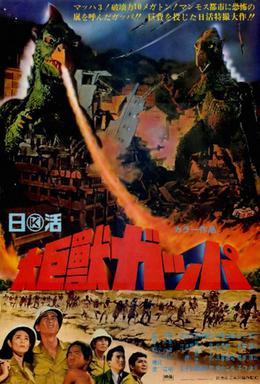
A wealthy publisher wants to open a tropical island resort in Japan.  (You see?)  He wants to fill it with exotic animals, and among those in the model are dinosaurs.  His expedition to collect specimens leads a Japanese crew to discover a newly hatched gappa, which they take back to Japan.  (The publisher, concerned that their find has been exaggerated, utters the title of this post.)  Meanwhile, back on Obelisk Island, the gappa parents return and aren’t pleased to find their baby gone.  They head to Japan to stomp around, Godzilla style.  It takes the sole survivor from Obelisk Island, a young boy, to figure out that the parents really only want their baby back.  The publisher, scientist, and journalist (all male) don’t want to give it up.  The female lead, also a journalist, convinces them that they must.  Japan is saved.

Kaiju have more recently become somewhat believable, and even a bit scary.  The monsters themselves seem to be metaphors.  It’s no accident that these early movies, such as Gappa, expend much of their screen time on explosions.  From the artificial volcano on Obelisk Island to the model tanks and missiles, to the plumes rising as the gappa lead to destruction, things are always blowing up.  The Japanese think at first that “Gappa” is a god, but the local boy who survives is emphatic that “Gappa” is “no god.”  Yet the locals are careful not to raise their wrath.  These movies aren’t great in any traditional sense, but they are imbued with reminders of war—no god—and the lasting damage it causes.  And the wealthy can lead to the destruction of many cities for the sake of making money off of a stupid burnt lizard.
Plus One

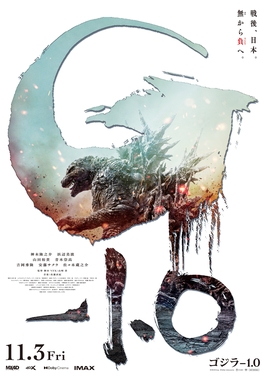
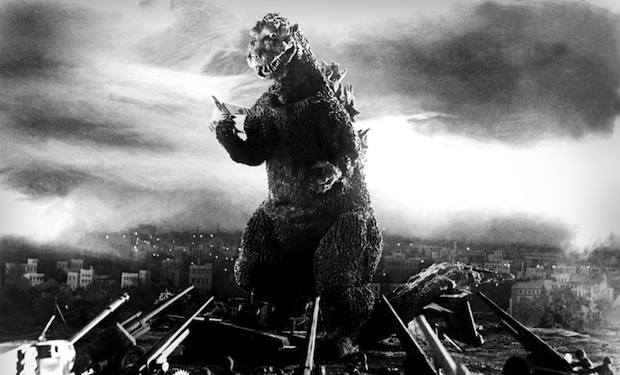
When one of your oldest friends suggests a movie, it’s a good idea to watch it.  I began watching Godzilla movies when I was quite young but I stopped after seeing the 1998 Roland Emmerich version.  A friend from high school told me I should see Godzilla Minus One, and I took that advice seriously, if slowly.  It certainly raises the bar on kaiju movies.  An epic film of over two hours, it isn’t just a monster destroying towns—it may not be a standard horror movie but it is an exceptional Godzilla film.  Following the story of Kōichi Shikishima, a kamikaze pilot who couldn’t bring himself to suicide, it introduces the kaiju in the last days of World War Two.  There is a lot of political sensitivity in the movie.  Godzilla—by far the scariest I’ve seen—kills off the Japanese crew on a Pacific island.  Shikishima survives and returns home to find his family dead from bombing in Tokyo.  He is shamed by his neighbor for failing in his kamikaze duty.

Shikishima assists Noriko Ōishi, also without family, in raising an orphaned infant.  Meanwhile, Godzilla starts reappearing.  The problem is, tensions between the Soviet Union and United States means that outside help isn’t available.  Japan had been forced to disarm its military due to the war, and therefore it has to rely on civilians to organize and try to stop the monster.  They devise a plan to try to sink the monster far enough into an ocean trench to crush it, and barring that, raise it rapidly to the surface so the depressurization will be fatal.  Meanwhile, Shikishima, who believes Ōishi died in a Godzilla attack, discovers an experimental new plane that he then has made into a kamikaze-style fighter.  The plan is to fly it into Godzilla’s mouth, killing the monster.

As a movie this succeeds in making the human story poignant enough that the kaiju threat becomes a way of tying together the fragments of a life shattered by war.  Indeed, the condemnation of war is one the elements that makes the film exceptional.  Godzilla is, of course, radioactive, but the movie doesn’t make that a cudgel.  No, it explores how human foibles—beyond war, the national posturing—prevents humans from helping one another in time of need.  And how war itself destroys life among the survivors.  Like all Godzilla movies (and there are many), it leaves many holes in the story, but it has the feeling of a real movie.  I agree with my friend that it’s well worth seeing.


The Maelstrom

Some monsters can’t be destroyed. Today is Edgar Allan Poe’s birthday. Poe had his demons, for sure, but the twentieth century took personal fear and made it universal. Atomic bombs and mutually assured destruction were concepts any of us born since World War II have lived under our whole lives. Kids in the 1950s were drilled in schools about what to do in case of nuclear attack. We didn’t have such drills in the ’60s, but the Fallout Shelter sign was still quite familiar and frightening in its frankness. There are people out there that want you dead, and we tend to elect them to positions of power. Duck and cover. It’s all in vain.

Then came peace. Ever so briefly. When I started seeing newspaper articles about what to do in the event of a nuclear attack—not in my childhood, but just this week—I shuddered. We’ve apparently made no progress at all. When we’re all decaying corpses glowing eerily in the night there’ll be no point in figuring out who’s to blame. A species as endlessly inventive as our own spends its time and resources on distrusting, hating the other. “They” might get what’s ours. The acquisitive mind trembles. You see, there’s no end to the things you can own. As long as anyone else owns anything you can always hope to get it for yourself. Say you read the Bible and evangelicals will forgive you daily for breaking the tenth commandment. Just don’t let those foreigners have it.

Poe imagined nightmare worlds. Most of his stories, however, were on the individual level. Our monsters, on the other hand, are international in scale. Radioactive fallout with its slow decay and devastating effects on frail flesh may be the stuff of good horror, but they make for decidedly poor governance. Perhaps it’s no wonder that this comes up under a president who ran on a platform of hatred. Last weekend the people of Hawaii lived through fearful moments that were all too believable with the incompetent pretender of Pennsylvania Avenue. A man who can’t keep his tweet shut and who gets away with offenses that would easily impeach a democrat. I grew up watching Godzilla, the famed radioactive dinosaur, rising from the oceans to remind us of the consequences of atomic sins. For the too brief era of Clinton we felt that the world might be safe at last from such monsters. Problem is, some monsters just can’t be destroyed.


Gorilla Whale

Monster Boomers grew up with Godzilla. Among the many monsters on offer on a Saturday afternoon, Godzilla was one of the most obvious fakes, but also among the most poignant of realities. Even as kids in the 1960s we knew about the atomic bombs that had been dropped on Japan. We knew, at some level, that we had come to a point where one species could destroy its entire habitat and that we had obliterated millions of our own kind in just the past half-century, let alone the millennia prior to that. Godzilla represented not just a man in a rubber suit, but the fear of what we could bring upon ourselves. Radiation, burning, the terror of Japanese citizens, and yet, that odd sympathy for the monster. Metaphors were growing much faster than the half-life was decaying. Godzilla became a lasting symbol of both childhood and adult awareness.

I haven’t seen the Godzilla that opened in theaters this past weekend. Inevitably, I eventually will. The 1998 version came pretty cheaply on DVD at a local video store a decade after its release, and I saw then that the monster had lost its emotional appeal. The original, compelling Godzilla was now just another monster to be destroyed. Instead of representing the environment fighting back, it was the environment waiting to be exploited. A shift had taken place and Godzilla was less godlike than before, but more terrifying. Monsters can be lovable, too.

MCDGODZ EC052

H. R. Giger, Time reports, died this past week. Giger was involved in creature design for the new Godzilla, and the memorial by Richard Corliss notes that he was inspired by H. P. Lovecraft, among others. Lovecraft gave us the old gods, and although the original Godzilla was about the horrors of nuclear war, there is a streak of Lovecraftian righteousness to it. The universe does not care for us. We invent gods, or monsters, or both, for that. Godzilla, as originally conceived, was never really that scary. What people could do to each other, and their planet, was. Sometime in the next decade, I’ll watch the newest Godzilla, and in the meantime, I hope that the message of the original somehow manages to sink in. We Monster Boomers can be quite naive that way.


Divine Fury

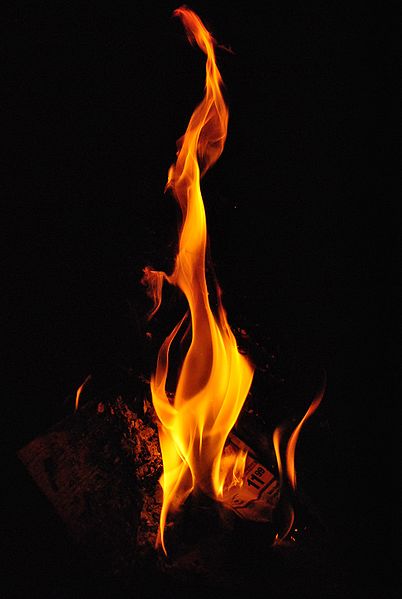
“It was like Armageddon,” a woman in Colorado Springs told a reporter, according to CNN, after seeing the wildfires raging down the mountains onto the city. The article opens with a reference to Godzilla. The story is a wrenching reminder of how helpless humans are in the face of disaster. When facing danger far bigger than ourselves, language of God is never far behind. The things we control—the future we engineer—is bright in prospect. We’ve impacted our own chances for the better in a steady surge since the Middle Ages. Of course, there have been notable blips along the way where we’ve fallen victim to our own paranoias, but generally, things are better. Controlling fire was among the first of human innovations that eventually led to civilization. Humans took a natural force and put it to work for us. It is easy to forget that fire serves no master. Until nature reminds us.

Earth, wind, fire, and water. The ancient Greek philosophers had narrowed the basic environment down to four features. Each of them holds profound dangers for a small species like our own. No wonder the ancients ascribed each of these elements a guardian deity or two. On driving trips to the west, I have gone past fires whose intense heat could be felt hundreds of yards away in the air-conditioned comfort of our car. Still, I shuddered. In this day of advanced transportation, most people can drive themselves away from the danger of wildfires. The problem is that material goods take up space, and in a world that values material goods above all things, well, you still can’t take it with you. My heart goes out to those who tell their stories of impossible decisions of what to take. What in our lives can’t be replaced? What do we truly value?

Funny thing is, we’ve known since I was in high school at least, that our own actions were changing the climate. The wildfires may not be directly related—I don’t know—but I do know that we’ve been in deep denial. We’ve been caught in a sin so black that the only way out is to lie until we’re even deeper in it. We’ve been destroying our own environment for money. Money with which to buy material possessions. Earthquake, hurricane, wildfire, and flood. None of the four elements are safe. We can put our material goods in a secure house in a mountain stronghold and still lose everything. It is the fate of a culture that puts too much faith in material goods. Colorado is beautiful and peaceful, much of the time. But nature respects no human. Yet we put our faith in material things. Maybe she was right after all, it is like Armageddon.

Friend and foe.


Hic Sunt Dracones

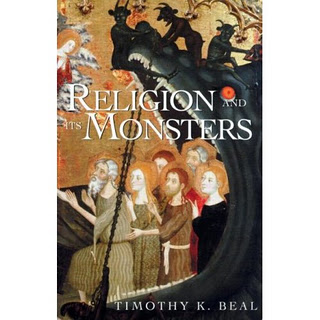
Even a visionary like Thomas Edison can’t know the directions in which an invention might be taken. The idea of the moving picture has immersed human beings in an alternate reality that is sometimes difficult to separate from the physical world we daily inhabit. As soon as movies were invented, producers and directors began to explore the depths of fear with the monster movie. What they were really exploring was the mystery of religion. I frequently write of the nexus of religion and the monstrous, and Timothy K. Beal wrote a book on that subject a decade ago in which I found another affirmation of my suspicion. Forthrightly titled Religion and its Monsters (Routledge, 2002), Beal’s playful yet serious exploration of the scary traces the origins of monsters to Genesis, and even earlier. Taking on Leviathan, the biblical sea serpent, Beal demonstrates the pre-biblical pedigree of this fierce monster and shows that, like most truly frightening entities, it began as a god. Indeed, what we call religion today grew up around fear of those forces beyond our control, a nature so harsh it could be none other than divine. The writers of the Bible clearly knew this story as Beal traces it from Genesis to Job, from Psalms to Jonah, from Leviathan to Devil.

In a shot/reverse shot formation, Beal takes us to modern-day monsters and shows their religious origins. Those things that frighten us on the big screen crawl there from their origins in the temples, shrines, and chapels of religions that don’t manage to subdue evil completely. The claims are made that the gods are stronger than the chaos that surrounds us, but they are still fighting nevertheless. From Dracula to Godzilla, the monsters have the gods on the run. And when the human protagonists finally get their monster pinned down, they discover that it is often God wearing a mask. Our monsters are gods gone bad. How else could they revive from the dead at the end of the reel? They never truly disappear. And if they do, there’s always more where they came from. The reason, Beal concludes, is that we are, in fact, the monsters.

According to the analysis of W. Scott Poole, Timothy Beal, like myself, falls into the “monster kid” generation. As I grew up, I quickly learned that to confess my interest in monsters was to risk the labels of juvenile, naïve, and immature. Grown ups are interested in money and sex and power. Only kids have any interest in dinosaurs, mythology, and monsters. An epiphany of sorts, however, seems to be unfolding. Scholars of religion in my generation are peeling back the rubber masks of our movie monsters and are discovering the face of the divine. Perhaps we are all adolescents at heart, fixated on the weird and bizarre because the paths to money, power, and temptations of the flesh are blocked to us. Or perhaps we are the Magellans charting a course for regions off the map. It is those regions, as Beal reminds us, that are illustrated with sea serpents and inscribed hic sunt dracones, “here be dragons.” Doubt it? Read your Bible and find out for yourself.