Horror Adjacent

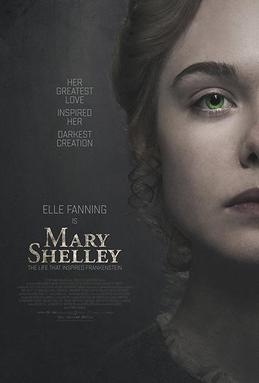
We have the basic facts, but still, it takes a good bit of imagination.  We simply don’t know what the life of Mary Shelley was like, as experienced by the woman herself.  The movie Mary Shelley isn’t a horror film but it’s horror adjacent.  How could a movie about the woman who invented Frankenstein be anything but?  The handling of Haifaa al-Mansour’s film is generally as a drama, or a romance.  The story takes the angle that it was her stormy relationship with both Percy Shelley and her own father that led Mary to express her feelings of abandonment in her novel.  And while we have to acknowledge the liberties all movie-makers take, it does seem interested in keeping fairly near the known details of Mary Shelley’s life.  Although other women were also writing then, it was still a “man’s world” she tried to break into.

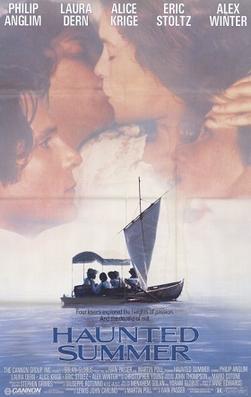
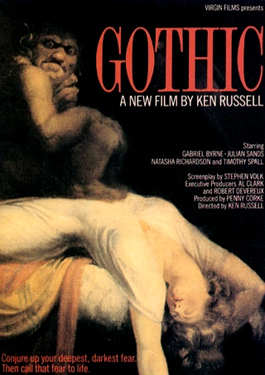
I confess that one of my reasons for wanting to see this film was that Ken Russell’s Gothic had a powerful impact on my younger mind.  That movie, which is over-the-top, being the first I’d seen telling the tale, had become canonical in my mind.  I know the dangers of literalism, and I wanted to see someone else’s take on the story.  Al-Mansour’s treatment takes a female perspective to the narrative.  It seems that Percy Shelley and Lord Byron were both advocates of what might now be termed a playboy lifestyle, and that Mary, daughter of forward thinking Mary Wollstonecraft and William Godwin, was fairly liberal herself.  Although Percy Shelley, like Lord Byron, was quite famous in his time, that didn’t always equate to financial solvency.  I could relate to parts of that quite well—full of creative ideas and shy on cash flow.

Mary Shelley didn’t rock the critics, but many felt it was a thoughtful treatment.  It is dark and gothic, but with no real monsters.  It did explain a bit of inside baseball about Ken Russell’s film.  Both movies make use of Henry Fuseli’s painting The Nightmare to explore the famous meeting of Byron and the Shelleys that led to the writing of Frankenstein.  Indeed, Gothic makes a good deal of it.  Mary Shelley explains that Mary’s mother, Mary Wollstonecraft, had an affair with Fuseli.  I was unaware of that connection.  Something was clearly circulating among the Romantics, many of whom knew each other and, in their own ways, became formative of culture centuries down the road.  And although many critics weren’t impressed, I think it’s about time that a woman’s point of view was brought to Mary Shelley’s life in a world not kind to women.  Even if a woman gave the world one of the most influential books of the nineteenth century.


Peak del Toro

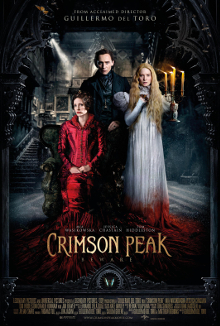
Crimson Peak is perhaps my favorite Guillermo del Toro movie.  Gothic to the hilt, the story—a bit overwrought—features plenty of ghosts and a house appropriate to them.  The many reflexes of horror on display here make it a compelling movie, despite its box office disappointment (although, honestly, how can $19 million really be a disappointment?).  There’s a gothic mansion, a murderous plot, blood-red clay, incestuous siblings, ghosts—what more’s necessary?  Thomas Sharpe is a minor aristocrat down on his luck.  All he and his sister have is the crumbling Allerdale Hall, perched atop Crimson Peak with its clay mines beneath.  In need of investors, they travel to Buffalo, New York, where Edith Cushing (surely no coincidence of names) meets and falls in love with Thomas.  Her wealthy father dies in mysterious circumstances, but she marries Thomas and they head for England along with her inheritance.

It’s clear something’s not right, so Edith, who is an aspiring writer, explores the old house and makes some unwelcome discoveries.  And she sees ghosts.  They help her unravel what’s going on but her health is declining as winter sets in.  Of course, the fact that she’s being poisoned doesn’t hurt.  Thomas and Lucille, the lover siblings, have done this before.  More than once.  There’s a kind of Bluebeard theme running through Crimson Peak.  Each time they inherit the wealth of the deceased brides but they can’t get the mines up and running to save their estate.  The twist is that this time Thomas has actually fallen in love, making it difficult for him to kill Edith.  Their house, except for that gaping hole in the roof, is one of my favorites from any movie.

The more I think about it, the haunted house in gothic films may be the decisive element for me.  I’ve always loved Poe’s “The Fall of the House of Usher,” and perhaps growing up in humble domiciles attuned me to what could be.  I loved reading about Collinwood.  Maybe I even knew that such houses come with a very steep price that consequently casts them as haunted.  Indeed, in the movie itself Edith says the ghosts in her story are metaphors for the past.  Of course, she encounters literal ghosts at Crimson Peak.  This is a movie about moods and gothic settings.  The horror pretty much matches what del Toro offers up in other films like The Devil’s Backbone.  The only monsters here are the ghosts and they aren’t the bad guys.  


Feeling Gothic

Gothic is an odd movie.  I first saw it while in seminary and have come back to it now and again.  I had been thinking of Frankenstein, so I decided to refresh my memory.  A pastiche of opium-fueled images and hedonism it nevertheless brings some religion into the horror.  In case you aren’t familiar with this Ken Russell piece, it’s a movie version of the stay of the Shelleys with Lord Byron, his physician John Polidori, and Mary’s stepsister Claire, in the summer of 1816.  During that visit, the basic ideas for Frankenstein emerged, and Polidori wrote an early vampire story that later inspired Dracula.  The religion comes in the form of Polidori’s Catholicism and his fear of condemnation for being a homosexual.  At one point, when the friends are about to read ghost stories, Percy Shelley says they’re more fun than any Bible.

Of course, in actual life Shelley and Byron were atheists, but the movie portrays the five raising some kind of entity during a seance.  They then spend the remainder of that stormy night trying to drive the entity back into their minds from the physical reality they gave it.  It’s a weird movie with lots of incongruous shots and some gross-out moments.  Ken Russell was known for his flamboyant style, and this movie is a good example of that.  It’s not great but it is moody and I come back to it when I want something, well, gothic.  The year 1816 was called “the year without a summer,” because of the volcanic winter caused by an eruption of Mount Tambora, and some have speculated that the bad weather of that year may have led to the creation of Frankenstein.

Every time I watch it, I wonder what the appeal is.  There’s a lot of God and Devil talk, and Byron was a fascinating character.  Julian Sands’ overacting in every scene makes me wonder what Shelley was like in real life.  I’ve occasionally read about his relationship with Byron and each seems to have had at least a supporting role in the iconic pair of monsters, Frankenstein and Dracula.  The two would be forever associated with the Universal release of movies named after them in 1931.  Gothic never made it big—I only found out about it because a seminary friend invited me over to watch it on VHS one weekend.  Still, it made enough of an impression to bring me back when the mood is right.  Even if it’s strange.


Dark Academia

Dark academia is the new gothic.  It’s all the rage on the internet, as I found out by releasing a YouTube video on the topic that quickly became my most popular.  Still, I was surprised and flattered when Rent. asked me my opinion on the dark academia aesthetic.  You should check out their article here.  What drew me to dark academia is having lived it.  Although the conservatism often rubbed me the wrong way, Nashotah House was a gothic institution with skeletons in closets and ghosts in the corridors.  Tales of hauntings were rife and something about living on a campus isolated from civilization lends itself to abuses.  An on-campus cemetery.  Even the focus on chapel and confession of sins implied much had to be forgiven.  The things we do to each other in the name of a “pure” theology.  Lives wrecked.  And then hidden.

I entered all of this naive and with the eagerness of a puppy.  I was Episcopalian and I had attended the pensive and powerful masses at the Church of the Advent on Beacon Hill in Boston.  I was open to the mystery and possibilities even as I could see the danger in the dogmatic stares of the trustees.  It was a wooded campus on the shores of a small lake.  A lake upon which, after I left, one of the professors drowned in a sudden windstorm.  I awoke during thunderstorms so fierce that I was certain the stone walls of the Fort would not hold up.  Disused chapels full of dead black flies.  Secret meetings to remove those who wouldn’t lock step.  This was the stuff of a P. D. James novel.  Students at the time even called it Hogwarts.  They decided I was the master of Ravenclaw.

Fourteen years of my life were spent there.  I worked away at research and writing in my book-lined study painted burgundy.  Is it any wonder that I find dark academia compelling?  I’ve often written, when discussing horror films on this blog, that gothic stories are my favorites.  Even the modern research university can participate.  Professors, isolated and often unaware of what’s happening outside their specializations, still prefer print books and a nice chair in which to read them.  And, of course, I’d read for my doctorate in Edinburgh, one of the gothic capitals of Europe.   Even Grove City College had its share of dark corners and well-kept secrets.  What goes on in that rarified atmosphere known as a college campus?  The possibilities are endless.  On a stormy night you can feel it in your very soul.

That article again: Dark Academia Room Decor: Aesthetic Secrets Revealed


Mirror Gothic

I have a soft spot for gothic novels.  I get the sense that Rebecca James set out to write the most gothic novel ever in The Woman in the Mirror.  Although the supernatural persists in the background throughout the novel, it’s mainly the reflection of two women who encounter the mysterious Winterbourne Hall, high on a cliff over the Atlantic in Cornwall.  Rachel Wright, in the present day, is a self-made woman.  Overcoming the life of being raised an orphan, she has opened a successful art gallery in New York City when she receives an unexpected letter informing her that she’s inherited an expansive property in England.  Not knowing who her parents were, this is a world-changing surprise, so she heads to Cornwall to find her past and to figure out what to do with her inherited property.

Her story is intertwined with that of Alice Miller.  An English woman from two generations past (I’ll come back to that), Miller grew up with a bully for a father and a desire to make it on her own.  She’s hampered, however, by a past secret.  She takes up employment as a governess at Winterbourne where a Rochesterian Jonathan de Grey is lord of the manor.  His two children, fraternal twins, require keeping and the last governess threw herself off the cliffs—you see what I mean by most gothic—so Miller takes the post.  The massive house, however, has a strange effect on her.  Not only on her, we learn, but on most of the women who live there.  The final housekeeper, however, does seem to be immune, perhaps because she’s older.

The story is slow paced, with a fair amount of romance thrown in.  Both Rachel and Alice have lost lovers and are coping with their pasts.  They never meet, of course, being from separate generations.  Perhaps this is just the perspective of an old geezer, but putting Alice Miller in, presumably, her twenties in 1947 doesn’t really seem long enough in the past for the story to unfold as it does.  I couldn’t help but think that this makes her about my mother’s age and I would have to admit that my own daughter is old enough to inherit an estate while having already become a successful artist in Manhattan.  The timing just seemed a little off to me.  The perfect gothic novel seems to require some Victorian aspects, in my opinion.  Nevertheless, this story becomes quite gripping toward the end.  If you want a modern-day gothic romance, you’ll likely enjoy The Woman in the Mirror.


Nesting Urge

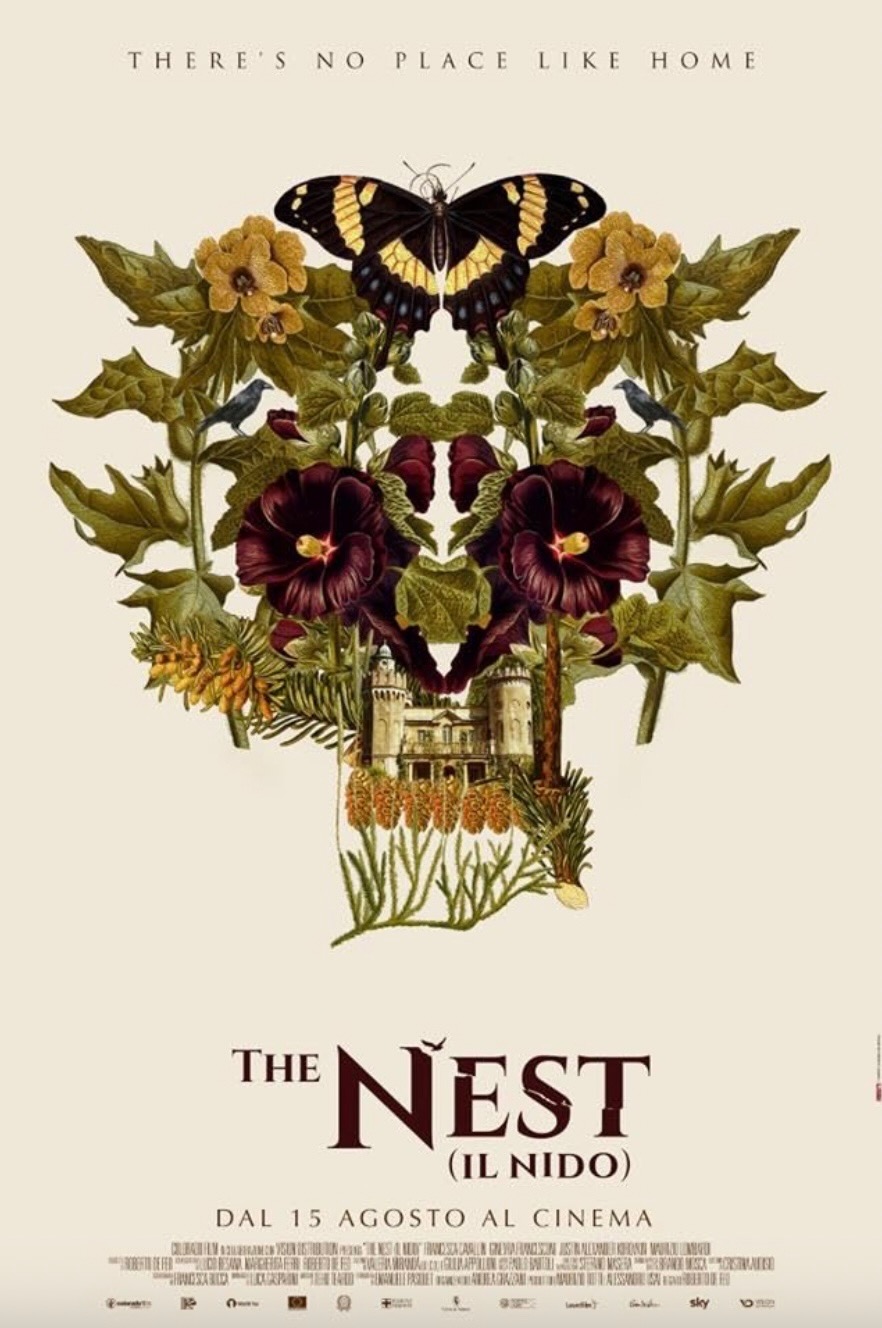
Okay, I’m going to try really hard to do this without spoilers.  There’s a twist ending here that, in my humble opinion, works.  All I’ll say is that the monster may not be what you think it is.  The only problem is that there are at least eight movies titled The Nest, and you’ll need to find one  from 2019 if you want to see what I’m talking about here.  Don’t read any summaries beforehand because you want to let this wash over you and draw you in.  Although distributed by Universal, this Italian Euro-horror remains relatively unknown.  That’s really a shame since this movie delivers.  A woman, an heiress, has a paraplegic son that she never allows to leave the estate.  She’d training him to run things when she can’t and she strictly limits the people he can see.

Teaching him classical culture, she won’t expose him to anything modern.  Then a teenage girl his age comes to live on the estate.  She was being raised by the same man who raised the heiress, but she knows things.  She knows about rock music, and she understand the way the world works.  The heiress, however, wants her son to experience none of this.  Afraid of what might happen, she sends the girl away.  In the meantime, we learn that the heiress kills those who are sick among her staff.  She employs a very creepy doctor who does whatever she orders, noting that she has saved them all.  The question is, is it best to live in such a bubble?  Is life so isolated worth living?  The heiress brings the girl back, but begins, with her doctor, to alter her behavior using electroshock treatment.

The Nest is one of those movies where you spend nearly the entire thing being misdirected.  When it’s over you think back on what you’ve seen and it does make sense.  Along the way, you know something’s not right.  It’s creepy in a way more than old, castle-like houses can account for.  I like gothic films like this.  There are disturbing moments that punctuate what seems like an idyllic lifestyle.  The heiress knows that survival equates to a cultured existence, but she never tells her son why.  This film shares some territory with M. Night Shyamalan’s The Village, in fact, they could be next door neighbors at points.  They both have a similar message, at least in part.  Efforts to build a paradise are beyond human capacity.  We need the outside world even if we fear it.


Beauty of Ruins

One of the things I most miss about living in Scotland is the relative dearth of stone ruins in my home country.  In no way to diminish the culture of American Indians, there’s a particular poignancy about stone—which is supposed to be forever—falling apart.  As a homeowner I’ve discovered that you constantly have to repair to keep any kind of building up—something better suited to those with more money than we have.  In any case, my memories of Scotland quite often center on ruined castles and the gothic dreams that accompanied visiting them.  I can’r recall how many we actually had a chance to explore, but it was many.  And not only castles, but other crumbling structures, including monasteries.  Monasteries are, if possible, even more gothic in ruin.

On a rare sunny day this spring I visited the remains of Bethlehem Steel’s silent behemoth.  This industrial powerhouse took up much of the valley dividing the south side of Bethlehem from the older, more genteel colonial part of town.  While these ruins are modern—the factory shut down only in 1995—and steel, it nevertheless caters to gothic sensibilities.  There is a raised platform that allows visitors to examine the exterior from a safe distance, but still close enough to get a sense of its enormity.  The great steel furnaces and blowers and train cars are rusty after nearly three decades of sitting in the elements.  The roofs are falling in on some of the buildings.  Others have been repurposed or replaced with contemporary businesses.  Walking through, however, you can’t help but to imagine past lives.  This was hard, dangerous work.  For most it meant small rewards.  A living wage.  A modest house.

The Bethlehem Steel stacks are a landmark.  Allentown and Bethlehem merge into one another and out driving backroads it’s sometimes hard to tell which you’re in.  Once you spot the steel stacks from afar, however, you know where Bethlehem is.  Like a star guiding magi, the ruins proclaim that something significant once happened here.  Lives in Scottish castles, I expect, were often boring.  Our “something new every second” culture didn’t exist and news traveled slowly.  There was surely humdrum jobs in Bethlehem Steel as well.  Days when remembering that during World War One this factory produced a battleship per day.  Or when the realization that Manhattan’s skyscrapers couldn’t have existed without the I-beam developed in this plant.  There’s a sense of history about such places.  What makes them fascinating is that they’re falling apart.


Connection

I’ve met a few famous people in my time.  Meat Loaf wasn’t one of them.  In fact, the only real rock concert I’ve ever attended was Alice Cooper, back in the first part of the millennium.  Still, the good folks over at WikiTree like to let you know your degrees of separation from the famous.  With the news of Meat Loaf’s passing recently the connections emphasized were rockers, and I ended up being some twenty degrees separated from Michael Aday.  Every time this happens I wonder why our world doesn’t take better account of how closely related we all are.  Fear is a powerful emotion and fear of strangers runs deep.  Even babes in arms often object to being held by those with unfamiliar faces.  We could benefit quite a bit, it seems, by learning to get comfortable with fear.

Looking at the political mess in the United States it seems pretty clear to me that its main fuel source is fear.  It’s been decades now since I first learned that politicians are well aware of how fear makes people behave at the polls.  This fear is carefully crafted and exploited to try to get the election results desired.  If we could learn to master our fears just think of how things would improve!  Instead, those who have something personal to gain use fear to attain it.  Not that there aren’t real reasons for concern.  Facts such as global warming are real and deserve our immediate attention.  To address them we have to work together.  Instead, many chose to use fear for personal gain, and we let them.

For me personally, engaging with horror is a means of handling fear.  Like most people I don’t want to be afraid.  At the same time I’m fascinated by it.  I can’t scroll past a web page listing scariest books.  I try to go through tallies of the scariest movies made.  In doing so I’ve found that many of my phobias (and there are many) have dulled a bit.  Perhaps that comes with age, but then I’ve read that fear tends to increase with age.  Why not get it out of the way when we’re younger?  What has all of this got to do with Meat Loaf?  I suppose it’s the kind of gothic quality of his songs with Jim Steinman that drew me in.  The songs are all stories and the gothic was among the earliest influences of what would become horror.  Now my fear is nobody will be able to fill that need.  Perhaps the answer is connection.


Dark Lite

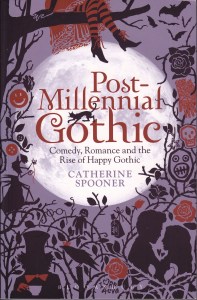
Maybe you’ve noticed it too. While certainly not universal, many forms of Gothic cultural expression (novels, movies, television, etc.) have a playfulness to them. As if taking the genre too seriously might be a misrepresentation. Even Edgar Allan Poe can be caught smirking from time to time. I’ve often wondered about this unusual combination of darkness and light. Catherine Spooner obviously has too. In Post-Millennial Gothic: Comedy, Romance, and the Rise of the Happy Goth she takes on a number of these cultural expressions—both Goth and Gothic—and tries to understand the lighter side that they often present. Sometimes it’s comedy and sometimes it’s irony, but those fascinated by darkness aren’t always as gloomy as they seem.

This book is a real hodgepodge of both British and American explorations of the smiling dismal. It’s a cultural contradiction, maybe, but it certainly feels authentic if you look closely enough. Although Spooner doesn’t discuss it directly, I couldn’t help but think of that great progenitor of the Gothic—the medieval church. Perhaps it was the very real fear of the plague and the nearly constant warfare of the time in Europe, but liturgy, when done right, has a palpable darkness to it. References to ourselves as “miserable sinners” begging God to “have mercy upon us” clearly call to mind some of the deeper elements of the Gothic sensibility. Having attended Anglo-Catholic services for years I came to know many who were compelled by this intensity. A Gothic chasuble is a thing of beauty forever.

Spooner, however, focuses on popular culture. Beginning with the Goth movement of the 1980s, a subculture formed that brought much of this darkness to light. She’s careful to point out that being Goth isn’t the same as being gloomy all the time. It is an expression of creativity, and, as Spooner notes, closely associated with Steampunk. Such things, however, require a recognition on the part of participants that in order to taken seriously, such expressions must become part of daily life. There are risks, however. Even in enlightened cultures we are not yet fully tolerant of those who are different. And really, much of the book is about this—accepting those who are not like ourselves. There is quite a bit going on here that’s beneath the surface. And depth is something the world could use a bit more of. There’s nothing wrong with having some fun while acquiring it, either.


Fighting with Monsters

GothicThe Lady and Her Monsters reminded me of Gothic. A friend of mine in seminary showed me this “shocking” movie by Ken Russell just after it was released on VHS (I always was fond of ancient history). To my young eyes this was a challenging film, but it rated higher in moodiness than scariness. Roseanne Montillo’s book brought the movie to mind because, it turns out, several of the incidents in the movie were based on fact. Perhaps I need to take a step back because Gothic never made it big, and many may not realize that the movie is about the legendary night Mary Godwin (soon to be Shelley) came up with the idea for Frankenstein. In an early nineteenth-century walk of fame, Percy Shelley, Mary Godwin, Lord Byron, and John Polidori decided to write scary stories, as a kind of contest. Only two ever made it to print, Polidori’s The Vampyre, which inspired Bram Stoker’s Dracula many decades later, and Mary Shelley’s Frankenstein. The movie, with Ken Russell’s famous flamboyance, traced an unlikely story of the friends conjuring a ghost and then banishing it once again before the stormy night is over.

Ken Russell had the reputation for being obsessed with the church and sexuality. These interests are certainly well represented in Gothic, where Percy Shelley, famously an atheist and believer in the supernatural, struggles to make sense of it all. Polidori, Byron’s personal physician, is presented as a Catholic who admits, when each has to confess his or her deepest fears, that God terrifies him. The friends (perhaps in an unwitting prelude to a television series by that name) explore sexuality and the supernatural through the long night. Waking nightmares meet them at every turn. They even have a skull of “the black monk,” a character attested in all sincerity, at one time, at the most gothic seminary in the Wisconsin woods.

“He who fights with monsters,” Friedrich Nietzsche opined, “might take care lest he thereby become a monster. And if you gaze long enough into an abyss, the abyss gazes also into you.” That which we worship is that which we fear. Certainly the Christianity of the Middle Ages had as much of Hell as of Heaven in it. Bursting out into the light of rationalism, it seems, did not banish the darkness after all. We still have many questions left unanswered, and many intelligent people have begun to question whether any one paradigm fits all of the evidence. I suspect not. Human experience goes in multiple directions at once. We have ladies, we have monsters, we have scientists, we have God. And on rainy nights we have movies that make us see that we have combined them all into a tale often repeated but never fully understood.


Shelley, Byron, Trelawny, and Ahab

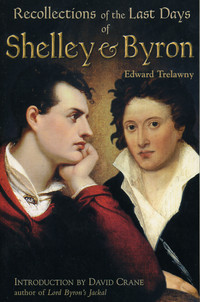
“I took up the word [atheist], as a knight took up a gauntlet, in defiance of injustice. The delusions of Christianity are fatal to genius and originality: they limit thought.” The words come from Percy Bysshe Shelley, according to Edward Trelawny. After visiting the display Shelley’s Ghost at the New York Public Library last week, I was struck by how little I knew of Shelley. I’d read some of his poetry, and had watched the fictional movie Gothic (maybe more times than is really healthy) to get a sense of this candle in the wind, the Romantic poet who died in a shipwreck before reaching 30. Edward Trelawny’s reputation as an historian is somewhat suspect, but he did form friendships with Shelley and Lord Byron and arranged the disposal of their earthly remains. His book, Recollections of the Last Days of Shelley and Byron, while somewhat self-serving, weaves an intriguing account. Among the mementos in the library display are some fragments of Shelley’s skull, taken after his cremation by Trelawny. This erstwhile biographer did prove his mettle by reaching into the pyre and pulling out Shelley’s heart, according to his own account, that eventually returned to Mary Wollstonecraft Shelley, his widow.

Trelawny admired Shelley’s atheism, and even applauded Darwin’s Origin of Species when it appeared. The nineteenth century was setting the stage for a strange Frankenstein’s monster of political and religious backlash against the freedom of the Romantics. Not all of the Romantics, obviously, were atheists, but their works extolled the wonders of nature and a sense of liberty from tyranny that would define them as dreamers and idealists. Lord Byron comes across much less favorably in Trelawny’s account, although their friendship lasted through some difficult times. After the poet’s death, Trelawny claims to have examined his feet, discovering the cause of a lifelong limp. His psychologically astute conclusion is that Byron’s disagreeable personality traits arose from his lifelong anger and anxiety about his birth defect.

Being an ardent admirer of Herman Melville’s Moby-Dick, I have to admit that the elements of anger at the divine for a limp (Captain Ahab forcefully stomps into mind), and the emphasis on ships and shipwrecks (as in Shelley’s death) tie these three literary geniuses together into a knot of suffering and seeking. Religion had consoled many in the nineteenth century, just as it continues to do now in the twenty-first. Among many of those who have endured through their literary works, however, God had slowly disappeared. Not quite as dramatic of a demise as Shelley’s, nor as unforgettable as Captain Ahab’s, but one for which there will be few biographers.