Drac Ops

Just don’t ask, okay?  Like most things in my life, I discovered Dr. McNinja way past when it was popular.  Who knows?  Maybe it’s still popular.  I’m not the best judge of that kind of thing.  I’ve read a few graphic novels in recent years, generally when someone lends them to me, or when a movie I like is based on them.  Now, the thing about Dr. McNinja is that it started out as a webcomic.  People younger and more with it than me have shown me other people younger and more with it than me making a good living web cartooning.  They don’t have 9-2-5s and they live, going by their videos, in nicer houses than I do.  So when someone suggested I look up Dr. McNinja I found an old-looking website saying it was no longer online.  The author had published it in book form.

Even though I work in publishing, I find it difficult to tell if a book is out of print.  We live in that strange purgatory where IP (intellectual property) can be kept on life support until copyright expires without ever really having to print more books when they run out of stock.  They’re never truly out of print.  I’m guessing that’s what happened when on Amazon you see that only used copies are available.  So which McNinja to select?  The one with a cover that riffs off Plan 9 from Outer Space, of course.  That movie keeps coming back into my life.  It’s one of Fox Mulder’s favorites on the X-Files.  In any case, I was hardly prepared for the amazingly creative imagination that Christopher Hastings has.  If you start with Operation Dracula! From Outer Space you’re entering the story in media res, as the academics say.

I confess to liking Teenage Mutant Ninja Turtles when it first came out.  These days the exoticism of eastern Asia is frowned upon by academics, but it’s still there in Christopher Nolan’s Batman Begins, so why not?  In case you’re wondering, there is a reason behind all this.  I can’t tell you at the moment, however.  I can say that if you’re looking for a wild, wild story with lots of unexpected twists and turns, Dr. McNinja will not fail to win approbation.  I’m dithering on whether to go back and start from the beginning—these print volumes are becoming collectors’ items, it seems.  And no matter how much fun it is, reading graphic novels always feels like cheating to me.

Visualizing Twilight

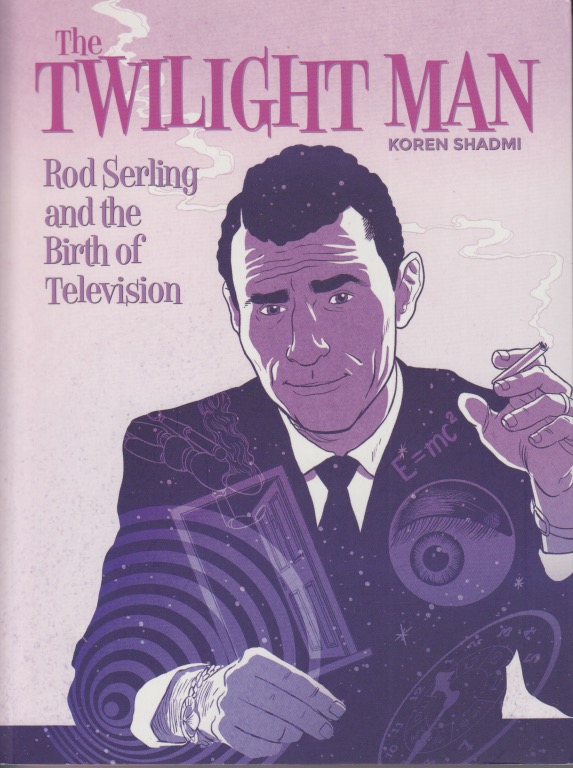
Graphic novels still feel like cheating.  That childhood message that comic books “aren’t really reading” has proven difficult to dislodge.  That, and the fear that we are entering a post-literary world, keep me from reading many of them.  Koren Shadmi’s The Twilight Man: Rod Serling and the Birth of Television, however, caught my attention right away.  Like many other people my age, my thinking was heavily influenced by The Twilight Zone.  As a kid, television had a kind of authority to it.  This is what adults were feeding us.  Although I was hardly intellectual then, I thought deeply about things and one of those things was The Twilight Zone.  The episodes were profound.  The twist endings certainly were among the best on the tube.  Shadmi’s graphic novel of Rod Serling’s life is a tribute to the influence the man had.

For a graphic treatment, The Twilight Man is strangely affective (yes, that’s spelled correctly).  I tend to shy away from hagiographies, and Shadmi’s treatment isn’t one.  It does illustrate, however, how Serling fought against a commercialism that would eventually win out.  Those who control the money control what we see.  Granted, the democratizing influence of the internet has let competition arise from unseen quarters—there are young people who watch YouTube to the exclusion of television altogether—but few shows manage the impact that The Twilight Zone had when there were only essentially three large networks.  Now we have so many choices that cultural reference points are rare.  Those who’ve never seen it, at least for the time being, know what The Twilight Zone is.

This book is biographical, based on published biographies.  There’s something about knowing, however, that the episodes actually happened.  Being in combat (as Serling was) puts some people into their own kind of limbo.  At least one person in my own family was irrevocably changed by fighting in a war.  The remarkable thing is that Serling came out of it wanting justice for all people. The book even points out that he became a Unitarian, although it doesn’t dwell on that point.  Some things, such as spiritual insights, are difficult to illustrate I suppose.  I can  see why Shadmi’s tribute receives good press.  Graphic novels are a means of telling a story that moves people.  I re-learn this each time I read one, which is something I rarely do.  Now that I’m starting to explore this genre I’m perhaps learning to address my own prejudices.  As long as there are still words to read.


Read Ban

Someone in the Greenville County Library doesn’t get out much. The LA Times reported this week that a surprised parent got a look at Alan Moore’s Neonomicon, a graphic novel that her child was reading, and went to the library to get it banned. There is a perverse kind of logic to this. The 14-year-old minor checked the book out from the adult section. The story doesn’t say why, but anyone familiar with H. P. Lovecraft would immediately see the familiarity of the title to his fictional Necronomicon. And anyone wanting to read that is surely above the age of innocence. As a result of this imbroglio another book has been banned. As the parent of a teenager I understand concerns about reading material, but then I know that graphic novels can be, well, quite graphic. I know because I read.

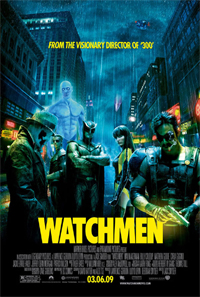
I’m currently reading a fascinating book about religious aspects of comic books. Many of us grew up with comics, and anyone who’s read some psychology knows that people are very much image-oriented. Even our Bibles for children are heavily illustrated—often with drawings nearly as far from reality as those of an Alan Moore story. Adults raised on comic books have been enticed back with such novels as The Watchmen— something that looks like maybe kids are the intended readership, but they’re not. The only way for adults to know is to read. (That, and to consider that the movie version of The Watchmen scored a solid R rating. That little itch should be telling you something.) But reading literature has fallen out of fashion.

While waiting for my bus home one day I decided to take the more local route because the bus was still at the gate when I arrived at the Port Authority. This is a longer ride, but with any luck it might get me home ten minutes earlier. When I asked a woman if I might sit next to her, and I began pulling out my book, she said, “you’re that guy that reads.” Guilty as charged. As I wait for the express bus, I spend the time with a book. Until she said that I never considered that almost nobody else does. Forget the days of earnest looking men, faces hidden behind newspapers, passing the commute by reading. Now it’s all ages and genders, holding electronic devices. Not that I’m surprised. People are visually oriented, after all. But I immediately recognized Moore’s nod to H. P. Lovecraft in naming his novel Neonomicon. I think I might have an idea of what to expect if I were ever to read it. It is, however, far easier to ban books than to take the time to read.

Watchmen