Fragments Etc.

I’ve never counted, but there’s well over a hundred of them.  And a notebook with at least a thousand more.  What have I got in such abundance?  Ideas for stories that remain unfinished.  I’m not exaggerating or inflating numbers, I assure you.  I’ve been writing short stories for a half-century now, many, no, most unfinished.  Thirty-three have been published.  I was reminded of this recently while reading a nonfiction book that suddenly gave me the ending for a story I’d started many months before.  Perhaps even a couple of years.  I started searching through my electronic files for it and couldn’t find it.  Why?  There were too many stories started with frustratingly short titles (my bad).  To find the culprit, I would need to open each one and remind myself what was inside.

A few months ago, I printed out copies of all eight of my unpublished novels.  I also printed out copies of all my published stories as well.  I never got around to the unfinished majority.  I have a feeling that if I printed them I’d find what I was looking for more easily.  This, even with the ease of electronic life, will be quite an undertaking.  I think it may be a necessary one.  Although I’m hardly well known—I’m an obscure, private intellectual, after all—I do have many fiction ideas.  The stories generally come to me with an impression.  The start of an intriguing tale, for instance, or the end of one.  I then begin writing and either write myself into a corner or I scribble until I realize that I don’t know what happens next.  The story sits, unfinished.  Now and again, however, the missing piece is found.  I try to find the story so I can complete it to send out for several rejections.  Such is the writing life.
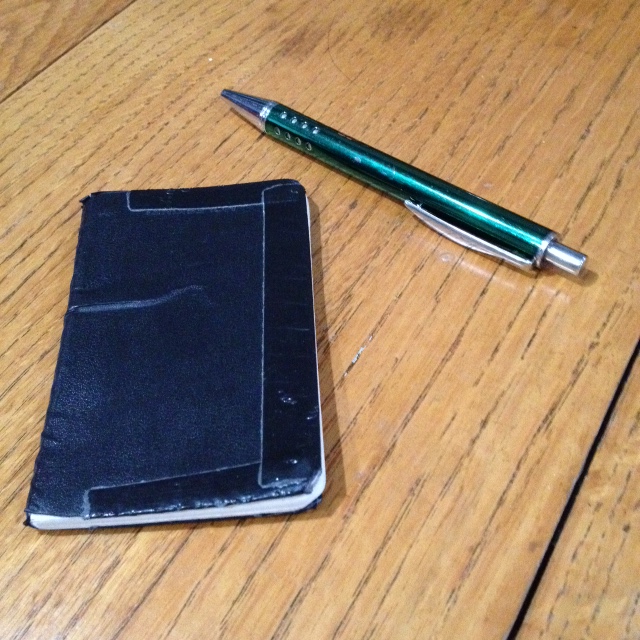
Now, if I could do this for more than the paltry time allotted to personal pursuits, courtesy of capitalism, I’m confident that I’d have far more than thirty-something stories published.  At current count I have seventeen stories ready to send out to literary magazines, several of them already rejected a time or two.  Another twenty finished and nearly ready to send out.  And forty just finished, but requiring a bit of spit and polish.  And these aren’t the fragments.  Don’t get me started on the nearing 6,000 posts on this blog.  Is it any wonder I can’t find anything?  I grabbed my notebook of a thousand fragments and jotted a physical note of how that particular story ends, in case I ever find it again.

A Plea

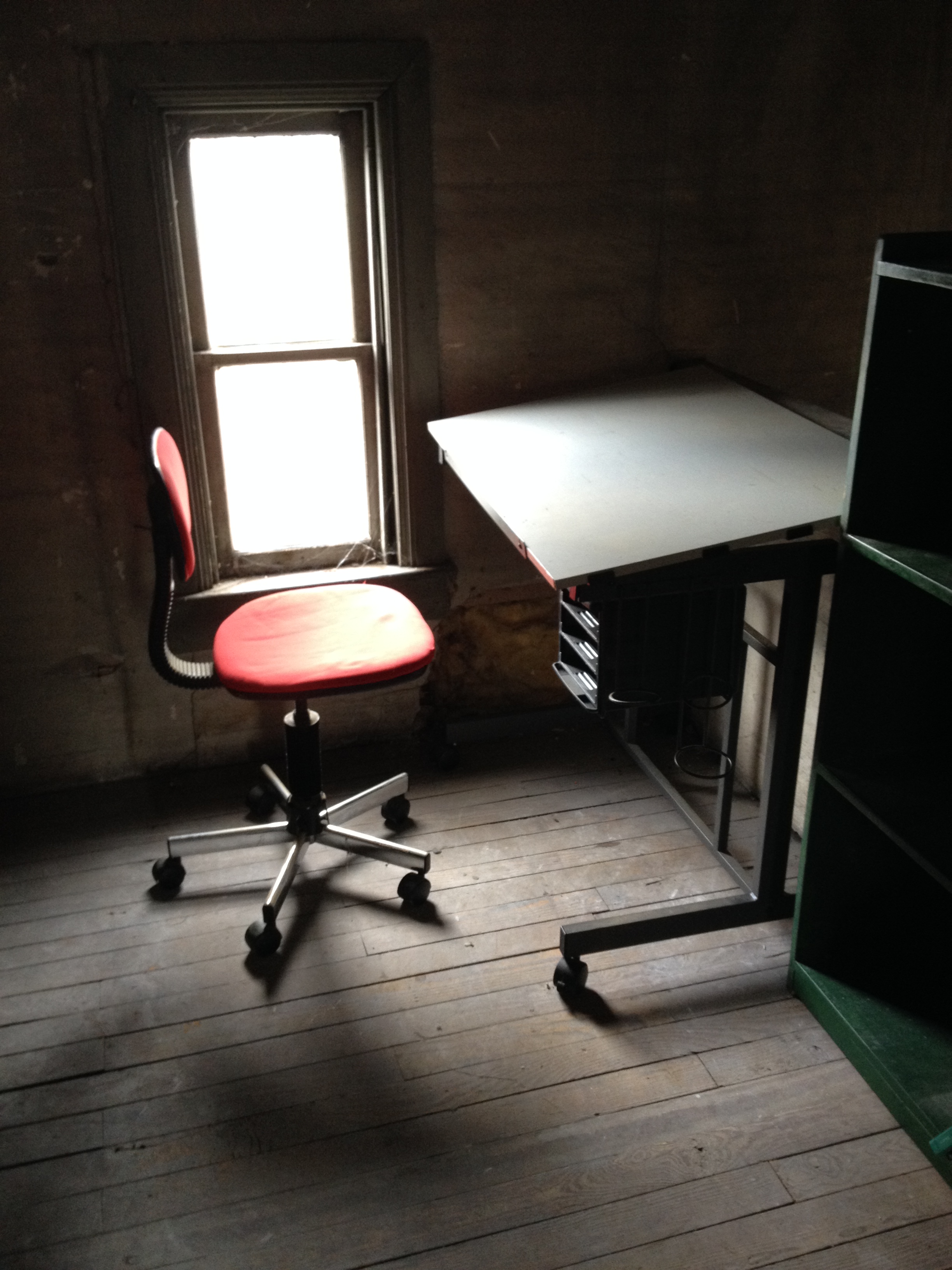
One literary Saturday recently I found myself in the attic.  When we first moved to this house I sometimes wrote up there but I quickly learned that with no heating it was intolerably chilly on autumnal mornings, and that didn’t speak well for the coming winter.  Nevertheless, I set up a shelf with my fiction writing on it.  I was looking for something on that shelf when I discovered many things I’d forgotten.  Novels mostly.  I don’t know how many I’ve started, but I have completed six (now close to seven).  Going through the papers and folders on that shelf I found about 250 handwritten pages of another novel—one that I’d completely forgotten.  There were stacks of short stories, also handwritten, awaiting some recognition.  I haven’t had a ton of success in getting fiction published—the current count is 33 short stories—but I was inspired by what I found.

When my wife and I visited a lawyer some years back to make out our wills, I kept trying (unsuccessfully) to interject a literary executor.  At that point I had published only three books and two of them were academic.  Besides, there’d probably be an extra charge for adding that codicil.  I guess what I fear is that all of this work will just get dumped when I die.  Retirement doesn’t look like a realistic possibility for me, and what I need is time to sort it out.  Some of the novels aren’t good.  I know that.  Some are.  One was actually under a book contract for a couple of years before the publisher decided to kill it when the acquisitions editor left.  I haven’t found a replacement publisher yet.  Then, a few years back, my laptop started complaining about the amount of writing I was asking it to remember.  I had to buy external hard drives to store some of my writing.  Even I forget it’s there sometimes.

Graphomania should have its definition expanded to include those whose thoughts overflow to the point that they’re constantly writing.  There’s a reason I get up so early in the morning every day.  Up there in the attic I found what I was looking for and pulled it off the shelf.  A half-written novel that I had, unwittingly, started to write again presuming that the original had been lost.  All of the writing has been done while trying to hold down a demanding 9-2-5 with no sabbatical and few vacation days.  Not all of it is finished.  Not all of it is good.  But someone, I hope, will stand in front of the dumpster on some future day and say, “This doesn’t get thrown away.”


A Life of Writing

One problem with being a graphomaniac is forgetting what you’ve written.  I’m glad to know I’m not alone in this.  Once we had the eminent historian Owen Chadwick to our house for dinner.  We of course had invited some students as well.  At one point one of the students asked him about something in one of his books.  The famed historian shook his head, not recalling it.  “One writes so much,” he replied.  Now, I’m not comparing myself with a knighted academic of international fame, but his remark in our living room has stayed with me all these years.  There are over 4,400 published posts on this blog, over a million and a half words, by my calculation.  Not even I remember everything I wrote.  “One writes so much…”

Just the other day I was looking for something I wrote.  You see, when I get an idea for a book (which happens frequently) I start writing it.  Inevitably, since I have very little time for writing on a daily basis, given my job, it joins many other partially written books.  Unless something like a book contract happens, my interests shift from one project to another, slowly building each up to near book length.  Once a project reaches that point I try to finish it off.  This involves writing and countless edits.  Holy Horror, for example, went through fifteen rewrites, some of them extensive.  Before it was sent to the publisher other books had already been started.  A conversation the other day reminded me of a book I’d started and I couldn’t find it.

My backup discs are a jumble of projects that take up too much memory on my laptop.  I try to organize them, but when a computer warning comes on while in the middle of a project one tends to cram things aside until one has room to finish up what one’s currently working on.  All of this authorial drama takes place before the sun rises, and when enough time passes I don’t always remember which file I put that old project into.  What did I even call it?  Writing, you see, requires constant practice.  Working nine-to-five creates a sense that you owe a great deal of time to your employer.  (Ironically, in my case, helping other people get published.)  The people I talked to the other day thought that that unfound idea sounded like a viable book.  Perhaps it is, if only I could remember where I put it.  Meanwhile I remember Sir Chadwick’s words from a quarter-a-century ago.


Graphic Graphomania

You can spot them fairly easily.  Graphomaniacs.  Perhaps it’s a bit closer to the surface when you work in publishing, but the person who writes too much can run risks.  Some authors turn out a book every few months.  While this may be okay for potboilers, for academics it is seldom possible to do this well.  Research and reflection take a long time.  Those who churn out book after book sometimes wonder why their works don’t sell.  Graphomania has to be reined in.  Horses have to be held.  I’m sympathetic, actually.  If you write every single day you’ll soon end up with a surplus.  So much so that your computer will tell you to empty some stuff out or it’ll go on strike.  I had to order a new terabyte drive this week exactly for that reason.

To free up some additional space on my laptop I went through the many, many folders that have essays, book drafts (both nonfiction and novels), stories, blog posts, etc.  While I didn’t throw them away, I had to clear them off my working disc.  As I did so I realized that the great majority of these writings will never see the light of day.  There are really a lot of them.  Part of the problem is you never know what you’ll feel like writing when you get up in the morning.  Sometimes the best ideas come after a wretched night’s tossing and turning.  Well-rested you can get up to a brain so content that it doesn’t have much to say.  Or that story you started yesterday may seem dumb today.  That nonfiction book that burned with passion just last week may now seem lame.  My fear is that by moving them off my hard disc they’ll become forgotten.

The terabyte drive is a thing of wonder.  It can hold so much information.  I have to go back and hook it up to my laptop to find it, however.  Out of sight, out of mind.  I’ll move on to other things.  I honestly can’t count the number of projects I have going.  Graphomania can be a problem.  This blog is a daily outlet, and you, my faithful few readers, are saints for coming back.  In my attic, next to the brick wall of external hard drives, are folders full of handwritten material.  Many of them are stories that are complete, but that haven’t been transcribed.  Some writers suggest flooding the market with your stuff.  Others of us know that graphomaniacs are feared in some quarters, and so we keep our own counsel.

Photo credit: NASA


Drowning in Words

One of the features of this blog, which as inclined more lately toward books of all sorts rather than simply religion, is that I only write one post per book read.  There’s no law that says this should (or must) be the case, but I’ve held myself to that standard for about a decade now, and if I have trouble recalling a book this blog is generally a kickstarter for my memory before hauling myself off to the attic to find the physical copy—long live print!—to do a bit more detailed work.  This method sometimes leads to crises of my own making.  Long books take some time to get through.  And despite the action-packed picture you get of my life from this web log, many long weeks are spent doing work and I can’t really share the details here.  And so it goes.

Like many people I read multiple books at a time.  Although I have a kind of general plan, the actual books being read at any one time often depend on my ability to lay my hands on a copy.  And since I’m in the final stages of Nightmares with the Bible, I tend to prioritize books I really should read in whole for that tome.  I also read (and write) fiction.  Normally I reserve my fiction for bedtime reading; it’s more pleasant to prepare for sleep with an engaging story that I know isn’t factual enough to haunt me.  Sometimes the fiction is a long book too.  Two lengthy books going simultaneously feels like trying to pass a truck going uphill.  Or swimming underwater.  The insistence of the necessity of taking a breath (writing a blog post on a book) strains against me as I look up and see the surface still some distance away.  Drowning in words, however, isn’t that bad.

As I confessed to a friend the other day, I am a graphomaniac.  I write incessantly.  To do that it helps to read incessantly.  At any one time I’ve got several books going, and I’ll let you know when I reach the end of any of them.  This is, I suppose, the bookish life.  Ironically I read more now than when I was a professor.  Those days were filled with lesson prep, teaching, and reading student papers.  Grading tests.  Fulfilling administrative duties.  On the days when I feel like lamenting my lack of time (and those are most days) I need to remind myself that a great deal more of my effort is now spent with books than it used to be.  You’ll have to trust me on that since I don’t always get to write about reading until the long books are done.  And that’s okay by me.


The Truth of Fiction

The thing about reading is that it’s a lifestyle.  I record books both here and on Goodreads, but I read a lot more than books.  Although I don’t have much time for magazines or even newspapers, I read a lot on the web.  And billboards.  And sidewalks.  I’m quite content doing it.  One thing I’ve noticed in all this reading is that fiction writers tend to be more often cited as experts and intellectuals than do non-fiction writers.  Oh the non-fic practitioners get their footnotes, and other specialists mention them, but fiction writers get analyzed, probed, and explored.  Literary types wonder what they meant by some obscure doggerel they wrote.  When’s the last time a non-fiction writer drew that kind of attention?  It makes me wonder about all the time I’ve been spending on non-fiction lately.

I suffer from graphomania.  There’s no cure.  The other day I went looking for an old, pre-electric typewriter to get my fix in case the power goes out.  I have notebooks, zibaldones, commonplace books.  I carry one in my pocket.  I have one on my bedside stand.  And the thing I’ve noticed is that the ideas that come to me unbidden are often fictional.  You see, I have a hidden life as a fiction writer.  That persona is very poor since he’s never made any money from his writing.  He was nominated for a Pushcart Prize some years ago, but he never won.  That fiction writer has been suffering cabin fever because I’ve been finding publishers for my non-fiction work.  I wonder, however, if maybe I shouldn’t be spending my time on fiction.  It’ll never get me to the point I can make a living on it, but it might get quoted after I’m gone.

Writing, after all, is a stab at immortality.  Those of us who do it are legacy builders.  Even as the web has moved us more and more toward visual, iconic forms of entertainment, it has still left a few dusty corners for the written word.  When I pass the sometimes impressive graffiti on the way into New York I think I know what the vandals are feeling.  We’re kindred spirits.  We don’t want to be forgotten.  Whether with spray can, fingers on a keyboard, or fountain pen (or maybe even an old-fashioned typewriter) we are trying to say, “I was here.”  I used to print out all my blog posts in case the web failed.  It grew to thousands of pages.  I had to stop.  I was beginning to act like a fictional character.