Diggers, Ranters, and Muggles

Great Britain, despite its relative secularity today, has historically been the Petri dish in which many religions have been cultured. A large part of this phenomenon derives, I suspect, from the relative indecision during a crucial period of what the official religion should be. It is quite possible for a state to dictate a religion, and historically religions have often served the purposes of the state. Governments support the religion that serves them best. Beginning with Henry VIII, however, Britain had a difficult time making up its royal mind. The Church (in Rome) had decreed divorce immoral, and the interests of patriarchy run deep in some men’s souls. In the flip-flopping between Protestant and Catholic that took place, many new groups emerged from the froth. The True Levellers, popularly known as “Diggers,” were one such group. Taking the book of Acts literally, they believed true Christians should have everything in common. They formed farming communities (digging the soil) to support themselves as dissenters. As with most utopian communities, however, this kind of radical sharing just didn’t last. After only two years the Diggers had disbanded.

Around the same time another sect known as the Ranters abounded. The Ranters, early rivals to the Quakers, held ideas well beyond the simple communism of the Diggers. Pantheists in an age of omnipotence, they didn’t really stand a chance of survival. They didn’t trust the authority of the church, and being Christians, as well as pantheists, they urged their English compatriots to listen to the Jesus inside instead of the one proclaimed in a limited way by the church and the Bible. Their antinomianism led to the perception that they were a threat to the social order. Interestingly, there seems to be evidence that the movement was somewhat widespread in the seventeenth century. Eventually they disappeared, absorbed into the Quaker movement or simply losing their cohesiveness by dint of their native antipathy to order.
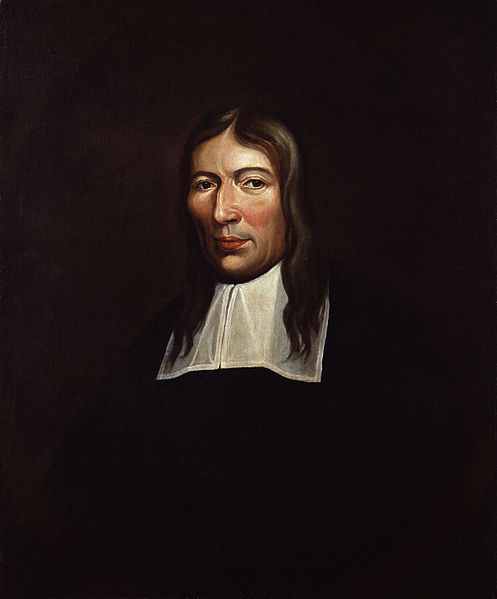
Mr. Muggleton, I presume

One of those influenced by the teaching of the Ranters was Lodowicke Muggleton. Technically a tailor, Muggleton is remembered as a religious thinker (a rarity in itself) largely because of his writings and Muggletonianism, which he founded (and which lasted until 1979). Apart from the Ranters, he also rejected the Quakers. Muggleton believed only in that which could be physically embodied, denying many aspects of an early modern world still alive with miracles and superstition. Even angels were beings of pure reason. Tracing the origins of fictional concepts may be a fool’s errand—and if so I am well qualified—but I wonder if J. K. Rowling’s “Muggles” derive from the name of this former Ranter who came to see life as having no magic. Muggleton’s world had no place for witches, magic, or divine intervention, yet it was profoundly religious. Once religion enters the public domain, it is sculpted to the satisfaction of individuals in search of their own meaning. Some of those searchers will be Muggles and others will be Ranters and a few may remain Diggers. Without any of them, the fabric begins to unravel.


Latin Goddesses

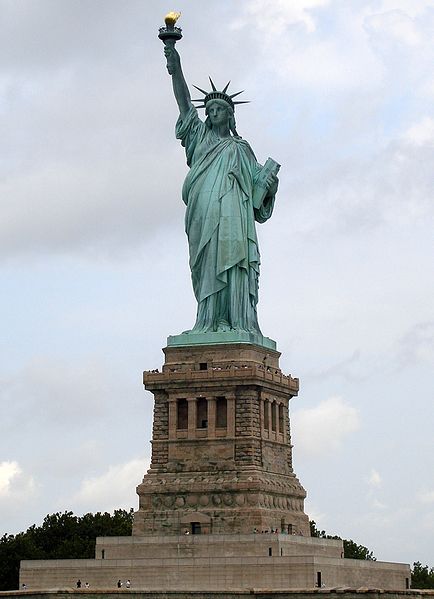
Armed with her shield and trident, as if blending those ancient rivals Athena and Poseidon, Britannia sits proudly atop buildings and plinths of the United Kingdom. She is an hypostasis of the island itself, and as Britain catapulted toward empire status, the goddess was adopted as her protector. She even appears on the coin of the realm. Literally. Across the Atlantic Ocean, those coming into New York City via boat (and occasionally jet) see the familiar green lady standing in the harbor. Generally called the Statue of Liberty, the woman is actually Libertas, another Latin goddess, the personification of freedom. She too has appeared on the coinage of her adoptive nation, although she has been replaced mostly by the more human heads of state and symbols of civil religion. In Great Britain, Charles Darwin appears on the reverse of the ten-pound note.

I’m sure that Britain and the United States are not the only nations to honor goddesses in their national mythology. Whenever nations want to display what is truly noble and to symbolize their highest aspirations, they choose goddesses. Ironically, some of the nations to do so hold a stringently Christian view of themselves, as if Yahweh were battling it out with an old, divorced spouse. Civil religion, however, should not be confused with doctrinal belief systems and dogma. These insidious agitators have forged the weapons with which religions daily clash. Masculine religions brook no rivals.

As Britannia sits in my pocket, and Libertas reigns in my head, I think of the nations run with male agendas and their goddess consorts. The temples to Britannia and Libertas are in the Square Mile and on Wall Street, for lucre always assumes the superior position in any relationship. I fondly recall the days when goddesses had actual power. Of course, the skies have always been empty, with the exception of our imaginations, but once the belief that protective goddesses were there gave humans cause for hope. Maybe they grew a little ambitious now and then, but the Latin goddesses always had the best interest of their patrons in mind. Have we outlived our need for goddesses? That will only happen when mothers and nature’s best protectors are no longer necessary. The Latin goddesses will long outlive our civilization.