One to Tree

Asherah’s in the news again. My book on the old girl safely moldering on obscure library shelves, I figure it is my academic duty to be a staid voice of reason on the subject. The jury’s still out on her status as Yahweh’s wife – no wedding pictures have yet surfaced – and her associations with lions and snakes have always been suspect. It is clear, from the Bible’s perspective anyway, that the physical object called by the goddess’s name was made of wood. Although such a slight association does not a tree-goddess make, it nevertheless runs counter to scholarly orthodoxy to suggest otherwise.

In the Rabbinic period it had become clear that just about any tree in the right location could serve as an asherah. So it was with a double-take that I looked at the cover of my Green Bible. I began using the Green Bible a couple of years ago because of the environmental impact of the millions of Bibles printed annually. Best estimates are that about six billion Bibles have been printed (about half of which have been sent to me by various vendors as textbook options) and I was hoping to at least use a recycled book to ease the burden. Then yesterday it clicked for the first time: the Green Bible has a tree on its recycled cover.

Asherah seems to have had the last laugh. If she was a tree-goddess. The fact remains that Asherah is a difficult goddess to qualify. She may have been associated with trees, or lions, or snakes, or wisdom, but none of these things has been proven beyond reasonable doubt. She was, however, the spouse of the high god El among the people of ancient Ugarit. And the Israelites accepted without qualm that El was essentially the same as Yahweh. Did he bring his former spouse along? We don’t know. Asherah, as her own person nevertheless, is a wonderful example of the feminine divine. Too bad she doesn’t have her own book.
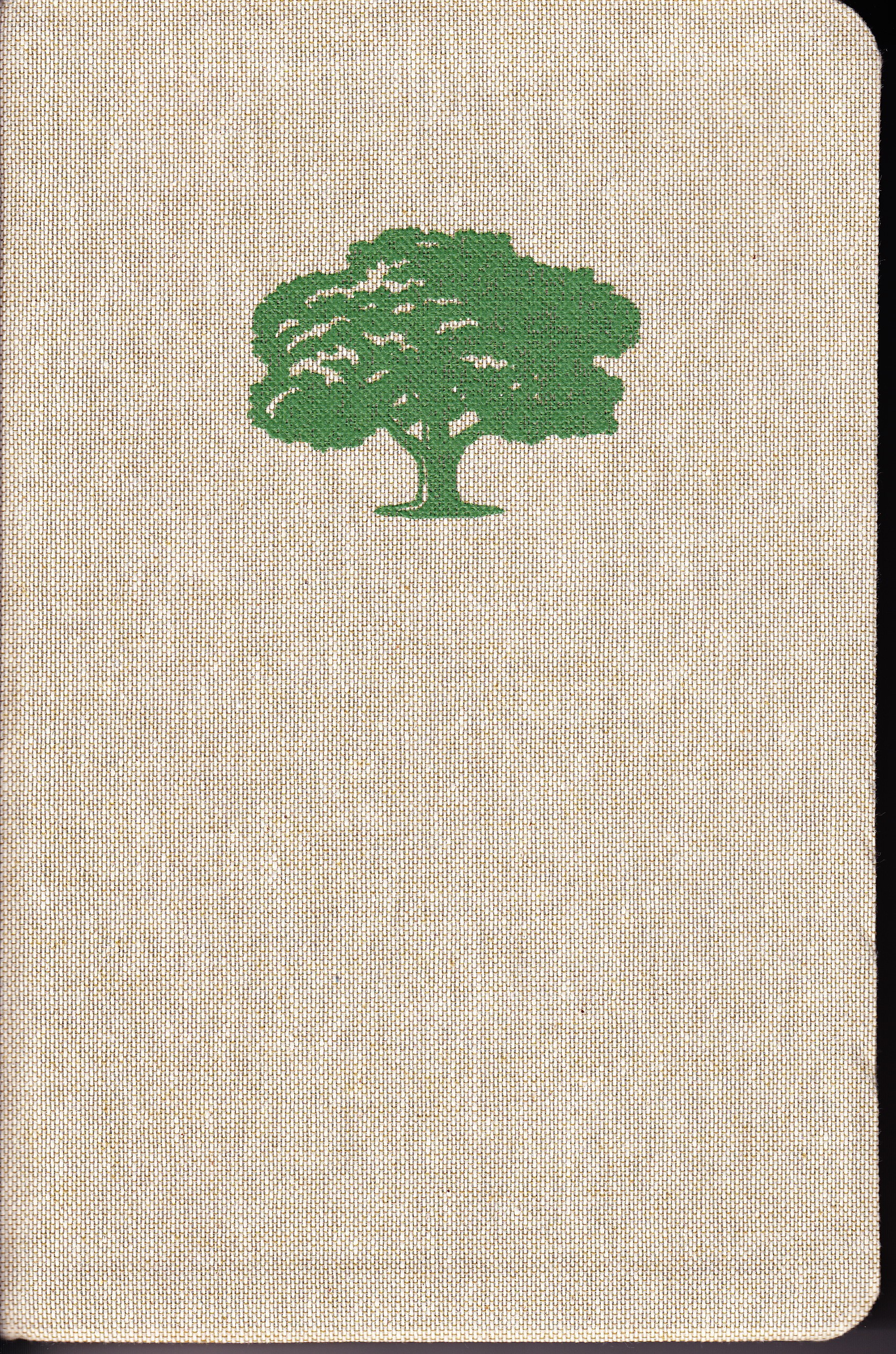
God's wife on the cover of his book?

Green Bible


One of the most heinous theologies to emerge from Christendom is the idea that exploitation of our planet is good for the soul. The idea, apart from having been foundational to Bush II’s administration, is based on the idea that if we mess up our world badly enough we will force the divine hand into sending Jesus back to clear up our detritus. The Second Coming apparently will be in a garbage heap rather than a garden. Christian businessmen rest secure knowing that their exploitation of our natural resources is all part of God’s master-plan. This “theology” is alive and well among many Neo-Cons and it insists that the fact of global warming is a myth and the myth of creationism is a fact.

One of the unexpected perpetrators in the war on our planet has been the Bible. Accurate records of the number of Bibles actually printed were not kept in the early days of Gutenberg’s dream machine, but current estimates place the number of Bibles printed at over 8 billion. That’s more than enough for one per person. Some of us would have to confess to owning multiple copies, making us perhaps guiltier than the rest. It was in an effort to stem the dendrite slaughter of this industry that I shifted to the Green Bible for my classes last year.

Some people treat the Bible as an object of veneration, never laying it on the floor or putting other objects atop it. Some people object to making Bibles out of “inferior” products – the Green Bible is printed on recycled paper and is biodegradable – but to me this seems to be the most responsible way to produce a book with the enormous environmental impact that the Bible has. I could live without the “green letter” sections intended to prooftext the Bible’s environmental concerns, but care for our planet trumps good taste at times. If anyone from Oxford University Press is reading this, the eco-friendly aspects of this Bible are what reluctantly switched me from 15 years of requiring students to purchase the New Oxford Annotated Bible! It is time that the Bible owned up to its part in our planetary plight.