Clown King

Like many people, I enjoy a Stephen King novel from time to time. King has a talent for drawing you into his tales, and whether or not they’re scary you feel a kind of relief when they’re over. A few years back I read IT. I was prepared to be scared because many people talked about fears of bathrooms after reading it, and, of course, of the terrifying clown. Not being a fan of serialized television movies, I never saw the 1990 movie adaptation. Besides, reading a novel that long is a serious investment of time, and since I like to hear lots of different voices in my reading, I spread out the wealth. In any case, the novel didn’t scare me beyond the neighborhood bullies (who’ve since moved to Washington DC) and I moved on to other things. The new film adaptation has people talking about IT again, and clowns, and clowns always remind me of college.

During the late 1970s and early ‘80s, it was fashionable for Christians to clown around. Taking cues from Paul’s one-liner about being fools for Christ, evangelicals began to experiment with clowns as a means of witnessing. I got involved my freshman year at Grove City College. I researched clowns. Where had they come from? What was the proper way to do it? Was there a deeper meaning? A friend recently sent me a video from Origin of Everything on the subject. I see a lot has been added to the history that I once studied. The idea of the circus clown is one of the more recent innovations of a character that was, in origin, a bit frightening. In classic horror movie style, heavy makeup functions like a mask and we rely on faces to know if someone is friend or foe.

We were taught, in our rudimentary training, that clowns do not talk. To express yourself you had to exaggerate gestures. I learned that makeup did indeed free you from social constraints. The Christian clown, however, had to be good. We weren’t meant to scare anyone into heaven. As nights are growing longer and people’s thoughts are coming to grips with the end of summer, clowns make good companions in the dark. IT may not be King’s scariest novel, but he did understand that bullies and clowns are fears that never go away. And when you combine the two, and move them into the White House, vaunting white faces and corrosive social values, well, maybe it’s time to go to the movies and try to have artificial fears for a while.

Making Prophets

I first read 1984 around its eponymous date. The context is informative. I was a student at Grove City College, a conservative, Reagan-esque school of strong free-market inclinations. Being a first-generation college student I knew nothing of choosing a school, and since my upbringing was Fundamentalist, and since Grove City was a place I’d been many times, it seemed the natural choice. As my four years there wore one, my conservatism became effaced before what should be the effect of higher education. I was reading and learning new things—ideas that in the pre-internet days were simply inaccessible to someone from a small town which had no library, no bookstore, and, to be honest, no charm. How was someone supposed to learn in those circumstances? Largely it came down to high school (for those who finished) in a nearby town, and television. George Orwell saw the potential of the latter far too clearly.

It was in this great conservative bastion that I read 1984—I don’t even remember what course it was for. I do remember vividly the discussion of the Appendix on Newspeak—that it was a danger, a very real danger, to engineer language to prevent free thought. That was conservatism in the literal era of 1984. When that year passed we breathed a collective sigh of relief that Orwell’s prophecy hadn’t happened. Maybe Orwell wasn’t a prophet after all. The thing about prophecy, however, is that it unfolds slowly. Trump may have caught the world by surprise, but the evidence is there that the Orwellian groundwork was being consciously laid from the time of the Clinton Administration onward. Those who seemed to think Ingsoc was onto something good began working in local politics—the level of school boards and state elections, to build a strong conservative bloc. How many states have Republican governors? Go ahead and look it up, I’ll wait.

Progressives blithely moved ahead, making real ethical strides. One problem that they’ve always had, however, is believing that Evil is real. It’s an outmoded idea, fit for Medievalist thinking only. There are, however, very real racial supremacists out there. And avowed, unrepentant sexists. They feel that the great white way has been slighted and they are itching for revenge. Don’t believe me? Turn on the news. This is not your father’s Republican Party. In 1984 the Republicans were warning us about 1984. By the next decade they were actively emulating it. Orwell died paranoid and the world was relieved as his prophecy was harmlessly classified as fiction.


The Scofield Connection

While reading about Cyrus Scofield recently—and that book has stayed on and played with my mind for some reason—I ran across the conferences that he held in preparing his famous reference Bible. Although he claimed the sobriquet “Doctor,” placing D.D. after his name, like many a self-puffer Scofield has no university that will support the claim. (It’s amazing how many high-level CEOs and “important” businessmen pad their résumés with false degrees. Even some government wannabes do it, and then they want to defund education after they get into office.) Perhaps because he had no seminary training, and likely didn’t even graduate from college, Scofield might’ve felt a sense of insecurity when it came to a very large book originally written in languages he couldn’t read. There’s a reason “King James Only” Christians exist. In any case, he set up meetings in a couple of conspicuous places to go over his work. One of those places was Grove City College.

Now, like many small, Christian colleges, Grove City isn’t widely known. Most of the student population—at least when I was there—was fairly local. Pennsylvania, Ohio, and New York, for the most part. Still on the (admittedly rare) occasion when someone asks me where I went for my undergraduate work, they generally haven’t heard of Grove City at all. Even though I spent four years of my life there, I had no idea about the Scofield connection until I read Joseph Canfield’s book. That’s because not all Fundamentalists grow up with Scofield. I’m sure I heard about the Scofield Reference Bible but I didn’t own one and I wondered what the big fuss was all about. After all, the annotations were the work of a man, and I was interested in the words of God. Far more popular was the revision of Scofield known as the Ryrie Study Bible, but I never read that either.

The end result is that many people think that Scofield’s words are “the Bible.” As I used to tell my students, binding pages together within a book makes a statement. If you’re saying “this is the word of God” and part of “this” is Scofield’s annotations, most people can’t distinguish between text and commentary. I eventually acquired a Scofield Bible, not for valid information, but simply for information. I was amazed at how poorly executed it was. Nevertheless, a true believer reading through the first chapters of 1 Chronicles is ready to accept even minimal narrative as divine. So it is that many Americans have come to believe in a Bible that’s not biblical. Religion is full of paradoxes and in this case I’d shared sleeping quarters with one in my more formative years although the connection was unknown at the time.


Sell-by Date

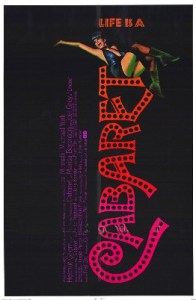
Labels give us the information we need to enact our prejudices immediately. Having been on the receiving end of great cruelty by “conservatives,” for example, I’m immediately cautious of anyone bearing that brand. A strange confession, perhaps, from someone who grew up in that camp. I struggle to remind myself that a label’s not a person. For example, I had a very good education at Grove City College, a conservative school. It wasn’t uniformly that way, of course. Now having a better sense of higher education politics I can see how this might happen—how a school committed to a doctrine might inadvertently challenge that view in the name of education. Quite a few things swayed me to broaden my view as a religion major at Grove City. One of those collegiate experiences was watching Cabaret.

Enough time has passed that I can’t recall the exact context of the film. I suspect it was a weekend entertainment required by some humanities intro course. For a kid from the sticks, seeing a ménage à trois on the big screen made a deep impression when I’d always thought of the world in binary terms. The larger message of the film was not lost on me, however, that those who are prejudiced will always find ways of expressing their hatred, if society will let them. Last night I watched Cabaret again. As a movie it hasn’t aged a day. Society, however, seems to have regressed back to those days when a Nazi could stand and proudly sing at a social gathering and others, distressed by economic hardship, would willingly  overlook the evil that lay in plain sight in the hope of change.

Back when the film was made I suspect the Vietnam War was on the public mind. We thought we’d safely gotten beyond the fascist threat. In the scene where the boarding house residents are complaining about conspiracies between “Jewish bankers and Communists” it became clear that people fall for the same tactics time and again. Rumors, fear, and economic disappointment are a dangerous combination in a democracy. The players have changed but the fact of fascism hasn’t. We can see it being enacted plainly, as it has been every day since 11/9. Accommodation is more deadly than conservatism. As the story opens Nazis aren’t welcome at the Cabaret. By the end they predominate there. Their hateful agenda had been accommodated, normalized by the press. And who can forget the song that could well be the anthem of the current administration, “Money Makes the World Go Round”? There’s an accurate label for that, I’m sure.


Ready, Ames,

Ames, Iowa is famous for many things. Not only is it where my wife grew up and where we were married, but it’s also the home city of Howard Bannister from What’s Up Doc? and it served as the staging ground for the crew of Twister, which includes some scenes shot in the area. Probably its greatest claim to fame, apart from the sadly defunct Do-Biz Cookies, is being the location of Iowa State University. Often I lingered near campus during family visits, wistfully hoping that someday someone in the religion department would welcome me among the faculty. My academic curse, however, is a powerful one. And that brings me (finally!) to the topic of this post—the haunted history of ISU.

Even the first president had a biblical name.

The website onlyinyourstate (we’re evolving out of the need for a spacebar) has a whimsical story about the hauntings on ISU’s main campus. The story isn’t scary at all, but it does raise that interesting specter of the ghosts of higher education. I’ve read a few of Elizabeth Tucker’s books about haunted campuses (Tucker teaches at another family school, Binghamton University) and, having spent a good deal of my life in academia, I’ve heard many tales first-hand. The very institutions that repeatedly bash our heads with facts can’t escape their own spooky pasts. Even conservative Christian Grove City College had its share of hauntings that we all knew about. You know, the Ketler ghost, and the spirit of the basketball player who broke through a glass door and bled to death right there on campus? Every campus I’ve known has had its baleful wraiths.

Sometimes I wonder if such stories aren’t a natural reaction to having the wonder excised from the world as we mature. Most of us can make it through high school somehow believing in the real possibilities that the world might offer, only to graduate from college to a 9-to-5 existence robbed of any supernatural splendor at all. Is it any wonder coeds see ghosts? Just the other day I read that a tree trimmer with a high school education in Iowa makes a much higher salary than I do with a Ph.D. working in New York City. Maybe that’s why I enjoy the movie Ghostbusters so much. When the reality of higher education and its politics and cruelty become clear escapism can be your best friend. And if you find yourself in Ames, you might want to avoid Friley, just in case.


Alma Mater Matter

I was a teen-age religion major. Okay, that’s a bit dramatic, but I did start college at 19 and, being a first generation matriculant, had no idea about majors. No idea about colleges either. The school you choose stays with you for your life—especially if you decide to go into academia. A couple of recent events brought this home to me again. Grove City College is stridently conservative. Since I was raised Republican, it felt like a good fit at the time. It was cheap and close to home, and since my parental contribution was a total sum of zero, both of these factors counted heavily. Overlooked by many a hiring committee, it was also academically rigorous at the time. For better or worse, it’s now on my permanent record. Enough ancient history.

Recently a colleague asked me about an author, noting his undergraduate degree was from a school not unlike Grove City. I saw myself from the outside (yet again). Conservatism can be a lifestyle choice. My fellow religion-major grovers mostly went on to Gordon-Conwell Theological Seminary or other bastions of further conservative thought. Their minds were already made up. In their early twenties, no less. I headed to Boston University, at the time the most liberal of the United Methodist seminaries, by reputation. But still my record says “Grove City.” My academic writings should leave no doubt as to my scholarly outlook (most of these papers are available on Academia.edu), but there is always a shadow of suspicion over a former grover. You can’t change your alma mater, no matter what the next decision you make says about you.

Then I came across a recent writing sample from one of my Grove City professors who’s still on the faculty. This piece showed that as this faculty member was in the early eighties, so he is still today. Biblical literalism all the way down. With over three-and-a-half decades to read, that’s incredible to me. I guess I just don’t share the kind of arrogance that declares you got it right the first time and that everything you read confirms a literal Adam and Eve. And a snake and a tree. What am I to think when I see a conservative undergraduate school on someone’s academic record? I would hope that I would know to look at the next step to see what that reveals. I am a grover, but a bad grover, I guess. You have to know how to read a permanent record.

Photo credit: The enlightenment at English Wikipedia

Photo credit: The enlightenment at English Wikipedia


On Practicalities

In a world where a metaphorical ton of money may be made by corralling electrons into specific shapes on an LCD screen, it may be easy to think of learning dead languages as a kind of autoerotic mental enterprise. Who has the time for clay-writing anymore? We have “money” (that we never see) to “make” at the click of a mouse. Although honestly, who uses a mouse anymore? So it was strangely gratifying to see Aviya Kushner’s article “Why Dead Languages Like Akkadian Still Matter” on Forward. Unlike Kushner, I didn’t grow up with exotic dead languages. Not even Hebrew. We took our Holy Bible neat. King James, of course. In English, just like God meant it to be. When I’d read every English translation available in my small town, I began to wonder about the original languages. I taught myself the Greek alphabet before going to college, but even at Grove City I couldn’t find any faculty willing to teach Hebrew. There was obviously something mysterious here.

Hebrew, generally printed in a calligraphic font, is difficult to teach oneself. Once I began, however, I had to learn what came before. That alien, runic Phoenician script fascinated me. Cuneiform even more so. I spent my graduate years pondering over Ugaritic, learning as much Akkadian as I could along the way. Then I realized Sumerian might take me even further back in history, but it was time to get a job. Earn a living. Make some money. Or at least some electrons.

img_2965

As Kushner shows, however, these ancient languages tell us how we got here. Those who earned their own day’s equivalents of millions of electrons used to spend their excess wealth on ancient clay tablets. I’ve seen them in private collections in various parts of the world—they seem to validate those who can’t even read them. Artifacts can be status symbols. Having spent years learning the finer nuances of Ugaritic, I eventually had to put my interest into my own personal museum. Universities—the only places that can afford to offer doctoral programs in impracticalities for the unwary—are the sole bastions of employment where cuneiform might come in handy. The irony is that many scholars have to travel to private collections to examine a tablet that some entrepreneur has purchased, but can’t read. Its meaning is lost to the world, but it is valued for it’s power to confer status on its owner. Those who might be able to read the thing, unless they are very lucky, will be out chasing electrons in the hopes of paying the rent. What could be more practical than that?


Sorry about That, Chief

What’s worth $20,000? An apology. That figure may require some adjustment for inflation, but back in the days when I was taking conflict management training it was right. Our teachers informed us that court decision costs were lowered by $20,000 when a client apologized. I’m sorry, but I don’t see that money should be necessary for an apology. Nevertheless, in a world motivated by money, this is a factor to keep in mind. With some of the very late apologies that have come out in recent years (the church apologizing to Galileo, and to the “witches” executed in the Middle Ages) comes the realization that too late is, perhaps, better than never. Often in cases such as these, a religious bravado just can’t back down. Doctrine is doctrine and you can’t change it without losing face. This doesn’t just impact large bodies like the Vatican, either. Lots of religious groups have apologies that they could, and should, make.

Grove City College is a small school. It has, from reports I see, become more conservative than it was when I was a student there. One suspects there may have been some apologies due over the years. I was surprised, however, to find GCC mentioned in the Christian Century. A former professor at my alma mater was fired for refusing to register for the draft in World War II, according to the story. Howard Pew, chair of Sun Oil (and the board at Grove City) accused him of being a communist. Now, over half a century later, the former president of the college delivered an apology to his door. That’s a nice gesture. Former faculty are generally, in my experience, shoved far from mind. We don’t like to treat those who educate too well, some times.

Photo by "the Enlightenment"

Photo by “the Enlightenment”

For the unapologetic professor, the greatest sense of satisfaction comes not from humbled administrators, but from grateful students. On very great occasions I still hear from some of mine. It makes up for some of the pitfalls along the way of an academic life. Teaching religion, naturally, puts you in some company that you might not expect. Of all anathema topics, teaching about being decent to other people earns you the most rancor. So it is, unfortunately frequently the case among our educational institutions. Pew, whose shadow still loomed large over campus in my undergraduate days, never personally apologized. Those with plenty of money to spare seldom do. $20,000 is not too much to pay to feel completely justified in taking another person’s livelihood away. We can only hope for a better educated future.


Witnessing Angels

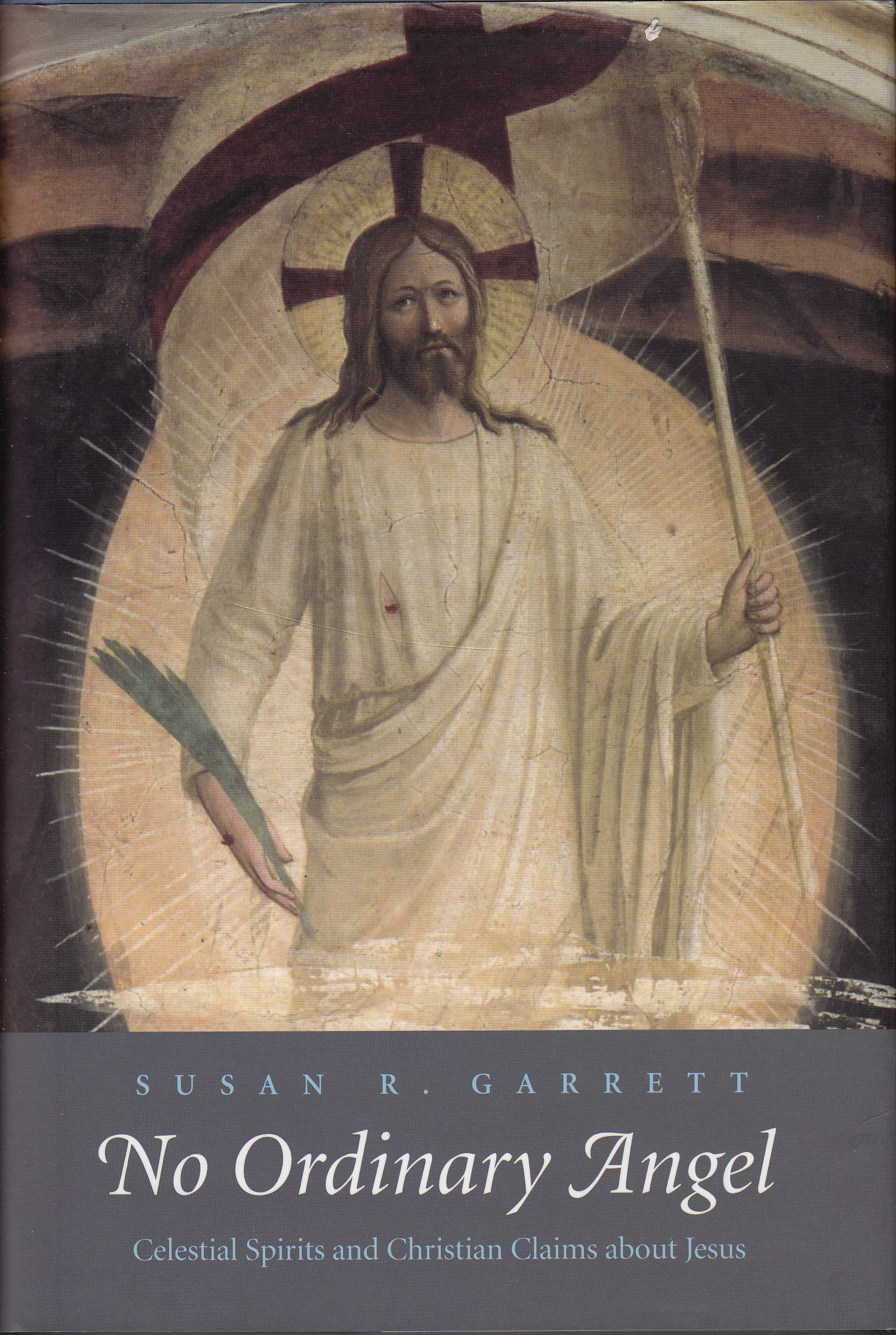
OrdinaryAngelBack in my undergraduate days, I wanted to learn more about angels. Surprisingly, there were no courses offered on the subject, even at evangelical Grove City College. When I finally took an independent study on angels, I found that few serious books had been written on the topic. I was immature as an academic, and I hadn’t learned that the subject of angels was a kind of scholarly embarrassment. Although many biblical scholars still clung to the idea of God, most had jettisoned angels along with other Medieval fabrications such as dragons and virgins. We inhabit a hardened, material world with no room for spiritual beings flitting about. As a student of ancient Near Eastern religions, I discovered angels possessed a hoary pedigree stretching back to Mesopotamia and perhaps beyond. Susan R. Garrett’s No Ordinary Angel opens the question again, and considers the many roles that angels have played and continue to play.

Subtitled Celestial Spirits and Christian Claims about Jesus, the book goes beyond the issue of angels per se, and addresses the distinctly Christian concern of how Jesus differs from them. What becomes clear in the reading of the study is that uniformity isn’t to be had. The earliest Christians already had divergent ideas on many concepts. As Roman Catholicism developed, angels attained a natural role in a world that still allowed mystery and shadows to exist. Protestants, the progenitors of much of science, cleared the closets of supernatural beings, leaving God and a table instead of the hosts of Heaven and an altar. I’m oversimplifying, of course, but there’s a sense in which the more liturgical traditions have more room for angels and demons. You don’t call a Protestant for a proper exorcism. Still, Garrett knows her stuff and shows how angels insinuate themselves into several aspects of sacred experiences of both Protestants and Catholics.

Angels come at births and deaths. They heal the sick, they protect people and they worship God. They rebel and fall, becoming Satan and his minions. Angels are, by their nature, liminal figures. They help to transition people between different states and worlds. As early back as written records, people believed in them. Outside of academia, people still do. God has become wrathful and distant in his old age and, well, you can talk to an angel without having to worry about vaporizing. In antiquity they were messengers. When God didn’t condescend to the earth, angels would come down. Now we get the sense that they’re more like us than we might have originally thought. Or maybe we’re more like them. Angels, even though they may have fallen out of academic fashion, are sure to endure longer than most weighty treatises, no matter how well footnoted they may be.


Scotland the Evolved

Imports and exports are the stuff of international commerce. Nations import what they require or desire from nations that have a surplus. One surplus that the United States has is Creationism. The origins of the movement share some culture with England, but there is no doubt that the idea of Creationism is a distinctly American one. Histories of the movement have been written, and it has proven itself remarkably resilient and tenacious. The leaders of the various forms of Creationism (yes, of course there are factions) tend to be very good at fund raising and political maneuvering. Once Creationism has been safely laid to rest in one form, another arises in its place like the heads of a hydra. The United States has been exporting Creationism for years now. I recall talking with colleagues from the UK many years ago and they were asking what this thing was that was showing up in their classrooms. The Brits tend to be sensible people and they were unacquainted with this blatantly faith-based approach to “science.”

A recent piece on IFL Science! declares that Scotland, at least, has banned Creationism from science classes. As a form of religious or cultural belief, of course, it may be studied. I have a feeling that in the future our generation will be regarded with wonder as that which experienced a massive delusion that science is whatever you want it to be. Don’t get me wrong; I understand Creationist concerns. Indeed, up through my sophomore year in college I shared them and could not see how evolution would fit into a biblically informed worldview. This was not discouraged at Grove City College. The serious study of religion, however, does bring many truths to light. Religion can be studied empirically. When it is, ideas such as Creationism can be objectively assessed. When they are, mene mene tekel upharsin.

We will not see Creationism going away. With the conviction of righteousness that is fueled not only by monkey business, but also fears of social changes, it gives a verisimilitude of respectability. Science has eroded systematically such ideas as homosexuality as an aberration, gender being fixed and defined at birth, women being inferior to men, races as being different species. It used to feel like a safe world to those who felt the Bible supported their right to run the place. Creationism feels like science and tries to cast doubt on a worldview that has relegated the Bible to a quaint place on a dusty bookshelf of Weltanschauungen. It would be naive to suppose that it is about to go away just because it is banned. If we would take the time to understand it, and to try to address the insecurities it effectively assuages, we might see different results. Making fun, however, seldom leads to conversion. We’re simply too evolved for that to work.


Truly Educated

Binghamton University looms large in my consciousness, for rather obvious reasons. Although it sits in a small corner of upstate New York not particularly near anything famous, it has its own culture. Having taught at several schools, and having studied at many along the way, I’ve always been particularly struck by the genuine nature of Binghamton. For example, it is the only school—apart from a hazily recalled “Bible Study” led by the then president of Grove City College—at which the president has made himself available to be met and chatted with by hoi polloi. I’ve met and talked with him twice, and although I taught a phenomenal number of courses at Rutgers, and conveniently solved a crisis in the religion department for a year at the University of Wisconsin Oshkosh, I never found a time or place when the president was available to the likes of mere mortals. Not only that, but at a time when other universities are cutting whatever faculty they can to make more administrative posts, Binghamton is actually hiring faculty and expanding. I feel renewed when I visit the campus. You can tell they care about people.

A story in the Washington Post underscores this. One of the graduation speakers at the Watson School of Engineering is an Orthodox Jew. His commencement ceremony fell on Saturday—the sabbath. According to the dictates of his faith, speaking through a microphone system that passes through a soundboard is considered work, and could not be done on the sabbath. In today’s climate, I would expect most universities to say, “too bad.” Religion is not to be taken seriously, right? So just get over it. Here’s where Binghamton, however, shines. They taped the address beforehand, allowing the speaker to take the stage and have someone else broadcast his speech. This isn’t about picking apart the logicality of anyone’s personal Torah, it’s about recognizing the human.

DSCN4915

Our very religious society has a way of compartmentalizing religion so that we can still get away with what we want to do. We can be religious when our clergy so dictate, but otherwise we’re pretty much free to look out for number one. This story is one that makes me proud to have once been a part of a system that includes a school that can truly lay claim to the designation “higher education.” We learn about the world to become, ideally, better citizens of it. Any university that is able to take what might seem to be a petty problem and recognize its human dimension deserves to have our admiration. It restores my faith in the future. At least in a small corner of upstate New York.


Geneva Conventions

As an alumnus of Grove City College, I generally don’t have the chance to consider other colleges as unreasonably conservative. College taught me, after all, that education involves thinking things through, and that, of all things, doctrine is one of the many human constructs that wilts under close examination. Both religious and political doctrine fall under this rubric. So when an article in the Chronicle of Higher Education fingered Grove City’s near neighbor, Geneva College, I was both relieved and not really surprised. Grove City was strict, but Geneva, located down the road in Beaver Falls, was even more Reformed. Tales at the Grove said that even off-campus dancing was an infringement of the student code there, and that even a legal sip of beer with dinner, off campus, could get you expelled. You know how students talk. In any case, both cut from Presbyterian fabric, Grove City and Geneva Colleges hold out against the world and its multiple evils. So why did humble Geneva merit notice in the exalted Chronicle?

Geneva College recently sued for exemption of the contraception-coverage mandate of the Affordable Care Act. You see, in many conservative religious traditions pre-marital sex is not only from the Devil, it practically never happens among true Christians. If it doesn’t happen, why should you be forced to pay for its treatment? Denial runs profoundly through these conservative colleges. While at Grove City, in a first-floor dorm room, my roomie and I were awakened one night by a group of pretty obviously drunken frat boys from the third floor. Cursing loudly, one of them rammed his fist through our window, showering the floor with glass before stomping loudly up the stairs. When I went to the housing office the next morning, they wondered about my story. Students at Grove City, drunk? It simply did not happen. In all likelihood, I’d broken the window and made up the story so I wouldn’t have to pay. I pointed out that campus security had noted the glass was inside the room and my roommate and I were both there at the time. Reluctantly, while still withholding judgment about the drunken part, I was believed.

Conservative Christian colleges often face the specter of reality. College kids were killed driving drunk. Girls, gasp!, did get pregnant and did not always decide to keep the baby. Real world issues declared anathema by a magisterium with its hands firmly over its eyes. No matter one’s view of morality, singling women out for punishment of sexual sins is just plain unfair. The issue here is health care, not the consequences of a decision made in the heat of passion. How often the anonymous male gets to scamper off, his health fully covered. The co-ed, however, is treated like Eve holding a newly bitten apple. Students attend Christian colleges for a wide variety of reasons, and the education, apart from the theology, can actually be excellent. It is the ethical obligation of the schools to cover all the human needs of emerging adults, not just those based on a morality still mired in the Middle Ages.

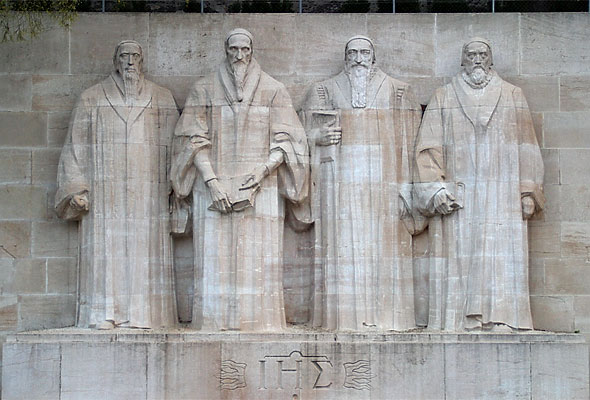
Time for a Reformation?  Photo credit: Roland Zumbühl, Wikimedia Commons

Time for a Reformation? Photo credit: Roland Zumbühl, Wikimedia Commons


Christian Computing

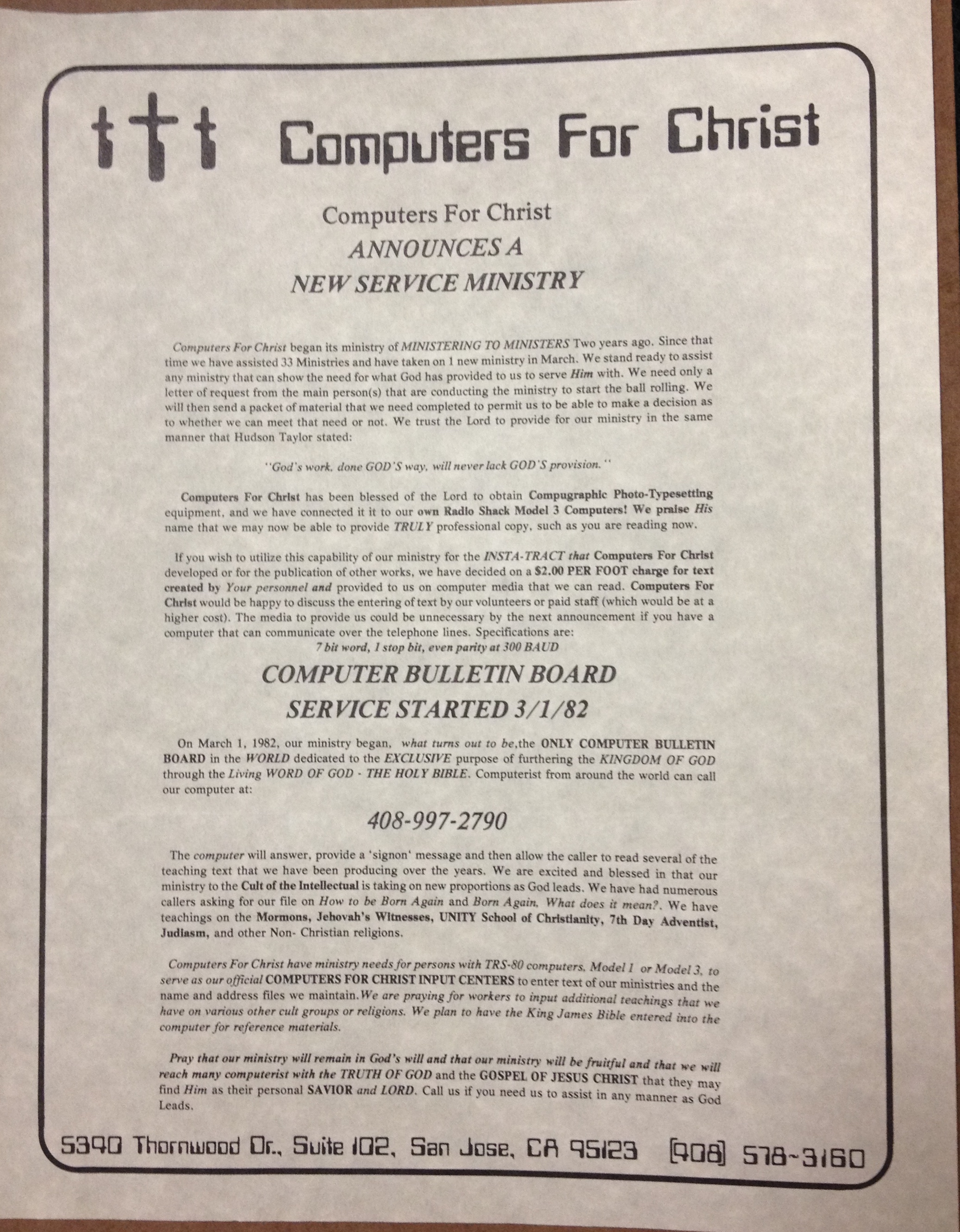
Science and religion are often portrayed as fighting like dogs and cats. Both claim superiority and a comprehensive worldview that should make sense of everything. With reality television probing deep into the lives of rural folk who still hold to the old ways, it is easy to think that religion is awkward and backward and an embarrassment to the technologically sophisticated. In electrons we trust. As with most simplistic views, however, this dichotomy is overly dramatized. I recently found a flier for Computers for Christ. I didn’t have time to read it carefully, but the space-age font immediately told me that this was vintage 70s or 80s, back when computers were still so new that most of us had never seen an actual exemplar and we had to guess what the future might hold. Would these things catch on or not? A little closer reading revealed the date of 1982, back when I was a college freshman. I had, by that point in my life, never knowingly glimpsed a computer.

IMG_1644

Sitting here with a computer on my lap, and another in my pocket, I wondered what ever happened to Computers for Christ with its space-age crosses and early embracement of technology. I didn’t find anything that really matches it with a half-hearted web search, but it did make me realize that some enterprising Evangelicals had latched onto computers long before I ever did. I recall making a pact with a couple of friends my senior year in college that we’d never give in and use computers. Since I can’t find them online, my guess is that they kept their end of the deal. As usual, I caved. By 1985 computers had found their way even to Grove City College. A strange thing called a “server” allowed people to access it via multiple “terminals.” The computer science professor wore a large cross around his neck. I would go on to seminary and graduate with a second degree not ever having used such a device.

Dogs and cats are both mammals, and neither regularly preys upon the other for food. Although Computers for Christ may no longer exist, the internet has been fully exploited by some of the religious. Jesus was an early meme. I remember when “the winking Jesus” was all the rage since an image on screen was actually animated! The savior virtually moved an eyelid! Now we can find Jesus doing everything from walking on water to riding on dinosaurs. The son of God has adapted to life on the web quite well, and often with a sense of humor. There are those who would argue that this is a travesty of true faith. There are others who would argue that it is a silly use of serious technology. I grew up with both dogs and cats and learned that when domesticated together they seldom fight. As I file away this aging paper, I wonder how the world might change if people behaved so sensibly.


Inspired. Absolute. Final.

IMG_1394Recently I spent some time in my native Pennsylvania. Doing so sometimes makes me believe in a bizarre kind of predestination. I never had any truck with theological fore-ordainment; I’d rather just give up and get it all over with now. Nevertheless, the Bible was very present in the Pennsylvania of my youth and logic dictates that if something is, a priori, more important than everything else, only a fool wouldn’t pay attention. When we’d be driving along a country road and a prominent outcropping of rock was spray painted with “Jesus Saves,” I’d feel a quiet reassurance that my choices had been sound. I started reading the Bible as a child, toughing it through Leviticus and Chronicles, with true Protestant fervor. The Bible, I believed, could never let you down.

On my recent drive down memory lane, I passed a road sign advertising the sacred scriptures. It read “The Holy Bible. Inspired. Absolute. Final.” There was a number to call, ending with the words “for truth” in place of digits. Operator. Information. Get me Jesus on the line. (With apologies to Sister Wynona Carr.) The odd thing is that I always assumed this was normal. Ticking off the miles on Interstate 80, I used to see how many “Jesus Saves” graffiti I could find on overpass pylons. Even in Manhattan I still find the same phrase scrawled in the cement of a grimy sidewalk, and I always look for it when I walk that way. It was all so matter-of-fact that there seemed to be no reason to question any of it. The same held true for most of the faculty at Grove City College. No questions asked. Just read the highway signs.

Ambiguity toward the Gospel truth seemed wrongheaded and foolhardy. It is, however, difficult to take the Bible seriously without at last beginning to ask questions. Even the Bible has a backstory. Be careful how far back you turn the pages. There was a prequel to Genesis, for those who dare to look, just as their is a sequel to Revelation. Inspired—no doubt. Absolute—perhaps. Final—I doubt it. The last word comes only when all has been said and done, and given the signs I see along the road, it looks like this journey is only just getting started.


For Love or Money

IMG_1258The Council for Christian Colleges and Universities is seeking a Christian way out of a contract. It seems, according to a recent Chronicle of Higher Education article, that Edward Blews was released from his $300,000 position “without cause” (I know how that feels—not the $300K part, but the “without cause” aspect), and he wants this resolved “in a Christian manner.” To the tune of two million dollars. That’s Christian if anything is. Christian higher education counts for a fair proportion of schools in the United States, while the CCCU, defining itself as “Christ centered” has only 120 members in North America at the moment. It was founded in 1976. Ironically, my old alma mater does not find itself on the list, although Grove City College often proclaimed itself as God’s Country Club during my years on campus. Among the services listed on the CCCU website is advocacy and public policy, that will allow them the “crucial right” to hire “only persons who profess faith in Jesus Christ.” And perhaps, who can’t afford a lawyer.

Academic freedom has been on my mind a lot lately. Conservative Christian views seldom benefit from academic inquiry. These views, most of which are decidedly modern, are passed along as a package with political riders, and strive to see themselves as counter-cultural, although, in fact, they resemble the 1950s more than the 2010s. I have no idea why Blews was let go, but I do know that “without cause” hides a multitude of sins. In my case, it was shorthand, I think, for just being too liberal. I was doing a great job, but endangering the morals of majors, I guess. Teaching critical thinking does have a price tag. I don’t see seminaries on the CCCU member’s A-list at all.

It is becoming increasingly obvious that we need to understand more about human religious motivations. Reason alone cannot satisfy brains where emotion may be just as critical to thinking as logic is. I know that when I’m depressed all thoughts seem to flee, except the most dismal of the lot. Reason can’t penetrate this fog. Yet reason itself cannot be ignored. The facts it teaches are frequently uncomfortable—to scientists as well as religionists. There’s nothing fair about it. When it comes to legal agreements, however, we are at the mercy of lawyers. Ironically, those who head Christian coalitions of various sorts feel the need for financial compensation. A little lucre to wash down the humility of dismissal. “Without cause” can be the most unkindest cut of all, eh Marcus? Even Judas got his 30 pieces of silver, but the cash never satisfies.