
Last week CNN’s religion Belief Blog reported on the five most and least religious colleges in the United States, according to Princeton Review (not affiliated with Princeton University). Having attended one of the five most religious colleges on the list (Grove City College, but whether it is number one or five is difficult to determine), I took an interest in the overarching question: how do you determine if a college is religious? The author of the survey indicated that it was through student interviews concerning whether they perceived other students as religious or not. And that’s where the bone of contention pokes through—who determines what is religious behavior? Are students able to determine who is religious or who acts religious? Does religious mean Christian in this context, or religious in any tradition?
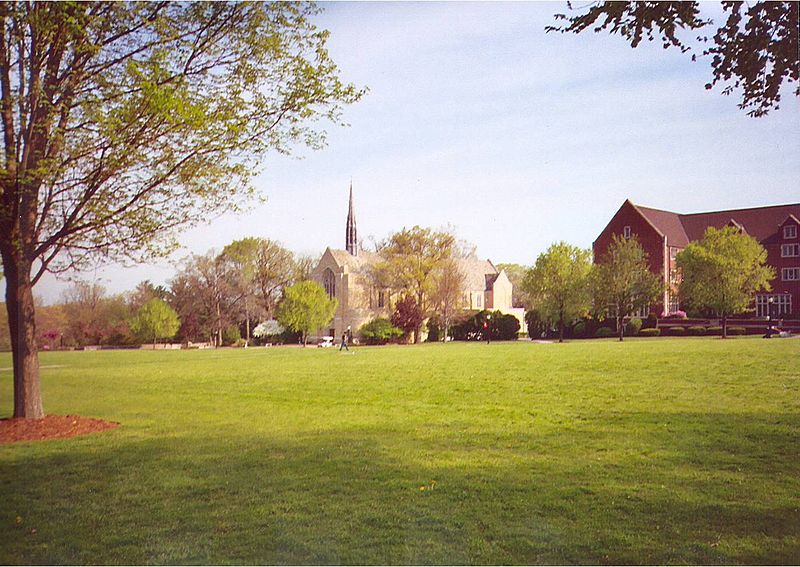
Grove City College, God's Country Club
Three of the four other most religious schools might bear this out: Brigham Young, Thomas Aquinas College, and Wheaton College. Hillsdale College, the final member of the most religious fraternity, is the exception. A liberal arts school, formerly Baptist but currently independent, it fits somewhat uneasily next to the Mormon, Catholic, and Reformed natures of the other four schools. While I can’t speak for the other colleges, at Grove City there was definitely a coercive peer pressure to behave like everybody else—to be religious, i.e., evangelical Christian. With required attendance at chapel and required courses in religion, the ethos was heavily impressed. Were other students truly religious? That depends on the measure that is used. Many have gone on to be entrepreneurs declaring free market economics in the name of the kingdom of heaven. If that is a measure of true religiosity, all hope is lost indeed.


 Steve A. Wiggins