
“Remember, remember the fifth of November,” so begins the poem that haunts my every autumn with V for Vendetta. As a colonial, I never really peered too deeply into the Gunpowder Plot. We were all told that Guy Fawkes was the bad guy and that he got his in the end. Recently I delved a bit deeper and learned that this was a religious conflict. Part of a conspiracy to restore a Catholic monarch to the throne of England, Fawkes was captured as he guarded the actual gunpowder of said plot, and the rest, as they say, evolved into V. The iconic Guy Fawkes mask, sometimes sported by members of Occupy Wall Street and other protest movements, has moved away from its Catholic roots and on into the realm of wider social justice. We know that blowing up our enemies is not a viable solution (we too remember, remember the eleventh of September), but the metaphorical destruction of oppressive systems may be the only way to vindicate the demands of social justice.
Dystopias have been heavily on my mind lately. Looking across the socio-political landscape I see many concerned people with no power to displace the impacted one-percenters. Politicians court money, and sociological studies show that young people don’t bother to vote and have no interest in entering politics because it is so widely known that it is a corrupt and inefficient system. While laws are easily enacted to protect extreme wealth, social security finds itself on the block as seniors are increasing in poverty almost as fast as they are increasing in numbers. In my own life I have experienced being cut off from retirement plans because I wasn’t “vested,” which I translate as “saving money for those at the top.” Still, we blithely press on, wondering if V really exists at all. We don’t need to seek out dystopias. They will discover us.
November is that graying period between the colorful burst of vindictive playfulness that is Halloween to the long night of the solstice. During this time we will vote in vain and await a better future that never seems to come. We, like V, have been an experiment of the state over the freedoms of the individual. The market, we’re told, has recovered. The average citizen has not. Every year as the evenings grow longer and the winds begin to howl, I come back to V for Vendetta and hope against hope that corruption will meet the fate of Guy Fawkes. Ironically, few turn to religious organizations any more in the never-ending search for social justice. The trenches in which many denominations have chosen to die are those of sexuality and male dominance. Meanwhile, women and men both are aging, and the very structures we put in place to ensure they could rest after lives of hard work are being eroded. Behind every mask, it seems, hides the face of a politician.
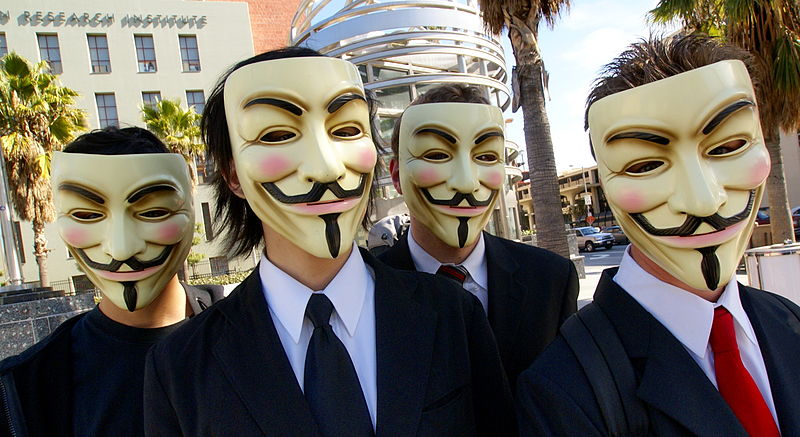
Photo credit: Vincent Diamante, Wikimedia Commons
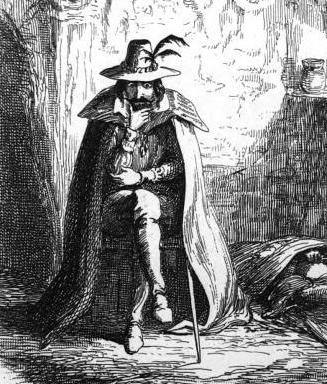
 Steve A. Wiggins