All Is Bright

As a Christmas present to myself I finished my third book yesterday. I’ll be posting details once the title is finalized. And “third” is only an approximation. I wrote another non-fiction book before this one which I decided not to send to publishers. That “fourth” book joins the six completed but unpublished novels resting on my hard-drive. Writing, for some of us, is a way of life. Not a way to make a living, mind you, but a way of life nevertheless. Literacy is a gift too often taken for granted. It’s easy to forget that the rapid scientific and technological progress that we’ve made has only come about since the invention of the now nearly defunct printing press with moveable type.

Among the first books printed was the Gutenberg Bible. This was a book of progress, as difficult to believe as that may be. You see, the Bible wasn’t always a means to enslave. It was once a tool of liberation. As I try to steer my thoughts from politicization this holy day, I can nevertheless not neglect to reflect on how Holy Writ has been weaponized. We’re warned to keep Christ in Christmas although we know the story isn’t history. Scripture becomes a blunt object of superiority and supersessionism. We sometimes forget that sacred time is a gift, no matter what anyone believes. Literature has built this world for us—some sacred, some secular. Our proper response ought to be celebration.

I now awake on Christmas morning—from long habit—at a time I would’ve thought a boon as a child. In the pre-dawn stillness of 4:00 a.m., sleeping in for me, I think about the great gift of quiet time. This is my writing time. Book three is done, and books four and five are already in the works. For those of us who write as readily as we respirate, this morning stillness is a gift. Time to compose, arrange thoughts that will only be scattered in the coming busyness of the day. The means are quite different than those employed by Johannes Gutenberg, and the results will be read by far fewer people. None of that really matters, however. Today is a holy day because it involves writing. Angels, shepherds, and wise men may come later with the stories we tell of how this day began, but remember they are stories. And no gift should be taken for granted. Not even the unbroken silence of 4:00 a.m.

Tomorrow Ever After

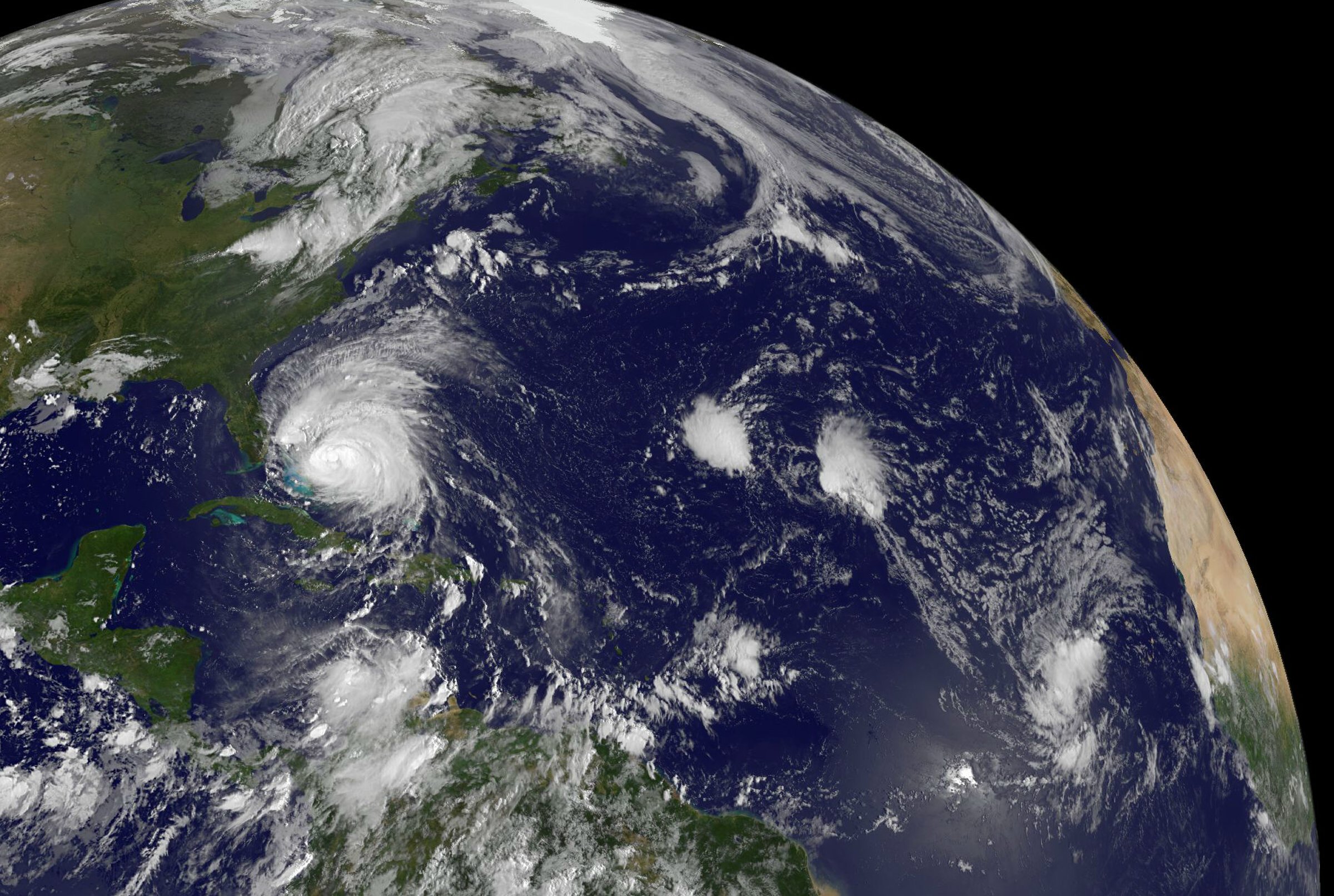
Last night as we said goodnight to Irene, my family decided to watch The Day After Tomorrow. Beyond The Perfect Storm and Twister we didn’t have any other weather-related disaster movies on hand. I became convinced long ago that weather was somehow key in the conception of divinity. Working at a seminary that required attendance at chapel twice daily where we would lugubriously and laboriously recite every verse of every Psalm according to the unforgiving schedule of the Book of Common Prayer, I began to notice the weather. Among the more common images used in the “hymnal of the second temple,” weather was seen as an essential aspect of divinity. Religions with celestial orientations frequently view the sky with a sacred aura. I began to compile all the Psalm references to the weather and eventually brought them together into a book, still unpublished. What became clear at the end of this exercise was that ancient people had no way to interpret the weather other than as a divine phenomenon. Listening to all the hype about Irene, it still seems to be the case.

In The Day After Tomorrow, our ill-fated teenagers are trapped in the New York Public Library as a super-chilled tropospheric wind freezes New York City. They build a fire and when you’re in a library, naturally, you burn books. I kept looking at all the furniture they spared as they consigned the books to the flame. A minor character called Jeremy is shown clutching a Bible. A girl named Elsa asks if he thinks God will save him. Replying that he is an atheist, Jeremy says that this is a Gutenberg Bible, “This Bible is the first book ever printed. It represents the dawn of the Age of Reason. As far as I’m concerned, the written word is mankind’s greatest achievement. You can laugh, but if Western Civilization is finished I’m gonna save at least one little piece of it.” This little dialogue represents the full circle of the celestial god. Jeremy doesn’t believe in this god, and the Bible requires human protection. Instead of being the instrument of war and political badgering and tea parties, it is seen as a symbol of enlightenment. It represents the first steps toward reason.

As Hurricane Irene still gusts outside my window, dropping rain as if New Jersey were a desert receiving its first drink in a century, the Tea Party is busy crafting ways of getting the Bible back in the White House. Their Bible is the antithesis to the Age of Reason. It is the symbol of superstition and prejudice and authoritarianism. It is the means of political power. The god of the Tea Party is a white-bearded man living in the sky, sending his fury against the liberal cities of the East Coast in a mighty wind. He is the punishing god of the Psalms. As the helicopter lifts off over a frozen Manhattan, the teenagers saved by a flawed father who walked from Philadelphia to New York to find his son, the camera pans across Jeremy as he hugs the Bible to his chest. I was in Boston for Hurricane Gloria back in 1985. Watching the waves crash on the beach at Winthrop I felt the power of fierce nature at the beginning of my own journey to, I hope, enlightenment. When it was over, however, there was not yet a Tea Party threatening an even worse, unnatural disaster to follow.

Irene, the early days