Scary Holidays

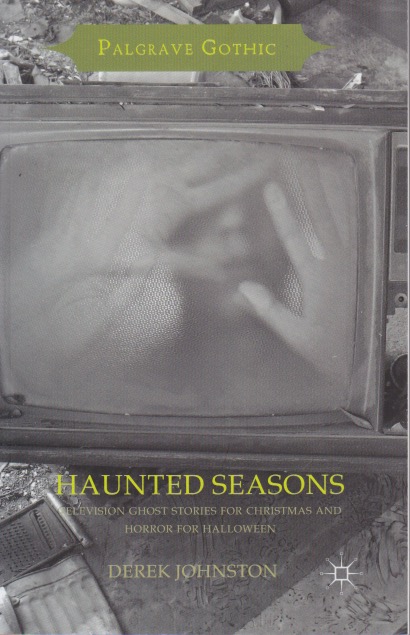
One of the real wonder of books is that they can spawn ideas outside their specific topics.  While revised dissertations can be somewhat difficult to read, Derek Johnston’s Haunted Seasons: Television Ghost Stories for Christmas and Horror for Halloween contains quite a few such moments of birthing ideas.  While being largely British-focused, it nevertheless explores holiday horror, a phenomenon that I’ve been researching for some time.  Not really a television watcher (not any more—as a child things were quite different), I don’t really keep up with many programs.  Still, I learned a lot from this book.  One of the main questions it addresses is something I’ve long wondered about—why is there a connection between Christmas and ghost stories in England?

Johnston points out that Celtic areas tended to have Halloween or its precursors to supply an occasion for otherworldly thinking.  The English, not wanting to think of themselves as these outer-lying cultures (I’m simplifying and abstracting a bit here), developed their own tradition of the Christmas ghost story.  It pre-dates Dickens and probably goes far enough back in history that there’s no way to trace it.  Telling ghost stories around the shortest day of the year makes its own sense.  Dickens’ A Christmas Carol was perhaps the most famous example, but M. R. James’ habit of telling ghost stories (later published) to students and fellow enthusiasts on Christmas Eve also plays into it.  In Britain this led to a series of BBC Ghost Story for Christmas shows.  Meanwhile, in America, where there was quite a lot of Celtic immigration, a taste for Halloween grew.

There are so many ideas that swirl around holidays.  I’ve been exploring the topic for nearly two decades now.  Publishers, always with their eyes on the bottom line, don’t produce much like this, figuring people will only buy it one season a year, and for books that means usually the first year only.  Some people (yours truly, for one) will buy books about holidays out of season.  So much of life is preparing for special times.  I suspect that ancient people also fell into humdrum daily existences also.  Humans require stimulation, we like variety and novelty.  Holidays are a great solution—they don’t occur every day.  If they did they wouldn’t be special.  They bring something different into our workaday world and, in modern times especially, we brand them so that each one is at least slightly different.  I don’t mind seeing the seasonal displays so early in the stores—it reminds me that haunted seasons are just around the corner.
Hollow

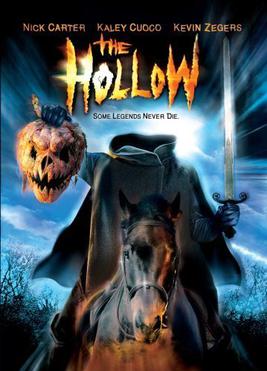
Now that we’re officially in September, it’s kosher to talk of Halloween horror (I’ve seen Christmas decorations in the stores already).  Well, around here we don’t really need an excuse, but since it’s handy I’ll use it.  Regular readers know I’ve been on a Sleepy Hollow kick lately, and I’d been wanting to see The Hollow.  Released as an ABC television movie, it had a fairly modest budget of only about $900,000 but managed to pull in stars with name recognition.  A pre-Penny Kaley Couco also appears as the new version of Katrina Van Tassel.  Let me back up a bit.  This is set in the present day.  Halloween eve.  Karen (not Katrina) is watching a Sleepy Hollow retelling being done by Ian Cranston, but her bored escort, Brody (Brom, anyone?), goes to the graveyard instead with some of his friends.  Two of them are killed.  Oh yes, there will be spoilers.

It turns out that Ian, who’s just moved to the area, is the last remaining descendant of Ichabod Crane.  You see, after Ichabod fled, and settled in New York City, he changed his name for fear that the Horseman would find him.  Now that a Crane is back in town, the Horseman rides again.  The teen-rivalry between Ian and Brody plays out at Karen takes a shine to the newcomer.  A descendant of Hans Van Ripper, who unaccountably talks like a pirate—lots of “ye”s thrown in—realizes that the Horseman’s after the young Cranston.  Since he’s the town drunk, though, nobody really believes anything he says.  On Halloween the town has a haunted hay ride in which each side of the love triangle is involved.  Brody plays the Horseman, but suddenly there are two of them—uh oh!

Cranston, who’s on the fencing team (to the everlasting shame of his football-coach father), is able to engage the fiend in swordplay and eventually destroys him.  He gets the girl and impresses his father all in one predictable way.  There are some laughs along the way, but for the most part this is played as teen drama.  Some racy scenes (and head-chopping) led to an R rating, but there’s little that’s surprising here.  For anyone who’s interested in the various ways Washington Irving’s “Legend of Sleepy Hollow” has been repackaged over the years, it’s a reasonable enough diversion.  When Halloween draws closer, however, it may well be time to try something a bit more appropriate for the harvest season.


October Early

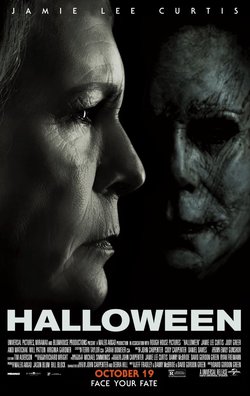
Still feeling that August is the new October, although that particular day happened to reach over ninety degrees, I watched Halloween.  Not the John Carpenter original; I’ve seen that one a few times before.  No, I watched the 2018 version only to learn it’s a retcon.  If you’re like me you’ll wonder what a retcon is.  It’s a portmanteau of “retroactive continuity.”  That’s where a sequel goes back and makes adjustments, or simply ignores, story elements from the original to take the story forward.  I haven’t followed the Halloween franchise.  There are too many movies I want to see that are original, with fresh ideas, to be spending my time trying to find my way through an emerging mythology of a serial killer.  Michael Myers, as horror fans know, inexplicably killed his sister as a child.  As an adult he terrorized Haddonfield, Illinois  one Halloween and Laurie Strode was the final girl.

What drew me to this sequel was that Jamie Lee Curtis was back as Strode, all grown up.  Michael predictably escapes again and goes for an even higher body count in Haddonfield.  Laurie, meanwhile, has gone NRA and booby-trapped her entire house in anticipation of this day.  You can see the draw, I hope.  You kind of want to see how this ends.  The original had Michael’s apparently dead body disappear at the end.  In the retcon he was arrested after that and re-institutionalized.  The thing is, you can never really kill a monster.  Original scenes and scenarios are revisited, and those familiar with the Carpenter story are rewarded by situations that subvert expectations.  Where is he hiding this time?  You always watch the credits roll wondering how “the authorities” don’t realize that a guy shot, stabbed, and incinerated and keeps coming back might be something other than human to be put in an asylum.

I should know better than to watch these kinds of movies when I’m home alone, but I don’t.  So it’s a good thing that I try to piece all these things together.  We have three strong women—three generations of final girls here, and the obligatory basis for a sequel.  (At least two, in fact, bringing the franchise up to thirteen movies.)  Laurie’s granddaughter is among the virginal, non-drinking final-girl prototypes.  Her less Puritan friends are killed off, although her worthless boyfriend survives the night.  You’ve got to love the endless self-references of such situations.  That’s why we keep on coming back.  We’ve seen it before but we still want more.  Even if it’s only August.


Horror Week

“Remember, remember, the fifth of November,” the old rhyme goes.  Earlier this week I advocated for Halloween being the start of the holiday season.  There’s been a lot going on this week and I’m now reflecting on how Halloween also took some of its identity from Guy Fawkes Day (or more properly Guy Fawkes Night), here on November fifth.  Halloween, as we know it, incorporates traditions from Samhain (actually November 1), All Souls Day (November 2), as well as Guy Fawkes (November 5).  All the while the Hispanic world is observing Dia de los Muertos, a multi-day holiday whose origins are somewhat uncertain but which shares similarities with Halloween.  In other words, it’s a veritable week of spookiness to get our November started off right.

Ironically, at least in corporate America, none of these are work-free holidays.  For the Celts Samhain was the most important day of the year.  A day when the dead might wander into our realm or we might stumble into theirs.  For the modern person it’s a day of checking email, making deals, trading and evaluating how well we did at it.  Pretty mundane stuff.  The message of all of these holidays is that there are matters of deeper import going on.  We should perhaps look up from our monitors and see.  Just as that veil between the living and dead thins at this time of year, so does that line between work and personal life, when our laptops are as omnipresent as a haunting deity set to keep our minds on the sin of not working.  

Guy Fawkes is about rebellion.  More specifically, putting down rebellion.  Keeping the status quo.  Halloween and its siblings are all about challenging the way things are usually done.  I often wonder what it would be like if people took it seriously.  The costumes are fun, yes, and the trick-or-treating, but there’s something more serious underneath.  Perhaps symbolically we pretty much ignore All Saints to Guy Fawkes, or Dia de los Muertos as pleasant diversions.  There’s some spiritual heavy lifting going on behind the scenes, however.  It’s not all about fun and games, because fear is always with us.  We know there are problems but it’s more comfortable keeping things as they are.  Guy Fawkes, perhaps for a cause we see as obsolete—restoring a Catholic monarchy—was trying to change things for the better.  What’s more, his motivation was religious.  There are spooky parallels here, even today.  It might be good to take a day off work to ponder the implications.


Holiday Season

Halloween, in some ways, is the unofficial kick-off of the holiday season.  This was made clear to me when someone recently played the song “Soul Cake” in the context of Halloween.  I’d only ever heard the song in a Christmas context before, and a little research led to the discovery that asking for soul cakes originated as a Halloween custom (before it was called Halloween, even) but was considered appropriate anywhere from All Hallows through the twelve days of Christmas.  The common thread here is, of course, gift giving.  We tend to keep our holidays discrete for commercial reasons but there is a natural continuity from All Hallows Eve through what used to be known as Epiphany (now Insurrection Day).

Holidays help us prepare for things that we know are coming.  For the Celts, Samhain—which led to our Halloween—was the start of winter.  With no Daylight Saving Time to oppress them with the changing of their clocks and throwing everything off for weeks at a time, this was the dark part of the year.  Holidays are helpful in getting through times when natural light is lacking.  From Halloween you can almost see Thanksgiving.  At Thanksgiving we anticipate Christmas.  The winter solstice holidays see us through the shortest, darkest days of the year.  I’m no fan of capitalism, but as long as we’re stuck with it I wonder why we don’t advocate for Halloween as an official holiday.  The start of the holiday season.  In my local town the Christmas lights went up on November 1.

East and south Asian religions spend considerable energy teaching that change is the only permanent aspect of life.  Western cultures, on the other hand, focus on the status quo, the assumption that once something is established, it will, or should, remain as it is.  Time reminds us that change is constant.  We can allow entropy to win by sitting by and letting things fall apart, or we can try to build something useful to prevent a collapse.  Holidays change over time and over religions.  Halloween was a pre-Christian new year celebration.  From there it changed into a solemn holy day to remember saints and then the dead.  Incorporating aspects of Samhain and some customs such as soul cake begging and guising, it grew to a more fun celebration.  Now it’s a commercial occasion to rival Christmas.  The year is constantly changing.  Just when I start looking for my sweaters I see my light summer clothes haven’t yet been put away.  I look forward to Halloween as the start of the holiday season until we get past the longest night just before Yule.


Spirit of Halloween

So it’s Halloween.  It’s also Sunday.  I’ve been thinking quite a lot about the spirituality of this particular day.  Now it’s often treated as a trick, a consumerist holiday with too much candy and befitting spooky decorations.  Like all holidays Halloween has evolved from its origins to how we celebrate it today.  Other than Wiccans and Neo-pagans, however, not too many take it seriously.  At Nashotah House, and therefore likely at some parishes scattered around the world, All Saints Day—which is tomorrow—was a day of obligation.  What we call Halloween was the day before this major festival of praising the faithful.  There is some evidence that All Saints was moved to November 1 to counter the lively celebration of Samhain, or the Celtic fire festival marking the onset of winter.

The Celts included an intellectual class known as Druids.  Druids seem to have been the “theologians” (oh, that word!) of the Celts and they mandated that their teachings not be written down.  A great deal of information was passed on by intensive memorization and only became known to us outsiders because after Christianization it began to be written down.  Their idea of the afterlife seems to have been that it was being born into the other world.  In the otherworld life was different and apparently in some respects better.  When our time there drew to a close, our death led to our birth into this world.  The cycle continued on and on.  Samhain was the time when crossing between worlds could occur.  Death wasn’t a cause for sorrow since the otherworld awaited.  Birth into this world was more problematic.

Fear of death seems natural enough to us.  Even though it’s inevitable and this world’s graveyards are full, somehow we seem to think we can avoid it ourselves.  Our evolved survival instinct runs out of control since we’ve eliminated many of the causes of death that have plagued our species (and many other species) for millennia.  Eons.  As we’ve done so we’ve distanced ourselves from death—dying in hospitals, our corpses prepared in funeral homes, buried and eventually forgotten.  To me, the Celtic idea, from a world where death was likely much more close to hand, seems a more healthy outlook.  Instead of fear, why not consider it a day of wonder and celebration?  To many, I know, that is a spooky thought indeed.  It’s more than a day of masks and candy, however.  And we might learn from it if we stop and ponder.


Interview Two

October turns the northern hemisphere mind toward Halloween.  It must be strange to receive northern media while living in the global south—Halloween occurs just as spring is getting underway.  I guess that’s what May Day’s for.  In any case, in the United States Halloween thinking is in nearly full swing.  My last two books, while not Halloween themed, look at horror films which, in keeping with October, are on everyone’s mind this season.  And it’s been quite a week for interviews.  The second half of my podcast interview on The Incarcerated Christian was posted yesterday.  If you want to hear more fun Q & A with Robin and Debra, click here.  I’ll post more about this Friday, but tomorrow my interview with Eric Ziolkowski of Lafayette College will air as part of the Easton Book Festival.  The festival’s going on right now, so be sure to check out the offerings online.

One bit of advice that I give as an editor: if you want to make it as an author you need to promote your own work.  Some of us were reared to believe that it’s in poor taste to do this, but in the internetted world it’s pretty much a requirement.  Something I learned from political activism is that every election is local.  Getting noticed also has to start in your own backyard.  I love doing interviews.  It’s always flattering to know that someone’s read your book and wants to know more about it.  I’ve started to explore the newish area of religion and horror.  From what we see in the news, it seems like it’s an area that’s likely to take off.  But only if those who work in it get their stuff out there where it can be seen.  (Or heard.)

Neither Holy Horror nor Nightmares with the Bible have sold very well.  They’re expensive, and academics, who will spend money on books, are still trying to decide if this area’s worth exploring.  I admit that there’s a puerile kind of naughtiness to taking monsters and “low brow” entertainment as a subject of study.  Horror, however, has lots of fans.  Perhaps not in the academy, but in the real world.  I like to think such marginal areas bring people together.  Horror, like demons, isn’t going away any time soon.  Instead of running away from what you fear, why not try embracing it?  If not even that, please consider the free content available on The Incarcerated Christian and the Easton Book Festival.  After all, Halloween’s just about here…


Discount Nightmares

Now that we’re past the equinox it’s officially okay to obsess with monsters, right?  (Any excuse will do.)  Nightmares with the Bible was officially a pandemic book.  Academic publishers (especially) found out that books released in 2020 tended to flop.  People weren’t thinking about much other than the pandemic (or crying about losing an election fair and square).  Books, of course, take a long time to write and a long time to produce—it’s not as simple as it looks.  And if your production schedule falls during a pandemic, well, be prepared.  In the case of Nightmares there was the added burden of price point.  When all you’re thinking about is survival, cashing out a Franklin to read about demons seems hardly wise.

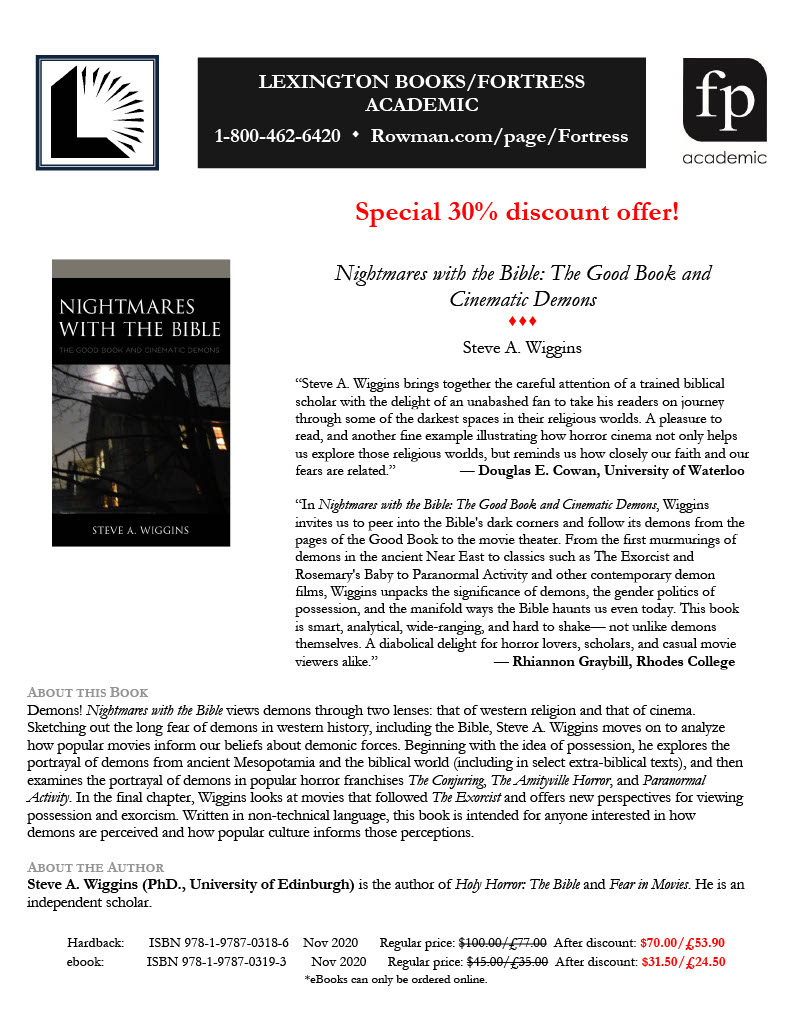
Just yesterday I received a flyer, that I’m passing along to you, for the book.  It has a discount code on it (look at part 2 below) so that the book is merely expensive rather than very expensive. Nightmares is part of a series titled Horror and Scripture.  The series, published by Fortress Academic and Lexington Books, is now coming out with its third volume.  The publisher, starting to recover from the pandemic, is promoting all the books in the series.  You see, Nightmares was not only a pandemic book, it also missed that highly sought-after pre-Halloween release.  Books that deal with horror get a boost during the holiday season.  Ironically the same thing happened with Holy Horror.  Both books came out in December when nobody but Charles Dickens is thinking about scary things.

Academic book pricing is based on a model that’s beginning to crumble.  It’s that capitalistic trope of what the market will bear.  The market is academic libraries, and it has been demonstrating lately that even they aren’t made of money.  I don’t know if libraries get to use discount codes or not—it can’t hurt to ask your librarian.  Fully employed academics, however, will sometimes pay a hefty price for a book they really want or need.  My shelves upstairs are filled with books that were overpriced but were required for the books and articles I wrote when it was an expectation of my job.  My next book, which is now in the negotiation stage with the publisher, will be more reasonably priced.  It will likely have a smaller appeal, but you’ve got to start somewhere.  I sincerely hope I’m through writing hundred-dollar books.  Please pass the flyer along to all your rich friends—it’s just in time for the haunting month of October.


Mabon

Given the immense popularity of Halloween, and the attention lavished on the solstices, it’s a little odd that Mabon is so infrequently observed.  Unlike its twin, the Vernal Equinox, the Autumnal Equinox has really only recently been added to the natural calendar observed by Wicca.  The ancient Celts, from whom many Wiccan traditions are drawn, celebrated Samhain, which became our Halloween.  Their other holidays divided the year into seasons, but perhaps the Autumnal Equinox was a little too subtle to merit much attention.  Or it simply fell between their own four-fold divisions of the year.  Starting today, however night will be longer than day, a situation that will last until the Vernal Equinox.  In other words, we’ve entered the dark half of the year.

As someone who enjoys horror, I often ponder the benefits of living in the dark.  Theologically the dark is often cast as evil compared to the light.  We have taken that metaphor and made it literal.  This makes sense, I suppose, given our natural fear of the dark.  The only real predators in the night, however, are now of our own kind.  The dark can also be peaceful, a time for contemplation.  One of the things adulthood has on offer is disrupted sleep.  Many of us find ourselves awake at some point in the night.  We need to become comfortable with it.  I’m not a Wiccan, but I appreciate the naturalness with which Mabon acknowledges the fact that half the year is darker than the other half.  It’s also a harvest-themed holiday, one of the many that stretch to Thanksgiving and on to living off the stored supplies through the winter.

No doubt there is some melancholy associated with Mabon.  The lessening of the light brings a chill with it.  Summer’s ease is at an end and we will need to start layering our clothes and adding blankets back on our beds.  Already it is dark when I begin work, which means the brightest part of the balanced day and night is spent indoors at the computer.  I will need to leave the harvest, so obvious in the fast-approaching October, to others.  Mabon and Halloween aren’t company holidays, but that fact won’t stop the encroaching dark.  There’s a wisdom associated with acceptance and even melancholy can been sweet.  The leaves, while still mostly green, have begun to turn.  The bright songbirds of summer have given away to ravens and crows.  We need to learn to walk in the dark again.  Perhaps it’s time to consider what Mabon can mean.


Screaming Season

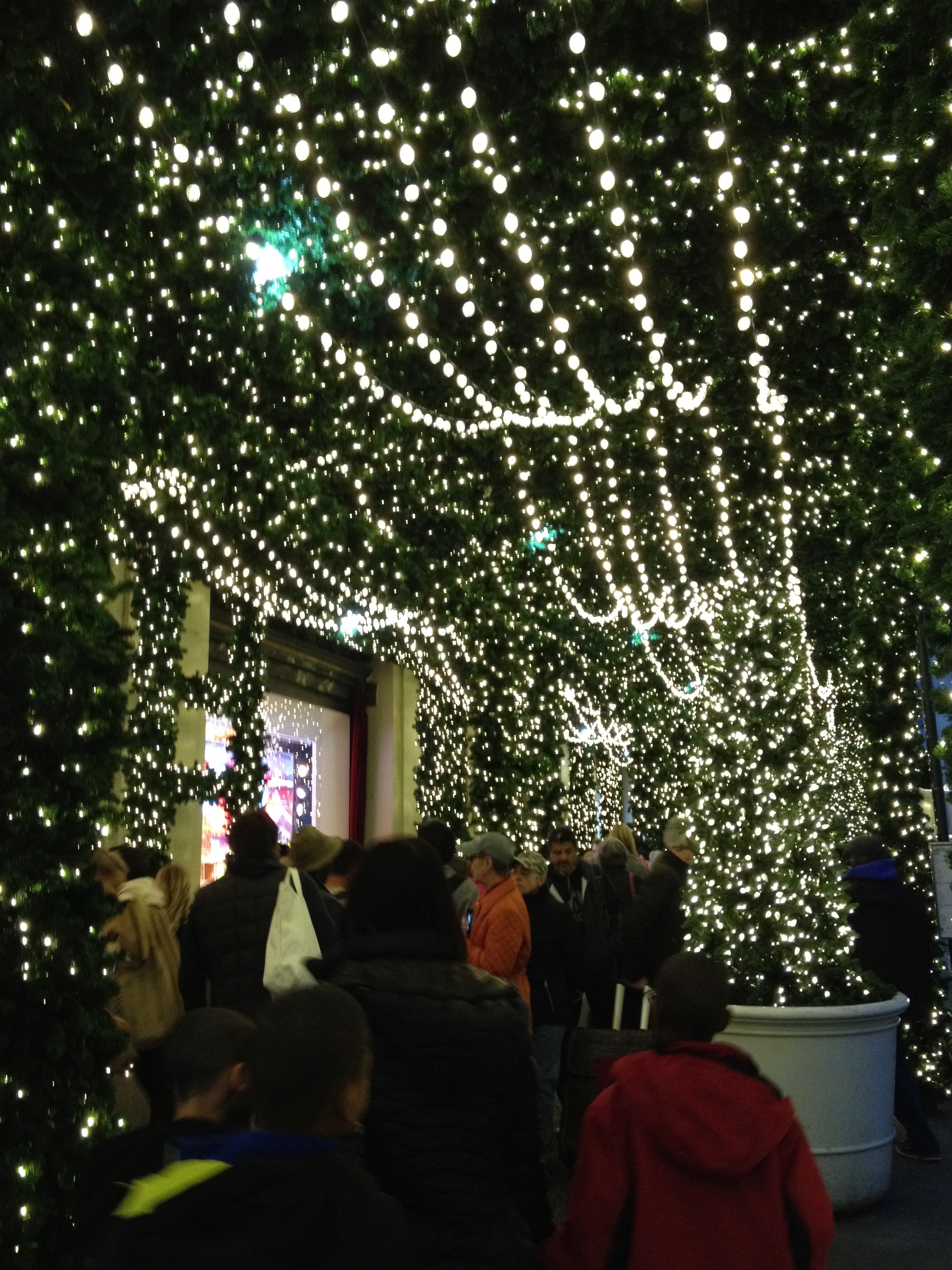
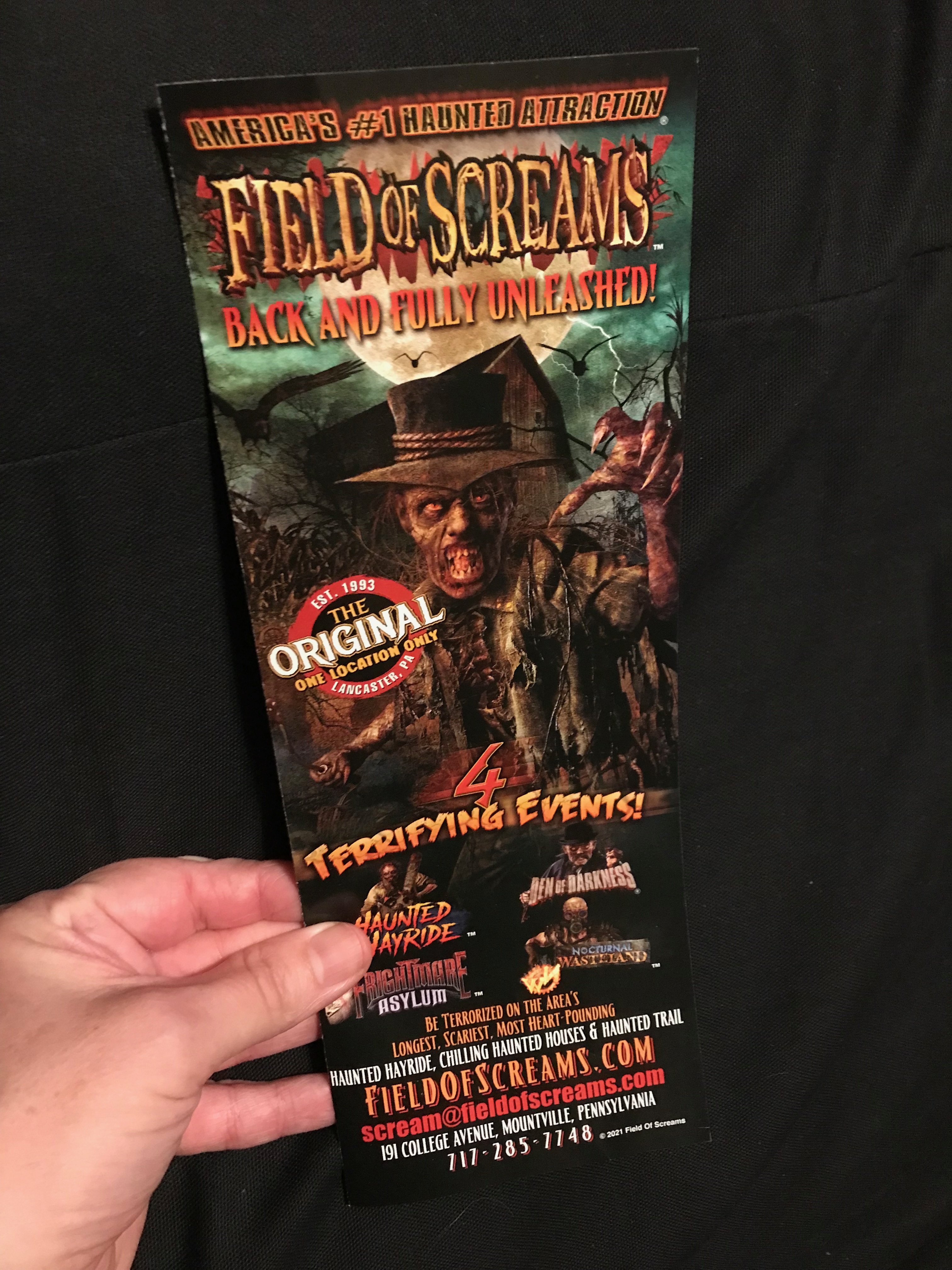
The signs are all around.  The orange and black Spirit Halloween signs are appearing where vacant storefronts stand.  Advertisements for autumnal activities are cropping up.  Brochures broadcasting local haunted festivities now adorn store counters, free for the taking.  I picked up a leaflet for the local Field of Screams the other day although I really don’t like to be in scary situations.  I do appreciate the spooky sense that they generate, however.  This local event runs from early September through early November—the two months enterprising farmers can draw urbanites to their land, cash in hand.  Halloween has been a major money-maker for many years now.  The less doleful minded wonder why, but I think that lots of us are really afraid.  Halloween says it’s okay to be so.

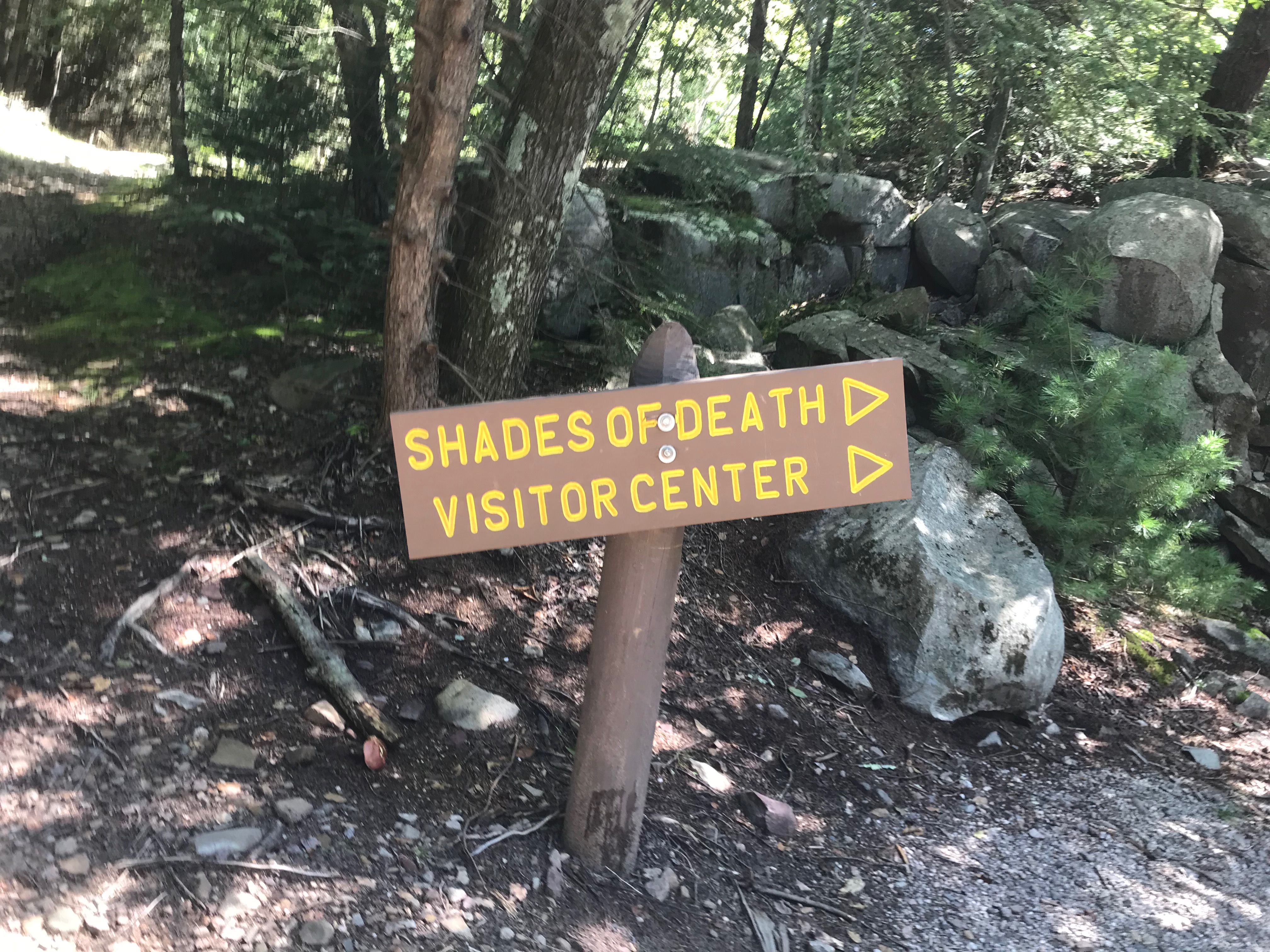
Perhaps it’s the realization that it’s all in good fun and nobody will really hurt you.  I’ve attended a few of these haunted events over the years, but it was more fun to participate in them.  Perhaps it goes back to Nashotah House.  I’m guessing that most of you’ve never been.  Nashotah is a gothic campus, at one time pretty isolated, out in the woods.  Halloween was, once upon a time, a real celebration there.  Our maintenance crew would offer a hayride through farm fields owned by the school, then through the cemetery on campus.  I used to dress in a grim reaper costume and carry a kerosene lamp through the graveyard, awaiting the tractor.  Nobody instructed me to do it, but we all knew it was in good fun.  And I wasn’t the only volunteer who’d pop out from behind headstones.  Students got into the spirit of it too.

These days remembering such shenanigans is more appealing than actually going out at night to have other people scare me.  The last time I went to a haunted maze it was really too unnerving for me to enjoy.  I volunteered instead for a local haunted house in New Jersey.  The run up to Halloween was usually an intensely creative time of designing and fabricating homemade costumes, and thinking of ways to make pumpkins look scary.  Now it’s become a season in its own right.  An important segment of the economy.  I won’t be going to our local Field of Screams, but I will understand those who do.  Changes are in the air.  It’s dark quite a bit earlier these days.  The air is chilly in the morning.  And the local fear fields open this weekend.


Starting September

The deep green of late summer has been starting to brown at the edges.  The process is a slow one, but it’s urged along by the Halloween decorations beginning to appear in the stores and the spooky offerings showing up in various media.  Our second pandemic summer is winding down.  Autumn has always been my favorite season.  I like summer’s relaxed attitude.  Even winter’s chill is something I anticipate.  But autumn is so visceral that it’s spiritual.  Autumn catches in my throat.  I sniff the air expectantly.  I know the ghosts and ghouls are on their way.  I won’t feel so strange for watching horror movies when the season demands it.  Already light is scarce before work in the morning.  In order to accommodate my daily constitutional I’ve had to shift to the streets of our town where there’s a bit of artificial light at 5:30 a.m.

September has crept up on us under the guise of several heat waves and hurricanes crossing the country.  The season of scares is about upon us.  I have to admit to feeling a thrill when seeing orange and black in stores and on front lawns.  Halloween lights have begun to appear on some front porches and the candy has begun to spill out in grocery stores for those who want to shop early.  Outside, even with the heat waves and hurricanes, early morning declares that fall is on its way.  As early as August, like a squirrel I begin to horde away my autumnal reading and viewing.  Books and movies to see me through to what seems like the home base of spring when shivers cease and light begins to grow again.  Every year I tell myself I’ll be ready this time.  Every year it stuns me in its wonder.

The transitional seasons, unfortunately, are most under threat from global warming.  The periods between the extremes of heat and cold get foreshortened, making them even more precious.  I have to believe Halloween is capitalism’s attempt to sell autumn.  It’s a season of feeling, of pure emotion.  I almost fear its coming since I know it can’t last for nearly long enough.  There’s a beauty to the decline, and my migratory instincts for the classroom kick in.  If only it could be so forever.  Summer’s heat underscores autumn’s relief.  There’s treasure hidden here, even if it’s only temporary.  September is finally here.  And with it comes hope.

Things to come

Rest and Be Thankful

Many years on Thanksgiving I find myself distressed.  Don’t get me wrong, I’m thankful for all the good things in my life—and they are more than I regularly stop to count—but life has a way of tossing reality bombs into the mix.  This year, though, there is much for which I’m feeling particularly grateful.  Family and friends foremost.  Fairly good health and a day or two off work.  These are all wonderful.  This year gave us a couple more great gifts: the rejection of a leader who always and only thought of himself and convinced millions that he cared for their interests and beliefs.  A “leader” who refused to acknowledge defeat but just this week began a transition that should’ve begun nearly three weeks ago.  Many are inexpressibly thankful for this.

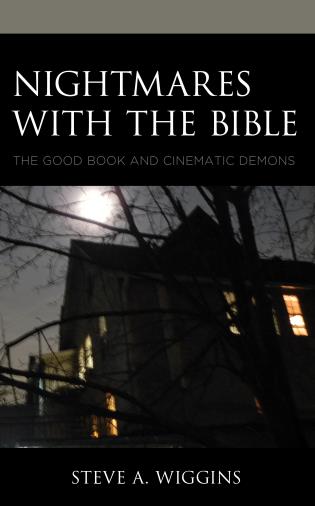
Although on a much smaller scale, I’m thankful for Nightmares.  Nightmares with the Bible, that is.  Although it’s expensive (I’ll thankfully give a discount code to all askers), it is with a publisher that will promote it better than Holy Horror.  It was a very pleasant surprise to receive the book before Thanksgiving, even with its Halloweenish theme.  Anyone who puts years of their life into a project knows the gratitude in seeing it come to fruition.  Nightmares was a labor of love and I hope all who venture to read it will be thankful that they did.  I know I”m grateful for having lots of other book ideas.  That’s one area where there’s a substantial surplus.

Like many people I’m becoming aware of the dark under-narrative to the American Thanksgiving myth.  What we were presented in state-sanctioned school curricula was a story of grateful pilgrims wanting to share abundance with the American Indians.  History shows that their motivations in colonizing were actually subjugation and making slaves of the indigenous people, something we now recognize as a form of evil.  Such lessons are difficult to learn as an adult when the holiday has so many happy, cozy memories associated with it.  We have just been through four years of national chaos in which “othering” became a wedge intended to fracture the fragile unity of this country.  Yes, the guilt is real.  We cannot, or at least should not, deny what history reveals about our motives.  Instead we should widen our tables.  Invite others to join us.  (Virtually this year.)    And be truly thankful for the many good things—some very large, and others very small—which we have.


Is It Really Saving?

Daylight Saving Time has begun.  Or ended, I can never keep track of which.  All I know is that when I’m supposed to being enjoying another hour abed my mind wakes up at the usual time on a weekend only to find it’s even earlier than I’m accustomed to.  I ceased being able to sleep in when the commuting life began.  From where we lived in New Jersey I had to catch a bus well before 6 a.m. daily to get to New York.  Doing this for seven years set a pattern that I still find impossible to break and so I keep apologizing to my associates that no, I can’t attend evening meetings.  The morning after I can’t sleep in.  And then we change the clocks.

Many of us are creatures of habit.  Twice a year we needlessly disrupt our routines so we can “save daylight.”  What difference does it make when you’re staring at a screen all the time anyway?  Now it gets dark even earlier in the evening.  Well, that part I don’t mind so much.  I feel less abnormal when it’s dark as I get ready for bed.  An hour isn’t enough, however, to make it light when I awake.  The daylight will now last about as long as work does.  We’ve entered the darker half of the year.  Of course, yesterday was Halloween and we’re now facing All Saints and All Souls and el Día de los Muertos.  These are not all the same thing, for religion is very good at parsing things.  Still, who can help but suppress a yawn?

We’re supposed to be well rested but in reality we’re disoriented.  I’ve read that congress has been trying for years to make Daylight Saving Time permanent.  This has bipartisan support, but politicians, being what they are, keep on inserting riders that the other side doesn’t like so we continue the pointless ritual.  I know writers who stay up late to dedicate time to their craft.  Since I’m awake early I guess I’m simply picking up where they’re leaving off.  There are few interruptions at 2:00 a.m.  Soon, I know, I’ll get back into the swing of things and I’ll eventually be able to sleep in to three.  Then when March rolls around the gatekeeper will demand toll.  We’ll lose that hour we were so freely given last night.  But some of us will be tired all the time anyway.


The Halloween

Halloween seems especially portentous this year.  Some of us thrive in this introduction to what was a major set of Christian holidays that encompassed many pagan traditions.  The lynchpin was All Saints Day (All Hallows), which in good Christian fashion upheld its favorite sons (and a few daughters) to remind the rest of us what a sorry lot of humanity we are.  Followed by the more democratic All Souls Day where the vestments went from white to black, it was preceded by Halloween.  Through mostly Celtic additions from Samhain, the first of the three days became decidedly spooky and came to be a commercial holiday.  There’s more to it than that, of course, but we all know Halloween.

This year a number of other phenomena are converging on today.  Not only is it a full moon, but a famed blue moon—the second full moon this month.  It feel like something could happen.  And if that weren’t exciting enough the powers that be have decided to end Daylight Saving Time tonight (well, technically tomorrow morning).  And Tuesday is the most importation election day in the history of our nation, when we decide whether to retain democracy or become a monarchy.  Seems like a strange confluence of phenomena.  Meanwhile, outdoors a pandemic rages and some locations have had early snowfalls.  The last of what had been Hurricane Zeta blew through here yesterday.  Who needs Halloween to be scared?

For some years I’ve been contemplating the spirituality of Halloween.  We live in a death-denying culture while knowing full well we all die.  Halloween has become a holiday when we can think about it openly.  Pretend we’re someone/something we’re not.  Perhaps, if we’re lucky, we might learn something from it.  It has become a boon for horror films, but they’ve been successfully spread through the rest of the year as well.  There’s plenty to be frightened of in July and January too.  Still, there’s something about Halloween.  Some of my earliest memories are of this particular holiday.  Poor as we were, we always had costumes for the day.  I remember sitting on the school bus, wearing a mask, thinking that nobody knew who I was, and I could really be the hero or villain that my costume suggested that year.  Now we wear masks all the time and we’re frightened every day.  Halloween is coming along with a blue moon this year.  There must be some significance to that.


Proof in the PDF

The proofs of Nightmares with the Bible are sitting right here on this laptop.  If I’ve seemed distracted, now you know why.  My life is unaccountably busy for a mere editor, and I’m afraid my September is being consumed by proofreading and index-making.  I had some fiction I wanted to submit this month, but proofs are a necessary part of writing and for those who take nobody’s word for it, reading them is important.  I have books on my shelves from very reputable publishers literally littered with typos.  I fear that.  I try to read proofs with as much concentration as a busy life will allow.  And yes, proofs come with hard and fast deadlines.  I only wish they’d been here in July.  Or June.  But still, Nightmares are on their way.

Since this was a “Halloween season” book, the goal was to have it out in September or October.  That won’t happen now, but there were a couple of things that transpired along the way: one was a pandemic.  The other was another paper shortage.  Strange as it may seem, both of my last two books came out in a time of paper shortages.  In 2018, the industry had supposed ebooks would wipe out print.  That didn’t happen, and when Michelle Obama’s Becoming took off, well, let’s just say academic books weren’t a priority.  Printing schedules across the industry got bumped and books from small publishers targeted for a specific date just didn’t match the demand.  This year the paper shortage is due to the Covid-19 outbreak.  Paper suppliers shut down for a while and, guess what?  Print came back!

In any case, hoping against hope that we can make the November publication date, I’m trying to read the proofs with record speed (and care).  That means other daily activities may suffer for a little bit.  Those of us who write think of our books as something like our children (not quite literally that high, but not far from it).  We want them to be launched into a world that will be receptive to them.  And so my morning writing (and reading) time has been dedicated to Nightmares with the Bible.  And indexing said book.  I’m not good at many things, but one talent I do have is concentration.  Until these proofs are submitted (hopefully ahead of deadline) there won’t be much else to which I can pay attention.  I’ll continue to post my daily thoughts, of course, and if you can click that “share” button on Amazon’s book page it’d be much appreciated.