Buying Salvation

October is upon us. The telltale signs are all there: trees just starting to turn, gray skies that hide an intangible menace, a coolness in the air, and Halloween stores sprouting like mushrooms. Halloween is a holiday with incredible sales appeal, I suspect, because people are still, at some level, very afraid. We evolved into who we are from a long history of being prey as well as predators. Fear governs many of our interactions in social settings, although we prefer to call it more abstract names such as “rule of law” or “peer pressure.” Deep down, we are afraid. Halloween allows us to wear that fear on our sleeves. And it isn’t just the Celts who made this confession; Día de los Muertos developed independently, giving us a different flavor of the same emotion. Savvy marketers know that where a human concern lies, there will be the purse-strings also.

Commercialization of religion—the fancy word is “commodification”—is as close to American religious experience as you can get. We live in a religious marketplace. Various religious groups offer their wares, sometimes obviously, sometimes subtly. Often the underlying motivation is fear—fear of displeasing deity, fear of eternal torment, fear of reincarnation. We are afraid and we don’t know what to do, so we try to buy our way out of it. Other times the Madison Avenue approach works. Consider the Crystal Cathedral, or even the great medieval cathedrals of Europe. These are tourist destinations, architectural marvels that draw us in. The message is still pretty much the same: the deity will get you unless you give back. How better to show respect (that is fear) than erecting a massive, complex, and very expensive edifice to the angry God?

It is simplistic to suggest that religion boils down to fear, but when all the water evaporates, fear is certainly evident among the residue. Next to the overtly commercial holiday of Christmas the most money can be coaxed out of Americans at Halloween. Or consider the appeal of horror movies. Love them or hate them, they will draw in big money at the box office. In a society that sublimates fear and tells its citizens that unimpeded growth is attainable, Halloween is the most parsimonious holiday. Perhaps the most honest, too. A full month before the creepy sight of naked trees and chill breezes that sound like screams whistling through their bare branches, the stores begin to appear. When Halloween is over they will be dormant for eleven months of the year, but like the undead they are never really gone. Only sleeping.
A parable.

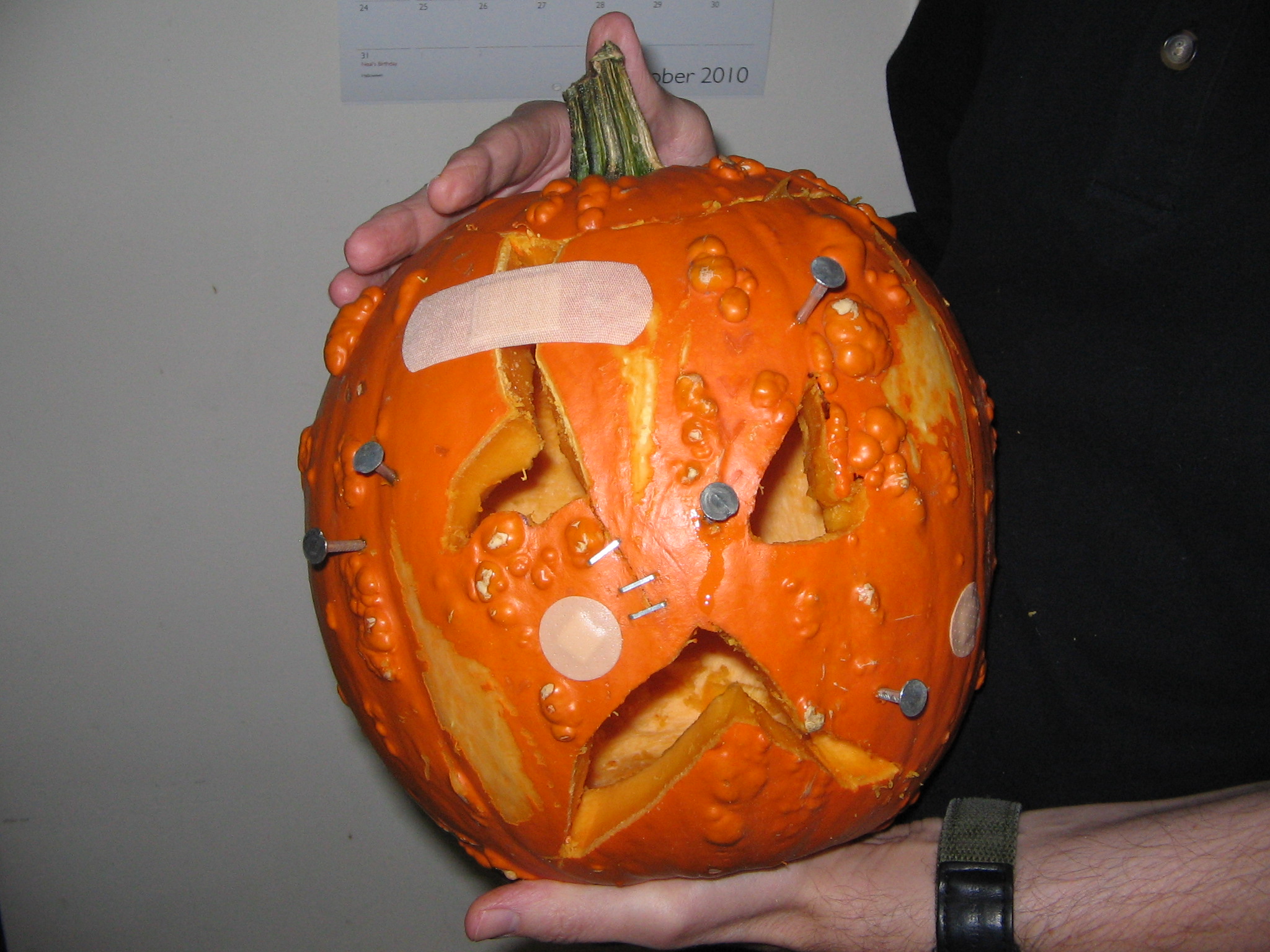
Holy Horror

Back in October, in the spirit of the season, I attended a local lecture by a ghost hunter at a nearby public library. This sincere young man struck me as perfectly normal, but haunted by his ghostly encounters. During the question session someone asked about TAPS (The Atlantic Paranormal Society, of “Ghost Hunters” fame). The lecturer indicated that TAPS is not above fabricating evidence for ratings, a disappointing but not unexpected factor when it comes to television. He even gave some evidence to back his assertions. Nevertheless, my wife’s whimsical six-month subscription to the TAPS Paramagazine has continued on well past its expiration date, and when the November/December issue arrived, I was interested to see a piece entitled “Sacramental Horror: What scary stories can tell us about what is real.” Well, this was too good to pass up.

The article, written by Presbyterian minister Jonathan Weyer, discusses the value of horror films. The juxtaposition of a clergyman and horror films is a little unexpected, but believable. After all, many horror films feature religious ideals clothed in monstrous form. Dividing horror films into Uncanny/Unsettling horror, gross-out horror, and torture porn, Weyer goes on to explain how uncanny or unsettling horror underscores the moral order of the universe and is therefore appropriate for Christian contemplation. He even draws the Nicene Creed into it. Gross-out horror serves the function of making the viewer contemplate death and perhaps even helps to make fun of it. This is a less noble, but still acceptable Christian enterprise. Torture porn, on the other hand, simply has no redeeming value. Sacramental horror really didn’t enter the discussion. Douglas Cowan’s Sacred Terror takes this issue on more directly.

I really don’t expect much insight from a fanzine that treats the reality of fairies and the prognostications of tarot cards next to the genuinely mysterious, such as ghosts. Finding morality in horror films is often a matter of eisegesis. The fear in such films often emerges from the sacred, either in pure or distorted form. Even if “the pure of heart or, often the virgin” survives while “Wrongdoers get put to the axe,” as Weyer states, seldom is that the intended point of the movie. John Carpenter denies that there was a moralizing message in his Halloween, often cited as the movie that established the “good girl survives” motif. The fact is that horror relates to the sacred in the element of fear. If people were not afraid, there would be little for religion or horror movies to accomplish.


Origin of Halloween

Perhaps the most misunderstood of holidays, Halloween has grown into a major commercial holiday. Outsold only by Christmas in the United States, Halloween now supports its own seasonal stores that cash in on the massive public interest. A few years ago a wrote a book explaining the holidays for teens/tweens. The book was never published, and I’ve been putting excerpts on this blog on appropriate occasions. For the full story of Halloween, please check out the Full Essays page (link above).

Accusations of a demonic origin may fit in with the popular creatures of the holiday, but they are far from the truth of the matter. A cross-quarter day, Halloween comes in the opposite side of the year from May Day (remember Walpurgis Night) when spirits make their way back into the mortal world. It represents the passing of fall into winter and the shades of death that accompany it. How much more religious can you get?

From ancient times people have been aware of how weak our control over our lives really is. We depend on the sun and the weather to cooperate for our crops. We fear the darkness when our eyes can’t compete with those of our predators. As the year descends into longer and longer nights, we secretly fear that eventually night will not end. The dark time of the year belonged to the spirits.

Just as all ancient people celebrated the vernal equinox (if you missed it, check out the Passover-Easter Complex for more), they marked the autumnal equinox with festivals. Although Halloween is six weeks after the equinox, it seems to have inherited some of the ancient associations of that season. One of the ancient feasts of the equinox was for Pomona, the Roman goddess associated with fruits and seeds. There is more of Thanksgiving than Halloween in this festival, however.

Halloween, as we have come to know it, is usually traced to the same people who gave us St. Patrick’s Day – the Celts. The Irish calendar was divided into four quarters, marked between the solstices and equinoxes by the cross-quarter days. The fall cross-quarter day was Samhain (in case you don’t speak Gaelic, this is pronounced “sow-win”). Samhain can be understood as “summer’s end” and it was the traditional marking of the onset of winter; it actually comes just a month before meteorological winter.

The Celts, as well as other ancient peoples, believed that spirits of the dead were active as the trees lost their leaves, the grass began to dry and, and the world itself seemed to be dying. Huge bonfires were lit to ward off evil spirits, and perhaps bloody sacrifices were made to ensure the safety of the living.

No matter what modern Halloween critics may say, the Celts did not worship Satan and the origins of the holiday are not satanic. Pagan, maybe, but who isn’t somebody else’s pagan? The idea was to fend off evil, not worship it. The shamans, or “medicine men” of the Celts were a class of priests called Druids. Samhain would have been one of the festivals overseen by the Druids. These guys were priests of a religion that focused on nature, not the Devil. They did play a little rough though. They seem to have practiced human sacrifice once in a while, but Samhain was more often about killing off livestock before the winter. Either you can keep your animals alive and they will eat the little food you have, or you can butcher them and add to the little food you have. After all, not much grows in winter.

[See Full Essays for the rest]


Zombie Walks

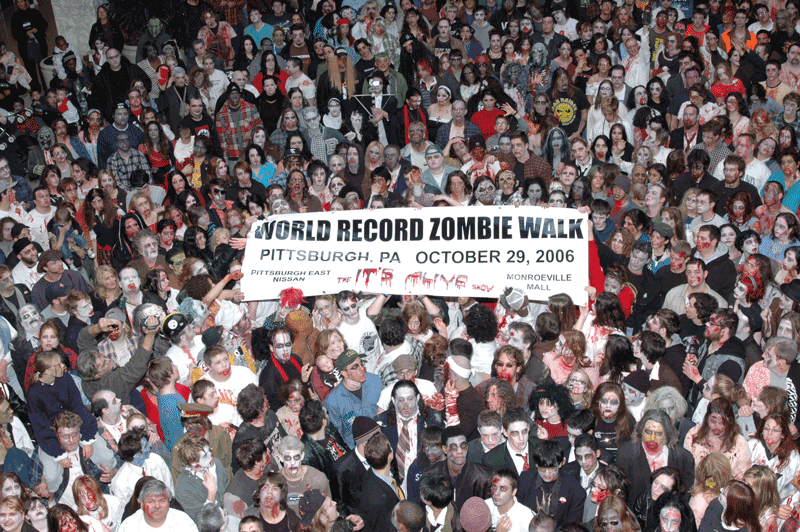
As October nears its creepy climax, signs of the macabre have become abundant. A trend that has reached new heights in recent years is the zombie walk. Various cities or regions host large groups of brainless, reanimated corpses in parade (rather like a Tea Party, I should imagine) to welcome in the darker half of the year. In a most unconventional display of cultural unity, groups of strangers meet for the purpose of sharing their fascination with the undead. Given the inherent potential for overly enthusiastic participation, these events are usually held during daylight hours and are becoming as accepted as trick-or-treating on Halloween.

Fear of death is sublimated in a conquest of the same with less definitiveness than traditional resurrection, but with a more gritty and graphic triumph of life. Organized religions have had difficulty maintaining numbers in much of the “developed world” while this new danse macabre has taken on a life of its own. Many find claims of divine authority in institutions that refuse to make clean breaks with sex scandals or threats of Quran burning somewhat disingenuous, while nobody questions the motives of zombies. They simply do what it takes to survive. An honest zombie stumbles toward eternal life.

Credibility is less easily commanded than it had been in former times. While many voices, such as Tea Partiers’, are claiming the need to erase the sixties and seventies and subsequent decades from the calendar so that the authoritarian Father can be returned to power, thinking people are asking what the plan might be. Is it time to break down that putative wall between church and state and declare America a plutocratic, evangelistic Republic? Never mind that inevitable conflicts will break out over who has the right to set doctrine and public policy – most citizens will be found out walking with their fellow zombies, welcoming in the darkening season.


Robots vs. Ancient Deities

NasaRob

Yesterday I found myself at my first ever robotics competition. As a scholar more familiar with the offering recipes for long extinct mythological deities than with the practical application of computer technology, I felt a little out of my league. I had gone to support the local high school robotics team, and, well, robots and Halloween seemed a natural combination.

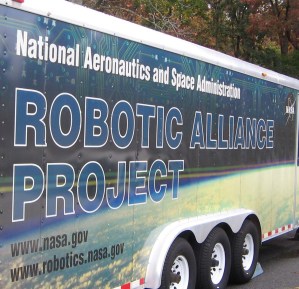
The first thing that stood out was the large NASA van parked in front of the school. Fidgeting over finding a job at the moment, I realized that the money is far more forthcoming for practical enterprises than reading ancient history. It is, literally, for rocket science. So I was crammed into high school gym bleachers with other aging parents, surrounded by kids smarter than I’ll ever hope to be, watching robots compete in exercises too complex for the average Republican. There was rock music blaring and yes, nerdy people dressed like science fiction movie/television characters. I was really feeling lost when I spied the character below.

DrJim

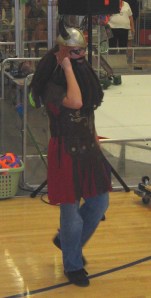
I had no idea that Dr. Jim of the Thinking Shop had relatives in the robotics field! As I saw the bearded Norseman approaching me, I was strangely reassured that there might be a place for me here after all. Religion and NASA do share an interest in celestial realms, and if my generation has been capable of producing kids this smart, there may be hope for the future yet.


The Life Is in the Blood

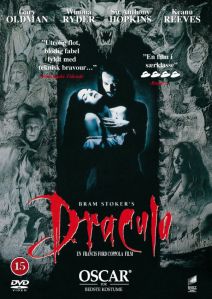
Finally, after a couple of decades, I got around to watching Francis Ford Coppola’s Bram Stoker’s Dracula. As viewers know to expect of a Coppola film, the cinematography is stylish and artistically exaggerated. It has been even more years since I’ve read Stoker’s novel, the book that gave birth to the modern vampire, but I am pretty sure that the many oblique references to the Bible count among the film’s innovations. Coursing like an artery through the movie is the phrase “the blood is life,” taken from Leviticus 17. I’ve posted earlier concerning the biblical outlook that life is equated with breath, and so it is. The Bible does not always remain consistent on this point — natural enough for a book with multiple authors living centuries apart. Blood and breath obviously share crucial functions in maintaining life.

Stoker

Ancient peoples believed in a world peopled with unusual, quasi-supernatural beings, including blood-drinkers and nocturnal baby-snatchers. Theirs was a world of harsh realities where death was more closely observed than it tends to be in many parts of the world today. The fascination, often coupled with religious underpinnings, continues to engage our imagination today, as can be seen in any given Halloween season or on el Día de los Muertos.

Whether el chupacabra or Bela Lugosi, the fascination with mythical creatures of the night that thrive on the life-source of others is a concept never far from religionists. No matter how many stakes we pound through undead hearts, the unholy bloodsuckers continue to show up in our theaters and on YouTube. A childhood penchant for Dark Shadows books has recently been reactivated in the restless gray-matter in my head. As the days grow shorter and shadows become an increasing element of daily experience, I marvel at how the human imagination parodies our daily experiences, dressing them up in fanciful garb to parade about with the other ghosts of October. What is perhaps even more unusual is that money is still to be made in this business of selling the parasite. How else can we explain Buffy and all her cohort? The life is indeed in the blood.