Q’s and P’s

I finally had to break down and buy it.  Quatermass and the Pit has been on my “to see” list probably longer than any other single movie.  I managed to stream the first two of this telinema series for free, so I guess it was like getting three movies for the price of one.  Aired in the United States as Five Million Years to Earth, this isn’t the greatest sci-fi-horror movie ever, but it isn’t bad.  The pacing is a bit slow but the story is intriguing.  Rocket scientist Quatermass gets involved in the excavation of what turns out to be a buried rocket ship from Mars.  Surrounding the ship in the five-million-year-old matrix are the remains of apparently intelligent apes.  The scientists discover that the apes were artificially enhanced by insectoid martians that resemble the devil.  It’s pointed out that any time digging has taken place near Hobb’s End, strange phenomena occur.  It’s noted that Hob used to be a nickname for the devil.
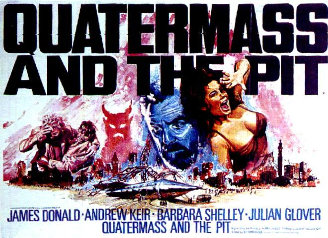
This detail leads to a perhaps unexpected connection to religion and horror.  Quatermass and Barbara, a scientist who has the ability to “see” the creatures via collective memory, realize that the hauntings that have taken place around Hobb’s End for centuries may have been the image of demons, or the devil, emanating from the evil of these would-be invaders.  At one point a priest argues that their influence is essentially demonic, but the scientists realize that these modified apes are actually the creatures from which humans evolved.  All the human tampering with the ship eventually frees the spirit of the martian insects, resembling a devil.  The way to destroy it is with iron, relying on folklore which, in this instance, works.

The four Quatermass movies (I don’t plan on seeking out the last) were theatrical reshoots of television serials.  The last movie is essentially the TV series stitched together as a movie.  From at least the seventies on (Quatermass and the Pit was released in 1967) the first and third installments were considered fairly good horror films.  They aren’t always available in the United States, probably due to digital rights management.  It seems ridiculous that in this day and age that companies still restrict access, even to those willing to pay a modest fee, for movies that are essential parts of the canon.  Hammer (all three Quatermass movies are Hammer productions) films are still difficult to access in the United States.  At least, with the willingness to wait half a century, I’ve finally be able to see Quatermass and the Pit.
Gothic Days

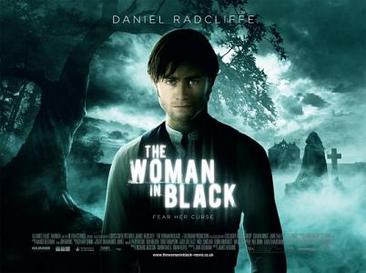
The tradition of telling ghost stories during the months of long darkness has evolved over time.  Since the time seems right, I watched a movie for which I read the book some years ago.  I recall that The Woman in Black is moody, and gothic.  What I don’t remember is how it ends.  More than one source—at least one from someone I know and one from a book—suggested I should see this movie, and I’m glad I did.  It’s a haunted house movie, set in a haunted village and the production values (unlike some movies I’ve recently watched) are quite high.  This film was a reboot in a couple of ways; there was an earlier film version, and it was also a new Hammer production.  In the latter capacity it broke records for Hammer box office earnings.

You see, Hammer, in its first incarnation, struggled for any kind of respectability.  The company almost single-handedly kept horror movies alive while US studios moved more toward sci-fi-themed projects, before the rebirth of modern horror.  Fans knew to go to Hammer for their monsters, but society folks (and those who wish to be society folks) don’t find horror worth any attention.  From my amateur point-of-view, such movies give the viewer a lot to think about.  The problem, as with most underdogs, is that a few bad examples tend to get all the attention.  Life is scary.  That doesn’t mean we shouldn’t try to live it, but it does mean that we might learn something from other people’s mistakes.  Or we might find ourselves haunted.

The Woman in Black is set in Edwardian times.  (I often ponder why we still refer to historical eras by the British monarchs—Elizabeth, Victoria, Edward, etc.—in a world finally moving away from imperialism.  Still, it’s convenient.)  Perhaps not quite as evocative as the Victorian Era, but still moody enough.  Although there are some disturbing scenes, this is no slasher.  Like the novel it’s the tale of a vengeful ghost, wronged in life and out for revenge.  While the end of the movie isn’t the same as the novel (okay, so I looked it up!), it’s similar.  And perhaps it’s best considered a parable of parenting.  No amount of training can prepare you for it, and although it’s supremely rewarding, it’s also very scary.  Susan Hill, the novel’s author, lost a child and that sense of haunting pervades both book and movie.  Gothic is often about grieving, and perhaps about learning something from it.


Seasonal Viewing

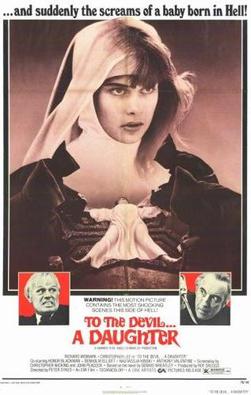
Any movie that begins with an excommunication ought to be good.  Especially with its list of stars you’d think To the Devil a Daughter might’ve turned out better.  Still, it is a good example of religion and horror mingling together.  I’ve never read any Dennis Wheatley novels, but reputedly he didn’t like this film adaptation of his book.  It certainly has a convoluted plot.  So an excommunicated priest has started a new religion that worships Ashtaroth.  He has to baptize a child, now 18 (three-times-six, don’t you see), with the blood of the demon so that she can become his (Ashtaroth’s) avatar.  This is apparently the eponymous daughter to the Devil.  She was baptized initially by her mother’s blood at her birth.

The girl’s father, who survived her birth—unlike his wife—has decided at the last moment to save his daughter.  He appears to be independently wealthy yet he talks an author of occult books into doing the saving for him.  The girl, it turns out, is a nun in this satanic religious order and is only too willing to do what she can to serve “our Lord.”  The way that all of this plays out is confusing and Byzantine, but it does raise a serious question: what if a child is reared in a bad religion?  (And there are some.)  Who has the right to decide if a religion is good or bad?  Children are easily indoctrinated and not too many question the faith in which they were raised.  Yes, we all think the religion we believe is the right one.  The problem is everyone else thinks the same thing.

One of the things this movie got right is that the “heretics” are portrayed as sincerely believing that their religion is for the improvement of the world.  Calling themselves Children of the Lord, they believe Ashtaroth is good.  And a good lord wants what is best for the world, right?  This is the dilemma of exclusive religions that teach only their own outlook can possibly be the correct one.  Otherwise you have to give adherents a choice and another religion may be more appealing.  Or worse, they may reason out that if you’re given a choice that means your own religion is also merely one of many.  Historically religions have gotten around this by valorizing true believers who never question anything.  To the Devil a Daughter isn’t a great movie.  It’s not even a very good one.  Nevertheless, it raises some questions that lie, of course, in the details.


Everything’s a Nail

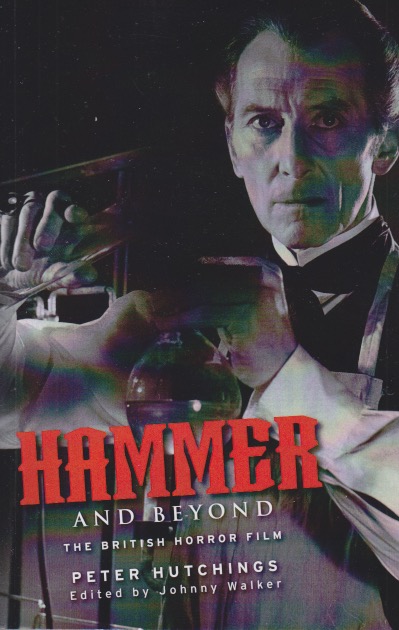
Taking my first, tentative steps into horror analysis, I had read a great many monographs on the subject.  I had watched many horror films over the years, but since my family has no love of the genre, and since habitually under-employed I can’t afford to pay for many, my quota is fairly modest.  I’ve missed out on many.  When I could afford it, I started out with either movies I’d heard of when younger but had never watched, or packs of ultra-cheap B (C or D maybe) movies that nobody has ever heard of.  As I lamented recently, British films were rare—Hammer, which held the English reputation for horror, was the undiscovered country.  Then I saw that Peter Hutchings’ Hammer and Beyond: The British Horror Film had come out in a second edition.  (The new edition contains three of Hutchings’ other articles as well as the original text.)  I had to read it.

Although I’ve not seen many of the movies discussed in the book (again, access issues) it was fascinating nonetheless.  Hutchings considers the elements of gender and Britishness in his readings of the films and there’s quite a lot there.  Horror is generally seen as a conservative genre (it tends to uphold typical social values) and for many Hammer and other films this meant that male prerogative was important.  Equally important, however, is that horror often disrupts this hierarchy.  There are strong, and even fatal, women here.  Horror embodies the acting out of the complex world of fear between women and men.  The study, as befitting a revised dissertation, is laid out chronologically for the most part.

Some readers of this blog have kindly pointed out ways to access Hammer films in the US.  Now all I need is the time.  I’ve been able to keep up with my reading, at least.  And this was a worthwhile book to read, even without having seen much Hammer.  It surprised me, however, that their list of classic horror wasn’t longer.  Having read about Hammer for many years,  I suspected their output was massive.  Instead it was mostly just impactful.  The essays following the main body of the book make the point that British horror was/is distinctive.  These days a lot of international cooperation takes place in the movie industry, and national cinema is becoming more global.  We could use a little less nationalism just about now.  So I’ll continue my quest for Hammer and try to make my way through the movies I really should add to my repertoire.  It’s a good book that can make you want to do that.


Horror Show

The horror film history narrative runs something like this: although there had been some scary movies in the silent era, the term “horror” was first used to describe Universal’s 1931 release of Dracula and Frankenstein.  Some other studios got in on the action and creature features were a staple of US cinema until the fifties when they began to peter out.  By that point a UK horror industry took off, largely due to Hammer Studios.  While these Hammer offerings often remade the standard creature features, they also branched out into less commonly explored areas such as films set in contemporary times focused on the occult.  This phase faded in the sixties just as “modern horror” was taking off with classics like The Night of the Living Dead and Rosemary’s Baby.  Modern horror quickly grew.  Further divisions can of course be made, and the modern period has gone through several transformations as well.  It’s a rich coffer.

There’s a real problem with this, however, for those who might’ve missed a decade or two somewhere in there.  Many of the UK films are still not available in the US for anything like a fair price.  Part of the reason for this is copyright law, but another is apparently the ignoring of demand.  I saw maybe one Hammer film (on TV) growing up.  Saturday afternoon fair was more often American B movies like Zontar the Thing from Venus.  I’ve got a hankering to watch some of those Hammer films, but even in the 2020s they’re difficult to find.  Even with the internet.  Often the DVDs are (because of differing copyright laws) coded so they can’t be viewed in North America.  You can buy a player to see them, but when you think of the inevitability of streaming it hardly seems worth the cost.

Streaming might be the solution, but much of the Hammer oeuvre doesn’t stream in the US, at least not that I’ve found.  If I’m wrong please let me know in the comments!  You see, I spend time reading about horror and when you do this recommendations often arise.  Some Hammer classics are as expensive as the academic books that discuss them.  Is it possible to be a horror connoisseur?   And can you truly be a connoisseur without sampling what’s on offer overseas?  We tend to forget that the world is culturally divided by copyright laws.  If nobody’s watching the movie anymore what’s the harm in making it free?  If people do want to see it, why not sell it to them at industry standard price?  Even trying to watch horror, it seems, has become a horror show.

Photo by Michael Mouritz on Unsplash