Faith and Freedom

Schadenfreude is not my usual response to the downfall of a religious leader—with perhaps the exception of televangelists. After all, religious leaders are only human. Occasionally one crosses a very serious line, as the news about Nechemya Weberman, a Hasidic counselor who was found guilty of molesting a girl under his profession care, reveals. The sad part of this situation, apart from the tragic consequences for his victim, which are very serious in their own right, is that the Satmar Hasidic community insisted that it should have had the right to do its trial in secret. Sects that take their cue from the Bible are seldom fair to women. The Bible, after all, is not a very female-friendly tome, no matter how much feminists may try to rescue it from its androcentric world. Religions based heavily on the Bible feel they have the right to judge by their own standards—something a secular court can’t understand. It is back to the paradigm of the two swords here.

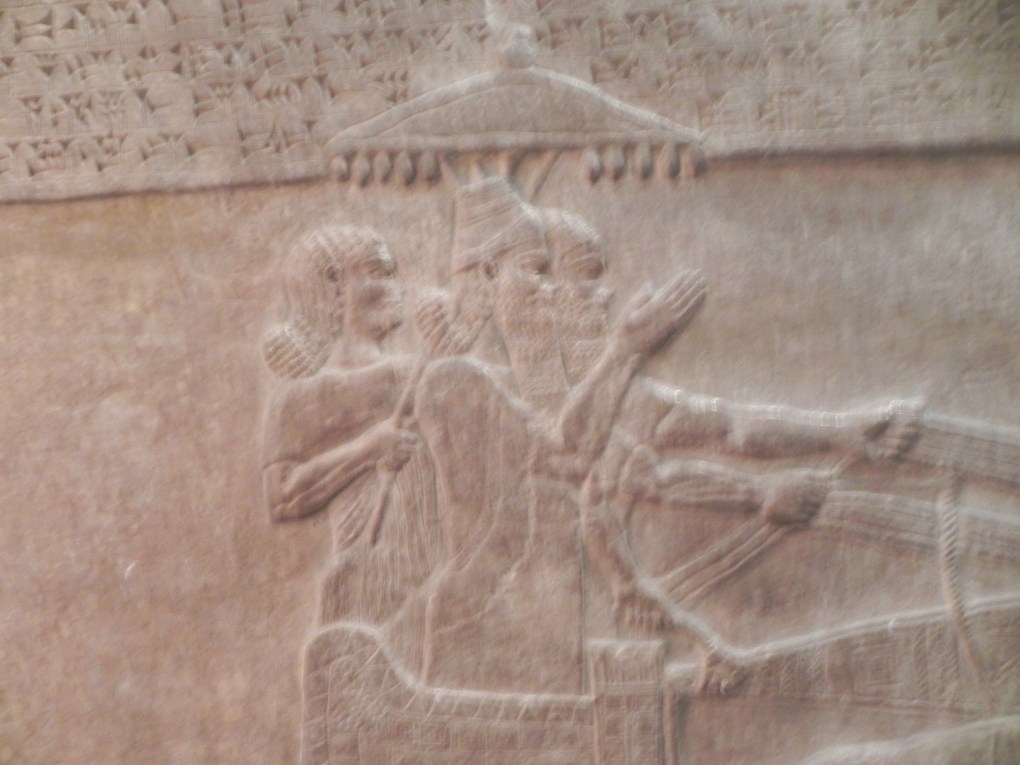
What are we to make of the civil crime that violates no religious laws for any one sect? What is wrong in one book is all right, or at least forgivable in the other. For a secular crime committed in a closed religious community in a country of religious freedom, who is to decide? These questions are decidedly more than rhetorical. Any religion that says women are here to serve men—and there are a disturbingly large number of such religions—can claim that God trumps gent d’armes every time. What’s more, they believe the decree is eternal and they are violating the divine will if they don’t keep to it. This situation is nothing new; at least as early as Tiglath-Pileser III, and probably earlier, ancient religions sometimes had to compromise under the hegemony of a higher power. But they were only biding their time until the political situation would grant their autonomy once more.
DSCN1828

It is simplistic to suggest that the two swords represent the two hemispheres of the brain, but we do have a rational versus emotive issue here. Rationally, would an unseen force endowed with a human personality demand the unfair treatment of some people simply because of an unexplained favoritism? It does not seem likely. But religions are seldom logical. “Credo quia absurdum,” Tertullian is remembered as sighing—“I believe because it is absurd.” Theologically profound? Certainly. Helpful in society? Not so much. Freedom of religion is a classic ouroboros, a serpent biting its own tail. Religions are free to declare their own beliefs, but their own beliefs may challenge the very authorities who grant them that privilege. Secular authority may have the ability to put to death, but resurrection is the prerogative of religion.

The Price of Religion

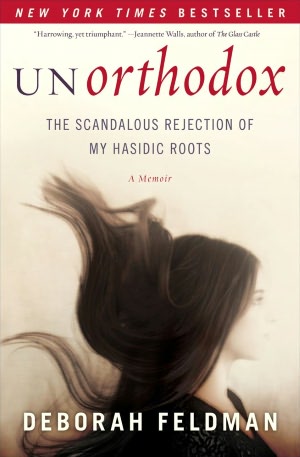
Gender is a religious construct as much as a biological one. The study of religion has brought me face-to-face with the reality that religion appeals to many women and to those who would manipulate them. Lately I’ve taken to reading the memoirs of women who’ve discovered the abuse their faith has doled out to them and who’ve taken moves to reclaim their lives. This past week I read Deborah Feldman’s Unorthodox: The Scandalous Rejection of My Hasidic Roots. As someone who has spent much of his life reading and re-reading the Hebrew Bible that gave fuel to the Mishnah that gave fuel to the Talmud that gave fuel to the Hasidic movement, I found Feldman’s narrative gripping. Some branches of Judaism, like some branches of Christianity, try hard to separate themselves from society. Their cloistered lives become secretive, and often by the standards of secular culture, incomprehensible. While reading this wrenching account of sexual domination, I kept wondering why Feldman didn’t try to escape. At the same time I already knew the answer.

I was raised by a religious mother who found her faith both a source of rules and a source of comfort. Unaware that religion can be a trap, women are frequently its victims. In a society that still refuses to give females equal opportunity for earning a living, is it any wonder that religions offer alternative routes that equally entrap? How do you appeal to a higher power when that higher power is, by biblical definition, male? Who will help you out when the largest religious structures in the world are male constructs? Yes, lately some religions have opened themselves to female leadership, but almost always at the cost of splitting off of factions that claim seniority and sanction from the beginning, when, they claim, only men ran this show. Deborah Feldman was trapped in a religion where her life, down to her hair and clothes and reading, was programmed by male expectations. In this continuum between religions we find the same progression in a series of degrees where men make the rules.

Many who read Unorthodox, I suspect, will see it as a condemnation of Hasidic Judaism. It is not. As Feldman makes clear, she has retained her Jewish identity, but she has let it evolve into a place where she is finally free to express herself. Gazing over the religious landscape, I see this as a place that many women find themselves. The very religions that had formerly held them down, however, continue to be male preserves. Even if women may join the club of bishops, clergy, or rabbinate, they do so with the constant reminder that they are only invited guests in what was once a masculine world. The world of men never voluntarily relinquishes its grip. As long as people are considered in the image of God they will always be by default male and female only as an afterthought. To conceive it any other way would be very unorthodox indeed.