
In perhaps one of the greatest ironies of history, throughout the Ancient Near East, cattle were currency. The entire system of fair exchange is based on what humans deem to be valuable — gold is not inherently of more worth than iron. We choose to agree on such value systems and the chosen material becomes a means of trade. In the Bible, before coinage evolved, wealth was measured in animal possession. The rancher with the largest herd was the richest person around. This should be familiar to readers of the Bible, and it is attested in the surrounding cultures of the Near East as well. Even in Egypt, which has the reputation of looking down on cow-pokes (see Genesis 46), bovines were sacred. The apis bull and the usual representation of the goddess Hathor attest to that.

Wikipedia's prized gnu cow
In reading the Iliad over the last few days, the value of cattle among the ancient Europeans also stands out. War prizes from Troy and other conquests are often valued in terms of how many cattle they are worth. Even captured human prizes are symbolically weighed against their worth in moo. The sacrifice that gods appreciate most is that of the beefy variety, although the small-scale farmer may only be able to spare a caprid; when the gods are showing temper, throw another steak on the divine grill and all will be well. It would be difficult to find a stronger religious continuum in antiquity than the pacifying value of bovine sacrifice.

Bovine worship gone crazy
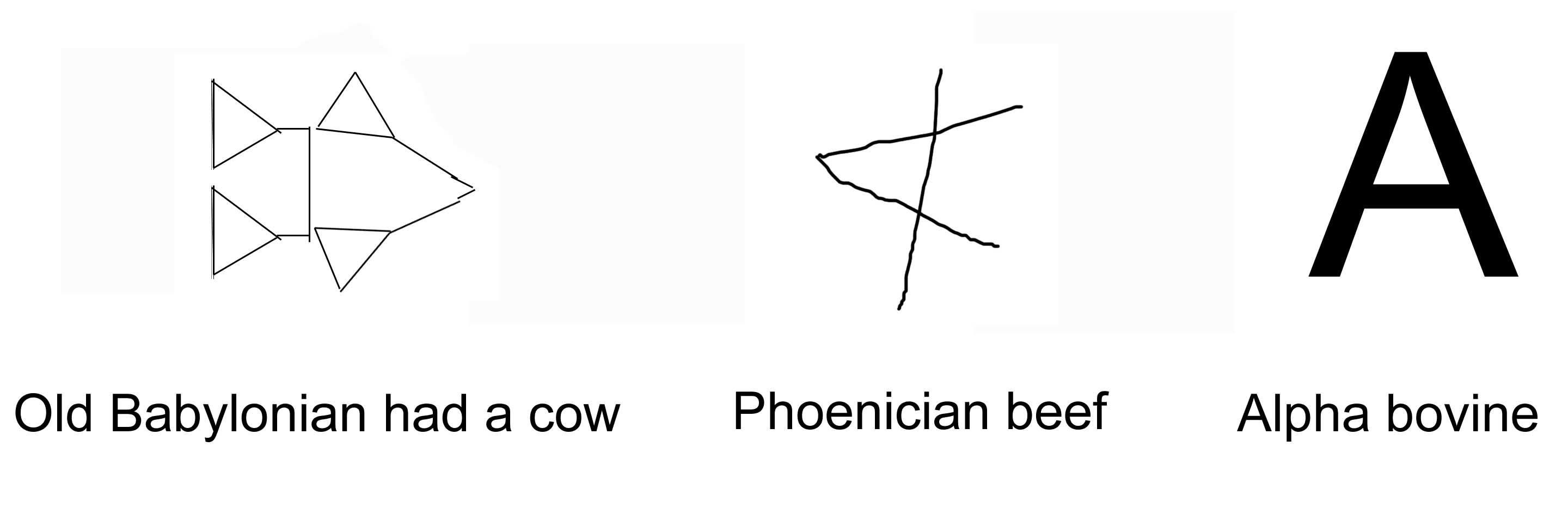
One of the lesser recognized features of our ancient ancestors’ bovine-fixation is found in our own alphabet. Writing began with pictographic symbols representing their referents. Since cattle were so important, their characteristic visage made up a frequently utilized symbol. As cuneiform developed, drawing was replaced by wedge-shaped writing on clay, and the bovine head was represented as a series of wedges and lines. When the inhabitants of ancient Aram (very roughly our Syria) devised their non-cuneiform alphabet, the very first letter was an ox head. The Greeks turned our abstract cow onto its horns and gave the world its alpha, a form that survives in Western scripts today as a Latin capital A. In this industrialized age when, unless they go to the 4-H fair, many people never even see a real cow, every time we tap out messages on our keyboards, we still acknowledge the sacred bovine.
 Steve A. Wiggins