Peak del Toro

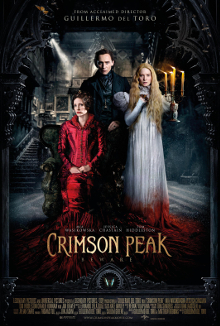
Crimson Peak is perhaps my favorite Guillermo del Toro movie.  Gothic to the hilt, the story—a bit overwrought—features plenty of ghosts and a house appropriate to them.  The many reflexes of horror on display here make it a compelling movie, despite its box office disappointment (although, honestly, how can $19 million really be a disappointment?).  There’s a gothic mansion, a murderous plot, blood-red clay, incestuous siblings, ghosts—what more’s necessary?  Thomas Sharpe is a minor aristocrat down on his luck.  All he and his sister have is the crumbling Allerdale Hall, perched atop Crimson Peak with its clay mines beneath.  In need of investors, they travel to Buffalo, New York, where Edith Cushing (surely no coincidence of names) meets and falls in love with Thomas.  Her wealthy father dies in mysterious circumstances, but she marries Thomas and they head for England along with her inheritance.
It’s clear something’s not right, so Edith, who is an aspiring writer, explores the old house and makes some unwelcome discoveries.  And she sees ghosts.  They help her unravel what’s going on but her health is declining as winter sets in.  Of course, the fact that she’s being poisoned doesn’t hurt.  Thomas and Lucille, the lover siblings, have done this before.  More than once.  There’s a kind of Bluebeard theme running through Crimson Peak.  Each time they inherit the wealth of the deceased brides but they can’t get the mines up and running to save their estate.  The twist is that this time Thomas has actually fallen in love, making it difficult for him to kill Edith.  Their house, except for that gaping hole in the roof, is one of my favorites from any movie.

The more I think about it, the haunted house in gothic films may be the decisive element for me.  I’ve always loved Poe’s “The Fall of the House of Usher,” and perhaps growing up in humble domiciles attuned me to what could be.  I loved reading about Collinwood.  Maybe I even knew that such houses come with a very steep price that consequently casts them as haunted.  Indeed, in the movie itself Edith says the ghosts in her story are metaphors for the past.  Of course, she encounters literal ghosts at Crimson Peak.  This is a movie about moods and gothic settings.  The horror pretty much matches what del Toro offers up in other films like The Devil’s Backbone.  The only monsters here are the ghosts and they aren’t the bad guys.  


Who’s Pretty?

Movies come at you from all angles these days.  People love stories and streaming companies make enough money to create their own content.  I Am the Pretty Thing That Lives in the House is a notable effort for a Gothic film, financed by Netflix.  The pace is fairly slow and there’s little in the way of jump startles or bloodshed.  The story isn’t fully explained, but then it revolves around a horror writer, so that’s not unexpected, I suppose.  Lily is called in as a hospice nurse for Iris, although what Iris is dying from isn’t specified.  The estate manager supposes the stay won’t be long, but Lily remains in the house for eleven months, not leaving at all.  A few creepy things happen, but nothing terribly threatening.  Meanwhile, Lily, who admits to being too scared to read horror, decides to investigate Iris’ best-known book because Iris keeps calling her by the name of one of the characters (Polly).

After several months of this, Lily comes to believe that Polly was a real person and that she was murdered in the house.  Up front the movie announces itself as a ghost story and lets us know that Lily won’t survive the year.  That’s technically not a spoiler, since it says so at the very beginning.  The question becomes, what has happened to Lily?  Iris remains pretty firmly in the background, but she is the one who initiated the story.  The movie strongly implies, without outright stating it, that Polly was a real person who somehow channeled her story to Iris.  Iris, however, when she talks about Polly, seems to take the point of view of her murdering husband.  I won’t say how Lily fails to survive the year because that might actually be a spoiler.

This is one of those movies that relies on mood more than plot.  In that it manages to approach Gothic sensibilities with the very premise being, from the start, that ghosts own a house.  I live in an old house.  Apart from the previous owners, who both left alive, I have no idea who might’ve lived here since about 1890.  I haven’t seen any ghosts but I often do wonder what has happened in this place.  There are those who prefer modern houses with shiny surfaces (and generally no books),  but some of us prefer to take our chances with history.  We may never unpack that history but living among it makes us feel connected.  That’s kind of like the experience of watching I Am the Pretty Thing That Lives in the House.  Only we hope that are good guests in what may be somebody else’s dwelling.


Return to the House

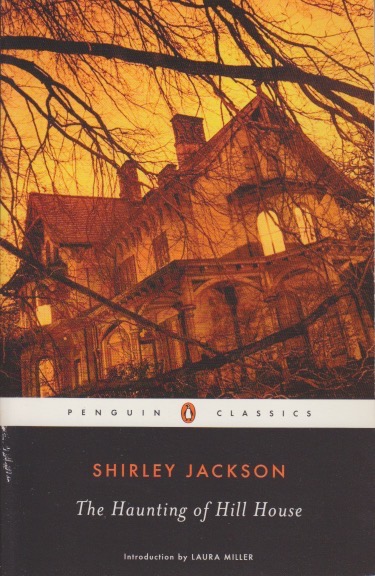
I’ve read Shirley Jackson’s The Haunting of Hill House before.  It might’ve been before I started this blog, or it might’ve been before I started writing about the books I’d read.  Either way, when I search for a post on it, I don’t find one.  This is a classic novel in the genre, but I found it rather sad both times I’ve read it.  Eleanor is such a compelling, abused and discarded character.  But in case you’re unfamiliar with this psychological horror story, here are the basics: Hill House is haunted.  A professor, Dr. John Montague, somewhat hapless, decides to gather a couple of sensitives to try to investigate the hauntings.  He plans to write a book about it.  The two women he invites, Eleanor and Theodora, both had some psychic or Fortean experiences.  The owner of Hill House insists that a member of the family be present, so Luke, a carefree young man, joins them.

The house “manifests” in various ways, but the occurrences while they’re there, center on Eleanor.  Eleanor lives with her domineering sister after having been a caregiver for her dominating mother.  She’s never been able to develop her own self, and she desperately wants to be accepted.  She’ll lie to make that happen, but not maliciously.  In fact, she’s quite childlike.  While the half-hearted investigation takes place, the others begin to suspect Eleanor may be behind the events, or some of them.  Then John’s insufferable wife arrives with her pretentious friend.  Eleanor acts out, doing a foolhardy stunt that leads the others to dismiss her from the house.  The story is creepy, but, like Mary Shelley’s Frankenstein, more like sad.

I decided to re-read it as autumn began to be felt in the air, and I had read a couple other of Jackson’s novels that I remembered better because they were more recent in my experience.  Quite often this story is compared to Henry James’ The Turn of the Screw, another ambiguous ghost story involving a young lady who wants to be accepted.  These characters are compelling in a  Poeseque kind of way.  Critics complained of my using Poe’s observations in Nightmares with the Bible, but these stories, by a woman and a man, are further exhibits in the case.  They add a poignancy to the events because even as we’ve made some progress in women’s rights we still have a long way to go.  No one doubts that Jackson’s writing is laced with metaphors.  None of her characters can be considered “normal.”  And yet, it’s the house that brings it all out.  It’s a story worth pondering again.


No Changes

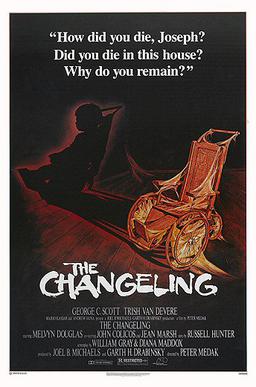
It’s one of those polarizing movies.  Well, maybe middling-polarizing.  For certain kinds of people.  I didn’t see The Changeling when it came out, but I watched it about a decade ago.  It struck me as lackluster then, but I decided to give it another try.  One of the reasons is that I’d read a couple of things about it recently and thought that maybe I’d misjudged it.  There are those who say it’s a very good haunted house movie—one of the most influential Canadian films of all time.  Hyperbole aside, it’s one of those vengeful ghost movies and the most affecting scene, to me, is when George C. Scott is crying in his bed about the death of his wife and daughter.  There are a couple startles, but nothing really that scary overall.  It is slowly paced and sophisticated, but not terribly so.  It still strikes me as lackluster.

I’ve seen many movies since that feature a child murdered seeking to have their story told.  The end result is, however, a feeling of “so what?”  The boy’s father got away with the murder and the beneficiary—who may or may not know all or part of the story—dies in revenge.  There are just too many questions left unanswered.  The haunted house tropes are fairly conventional, and the wheelchair chase scene is a bit strange.  I wondered if there might’ve been something I was missing.  There are critics with a “meh” response, but others rate it highly.  I did learn that, although the film makes no such claim, it is purportedly based on actual events.  That I’d like to know more about.

Playwright Russell Hunter (who lends his name to Scott’s character), alleged that these kinds of things happened to him while living in the Henry Treat Rogers mansion (in Denver).  A local, Katie Rudolph, has done some fact-checking that casts doubt on the story.  Hunter claims to have found human remains (as in the film) and this would seem to be something that could be checked out as well.  In all, there’s not a ton online about the story and its supposed authenticity.  The house was torn down some time ago.  It would seem that any author (Hunter co-wrote the movie) would see the benefits of claiming actual events.  Even if the film doesn’t play that card.  Was there a murder in the mansion?  From what I’ve been able to find, there are about as many unanswered questions as there are in the movie itself.  Although next time I’m in Denver, that’s not to say I won’t be tempted.


Dark Houses

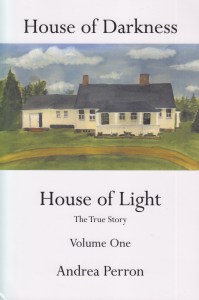
A book can be whatever an author wants it to be.  When it goes through the publication process, however, it becomes a group effort.  Granted, the other parties are motivated by money rather than by the message of the book, but they are professionals.  Editors can point out what’s irrelevant, or beside the point.  What you’ve already said, if you happen to repeat yourself.  What you’ve already said, if you happen to repeat yourself.  They change things, often, authors admit upon reflection, for the better.  The self-published book shows itself as just what an author wants it to be.  House of Darkness, House of Light: The True Story, by Andrea Perron is a case in point.  In three volumes of about 500 pages each, it is (they are) the insider story of the family portrayed in The Conjuring.  After having finished volume one, it’s clear the book needed an editor.

Don’t get me wrong; there’s some good stuff here.  The first couple hundred pages are fascinating, although there’s a slow build-up into moving into the Harrisville house.  One thing academics have always been too quick to do is dismiss the experience of non-trained observers.  We have to be skeptical, of course, to spot those who are intentionally deceitful, but a person doesn’t write 1,500 pages without cause.  People do experience strange things, and this book is a family’s recollection of events that inspired a horror movie.  There were a few points in the course of reading through that I found myself pondering new perspectives on the realm of ghosts—shifts of point of view.  There were many points, though, that I found myself muttering that an editor would’ve helped.

As a fully trained academic in the field of studies that handles issues of the soul, I am hungry for primary sources.  Sociologists and psychologists get their information from observers—ordinary people.  It’s only when the claims become extraordinary that such observations are called into doubt.  We have all heard of haunted houses.  We all know that sometimes strange things happen in them.  We can explain such happenings in different ways.  The skeptical explain them away as misperceptions, normal occurrences masquerading as paranormal.  The credulous accept everything at face value.  Truth, it seems to me, is a middle of the road phenomenon.  I’ve always sat on the fence regarding ghosts.  Too many people over too many centuries have reported them with great detail—witnesses include some very reputable and rational individuals—to dismiss them in toto.  After volume one, it seems that something worth exploring took place in the eponymous house.  For full impact, however, who you gonna call?  This time you’d better make it an editor.


Amityville Revisited

Remakes, standard wisdom holds, are seldom as good as the originals. When the original wasn’t great to begin with, the bar should be lower. Should be. I’ve been curious about the Lutz haunting in Amityville, having just read the book that started the phenomenon back in the late 1970s. I saw the movie first. That was several years ago now, but I do recall that even as horror movies go it had its failings. Some of that goes back to the book (presuming that anything happened)—nobody had a solid grip on whether this was a ghostly haunting or a demonic infestation. What the movie did do well is show how fragile family relationships can be, especially when under the pressures of supernatural supervision, not of the positive kind. Although, as is to be expected, the book was scarier.

Overcome by curiosity I finally watched the remake from 2005. Clearly I’m not the only one still curious about this alleged haunting, alleged hoax. I also have the alleged burden of looking for religion in horror. Only on this final count was it not disappointing. Well, that and in featuring burgeoning scream queen Chloë Grace Moretz. Although Father Callaway’s role is late in the film and brief, early on religious ideas are implicated. If the movie hadn’t tried so hard to be The Shining these themes might’ve been developed to good advantage. Instead it introduces Rev. Jeremiah Ketcham (also late in the film) as the first owner of the house in 1692 (did the real-estate agent’s mention of that date make you shiver?). Ketcham was a sadist to the Indians under his care, torturing them to death in the house. No time is left to explore the sinister minister’s motivation as the family implodes in its attempt to escape the house by boat.

As is frequently the case with the supernatural, we’ll likely never know what happened at the Amityville house. The story Jay Anson told is now generally classified as a novel. The preternatural can be judged neither in the courtroom nor the laboratory. The best that we can do is make celluloid adaptations to make some money on the deal. The DeFeo murders happened in living memory. The Lutzes left the house in a hurry shortly after purchasing it. Anson’s Indian “asylum” was never really there—and there were no such Native American practices in any case. What the remake left out was demons. Although the movie attempted other religious scares, the house just isn’t the same without them.


House of Unsure

DSCN0216

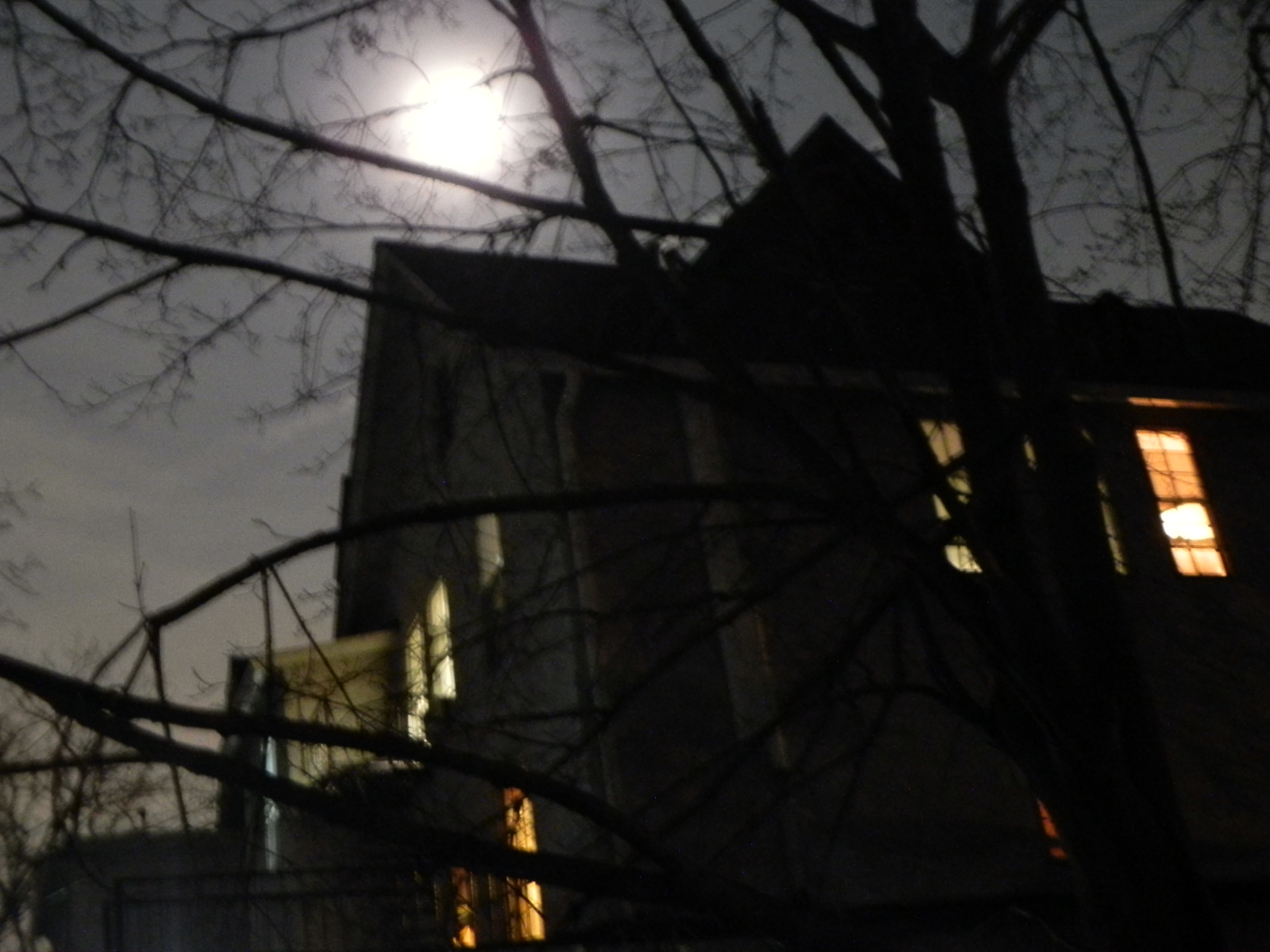
It’s that spooky time of year when nights have surpassed days and the chill in the air suggests an oncoming period of bleakness. Leaves are raining down off the trees and strange sounds fill the dark. So when a friend sent me an article on The Vintage News entitled “Website ‘Died in House’ can tell you how many people have died in your home & how” I had to look. At the story, I mean, not the actual website. You see, I’m not sure if I want to know too much about those who lived here before me—or died here before me. Like many people near a major city, we rent. I’ve never owned property (never had a job that paid well enough to do so) and as a renter you’re limited in what you know about your home. We’ve lived in our current situation a decade now. Of the four families in the two houses that make up the property, we’ve been here by far the longest. The house, however, has been here even longer. Has someone we’ve not met?

We live in a rational age, but we still fear ghosts. Belief in the lingering spirits of the departed goes back to the earliest written records and, we have every reason to suppose, far before that as well. We just can’t seem to shake that feeling, no matter what our rationality tells us. I didn’t go to the actual website, but Vintage News reports that it is a paid service. You want to check your address, you’re going to pay. And the results only go back to 1980. I don’t know about you, but to me it seems there’s a lot of years before that to wonder about. I mean, I was in high school in 1980 and there were lots of houses in my town that looked pretty old even then. If you’re going to pay to learn about ghosts, you want to be sure you’ve got the older periods covered as well.

I’ve lost track of the number of places I’ve lived. Some of them have been fairly old and some I have been curious about. Would I want to know if anyone had actually died there? I’m not so sure. One of the seminary houses I lived in had a spooky, neglected feel. I never saw anything that most people would characterize as a ghost, but I knew nothing of the history of the place when I moved in. It never occurred to me to ask. Now you can ask. A few keystrokes and a few dollars and you can learn if your house has “that kind” of history. The question is, with the increasing hours of darkness, and the wind whistling through the gaps around the windows, do you really want to know?


Holy Haunted Book

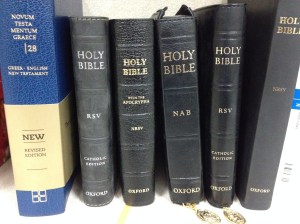
Religion is one of those words that defies easy definition. As I’ve suggested before, you know it when you see it, but trying to pin the idea down is a different matter. Consequently, religion is closely related to a number of other areas of interest: philosophy, ethics, monsters, and the paranormal, to name a few. I was interested, therefore to see a blog post recently concerning a “haunted Bible.” Call me naive, but the thought had never occurred to me before: could a holy book be haunted? Churches are notorious for housing ghosts, of course. As someone who’s spent overnight retreats in churches I can vouch for the fact that a sanctuary after dark is a naturally eerie place. I’ve never seen a ghost in a church, however, and I’m not entirely convinced they exist, and if they do, what they might be. In any case, a haunted Bible is a different story.

David Weatherly is a fairly well-known paranormal writer. My web search brought up his blog where he explains that the haunted Bible was for sale on eBay with an asking price of $180,000. The owner, who remains anonymous, claimed to take no responsibility for any damage the supernatural scripture might cause. Instead of thinking that we have here a genuine haunted leather scripture, I know it can be nothing other than a genuine hoax (not on Weatherly’s part). Realtors know well that a haunting can, in today’s climate, counterintuitively drive the price of a house up. With people hungry for some element of the supernatural in their lives, and ghost hunters of all sorts on their televisions, they are willing to shell out a few more dollars to have a spirit around. And since ghosts can’t sign contracts, there’s no guarantee that they’ll be there once you move in. The supernatural can, it turns out, be the perfect scam.

If items can be haunted, I suppose a Bible might as well. When an owner, however, turns down an offer of 50,000 pounds that odor you’re smelling is that of a rat. I love old books. I have a few around that have more than a century’s weight on them. Looking at used bookstores longingly, I see first editions of Poe or Shakespeare that sell for far less than the asking price of the most printed book in the western world. Bibles, if you know where to look, can be had for free. I’ve got at least a dozen of them myself. Nothing makes fakery quite so clear as greed. No wonder the haunted Bible was such a disconnect. There’s nothing paranormal about love of money. That’s all too normal for anyone who tries to sell a Bible for implied spirituality.

IMG_1235


Haunted Purgatory

Halloween season is a time for both pagans and evangelicals alike to tremble. Our usual local “haunted house” for charity being closed this year, my family went to the local haunted farm last night. In a nation where few of us grow up on farms, the agricultural world is already a foreign environment. And corn is a scary plant when it dries out, especially at night. The Creepy Hollow part of the farm tour was a long, rambling stumble through a corn field where costumed actors jump out at you or just as ominously shake the cornstalks as you walk by in the dark. Senses that we have long ignored leap to full attention, scanning for any possible fright. At nearly a mile long, this haunted trail was pretty intense, and I’ll admit to being glad to have seen the open field at the end. One of the props along the way was a haunted church. As I’ve noted before, religion and fear often stride hand-in-hand.

Earlier in the day, my wife had pointed out an article in the Huffington Post about the dilemma many evangelicals face when their kids want to celebrate Halloween. A holiday of Catholic and pagan origins (both feared equally by the truly staunch evangelical), Halloween is a season of dangerous influences. In response, some groups have started their own “Hell Houses” designed to show kids the horrors of Hell as they walk through a putatively non-fiction version of fear. The intention seems clear enough, although a little odd for a religion that claims to be based on love. The Hell Houses are part of an alternative holiday called “Jesus Ween” and people are encouraged to give out Bibles rather than candy. At least they got the scary book part right.

In an unrelated yet relevant story, Time projects that the seven billionth person will be born on October 31. I remember when there were just four billion of us, and my teachers began pointing out the stresses we place on our environment. Of course, those who co-opt the identity of being “pro-life” advocate for as many of our species as possible—less for God to pour out love, but better to populate Hell, apparently. The Roman Catholics share this petard with the evangelical camp, as Monty Python made famously clear in The Meaning of Life. We have overcome (largely) nature’s control on our expansion, and as Halloween, or Jesus Ween, races nearer, we have less to fear from chainsaw-wielding maniacs than we do from Bible-bearing clones who claim it is divine mandate to stress our own planet to death.