Stigmatic Thoughts

Stigma is a funny thing.  Almost a superstitious mindset.  Especially when it concerns a non-contagious agent.  When a person becomes a victim of such an agent, the tendency is for others to withdraw from them, as if afraid they might catch it.  One such instance of this is cancer.  When someone is diagnosed, many people either keep silent or distance themselves from the person who received the diagnosis, as if even saying the word might put them in harms way.  Being married to a cancer survivor, I have experienced that firsthand.  Another instance, I recently discovered, is when you’re the victim of a scam.  Not only do you feel bad for your loss, but others tend to step back silently, as if they too might contract scam germs.  In both these cases, and many others, it’s easy to feel isolated.

As social animals, humans long ago learned that shunning is an effective tool in controlling social behavior.  A shunned person leaves a community or withers and dies within it.  As much as we value individualism, it means nothing if there’s no social group to acknowledge it.  Stigmas can lead to a kind of shunning.  A perhaps more lighthearted example is the person who tells others they’ve seen a UFO.  There’s adequate documentation that, beginning in the forties, the US government instituted a policy of ridicule to prevent such reports from proliferating.  It worked.  I remember growing up in the sixties and seventies that anyone who’d claimed to’ve seen such a thing was socially stigmatized with ridicule and claims of insanity.  We crave the approval of others.  Stigma and the associated shunning are among the most effective forms of social control.

As an introvert, I think quite a lot about this.  I’ve moved several times in my life and it takes quite a long time for me to get to know people.  Even now, having lived in my current town for over seven years, I know only four others in town  by name and none of them socialize.  One of the reasons I keep at this blog is that it develops a sense of community.  Those who are really successful on the internet develop followings of thousands, or millions.  My posts tend to be thoughtful (I hope) and often deal with stigmatized subjects.  (Although it’s starting to gain some respect, horror is a stigmatized genre.)  I very much appreciate my readers.  These thoughts are in my head and I let them out to roam on this blog.  I do hope that this post on stigma doesn’t lead to any shunning.  It’s just something I’ve noticed over the years.


Routine Weirdness

I’m weird.  Nobody has to tell me that.  Like most people, I suspect, with my mental condition, I value routine.  Although the time I post on this blog varies, that’s usually due to one of two factors—the wobbling of the earth, and whether I get wrapped up in something that makes me forget.  The wobbling earth changes the time of sunrise rather dramatically, of course.  I jog at first light and my routine before that jog is pretty solid.  Then something comes along to interrupt it.  I have to begin planning the day before how to make it all fit.  So, routine bloodwork.  The lab where I have it done is within walking distance.  Of course, you have to go in fasting so everybody wants to get there first.  The lab opens at 6:30 a.m. and this time of year vampires are still safe out and about at that time.  

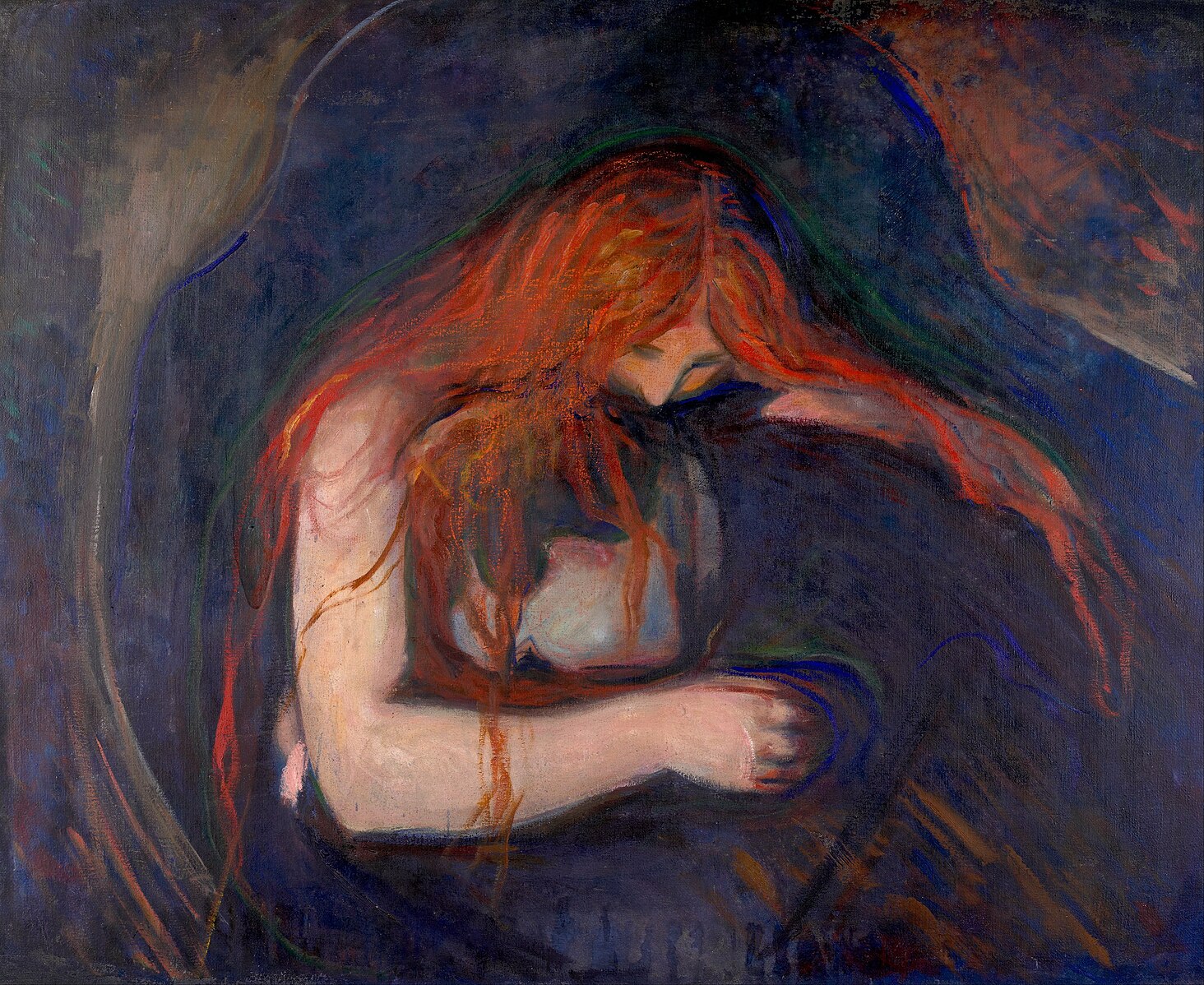
Edvard Munch, Vampire. Image credit: Google Art Project, public domain via Wikimedia Commons

But by 6:30 I’m usually dressed for my jog.  I’ve been writing and reading, typically for three hours.  I forgot to wash my jogging clothes this week and this was a Friday.  Hmm, better think about that.  Then there’s the whole question of my eating routine.  If I’m going to have something it has to be a couple hours before I jog—can’t do that with anything on my stomach.  Will I be too weak with nothing until afterwards?  After all I’ll be missing a vial or two of blood.  And there’s the matter of my shoes.  I only wear my jogging shoes on the local rail trail.  It’s pea gravel and it’s been raining lately which means they get a bit muddy.  All the rest of my shoes are in the bedroom where my wife’s (sensibly) still asleep.  Besides, I need to be on the trail right after giving blood, and changing shoes takes too long.

I’ll need to change my shirt when I get home.  The jogging tops are a bit too much to expect even a phlebotomist to put up with.  Besides, the under layers are tight-fitting since it’s only in the thirties today.  Why all this fuss about going to the lab before work?  That’s the magical word.  Work.  Also, lines have always been a problem for me.  Although I take a book I dislike waiting in line.  I need to get there before the doors open.  Be first in line.  There’s already a car in the parking lot, but standing beside the door in the cold has to earn you something, doesn’t it?  I’m back home just as the sun is rising.  Throw on my under layers and out before anyone else gets on the path.  I know I’m weird.


Going Viral

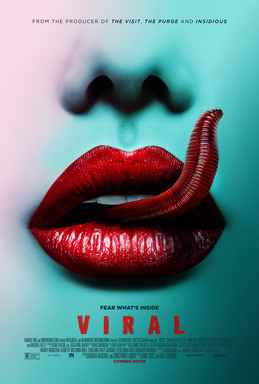
Okay, so there are some pretty big plot holes, but Viral is nevertheless an effective horror film.  The “virus” is actually a parasite spread by blood, which carriers cough in your face, if they don’t kill you first in a fit of parasite-induced rage.  The really scary thing is that this movie was produced before Covid-19 and the government response, as presented in the movie, is somewhat believable.  Nevertheless, it retains its ability to be a story about family and loyalty.  There are some missed opportunities in that regard, but overall it’s fairly well done.  It certainly keeps the tension going and I feel some spoilers coming on so I’ll warn you here.  A Blumhouse production, it seems to have had a reasonable budget.  And there’s a solid attempt to have a storyline with characters you care about.

Sisters Stacy and Emma are trying to adjust to a new school system as news reports increasingly focus on a new, and lethal, virus.  Their California community is the site of the first U.S. outbreak and the initial panic isn’t unlike what happened in 2019.  I’m a little surprised that, given that development, the movie didn’t gain more residual watching.  In any case, a quarantine and curfew are set up, but the teens of the housing development decide to have a party.  Kids will be kids, after all.  Of course, an infected guy is there and Stacy, the older sister, gets infected.  Their parents were caught outside the quarantine zone, so they have to try to survive on their own.  Emma has a new boyfriend—the guy next door—and he urges Emma to leave her sister, but she won’t.  Martial law is declared and “nests” of the infected are being bombed by the government.  Emma and boyfriend manage to survive, but the rest of the town’s a wasteland.

As I say, the implications are the really scary part.  Governments have the mandate to protect the greatest number of people—isn’t that utilitarianism, by default?—and decide to cut their losses and destroy infected communities because there’s no stopping the disease.  Even as the gaps in the story kept coming up, I was asking myself would our government do such a thing.  I could find nothing to dissuade me that it would.  Self-preservation is human nature.  As is might makes right.  Our government, for my entire life, has consisted of the wealthy and one thing we know about those with money is that they’ll do whatever they can to protect their interests.  Oh, and there are a number of effective jump startles as well. But they’re not as scary as the government.


Eating Conscience

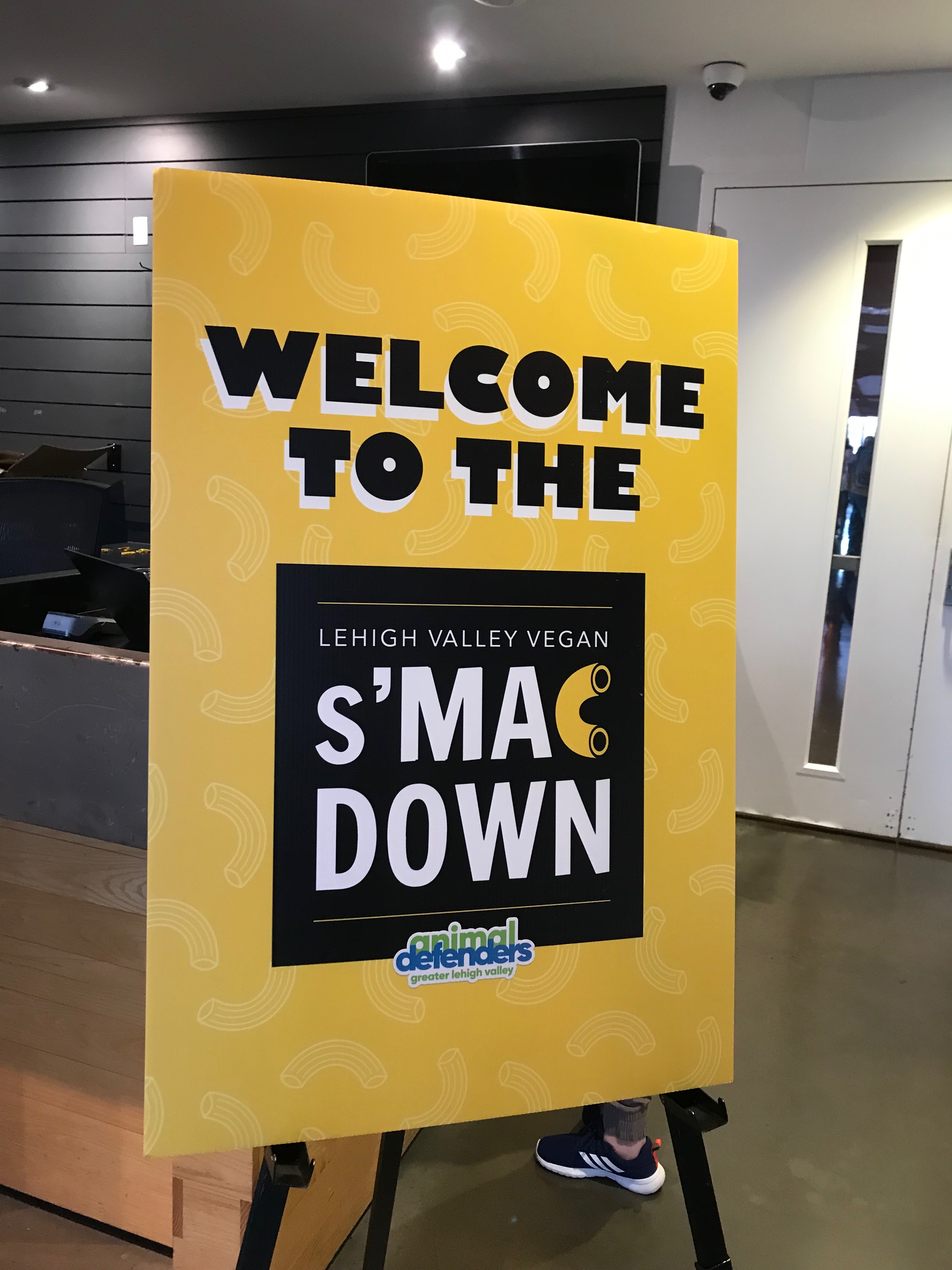
Elections notwithstanding, people—at least many of them—are becoming more accepting of those of us who are different.  Or so it seems on the ground, in some places.  A couple of weekends ago we attended the s’MAC DOWN in Bethlehem.  In case you’re not from the Valley, s’MAC DOWN is an event where hundreds gather to compare vegan macaroni and cheese prepared by area restaurants.  I don’t think that when I was younger—and vegan could’ve been considered a protected category—that there would’ve been a healthy line to get into such an event.  But there was just a couple weeks back.  Even after those who paid extra had been already allowed in and had been given a complementary glass of wine.  It helps, as my family reminded me, that mac and cheese is something people tend to like in general.  Being a vegan myself, I do miss cheese the most but vegan alternatives are getting better all the time.

People are slowly becoming aware that industrial farming of animals simply isn’t sustainable for our environment.  It’s one of the largest pollution-generating capitalistic practices.  It contributes to global warming as well as deforestation.  And how many e coli outbreaks and animal diseases leaping to humans will it take until we realize we’re going about this all wrong?  I became a vegan because it’s very clear that animals suffer as they’re being “processed.”  I don’t want to be part of that.  I understand that others differ in their opinions, which is one of the reasons I don’t write about this often.  But attending events like this can be an eye-opening experience.

It’s safe to say that if eaters didn’t know, they wouldn’t be able to tell that this food was vegan.  Things have come a long way on that front.  Cheese and milk are fairly easy to substitute.  (As is meat, it turns out.)  Butter goes without saying because people warmed up to margarine decades ago and some margarine makers are now putting “vegan” on their packaging.  I’ve been vegan going on a decade now.  There are still places you can’t eat without violating your principles, but events like the s’MAC DOWN show that even non-vegan restaurants are willing to give it a try.  And by and large they do it well.  Of the nine samples we had (in compostable cups with compostable “plastic ware”) there was only one I really didn’t care for.  A couple would’ve been very difficult to pin down as vegan at all.  And then there was the fact that hundreds of people had paid to give this a try, and not all of them were young folks.  It’s good to feel accepted, even when eating by my conscience.


Toothsome Books

A visit to the dentist always entails a certain amount of anxiety.  Will the sins of my mouth have caught up with me?  Are my sleepy nights’ brushings thorough enough?  Is that spot where I declined to have a false molar replace the missing one causing any problems for the teeth above?  That kind of thing.  In any case, I like our dentist.  The town we live in, which is small, has four dentist offices.  The one I selected is run by three women and instead of always getting the same mouth doctor, on a standard visit you meet with the one who has an opening in her schedule.  I like to support women-owned businesses.  But still, the anxiousness.  Something happened on my last visit that may help.  I’ll try to remember it.

Unlike anyone else I’ve ever seen, I always take a book with me for those minutes in the waiting room.  I have so much that I want to read and so little time, so as long as I’m cashing in a sick day, I might as well get some extra reading done.  Since it’s summer, I didn’t have a coat in which to leave my book, so I took it back to the room with me.  They’ve never said anything about me taking up a little of their medical counter with a book, so I figured it was okay.  The hygienist did the x-rays and cleaning, then the dentist stopped in.  I had never seen this particular doctor before, and she began the conversation by asking what the book was about.  Now, as strange as it may sound, I have wondered why nobody ever asks about the book I inevitably have.  I take books to every medical appointment—I’m not a magazine reader—and in all these years no one has asked me.  Until now.

This wasn’t just a polite query either.  She asked whether I thought it was good, and even suggested some similar things I might want to read.  It was, in fact, a literary conversation.  As I walked home (teeth are fine) I pondered how rare this is.  I’ve told people that I write books and the conversation usually dies when I say what they’re about.  Of course, I don’t go around reading copies of my own books.  I already know what they say.  I guess I miss a literate society where people discuss the books they read.  I do it on this blog, and on Goodreads, but engagement is low.  At least next time I won’t be afraid to go to the dentist.


Sweet Tooth

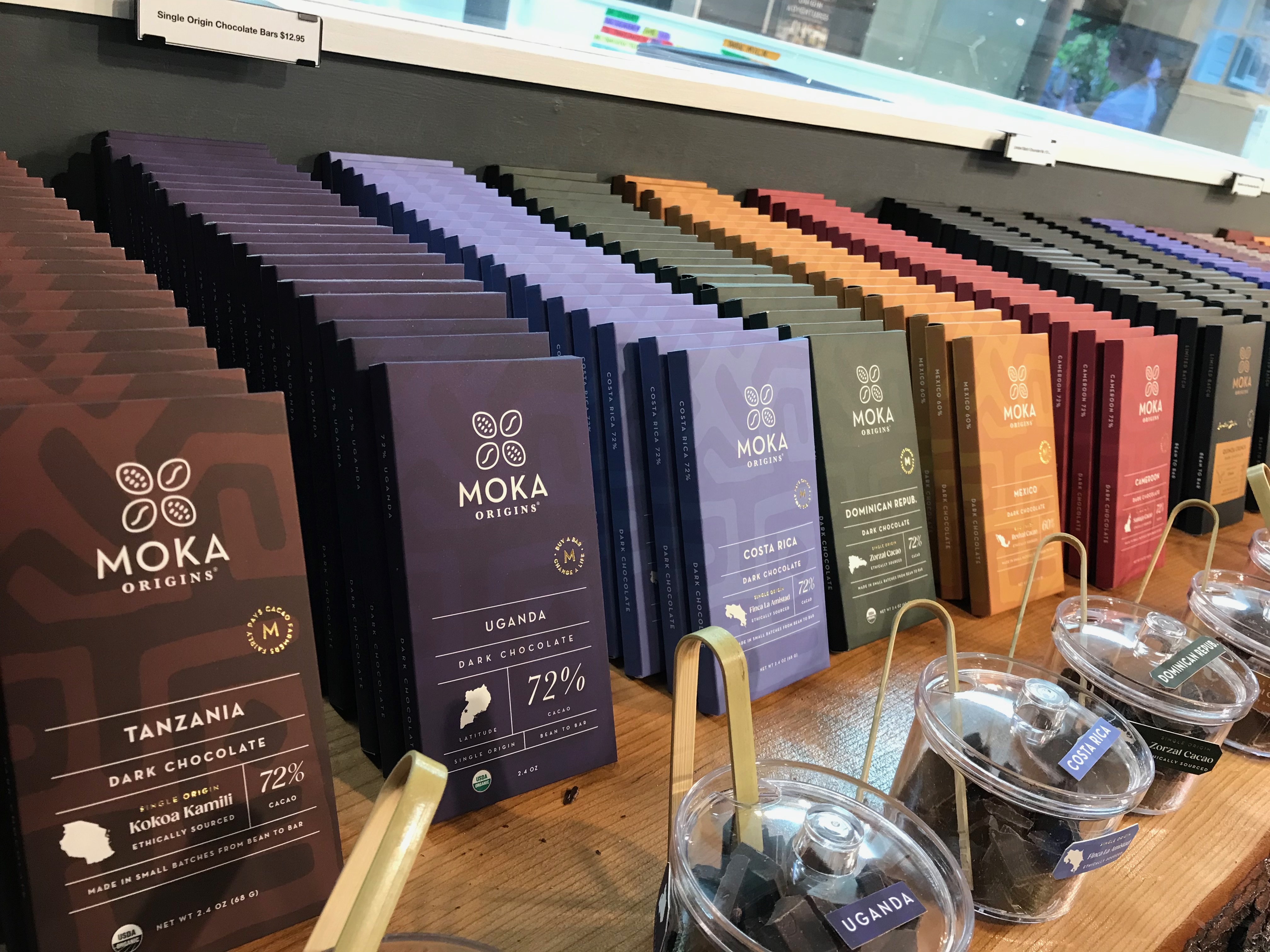
Often our luxuries come at someone else’s cost.  I personally don’t have much of a sweet tooth, but I do enjoy dark chocolate once in a while.  (Milk chocolate tends not to be vegan.)  My wife had discovered Moka Origins chocolate at a local health food store and then learned that their location is in the Poconos, just outside Honesdale.  We visited their facility, small but growing.  We learned how they’re committed to fair trade and sustainability.  And they’re gaining a reputation in a world where scale is everything and as scale increases quality declines.  We all know that to be true but we still support the big guys.  The visit to Moka Origins made me reflect, once again, how we prefer low quality and cheapness to something that’s really well made but costs more.  It’s one of the realities of our economic system.

There is a small but thriving vinyl market for sound recordings—the quality is better, and many are willing to work with the inconvenience of turntables and discs than simply streaming whatever.  I took a lesson from Moka.  The cofounder told us that large companies come into places like Africa paying low prices to buy in bulk.  They buy improperly fermented cacao beans in huge lots which probably includes some beans that aren’t even cacao.  Mixing these large lots with enough additives, they can get away with the chocolate taste most people have grown accustomed to having.  If, on the other hand, you scale down and pay attention to what you’re doing you can even tell the country of origin of chocolate by its taste.  Since Moka sells only single origin chocolate, we were given samples from three different African countries and they were obviously very different, even to someone without a sweet tooth.

Economic scale often drives quality down.  In a company where the owner comes in on a Saturday morning to personally lead a tour and where the chocolate bars they sell are literally wrapped by hand, you know you’re not in Hershey.  Or at Nestlé.  Or any other corporate candy giant.  These companies make astronomical profits.  The owners of Moka Origins spend time in Africa, developing fair trade farms to grow quality produce.  I also learned that cacao pods are technically fruits.  It’s a food.  We tend to overlook that in our quick snack culture.  This was a very educational half hour, even for someone not inclined to food tourism.  So, if you happen to be in northeast Pennsylvania on a Saturday morning, stop in to try chocolate that’s really a food.  Or you can order it online.  Just know that you’ll pay for fair pricing for those who are doing the work to raise and process cacao beans as they should be treated.  You can tell the difference fairness makes.

Oh, and I should mention they also do coffee…


Mr. Bean

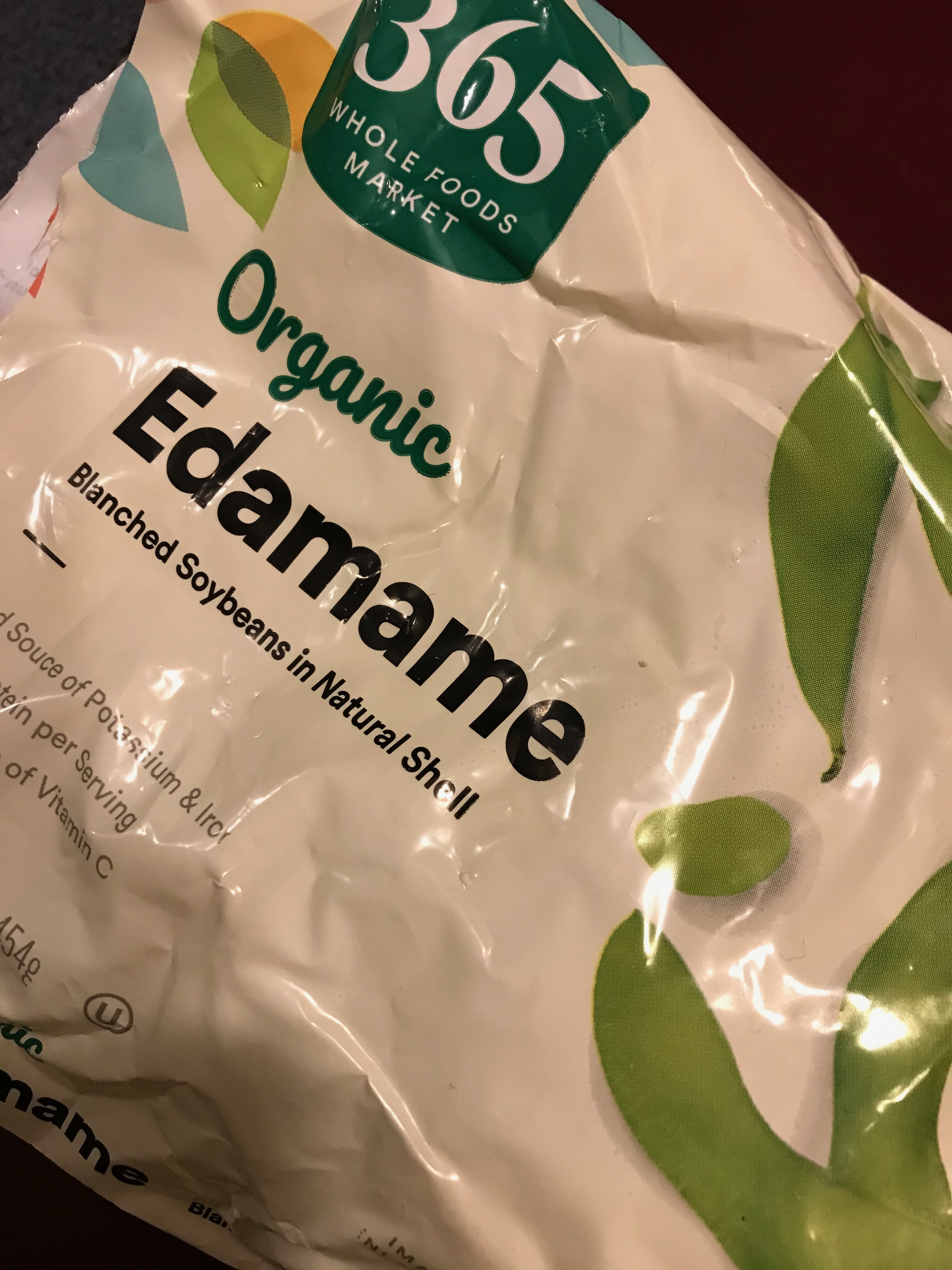
Edamame.  I remember distinctly the first time I had it.  I was at the house of Alvy Ray Smith, co-founder of Pixar (shameless name drop), by the courtesy of Neal Stephenson (another).  It was a book club discussion and although I don’t remember who else was there, I was certainly the least distinguished person in the room.  Someone had brought edamame to share.  I’d neither seen nor heard of it before.   I popped a pod in my mouth and began to chew.  After ruminating a few moments, I figured this cud wasn’t going to break down and when others put their—relatively intact—pods in the discard bowl, a lightbulb clicked on.  Sheepishly, I pulled my mangled pod from my mouth and slipped it, I hoped unobtrusively, into the bowl.  If anyone noticed they were too sophisticated to say anything.  Blue collar through and through.

I repressed that memory, which is strange.  I tend to remember, and replay, the embarrassing things I’ve done.  This memory slipped, however, until our daughter reintroduced me.  She was in college, or recently out, and she showed us how to do it.  When that pod hit my tongue, the memory sprang back.  Edamame has become a standard of our house since then.  In case you’re unfamiliar, you put the pod in your mouth, keeping hold of one end.  You extract the beans, generally by using your teeth as an immovable obstacle—like artichoke leaves.  Discard pod, chew and swallow.  We sometimes dress ours up with a sauce.

The last time we had edamame, however, one of the beans shot to the back of my throat while the other two laughed.  I couldn’t tell which way, but it was clear the renegade bean was going down on its own.  I spent the rest of the evening worrying that I’d aspirated a bean.  Aspiration becomes more common as you age—something about nature trying to send us a hint, I guess—but I didn’t cough at all.  No wheezing started.  No pain.  Probably I swallowed at the last possible second.  If I did it was reflex because I couldn’t think what to do.  The next day, with no ill effects, it seemed funny.  Amusing enough to remember a time when really accomplished people were interested in what I had to say.  That time has largely departed, like an empty edamame shell.  But the memory remains.  There are hidden  hazards to eating edamame, it seems.


Technologies of Hope

Having an immediate family member with cancer means that you look for hope everywhere.  Those who’ve brushed up against this family of diseases hopefully know that support groups abound.  Given my schedule, I don’t get out much on workday evenings, but we recently attended a survivors’ event hosted by the Andy Derr Foundation (donations accepted).  Two prominent local oncologists spoke and their tone was hopeful—always hopeful.  What really struck me was how much cancer treatment has progressed even just in the last five years.  The “cure for cancer” does not yet exist, but many technologies of hope do.  I sat there awestruck.  There are women and men spending their lives working to treat what used to be nearly always a fatal condition.  It was inspiring.

On the way home I was musing about how much we could advance in human health care if we had the budget of the military.  A vlogger we follow, John Green, happens to be a bestselling fiction author.  He is now writing a nonfiction book on tuberculosis.  This disease, for the most part, is completely treatable.  His efforts have led to lowering the cost of supplies to treat it for cash-poor countries.  I suspect he knows the same thing.  Our government decides which priorities it will fund.  Our fear—let’s be honest about this—funnels billions and billions to military budgets.  (And you wonder why I watch horror movies?)   I’m a dreamer, I confess.  But what if, world-wide, we put our money into medical budgets?  Can you even begin to imagine where we’d be by now?

I know most medical personnel are paid quite well.  My family member’s cancer medication costs more than she makes in a year, per single dose.  The technologies of hope those doctors were describing would be phenomenally expensive.  If only as a nation we had trillions of dollars at our disposal.  If only.  None of this, of course, should overshadow the tremendous work being done by nonprofits like the Andy Derr Foundation.  Channeling hundreds of thousands of dollars into research and treatment, they are making a difference.  Those beautiful survivors there that night are proof of the lives they’re helping save.  We have the ability to do amazing things.  If we support, and love one another, we can overcome a scourge that many, many families will experience, if they haven’t already.  Good work is being done.  And the good will behind it is cause for great hope.


Thinking Thinking

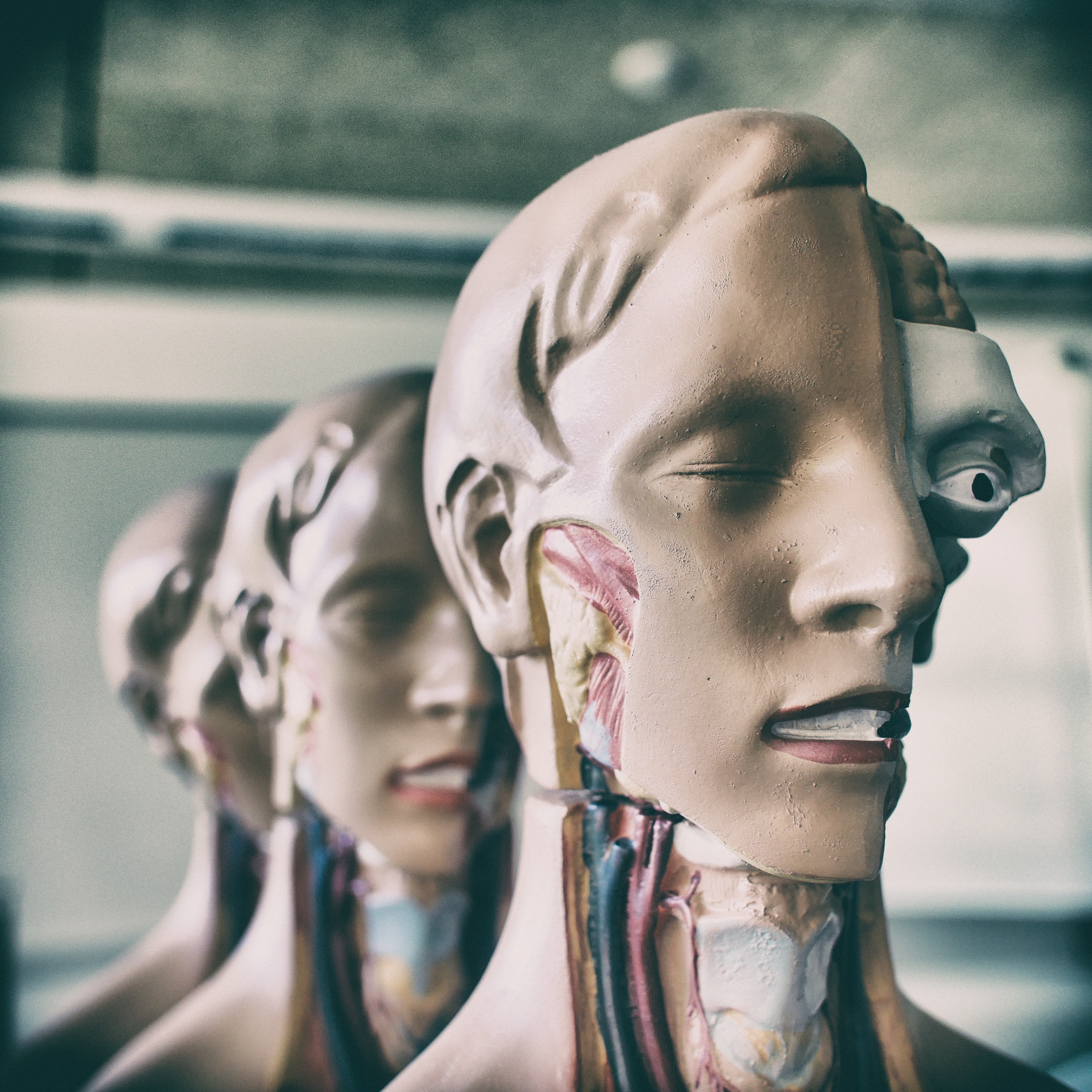
Something that’s been on my mind (anticipatory pun) lately, has been thought.  More especially, the quality of thought.  We are conscious beings, although we’re not sure what that means.  Beyond a Cartesian self-awareness.  Everyone knows what it is to have times when you’re not thinking clearly.  Or are feeling confused.  Those of us who tend to live quasi-monastically (keeping to a routine, early rising, writing and reading daily before the 9-2-5 routine) notice the ways subtle things can influence the quality of our thinking.  For me, first thing in the morning is the best time.  (Although I must confess that lately I don’t wake up with the crystalline clarity that I have for years, as if sleep is beginning to intrude on my earliest hours.)  Once I’m up and going, though, routine, you’d like to think, would provide the same results.  But it doesn’t.

Photo by Pierre Acobas on Unsplash

I’ve written before how the quality of sleep can affect the quality of awake thinking—something we’ve all known all along.  But even when I have somewhat identical nights (same quality of sleep more than one night in a row), the subtleties of difference in thought persist.  To understand this, you need to realize that I’ve been rising well before the sun for a dozen years now.  I awake to a quiet house and spend a couple, sometimes a few, hours writing and reading.  (It’s how I write my books, as well as this blog.  And my fiction.)  Even on “identical mornings” where the weather’s pretty much the same, and all other factors seem equal, the quality of thought differs.  Sometimes it depends on whether I’m writing fiction or non.  As I transition into my reading time, that can make a difference in the reading experience.  I suppose that’s one reason I value good writing.

We don’t understand consciousness.  Identity is also somewhat negotiable at times.  We’ve all known a family member or friend to act “not like themselves.”  More to the point, to think not like themselves.  We have no real way of understanding thinking itself.  I think about thinking quite a bit, and I marvel at how intensely personal it is.  We may, at our will, keep our thoughts to ourselves (and that’s a good thing, in many circumstances).  Thought, it seems to me, ought to be a very high priority in our academic pursuits.  It’s a powerful thing, capable of more than we’re even presently able to imagine.  And it can differ from day to day.  Do you suppose I wrote this after writing fiction or non?


Time Flees

I can’t speak for all early risers, of course, but for me the absolute worst thing about this useless tradition of switching to Daylight Saving Time is the loss of morning light.  I’m in favor of keeping DST all the time, as the US Senate has voted to do.  The only reason this is still an issue is to give the House yet something else to fight about.  How dysfunctional are we, really?  This one’s a no brainer!  Look, I start work early every day.  I jog before work because I’m too tired afterward.  In late February to early March I can get out and back before seven.  (In the summer before six!)  Then DST happens.  I’m plunged into another month of waiting until seven to be able to jog.  DST is just one of those ridiculous things we just keep doing because we don’t have the will to change it.  We’d rather fight.

I’ve been thinking a lot about time lately.  How we think of it, how we divide it.  We sometimes lose sight of the larger picture.  If relativity is right, the stars we see at night are, many of them, long gone.  We’re seeing light trudging through the near vacuum of space, or maybe dark matter, and thinking how we’ve got to get to our meeting on time.  How we need to be at work from 9-2-5.  How somebody with money owns that portion of our time.  There’s a reason that DST starts on a weekend.  Time.  We can’t grasp it but we can waste it.  What are we waiting for?  Some of us are seeking the truth.  Even so we know that Morpheus was right—time is always against us.  It’s a limited commodity, but even that language cheapens it.

Those of us of a philosophical bent allow ourselves time to ponder such things.  We call time a dimension, but what does that really mean?  Theoretically it can be traveled along in either direction (again, pending relativity) but we only experience it in one.  So what do we do?  We interrupt its flow because during a war during the last century it was deemed that industry could be more productive if it were light an hour later.  Maybe we should just all agree to shift our perception of time ahead by an hour permanently.  That’s forward thinking.  And who knows, it might just save us all a lot of time.


Read Long and Prosper

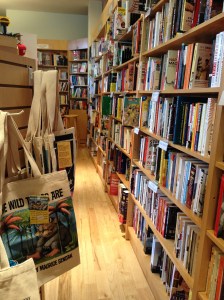
“Live long and prosper,” Mr. Spock was (or will be, depending) known for saying. Many of us know the regimen for healthy living: don’t overindulge on the food and drink. Get some exercise. Try to eat the right foods. Sleep once in a while. When we go to the doctor’s office, it’s generally a physical cause that we want explained or treated. It seems, however, we might have been overlooking a way to live longer. Reading. An article from last month’s Tech Times explains that book reading—sorry folks, reading this doesn’t count—correlates to longer life, according to a Yale study. The article by Alyssa Navarro explains that concentrated reading for three-and-a-half-hours a week can be connected to living longer. Those of us who read may not have that fringe benefit in mind, but it does stand to reason.

img_2947

Since people love correlates that sound alike, the way that we describe aspects of our lives is often quantity verses quality. In terms of quantity, consciousness seems to drive us to claim as much life as possible. It’s hard to let go. Connoisseurs, however, often prefer quality to quantity. While there may well be other options than these two q’s, it seems to me that those of us who read tend to do it for the quality issue. Quantity may be a fringe benefit. My job requires a long commute most days, and I bury myself in books. If I pick one that really captures my interest, I’m amazed at how quickly even an intractable commute can go. On those days I work at home, I have to admit, I miss the reading time. I try to read with the same level of concentration when I power the laptop down, but there is something about being in a situation where you’re forced to read that somehow enhances the level of concentration. It’s training, I suppose. We often think that once we’ve figured out how to read then it’s just a matter of doing it. To really get into a book, however, requires effort.

If I’m at home and I sit down for a marathon reading session, I inevitably get sleepy. Since I awake quite early this isn’t something I think I need to see my doctor about. Of course I get sleepy on the bus, but I’ve seen how ridiculous most people look when they sleep in public, and I don’t want to be one of those. If the book I have is a good fit, I barely notice how tired I am, surrounded by my aluminum walls and the wheels that go round and round. Maybe that’s because my mind is elsewhere. I don’t commute for my health. On the days when I don’t take the bus I try to get out and jog. My healthcare regimen, I think, could use a little more book reading. At least that’s as good an excuse as I can come up with for what many people, ironically, consider a kind of illness. May we “bookworms” read long and prosper.