Sunk Costs

The other day, in a fit of post-holiday tiding up, my wife found something that she couldn’t reach to put away.  As I took the thing and dutifully began to return it to its high cubbyhole, I realized that it was something we no longer needed.  Now, we’re very careful about not just throwing things away—this attitude of disposability has led to far too many landfills and rampant pollution.  So what was this thing?  It’s a dryer vent brush. After a couple years in our house, and with the awareness that the previous owners clearly ignored things like lint build-up in dryer vents, I purchased this brush to weasel in through the outdoor vent and try to get as much lint out as I could.  The old dryer died a couple years later, and we bought a more environmentally friendly heat-pump dryer.  Heat pumps require no vents, so the brush, in its high cubby hole, had simply been forgotten until it got in the way of something else.

This is an example of a “sunk cost.”  Economists, those purveyors of the dismal science, tell us never to worry about sunk costs since you can’t get your money back.  I suppose this is the impetus behind yard sales.  We’ve always been careful with money—we have to be—so purchases like this brush are calculated to meet a current need.  An investment.  Looking around, I see a number of sunk costs—there’s an extraneous office chair just a few feet from me at the moment, made superfluous when Gorgias Press moved offices and gave away office furniture that wouldn’t fit into the new place.  That’s the chair I’m sitting in at the moment.  The other, cheaper chair, however, is still functional.  Something’s telling me a yard sale might not be a bad idea.

But do I want neighbors to see the things we’ve accumulated over the years (and there seem suddenly to have been so many years)?  Some of the stuff obviously could have a future life.  The dryer vent brush was only used for a couple of cleanings and still has much life left, for an inanimate object.  Much of the technology that we’ve sunk money into would serve only as museum pieces, however.  And those costs tend to be much higher.  We try very hard to reduce, reuse, and recycle.  We give books away to little free libraries, if it’s clear they’ll never be opened again in this house.  But I can’t help wonder if sunk costs are a plague of capitalism and consumerism.  There’s got to be a better way.  And while I’m pondering it, I have a funky blue brush to use for scratching my head.
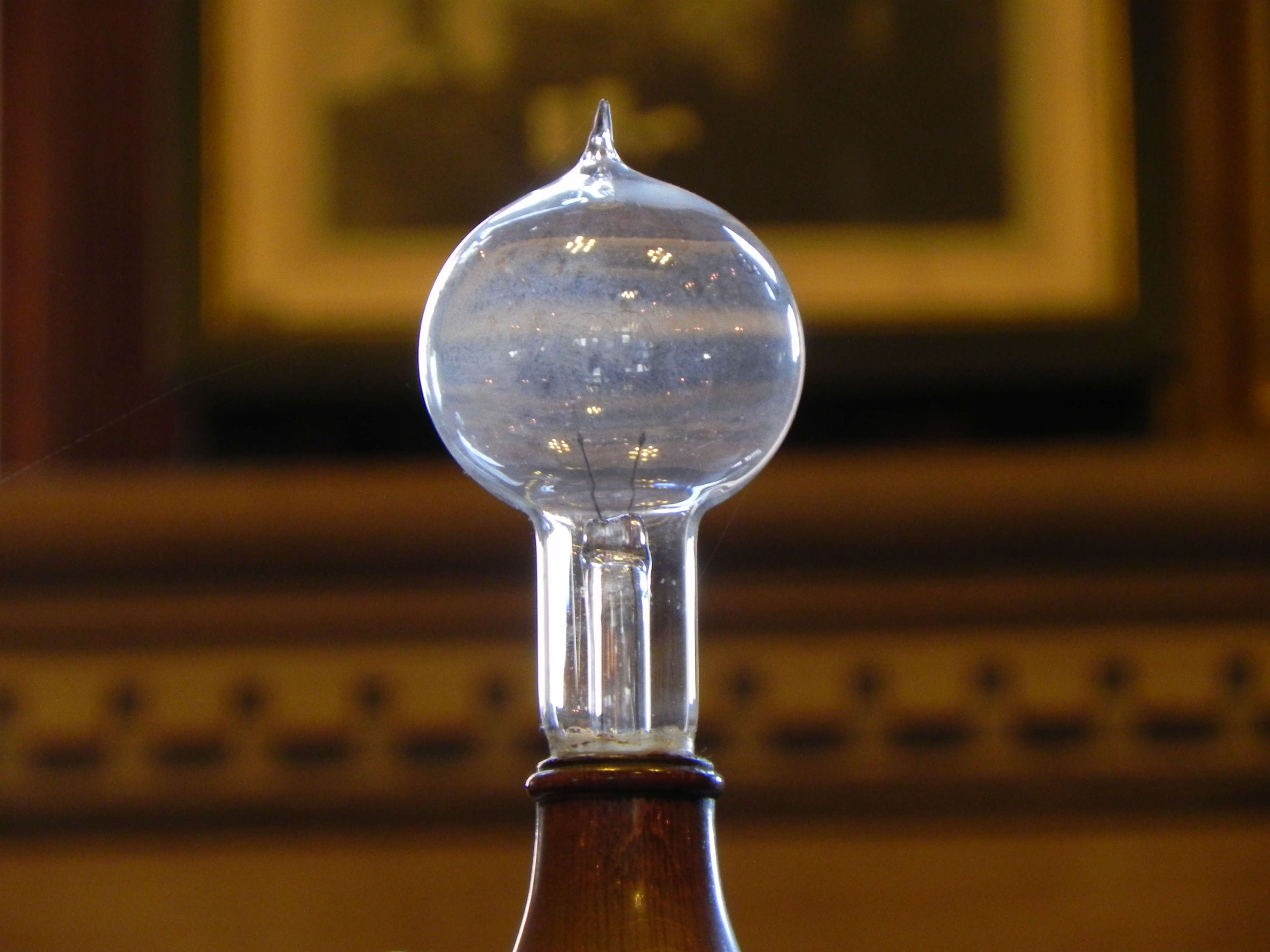

Bright Idea

No, I didn’t see a long tunnel with a light at the end, but I did have soot on my hands from the flash.  I’m no electrician and the ordering instructions weren’t clear about how to get the dryer installed, as well as delivered.  The driver, who spoke English haltingly, told me he would not set it up.  There was another problem with the order: the dryer cord was for a four-pronged outlet, but our house has a three.  I suppose that’s why the cord doesn’t get attached to the appliance.  Now, we lived in Scotland for three years.  Electronic devices there are sold with a cord that you have to wire into the plug yourself—different places have different outlet types.  With fear and trembling I’d wired a lamp or two.  I prefer not to play God when it comes to electricity.

I don’t know how many appliance-related deaths happen each year, but I’m sure it’s not a null set.  Here’s what happened.  A week after delivery I found time to go to the hardware store to exchange the four-prong for a three-prong.  I went home and wired it up.  The plug didn’t fit into the socket.  Muttering under my breath, I turned to the internet to find out what had gone wrong.  Well, it turns out that electric kitchen ranges are also not wired sometimes, and they take a different three-prong plug with wires handling different voltages or whatever.  Yet another weekend came and I finally got the right cord.  A little insecure from the two attempted efforts, I put the plug in the socket to see if it fit.  A bright spark and a loud pop occurred.  Two of the connectors had been touching and I’d closed the circuit.  If I’d been holding it differently, I wouldn’t have survived the experience.

As a child I once electrocuted myself, quite by accident, it is an experience I never wanted to have again.  I was so shook up after being so close to it again that I couldn’t face going back to the store to see if they had another one—the cord was now soot-blackened, and useless.  Living in a capitalist society my mind immediately turned to my electric bill, wondering how much that light and sound show would cost me.  The dryer is energy-efficient, all the more so for not having ever been used up to that point.  Now we’re hooked up and ready to go and I’m thinking how fragile life is.  And how, in middle and high school we had to have wood shop and metal shop but not a thing about that favorite tool of the gods—electricity.


Heat Pump

We’re preparing our home to welcome a new resident.  It’s not human.  Those of you who are home owners know how you move from crisis to crisis, paying to repair this just in time to start paying for that.  Our current issue is a dead dryer.  We knew it wasn’t long for this world when we moved in.  The previous owners, as most working class folk do, let things go until a machine forces  the issue by dying.  Being concerned for the environment, we like to replace appliances with more environmentally friendly ones, if we can.  They are, of course, much more expensive.  With the dryer it was also a space issue.  Snuggled together like young lovers in bed, the washer and dryer leave less than an inch clearance total from either wall.  The first issue we faced—modern dryers are bigger.

Small and energy efficient is what we wanted.  I learned about heat-pump dryers.  They don’t require a vent and they’ve been used for decades in Europe because of both space issues and environmental friendliness.  Here they cost more and you’ll have to wait because they’re in demand.  We decided to side with the environment.  Then there’s the problem of the old vent.  I gingerly walked out the old dryer and was amazed at the detritus I found.  Now, I’m an archaeologist at heart, so instead of sweeping it all in the trash, I sorted through it.  I found a dollar bill.  And 32 cents—this helps defray the cost of the new dryer.  Three guitar picks and a heap of cosmetics.  A box of rubber bands for braces.  There was ancient history in this pile!  The lighting’s bad in that corner so I put on a headlamp like a phylactery.  Let there be light.

I had to use most of my tools to tug the old vent out.  You have to stuff the hole with insulation and put some furring strips in place to hold the new drywall.  Cut out the patch to fit the hole and mud the whole thing up.  Why bother painting where nobody will see?  By the end of the weekend we were ready for our new resident.  It still wouldn’t be here for at least a couple of weeks.  The clothesline is strung in the backyard where the even better method of using nature’s dryer is free.  For those days without sun and on which we have time to do a load, we’ll be glad for our heat-pump dryer.  Particularly when the weather starts growing cold again and global warming enacts its chaos.  Hopefully we’ll have a stop-gap solution by then.