Conflicting Lifestyles

Sleep patterns often don’t fit with work patterns.  The reason I wake up so early is that for years I had to do it to get to Manhattan.  For work.  Since ending the commuting lifestyle four years ago, I haven’t been able to adjust back to normal, whatever that may be.  During a recent heatwave weekend, when it wasn’t really conducive to be doing yard work, I suggested to my wife that we watch The Godfather on Sunday afternoon.  Somehow I thought it was only two hours, but it is actually much closer to three.  Now this Coppola film is considered one of the greatest movies of all time and I have literally wanted to see it since 1972.  There were no VCRs in those days and life has been, well, busy since college days.
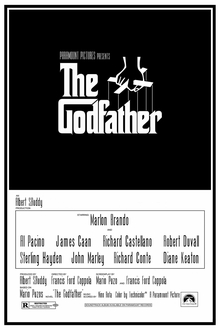
It is a powerful movie, even today.  I knew the basic plot and I started to read (I can’t recall if I finished it) the novel in the early seventies.  All I know is that I sat engrossed as the temperatures tempted 100 degrees outside.  Because I awake so early Sunday afternoons are often sleepy times for me, but I don’t nap.  Napping leads to long nights and I awake early no matter what.  The movie doesn’t allow for a lapse of interest.  One of the scenes that had the most impact is when Michael is attending the baptism of his godson and the priest asks him if he renounces Satan intercut with scenes of his hitman killing his rival family bosses.  The religious nature of the violence in the story is perhaps one of its most shocking elements, even today.

That night it was still hot, and all the water that I drank during the day made itself rather urgently felt around 2 a.m.  The trick to the late night bathroom run is to keep your mind shut off.  Although The Godfather ended nearly twelve hours earlier, it crept back into my head, keeping me awake after that.  Of course, I had a full day of work—there are no allowances for aging in this thing of ours called capitalism—ahead.  The thing is, when else do we find three consecutive hours to catch up with a cultural landmark but a Sunday afternoon?  Are you supposed to take a vacation day to do it?  I have no regrets about having watched the movie—it was like an offer I couldn’t refuse.  It’s just the rest of life that, well, simply won’t compromise.

Heat Wave

Kim Stanley Robinson’s The Ministry for the Future wasn’t my favorite book read the first half of this year, but reading the headlines about India’s heatwave took me back to it.  That’s precisely the way the book starts out—with an intense, deadly heat wave in India.  As a nation lacking infrastructure in relation to the size of its population, and lying near the equator, India is particularly vulnerable to global warming.  We all are.  As the planet heats up and weather becomes more erratic and extreme, food shortages will appear.  At the moment we’re concerned because Covid and Putin-War have driven inflation to incredible highs.  A trip to the grocery store or gas station is like a horror film.  Meanwhile the planet’s heating up and Republicans are pushing for four more years of Trump environmental degradation.  Can we please open a window here?

Global warming has been challenged by many because of their religious conviction that the world ought to end.  Apocalypse is probably the Bible’s most dangerous teaching.  Speaking only for myself, I didn’t know there was an Indian heatwave until headlines took a break from Putin-War and America’s mass shooting crisis.  And oh, India’s sweltering under temperatures over 110 degrees.  People are dying.  Birds are falling from the sky in mid-flight.  We had a couple days in the 90s around here before the end of May.  Those were some uncomfortable times.  Meanwhile in India it was twenty degrees hotter.

The human ability to ignore life-threatening problems we create for ourselves in service of our theology is remarkable.  Even as experts declare religion is no longer important, it’s slowing killing us.  We focus our resources on making money, as if money will do us any good when we’re the lobsters in the pot.  As a species we’re amazingly capable.  Billionaires can afford their own private spaceships—something most nations in the world can’t spare cash to buy—and we have proven ourselves endlessly inventive.  When it comes to the basics—the need to believe, for instance—we turn a blind eye and pretend it’ll just go away.  Religion scorned is a very dangerous thing.  I once heard a talk by a scientist presenting a rosy technological future.  I raised my hand and asked about religious objections and he mused, “I hadn’t even thought about religion.”  His future was progressive and optimistic.  Robinson’s is quite a bit less so, although it ends by suggesting we might manage to pull through, with only millions of deaths.  As Donovan says, “It’s time to ask yourself what you believe.”