
Something to believe in?
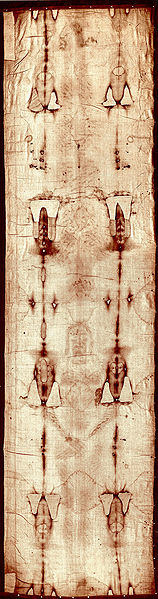
The Shroud of Turin first appears in the historical record only in the sixteenth century. Prior to that a back-story has been composed that takes it all the way to the first century in Jerusalem. Hungry for proof of the truth of their conviction, thousands of Christians fervently believe this sheet is the tangible evidence of resurrection. What seems to have been forgotten in this whole debate is the Bible itself. Not one of the four divergent Gospel accounts of the resurrection (some of the most wildly disparate material in the whole of Sacred Writ) mentions the miraculous capture of a resurrection photograph. The Gospel writers, never shy about flashing miracles across their narratives, do not tout an artifact as proving the resurrection. The force of apostolic conviction was enough for the first century crowd.
Believers in the modern world lack such conviction. Too many forces in the natural world conspire against the supernatural. A faith shaken by science and the competition of hundreds of other religions desperately needs a sky-hook on which to hang certitude. Yet the Bible itself speaks to this very issue. “Now faith is the substance of things hoped for, the evidence of things not seen,” the writer of Hebrews declares. It seems, however, that true believers throughout history feel a little more comfortable with something palpable, just in case faith is not enough.
 Steve A. Wiggins