Darwin’s Descendents

The plague that goes by the name of Creationism has been attempting to spread its reach to the shores of Britain. Proponents of a biblical literalism, whether overt or covert, have championed the idea that the world is terribly young—a mere cosmic toddler, in fact—compared to the vast geological ages of actual fact. When I unfolded my first ten-pound note and found Charles Darwin on the back, I smiled. England may claim a lion’s share of the heritage of one of the great unifying theories of science. In my brief jaunts between bouts of work I came across the tombstone of Herbert Spencer, the man who coined the phrase “survival of the fittest.” On a visit to Kew Gardens I strolled through the Evolution House. When I paid for my lunch, Darwin passed hands as the common currency of the realm.
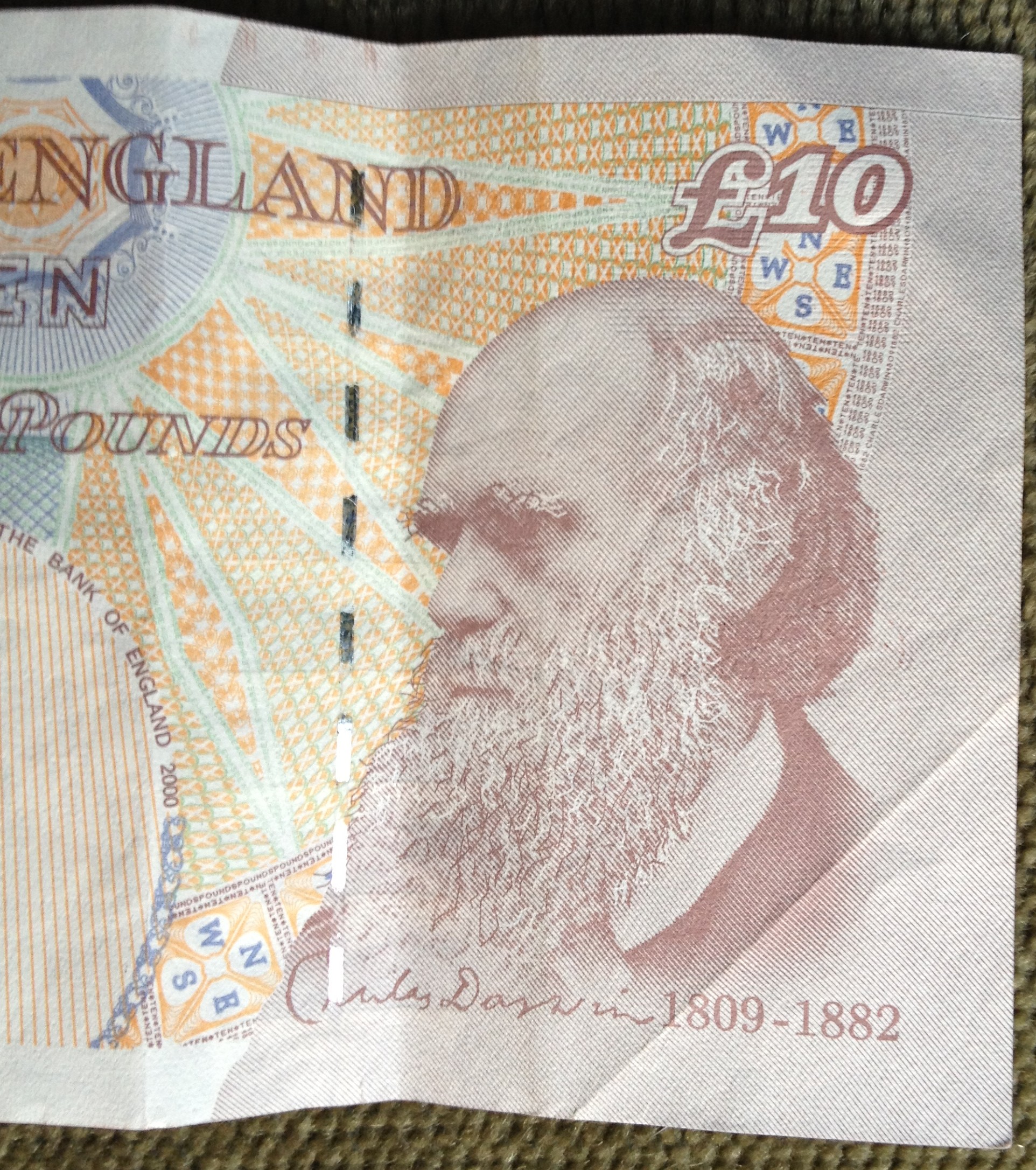
Ten pound note

A school of thinking exists among many religious believers that insists that if science makes its claims justly then God cannot condemn them. Evolution runs as close to fact as does atomic theory. Those who doubt the latter should visit Hiroshima. Or Three Mile Island. Our literalist companions certainly don’t doubt nukes, but then, the Bible is mum on the subject of what things are really made of. Well, almost. According to Genesis 1, everything is made of chaos and divine words. The Bible doesn’t describe the origin of chaos—it is the natural state of things. God’s word, when it generates uranium, can be very deadly indeed.
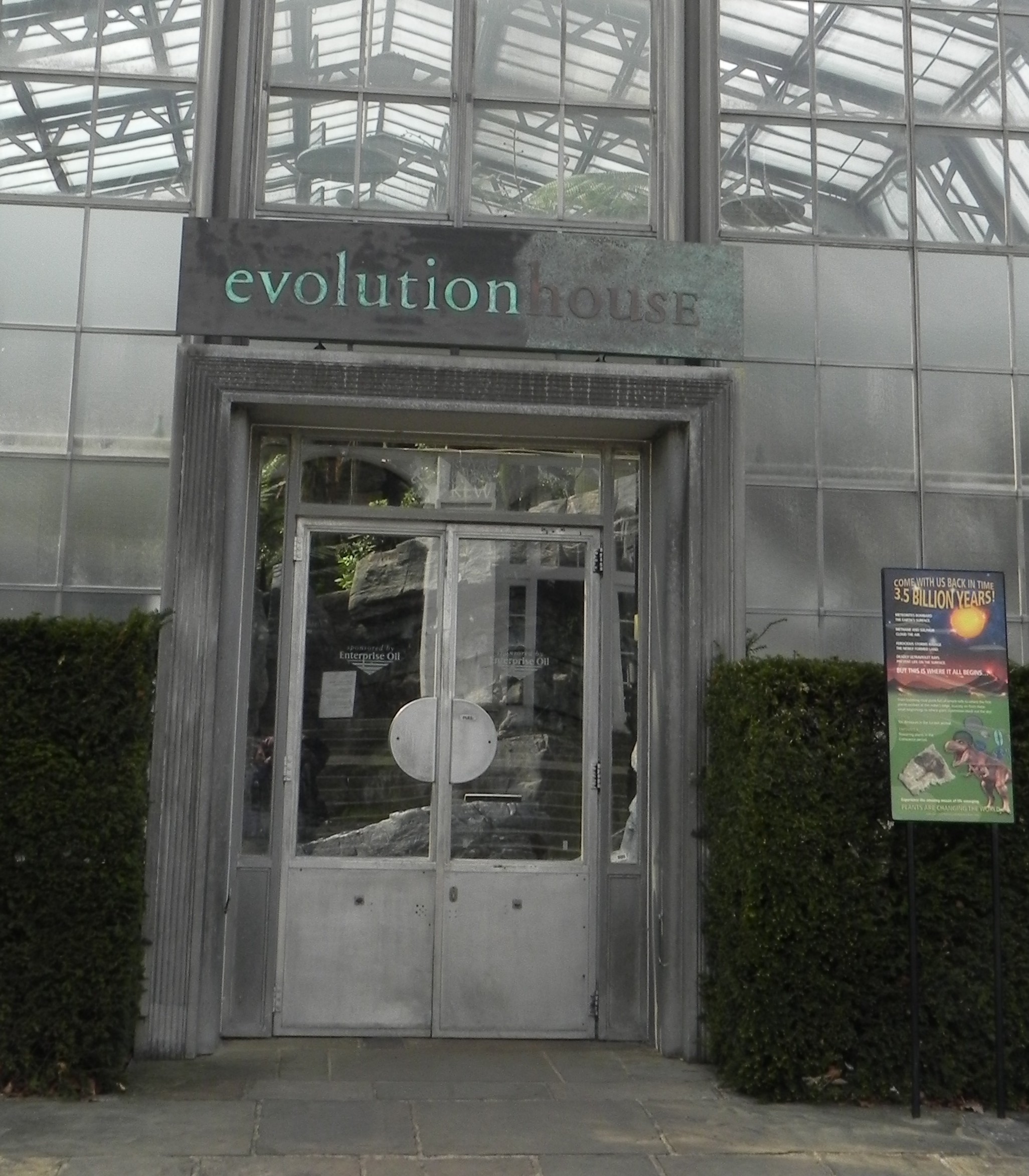
Evolution House

Creationists selectively choose which science to believe and which to reject. Fundamentalism can trace its origins to Britain, but the culture rather quickly outgrew these childish fantasies. In America literalism sank deep roots, roots deep enough to withstand the hurricanes of reason that would otherwise clear the air. Can an American imagine Darwin sharing the money which reads “in God we trust”? And yet, Darwin lies scarcely two meters from Isaac Newton in England’s holiest shrine of Westminster Abbey. Science and religion have here embraced one another. Perhaps when we put all the monkey business aside, we will come to realize that we may still have a thing or two to learn from the nation of our founders. Literally.
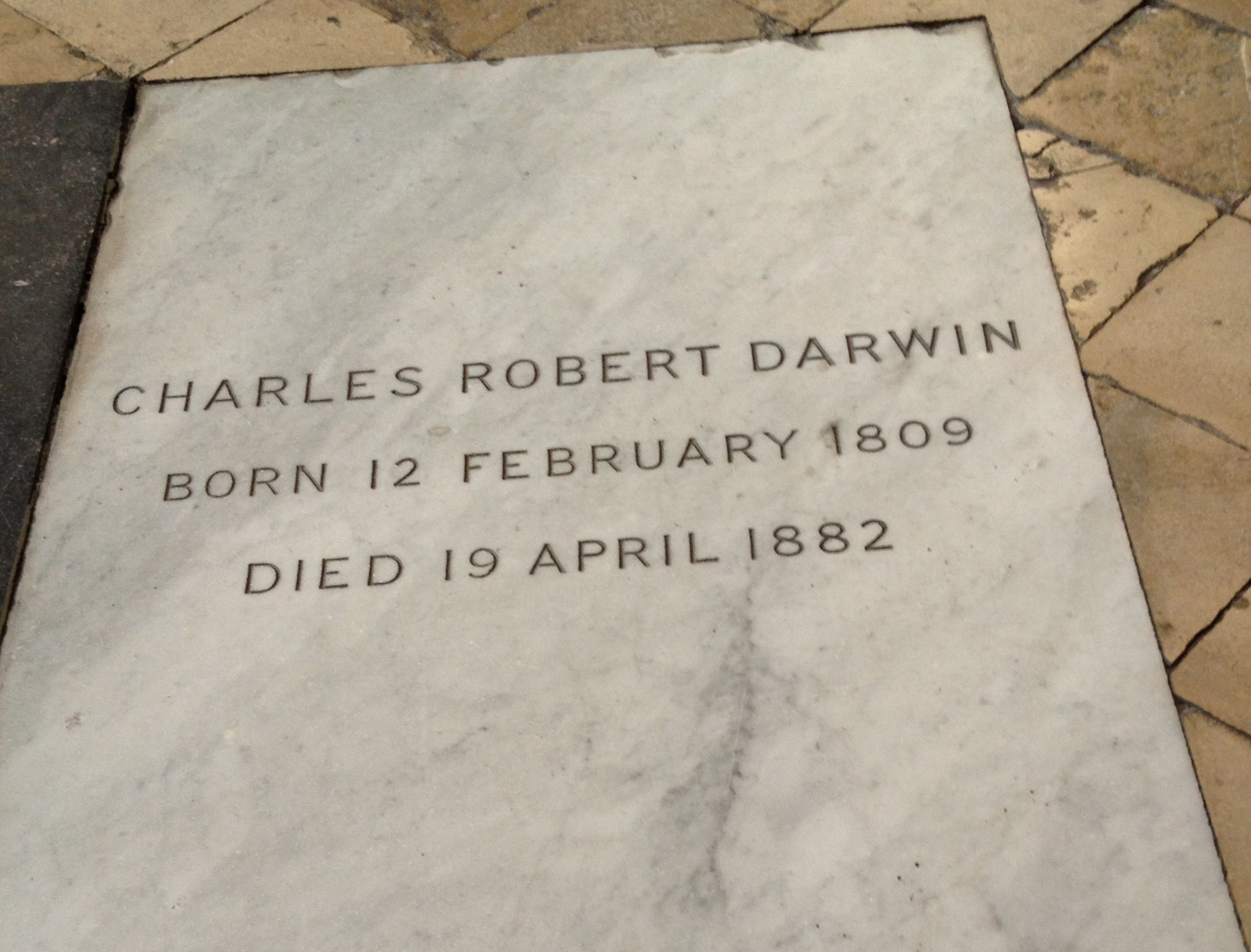
Darwin at rest

Bookends

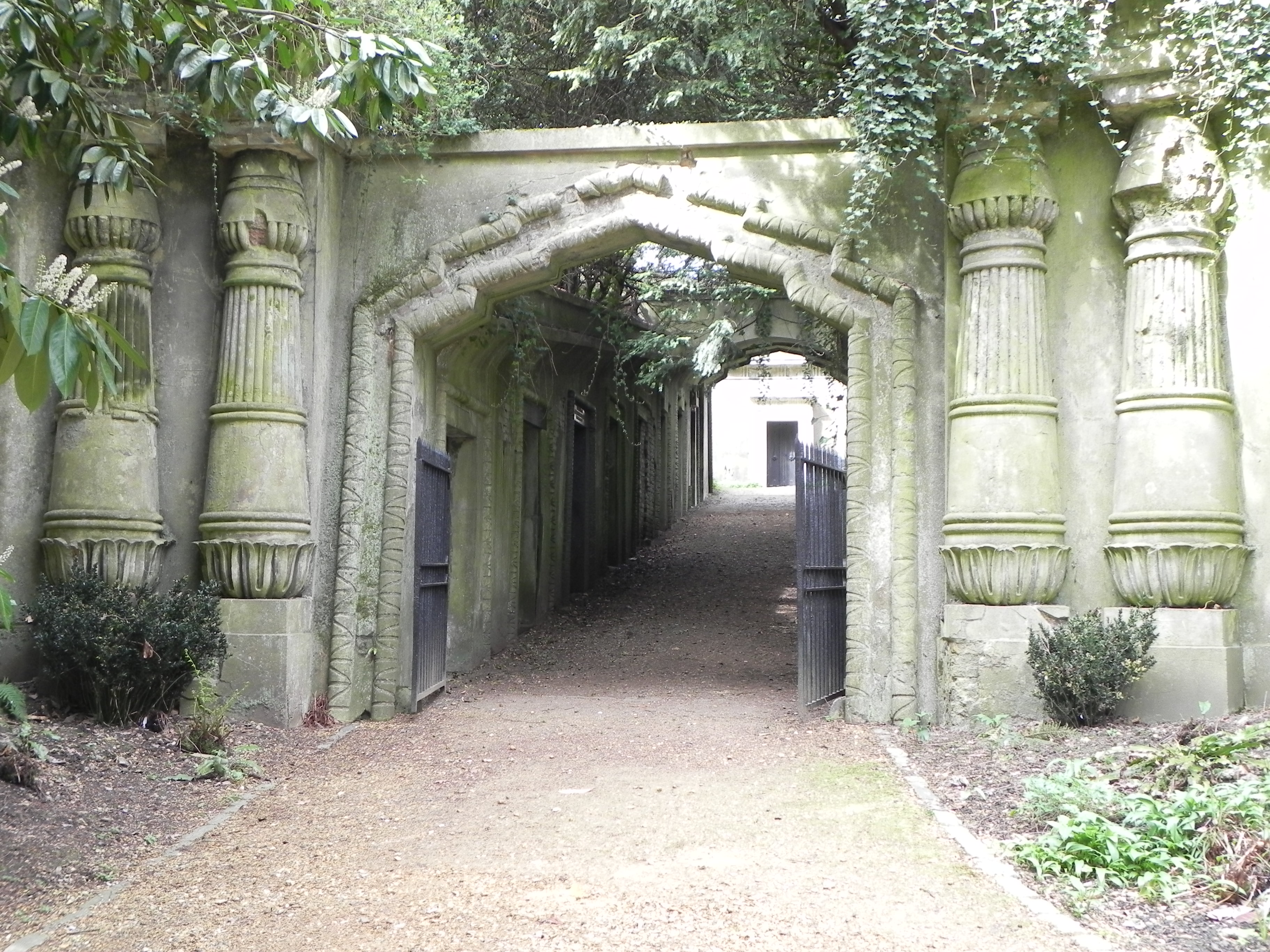
There is something extremely satisfying about bookends. Bookends are those events that bracket moments of our lives and give them a frame, a perspective they would otherwise lack. If my readers will indulge my recollections of my trip to Britain for a day or so longer, some of this may become apparent in esoteric ways. Our kind hosts in London live in Highgate. Our first bleary-eyed morning in the city we wandered to Highgate Cemetery. This burial ground is divided by Swain’s Lane and that makes it frightfully convenient to charge separate admission fees for the two halves. Both, however, are worth the pounds dropped to gain entrance. Our first visit was via tour group on the western half of the grounds. The ornate—indeed grand—architecture of this necropolis bespoke the mysterious connection between the living and the dead. Tycoons are buried there, as is the non-conformist Michael Faraday, a name that lingers on from my childhood physics classes.

Highgate Cemetery West

Just before leaving to board our flight back to the States, we completed the bookend by visiting the eastern half of the cemetery. Here the most famous residents seek eternal rest. The most famous of the dead on this side is Karl Marx. Visitors speaking Cyrillic or Sinitic languages milled about, but even an American idealist might find some grounds for admiring a man who felt deeply about the plight of the workers in society. Just across the lane lies Herbert Spencer, one of the founders of sociology. Less than two minutes will take you to the grave of Mary Anne Evans, known to the literary world as George Eliot. She is not far from Douglas Adams, inventor of the Hitchhiker’s Guide to the Galaxy. Across the path from Adams rests Anthony Shaffer, writer of both Sleuth and of the screenplay of The Wicker Man.

Highgate Cemetery East

Perhaps it seems macabre to travel such a distance only to bookend a visit with treks to Highgate Cemetery. Death, however, is the ultimate bookend to life, with each generation shoring up those that come after through its unique perspective on what has brought us here. Not even a visit to Westminster Abbey is complete without paying respects to the most noteworthy of the Brits found both within and without its walls. This trip to England will remain in my memory as the pilgrimage bookended by the solemn parentheses of death. With such august company, however, one might have less to fear from that final veil that all must face.