Bugging Out

There’s a scene in Disney’s Hercules where Thebes has just been through a bunch of unnatural disasters sent by Hades to lure Hercules into the open.  The people, visibly shaken by the tragedies are talking about their need for a hero.  Then a locust hops in.  An old man says that does it, he’s moving to another city.  So with yesterday’s super soaker around here—we’ve had our roof completely replaced—water was still getting in.  I’m no expert, but it looks like it was condensation rather than roof leaks proper.  The air was saturated and cold, while inside it was at least a few degrees warmer.  I got up to find buckets scattered around that my wife had set up after I’d fallen asleep.  Then a boxelder bug appeared on the curtain in my study.  The insect on top of other misfortune.  It’s classic.

That’s because insects swarm.  We live in an older house (the only kind designed with space that can be used for books).  It doesn’t have wooden siding, but boxelder bugs like to overwinter in the walls.  I really can’t figure out why because in nature they winter in, well, boxelder trees.  Or a maple.  There are no boxelder or maple trees near our house, but they seem to like it nevertheless.  The problem is they get inside, in numbers.  We try to run a catch and release business.  It seems decidedly unfair to kill a harmless bug for doing what human-altered climate tells it to do.  When the heating kicks on, their insectoid brains tell them it’s spring and they crawl out looking for food.  Well, we don’t have any trees they like growing inside, so they wander about aimlessly.  I catch them and take them outside, figuring maybe they can find, I don’t know, a tree?

Usually when winter’s serious chill sets in, they go dormant.  This year we’ve been hovering between freezing and not, and when the sun comes out—which it sometimes does—they awaken.  They must be confused.  Somehow they don’t realize that the world has changed around them.  Going about their daily bug business (nothing seems to eat them—apparently they taste bad) the climate has broken their hibernation into segments of a few days at a time.  Perhaps they’re cranky when they crawl up the curtains, or across my desk (they pretty much stay in my study).  At least they don’t sting.  They’re not bad enough to make us leave Thebes, but it would be wonderful if they’d wise up to global warming, and maybe plan in advance.  Or maybe they’re waiting for a hero.

No Noah

Noah2014Poster

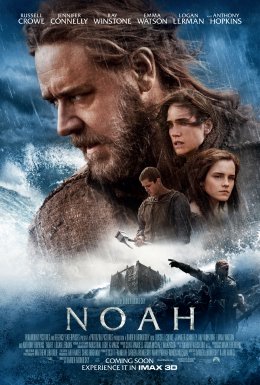
I haven’t seen Noah yet; the timing didn’t work out this past weekend. Besides, you don’t always get to see what you want. Nevertheless, the critics are already having a go at it, and the movie is gathering such attention because it is of biblical proportions. Or more properly, of biblical origins. One commentary in The Guardian suggests that, since knowledge hasn’t moved since Aristotle, that gods really have no place in movies. I have to wonder about that. Sure, the wealthy and powerful seldom have a need for gods, being the captains of their own destinies. Until it comes time to face the flood that all mortals face, and even the rich have to acknowledge that no ark is big enough to take it with them. Who wouldn’t want to have a little divine intervention then? Indeed, God strikes me as the almost perfect antagonist. Before you begin to hurl your stones this direction, think of the book of Job, underrepresented at the box office, but about as honest as they come. We, like Noah, are not in control of this vessel.

To quote Tom Shone, in his review, “[God] has no desire, no needs, no social life, no private life, no self-exploratory intellectual life to speak of.” Of course, the biblical view is quite different. God in the Hebrew Bible is not omnipotent. In fact, he (and he is generally male) comes across as quite lonely. He has anger issues, to be sure, but he is a troubled character rather like a Disney Hercules who doesn’t know how to control his power. Add him to the mix with willful, self-satisfied human beings and it sounds like an afternoon at the movies to me. Perhaps film makers don’t present God with weaknesses—that would be the worst of heresies—but it is also perhaps the most biblical of heresies.

Going back to Aristotle, perhaps it is not that gods should be left out of drama, but that human ideas of God are what writers call a Mary Sue. A Mary Sue is a perfect character with no flaws, the kind of person we first learn to write, since we believe people—and gods—are only good or evil. Then we begin to discover shades of gray. More than just fifty. Characters are complex and experience conflicting wants and wishes. Thus, as Shone notes, God wants people to procreate, but then wants to destroy them. Afterwards he is upset at what he has done. What could be more human than that? The perfect god who knows no struggles, and who never has to fight for what he wants, would be a boring deity indeed. That’s not the divinity skulking around Genesis, however. I’ll have to reserve judgment on Noah’s god until I get to the theater. It seems to me, at this point, that a wee touch of evil makes for deities that are closer to those we experience in our own workaday lives.


Old Myth

The Greek gods are in the ascendant again. They seldom disappear completely, but the big movie studios have rediscovered the special effects boon that only gods can deliver. When I first began to teach my Mythology course at Montclair State University, the Clash of the Titans remake and Percy Jackson: The Lightning Thief were both released just as the class was getting underway. It seemed like interest had been lost since the original Clash of the Titans back in 1981 when I was still a student. Special effects then meant Ray Harryhausen. Now they are measured in terabytes and whatever is larger than that. So Immortals was released recently, but I haven’t seen it yet. Picking up on the sometimes forgotten hero Theseus, the Athenian answer to Hercules, the movie promises to bring the divine into the theater.

In the spate of movies showing gods, America is not yet ready for a movie featuring Yahweh. Oh, certainly there have been films where the god of Israel has loomed very large behind the scenes, but with a prohibition of making images—no paparazzi need apply—it seems unlikely that we’ll see a special effects extravaganza featuring the Almighty. Besides, few Americans have reconciled themselves with the mythic nature of many Bible stories. As politicians and televangelists insist, these stories are fact, not entertainment. GCI Yahweh always stops at the somewhat comic George Burns or Morgan Freeman figures. Charleton Heston, where have you gone? Yahweh of the Bible is a gun-toting, hard-talking, pestilence-slinging, American-style deity. And action is where it counts.

Critics say Immortals suffers on the side of story-line at the expense of gore and action. A factor that is often overlooked, however, is mythology’s inherent mutability. “The Classics,” as we grandly call them, do not derive from a super-Scripture of literalist myths. Each writer told his (less often, her) story in his (her) own way. Although there were those who took such stories literally, as Socrates will silently confess, I suspect not a few knew these were stories told to make a point. There is no right way to tell a myth. From Harryhausen’s Jason and the Argonauts to Disney’s Hercules to Singh’s Immortals, mythology transcends the mere mortals telling it. This is the greatest shame of the modern world—we have traded the beauty of myth for a paltry handful of literalism approaches to religion. And the literary (and cinematic) world is much the poorer for it.

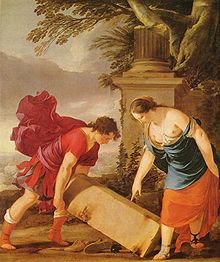
Theseus looking for immortality


Slash of the Titans

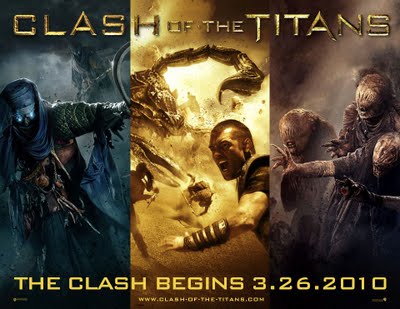
I’m suffering from mythology overload. Last night I watched the mediocre 2010 version of Clash of the Titans on DVD. Since I’ve been grading students papers on mythology non-stop for over a week now, I felt that I needed to see what all the fuss was about. Again. I saw the movie in a theater earlier this year and wrote a post on the post-modern perspective the film has on the gods. To get a better sense of a movie, however, a repeated viewing is awful helpful. The fact is that the public exposure to mythology is often limited to the movies. Students frequently ask if something they saw in the Disney version of Hercules is the way it really happened in the myths. Nothing really happened in the myths.

Meanwhile angry letters have been pouring into the New Jersey Star-Ledger. Rounding out a new losing season, Rutgers University football coach Greg Schiano remains the highest paid employee of the state of New Jersey. Academic voices are feeble, but economics makes people sit up and pay attention. Money talks. Brains are lazy when it comes to rigorous thought. As the collection of heroes gathered in the forest of Calydon to chase the great boar Artemis let loose on the city, the academic world has also chased the glory of the pig-skin. And poor Meleager paid the price of the public outcry when it was over. Even though his team won the biggest college bowl ever.

It is hard to tell the real villain in Clash of the Titans. The writers suggest it might be Zeus, or Hades, Medusa, the “Kraken,” Acrisius, Cephus, or even the “fire priest.” Everybody’s looking for someone to blame. Things aren’t right in Argos. Others blame state legislators, the president of Rutgers University, or the football coach himself. The fact is in both the movie and in the university priorities have been skewed. Nobody is driving except the money, no matter which box office it goes into.

Who's got the pig-skin?