Thought Experiment

One benefit of aging is that hiccups become less common.  They were always a conversation starter when I was younger—someone you were on a date with, or a college buddy, would get the hiccups and you’d end up talking about how they got rid of them.  Generally it was some variation of taking a long drink of water, often with a twist (not a lemon twist, but some kind of alteration from normal drinking).  I did that myself.  My technique was simply a very long draught of water.  I eventually figured out that it was holding my breath as I drank that did the trick, so I started using the dry method, which was helpful when you didn’t have a glass of water handy.
People sometimes tell me I overthink things.  So with the hiccups.  Somewhere in Wisconsin—I don’t remember where, but we weren’t at home and I didn’t have any water in the car—I thought, if holding your breath gets rid of hiccups, you don’t need an external agent at all.  The point is rather to get your mind off the physical discomfort and it goes away.  If that’s true, you ought to be able to think the hiccups away.  I tried it and it worked.  I’m no physician, and I’m rather squeamish about many body things, but you can kind of feel what’s going on in your throat when you get the hiccups.  What I do now is concentrate on that and will it to stop.  It works unless I’m really distracted by something else I have to do.

Our minds can control quite a few of our bodily functions by concentration.  It’s sort of like mind over matter, I suppose, but I’ve noticed that when I can take the time to analyze something I can often think a physical annoyance away.  It’s difficult to ignore an itch, but if you can do it it often goes away.  Like everybody else I find my hand subconsciously scratching itches.  To invoke the power of concentration entails having to be able to think about it.  Our working lives are filled with the distraction that we call vocations.  Time to concentrate on how the world works quickly evaporates once they hand you that diploma.  We have things to do so that we can get paid, and some of us really can’t afford to retire.  Just think of the things we’d learn if we had the time to think away physical annoyances.

Bodily Futures

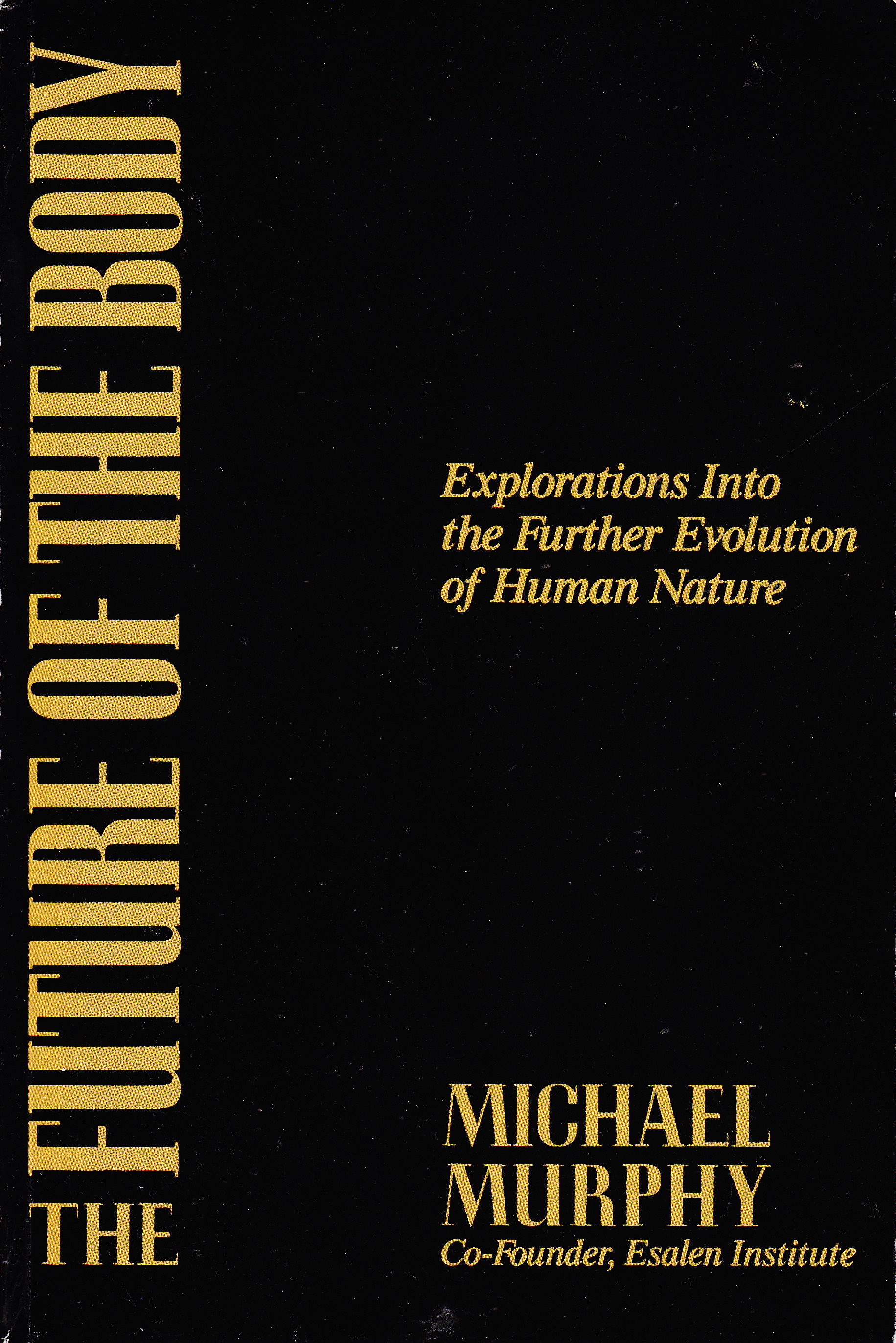
FutureOfTheBodyJust about everyone I know has their own method of curing the hiccups (or, in their more evocative spelling, hiccoughs). Most of these involve holding one’s breath or elaborate ways of drinking a glass of water. Since hiccups are involuntary spasms that can be quite annoying, they can’t be predicted or easily foreseen. Some years ago I realized that the methods I’d been using to rid myself of this unpleasantness were really just ways of getting my attention off of the hiccups—in other words, it was a matter of concentration. I started to respond by thinking the hiccups away whenever they struk me. Cut out the middleman, as it were. And it works. All of this is preamble to the remarkable material to be found in Michael Murphy’s The Future of the Body: Explorations Into the Further Evolution of Human Nature. Murphy is one of the co-founders of the Esalen Institute, about which I’ve posted before. Promoting exploration of human transformative potential, Esalen was a landmark in 1960s culture that I was a little too young to appreciate. Besides, I lived far from California and in a strictly religious mindset. Those who founded Esalen knew, however, that people are capable of more than we appear to be.

Human transformative potential involves matters with which materialistic science is often uncomfortable. Religious practices such as meditation, sports, and martial arts training, all, however, can produce results that shouldn’t be on the books. Whether it is the basketball player who can stay in the air a little too long, or a religious adept who can survive being buried alive for protracted periods of time only to be revived later, or even the remote viewer hired as a spy by the government, people are capable of more than we’re told we are. Murphy suggests that perhaps it is because we are socialized to think this way. Our young minds are open to a realm of possibilities that adult minds have been conditioned to discount. If it’s impossible, it’s impossible. Or is it?

The Future of the Body will take some readers where they do not wish to go. The fact is, however, that faith healers and stigmatics exist without fraud. Just because some frauds imitate reality, it doesn’t follow that the genuine article can’t exist. The usual reductionistic answer is that such things can’t possibly be real—let’s teach our children this fact—we are only robots made of meat. But this view still hasn’t accounted for consciousness, and consciousness is, at least for most of us, inescapably real. We know that because these bodies with whom we are associated do all kinds of things that bring it to mind. We get sick, we experience pain and emotion. We get up and go to work when we don’t feel like it. Most of the time we’re conscious of where we are, and what he have to do. Or do we? It very well may be that matters much larger than the hiccups might just be negotiable.