Thanksgiving Reentry

One of the facets of attending AAR/SBL that I’d forgotten is how international attendees marvel at American Thanksgiving.  While it is far too focused on food for my liking, it is nevertheless an oddity among late capitalism’s sops.  I’m slowly becoming acclimated to the 9-2-5 environment I so desperately wanted to avoid in my career, but I’ve noticed that, at least in my case, the three publishers for which I’ve worked have this in common.  What is “this”?  The only four-day weekend in the entire year is Thanksgiving.  Probably that stems back to the fact that it falls on a Thursday and employers probably don’t want bloated, food-comatose employees trying to keep awake on Friday, and failing.  Perhaps there’s also the kinder motivation in realizing that by this point people have been working hard for many months and the US has comparatively few paid holidays.

I’m thankful for being home after the conference.  My trip to Boston underscored how much of a hermit I’ve become.  Afraid of crowds because of Covid, and not having ready cash as a result of being scammed, staying home has become a comfortable idea.  Being with others, I was glad to find, provided stimulation.  There are colleagues, both in publishing and in academia, that I look forward to seeing.  I’ve been slow to admit, I suppose, that my ouster from the latter is indeed permanent.  It’s wonderful to see friends who remember me when.  Looking back, I was very naive, even as a professor.  And I see many who, pardon my saying so, still are.  Unless you’ve been in the business world where a four-day weekend is a big deal, living in the ivory tower shelters you from much.
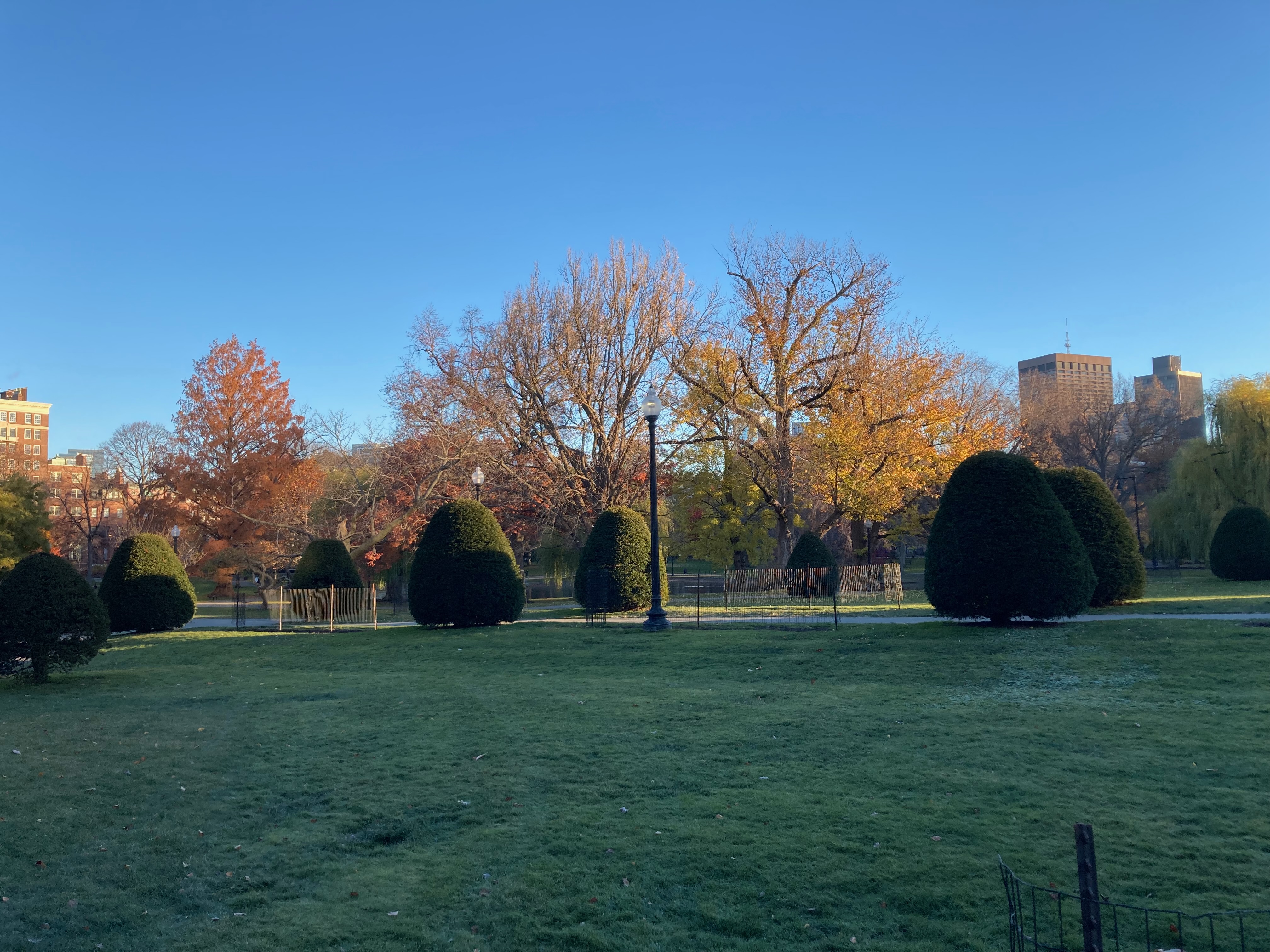
So I’m still in the “reentry phase” of conference recovery.  Although I was thankful to have been able to travel to Boston by train, getting home on a rainy night with heavy New Jersey traffic was a test of endurance.  In my hermit’s life I drink a lot of water and even rehydrating after shorting myself for five days takes an effort.  I’m thankful for the opportunity to have been in New England again.  And for friends on both ends of the trip who appear to welcome me for what I am.  What I’ve become.  Even though sleeping in a luxury hotel where the thermostat isn’t kept quite as chilly as we can afford to keep it at home, I’m thankful to sleep once again in my own bed knowing that there is a wider world out there and I can still function in it.

Not Intelligent

The day AI was released—and I’m looking at you, Chat GPT—research died.  I work with high-level academics and many have jumped on the bandwagon despite the fact that AI cannot think and it’s horrible for the environment.  Let me say that first part again, AI cannot think.  I read a recent article where an author engaged AI about her work.  It is worth reading at length.  In short, AI makes stuff up.  It does not think—I say again, it cannot think—and tries to convince people that it can.  In principle, I do not even look at Google’s AI generated answers when I search.  I’d rather go to a website created by one of my own species.  I even heard from someone recently that AI could be compared to demons.  (Not in a literal way.)  I wonder if there’s some truth to that.

Photo by Igor Omilaev on Unsplash

I would’ve thought that academics, aware of the propensity of AI to give false information, would have shunned it.  Made a stand.  Lots of people are pressured, I know, by brutal schedules and high demands on the part of their managers (ugh!).  AI is a time cutter.  It’s also a corner cutter.  What if that issue you ask it about is one about which it’s lying?  (Here again, the article I mention is instructive.)  We know that it has that tendency rampant among politicians, to avoid the truth.  Yet it is being trusted, more and more.  When first ousted from the academy, I found research online difficult, if not impossible.  Verifying sources was difficult, if it could be done at all.  Since nullius in verba is something to which I aspire, this was a problem.  Now publishers, even academic ones, are talking about little else but AI.

I recently watched a movie that had been altered on Amazon Prime without those who’d “bought” it being told.  A crucial scene was omitted due to someone’s scruples.  I’ve purchased books online and when the supplier goes bust, you lose what you paid for.  Electronic existence isn’t our savior.  Before GPS became necessary, I’d drive through major cities with a paper map and common sense.  Sometimes it even got me there quicker than AI seems to.  And sometimes you just want to take the scenic route.  Ever since consumerism has been pushed by the government, people have allowed their concerns about quality to erode.  Quick and cheap, thank you, then to the landfill.  I’m no longer an academic, but were I, I would not use AI.  I believe in actual research and I believe, with Mulder, that the truth is out there.


Dark Poetry

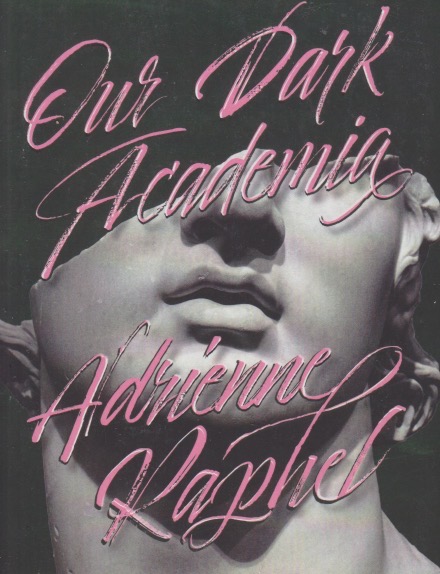
Playful.  Serious. Weird.  Very intelligent.  These are the words that come to mind.  Adrienne Raphel’s Our Dark Academia is a poetry book unlike any other I’ve read.  The poems take many forms from impressionistic reflections on life to a crossword puzzle.  From cutout paper-doll clothes to a faux Wikipedia article on dark academia.  It’s quite difficult to summarize since it’s more of an experience than anything else.  It’s the kind of book that makes you want to get to know the author.  Economy of language and an ability to manipulate words are required for poetry, and although I still dabble in it now and again, my tortured mind finds long-form prose a bit easier to produce.  I do try to keep these blog posts short, but I write a lot of other stuff as well.  In any case, Raphel’s keen intellect is obvious throughout this collection.  And she holds a doctorate from Harvard.

I’ve been exploring what is now being called dark academia pretty much my entire life.  And it has an articulate spokesperson here.  The academic life, although I love it, isn’t always the cushy existence it’s thought to be.  It requires a lot of work and long hours.  Those jealous of the lifestyle probably know it by fantasy.  It has taken a hard turn towards the political since about the seventies, something I didn’t know as I enrolled in a doctoral program in the next decade.  You learn by experience, and it’s clear Raphel has that.  The life of the adjunct instructor, which I tried to live for two years, demonstrates the inhumane things educated people can do to one another.  Of course it’s because of money.  In a late capitalist society, what else really matters?

One thing I know about myself is that I tend to take on the characteristics of authors I read, while I’m reading them, if they have distinctive voices.  Thought processes carry on in the mind even after a book is put down.  I find reading endlessly fascinating and wish I could share this enthusiasm with everyone.  I have to stop and remind myself, however, that our society only works with those who are doers as well as thinkers.  It works best, it seems to me, when those who are thinkers are in charge.  But not all thinkers are good.  My solution, at the moment, would be to have them read Our Dark Academia.


Publish, Perish

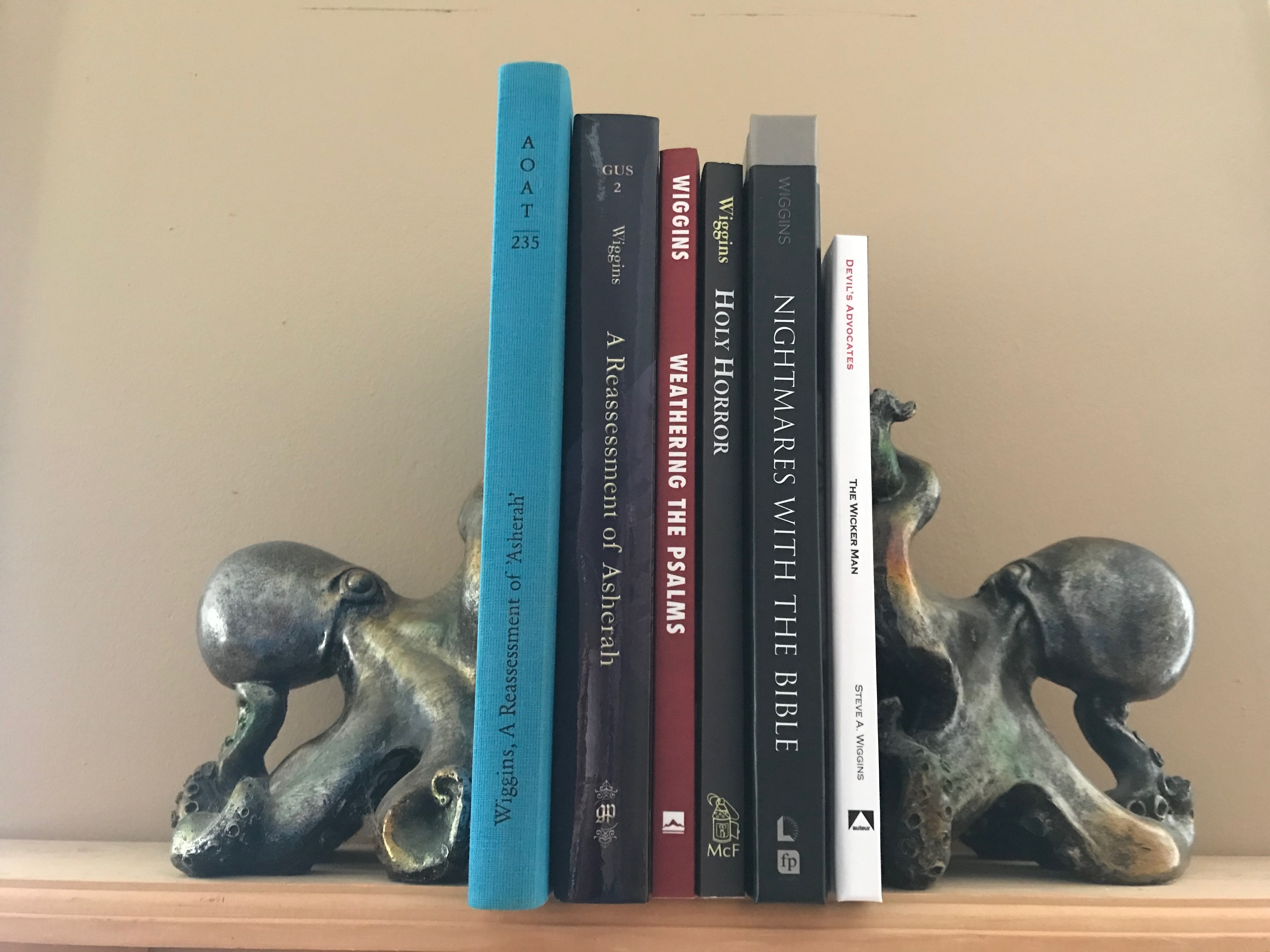
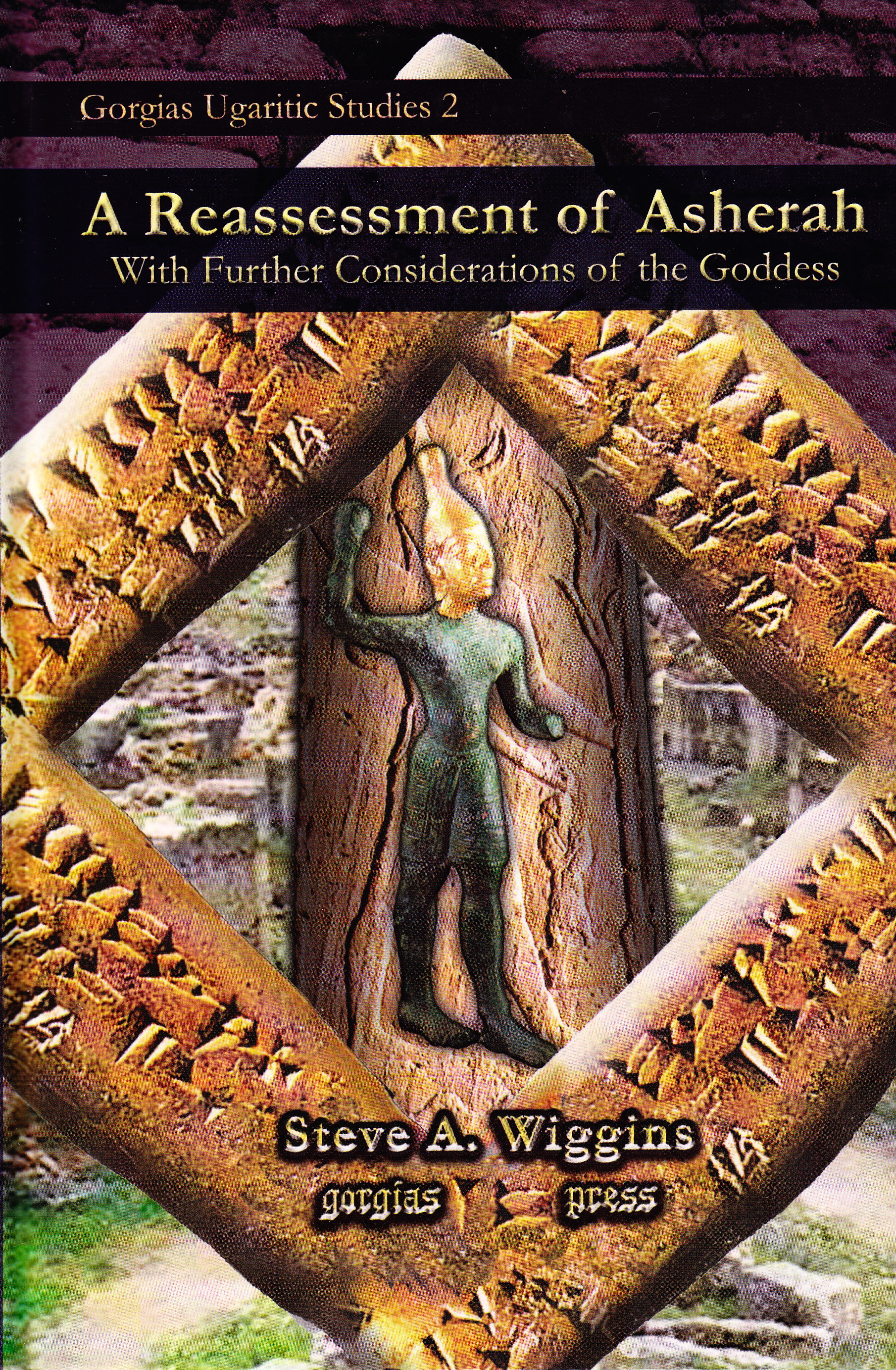
Publish or perish has been around for quite a while and I feel for younger scholars who are trying to publish their collected essays as their second book.  Collected essays, in case you’re not familiar with dark academia, are generally what senior scholars do before they retire and they can’t be bothered to rewrite everything into a proper book.  Or maybe the topics are disparate and don’t easily fit together in one category.  When I was teaching the general rule was an article a year and a second book for tenure.  I was able to do this without a sabbatical, and with a heavy teaching load and administrative duties at Nashotah House.  It’s a lot of work.  My biggest challenge was coming up with ideas for new books.  Eventually I published my collected essays on Asherah in the second edition of my dissertation.

I’d written a 50-page article on Shapshu, the Ugaritic sun deity, that was intended to be my second book.  Then J. C. L. Gibson retired and I had to have something for his Festschrift.  There it went.   It was about that time that I started Weathering the Psalms.  That was my “tenure book.”  There was over a decade between that and Holy Horror, for a number of reasons.  The main one was that I was trying to cobble together a career between Gorgias Press and moonlighting as an adjunct at Rutgers University.  There was no time for research and publication.  Ironically, that only came after I gave up academia to enter the commercial world of publishing.  I see younger scholars now expected to produce that second book, and some of them go for the collected essays approach.  I understand.

Back when I was applying for first jobs—and the scene was already very tight, I assure you, despite promises just a few years earlier—I applied for everything.  One search committee chair wrote a scolding letter saying I wasn’t senior enough to apply.  By the end of his dressing down, he concluded with something along the lines of “unless you’re applying because there are so few positions, in which case it’s understandable.”  He was right.  So few jobs and so much student debt!  I landed at Nashotah and began cranking out the articles.  In a moment of weakness I offered to write some further academic treatments after my horror movie books appeared.  They don’t do anything for my career, of course.  And they take away time from popular writing practice.  Who knows?  Maybe some day I’ll gather them into a book.  Then again, maybe I’ll find myself growing younger too.


Unverified

Dear Google Scholar and ResearchGate,

Thank you for listing me as a scholar on your website.  I am pleased that my academic publications interest you.  I am writing to you today, however, about your verification process.  Neither of your sites will verify me since I do not have an email with a .edu domain.  Now, I fully realize that even adjunct instructors are often given a university or college email address.  This is so students and administrators can reach them.  Speaking as a former adjunct instructor at both Rutgers University and Montclair State University, I can verify that such an email address does not verify your scholarship.  It is a means of communication only.  It does not verify anyone (although it may come in handy if you need to contact someone internally).

For large companies with a great deal of resources, I am surprised at your narrow view of both “scholar” and “verification.”  I earned a doctorate at Edinburgh University before email was widely used.  I taught, full-time, for over a decade at a seminary that did not request any .edu emails until well into my years there.  I taught for a full academic year at the University of Wisconsin Oshkosh.  Had you requested “verification” earlier (pardon me, you may not have existed then), I would have been able to contact you from nashotah.edu, uwosh.edu, rutgers.edu, or montclair.edu.  Your choice.  However, since you only decided to begin your online resources after I had moved into publishing, where the emails end in a .com domain, you were simply too late.  The thing about technology is that it has to keep up.

I hardly blame you.  My doctoral university was opened in 1583, long before today’s giants were twinkles in the eyes of the likes of Bill Gates or Steve Jobs.  Scholars used to write these artifacts, called “books” on paper.  They sent them through a service called “the mail” to publishers.  I know all of that has changed.  The fact is, however, that I have published six scholarly books, and several articles.  I am still writing books.  I am simply wondering if you can answer the question of when I became unverifiable because of my email address?  I have a website that details my educational and professional history.  Academia.edu has not asked me to verify myself and my profile there gets a reasonable number of hits.  My question is when are you going to catch up with the times?  Many, many scholars do not work at .edu-domain institutions.  Of course, nobody knows who we are.  Thank you for your kind attention.

Unverified  


University Death

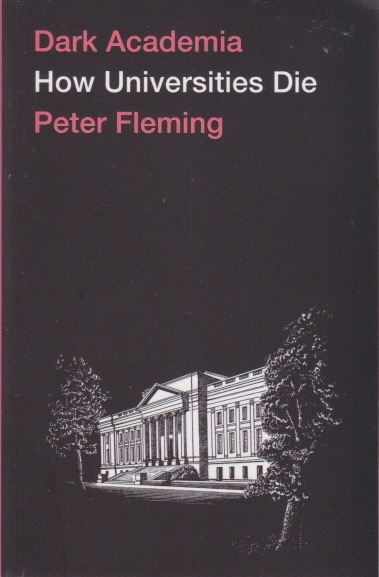
This is an important and thoroughly depressing book.  Despite globalization, I fear that a book from down under might fail to be readily found in the United States, where it’s also needed.  Peter Fleming’s thesis is spelled out in the subtitle.  Dark Academia: How Universities Die.  I’ve read a few other books like this, but I was attracted by the title of this one.  Fleming points out much of what I already knew, but with the stats to back it up, as well as compelling personal stories.  Few people worry about professors.  We’re conditioned to think their lives are easy and carefree.  I doubt they ever were, but since the eighties, when universities started to act like business ventures, the cracks showed in the foundations and their lives grew harder.  Capitalism ruins everything.  Fleming discusses the political maneuvering in the UK and Australia, as well as in the US.  We’re all facing the same nemesis.  Greed.

Politicians began attacking universities likely because they realized that educated individuals can see through the shenanigans that people like Trump, and Reagan and Bush before him, pulled.  They didn’t want alternative voices.  Debate is anathema.  The easiest solution was to make education a business because businesses always want more money.  Now, I’m shooting from the hip here, but Fleming pulls such things together with evidence.  I have witnessed firsthand some of what he describes—living as an adjunct instructor, barely making enough to cover the bills.  At the same time learning the university I was working for had been hiring “managers” (hundreds of deans, associate deans, etc.) but couldn’t afford to hire faculty.  That sports (something Fleming doesn’t address) were allocated far more money than teaching.  Yes, things were bad.

Fleming points, rightly, in my opinion, to neoliberalism as the culprit.  That’s the form of liberalism that’s wedded to free market capitalism while spouting the causes that traditional liberals support—care and concern for all people.  The older I get the more I see that neoliberalism is what the Republican Party used to be.  They’ve veered hard right and since, in America, liberals have never really had a chance to hold power since Roosevelt, they’ve become neoliberals.  Thus began the transformation of higher education before I ever started my doctorate, but I didn’t know it.  I’m no political scientist.  I’m a teacher interested in the past.  And religion.  Having grown up poor, I invested all my scant resources into getting qualified to teach, only to discover that the ivory tower was being sold to the highest bidder.  Dark academia indeed.


Little Things

Those on anti-clutter campaigns (whose lives I can’t imagine) claim that we have too much stuff.  That may be true, but when you reach a certain age these realia can serve to remind us where we’ve been.  How we’ve become who we are.  We moved to our house in a whirl.  Neither my wife nor I had enough vacation days to take any time off and we had to move 55+ years of stuff over a weekend.  Lately I’ve been going through some of the boxes of little things you keep.  They were generally mixed in with papers I didn’t have time to file, bits of hardware, and a few things I’m not sure why I kept.  In the archaeology of my life, the layer labeled Nashotah House retains a prominent place.  It took many years before I could look at my little Nashotah House things without being overwhelmed by emotion.  Nearly twenty years on, I hope I’m beginning to get over it.

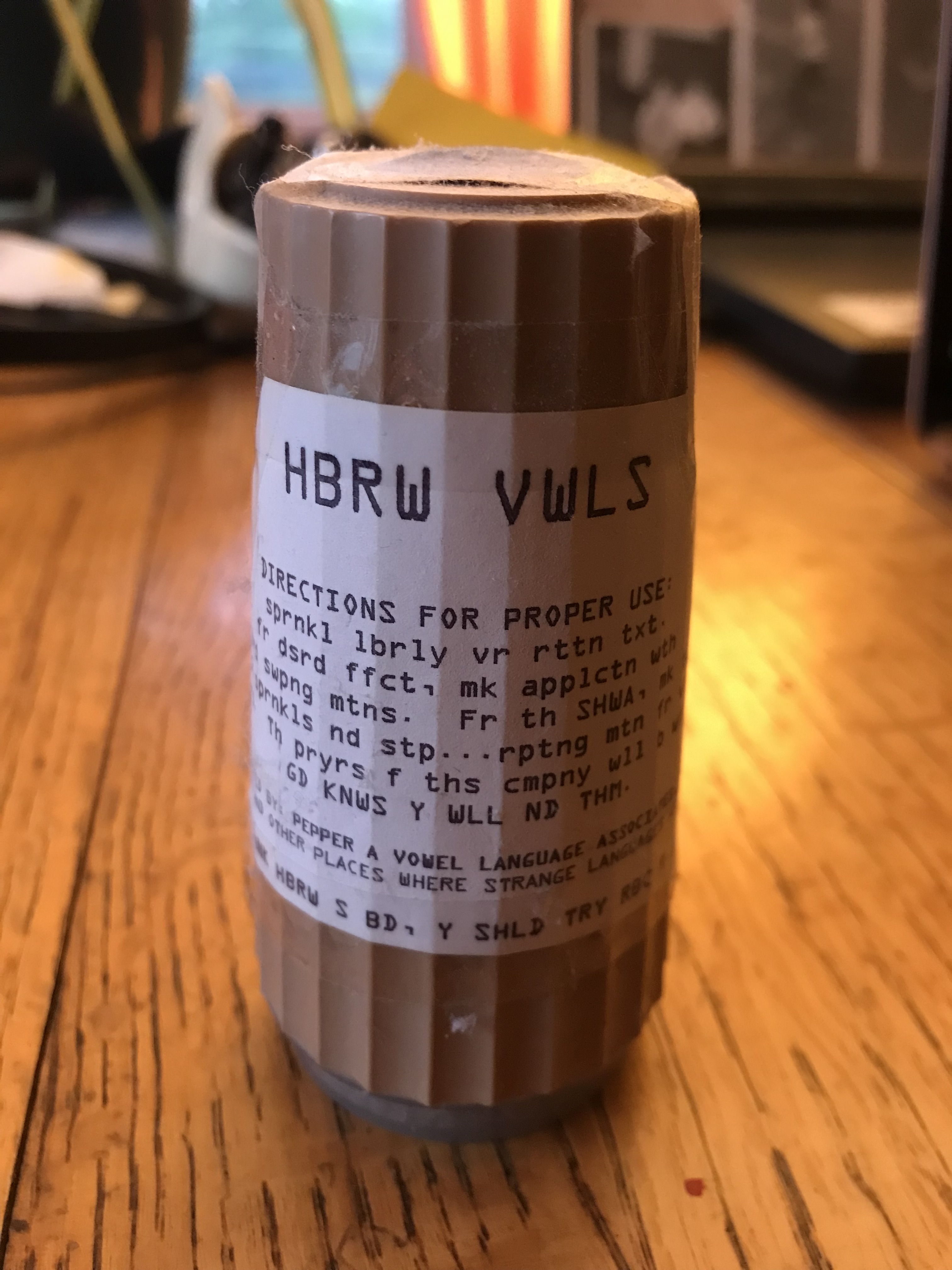
One of the little things I unearthed was a pepper shaker.  One of my students (now sadly departed) had made a label to express her frustration and humor at trying to learn Hebrew as a mature woman.  I’m probably now the age she was then.  This little artifact has been with me through a great number of momentous changes in my life.  It can still bring a little smile, however.  I see it and I remember Judy giving it to me with a laugh.  I probably shared it with the class.  Even now it has two-decade-old pepper in it.  The declutter experts would say it belongs in the dumpster.  They’re wrong.

Nashotah House was the only job on offer following those intense Edinburgh years.  As all of these things recede further and further into the past, they become more valuable.  No matter how small, these objects played a part in what I remember and rubbed me in a way that influenced my shape.  I don’t know what that final shape will be, but I jealously guard my little things, these boxes of years.  They are points of contact between my life and those of others.  I found many other pieces of myself in these miscellaneous boxes.  I know that someday, all things being equal, this stuff will probably end up in some landfill somewhere, waiting for some future archaeologist wondering what realia we kept back in the years when the world went insane.  And if s/he is really brave, they might even try some of the pepper on their future lunch.


Shadow off Campus

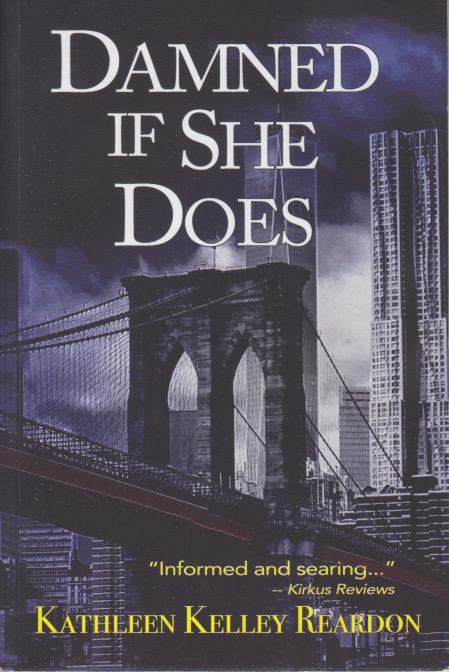
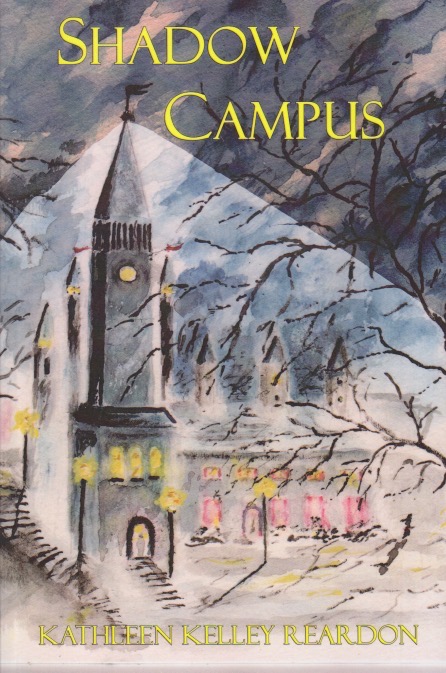
I’ve been to quite a few academic conferences in my life.  Some have been held in neighborhoods declared “unsafe.”  I even had a job interview in a hotel room (such can’t happen now) with a college that didn’t want to pay the fee for using the society’s services.  (A friend who’d also interviewed with the same school said to me afterwards, “I thought they were going to jump me!”)  (Neither one of us got the job.)  I even went to a conference where I had to drive through a crime-ridden neighborhood to get to an off-site hotel.  But I’ve never been to a conference where someone was murdered.  That’s the premise behind Kathleen Kelley Reardon’s Damned If She Does.  Reardon’s keenly aware of the kinds of issues women face in the professorate.  There are some unsavory guys in the profession and power is very difficult to wrest from those who hold it (generally white men).  In this follow-up to Shadow Campus, she tells Meg and Shamus Doherty’s experience with murder, and more, at an academic conference.

Academics are so necessary for studying things closely, opening up true understanding.  They are, however, people too.  And people can be petty, vindictive, and selfish.  They’re usually not inclined to murder, however.  I’ve been meaning to read that book about the murder of a religion professor at the University of Chicago several years ago precisely because such things are so unusual.  In dark academia, however, events like that are fairly common.  The thing is, many academics are also quite smart.  If someone were to put their mind to an undetectable murder, hmm.  The old gray matter starts churning.

In Damned If She Does, the apparent motive is publication in prestige journals.  In the end, it turns out that there’s more to it than that, but it’s somehow believable that a matter like publication could lead to homicide in academia.  As an editor, and writer, myself, I know how important publication with specific presses can be.  Even after doing this for over thirty years, an acceptance notice creates a sense of validation like no other.  Dark academia explores such territory.  I suspect that I’ve always been a bit naive when I’ve attended conferences.  I go, present papers, and keep interactions, well, academic.  I’ve heard whispers of them being places of temporary flings and I’ve seen colleagues use them as places to party.  On occasion I’ve seen established scholars very inebriated.  They’re people too, of course.  And as long as nobody is murdered, the code seems to be that what happens at a conference stays at the conference.


Dark Smile

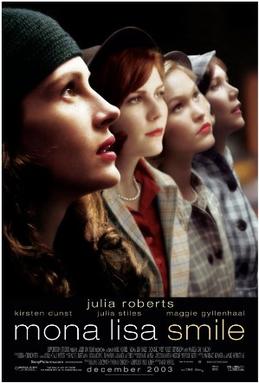
Romance.  It’s not the same thing as Romanticism, but it’s often part of drama.  It can, and often does, feature in horror.  Tender feelings toward someone we really love seem to be a human universal, even if social structures don’t always support such feelings.  Maybe I’m trying to make excuses for why I watched Mona Lisa Smile, but there is an underlying reason.  More than one expert considers it an example of dark academia.  I was curious, and honestly, it’s easier to get my wife to watch dark academia than it is horror (for that I’m on my own).  This was a film I’d heard about many times, but hadn’t watched any trailers for, so I wondered what it was all about.  In short, Wellesley.  One of the seven sisters.  But more than that—women struggling for equality in the 1950s.

A fictional Katherine Ann Watson takes up a post teaching art history at Wellesley, back in the day when a doctorate wasn’t required.  In order to demonstrate her expertise to her very well prepared students (I never, in nearly 20 years teaching, had students show that level of eagerness for any subject) she introduces them to modern art.  Traditional Wellesley isn’t prepared for that.  Moreover, she encourages them to develop careers of their own in a period when the MRS degree was still a main reason for women to attend college.  Watson’s own life isn’t without romance; a boyfriend back home in California and another professor at Wellesley both vie for her affections.  Some powerful students, however, make her life difficult and despite her popularity as a teacher, the administration allows her to remain, but with severely clipped wings.  She decides to fly instead.

Amid all the social commentary, a darkness remains.  A large part of it is patriarchy, but academic politics—driven by money—is the main culprit.  As Watson is essentially forced out, her students see her off with a display of camaraderie, making this, in some ways, quite similar to Dead Poets Society.  There were a few triggers for me.  Years ago I was indeed called into the Dean’s office and handed a letter to read.  While not nearly as dramatic as either Dead Poets Society or Mona Lisa Smile, I had students demonstrate their support for me as I was forced out.  Katherine Ann Watson seems to have had better prospects than John Keating, but both movies remind us that academic politics are dark indeed.  Even if it’s couched in the genre of romance.


Contours of Dark Academia

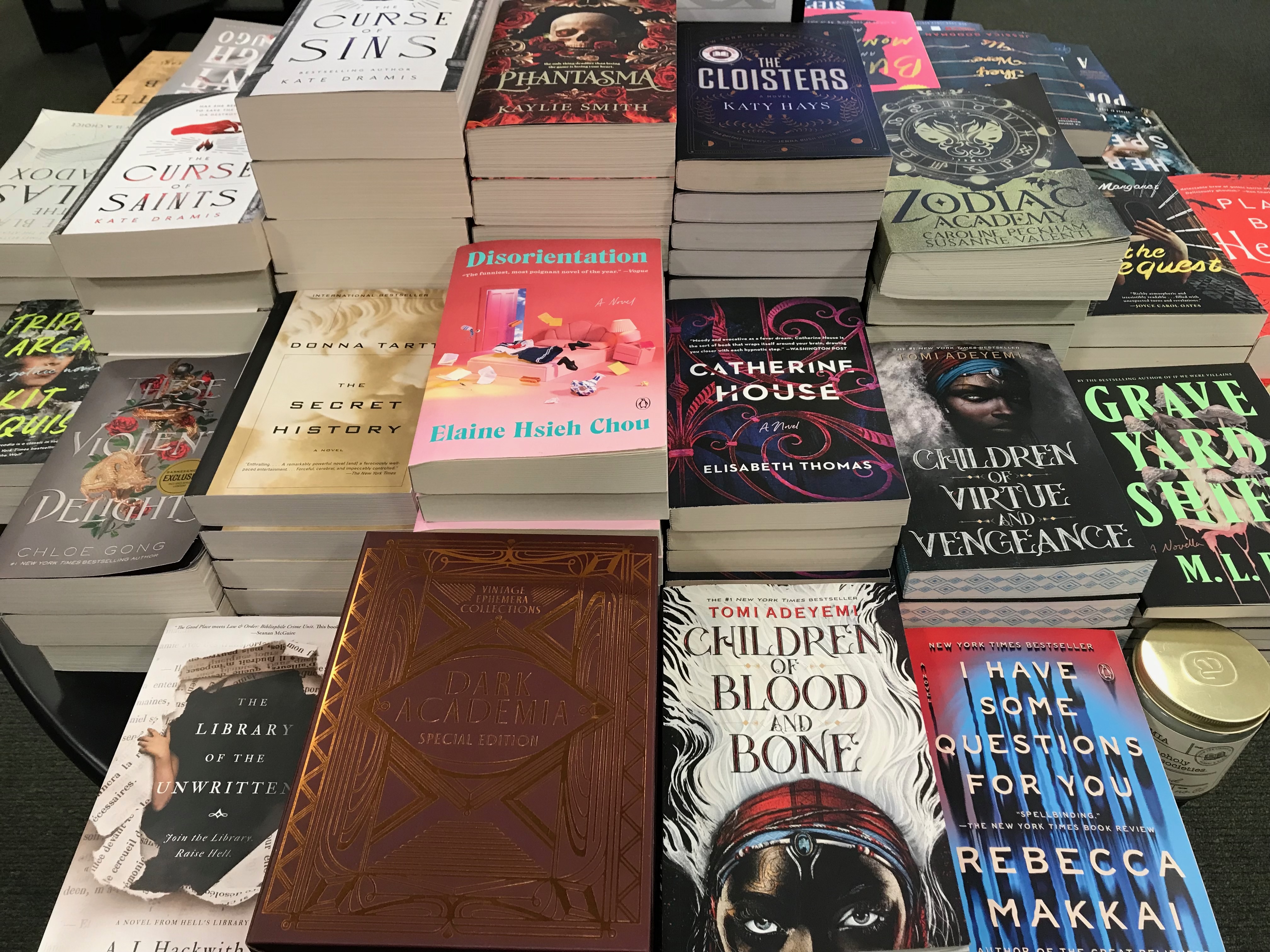
As I attempt to trace the contours of dark academia, I’m learning that much of my reading has been classified that way by others.  My main engine for discovering this is Goodreads, making me think I should shelve my own books more.  Also, I recently visited a local Barnes and Noble where one of the front tables was dedicated to dark academia.  Looking over the titles gave me fiction reading ideas for months.  In any case, apart from classical dark academia, where the setting is an institution of higher, or specialized learning, the category for many includes books about books.  This would pull in titles such as Carlos Ruiz Zafón’s The Shadow of the Wind, which I read before my current conscious interest in the genre.  I think I was looking for gothic books back then.  I include, on my personal list, books about students with dark experiences, such as Familiar Spirit by Lisa Tuttle.

The books about books category does shed some insight.  I love Italo Calvino’s If on a Winter’s Night a Traveller, but it’s not really dark enough to be, well, dark academia.  I understand the critique that dark academia tells stories of privilege, but that dissipates somewhat when including books about books.  Higher education is, and remains, a domain of privilege, but it is possible for those raised poor (such as yours truly) to break in.  I enjoyed higher education throughout the eighties and into the aughties.  After that it began to get far too political and business-oriented.  (Not that I wouldn’t go back if I had half a chance.  Or even a quarter.)  My point is, dark academia can deal with those who lack privilege, but I also believe there’s no point in denying privilege does exist.  And opens doors.

Dark academia is new enough that its parameters are permeable.  To me the real draw is that a fair bit of sculduggery really does exist in higher education.  The reading public seems eager for it.  Thinking of all the odd, somewhat tenebrous things that occurred in the course of my couple of decades in academia, the genre rings true to me as well.  As I think back over the books I’ve read, I think maybe I should build a shelf especially for dark academia.  I’m trying to read in it more intentionally now, but I’ve been unintentionally exploring it for decades.  When you add books about books, Umberto Eco’s The Name of the Rose joins the crowd, and I read that one all the way back in seminary.  I tried to be part of academia, but there’s a darkness about an unrequited love, and so it just makes sense to me.


Remaining in Shadow

Some people want to be found.  Others don’t.  Those of us who are curious shade into those who are frustrated when we can’t find someone.  People have been around for a relatively long time now, and we’ve been giving each other names because “hey you” only goes so far.  Even so, unique names are rare since, it seems, the majority of European-derived folk had something to do with smithies.  Nevertheless, the internet offers to help us find people.  I was searching for someone the other day but that person, despite publishing nearly daily on the interwebs, has a very common name.  And he styles himself without even a middle initial.  (He may not have one, I know.)  The point is, perhaps he doesn’t want to be found.  I run into authors like this—they assume their high-level monograph is sufficient fame.  You can’t find them online.

I recently joined Bluesky.  I’d like to leave Twitter, but I still have a large number of followers there (for me), although they seldom interact.  Publishers look at things like the number of X followers you have, so until Bluesky surpasses Twit, I’ll need to keep both going.  On Bluesky more people introduce themselves to you.  At least when you’re new.  Not a few are looking for relationships, sometimes of the sexual kind.  (I find that occasionally on what is called X, but mostly in the account under my fiction-writing pseudonym.)  These are people who want to be found.  The internet, strangely enough, has driven us further apart.

America has always been a polarized place, but the web has sharpened the border.  Indeed, it has militarized it.  I remember the days when meeting people actually meant going outside and stopping somewhere else.  Society had rules then.  Two topics of forbidden discussion were religion and politics.  It was easier to make friends with those rules in place.  Since I’ve chosen to put myself out there on the web, my choice of field of study does tend to come out.  And it’s one of those two forbidden topics.  Since my career goal has occasionally been ministry (still is from time to time), putting religion into the equation is inevitable, for those who really want to get to know me.  Social media is a strange country, however.  I tell new conversationalists on Bluesky that I have a blog, but it doesn’t seem to lead many people to my dusty corner of the interweb.  And it still gets me no closer to finding that guy with the tragically common sobriquet.  He may not want to be found. 

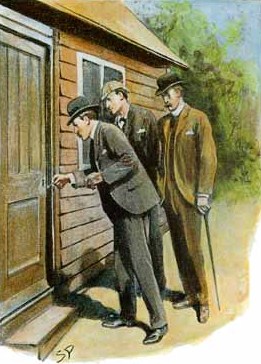
Sherlock Holmes seeks someone without the internet. Image credit: Sidney Paget (1860 – 1908), Strand Magazine, public domain, via Wikimedia Commons

Imagine Monsters

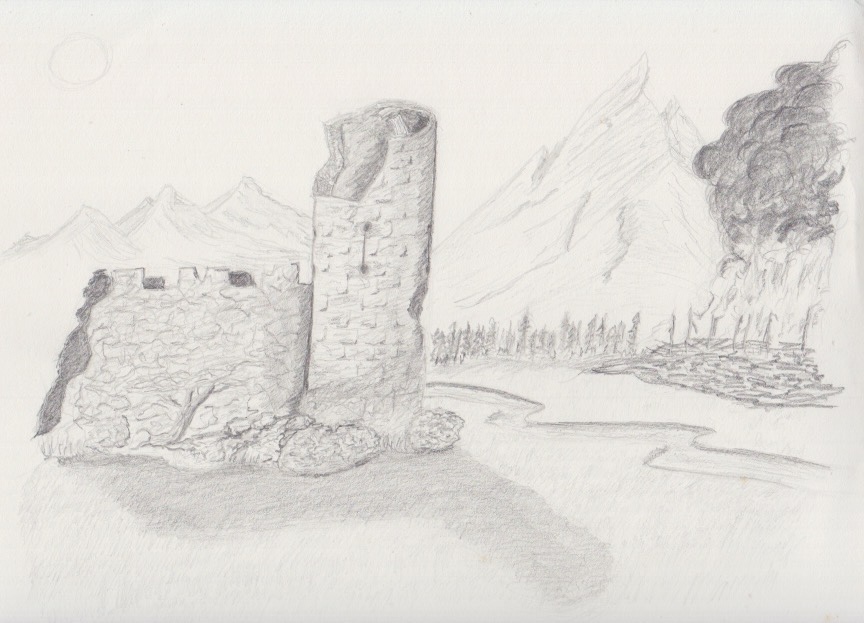
Adulthood is where you begin to recognize the folly of growing up.  Like most people, when I “matured” I was ashamed of things I made as a child and, regretfully, threw them away.  This came back to me recently as I was thinking of a sketchbook—actually a scrapbook that I repurposed in my tween years.  I love to draw.  I don’t do it as much now as I’d like (thanks, work!), but I was encouraged in it by art teachers throughout school who thought I had a little talent.  The sketchbook, however, was only ever shown to my brothers, but mostly only looked at by me.  This particular project was where I was making up monsters.  As with my writing, I’d never taken any drawing classes, but I had an active (some say overactive) imagination.  (That’s still true.)  

In any case, a discussion with my daughter brought back memories of this book I’d discarded by the time I went to college.  I still remember some members of the menagerie I’d concocted.  Even now that I’ve seen hundreds of monster movies, most of those I’d fabricated as a child have no peers that I’ve seen.  These weren’t monsters to be incorporated into stories—they were purely visual.  Although, I can say that my first attempted novel (probably around the age of 15) was about a monster.  I got away with being interested in monsters in high school, but college was a wholesale attempt to eradicate them.  Even so my best friend from my freshman year (who left after only a semester) and I made up a monster that lived in the library.

As an academic, until very recent years, monsters were off limits.  If you wanted to be sidelined (and in my case it turns out that it wouldn’t have mattered) you could explore such outré subjects.  Now it turns out that you can get mainstream media attention if you do (as a professor, but not, it seems, as an editor).  I’m sitting here looking back over half-a-century of inventing monsters, with a sizable gap in the middle.  The interest was always there, even as I strove to be a good undergrad, seminarian, and graduate student.  Now I can say openly that monsters make me happy.  I can also say, wistfully, that I’d been mature enough to keep that sketchbook that preserved a part of my young imagination.  It was tossed away along with the superhero cartoons I used to draw.  And the illustrations of favorite songs, before music videos were a thing.  Growing up is overrated. 

A surviving drawing, unfinished

Low Stakes

Elsewhere on this website I refer to myself as an “unfluencer.”  This quasi-serious attempt at humor does bear a kernel of truth.  It’s difficult to get your voice heard on the internet.  By the time I began blogging, vlogging had already become a thing and people prefer watching to reading.  (I do have a few YouTube videos out there, but they take an awful lot of time to put together and I’m kinda busy trying to write obscure books.)  The reason I mention this at all is to make a point.  People sometimes wonder why a guy who has a doctorate in religious studies wastes his time with horror.  There’s a good reason.  People will pay attention when the stakes are low.  Is horror important?  I think it is, but most people don’t.  Genre fiction is easily dismissed as being off in fantasy land, despite the growing number of voices suggesting we should be paying attention to how it influences (unfluences?) religion.

Those who delve in such blue collar things sometimes grow to be taken seriously.  I suspect—since I wouldn’t know—that it’s a matter of sticking with it long enough, and producing enough content that people have some standard for comparison.  And the interesting thing is, you often notice fascinating features along the way.  While working on my next book the other day, I realized a major gap in the study of history of religions.  I can’t say what it is here, of course, because someone without a 9-2-5 may scoop me.  But the gap is clearly there.  And I would never have noticed it if I weren’t spending my time writing about low-stakes monsters.

I’m a blue-collar thinker pretty much through and through.  Talking it over with my brother the other day, I realized that despite the years and years of higher education, I was brought up working class and I look at the world through those lenses.  When I was actually a professor that began to change, but in retrospect, I think that’s why my students liked what I did in the classroom.  I wasn’t some child of privilege handing down tired observations meant to impress other children of privilege.  I’m just a peasant trying to figure things out.  I can point to no highly educated forebears—neither of my parents finished high school.  No, I have been fortunate enough to have clawed my way through three higher degrees only to realize that people only listen if the stakes are low enough.  And I’m alright with that since I get to spend the time with my beloved monsters.


Bibliographer for Hire

Why is bibliographer not a job?  Why can’t a person make a living categorizing knowledge?  I ask this because I see YouTube videos of people saying your job should be what you enjoy doing.  What if you enjoy creating bibliographies?  You see, my research methods are a bit unconventional.  They kind of have to be since I have no institutional support for my writing, and yet I want it to be intelligent and informed.  That means I have to locate my own sources and inevitably, when I’m compiling a bibliography, I’m happy.  Even if it means ferreting out obscure sources and trying to learn where something was originally published, I’m still at the top of my game.  (Yes, this is one of those things that the longer you’ve been doing it, the better you get at it.  These days it means learning to engage the internet for research.  Since it’s more of a money-making venture geared towards entertainment, that can be tricky.)

I remember those days of typing out bibliographies by typewriter, smearing White-Out all over, or trying to use that ribbon stuff that was supposed to be able to type over mistakes.  My friends and fellow students hated bibliographies.  Secretly, and perhaps perversely, I was enjoying myself.  You see, a bibliography is gathered knowledge.  When I finish reading a nonfiction book, particularly one where I want to do further reading myself, I go through the bibliography.  I want to know the origins of ideas.  There’s an irony here since my last few books have featured quite a few of my own ideas supported by what I’d read.  And I know that unless I provide a precise footnote, anyone who might read my work might wonder “how I know” what I’m writing.  It’s increasingly becoming one of those “pay attention to your elders” sort of thing, I guess.

But the bibliographies I could compile!  The really tricky part when writing The Wicker Man was the word limit.  I know authors who struggle bringing the bibliography down to required length, and I feel for them.  I really do.  You see, a bibliography is a record of what it took to get me to write this book.  These are the things I was reading, pondering.  Or found along the way.  There’s an art to a bibliography as well.  Some topics seem to attract authors with last names beginning with a certain letter, for instance.  Or others seem to have a dearth of another letter.  I may be the only person who finds such things fascinating, but can’t that be a paying job?  It is most interesting work, and categorizing knowledge is a full-time job.  If only it was a paying one.


Trouble on Campus

I know what it’s like to have a story living within you.  Academics writing novels don’t always qualify as Dark Academia, but Kathleen Kelley Reardon’s Shadow Campus does.  Continuing my current kick of that genre, I eagerly read of the skulduggery taking place at the fictional Pacific Coast University and found myself nodding with recognition.  Higher education is highly political.  I have to wonder if where two or three are gathered politics will inevitably be in their midst.  Perhaps thus it has always been, but it seems to me that when universities decided to model themselves on corporations, it grew much worse.  In any case, Meghan Doherty is a business professor up for tenure.  Her only family is an estranged brother in Connecticut.  Then one night someone attempts to murder her on campus and make it look like a suicide.

Shamus, her brother, flies to California to see her in the hospital and soon begins to suspect things are not as they seem.  I don’t want to give away too much here, in case you want to read it too.  I can say that sometimes life on campus is like this.  I’ve made the claim to have lived Dark Academia, and I’ll stand by it.  After the unpleasantness at Nashotah House, I was hired for a year as a replacement professor at the University of Wisconsin Oshkosh.  I really enjoyed teaching there, apart from having to leave my family in Oconomowoc; I stayed with a former Nashotah House student to whom I’m eternally grateful.  The department chair and colleagues liked me.  I was a good fit.  There was talk of making this a full-time position for which I’d be the inside candidate.  Then one of the other professors began to dislike me (long story).

I was called into the department head’s office and told that my eight courses for the next year had been reduced to one.  Permission to hire had been granted, but it had to be a specialist in women’s studies.  I was welcome to stay on as an adjunct, of course.  I’m a blue-collar guy and I recognize a boot when I see one.  And that was only the second time something similar had happened to me, and it wasn’t the last.  I’ve paid my dues to academia and yes, it is often dark.  So I enjoyed reading Reardon’s fictional account of underhanded dealings at Pacific Coast.  In my own experience guns were never brandished, but then, you can’t have it all.