Modern Work

The entertainment industry has proven itself, time and again, resistant to recessions.  It says something about our lives that we need that outlet no matter what.  The New York Times has been looking at the writers’ and actors’ strike in Hollywood as a piece of what they are calling the “fractured work” puzzle.  Noting how inequality inevitably increases in a capitalistic system, they put the screenwriters into a situation with which I am unfortunately familiar—that of the adjunct professor.  Adjunct professors now make up some three-quarters of the teaching force in higher education.  In case you haven’t had the misfortune yourself, an adjunct gets paid by the course (not very well, by the way) and has no benefits—medical or, often, retirement (some state schools are required to offer the latter, but you’ll never be able to retire on the pittance you receive).  The idea is that work is being broken into smaller chunks so that entrepreneurs can pay less for work done.

Everyone knows such a system isn’t sustainable.  It will crash.  Unless it’s reformed.  Some people have asked me about becoming a copyeditor for a job.  The thing about copyediting is that it’s freelance work.  Publishers generally don’t hire copyeditors full-time.  You can make a living at it, but it’s self-employment.  You need to set aside the money for retirement and health insurance.  As well as taxes.  And you have to work long hours to make it pay off.  I tried it for a year, but I’m a slow reader.  It was clear that I didn’t have the right literary stuff to make such a living, so I had to move into acquisitions instead.  If you know me personally you may find that ironic.

Those of us who’ve always sought a spiritual existence, however defined, often don’t fit into a capitalistic system.  Especially if you question doctrine.  That’s why I became an academic—or at least tried to.  It’s one of the few places where people with my skill set can thrive.  Work often defines who we are.  Usually one of the first questions to arise when you meet someone is “what do you do?”  Specialists often suggest dissociating our selves from our jobs—I suspect that’s more necessary in positions in which a person is unwillingly being taken over by a position that’s not fulfilling on some level.  Wouldn’t it be better, since we’ve opted for fractured work, if we made it something you could do for a career?  The New York Times suggests specializing, but be careful, dear reader, in what you decide to specialize.  The “market” may well dry up on you and striking may not even be an option.


Life Semesters

Some people have a school calendar in their blood.  For me, that was one of the great appeals of the teaching profession.  I worked a lot during summers—class prep and research take a lot of time and the two go naturally together.  I didn’t mind the ten hour days, and more, during the semester either.  When you’re doing something you love, you become your job.  It was quite a shock when the job counselor at the University of Wisconsin Oshkosh told me that I had to separate myself from my job.  The two were one.  I would sit in that Oshkosh office researching for classes I’d never taught before.  My first year at Nashotah House I was writing 90 pages of class notes per week.  Anxious, but loving it.  There was so much to learn!  But that calendar has some natural breaks.

Academic careers involve sprinting that goes on for about four months straight.  Then you get a break of a month or two before sprinting again.  For those of us with my mental condition, that way of living just fits.  The 9-2-5 job is parsimonious second-pinching.  I’ve talked to other professionals in the field and they say the same thing—when your job involves thinking, there are no such things as fixed hours.  When I’m out on my jog before work and my mind comes up with a solution for that intractable problem that awaits me once I fire up the laptop, I’m working.  It’s just not “on the clock.”  It’s gratis.  Part of the problem is I don’t cotton onto sitting in front of a computer all day. Being “in the office” ironically hurts productivity.  In the teaching world you walk around and talk to people.  Summer days are spent with your nose in a book.  What’s not to like?

Not everyone, I know, is stimulated by that kind of lifestyle.  For me, it just works.  Some years I’m able to carve out a week’s vacation in the summer.  I try to save up enough vacation days, however, to get the week between Christmas and New Year’s off—a mini semester break.  When a person’s mind works in a certain way, finding employment that coincides with it is important.  Many people like the structure of a work day.  It tells you when to sign in and when to knock off.  It tells you when to eat lunch and when to take breaks.  Others prefer alternative work arrangements.  The 9-2-5 has never sat well with me.  It’s because the school calendar is in my blood.


Review, Please

I realize few academics read my musings.  (Heck, few non-academics read them either!)  Nevertheless, I have a plea: please be a peer reviewer when asked!  I get hit with this particular conundrum from both sides—as an editor potential reviewers simply don’t want to do the work (hint: we’re all “too busy”!) and as an erstwhile member of the academy, I also get asked to do reviews.  Out of a sense of obligation, I always accept the invitations, if at all possible.  You see, I know how hard it is to secure reviewers.  In the past two-and-a-half years, I’ve been tapped as a reviewer five times.  Ironically, when I had my full-time teaching position (for fourteen years!), I was never asked.  How times have changed!  Editors are now beating the academic bushes for those of us in the hinterland who have credentials and good will, even as we’re out gathering twigs.

You see, academic publication simply cannot go forward without peer review.  If you publish, someone was willing to review your work.  Don’t you think it’s only fair to offer the same courtesy?  Academia used to be, and still should be, a community.  Yes, those who break into those coveted teaching positions are often Lone Ranger types, shooting from the scholastic hip.  Still, the system only works if we help one another.  One of the long-term accusations against the academy is that those within have tunnel vision.  (I suspect there may be some neurodiversity going on here.)  That may be true, but try to consider the wider picture.  Teaching jobs are tough, yes, but the rewards are enormous.  Believe me, if you haven’t had to work a 9-2-5, you may not realize just how privileged you are!

Many editors dread the prospect of having to find new reviewers.  They spend time on university websites that are designed for recruitment, inviting them back to school (believe me, it’s tempting!), not to help editors find experts.  And we don’t like to use the same person over and over.  Reviewing also has some benefits—there are carrots as well as sticks!  I encounter new and untested ideas as a peer reviewer.  Who doesn’t like to be the first to get a crack at new knowledge being born?  My own portfolio of review requests stretches from semitic goddesses to the weather to monsters.  I’ve published in those areas and colleagues had to read my materials to make that possible.  So if you’re an academic and someone asks you to be a peer reviewer, please say yes.  Pretty please, with sugar on top.


Seminary Daze

It’s surprisingly easy to throw away an expensive career that once held much promise.  It really involves just a two steps: spend thousands of dollars earning a Ph.D. in religious studies, and take a job in a seminary.  It’s disheartening to watch colleagues going through this as seminaries contract, then close.  I know how it feels personally.  You’re suddenly aware that your years and years of training have made you practically unemployable.  If you do find a job it won’t pay as well.  Chances are you won’t enjoy it either.  Having taught in a seminary will mark you in academia as one of those “uncritical believers,” and, well, nobody wants to touch one of those.  While I would’ve taken a regular seminary job after my doctorate, my wife remembers me lying awake at night asking “Am I cutting off my career if I take a job at Nashotah House?”  The answer: yes.

I’ve been watching colleagues have their worlds torn apart as seminaries try to figure out how to stay open when institutional churches are dying.  Megachurches don’t require a seminary degree to run—natural grifters do it quite well with no advanced education, thank you.  But mainstream churches have been losing members, and therefore financial support, for years now.  And seminaries supply a commodity no longer in demand.  This may have been a trend when I started out back in the eighties.  If so, nobody told me about it.  I walked into this career naive and came out jaded and cynical.  My motives were to help other people.  It’s getting harder and harder to find jobs where you do that any more.  At least while being able to keep body and soul together.

Thing is, it takes years to earn the degrees you need to teach in a seminary. You have to think ahead.  When I started out, trends suggested a huge glut of jobs in the teaching market.  That never panned out, of course, as human predictions seldom do, and the decline in jobs has been pretty steady over the past thirty years.  Back in the eighties seminaries were doing okay.  Growing, even.  I do hope it didn’t have anything to do with me, but I hit this surprisingly fragile market at just the wrong time.  After having been overboard without a life preserver myself, it pains me to watch colleagues facing the same fate themselves.  Religion hasn’t disappeared—it’s simply taken on new forms.  Those forms don’t require seminary. Those of us who followed the rules on how to teach religious studies, however, somehow find ourselves in disposable careers.


Admit This

I thought about writing a letter to the New York Times, but I know my chances of getting it accepted.  A piece run yesterday in said periodical on elite college admissions policies, which favor the affluent, presented an argument frequently used in defense: high-performing colleges are faced with the problem that the highest achieving students are affluent.  I’m here to call shenanigans on that.  I don’t often state explicitly what my background is here on this blog, knowing as I do that I had white privilege on my side, but this admissions reasoning is elitist to the hilt.  I grew up in a poverty-level household and yet when I reached college it was only to have professor after professor marvel at how well I did in their classes.  My GPA at graduation was 3.85, partially brought down by “freshman orientation” and senior ennui.  After graduating summa cum laude, I graduated seminary magna cum laude.  My doctorate was with a major European research university that didn’t use the cum laude system.

In short, a guy from a non-affluent background can succeed academically.  Professors who think otherwise don’t know what they might be missing.  There is a bias against the poor that assumes that intelligence is bred, not an innate ability.  My academic track-record demonstrates that this bias has no expiration date.  Despite my record of achievement, I was routinely passed over for positions at universities and colleges, many of them elite.  I used to keep my rejection letters but the file was getting pretty heavy to lift.  An academic unknown, I didn’t have connections in “the club” and was asked to check my working-class abilities at the door.  I’ll confess when I see such reasoning as “we can’t afford to take chances on the poor” my blood begins to boil.

Some of the smartest people I know never attended college.  Even as a child I could tell if someone was capable of deep thought or not.  I didn’t know many college-educated people; my social circle was among blue collars.  Clergy were the few exceptions, and not all of them had attended college.  Nevertheless, I could see what admissions committees (I used to serve on one) call “special intelligence.”  I also saw how terribly petty the discussions could be when it came to admissions.  Try as I might, I just can’t feel sorry for those in higher education who feel trapped by their own success.  There are gems located in mountains, even if they tend to be buried under tons of plain rock.  Admission teams admit those most like themselves.  Thus it has always been.  And we are poorer as a society because of it.

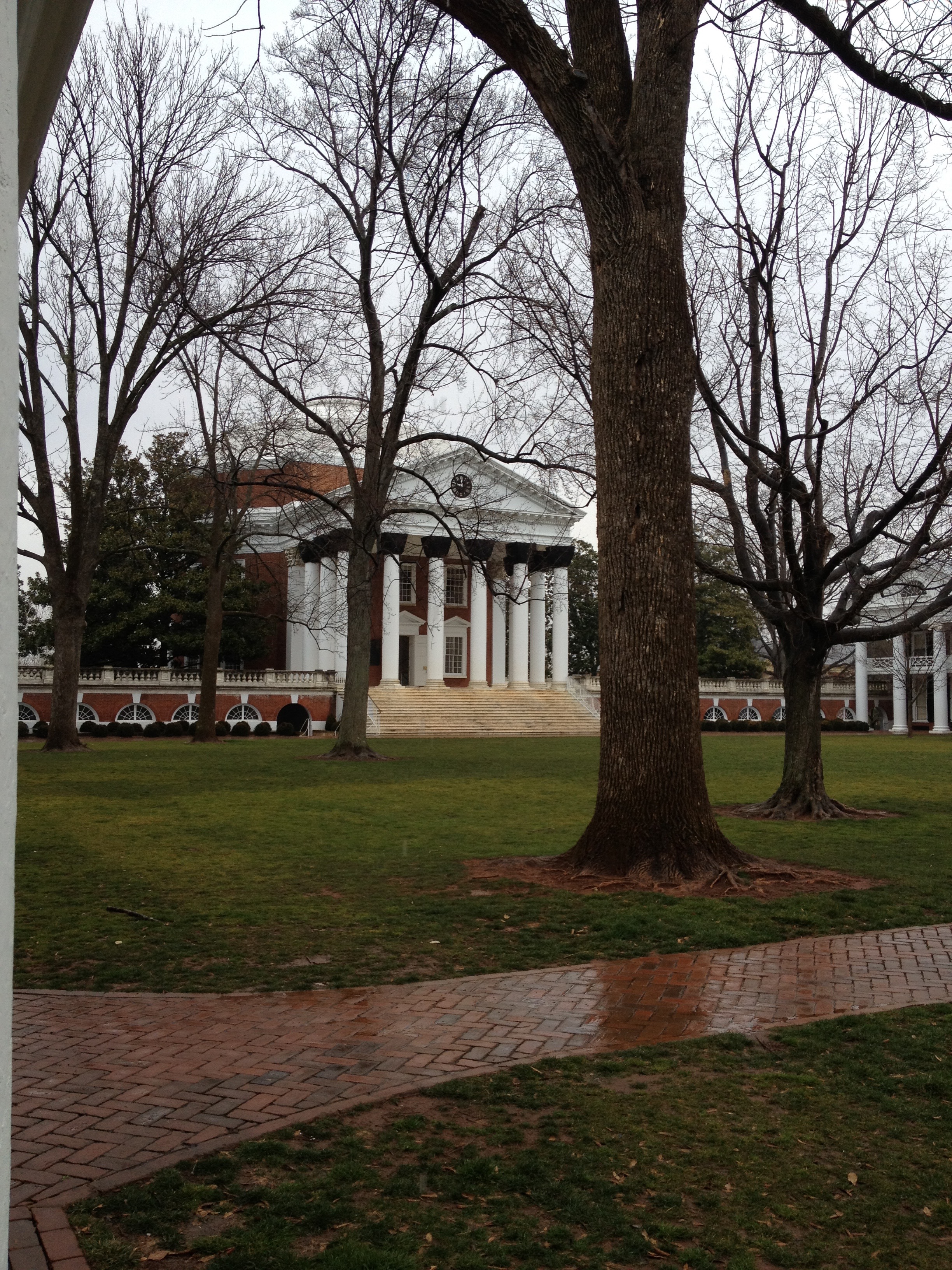
Not singling out UVA!

A Theory

Do you remember that crazy college professor you had?  Chances are there was more than one.  As a late friend used to say, that’s why we pay good money to go to college.  I have an idea, perhaps even a theory, that the neurodiverse used to be largely institutionalized.  And I don’t mean in mental hospitals or “insane asylums.”  I mean in two well-respected social institutions: the university and the church.  Before you can object to the latter, consider that ministers, and before them priests, derived from shamans.  Nobody would doubt that shamans think differently than most people.  So, my theory is that when neurodiverse people came along in capitalist societies, they were shunted toward jobs in higher education and religion.  Out of sight to most people most of the time.  Then capitalism grew.

Both the church and the university became businesses.  Again, if you doubt me about churches, get to know a few bishops.  You’ll soon see.  In higher education, business people were hired as deans and presidents.  Not knowing how to handle their neurodiverse employee pool, they began hiring more “normal” people.  Those who, with no real insight or ambition, figure teaching is a cushy job.  It pays well, and it’s respectable.  But to do the job right you might just have to be neurodiverse.  Now, I don’t have the means to test my theory, but I suspect if you surveyed students over time as they graduated, you’d find fewer and fewer crazy professors.  As my departed friend would likely have said, they’re not getting their money’s worth.

Money doesn’t compromise.  Many people are driven by it without ever asking themselves why.  Do they want to be able to build private rockets to take them to Mars when capitalism finally destroys this planet?  Do they want private jets and the endless headaches of having to worry about getting even more money?  Studies tend to show that wealthy people are far from the happiest on the planet.  In fact, many of them are privately miserable.  They don’t have to work, true, but what do they think about?  Deeply.  I’ve never been driven by money.  I would like a bit more than I’ve been able to manage with my background and specialization.  Enough not to have sleepless nights over whether we can afford to fix the roof.  And still buy books.  It may be crazy to still read like a professor when I’m no longer in the guild.  I like to think I’m participating in a very old tradition.


How to Write a Book

When I worked at Routledge I was told never to mention William Germano’s name.  I’ve never been one to dabble in workplace politics, but I did wonder why.  Over time, as I tried to commission the kinds of books I knew Routledge for, I was told that they didn’t do those kinds of books.  Not since the Germano days.  Years later I still don’t know what all of that was about, but I do know that Germano wrote a book that would make nearly every academic editor’s life easier if it were handed out at every doctoral graduation ceremony.  From Dissertation to Book is a classic in the field.  Now in its second edition, in it Germano explains, in non-technical language, why and how a dissertation is not a book.  He also explains how to make it a book.

You see, academic editors, such as yours truly, see more dissertations than the most ambitious professor.  The doctoral student, flush with the praise of his or her examination committee, sends off their thesis, largely unchanged, and wants it to be published.  Hey, don’t be embarrassed—that’s what I did too.  The truly amazing thing to me, as someone who’s been both professor and editor, is how little publishing and academia know about each other.  If I had to guess who knows whom better, I’d have to say publishers take an edge over academics.  Their knowledge is far from perfect, however.  Academics have to publish for promotion and tenure, but they don’t bother to learn about how publishing works.  Germano’s book would help them too.

For many years well-known academics have been stating in highly visible places that academic writing is poor writing.  It is.  Germano explains why in this little book.  Better than that, he gives solid advice on how to improve your chances of getting published.  I’ve been working in academic publishing for a decade and a half and I learned quite a lot from this little book.  Dissertations are written to prove yourself to a committee.  Books are written for a wider readership that wants to be able to understand what you’re talking about.  Day in and day out, people like myself read dissertations.  Generally there’s a kernel of something good there.  (Sometimes, honestly, there’s not.  Not all theses are created equal, although that’s not one of the ninety-five.)  Germano’s book offers a way to find and plant that kernel so that it grows into something any editor would be pleased to receive—the proposal for an actual book.  It should be read widely—much more widely than it is.


Rock the Absurd

Okay, so it was bound to happen eventually.  You see, the internet makes us all interchangeable in a way.  I occasionally lament being confused by various algorithms with other “Steve Wigginses” out there (and there are many).  So while innocently checking my personal email after work the other day I spied a message clearly not sent by one of the many organizations that spam me constantly.  It was an invitation to participate in a conference.  Now, with a 925 job that’s just not possible, but I always appreciate being asked.  Then I read what the conference was about.  Agriculture.  Why were they asking me to attend a conference on agriculture?  Then I recalled, one of the other Steve Wigginses is a professor of anthropology, specializing in agriculture.  Was this an electronic mail mishap?

It also made me wonder if this poor soul (I don’t know him and have never met him) has been receiving email about horror films and wondering why.  His research trajectory has him trying to help people (which is why I wanted to be an academic in the first place) in a real down-to-earth way.  This made me realize the dilemma of other biblical scholars I know who are interested in monsters and horror, but who also realize that we need to help the world.  I can say from experience that it’s a lot easier to do as a professor than it is as an editor.  At least a professor has a platform to stand on.  And all of this brought to mind the theater of the absurd, tying me back to my younger days.

As I started high school I learned about the existentialists.  Looking at my own life, I saw it was absurd.  The times when I start to get down are when I’ve started to take all this seriously.  This Steve Wiggins, in any case, spends his life trying to figure things out.  But he lives in a world where two and two don’t always come to four.  Anyone who’s been inside an organization with open eyes knows the absurdities—large or small—that go on within it.  As old Ecclesiastes says, the race isn’t always to the swift.  That’s biblical and bankable.  So it’s a bit absurd that three (that I know of) Steve Wigginses are or have been professors.  It’s absurd that we don’t all use our full names because most two-name combinations on the web are going to lead to duplicates.  Mix-ups are bound to happen and we should just enjoy the absurdity we see.

Photo by Steven Weeks on Unsplash

Hard to Say

There’s no easy way to say this, so I probably shouldn’t try at all.  Still, I feel compelled to.  You see, I’ve sat on admissions committees and I’ve written my fair share of letters of recommendation.  The former (admissions committees) have a difficult kind of calculus to compute.  Schools need students and their tuition money—this is, after all, the capitalist way.  (Yes, there are alternatives, but boards of trustees have severe deficits of imagination.)  Some schools get around this by being elitist.  Generally they have endowments of very old money and can weather all but the most severe of storms.  Such universities are in the minority and so the rest, and various small colleges, need to compromise from time to time.  Money or integrity?  You cannot serve both God and mammon.

At the graduate level this becomes even trickier.  Grad students bring in more money, and getting into grad school used to (and here’s the difficult part) require what some admissions folks secretly call “special intelligence.”  The paperwork and in-person interview reveal it clearly—this candidate (not always from a privileged background) displays a canniness that suggests they might really have a truly unusual ability to reason things out.  This is someone who should be admitted for advanced work.  But if you apply that principle not only will you be called “elitist,” you’ll also run out of lucre.  The solution is simply economic—let those who don’t have this kind of special intelligence in.  I have seen Ph.D.s after names from schools that I had no idea offered doctoral-level research.  And they legitimately call themselves “Doctor.”

When choosing a grad program—go ahead, call me elitist, but then interview me and see that it’s not true—I knew it had to be at a world-recognized research institution.  I ended up at Edinburgh, and my bubble was already deflated when I told family from western Pennsylvania and they supposed I was going to Edinboro College (now Edinboro University of Pennsylvania), located maybe 50 miles from where I grew up.  I had been accepted at Oxford and Cambridge, however, neither of them could offer scholarships to a penniless Yank, but the famously frugal Scots were far more generous.  And let’s face it, Scotland is more exotic than England.  You have to admit that much.  Of course, the deciding factor was, in my case, money.  You have to wonder if there’s any possible way of escaping it.  From all appearances, mammon wins.


Wicker Man Comes

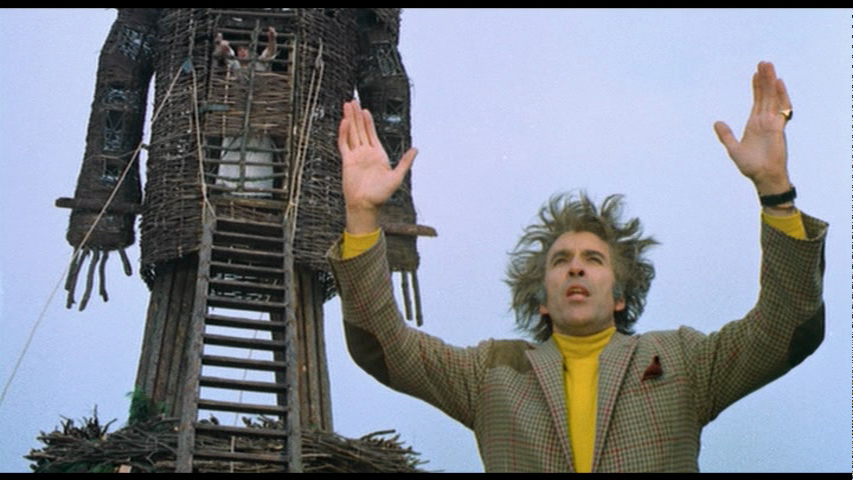
Not that I would know bodily, but it seems like a book being published is something like giving birth.  It takes several months (perhaps years, in the case of books) from conception to delivery and there are certain milestones along the way.  And you worry like Rosemary.  Has something gone wrong?  Is this still going to happen?  The book production process is a long and complicated one.  Just this week, however, the next recognizable stage occurred for The Wicker Man.  An ISBN has been assigned and a new book announcement has fed out through various channels.  It’s not on Amazon just yet but a Google search of 9781837643882 will bring it up.  I’d been worried about this because I saw a new book announced on The Wicker Man due out in October.  This is the fiftieth anniversary of the film, and I suspected I wasn’t the only one who’d noticed that.

Ironically, another film turns 50 this year.  The Exorcist released in December of 1973 to far greater acclaim than The Wicker Man.  Both films became classics in their own right, but The Exorcist would become a household name.  Even if they’d never seen it, most people had heard of it.  The Wicker Man is more of a cult classic.  It’s known among horror fans and a certain kind of Anglophile.  And those interested in paganism, particularly of the Celtic variety.  Although the cover isn’t available yet, I was glad to see the feed for my book going out.  It looks like I might scoop the other book by a month or so.  If that happens it will be the first time that I’ve actually had a book on horror release before Halloween.  The last two missed the deadline by a couple of months.

Having said that, if you’ve had your appointment with The Wicker Man you already know, it takes place on May Day.  And you likely know that a large number of people claim it isn’t a horror film at all.  Indeed, the horror element only becomes clear in the last ten minutes or so.  It’s the build-up that makes the movie.  And it was really a one-film wonder for the director, Robin Hardy.  He did other movies, but this was the one that lasted, and spawned imitations and parodies.  It’s exciting to see that the discriminating, or very persistent, searcher can now find the book announcement online.  I haven’t seen much to-do about the 50th anniversary just yet, but now when I do I’ll have something to point to.  More on this to come!


The Addiction

I’m an addict.  It runs in the family.  My addiction, though, is learning new things.  Research, it seems, comes naturally to some and not to others.  Like any other activity, some people love it and others, well, don’t.  I think I knew this about my young self, but I didn’t have any context in which to frame it.  Jobs were seen as a kind of necessary evil—you had to do something so someone would pay you and you could buy food and pay the rent.  Nobody in my family could say, hey, that research interest of yours could become a career.  The impetus for even going to college came from a minister who changed my life in many ways, and his encouragement was seconded by several of my teachers.  Many of those I went to school with just stayed in the area and found jobs.

So I get onto a topic and begin to research it.  You soon come to know what Lewis Carroll meant about tumbling down rabbit holes.  It leads to Wonderland.  Always I’m surprised at how little I know.  I’ve learned some new things and that which I thought I knew proves to have been so minuscule that I wonder at my boldness of even trying to write books.  I guess I believe in giving back.  The other day someone asked me to write a follow-up to Weathering the Psalms.  As I told him, that was my plan when I was employed as a researcher.  What happened to my “career” led to my renewed interest in horror.  It just made sense in the light of circumstances.  When that happens, what can you do?  Research it.

There’s a sense, I suppose, in which you end up where you’re meant to be.  If I’d stayed in higher education I’d have had precious little motivation to write about horror and religion.  I had three or four vital research agendas, depending on where I might end up.  I’d have been happy to stay with my semitic goddesses.  I had a second book on that topic well underway.  Fully employed with an optimistic future, I’d given up watching horror.  So much so that I ignored The X-Files when it was running.  So the addiction changes specifics over time, but the drive to learn more underlies it.  Even this morning I learned some mind-expanding things, for me at least.  And I know I will keep coming back although it may cause problems for my career and it gets me nowhere in the larger scheme of things.  I’m helpless when I know my fix is as close as a book.


Dark Academia

Over the weekend I “dropped” a new YouTube video on my channel (you can see it here, or by visiting my “YouTube” page in this website’s menu).  It ended up getting a little flurry of interest (1,800 views in the first three days), prompting a friend to tell me that if you pay attention to what’s hot on the internet, you can actually get attention.  That makes sense.  What’s so hot?  Dark academia.  Of course, my video really moves to dark academia adjacent, to what happens to real people when they try to teach religion and run afoul of “doctrine.”  There’s a real disconnect here because if you earn a good Ph.D. you’ll be taught to question everything.  If you’re a doctrinal believer, you’ll question nothing.

I stopped posting on YouTube a few years back because my cheap camera no longer worked.  It lost about three episodes I shot and, discouraged and too busy with writing projects, I gave it up.  I started again because I realized my phone was capable of recording and I had a holder that would stop it from slipping.  So why not?  Topics aren’t really a problem, but shooting and editing a video take a lot more than the eight minutes that result from it all.  Finding the time to edit, and learning how to edit in iMovie, are tasks in themselves.  And I’m an old dog.  Still, I miss that classroom audience.  I’ve been told that blogging is passé, and podcasts take even longer to record.

Some people make a living vlogging.  In fact, “YouTuber” can be a profession.  Those who succeed are often young.  And let’s be honest, a middle-aged white guy in a book-lined study is a tired trope.  Well, it is, in reality who I am.  A teacher at heart, I now try to imagine a virtual audience.  When I first started doing YouTube videos I had a very difficult time imagining an audience.  I fumbled a lot—I don’t script my videos.  If you’re interested in scripted I’ve got this blog right here.  The bump in interest in my dark academia post doesn’t translate to my other videos about my books or related topics.  Still, those are the things I know best and so it’s easiest to talk about them.  And possibly reinventing yourself.  I guess that’s what I’ve tried to do here.  Sloppily, stumblingly, but nevertheless, I’ve been changing my identity.  My YouTube channel’s not that active, but if there’s interest I can explore further reflections on dark academia.


Gift Books

The New York Times recently ran a story suggesting that books are not only the ideal gift, but that this has been the case for a very long time.  The article points out that treasured Roman Saturnalia gifts included scrolls, or the books of the time.  Books are the gift of knowledge—who wouldn’t want that?  Also, I’ve been reading about the fact that money can be any medium of exchange as long as it’s agreed upon.  Why not books?  Being an American, it’s often amazed me how intellectuals are held in such low esteem in this country.  We pay our teachers poorly, we mock those who read “too much” (as if such a thing were possible), and we dismiss what experts of many subjects tell us because we don’t like to admit others might be smarter than we are.

Reading, like arithmetic, doesn’t come naturally to people.  We evolved to survive and reproduce and our brains have that prime directive.  Along the way, however, we learned to communicate effectively and cooperate on large ventures.  These ambitions required wrapping our brains around things like advanced math and learning to interpret squiggles written by somebody else.  Kids, full of energy and needing to play, don’t want to sit down to learn these things.  At least most don’t.  In some parts of the world those who do take naturally to such things are celebrated.  Teachers are venerated.  Learning is revered.  Ironically, in this country where some of the best higher education is available, we want to belittle those who attain it.  We prefer to play with our guns.

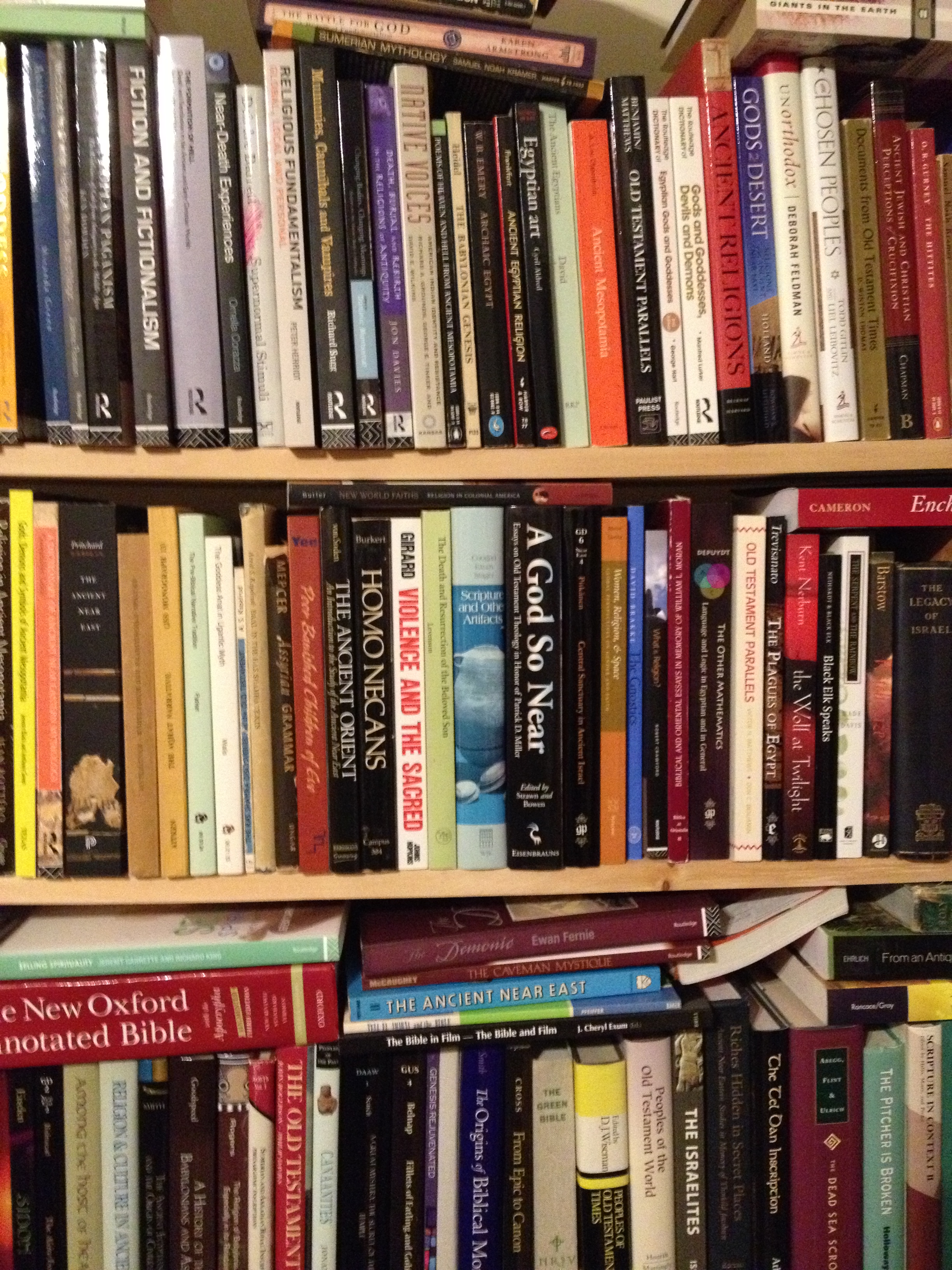
Now that the holiday season is upon us, however, I think of reading.  I keep a list of books I would like to have.  It’s well over a hundred titles long.  In a good year I can read sixty or more tomes.  It’s an engine that requires a lot of fuel.  Although in all likelihood I’ll never be able to retire, I keep my books against that time when I fear I might become bored.  Or that my mind might start to slip.  Reading is mental exercise.  In my current writing project, I’ve been discovering new connections almost daily.  Often in unexpected places in books I learned about only in recent months.  I write these words surrounded by books.  There are more in the attic, and more in the next room.  I may not ever have enough money to retire, but if we ever decide that books should be currency—and even if we don’t—I’m wealthy indeed.


Split Personality

This may be the way to develop a split personality.  For the majority of my waking hours of the week I’m a biblical studies editor.  I do the usual, boring editorial work associated with that job.  Academics contact me supposing I’m just some Joe who majored in English and who has to pay the consequences.  Once in a very great while the person contacting me knows that I once was a professor as well, but that’s rare.  So I have one part of my life.  When I’m not at work I continue to research (in my own way) and write books, as well as this blog.  Being in “the biz,” I have a fair idea about how to get published in the academic realm.  Ever since Weathering the Psalms came out I realized I could use that knowledge to steer my books toward appropriate publishers, but all of this is very separate from my day job.

A third compartment of this personality is as the closet fiction writer.  I’ve had thirty short stories published (under a pseudonym, for work purposes) and anyone curious about that pseudonym’s life can’t really tap into this one because I have to keep them separate.  I’m also involved in a faith community.  Most of the people there are surprised that I watch horror and write about it, and even write it.  Only two have expressed any interest in reading what I write.  So it is that each of these discrete elements—and they’re not all!—prevent me from being an integrated personality.  I know other religion scholars who watch and write about horror.  Because they’re academics they can integrate it into their profiles in a way a mere editor can’t.  To be fair, they’re misunderstood too.

The possibility of living an integrated life is limited in the workaday world of capitalism.  Companies want you to spend as much time as humanly possible making money for them.  You shouldn’t try to shine any light on yourself, and if you do, well, keep the company name out of it!  Who wants to be associated with some horror pariah?  And yet, statistics reveal about half the population of the United States enjoys horror movies.  A significant number of those people attend religious services or belong to religious bodies.  So what’s a graphomaniac to do?  I write because that’s what I do, and have always done.  I started in fiction and moved to academic and now I blog.  Somewhere in there there’s a person and someday I may discover who he is.


Not Sleepy Yet

Working on a doctorate changes the way you think.  Or at least it’s supposed to.  Easy answers have to be examined closely, and sources critically scrutinized.  One of the side-effects of this is that many Ph.D.s tend to think that only others of that status are able to do good research.  An essential piece of research, however, is passion.  This part isn’t always logical and can’t always be explained.  A recovering academic, I first resisted Gary DenisSleepy Hollow: Birth of the Legend because it was self-published.  I’ve had bad experiences with self-published books before but what I discovered here is that Denis is quite a capable researcher, driven with a passion for Washington Irving’s tale.  The execution may be a little rough, but the data-gathering is very good.  He tries to point out where accounts have problems and attempts, where possible, to resolve them.

Denis is driven by the question of what in Irving’s story is factual, if anything?  This is probably not a question an academic would ask, presuming that fiction is fiction.  Still, there is data.  The first four chapters are very good.  Here he lays out the background to the region, Irving, and stories of headless horsemen.  I learned quite a lot from it.  The final three chapters turn to the main characters of the story—Ichabod Crane, Katrina Van Tassel, and Brom Bones—asking who they might’ve been based on.  The best drawn of these is the first and there’s good reason to suppose Irving based Crane’s situation on that of his friend, Jesse Merwin.  The other two, however, are sketched rather hastily and lots of people have suggestions for who might’ve been behind them.

Clearly aware that authors borrow and make things up, Denis knows that Katrina and Brom may well be pretty much imaginary.  He also knows that Irving did indeed borrow much from previously known stories and legends.  Irving’s real genius was in the way he expressed these stories in colloquial English, making American literature a blend.  Although Irving wrote many books, his fame was largely due to two of his stories published early in his career.  One of those stories, “The Legend of Sleepy Hollow,” has left quite a paper trail and Denis leaves no rock unturned in his efforts to collect data on it.  I’ve read a fair number of self-published books over the years—they’ve been easy to produce since the internet began—and I’m wary of them.  This book, however, is one that I’m glad I found and it serves as a useful reminder that good research isn’t limited to the privileged few in the academy.