Day Two

You have your suspicions when you first spot them, but you have to wait to confirm it.  You’re flying in mid-to-late November and they’re concentrated around one particular destination.  They won’t be the only ones going there, of course—families with kids, late vacationers, others traveling for business—but they will be among them and you can learn to spot them.  The attendees of the American Academy of Religion and Society of Biblical Literature annual meeting.  Pre-pandemic there were reliably about 10,000—a biblical myriad—of them.  We’ll have to wait to get the figures on them this time around.  In any case, I make a game of spotting them at the airport.  Well, if you’ve got a connecting flight you need to wait until the final leg.  It’s possible some got on with me in Allentown, but I didn’t spot any likely candidates.

The male of the species is easier to identify at a glance.  Bearded, serious demeanor, slightly out of touch when it comes to fashion.  Incongruously sometimes they’re wearing jeans but you know that’s just their traveling raiment;  once they arrive and get tweeded up they’ll be easier to place.  Otherwise you can identify them on the path by their talk.  If they enter into discussion with a seat mate or someone walking to the baggage claim or getting onto the public transit, or even in restaurants, they will speak of strange things.  Their language will grow technical and their frowns will be discerning.  They are assessing, you know, assessing the ideas that don’t fit with their personal theories about samsara, or Origen, or Jeremiah.  And they don’t mind saying so, right out in public.
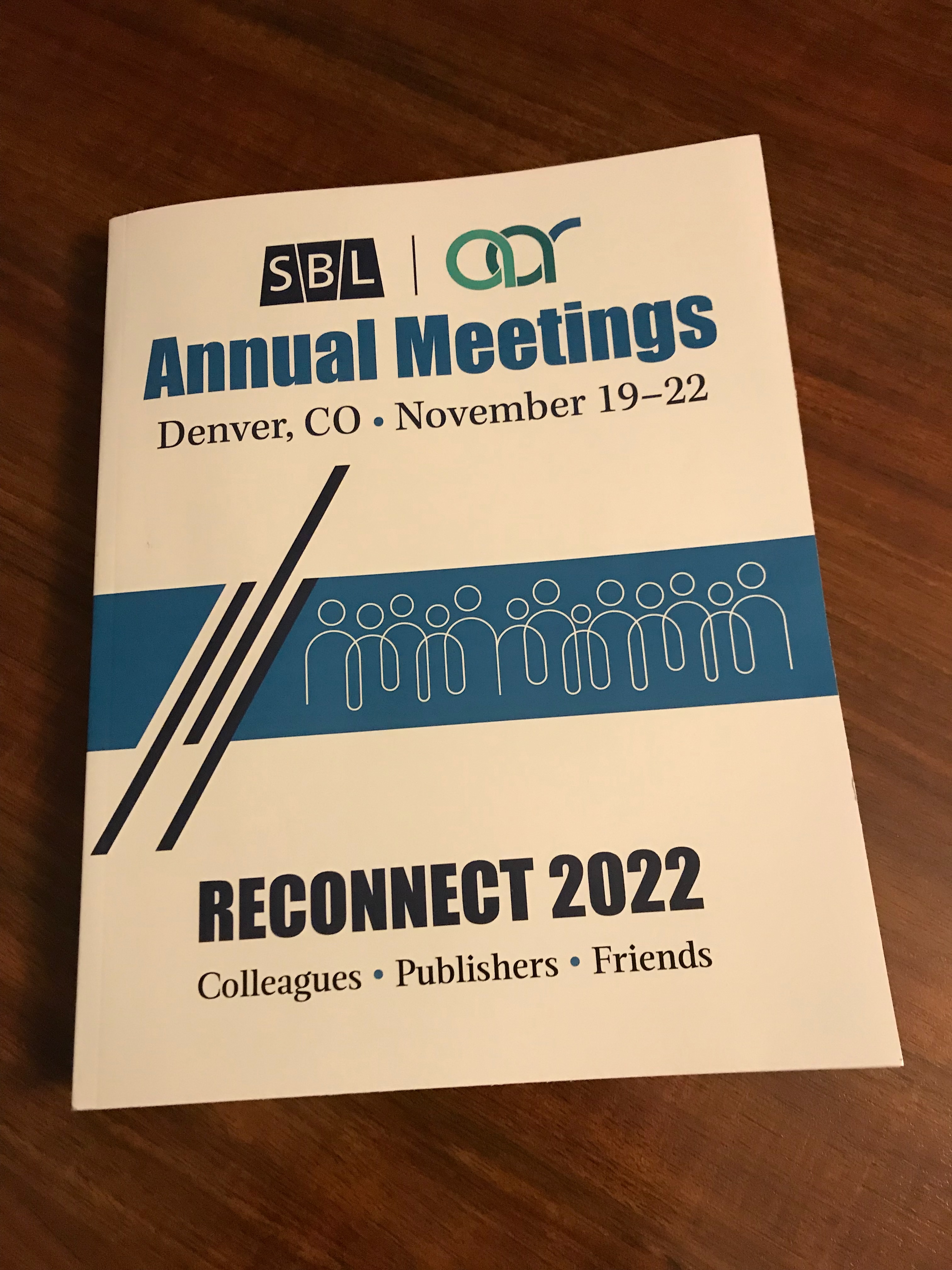
As important as I know religion to be, and as much as I know that to understand it deeply you must spend years and decades studying it, I sometimes wonder just how others must view us.  I still dress like them, although I travel in my tweed because it makes my suit-bag too bulky to pack it.  On the plane I read an actual book (likely about religion, but that’s not a guarantee), and once in a while someone who hasn’t realized that the conference is over will want to talk business in the airport while waiting for a flight when all I want to do is pull out a novel and try to get the shop talk out of my head for a little while.  This is the unusual experience of attending AAR/SBL.  I’m sure there’s enough material here for a sociological study, but I think the sociologists have conferences of their own to attend.

Remember November

I didn’t get his name.  I could have, because he was wearing a name tag.  I was too busy thinking, “that won’t be me.”  I ended up being wrong about that point.  He was sitting in that depressing place at the AAR/SBL meeting in Kansas City.  That room for those waiting to see if they’d scored any interviews.  “I’ve got publications,” he told me, “I’ve got years of teaching experience, but no interviews.”  Our capacity to fool ourselves should not be underestimated.  I was just sure that once I was in that place—publications, teaching experience—I would be able to find a professorship.  I did find one that lasted about fourteen years, but after that, my nameless friend, I have to say “you were right.”

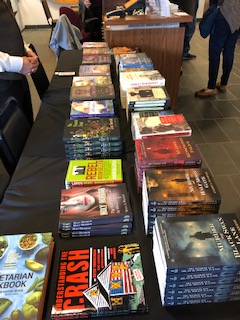
I can’t help but think of that when I attend this conference.  It’s a place of lost dreams for me.  I can see my books on display here.  I can see literally hundreds of people that I know.  I’ve gone from a vocation to a job, and there’s no going back.  Sometimes I wonder if adjacent careers are a good idea or not.  I’ve put some books under contract from new Ph.D.s who eventually decide to disappear.  Not to be found anywhere in academia, their books left unpublished.  Perhaps they met my mysterious prophet.  Maybe they came to realize that working in a job right next door to where they want to be will only ever remind them of loss and regret.  We continue to the glamour of a conference that reminds many of what they never found.  El Dorado.

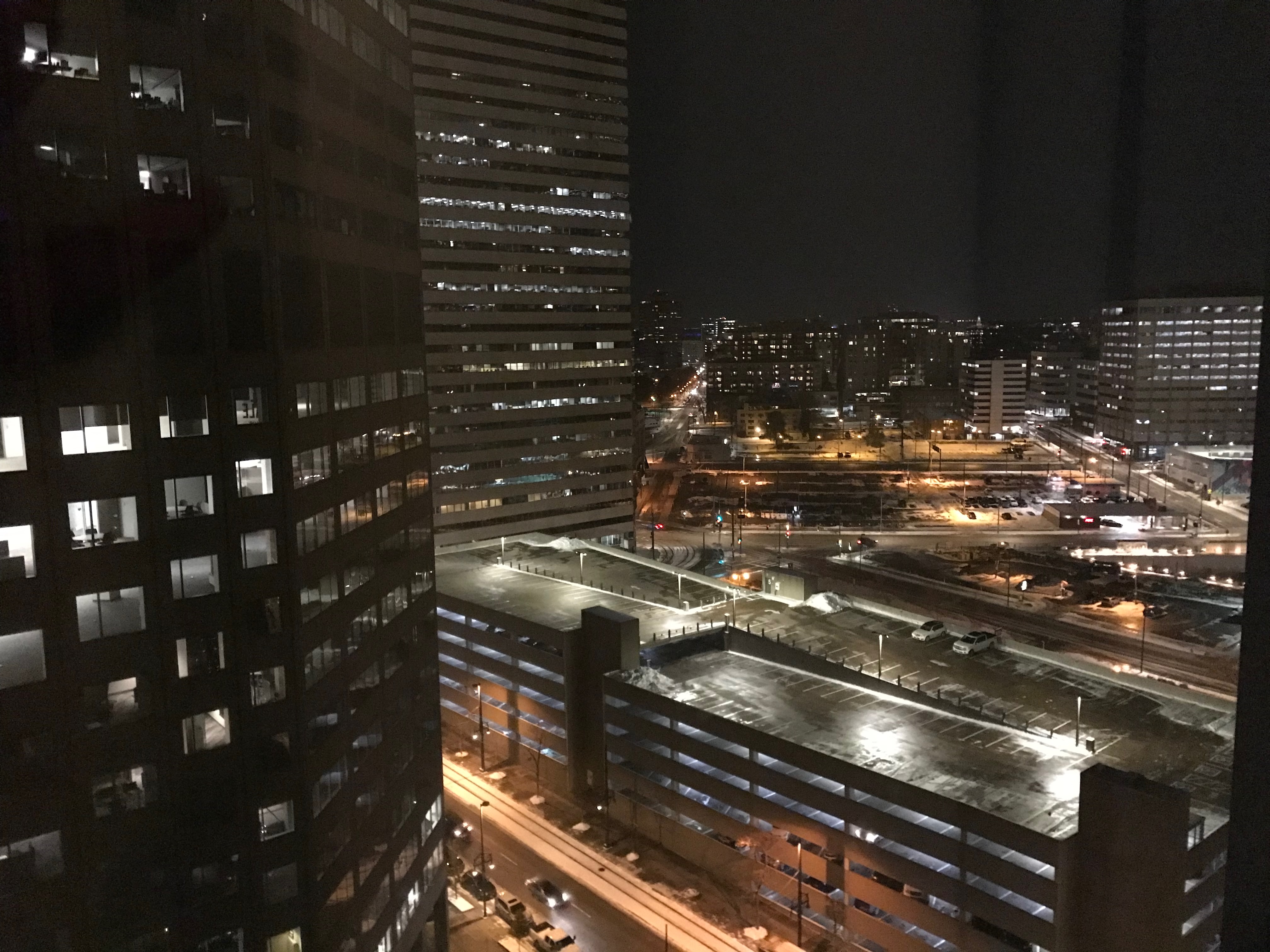
So as I sit here in Denver with my past.  I actually made it to Denver, which is, I suppose an improvement over last time.  There was snow, in Denver, but the locals seem to be fine with it.  Not many people are wearing masks these days, I’ve noticed.  There were a few stalwarts on the plane(s) and a few here at the conference who did.  The pandemic doesn’t bend to the will of people, not even religion scholars.  Viewing Denver from the airport (it’s a considerable way out), it looks so small and insignificant backed by the front range of the Rockies.  Maybe that’s what all of this is about: significance.  My association with this conference spans 31 years.  Perhaps there’s a bit of weariness here too.  The pandemic may never really end, not in any meaningful way.  I do wonder if my nameless friend ever found a job and if he still attends.  If he does I wonder what he would say about all of this.


Cone of Silence

I still get asked occasionally.  Actually, I was never asked when I was employed as a professor.  Peer review is essential to the academic process.  Although I hung my shingle at Nashotah House for a decade and a half, nobody was passing by.  Now I get asked from time to time, to do some academic reviewing.  As an editor I have to ask people to do this on a daily basis.  It always bothers me when some privileged professor says, “I don’t do peer reviews; I’ve got my own writing to do.”  Well, professor, if everyone felt that way you would never be published.  We’ve got to pay our dues, no?  Getting a Ph.D. doesn’t necessarily make you humble (although it should) or considerate.  Although I’m hoping to move away from academic publishing to the more popular trade venue (believe me, I’m trying!), I know that holding a Ph.D. means I should review when I’m asked to.

Right now I’m reviewing a book manuscript that I really wish I could talk about here.  Problem is, peer review is either a singly or doubly-blind process.  The author doesn’t know who the reviewers are—that’s crucial.  And sometimes the reviewer doesn’t know who the author is.  Although this blog doesn’t get a big readership, it’d be just my luck that I’d be spouting off about some ideas I read and the author of said manuscript (I don’t know who it is, in this case) would happen upon my remarks.  That means I have to make this post about the process rather than the content.  Too bad too, because I’ve had a number of conversations about this very topic recently.  Ah, but I must keep my fingers shut.

Peer review isn’t a foolproof process.  I try to remind people frequently that nobody—and I mean nobody—has all the answers.  As the Buddha reportedly said, “Don’t take my word for it, check it against your experience.”  I used to tell my Rutgers students that same thing.  Don’t take my word for it just because I’m standing in front of an auditorium full of students.  Ask others.  Ask yourself, does it make sense?  And don’t believe anyone who claims to have all the answers.  That doesn’t solve my dilemma, though, of wanting to tell the world about the hidden book I’m reading.  It ties in so well with what I try to do on this blog.  And, really, it’s an honor to be asked.  Someone thinks I have knowledge worth sharing.  Only I can’t talk about it.

Photo by saeed karimi on Unsplash


Former Education

Like most people I don’t have time to sit around thinking much about college.  Once in a while you’re forced into it, however.  This time it was by an NPR article.  I attended Grove City College for a few reasons: it was a Christian school close to home, it wasn’t expensive, and, perhaps most of all, I knew campus because the Western Pennsylvania Conference of the United Methodist Church held its annual conference there.  I’d been several times during high school.  It didn’t hurt that I was a Fundamentalist at the time.  Grove City was a college of the Presbyterian Church and I loved having debates about predestination with professors who actually believed in it.  At the same time, I was encouraged to think things through, which liberal arts colleges are known for promoting. Is it now “conservative arts?”

Photo credit: The enlightenment at English Wikipedia

The NPR story my wife sent me was about how Critical Race Theory is disputed at my alma mater (sic).  I noticed in the article that Grove City is no longer affiliated with the Presbyterian Church.  It’s become much more right wing than that.  At the same time they ask me for money on a regular basis.  What made them think they had to go hard right?  Are they still educating students or are they indoctrinating them?  It reminded me of a sermon I heard at yet another conservative school I was associated with: Nashotah House Episcopal Seminary (or at least it was then).  The priest made an entire sermon about how it was right to be conservative, as if no matter what the issues there was some creed to get behind in staying behind.  As if virtue exists in never admitting you were wrong.

I suspect that my failure to attain a full-time academic position at a reputable school was because of what looks like a conservative outlook, despite the evidence of this blog.  Yes, I grew up Fundamentalist—you grow up the way you were raised.  Hopefully, however, you start thinking after that.  And experiencing.  And yes, using critical thought.  There comes a time when “because I told you so” just doesn’t cut it anymore.  For many of us that’s when we go to college.  If it’s a good one you’ll be encouraged to debate with your professors.  Not one of them has all the answers, I can assure you.  Education is, by its very nature, progressive.  We learn and we continue to learn.  We don’t stand still and say the 1950s was when God reigned on earth.  It wasn’t.  And it wasn’t any time before that either.  Now we know that Critical Race Theory should be taught.  We know Black Lives Matter.  What I personally don’t know is what became of a college that was once conservative, but at the same time, believed in education.


Express Yourself

Do you ever get excited by an idea only to be let down when it comes to the execution?  I suspect that’s a standard human experience.  For me it often happens with books.  Especially academic books.  I get excited about the ideas that are sure to be lurking between the covers only to discover that the author has unimaginatively fallen into bad academic habits, such as “scholar A says, but scholar B says.”  Just tell me what you say!  Reflecting on this I realize that building a case has become conflated with taking a test.  A doctoral dissertation is a years’ long test.  Your ideas are being compared to those who’ve gone before you—the fact that they’ve published has proven that—and you are expected to show your work.  Did you read Smith?  Have you struggled with Jones?  Is Anderson in more than just your bibliography?

This kind of extended citation leads to turgid writing that slays any interest in the subject by the end of page one.  I’m not alone in this critique.  Some famous academics, such as Steven Pinker, have noted this.  In a not nearly frequently enough cited article, “Why Academics Stink at Writing,” Pinker lays out the bad habits that get perpetuated throughout the modern academy.  It comes down to, in my humble opinion, the fear of the exam.  Test anxiety.  Recently my draft of The Wicker Man came back from peer review.  While the comments of the reviewers were helpful, and quite complimentary, they felt there should be more academic dialogue going on.  I push back at this: if you don’t believe I’ve done the research, why approve the book for publication?  Most academic writing stinks and there’s no reason it should.

I’m a slow reader.  My average rate is about 20 pages per hour.  I know this because my morning routine sets aside about an hour for reading each day, and I note how many pages I consume.  Lately some of the academic books I’ve read have hobbled me down to 10 pages per hour.  I keep waiting for the narrative flow to kick in, something that I can follow and absorb.  Instead I’m learning what everybody else, often except the author, thinks about each minute point of his or her thesis.  Please, just tell me what you think!  I trust that you’ve done the research.  You wouldn’t have been granted a doctorate if you hadn’t.  The last thing I would want from my, admittedly few, readers is for them to close my book and say, “I’d rather be reading something else.”


Footnote Lament

I listened to a presentation on a famous novelist the other day.  It was noted that this writer was a master researcher, having read a lot for each book he wrote.  I don’t doubt it.  This novelist didn’t hold a doctorate, however, which makes even his historical novels suspect in the eyes of the academy.  I often think of the humble footnote.  You can’t read everything on a topic, not if it’s broad enough on which to write a book.  As soon as you send the proofs back to the publisher you’ll inevitably discover a source you’d overlooked.  And critics will delight in pointing this out to you.  I sincerely hope that my next book project will be devoid of footnotes.  There are personal as well as professional reasons for this.  One is that I like to believe what I have to say is important.

You see, the footnote is a way of backing up an assertion.  I remember many years ago reading a piece by a journalist who was scandalized that professors are so pressed for time that they rely on reviews rather than reading the actual book.  That journalist may not have been aware of just how much is published.  As an author you have to learn to say “Enough!”  The work is done and I’m not going back to it.  Footnotes will give you respectability.  Show that others agree with you—indeed, said it even before you did.  One of my great struggles with academia, besides the obvious, is that I’m more inclined toward creativity than your garden variety professor.  I like assert things because I know them to be true.  And those people I’m footnoting, they’re doing some of that themselves.

Finding yourself in a footnote

Academic respectability really comes into its own after death.  Even so, looking back at some of the “giants” in the field you can see that their ideas haven’t aged well.  They were important at the time, but now we look and see their western bias, how they didn’t take diversity, equity, and inclusion into consideration.  They simply accepted the dead white man’s version of the way things were.  They live on in footnotes.  You have to earn the privilege to be original.  Otherwise you’re just some patent clerk or editor and why should we take your word for it?  One of my zibaldones has written inside the cover Nullius in Verba—take nobody’s word for it.  I believe that, and yet I find myself having to put my source in a footnote.


Immature

I’m not immature, but I have to admit to having done a double-take every time I saw the name of the school.  While living in Edinburgh my wife worked for a short while at the Medical School and I couldn’t help but notice the official name of the associated veterinary school: The Royal (Dick) School of Veterinary Studies.  I was sure Dick was a surname and yet little boys never grow up, it seems.  Fast forward to just last week when I had occasion to look up Arcadia University, here in Pennsylvania.  For those of you who’ve never had the privilege of being an editor at an academic press, I’ll say that one of the things we constantly do is check out colleges and universities.  In the case of some church-related schools it’s easier to get the straight dope from Wikipedia before going to their actual websites.  I never rely on Wikipedia alone, of course.

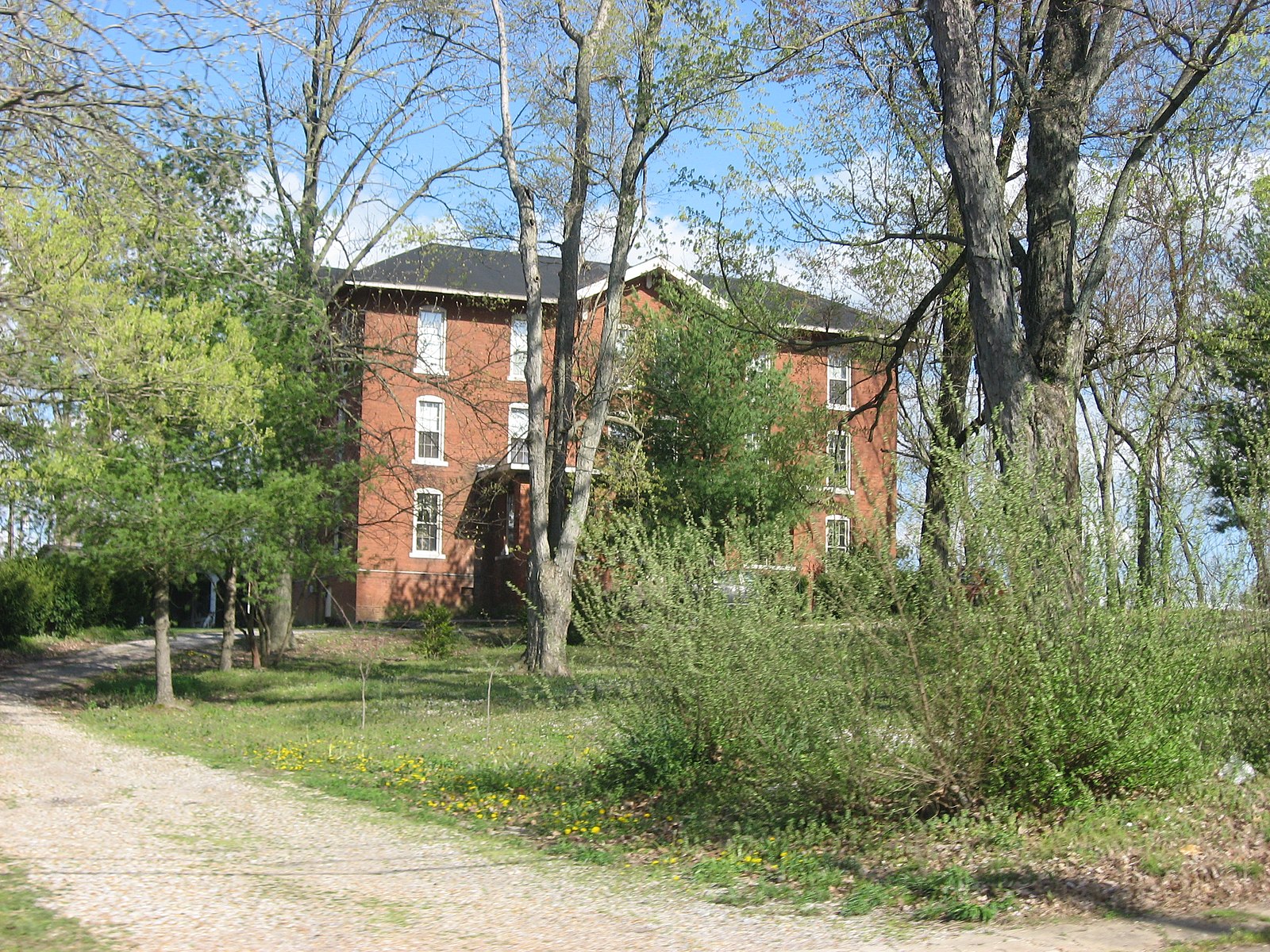
A defunct college (Marvin College). Image credit: Nyttend, via Wikimedia Commons

Still, the Wikipedia page for Arcadia explains that the school had to change its name because internet searches were being blocked for sexual language.  The former name of the school?  Beaver College.  Human beings have a very wide variety of slang words to refer to our genitalia.  I suspect part of the reason is the fun of establishing, and violating taboos.  There are many schools that could fall into this category (Ball State comes immediately to mind), but when it gets to the point that search engines block you because they assume your mind is in the gutter, what choice have you got?  Changing names is a big expense and even bigger hassle, but everyone searches for everything on the web.  It’s our common reference book.

I don’t know whether to believe Wikipedia on this point or not, but I know from personal experience that employers or commercial servers can block “offensive” information.  I’m a religion editor.  When I took our car in for service some years back—they have free wifi for customers so they can work while they wait—I soon found I could not get onto any websites mentioning religion.  Given my job, that’s a bit of a problem.  The garage had blocked it as a taboo topic, perhaps for good reason—I have no way of knowing.  What it means is that my wife now has to take the car in for service.  Regarding Arcadia, it probably doesn’t help that it was an all-female school.  Its first name was Beaver Female Seminary.  Things have changed since 1853, but I’m afraid that those of us who are immature still find this a little funny.


Not a Scholar

It’s insensitive.  And behind the times.  Google Scholar, I mean.  They send me emails telling me that people can’t read my research because I don’t have a verified email.  When I sign on and enter my email, it tells me to enter an institutional email instead.  I don’t have one.  So it sends an error message implying I’m not really a scholar after all.  Like hundreds, perhaps thousands, of academics, I had to settle for a job in the corporate sector.  Unlike some of my colleagues, I still research and write and try to maintain a web presence so I can be found.  Compared to non-academics those of us who’ve been through the system are few.  Even so, this can be an exclusive lot.

There are quite a few academic websites these days.  I’m not sure which is the biggest or best regarded—I’m not verified, after all.  I have an active account on Academia.edu, and recently, to gain access to an article I needed, I joined Research Gate (dot net).  Academia is after me every day to upgrade—they follow the “free cookie” model.  It’s free but if you really want to be discovered you can pay a modest fee for an upgrade.  I suspect Research Gate is the same.  And Google Scholar.  These websites aren’t out simply to promote you for your own benefit.  Of course, real scholars can be naive.  I’ve been in the business world long enough to be suspicious.  There’s no such thing as a free account.

What such websites don’t take into account is that academia is a harsh and punishing place.  Institutions are almost always run by businessmen these days and professors are deemed too expensive to maintain.  (Nobody’s talking about how university president salaries are too high, I notice, but they’re verified.)  To push knowledge forward we get rid of those who’ve dedicated their lives to study.  Those departments that bring in money—greed is not an academic field—thrive.  The academy was founded to further religious knowledge.  Soon study of the law was added, but law was considered something handed down from on high.  Some of us, and not a few, were naive and unverified enough to believe that fields that had been around for a millennia or so would be around for at least long enough to get us through to retirement.  Instead, learning has shifted online.  And to be part of that club, you must be verified.  At least according to Google Scholar.


Sabbatical Request

I don’t know when I became one of them.  It seems that I was pretty busy in my early teaching days, and starting a family.  I didn’t feel, however, that every single minute was programmed down to the second.  I had time for writing, vacation, and family, as well as work.  The other day when I was sending out those reminders to authors that their books are a bit (years) overdue, I realized just how busy they are.  Then I took a moment and considered that I’m not sure how I became one of them.  The people who are too busy.  Clearly buying a house was a big part of it.  I’d been pretty busy before, but now I need to invent time in order to get everything done.  The staycations I allow myself end up with feelings of guilt for all that’s been left undone.

Maybe it doesn’t help that I can see the neighbors out my office window.  When I see one of them weed-whacking or mowing during the day, I think I need to do the same.  But I’m also out of string for the whacker.  I really need to get to Lowes so I can stock up—last time they had only one spool left, which is probably why I ran out.  To get to Lowes I need a weekend.  Preferably not one with temperatures in the high nineties.  And without meetings cutting into weekend time.  And when it’s not raining.  Time is slippery.  Even as I work I often have other things—many other things—I have to do running through the back of my mind.  How did I become so busy?

Speaking only for myself, there’s nothing I’d rather be doing than reading and writing.  I do these daily only by carving out inviolable time for them.  It is costly time, I know, but to me it’s beyond price.  Thinking of these colleagues too busy to submit their books, I think back to my own professor days.  There’s no doubt that I read and write more now than I did then.  There were times (grading, accrediting body visits, commencement, etc.) when there simply wasn’t time to do anything else.  Many colleagues mention health issues on top of all this.  Academics, as those who supply (partially, but responsible for a goodly number of) books, the number published each year truly boggles the mind.  I would try to figure all this out, but I’m afraid I simply don’t have the time.


Who’s It For?

I suspect editors see this all the time.  I also suspect that I’ve unknowingly participated in it as well.  If you’re a book writer, you have to be clear of your readership.  As an academic editor I receive many proposals for books that either cry for popular treatment, but are too academic, or books that are written for laity on topics of interest only to academics.  A writing life is a struggle to find that correct balance.  Particularly for your typical academic.  You see, doctoral programs don’t generally include instruction on how publishing works.  Or in writing.  It’s assumed that any string of 100,000 words from a credentialed expert is worth publishing.  Worse, as Steven Pinker has pointed out, academics are rewarded for writing poorly.  No wonder people are confused!

Lately I’ve been on a kick about people not paying attention.  It is important to observe.  When writing a book it’s important to gauge who might want to read your potential book.  Indeed, this is something seldom asked early enough in the process.  Who is this book for?  Will they want to read it?  You see, we have this lone ranger attitude to book writing.  In actual fact, most books you see in bookstores are the clear result of teamwork.  Yes, authors do most of the writing.  In many books editors do quite a bit of the fixing of the writing.  Agents, marketers, publicists, sales reps—there are a host of people behind successful books.  It’s easy to think, while writing, that your book will be a bestseller, no matter how academic.  That you will see it in Barnes and Noble and point it out, ever so casually, to your friends.  That it will sell for less than $20.

It’s important to pay attention to what other people think.  We’re all busy, I know.  We have our own lives to live and plans to enact.  Who has time to bother thinking about who might read their book?  Obviously, other specialists such as themselves.  But how many people is that, really?  With the sheer number of books published each year, are there topics that will draw in thousands, instead of hundreds (or less) of buyers?  Writing a book naturally makes you think the topic is important—vital, even.  It’s easy to transfer your personal interest onto the masses.  My advice, for those few who ask or care, is to think carefully about who you wish to reach.  Be honest with yourself.  And try to think from the point of view of somebody else.


Ravens and Teachers

Humans, it is claimed, have a theory of mind.  What this means is that we know what others are thinking, or better, at least we can anticipate what they might be thinking.  This allows us to be self-aware and live in a complex society.  We can see someone else and infer what’s going on in his or her noggin.  This is often considered a uniquely human trait, but I’m not sure how widespread it is.  You see, I frequently run into the situation where someone expects something of me without telling me.  It happened just recently with an organization to which I belong.  I’m a very busy person.  I suspect most of us are—not having time to accomplish everything we need to get done.  If someone wants something from me I have to be told what it is and I have to be told in detail.

One of the things my students always said was that I was a good teacher.  The reason for this, I think, is that when I explain something I back up a bit before the beginning.  I try to assume no knowledge on the subject before going in a bit more deeply.  This method works because of my personal theory of mind.  These people wouldn’t be taking a class on this subject if they already knew the stuff I could assume.  For understanding something new, things have to be explained thoroughly.  That doesn’t mean taking a lot of extra time, but it does mean not assuming others know what I know.  For many people this is difficult.  We’re all busy.  We tell others “Do this,” without explaining what exactly “this” is.  The results are predictable.  It happens all the time in work emails.

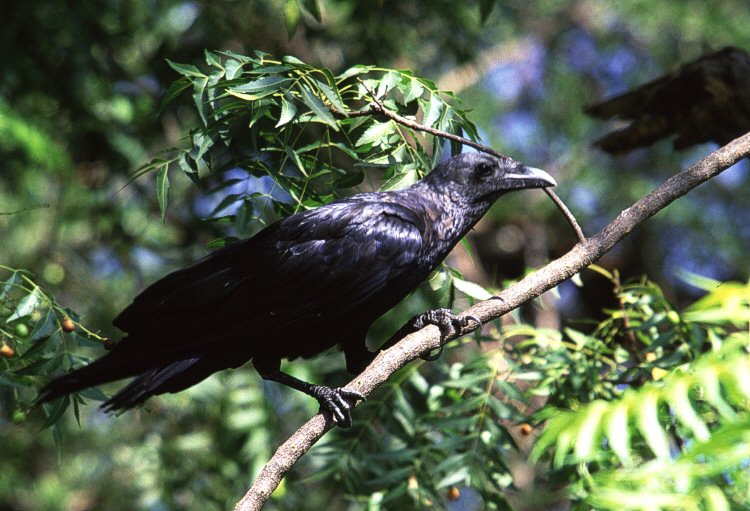
I’ve recently written of teachers and ravens.  The effective among the former understand the value of full explanation.  The latter have a theory of mind that allows them to go as far as to try to fool others by giving not enough information.  We might learn a lesson either by sitting in the classroom of the former or by watching the ravens that skulk on the edge of civilized areas.  What they have in common is the ability to realize that others operate with limited information.  In order to learn, information has to be conveyed and conveyed well.  Even now colleagues at work are surprised at when I explain something that it’s done thoroughly and clearly.  When I receive information it’s often piecemeal and frustrating.  The reason, I infer, is that we don’t spend enough time paying attention to either our teachers or the ravens.

Image credit: Wikipedia Commons, public domain

Thanking Teachers

Those who know me personally are often surprised to hear that my high school gym teacher was one of the most influential people in my life.  It is true.  He, and a handful of others I can still remember by name, set me on the path of knowing that I should be a teacher.  It is a very important profession, habitually underpaid.  To hold the future in your hands is a responsibility like no other.  I complained, like all kids do, about having to go to school.  Once there, however, I was fascinated by the learning.  I still am.  I think of those women and men who really wanted to mold young minds.  Who knew they’d never be paid as well as their peers, but who had a message worth preserving.

I suppose I’m thinking about them because I recently watched Dead Poets Society again.  It’s a poignant thing to do since Robin Williams’ death, but the movie makes a powerful statement about teachers.  Knowledge, once planted, grows.  I don’t name people on this blog unless they say I can, and although I’ve connected with a few high school teachers through Facebook, I don’t bother them in retirement.  I can say, though, that one English teacher, my German teacher, a couple history teachers, a math teacher, and my gym teacher made significant impacts.  The math teacher, of course, helped me realize that my thinking process veers in quite a different direction from equations and proofs.  Ironically, now I tend to think that way and often think I could’ve done it, but I needed several years for the ideas to settle into place.

Thinking of them by name may not be a daily occurrence, but in my actions I live out what they taught.  I’m not sure what leads a young person to pursue a teaching career, but clearly some of them have gifts that make them influential in lives long after the classroom relationship ends.  The young mind is receptive in the way that a more experienced one tends not to be.  Even as we reach our teens the natural confidence of youth seems to take over for many.  We might still, however, listen to those with more experience.  Teachers, under-paid and often having to take summer jobs to makes ends meet, are almost as influential as peers.  The twenty years of my life from the age five on were under the sway of teachers.  Time set aside for learning.  It wasn’t nearly long enough.


On Campus

It’s still the pandemic and I don’t get out much.  It seems prudent and only a little paranoid.  I had the opportunity to meet someone from Lehigh University recently.  The interesting thing is, I’ve become shy about going onto college campuses unless invited.  I can still usually pass for a professor (the beard and glasses help, along with a natural disheveledness) and I behave well in public.  Still, universities are all about belonging.  If you’re an alum you can come in.  You’ve paid a lot of money, and, the thinking goes, hopefully you’ll pay more.  Of course you’re welcome!  The last time I visited Boston University I remember thinking how small it was compared to my younger memories of wider corridors and more welcoming faculty.  Many ways exist for measuring how we grow.

When offered the chance for a quick stroll around Lehigh I had to say yes.  Like Syracuse University, it’s set on a hill.  From downtown south-side Bethlehem you need to walk up.  Even growing up in Pennsylvania I didn’t hear much about Lehigh.  The western part is dominated by the University of Pittsburgh and the eastern by Penn.  In the middle there’s Penn State.  There are actually many colleges in the commonwealth, about 140 if you separate out branch campuses.  Still, I was struck by the classic feel to Lehigh’s campus.  As you come down the hill it grows more modern, but I always like the older buildings.  Something about their solidity is comforting.  How’ve I been here nearly four years and not found it?

My host pointed out one of the libraries and suggested I stop in before leaving campus.  I had a mask and a minute so I did just that.  There’s a danger to stopping into libraries.  It’s too easy to fall in love in them.  I could see myself whiling away the hours there.  I spent plenty of hours in my own undergrad library, even though it wasn’t nearly so nice.  The only bad thing about visiting campuses is that I eventually have to face the exile from them I feel each and every day.  Many people can’t wait to graduate and get away.  Some of the rest of us never want to leave.  I suppose it’s an artificial environment, but if a small segment of the population can make it work, I wonder why we can’t get more of the world to emulate it.  I may not get out much, but I like to make those rare trips worth the effort.


Highest Education

The average church-goer is often impressed with the idea of seminary.  The thought that someone could devote three years of their lives to theological minutiae in order to take a job with long hours and substandard pay, is mind-boggling.  Having been a seminary creature for so many years, however, makes me wonder if many church folk realize that seminaries are businesses.  Non-profits, yes, but businesses nonetheless.  This is a trait that they share with other institutions of higher learning.  Customers pay money for a good or a service (I’m not sure which) in the form of a degree.  If a student can’t cope academically, they’re often “grandfathered”through because, well, it costs a lot of money and you deserve to get what you paid for, right?

This business concept of higher education is dangerous and is primarily prevalent where governments do not support education.  Schools have to raise money and if alumni don’t give, well you have to raise tuition.  And the more somebody pays the better case they have for getting their degree.  Seminaries, however, also suffer from generally low-income alumni and sponsoring churches needing clergy.  (It’s not difficult to get accepted into most seminary programs.)  Only when a candidate is a serious problem will they tend to be weeded out.  And congregations get the results of such a system.  My level of cynicism probably results from having gone through seminary and then having taught at one for many years.  At no point have I been ordained.  In fact, even churches facing clergy shortages have shown no interest.  Call it sour grapes.

To me, however, the crisis in higher education is the result of business practices being applied to education.  The two don’t mix.  In a world where job options are limited for those too weak to dig and too proud to beg, ministry has some appeal.  You can be considered a community leader and an expert in the relatively innocuous arcane area of “theology.” And most of the people you serve will have no idea what seminary delivers, or doesn’t.  I attended events for seminary administrators offered by the Association of Theological Schools—the seminary accrediting body.  I learned that they too are under pressure to approve unless there’s a serious problem.  Even heads of accrediting bodies have to eat.  So we let the system churn on as it has since the earliest universities turned out educated clergy.  And we don’t stop to think what all of this means.

Tradition

Search and Research

Woe to those who live to research but who have no professorship!  I have been prone to research since about high school, driven by the need to know.  Almost Wesleyan in my need for certainty, I have always been inclined to check things out.  It took college and a doctorate to teach me the necessary research skills.  It took years of teaching for me to learn how to frame questions on my own.  And it took years of being shunned by the academy to realize that as I’ve been pursuing my personal research agenda that I lack the time to fulfill it.  I’m a slow learner.  Yet I can’t give it up.  The thought process that led to Holy Horror was a kind of epiphany.  I could write a book without reading every last thing about the subject.  The problem, however, would always be time.  I’ve read an awful lot about horror media and I’m only beginning to scratch the surface.

I’m not totally naive.  Okay, I’m pretty far along on that path sometimes, but I want my readers to know that I understand movies and television are made for money.  It’s a business, I know.  But I’m an artist at heart and I like to think the creators are fond of their characters.  Writers are advised to drown their darlings, to put their protagonists on a cliff and then throw rocks at them.  And I also understand that money can make you do even worse to them.  Of course, I’m still thinking about Dark Shadows.  For me it’s been a rediscovery of my childhood.  And just how much time I’d need to make sense of just one television series with a five-year run.  There’s far more information on the web on Dark Shadows than I was able to find in print on Asherah for the years of my doctorate.

And the expense involved.  Plus, it’s only early April and the lawn needs mowing!  I’m still wearing a heavy jacket some days but the grass is always greener.  Period.  What a time to fall into a research reverie!  I need a sabbatical but they don’t have those in the 925 world.  And I need a professor’s salary to be able to afford the media required.  The Dark Shadows series alone has over 1200 episodes.  House of Dark Shadows introduced the fear of the cross to my understanding of Barnabas Collins.  My world has been shaken and to settle it I need research.  What I have, however, is work starting in just a few minutes.

Now watch this, for time is fleeting