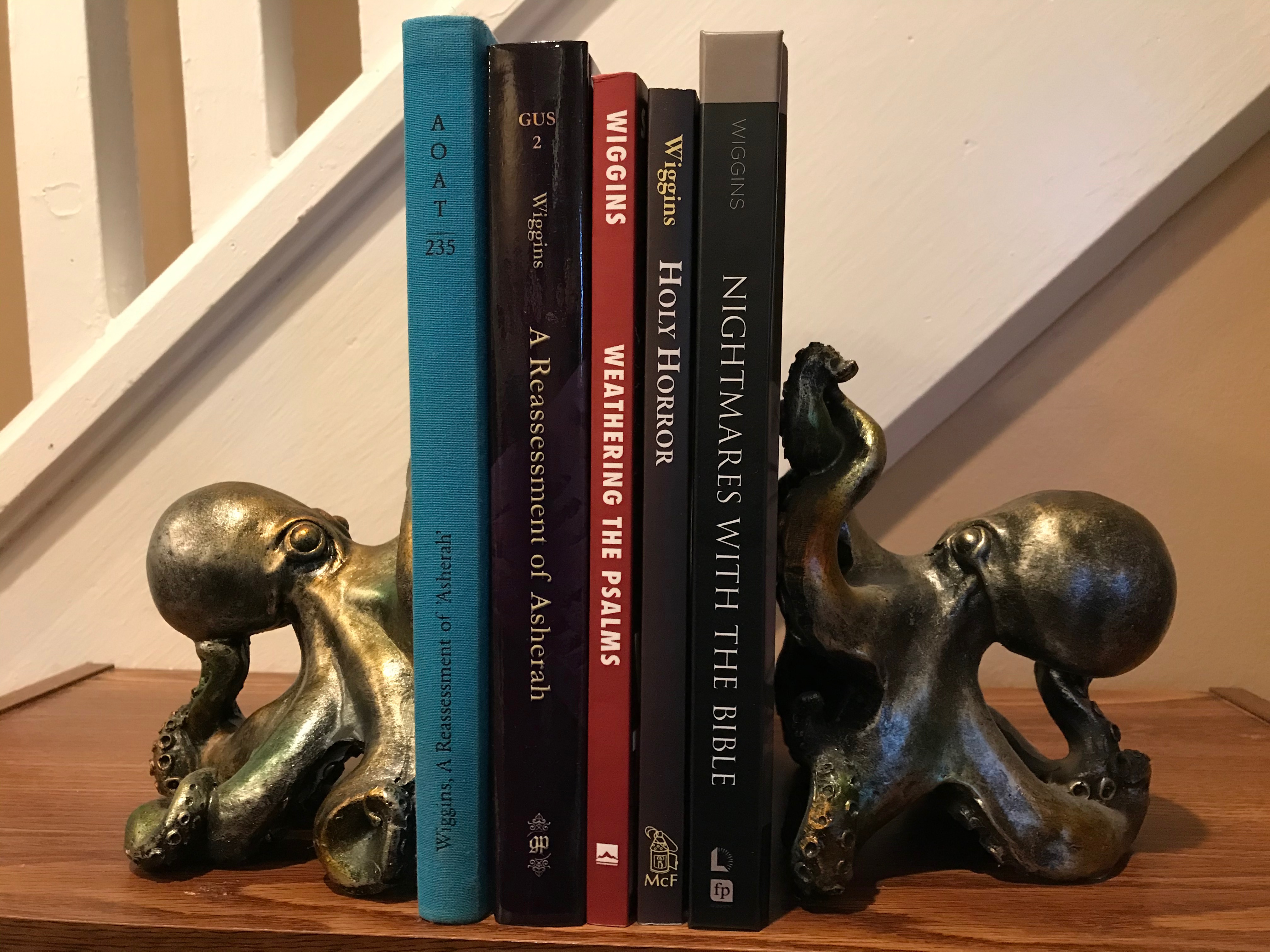
The Campus Library

Perhaps it’s an odd kind of nostalgia.  Many people can’t wait to be done with school and get on with “life.” Some of us remain fixated at the learning stage and society used to shuffle us into colleges and universities where we could be safely ignored.  One of the refrains in the very long song that is this blog has been the lack of a university library.  Although I’ve tried to get to know the academics in the Lehigh Valley really only one has made an effort to befriend me and when I was asking him about library access he actually did something about it.  Such acts of kindness are rare and require a kind of thinking that takes into account the circumstances of the academically othered.  I’ll be forever grateful.

It’s been a long time since I’ve been in a college or university library.  Many are protective and/or restrictive, as if knowledge is only for those academically employed.  I had to look up a couple of references for an article I was writing.  My colleague checked with his institution and yes, I was welcome to come in and use their collection.  The night before going to campus I had a series of nightmares of various librarians barring my attempt to get to the books.  I’d been trying to get there (in real life) for weeks.  Between family work schedules, the occasional weekend blizzard, and the library being closed for spring break, it ended up taking about six weeks to find the time to drive there, negotiate parking, and look up the references.
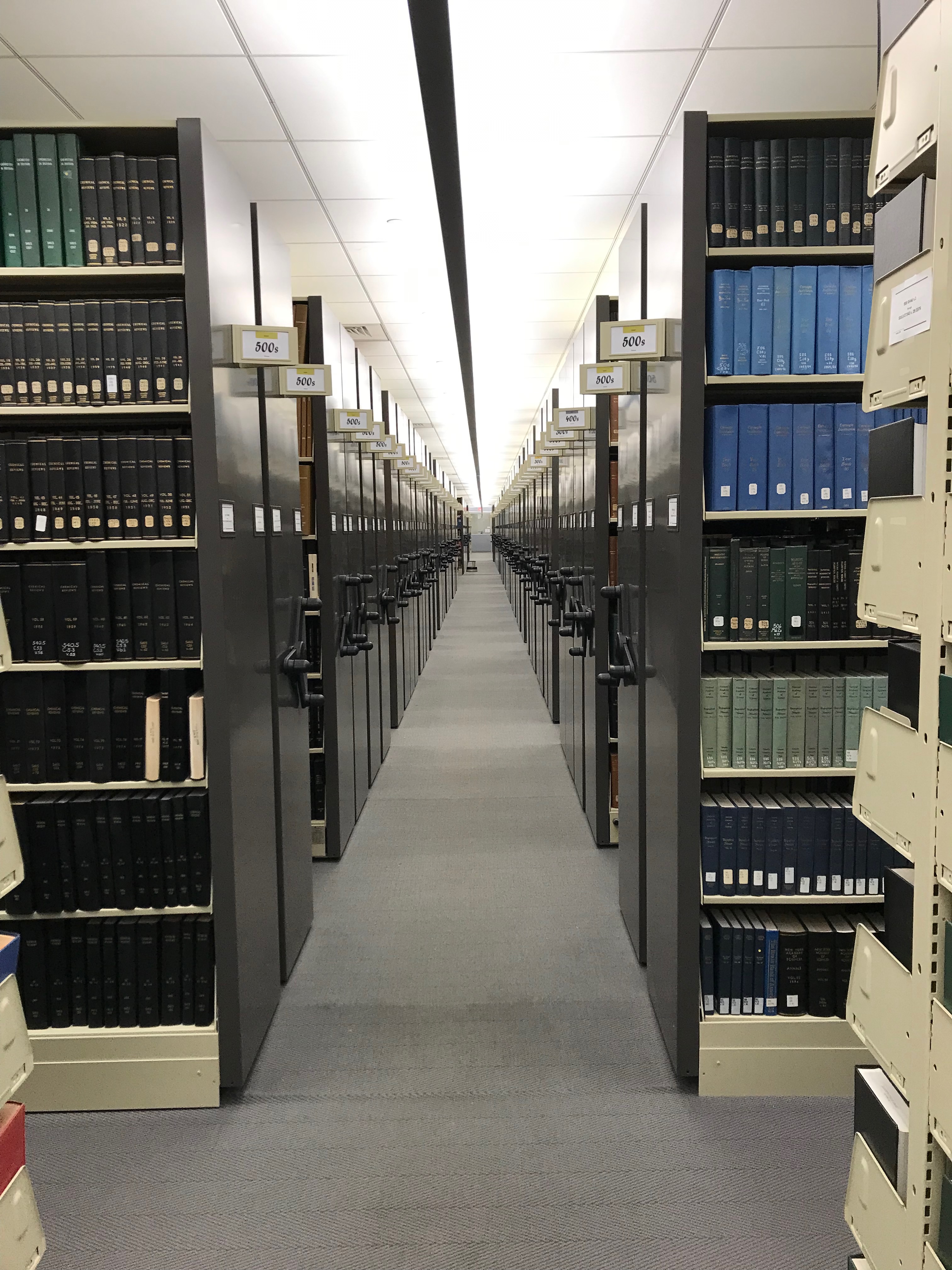
Everyone has a place they belong.  Mine has unwaveringly been the college campus.  It is home to me, even if it doesn’t recognize me.  I’d almost forgotten the feeling of being let loose in the stacks.  It was a Saturday morning and there was almost nobody else there.  As early as Grove City College I cherished the feeling of spending time in the library.  Few other students were hanging out there, but those of us who belong on campuses know that being surrounded by books is the only place that will ever feel like home.  Having looked up my references I wished that I had more to do.  I’d been to both the Dewey and the Library of Congress sections and, being a weekend, I had much else to do.  Stepping back out onto campus I was filled once again with a poignant nostalgia.  Getting to where you know you belong is a lengthy journey.


Look It Up

Say you remember something, but imperfectly.  Maybe it’s from years ago.  You have distinct recollection of a word or two, but other details (author’s name, publisher) escape you.  In the case of a book maybe you remember the cover.  If a journal article you’re out of luck there.  Not even Google can help you.  (I use Ecosia regularly, because they plant trees, but sometimes you just need to google.)  This happened to both my daughter and myself recently.  She was trying to remember a childhood book and I was trying to recollect an article I’d read while working on my dissertation.  And although I remember Edinburgh very well, that was, uh, three decades ago.  I tried searching different combinations of key words, but there’s just too much stuff on the internet.

One of the strange features of ancient Near Eastern mythology is that it’s extremely popular online but not in academia.  Departments have been closed down.  Smart people left unemployed.  But just take a guess whose websites come up first when you google a god?  After Wikipedia, it’s often fan and fantasy material for page after page.  Universities haven’t figured out how to monetize this interest, so it remains the purview of those who’ve read a book or two (or done a lot of web surfing) and have popularized the deity.  If universities offered courses that caught people where they lived, there’d be a steady audience.  That fickle lover academia, however, is quite coy.  In my daughter’s case it was fairly easy for my wife to locate the title and bibliographic details.  My case was a little harder.

Most sources I consulted on my dissertation are in my book, A Reassessment of Asherah.  (It is available in PDF form for free on Academia.edu).  Back in the day, I made extensive bibliographies.  I pulled it from the shelf and ran an index card down through the entire bibliography.  Apparently I hadn’t listed it there.  Or I was remembering the title incorrectly.  There’s a distinct possibility that I imagined it.  When you’re an active researcher you keep ideas current by going over them time and again.  I can still remember some individual articles that were used to make a point some thirty years ago, but those beside the point have somehow vacated my gray matter.  In the end I never did find the reference.  Perhaps some day, like bread cast upon the water, it will come back to me.  Like said bread, it too will likely be soggy by then.


Not Really New

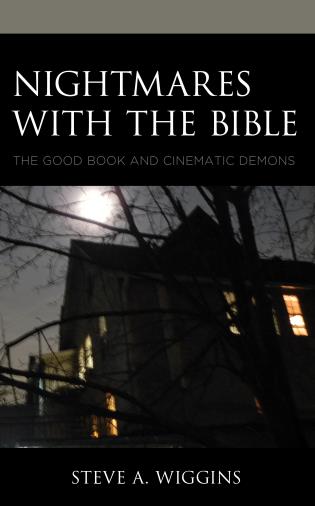
It’s called the New Books Network.  I have no idea what its stats are, but it is a place to get word out about your book that the academy has apparently overlooked.  I pitched Nightmares with the Bible to them some months ago and I recently had an interview about it.  I’ll keep you posted when it appears.  I suppose those who read this blog for the horror content sometimes think I may’ve forgotten about it.  The fact is I think of horror every day but there’s more to my psyche than just that.  This blog is a romp through part of what’s on my mind.  Sometimes it’s the quotidian horror of everyday.  At times it’s full of curiosity and wonder.  Sometimes I just trying to figure out how to work this thing.

So with the New Books Network.  I found out about it from an interview I heard with the guy who started it.  Funny—one interview leads to another.  He encouraged those listening to pitch their books.  I don’t have an institution to support mine, or students to have to buy a copy (and I’ve received zero royalties for it), so I figured what’ve I got to lose?  It was quite a nightmare (speaking of which) to arrange a time that worked for both interviewer and interviewee.  I think we rescheduled about half-a-dozen times, but then finally we both had a few free minutes together to chat.  Perhaps it’s a good thing I’ve been reading about the Devil.  

This was actually my third interview about this book.  Perhaps it’s a measure of how small the impact it’s had has been that I can recall each one so precisely.  You’ve got to start somewhere, so why not here?  The last question asked was about the next book.  I do hope I have a few more left in me.  I started writing early but publishing late.  Just because you write doesn’t mean people will read what you produce.  I find writing the most hopeful avocation ever.  Like a sower with his or her seeds, broadcasting them across the air, hoping they’ll land legible.  If there’s anything worth reading here there’s always the possibility it’ll be discovered someday.  That’s optimism with a glass half empty!  In any case, check out the New Books Network.  There are hundreds of books there to learn about.  And, I suspect, many authors who’d like the world to know what they’ve written.


Ignoring or Ignorance?

As someone whose career has always been about the Bible, I’ve noticed that many intelligent people are naive.  They seem to believe that since they’ve outgrown the need for religion that it doesn’t exist among the majority.  I guess that’s another way of saying their thinking tends toward elitist.  The vast majority of people in the world are religious.  Among the elites, since about the sixties, there’s been the fervent belief that religion will die out in the face of science.  That hasn’t happened, of course, and it’s not likely to.  In the meanwhile, the idea persists and replicates itself and religion is ignored until people fly jets into towers or elect Trump or commit some other extremely catastrophic act.  There’s then usually a flare up of interest that dies down when the danger is past.

I wasn’t very socially aware in the sixties.  I was quite religious, though.  The religious, although always in the majority, constantly talked about being under threat of extinction.  There was, even then, a paranoia about being discounted.  Some of the elites realized that by pretending to be religious themselves they could make use of those numbers.  In other words there are forces, not from any divine source, keeping the interest in religion high.  Only the naive ignore it.  That’s one of the reasons it distresses me to see institutions of higher education cutting religion programs.  It plays into the worst sort of elitism to ignore the vast majority of the human population.  Meanwhile, subjects that bring in cash thrive.

Should we look away?

Growing up in an uneducated environment may have been a hidden blessing.  It can sometimes instill a lifelong desire to learn, even if your outlook is discounted.  I’ve always believed in education, and when it wasn’t, or isn’t, available I tend to self medicate by reading.  Reading about religion is always a learning experience.  There’s something profoundly human about it.  Acknowledging that something greater than ourselves is out there, whether you want to face it as divine or natural, seems wise to me.  I think we all know it’s there.  How we choose to respond to it, however, differs widely.  We’ve had glimpses of what the universe would be like if humans were the most puissant beings out there.  The results, based on the headlines, aren’t terribly encouraging.  I see these things and say something, but it’s ever so easy to ignore someone whose career has always been about the Bible.


Serious Horror

Academically, horror has historically had a difficult time.  It’s one of those genres that people have already made up their minds about (even academics), and therefore nobody talks about this Bruno.  Nevertheless it’s still there and it has a tremendous impact on our culture.  Who hasn’t at least heard about Jaws or The Exorcist?  Some of us are renegades with little to lose, and have taken to subjecting horror to academic study.  So I was delighted to find the recently launched website HorrorLex.  Check it out.  I have no idea who Lupe Lex is, but s/he has a clever website that I’ve only begun to explore.  It lists academic works on horror and is a great resource for those who wonder why professors so seldom talk about it.  They do, and here’s proof.

The website has an alphabetical index of horror movies that will take you to a remarkably full bibliography of sources on any particular film.  If you’ve got grad students working in this area this is a resource they should know about.  It’s an example of what can be done to grow knowledge without a paywall.  Publishers, who have to make money off everything, often give bibliographic aids to those who subscribe.  On HorrorLex, you can simply take a look and find a whole swarm of information.  If you’re like me, it may also be a place where you’ll start to feel a little less alone.  As an editor I’ve been open to academic books on horror and as an editor you’re always pleased to find websites where those books will be made known.

At least half of the research journey is discovering what’s already been published on a subject.  One of the things I’ve missed most about academia is access to bibliographic databases.  Trying to build a bibliography from an individual account on JSTOR and searches on Amazon is somewhat hit-or-miss.  A focused source like this is a real service, especially if it’s shared widely.  You can share this post, or you can use your own means to get the word out, but please do it, no matter how.  This is a real service that’s being offered and the website is attractive and cleverly designed.  I know that I’ve learned quite a bit from my somewhat brief (being a working stiff) visits to the site.  If you’re researching a horror film, this is a resource you shouldn’t overlook.  Go ahead, you can always trust a werewolf!


In the Name of

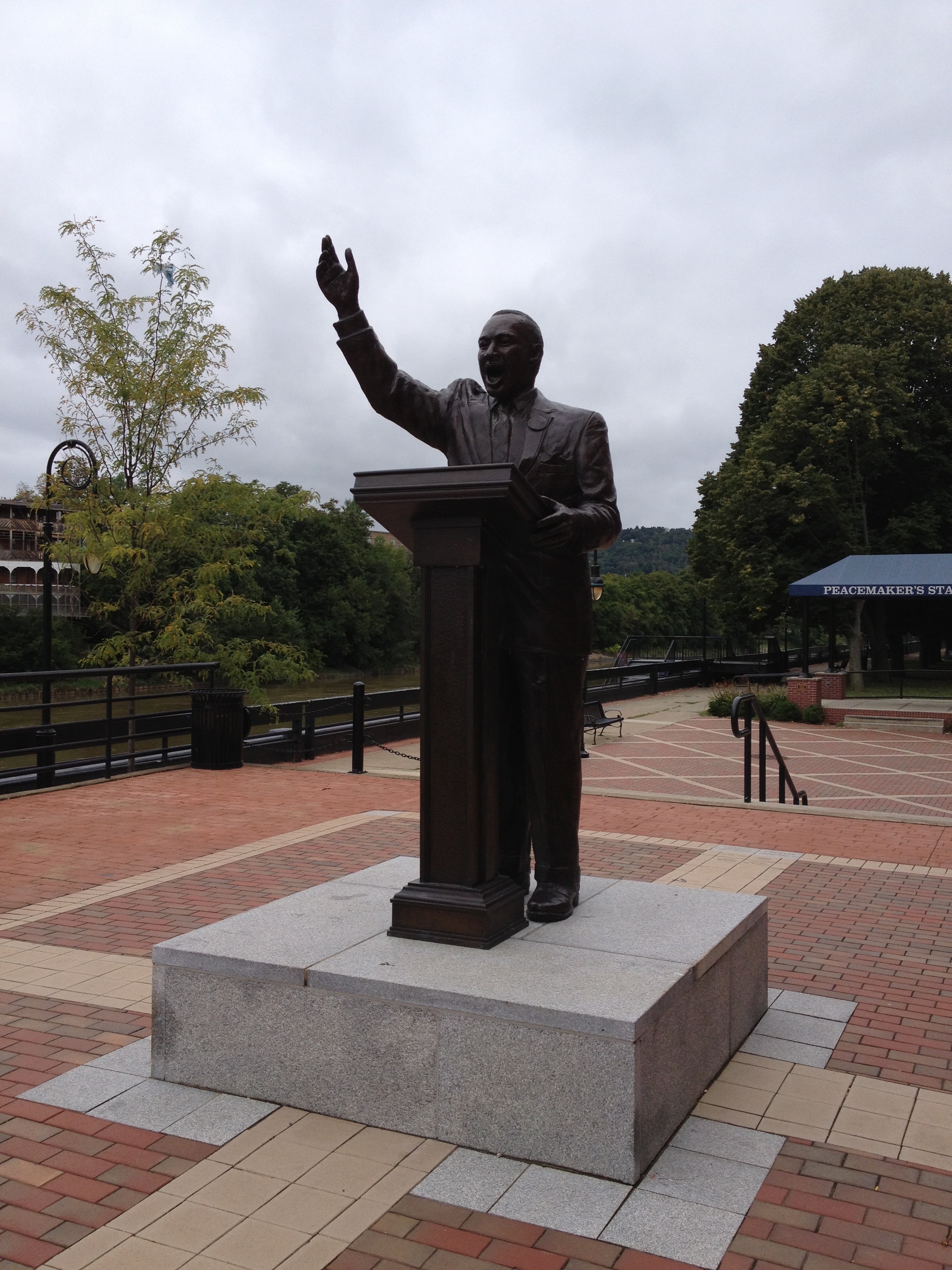
I recently heard someone who’s obsessed with honorifics opine that we should never mention Martin Luther King Jr. without his full titles.  I think I understand the reason, but I was reminded of my wife’s experience in Edinburgh.  Being Americans we assumed that “Doctor” was the preferred title of academics.  While tying up a letter for one of the higher ups in the medical school, she saw he’d signed himself “Mr. Gordon.”  She corrected this to “Dr. Gordon.”  When she gave it to him to sign he lamented that she’d demoted him.  The highest honorific, beyond the exalted “Professor,” was the humble “Mister.”  I’ve never forgotten that story.  University folk are all about titles.

I made the mistake of addressing my advisor as “Doctor” when we first met.  “Professor,” he corrected me.  In the British system, at least at the time, a department had only one “Professor,” the rest being “Lecturer” or “Senior Lecturer” or “Reader.”  The latter three were all addressed as “Doctor.”  The Professor alone had that singular title.  As my wife discovered, on beyond Professor lay Mister.  I’m a pretty informal guy.  When I was teaching I did insist that students call me “Doctor,” in part because I was young (I finished my doctorate at 29), and I’m small in stature.  And soft-spoken.  So that students didn’t take to calling me “son”—some at the seminary were old enough to have been my father—I kept the boundaries clear.  If I ever get a teaching post again I’ll insist students call me by my first name.

This day is about Martin Luther King, Jr.  He was a remarkable man who accomplished amazing things in the horribly racist America in which he was raised.  Unfortunately Trump has ushered in a renewed era of racism and our Black brothers and sisters find themselves still having to fight for fair treatment.  This reflects badly on the white man, as it should.  Still, to rely on titles is to play the white man’s game.  We honor each other more deeply, it seems to me, when we recognize that titles are, by their very nature, means of asserting superiority.  We offer our personal names to those closest to us, to those who humanize us rather than seeing us as an office.  Honor is important.  Titles can lead to better jobs (but not necessarily).  They can lead to higher pay (but not always).  We honor Martin Luther King, Jr. today by recognizing his great accomplishments and by realizing we all still have much work to do before we all really have names.


Come In

It feels good.  To be invited, that is.  Like many people I know how rare it can be.  When teaching at Nashotah House, invitations were scarce.  It’s a small seminary, not widely known.  Besides, the internet was in its infancy then and a great many people (including the seminary dean) were suspicious of it.  Few invitations came.  None for peer review opportunities, none for interviews.  I was invited to the Ugaritic Tablets Digital Edition project (for which I wrote a successful grant application) but that was because I met one of the lead editors while my wife was studying at the University of Illinois.  It’s strange, but nice, to be invited to things now.  It still happens rarely, but when it does it has two things in common: the invitations come closely spaced in time, and they have to do with horror.

Photo by Stella de Smit on Unsplash

This past week two invitations came.  One was to review an independent horror movie for Horror Homeroom and the other was to have an interview on the New Books Network.  Since this is the internet and since the internet’s endlessly self-referential, I’ll be writing about them both in more detail, directing you to the end results when they arrive.  It just feels good to be included.  I didn’t have many academic mentors at Nashotah House.  I’m a first-generation college-student; I didn’t know what academia would try to do to a person.  I had no idea what a “post-doc” was.  I did publish an article a year and write a second book which, I understood, was the key to getting hired by a “real school.”  I had a few interviews, but I’m demographically challenged, I guess.

Weathering the Psalms was written at Nashotah House but it has only led to one weekend church program.  My books on horror, written post-academe, have managed to get some small measure of attention.  It always struck me as ironic that, although raised among the theology crowd I never really found acceptance among them.  Those who know there’s something to horror, however, are a welcoming crowd.  The other day I was listening to Alice Cooper’s Welcome to My Nightmare and realized, whether intentional or not, the invitation was sincere.  It remains one of the formative albums of my life.  As a child the only invitations I had were altar calls.  I responded to many.  As an adult I’m still inclined to say “yes” when someone invites me in.  Rarity only adds value.


Rel Stud 101

There’s no such thing.  Religious studies, that is.  I first heard this a decade ago while working as religious studies editor for Routledge.  My supervisor stared at me with such knowing eyes that all I could do was nod.  I figured that since I’d spent my entire career in religious studies I’d probably know if it existed or not.  I’ve heard the statement a number of times since then and have come to realize that what it means is this: unlike other academic disciplines, religious studies has no single, central topic of study and no agreed upon methodology.  It consists of scholars trained in a variety of fields looking at different aspects of religion from different perspectives.  There’s even little agreement as to what religion is.

Religious studies is an outgrowth of biblical studies.  Studying the Bible was a long preoccupation with Jews and Christians.  Long before there were universities there were places you could study the Good Book in depth.  When enough time had passed history of Christianity and theology were added to the mix.  It was only fairly recently, about the late nineteenth century, that scholars of Christianity began to wonder about other religions.  The earliest religious studies were Christians studying other faiths.  Now, of course, religious studies exists in a number of universities and colleges (but by no means all of them) and nobody really stops to think how this came to be.  Students are very interested in religions, but as a major it offers few career options (yours truly is a case in point).  It’s a discipline under duress.  Pretty stressful for something that just doesn’t exist, isn’t it?

My suspicion is that many who entered this limbo started out as I did—a curious Christian wanting to know as much as possible about what I’d been taught.  You learn to think along the way, with somewhat predictable results.  Sometimes it takes years to dawn on you.  In other words, I doubt that many entered this field consciously thinking “I want to learn religious studies as a discipline.”  Like a pitcher plant, however, once you fly in there’s no way out.  Instead we have to find tools to study this strange and slippery environment into which we’ve fallen.  Otherwise we’ll simply be digested.  I made it through three degree programs in this field without ever encountering this idea that apparently has been long known.  Numbers are declining, which makes those of us in here how long our odyssey might continue.  If it even exists.


Rebranding

Established in 1583, Edinburgh University has been a world-class research institution for centuries.  It appears in pop culture as a place of great learning and innovation.  While the newest of Scotland’s four (in contrast to England’s two) ancient universities, it has risen to the point of greatest name recognition.  Even as a kid in rural western Pennsylvania, born into an uneducated family, I’d heard about it.  Little did I dream that I’d actually attend it one day, skulking its time-honored halls and walking the same streets as so many worthies that I couldn’t count them.  It was an inspirational place to live and learn.  While it may not get you a job, a doctorate from it will keep you curious for the rest of your life, and that’s a fantastic gift.

Just as I was preparing to graduate that venerable institution announced it had decided to rebrand.  Wait, what?  A four-centuries’ old university known world-wide felt it had to have a brand?  At great expense, they hired a consulting firm to make them more modern looking while retaining the trusted tradition stretching back to the late middle ages. It wanted to attract “modern” students (since this was in the early nineties those modern students are now adults).  I felt crushed under the commercialism of it all.  Branding?  If a kid from remote foothills of the Appalachians can know and dream of a place, why does it need to get the word out about itself?  Ah well, these wee bairn be wantin’ somethin’ flashy.

I’ve lived through other corporate rebrandings.  They seem to me a waste of good money, especially if you’ve been around for a long time.  Some people, I suppose, look at an old logo and say “looks outdated, not with it.”  Others of us fall down and worship.  You see, staying power is something rare these days.  Corporations come and go.  Even higher education institutions sometimes close down, but the old ones keep on.  You can pick up a book from 1600 and read about Edinburgh University.  It won’t have the new logo—in fact, it may not have a logo at all—but it will still be around four centuries later.  If you get something right at the beginning, why do you need to change it to impress those who think present-day branding (which will only have to be rebranded again at some point in the future) is superior?  Perhaps our ancient institutions need to learn that old lesson—trust yourself.


Classic Plural

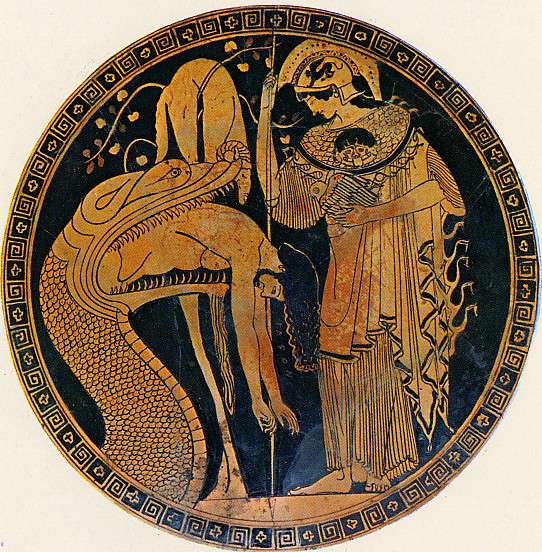
You might think that with our modern lifestyles, looking back would become passé.  Recently an article on Hyperallergic discussed “Ancient Greece and Rome Are Hot in Animation Right Now. Here’s Why.”  The article by Chiara Sulprizio notes that themes central to history—namely, sex and violence—animate ancient mythology.  This allows modern interpreters to explore where we are by looking back.  At the same time, in higher education, such topics and departments are being cut.  The humanities in general have come under fire lately.  Where are we going to learn about such things as the classics if we cut off the only people who spend their time studying such things?  This isn’t the only instance where universities seem to misread what hoi polloi find to be of interest.

The classics have been known as such because of their formative role in our culture.  As this Hyperallergic story shows, they can bring in money (for this is the measure by which all things are assessed).  Again it seems that higher education has followed the way of the dollar, so why not invest in the study of what makes us human?  I guess I’m a bit of a curmudgeon here because it was the humanities that came up with the idea of higher education in the first place.  Universities were places to study theology and law, and even the original concept of “humanities” included arithmetic, geometry, astronomy, and logic.  Only when these topics started to split off into what we would eventually call “STEM” did the humanities begin to suffer neglect.

Looks like a good story

It was, after all, the Greco-Roman world that gave us what we call the classics.  I fully agree that we can’t constantly look back—we’d never move forward then—but our heads turn for a reason.  Understanding what it is to be human seems to be something we’ve grown less interested in since the sterile clean room has given us gadgets and toys we can’t seem to live without.  Living, however, is such a human aspiration.  We want fulfilled lives.  Mythology gives us meaning.  That’s why we keep coming back to it.  In my own lifetime I’ve seen several resurgences of interest in the classics, and experts always seem surprised.  They needn’t be, however.  People have found these stories powerful well before the Greeks and Romans gave them the shapes we recognize.  Many of them go back even further to the early civilizations of the Levant.  The classics have, in other words, earned that name.


Don’t Google Yourself

The internet has made us all less significant, in some ways.  Specifically I’m thinking about names.  “Wiggins,” when I was growing up, was an unusual surname.  In fact, people in Pittsburgh would sometimes send me clippings when a Wiggins appeared in the paper, it was so unusual.  Now with the internet I find plenty of Wigginses out there, and, in my case, several Steve Wigginses.  Not only that, but there are other academic Steve Wigginses, prompting Academia.edu to send me emails asking if I was the Steve Wiggins who wrote this or that article, often about agriculture or some other aspect of anthropology.  Who would’ve guessed?  There’s actually at least a third Steve Wiggins academic out there, an applied mathematician.  Perhaps there’s some mystical draw to higher education with a name like this?

But not so fast!  The most popular Steve Wiggins online seems to be the one who shot and killed a Dickson County, Tennessee deputy.  His act of violence, probably not for a Herostratic motivation, has nevertheless placed him in a pool of internet of fame.  So much so that a supervisor emailed me, jokingly, in June 2018, asking why I’d done it.  It’s difficult to build a good family name when some of us are going around shooting people.  A simple web search reveals that he is currently the best known Steve Wiggins in the country.  It could be because his trial was just last week, but still, but still…

One of my earliest blog posts here on Sects and Violence in the Ancient World was about the gospel singer named Steve Wiggins.  Prior to the murder of a police officer, this Steve Wiggins came to the top in any Google search.  To become well known you must release content.  In my world, which is small, that still means in print form.  Widely distributed.  And reasonably priced.  It’s clear I’ve got my work cut out for me.  The lessons we learn when we’re young have a way of staying with us.  It’s still easy to believe Wiggins is an uncommon surname—people still have no idea how to spell it—but the internet shows that’s just not true.  Even with both names there’s a significant number of both famous and infamous Steve Wigginses out there.  We all like to think we’re unique.  That we all have some kind of contribution to make.  Maybe mine is in the realm of horror movies.  Or Doppelgängers.  Only time will tell.

Who are you?

The Price of Independence

Recently I was updating my Amazon author page.  Since this is purely a self-promotional place (my books aren’t exactly priced to move) I try to approach it with a sense of humor.  I need to be in the mood to write funny, and some followers of this blog often mistake what I’m doing when I try it here.  (Satire and irony, at least to me, have quite a bit of inherent humor.)  In any case, the trick with Amazon author pages—or any internet sites really—is being an “independent scholar.”  To both the academy and to educated laity, that moniker suggests you’ve somehow failed to impress the academic establishment.  No institution wants to claim you, and why should anyone listen to someone who “blows their own horn”?  If you sell enough books you’ll gain some credibility, but at these prices?

Still, I try.  The marketers and publicists I know all talk about building a platform (“shares” and “likes” help).  Platforms require a lot of planks.  One plank I recently learned about was JSTOR (a not-quite acronym for Journal Storage).  Well, I’ve actually known about JSTOR for decades but only recently have been able to use it.  JSTOR scans and indexes academic journals.  While that may not be exciting to the average layperson, for academics (and independent scholars), this is a great tool.  Prior to JSTOR you had to spend hours plowing through various indexes to learn what had been published on a certain topic.  Then you had to go into the stacks and look the material up.  And probably end up photocopying it.  JSTOR makes all of that obsolete with a few keystrokes.  The problem was you could only get in with your university’s subscription.

I stand and applaud JSTOR because they have now made it possible for independent scholars (we are a growing demographic!) to access 100 free articles a month.  Even though “independent scholar” often means you have a nine-to-five with no sabbaticals, that’s quite a lot of articles you can now access.  While I think this is a great move, I do wonder if it’s part of the writing on the wall for higher education.  Around the world universities (except those well endowed, or supported by federal funds) are having trouble staying solvent.  Knowledge is free on the web, until you run into that paywall at internet speed.  Well, at least for now we have JSTOR and access to otherwise inaccessible journal articles.  But that’ll have to wait until after work.  And after I update my Amazon author profile.


Used or New?

A recent post on a used book got me to thinking.  Back when I was acting like a trained researcher my reading was very specialized and focused.  Even so, my personal reading was eclectic.  I think that’s the result of having been raised poor.  With no bookstore in our town, and no Amazon (or Bookshop.org), book purchasing was catch as catch can.  Since my fortunes haven’t dramatically increased in life (long story), my purchasing habits have remained pretty much the same.  I’ll buy used books or movies if I can.  Since these are about the only things I buy, they loom large in my mind.  And the thing about buying used is that it’s often opportunistic.  I can pretend it’s intentional and say I’m trying to be well-rounded, but the fact is I try to save money where I can.

This really struck me as I was reading something written by a film maker.  Now, I’ve penned two books about horror films, and I tend to watch them quite a lot.  What struck me about what I was reading was just how many films the writer knew.  Academics can be that way—knowing everything about a subject.  When researching my first book, A Reassessment of Asherah, I read everything I could find in pre-internet days about the goddess.  That is a thoroughly researched book.  When you’re a graduate student your job is to become as familiar as possible with your subject, no matter the language of the research (within reason).  As just an editor my movies and my books are a matter of what I find in my eclectic life.

I often imagine what my life would be like if I could’ve remained a professor.  In those days I read fewer full books—research is often a matter of reading only the parts relevant to your project—and certainly less fiction.  I was never a well-paid academic, teaching at a small school that considered on-campus housing a large part of the compensation package.  I didn’t buy many books then, either.  Some of the most important ones were, you guessed it, used.  I wonder if I would’ve ever have shifted my interest back to horror.  During those days I didn’t need horror (it was a gothic campus and I was beginning family life).  Since then I’ve become an even more eclectic person.  My fascination with geology began then and still comes back when the stars are just right.  And even they, I suspect, might be remnants of even older, used stars.

Photo credit: NASA

Online Research

Given my current lack of a university library, and my continued rapaciousness for research I’ve had to sample internet offerings.  There’s a reason academics are skeptical of the internet’s research reliability.  Just about anything you want to verify brings you up against a paywall where you can sometime buy an article you could read for free if you were a professor, for about $15 or $20.  The privileging of academic information.  (Hey folks, I give it away here!)  In any case, I often run into websites on the topic on researching that give “facts” with a breezy assurance that isn’t followed up with footnotes, making me wonder where they got their information.  Who was the publisher?  Who says they know what they’re talking about?  No wonder alternative facts rule the day.

One of the things I learned in the course of my doctoral work is that those three insignificant letters, if applied correctly, indicate that you know how to do research.  Earning a doctorate is often considered (and sometimes is) a matter of becoming a specialist.  Those willing to peel back the top layer realize that underneath what’s going on is a transformation of your way of thinking.  You can find facts, but you can also weigh them in the balances.  You take no one’s word for it.  Unless, of course, they’re published by a prestige press.  And even then, if the lesson really sunk in, you’ll have your doubts.  The internet is a frustrating place to try to find reliable information.  Oh, it’s great for looking up phone numbers, and even for getting directions.  Just don’t trust it with history.

Currently at work on my fifth book, I’m finding research somewhat of a hurdle.  I’ve reached out to local universities and they seem only to want to let you in if you’re an adjunct (which is considered a conflict of interest in my current post).  You’re therefore locked out of knowledge.  I recently learned that JSTOR may be offering a fixed number of free articles to independent scholars.  If so, that is a great and farsighted boon.  You see, the problem is you need to look at the footnotes to know which articles are actually based on solid research.  There’s a move afoot that makes academic presses shudder.  The move for free information.  It’s the business of academic presses to sell it, of course—that’s where the money comes from.  So I sit here facing another paywall and I wonder is wisdom can ever truly be free.

Photo by Sharon McCutcheon on Unsplash

Caring for the Future

Some people have it really bad.  Living in war-torn countries, many former academics find themselves scrounging for a living.  In the United States academics tend to have it good—at least those who get jobs do.  In my line of work it’s not unusual to hear them complaining of overwork, or of various aspects of academic life that are a strain.  I know that can be true—I’ve been there.  However, a recent story about Adnan Al Mohamad on iNews, tells how the Syrian professor had to flee and become a waiter and farm helper in Turkey.  Until CARA found out.  CARA is a British charity—Council for At-Risk Academics.  They were able to secure Al Mohamad a university post so that he could achieve his potential.

Of course, academia isn’t perfect, as my many colleagues who’ve succeeded in it can tell you.  But it is good for the world.  Those of us taught to think deeply about a subject often feel what might be called a moral obligation to pass it on.  Interestingly, in the “developed world” academic positions are on the decline and education is seen as an expensive option instead of the way forward.  I may have been sidelined, but I’ve been watching this happen for decades now.  Instead of organizations like CARA (many academics are at risk) those encouraged to go on by their teachers and colleagues end up disappearing in obscurity with crippling bills to pay for many years down the road.  There are no safety nets and western society has decided education is a luxury rather than the path to a better future.

Somewhere along the line, as progress became equated with electronic gadgetry, we lost the desire to think deeply.  Books are “products” that can be thrown onto a plastic screen and soon forgotten after read.  We can gossip 24/7 through social media and never spend hours delving deep into a subject.  We can move the economy ahead without stopping to think about the consequences.  The world needs organizations like CARA.  Better yet, governments should take on that role.  Politics for some (most, of a particular party) is a means of enriching oneself rather than bettering the society that allows them to do so.  Wouldn’t it be better for everyone if education were the number one priority?  Isn’t that what a rational society would do?  Creating a world in which those who’ve personally invested in continuous learning could share it?  Instead, we live in a world where academics increasingly require rescue.