Highgate Cemetery Again

Vampires can distort your thinking.  For example, whenever I hear of Highgate Cemetery in London, my mind immediately goes to the Highgate Vampire.  (There was somewhat of a comment kerfuffle on that topic right here on this blog some years back that resulted in several comments being removed.)  Highgate is the amazing final resting place of a remarkable number of famous people.  Still, when I visited a few years back I couldn’t get the vampire out of my mind.  (A friend of mine lives a short walk from the cemetery and that made the visit possible.)  This all came rushing back when I saw a book on Highgate Cemetery up for review on Reading Religion.  (And hey, Nightmares with the Bible has been available there for free, for any interested takers!)
Given my current vocation, writing actual book reviews is considered conflict of interest.  More’s the pity, since that’s how I often managed to get ahold of expensive books back in the day.  I’m pretty sure the book advertised (edited by Marie-Therese Mader, Alberto Saviello, and Baldassare Scolari) has nothing to do with the vampire, but I can think of it no other way.  Highgate is an architectural marvel for a necropolis.  It is spooky, inspiring, and impressive.  When something happens in a place, even if the facts are in dispute, it takes on an atmosphere that reflects such happenings.  At least that’s the way it feels for Highgate.  I’d heard about the vampire incident before visiting, but didn’t have the details.  Besides, you’re only permitted in on guided tours and the docents don’t point out such things.

Nevertheless, having been there I still have an interest in the cemetery itself.  It’s odd in a way.  Nobody I know personally is buried there.  No ancestors, as far as I know.  It’s the sense of place.  I’ve written about this many times before—there are numinous spaces in the world.  Science may deny it, but even scientists feel it.  Some places transport you somewhere beyond just the physical dimensions of where your body happens to be at the moment.  Cemeteries are filled with the memories of lives past.  They remind us that our time is limited, and that we too will cross that numinous threshold some day.  We all contribute.  Well, I can’t review the Highgate book and I can’t afford to buy it.  I nevertheless suspect that there’s nothing about the vampire in it.  I’m sure it’s my thinking that has been distorted by vampires.
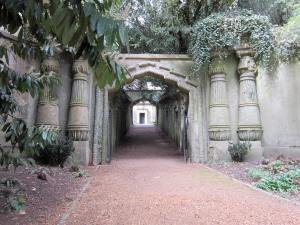

Of the Night

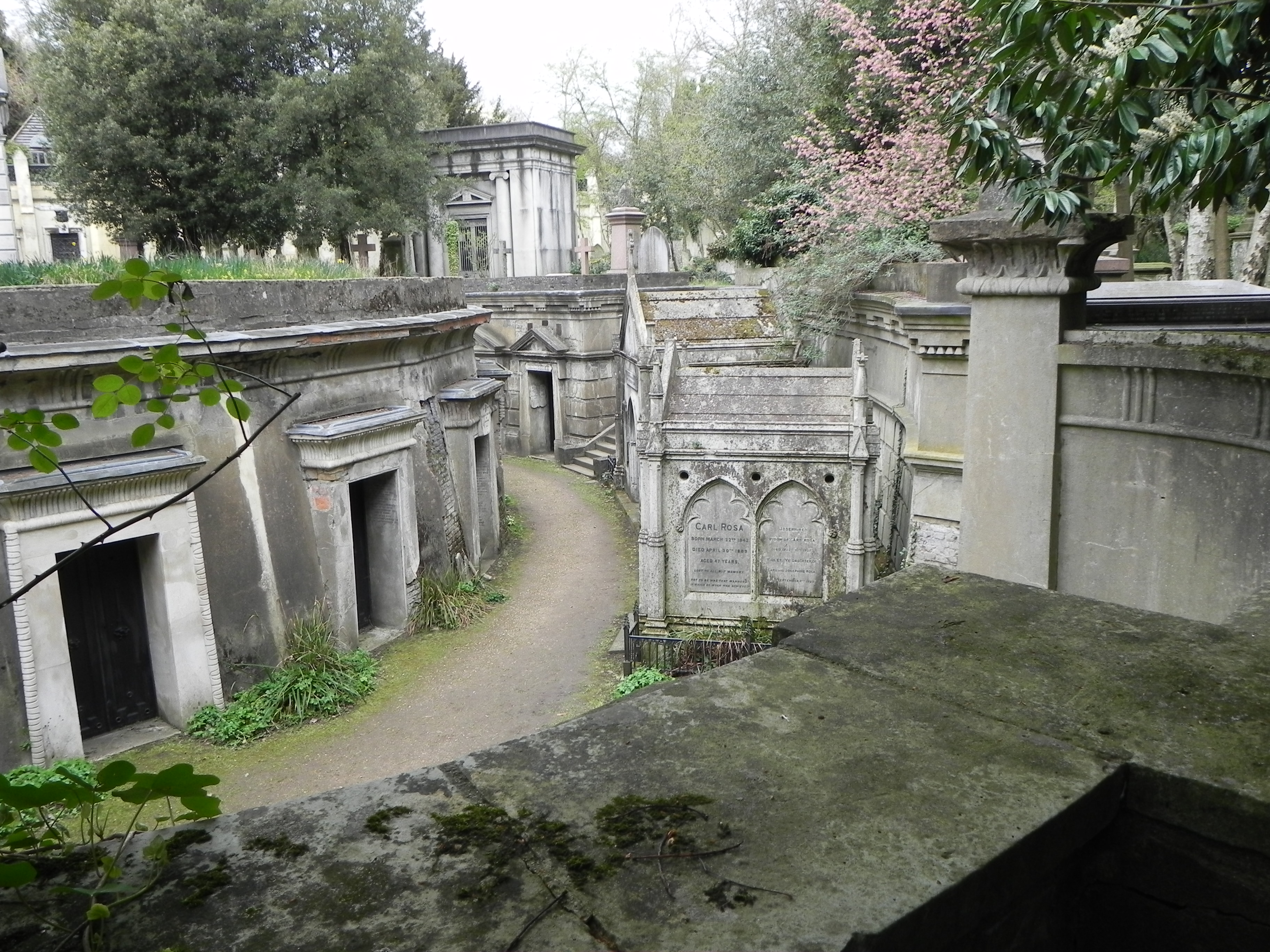
August isn’t too early to start thinking about vampires. The nights are already noticeably longer than they were in June and some leaves are just beginning to change on the trees. I’m thinking of vampires because one of my readers sent me a link to some investigative reporting about the “Highgate Vampire.” I’ve posted about this before, but the brief story, if you don’t have time to browse through my “monster” category, is that beginning in the 1970s a group of people came to believe a vampire haunted London’s Highgate Cemetery. This led to the publication of written accounts of the hunt for the undead. On a trip to London in 2012 I visited the Highgate Cemetery as my host for the trip lived quite close by. Apart from being the resting place of many famous people, the cemetery is moody and Gothic and it’s easy to see how, in days when it was neglected, it could’ve spawned such tales. Thing is, we know vampires don’t exist. So we’re told.

IMG_0061

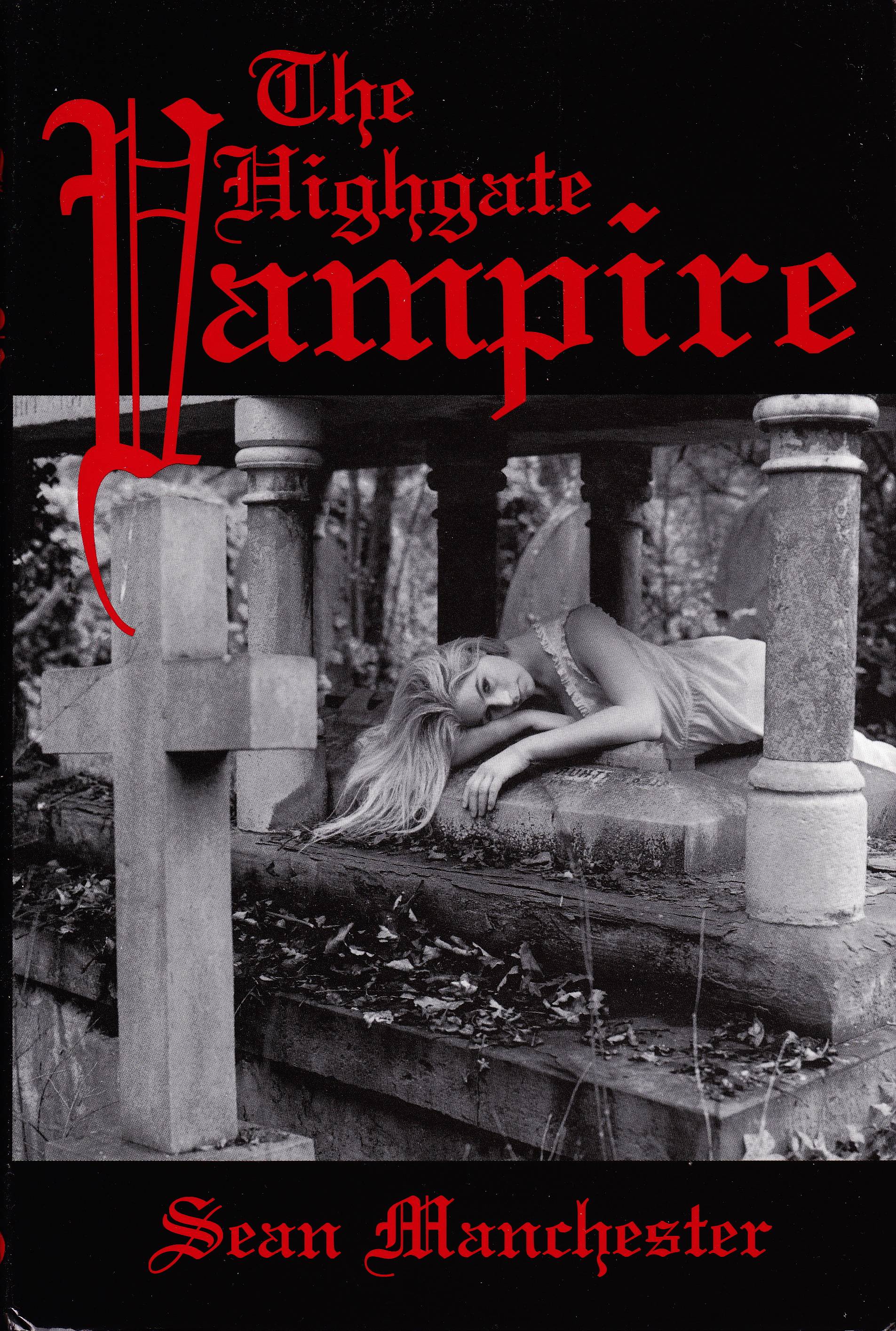
Back to the story. My reader pointed me to the website Vamped, and now I’m afraid my limited time has just grown more limited. More specifically, there is a story by Erin Chapman entitled “5 Reasons Why a Wampyr Didn’t Walk in Highgate Cemetery.” The article investigates claims made in Sean Manchester’s book on the subject (reviewed elsewhere on this blog), demonstrating that his locations, photographs, and narrative don’t add up. The piece on Vamped shows a meticulous level of detail, comparing notes and photos in a way some of us simply don’t have time to do. Now I’ll sleep more securely on my next visit to London. I hope. The conclusions are disputed.

At this point some may be asking why an educated, rational adult is even addressing such questions. Why worry about something that isn’t even real? This brings to mind the realm of religion. Archetypes, whether they have an objective existence or not, are part of our consciousness. Supernatural beings of many varieties inhabit our heads, no matter how much garlic or holy water we happen to have lying around. Ignoring them can lead to problems. Do I think there is/was a vampire in Highgate Cemetery? I don’t think so. Do some other people sincerely believe it? I have to think yes. No matter which religion people follow, there will be entities that other people don’t believe. That doesn’t mean that they should be ignored. The Highgate Vampire isn’t real for most people, but it is for others. And just in case, I’ll keep a bit of garlic around as the nights begin to grow longer.


Graveyard Culture

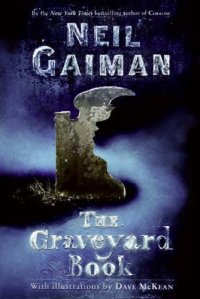
TheGraveyardBook During an Ancient Near Eastern Religions course a few years back, one of my students commented that something was like “in American Gods.” I suppose my quizzical look betrayed that I wasn’t familiar with the book, and, aghast, he said, “you’ve never heard of Neil Gaiman?” The funny thing about being a professional academic is, if you want to be good at it, there is little time to read. Popular culture is vast; I’ve never even heard of “Gangnam Style.” But I did subsequently read American Gods, and from then on I’ve been picking up Neil Gaiman books as a special treat in my literary diet. A couple years back another friend recommended The Graveyard Book, so I read it over my brief holiday break. It is the time of year for treats. Gaiman’s fantasy worlds, although seldom explicitly deity-populated, tangle the real world with the supernatural—just the juncture where religion emerges. Although defining religion is not as straightforward as looking it up in a dictionary, you can nevertheless feel when you’re in its realm.

Nobody Owens was raised in a graveyard among ghosts. Since science tells us there are no such things, religion steps up to the challenge with suggestions of an afterlife. Whether or not there’s a Heaven or Hell, ghosts partake in that uncanny milieu we call religion. And since this is fantasy, there are other mystical creatures as well. In Bod’s world werewolves are called “Hounds of God” and they are on the good side. Ironically, the only clergy mentioned (along with various political figures) are actually ghouls. The world of the dead involves a religion of its own where an altar and chalice lie deep beneath a special grave and a human sacrifice makes up the climax of the story.

Religion, of course, occurs where the supernatural meets regular people. We dismiss it at our own peril. When Bod attends school his teachers guess he must be from a religious family because he doesn’t have a computer or any electronic devices. Religion eschews such progress. And yet it touches on the real world. I recognized Highgate Cemetery almost from page one. It could be that my own visit there just last year was fresh enough in my mind that Gaiman’s descriptions naturally took over. Or it could be that since I walk that imaginary line that we recognize as religion every day I recognize its more familiar features. Neil Gaiman’s popularity is a testimonial to how we still need the hidden world unexplained by science. We may call it fiction but it is just as real in the human mind as anything in the quantum universe.


Staking a Claim

Okay, I confess. When I learned my recent host in London lived in Highgate, my thoughts immediately went to the Highgate Vampire. I first learned about the Highgate Vampire from Matthew Beresford’s From Demons to Dracula: The Creation of the Modern Vampire Myth, a book that spoke to me at some inexplicable level. Claims had been made that an actual vampire roamed the north of London in the 1970‘s. My first thought was utter skepticism—one of the reasons that I was never afraid of vampires is that I knew they couldn’t possibly be real. The mythical world of a fundamentalist allows deity, devil, angels, and demons. No more, no less. The vampire, as a supernatural creature largely dreamed up by John William Polidori and Bram Stoker, was a literary monster only. As a doctoral student in Ancient Near Eastern religions, I learned that the prototype of the vampire went back to Sumer, the earliest civilization known. Still, I wasn’t worried. The Sumerians also believed in night hags and dragons and had no crucifixes to keep the beasts down. Then I learned about the Highgate Vampire.

I have just finished reading Sean Manchester’s most recent iteration of his account of slaying the Highgate Vampire. Manchester, a bishop in the Old Catholic Church and a descendant of Lord Byron—Polidori’s close associate—claims to have staked the vampire in the backyard of a haunted mansion in Hornsey. This transpired in 1973. There’s one born every minute, right? But then, there are the claims of physical evidence: exsanguinated foxes, photographs of rapidly decomposing corpses, the obvious ardor of Manchester’s personal account. The mental jarring was extreme—surely a priest would never fabricate such a tale? Surely the vampire is a fictional creature with no place in a rational world? Why did Manchester’s account resemble Jonathan Harker’s diary so much?

So, we were staying in Highgate, London. The first morning as the sun rose, I dragged my family to Highgate Cemetery. I hadn’t read Manchester’s account yet, and Beresford’s book was almost three years back in my memory. Looking through our pictures, there I found it—the tomb in which Manchester claims to have originally discovered the black coffin with the actual vampire inside. Whether fictional or not, I was in the presence of the vampire. The overcast sky, ivy coated tombstones, the jet-lag—all combined to provide the atmosphere for the impossible. I have no idea what really happened in London when I was a child in school, but I have learned that many adults will gladly drain off the very lifeblood of others in order to attain their own benefit. From the days of Sumer to the present, growing in number there have been vampires among us. Our lives are much more comfortable if we simply refuse to believe.


Degradation

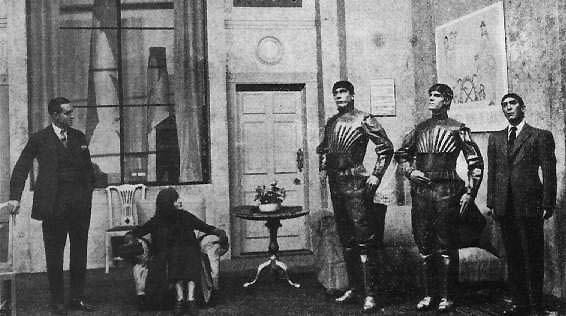
Having felt like an automaton in the realm of higher education, I was occasionally overwhelmed by the number of students and lack of resources. One of my fervent beliefs is that multiple-choice tests do not really demonstrate what a student knows, but playing the numbers, I sometimes had to resort to them. Being an adjunct, I didn’t have access to Scantron, so I devised a method of stacking the sheets precisely and grading them with a power drill. It was my one bit of notoriety at Rutgers—I was the guy who graded with a drill. All the while, however, I knew that a truer method would be to allow students to write for themselves. Even that, however, is going the way of automation. A recent story in the Chronicle of Higher Education reveals that student papers are sometimes being graded by robots. Real robots. The truly scary part of the story is that the robots provide grading almost indistinguishable from the professor, a species quickly becoming obsolete. I tell myself not to panic.

“Don’t panic,” of course, was the catch-phrase popularized by Douglas Adams in the Hitchhiker’s Guide to the Galaxy. In a world overwhelmed by forces we can’t hope to understand, panic is a natural enough reaction. Adams gave us Marvin the Paranoid Android. Higher education has given us the paranoid professor. Parents who pay extraordinary—mythologically high—tuition rates often ask me where all that money goes. It certainly doesn’t line the pockets of humanities professors; indeed, many of the classes are taught by adjuncts who are the penny dreadfuls of academia. I don’t know where the money goes. I do know that university presidents and football coaches are not wanting for material goods, but even their greed can’t account for the entire greenback drain.

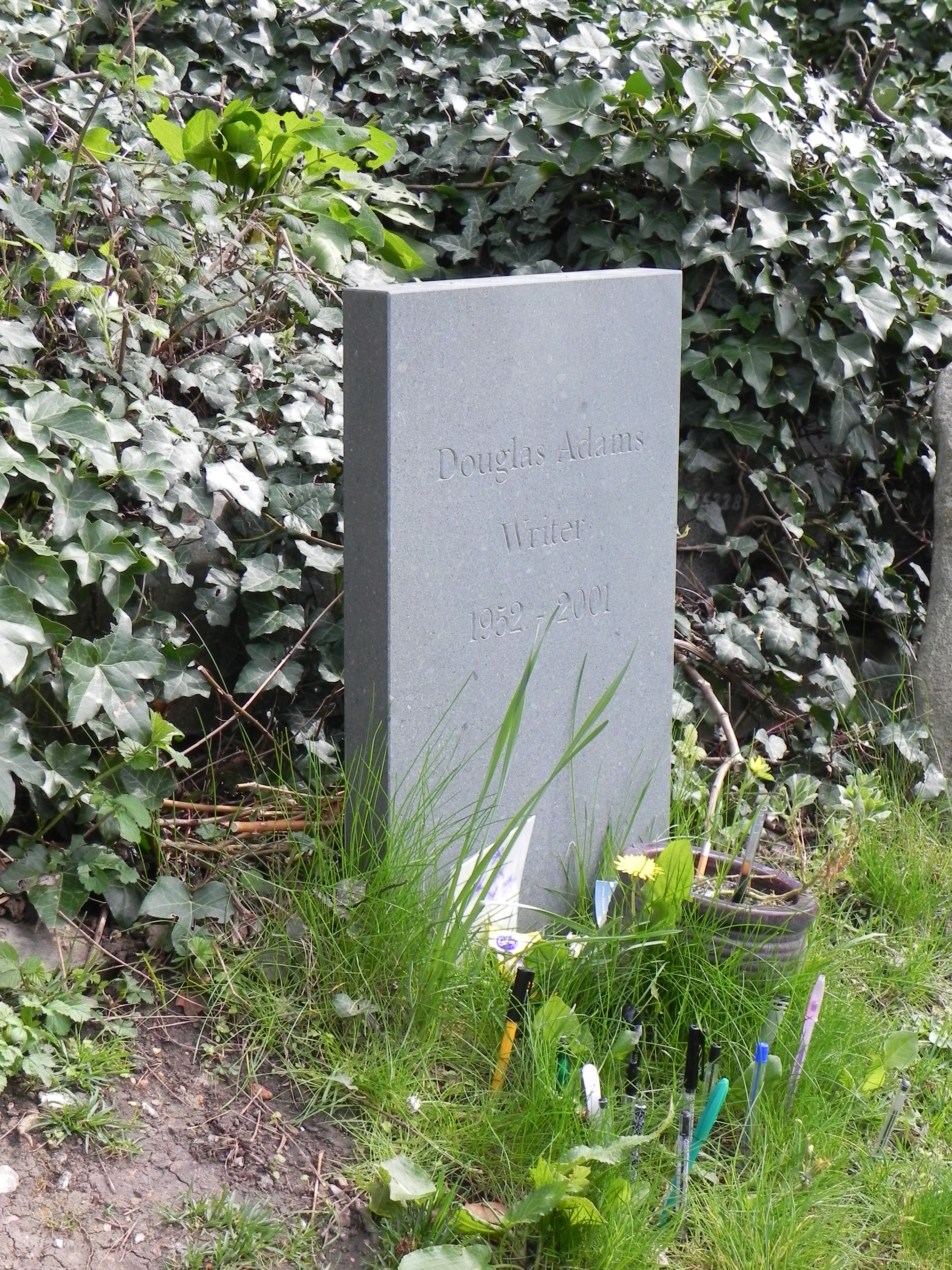
If I were still a professor I’d be tempted to ignore the sage advice of Douglas Adams about now. Courses can be covered by an overwhelming army of competent adjuncts, and grading can be contracted out to robots. Students really don’t even need to come to class any more as distance education has taught us. College becomes little more than an excuse to drink while away from home with a hefty tab being picked up by the folks back home. Higher education may have had the seeds of its own destruction always planted within itself. We’ve confused technology with the desire for increasing comfort and ease of lifestyle. It was only a matter of time before universities caught up. Standing by the grave of Douglas Adams in Highgate Cemetery I’m thinking that his bizarre vision of the future was more sensible than what has actually evolved in our culture. That, and I’m glad I learned to use a power drill.


Bookends

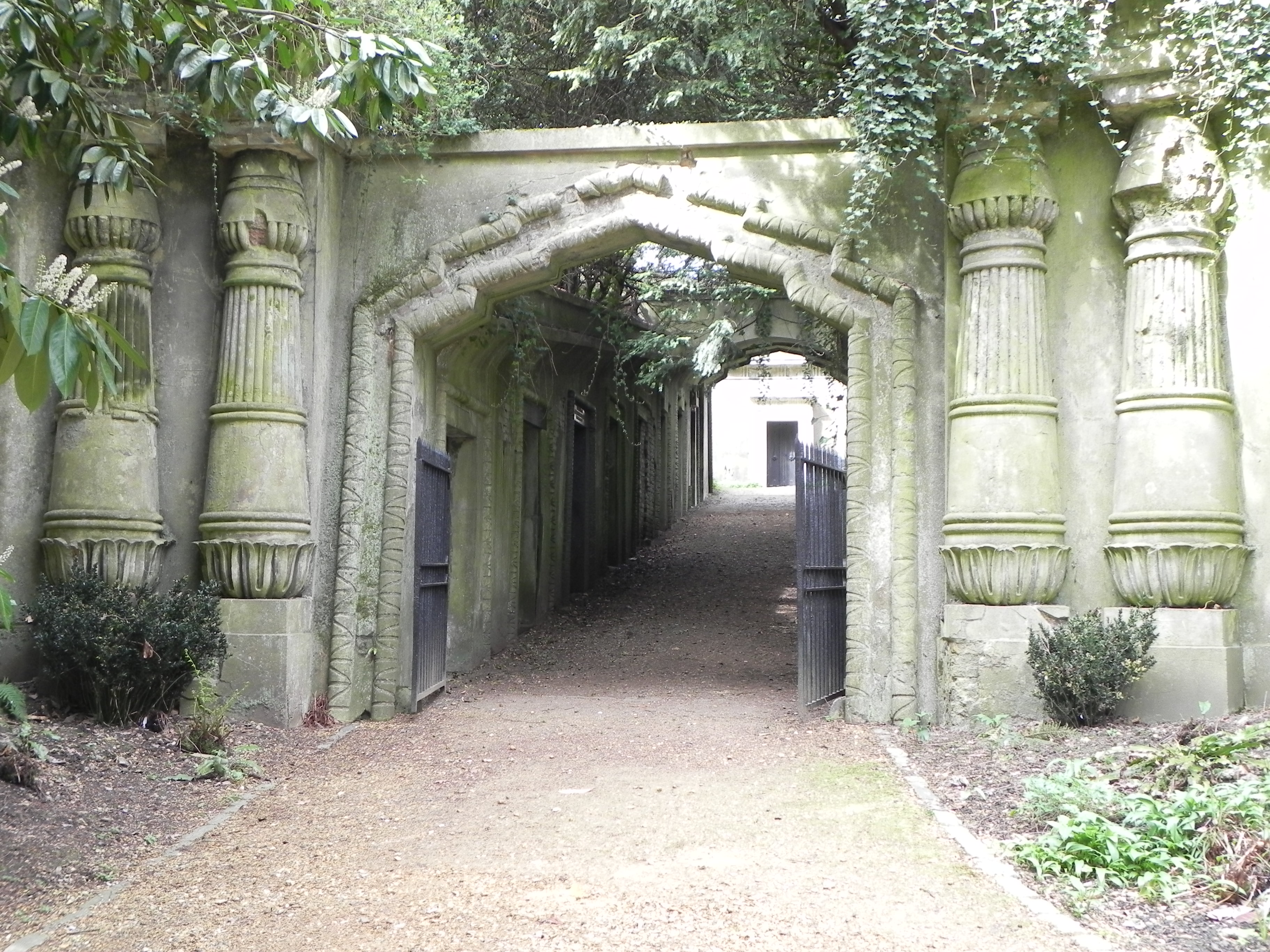
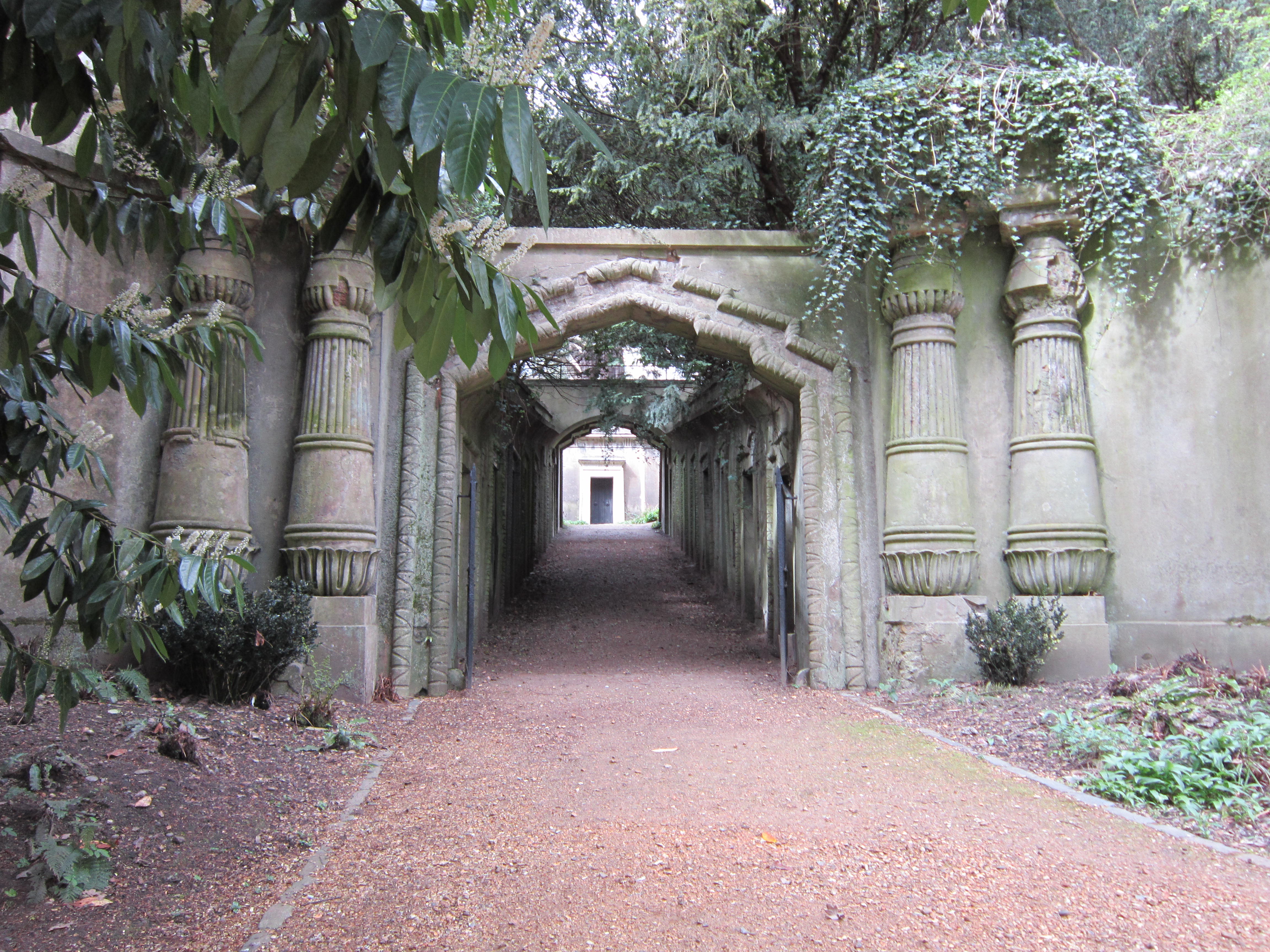
There is something extremely satisfying about bookends. Bookends are those events that bracket moments of our lives and give them a frame, a perspective they would otherwise lack. If my readers will indulge my recollections of my trip to Britain for a day or so longer, some of this may become apparent in esoteric ways. Our kind hosts in London live in Highgate. Our first bleary-eyed morning in the city we wandered to Highgate Cemetery. This burial ground is divided by Swain’s Lane and that makes it frightfully convenient to charge separate admission fees for the two halves. Both, however, are worth the pounds dropped to gain entrance. Our first visit was via tour group on the western half of the grounds. The ornate—indeed grand—architecture of this necropolis bespoke the mysterious connection between the living and the dead. Tycoons are buried there, as is the non-conformist Michael Faraday, a name that lingers on from my childhood physics classes.

Highgate Cemetery West

Just before leaving to board our flight back to the States, we completed the bookend by visiting the eastern half of the cemetery. Here the most famous residents seek eternal rest. The most famous of the dead on this side is Karl Marx. Visitors speaking Cyrillic or Sinitic languages milled about, but even an American idealist might find some grounds for admiring a man who felt deeply about the plight of the workers in society. Just across the lane lies Herbert Spencer, one of the founders of sociology. Less than two minutes will take you to the grave of Mary Anne Evans, known to the literary world as George Eliot. She is not far from Douglas Adams, inventor of the Hitchhiker’s Guide to the Galaxy. Across the path from Adams rests Anthony Shaffer, writer of both Sleuth and of the screenplay of The Wicker Man.

Highgate Cemetery East

Perhaps it seems macabre to travel such a distance only to bookend a visit with treks to Highgate Cemetery. Death, however, is the ultimate bookend to life, with each generation shoring up those that come after through its unique perspective on what has brought us here. Not even a visit to Westminster Abbey is complete without paying respects to the most noteworthy of the Brits found both within and without its walls. This trip to England will remain in my memory as the pilgrimage bookended by the solemn parentheses of death. With such august company, however, one might have less to fear from that final veil that all must face.


Cemeteries and Certainties

A visit to Highgate Cemetery is a reminder of a different way of life. Built as a fashionable burial ground for an overcrowded London of the Victorian Era, the cemetery demonstrates a closeness of life and death that we have very much sublimated in the twenty-first century, as if by avoiding the topic we might make death go away. As a tour guide led us through the overgrown, moody grounds with ivy-covered tombstones and doleful trees, she explained how those of just over a century ago wove death and life into a continuous fabric with elaborate rituals of mourning and a sure sense of the afterlife. Monuments commissioned by the families of the departed used symbols from a variety of traditions syncretized to assure the survivors that death was not the final word. The departed, one presumes, had little concern in the matter.

Symbols from the newly discovered wonderland of ancient Egypt combined with classical symbols of Greco-Roman antiquity and Gothic revival combined to assure the living that death was not really the end after all. How easy it is to forget that death, for most of human history, was very near at hand. Only with our recent medical innovations and concern not to overpopulate our environment have developed nations (something certain religious sects blithely overlook in their enthusiasm to conquer the world by dint of numbers) been able to shove death into the dark corners of our minds. Unless inspired by ghost hunters, we seldom linger in cemeteries. We separate ourselves from the dying as if the inevitable were some disease we dread catching. We can’t reconcile ourselves with the most biological aspect of our lives.

The Egyptians did believe in an afterlife, but at first it was not a democratic one. Kings and courtiers might live forever but the common person was only accorded a brief time in this world. The idea that death could be cheated by religion eventually grew, and Christianity came to accept such assurances as a hallmark of faith. The symbols for that faith figured prominently in Highgate Cemetery. As we came out from the tour, I was reminded that the radical Karl Marx, champion of the proletariat, was buried just yards away. Even those we today recognize as having borne immortal ideas still rest in the same chilly ground. Is the hope that binds them with the heavens an illusion left over from ancient times or is resurrection an idea from which we just can’t escape?


Didymus Haunting

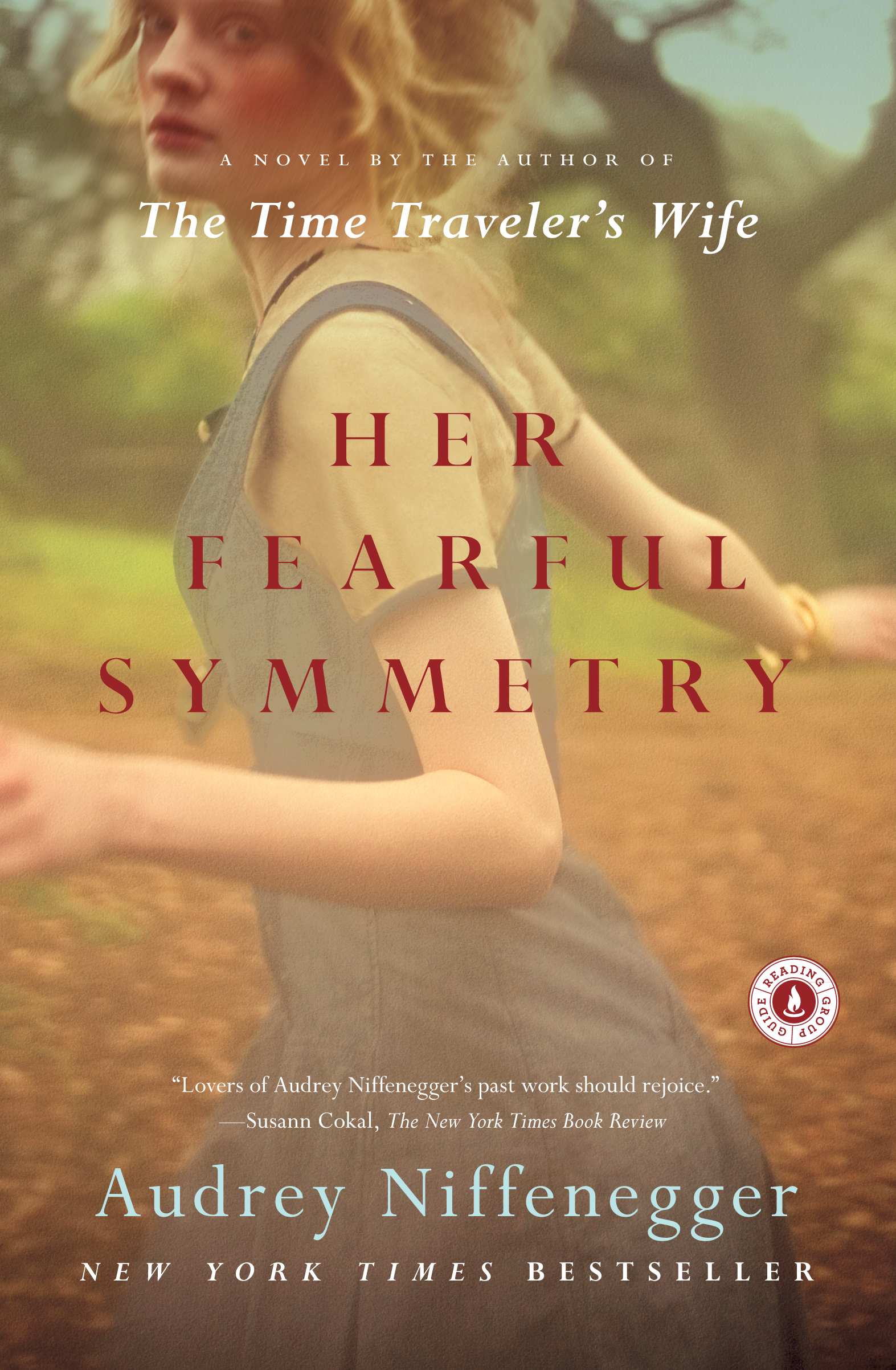
Now that winter is nearly here, the season of reading the autumn books is nearing its end. Each year, in my scant free-time, I seek the perfect book to capture the essence of the dying of the trees, the chill in the air, and the growing length of night. Autumn generates an emotion that is difficult to replicate or even describe. Many people respond by watching spooky movies and those of us old enough to appreciate printed literature turn toward moody books. One of my choices this year was Audrey Niffenegger’s Her Fearful Symmetry. At the constant urging of one of my former Gorgias Press colleagues, I’d read Niffenegger’s The Time Traveler’s Wife this summer. It was well crafted and left me with enough sadness to want to see if this New York Times bestseller might capture the feeling of the season. I was drawn into the book by reviews that mentioned it centered on Highgate Cemetery in London, the scene of a real-life vampire fracas back in the 1970s.

No vampires graced this novel, but ghosts abound. Often Niffenegger’s characters are either wealthy or have managed to obtain fulfilling jobs, features that make them inaccessible to me. Nevertheless, she is able to draw in the supernatural in a way that makes it seem normal and believable. By tingeing her novels with romance she is able to tap into an inexplicably huge readership, but her story development is intriguing even to those who read books with a paranormal slant. It took me a couple hundred pages to really feel much sympathy for many of the characters, but the ghosts eventually take over the story and it becomes very creepy indeed.

For those who’ve ever wondered about the secret lives of twins, Her Fearful Symmetry will provide hours of fascination. The title may be drawn from Blake, but the story is older than Esau and Jacob. The struggle of twins ranges far back in literature and raises questions of what a soul might actually be. Is it possible to share one? What happens when one twin predeceases another? What is the nature of individual identity? Even the Gospels take pains to inform us that Thomas is a twin. I finished the story last night feeling a twinge of autumn, but still hungry. Perhaps it is good that I completed this bedtime reading just in time to get ready for the more Dickensian ghosts of Christmas.