
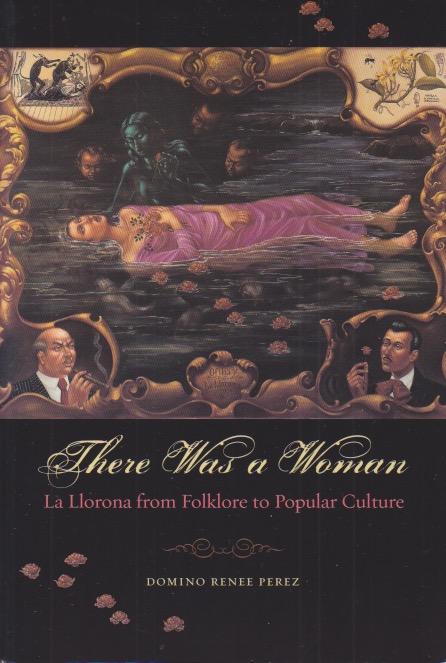
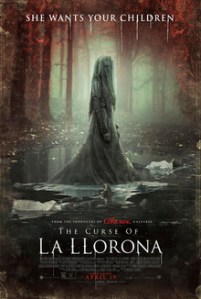
I was first introduced, consciously at least, to la llorona via the movie, The Curse of la Llorona. The film is part of The Conjuring universe, but just barely. It was clear from the movie that the weeping woman (la llorona) wasn’t invented for the film. I’ve never lived in, or even spent much time in, the southwest. Even less in Latin American countries. In my rather strange career path, the best source of such things to penetrate my own experience tended to be my students. (Those who think professors do all the teaching have the equation backward.) Since becoming more isolated as an editor, my interactions are often someone approaching me with an idea mostly formed, often fully formed, and few of them have to do with ghosts or folklore. That’s why I found Domino Renee Perez’s book There Was a Woman: La Llorona from Folklore to Popular Culture such a treasure.
As an Anglo reader endowed of white privilege, it’s important to read books where I’m clearly the outsider. Being a kind of historian, I was curious about the origins of the tale. As a person living in the modern world I was also interested by its reception history. This book contains many, many examples of the latter. It will demand that the outsider reader accept unfamiliar names and cultural conventions. It will, in some ways, force you to stand “south of the border” and face the suffering our nation has caused and continues to cause in the name of white supremacy and its adjunct, capitalism. There are other ways to be in this world, but when money gets involved all bets are off.
There’s much to discuss in a packed book like this, but one aspect, near the end, caught my attention. Briefly, if you don’t know the story, la llorona is a woman betrayed by her husband. She drowns their two children and is condemned to wander the riverbanks for eternity crying as she searches for them. Interestingly Perez makes the connection with Rachel in the Bible. I’ve read the Good Book many times and yet I seem to have missed Matthew’s use of Jeremiah’s interpretation of Rachel’s story. Joseph was kidnapped and sold to slavery by his brothers but Genesis focuses on the grief of Jacob. Rachel doesn’t live to be reunited with her lost son like Jacob does. Perez makes the point that the stories are quite different, but it showed me once again how much I have yet to learn. We need to pay attention to those who experience life differently.
 Steve A. Wiggins