New Hope Nightmare

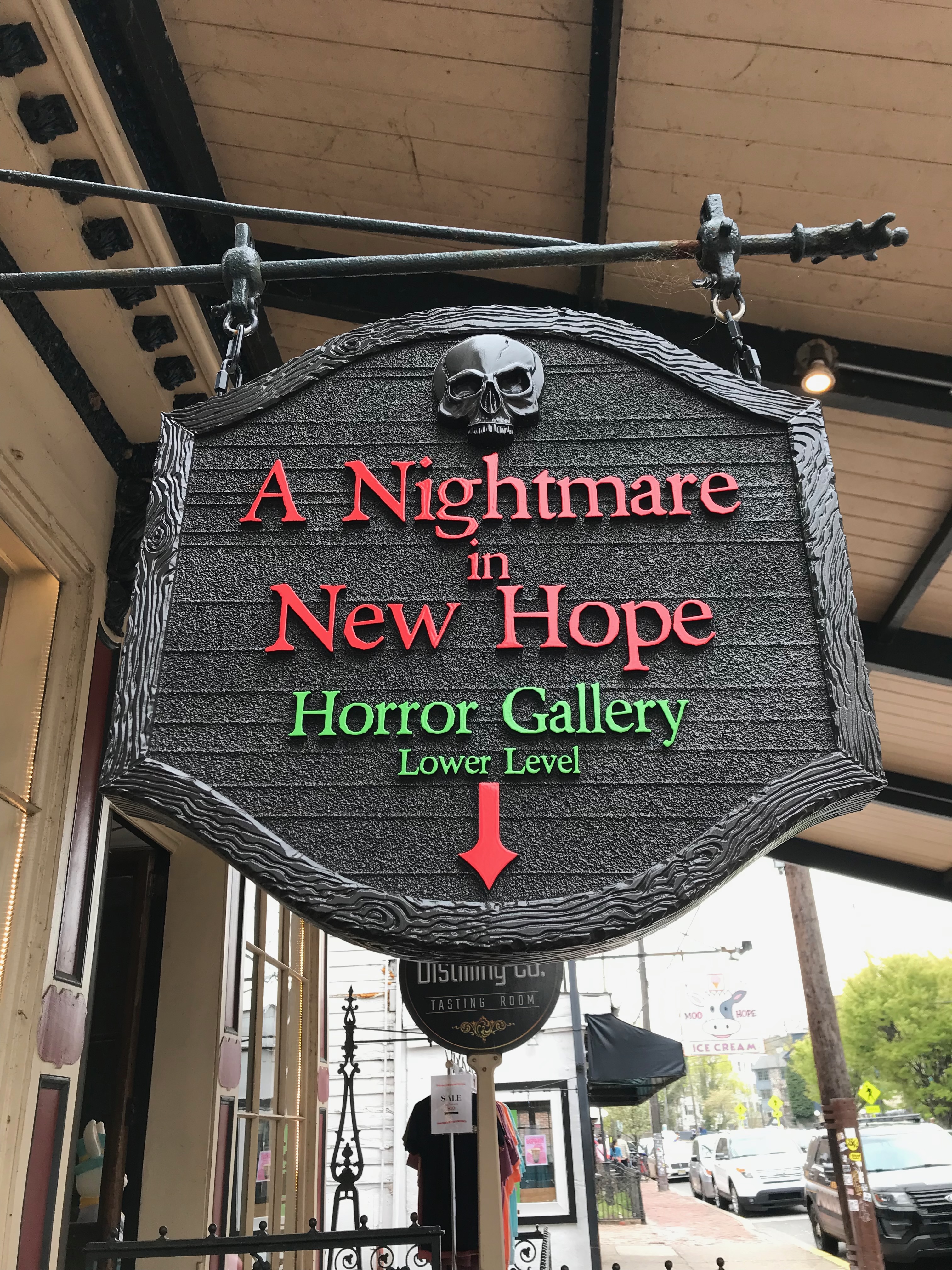
One of my favorite places along the Delaware River is the town of New Hope.  Across the river is the very nice town of Lambertville, New Jersey, but New Hope has a feel to it.  When I learned that a new horror museum had opened there—Nightmare in New Hope—we scrambled to change plans to get there right away.  We went the Saturday before Easter.  We’d planned to spend some time touring the rest of the town as well since it’d been years since we’d done so.  We managed to find parking and, since the museum opens at one, grabbed some lunch and went to Farley’s Bookshop.  Independent Bookstore Day was actually the following weekend, but bookstores need no special occasion.  Farley’s has changed a lot since our last visit.  It’s smaller (as has happened with many indies) and brighter.  I found plenty to like there, but I did miss the darker, dustier feel to the first incarnation of the store I’d known.

We made our way to Nightmare in New Hope.  And waited.  And waited.  Several people passed by, noting that they’d have gone in if it were open.  One of our party messaged the website since telephoning did nothing.  Eventually the owner indicated that he was closed for Easter.  Of all things.  A horror museum, open only on weekends, closed for the first nice weather we’d had on a weekend?  That was the main reason we’d driven an hour to get there.  We found a place with vegan ice cream and fed the ducks on the river.  I was sad that the main objective of the trip, the museum, hadn’t turned out.  And I knew it would be quite some time before we could try again.

My daughter, knowing my tendency to get depressed over such things, suggested we could go to Peddler’s Village instead.  My wife and daughter had visited it before, and so we decided to round out our Saturday trip there.  Peddler’s Village is a set of speciality shops that was born about the same time that I was.  These days there are about 60 shops with items that may or may not be strictly necessary.  Although we’d been to Farley’s, I couldn’t pass up the Lahaska Bookshop, part of the Village.  It was warm that day and we saw maybe only five or six shops.  At least one of them was an independent bookstore.  Not exactly the day we’d planned, but a day spent in and around New Hope is never wasted.  But really, closed for Easter without even putting a notice on the website?

(See updates here and here.)


Learning Bunnies

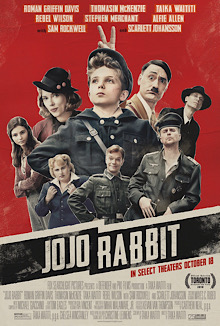
Although it was released during the first Trump administration, Jojo Rabbit was written before he was sharp bit of dust in the GOP’s eye.  Still, in the second debacle, it seemed like a good time to watch it.  Its message is appropriate for any time, but especially now.  Jojo is a ten-year-old boy who’s an enthusiastic member of the Hitler Youth.  So enthusiastic that he has Hitler as his imaginary friend.  He buys the party line without even thinking (he who has ears to hear, let him hear).  Jews are evil, according to the rhetoric.  Monsters even.  Jojo’s mother tries to help her son, missing his father, understand that love is the better way.  Then Jojo discovers something.  A girl his deceased sister’s age has been living in the walls of his sister’s room.  He quickly deduces that she is a Jew.  Were it not for her threats to implicate him and his mother, he would turn her in.

An unusual coming of age story, we see Jojo do something rare—he matures.  Getting to know Elsa he can’t reconcile what he sees with what he was taught.  She’s not evil.  She has no horns.  She’s not rich.  She fell in love with a guy and wants the same thing anyone wants.  The conflict faces Jojo every day as he decides he must learn about Jews to report this intelligence to the authorities.  The authorities, however, know Germany is losing the war.  It’s only a matter of days.  When Hitler dies by suicide, Jojo fully realizes that he has been simply following along instead of following the evidence.  His mother was hanged for not being loyal to the party and his father, he learns, was also helping the Jews.  In a moment of singular hope, Jojo grows up.

Movies can teach lessons.  Some are widely enough viewed to make a major impact on society.  Can any of us imagine a world without Darth Vader and Luke Skywalker?  In this era when sensible people seem to have forgotten that fascism is evil in its nature, films like Jojo Rabbit are important.  Thinking is not a crime.  Learning is not a crime.  Even if they’re being touted that way by the wealthy in order to protect their privilege.  We watched the movie for entertainment on a Friday night, but I received an education instead.  I wonder just when the message of love fell out of Christianity.  But then, I think it becomes clear when you think about particular movies and how we’ve come to be where we are.


Indigenous Gods

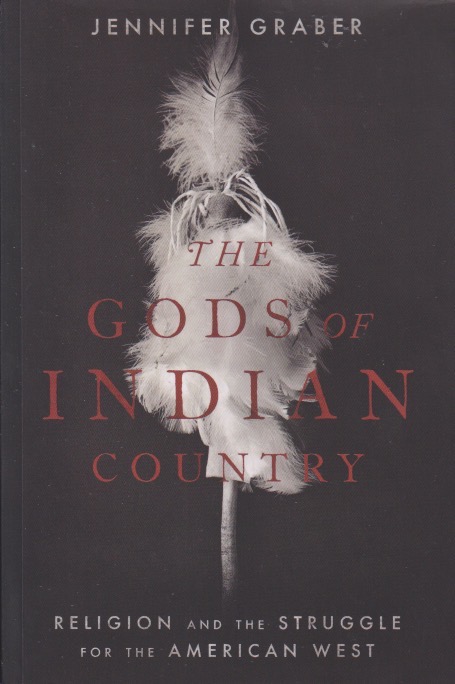
Engulfed by capitalism, it is too easy to ignore the indigenous population of this country.  I grew up thinking, in some way, that American Indians were extinct (this was small town America, after all).  Then we visited a place—in upstate New York, I think, but the recollection’s hazy—where there were real Indians.  This was before exoticism was a bad word, and I thought them quite exotic.  Maybe it was the way I was raised, but I’ve never thought of myself as better than anybody else.  Certainly not on the basis of race or gender, or even personal worth.  In any case, there were still Indians.  I’ve always been an admirer of their culture.  Jennifer Graber’s The Gods of Indian Country is an informative monograph on, as the subtitle says, Religion and the Struggle for the American West.

My interest in American history is relatively recent.  Growing up, I always found European history of greater interest, and then, for many years, the ancient history of the states along the eastern coast of the Mediterranean.  It was the antiquity of it all.  History feels safer when it’s at a great distance.  American history is not old.  When hearing that some of the events discussed by Graber took place in the 1910s, I kept thinking, “were we really that naive just over a century ago?”  Or was our nation willfully blind to the plight of the people who lived here before the Europeans arrived?  The narrative has changed.  And if it hasn’t, it must.  How would we like it if, say, aliens landed and assumed the right to take over capitalistic America?  It’s only our arrogance that prevents us from treating Indians better.

Religion, particularly Christianity, fueled many interactions with the Indians, as Graber ably demonstrates.  The assumption was that Indians had to assimilate to capitalistically-fueled Christianity.  Private ownership.  Free trade.  Otherwise the cultures could not share the land.  Treaties were broken because the “Christian” rules of the new overlords demanded it.  Graber also explores some Native American religious practices as well, chiefly among the Kiowa.  Since the book is fairly brief, it doesn’t include any kind of comprehensive coverage of Indian religion, nor, of course, of early American settler religion.  What happened is that religion and politics joined forces to justify stealing what belonged to someone else.  Those who study the history of religion recognize this pattern.  It isn’t a rarity, unfortunately.  Although my interest in American history is recent, it is growing.  What happened in your own backyard determines so much of how we’ve become who we are.


Bibliographer for Hire

Why is bibliographer not a job?  Why can’t a person make a living categorizing knowledge?  I ask this because I see YouTube videos of people saying your job should be what you enjoy doing.  What if you enjoy creating bibliographies?  You see, my research methods are a bit unconventional.  They kind of have to be since I have no institutional support for my writing, and yet I want it to be intelligent and informed.  That means I have to locate my own sources and inevitably, when I’m compiling a bibliography, I’m happy.  Even if it means ferreting out obscure sources and trying to learn where something was originally published, I’m still at the top of my game.  (Yes, this is one of those things that the longer you’ve been doing it, the better you get at it.  These days it means learning to engage the internet for research.  Since it’s more of a money-making venture geared towards entertainment, that can be tricky.)

I remember those days of typing out bibliographies by typewriter, smearing White-Out all over, or trying to use that ribbon stuff that was supposed to be able to type over mistakes.  My friends and fellow students hated bibliographies.  Secretly, and perhaps perversely, I was enjoying myself.  You see, a bibliography is gathered knowledge.  When I finish reading a nonfiction book, particularly one where I want to do further reading myself, I go through the bibliography.  I want to know the origins of ideas.  There’s an irony here since my last few books have featured quite a few of my own ideas supported by what I’d read.  And I know that unless I provide a precise footnote, anyone who might read my work might wonder “how I know” what I’m writing.  It’s increasingly becoming one of those “pay attention to your elders” sort of thing, I guess.

But the bibliographies I could compile!  The really tricky part when writing The Wicker Man was the word limit.  I know authors who struggle bringing the bibliography down to required length, and I feel for them.  I really do.  You see, a bibliography is a record of what it took to get me to write this book.  These are the things I was reading, pondering.  Or found along the way.  There’s an art to a bibliography as well.  Some topics seem to attract authors with last names beginning with a certain letter, for instance.  Or others seem to have a dearth of another letter.  I may be the only person who finds such things fascinating, but can’t that be a paying job?  It is most interesting work, and categorizing knowledge is a full-time job.  If only it was a paying one.


Philosophical Thoughts

Please don’t read too much into this!  I read a lot of professors who spend their careers trying to understand a previous scholar’s thoughts.  I suspect this happens quite a lot in philosophy, but it fits pretty well in religious studies also.  And I wonder, what of those intellectuals where were grappling with pure ideas?  Did they know they’d become adjectival?  In other words, did Immanuel Kant know that he was Kantian?  Or was he just writing stuff, trying to explain how he understood being in the world?  Now scholars dedicate themselves to understanding Kant.  Or in more recent times, Derrida, Lacan, and Bakhtin, or whoever’s the flavor of the day.  The ones who were too busy being Derrida, Lacan, and Bakhtin to figure out what someone else was saying about things just wrote.

Image credit: Portrait of Immanuel Kant by Johann Gottlieb Becker, 1768, public domain via Wikimedia Commons

I often wonder about how higher education has shifted the way we do scholarship.  It’s not really a place to test out ideas that the world can evaluate, but more a place where specialists can discuss possibilities and what someone else might’ve thought of something.  I guess that’s why I tend to think of my last four books as being non-academic.  I’m not using the tired formula of reacting against what some theorist has said about my subject.  I’m simply observing and drawing inferences.  Maybe it’s because I wasn’t raised in an academic environment.  I remember reading Nietzsche for the first time.  How he didn’t footnote.  How he didn’t argue against what some prominent others had said.  He simply wrote.  And he did so brilliantly.

Perhaps it’s yet another example of having been born early enough.  Tech has made it remarkably easy (for those without families to feed) to become writers.  No agent or editor required.  And things like Book-Tok can make those who publish outside the Big Five famous.  What would Kant have done?  That’s a nice Kantian question.  In fact, the whole reason I began this post was that I’d run across James C. Taylor’s A New Porcine History of Philosophy and Religion on my shelves.  Just seeing it reminded me of the Kantian pig refusing to lie to an axe-wielding maniac.  That got me to thinking of Kant and what it must’ve been like to see him being Kantian.  I’m no expert.  I took a lot of courses in philosophy and religion back in the day, but I have a book about philosophical/religious pigs on my shelf.  Somehow I suspect Kant wouldn’t have appreciated his page in this book, even though it gave me philosophical thoughts to start the day.


Must Be Autumn

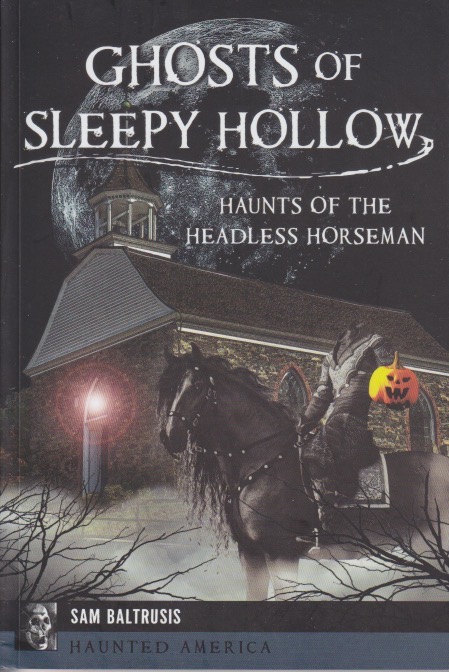
As it often goes, a friend pointed out to me a book on Sleepy Hollow that published just this week.  I preordered a copy that arrived on Tuesday and buzzed through it.  It’s what I describe to family as “one of those books”—you know, the local history, heavily illustrated quick reads from The History Press.  (I would note that I submitted what was then The Myth of Sleepy Hollow to The History Press, but they never even responded to the submission.)  In any case, Sam BaltrusisGhosts of Sleepy Hollow: Haunts of the Headless Horseman is really quite different from what I do in my forthcoming Sleepy Hollow as American Myth.  The History Press isn’t really regarded as such by historians.  I like their books nonetheless.  I was castigated by an academic journal editor early in my career for using one such book to illustrate local folklore.  (That was, by far, the snootiest rejection letter I’ve ever received.)

Aloft noses aside, there is a legitimacy in listening to what the folk say.  The tales in a book like this won’t convince skeptics, of course, but if you read them in the dark you’ll nevertheless find yourself glancing into the corner now and again, wondering if you saw something.  The book does cover the “Legend of Sleepy Hollow” and Irving’s life in a few pages—Irving was a complex man and the first truly famous American writer—before moving on to local haunts.  The thing that kept nagging at me was the easy shifting from fiction to fact.  Folklore does have a way of becoming reality (and who can definitively even say what that is?) for people.  No doubt, Sleepy Hollow has latched onto tourism in a big way.  Even more so than on my last visit there. And folklore draws on that shifting borderland between fact and fict.

One of my motivations in writing Sleepy Hollow as American Myth was that the story is largely ignored by academics and “sophisticated” readers.  It nevertheless remains important in popular culture.  Academics tend to be slow in picking up what general readers find fascinating.  I found a few academic articles on the subject, but my book was written for general readers as well.  I hesitate to say too much, otherwise, why buy it?  I have a handful of History Press (and similar) books on the region on my shelf.  I learn from them.  And I’m glad to see Sleepy Hollow getting more attention.  My only real regret about my book is that I’ll have to wait a couple of years before the price comes down.  In the meantime, those really curious about Sleepy Hollow will have this Haunted America version to read.


Borrowed Land

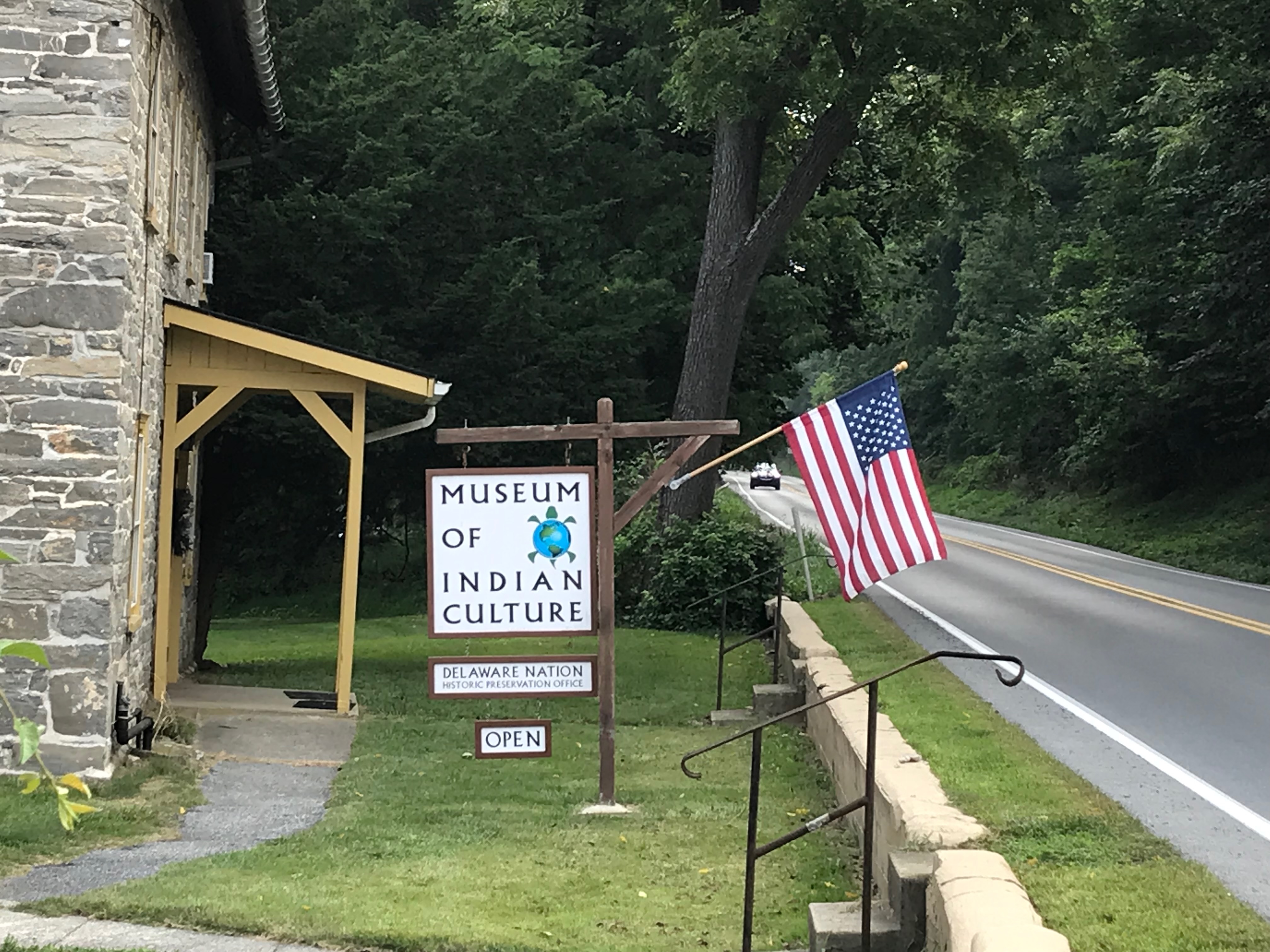
The thing about local attractions is that residents seldom have time to visit them.  Weekends are busy with the tasks you can’t accomplish otherwise with a 9-2-5 and being a “homeowner” is more like being owned.  Nevertheless, one Sunday afternoon we ventured to The Museum of Indian Culture, just south of Allentown.  I’d known about it for a few years, but wasn’t sure what to expect.  Occupying the house built by the Bieber family (not the singer, but the local bus-owning company that died during the pandemic) way back, the museum is small, but intimate.    The docents are unstinting with their time.  This is Lenape tribal land and the museum houses some local, and some national, pieces.  It also has a very extensive library.  

Often it’s difficult to feel proud of being of European extraction.  So many crimes were committed during the period of colonialism (and are still being perpetrated) that you just want to apologize over and over when you meet an American Indian.  The thing is, every native American I’ve met has been gracious and kind.  They still feel connected to the land in a way that seems foreign to Europeans.  Colonialists (and present-day capitalists) saw (see) the land as for exploitation.  We are slowly, hopefully, coming to realize that the indigenous way of living with the land is far more sustainable than the conquering attitude that metal smelting and gunpowder gave.  I kept thinking, what would it be like if people we didn’t even know existed showed up and just started taking everything for their own?  And claiming an all-powerful deity had given it to them?  Wouldn’t we fight back, just as the first Americans did?

I was especially hit by the hypocrisy of it all.  The code talkers helped win the Second World War.  As our docent said, at the Carlisle Indian School Indians were severely punished for speaking their native language.  They were being Christianized, of course.  Then, during the War the military realized we have a treasure-trove of languages that nobody else in the world speaks.  Suddenly their languages were an asset to be exploited.  Native Americans proudly served (and serve) in the military.  It is actually their land they’re defending.  We spent an educational hour in the small museum not far from property we “own,” according to a law code of “right behavior” drafted by others.  You might be able to leave places like this small museum, but they don’t leave you.


Things about Pennsylvania

When I used to pick up my daughter from college in upstate New York, we’d sometimes come up with ways to keep the conversation going for the three-to-four hours it’d take us to drive home.  One trip we thought of doing a parody of “Sweet Home Alabama,” namely, “Sweet Home Pennsylvania” (same number of syllables).  We sketched out some verses by her asking me what Pennsylvania was known for.  Now, I was born and reared in this state, but my ancestral states are more properly New York, North and South Carolina, and the District of Columbia.  Still, I feel at home in PA, but I’ve always felt it was one of those places that people think “Philadelphia” then call it quits.  Pittsburgh used to be much larger than it now is; it was the 16th largest city in the country when I was in high school.  So, the Liberty Bell/Declaration of Independence, and steel (also in Bethlehem), were obvious gimmes.  But what else?

The Amish.  Yes, they have colonies in many states, but Pennsylvania has Lancaster County.  The state may not be widely known for this, but it is the second biggest supplier of fossil fuels in the lower 48, right after Texas.  Indeed, the petroleum industry was born right here, not far from where I grew up.  So we have the Mennonite farmers and heavy industry.  It is really quite a varied state, my home.  We have lakefront property on Erie, and a tiny part of the Atlantic in Philly.  We have a good dose of the Appalachian Mountains.  Lots of forests, even some with elk.  We were the second state, after Delaware, and Pennsylvania is properly a commonwealth instead of a state.  Our European founding was by means of the Quakers.  Pennsylvania housed several Indian tribes.  It was known for religious tolerance.  Daniel Boone was born here.  So was Stephen Foster.  And two US Presidents.  Not bad.  Not bad at all.

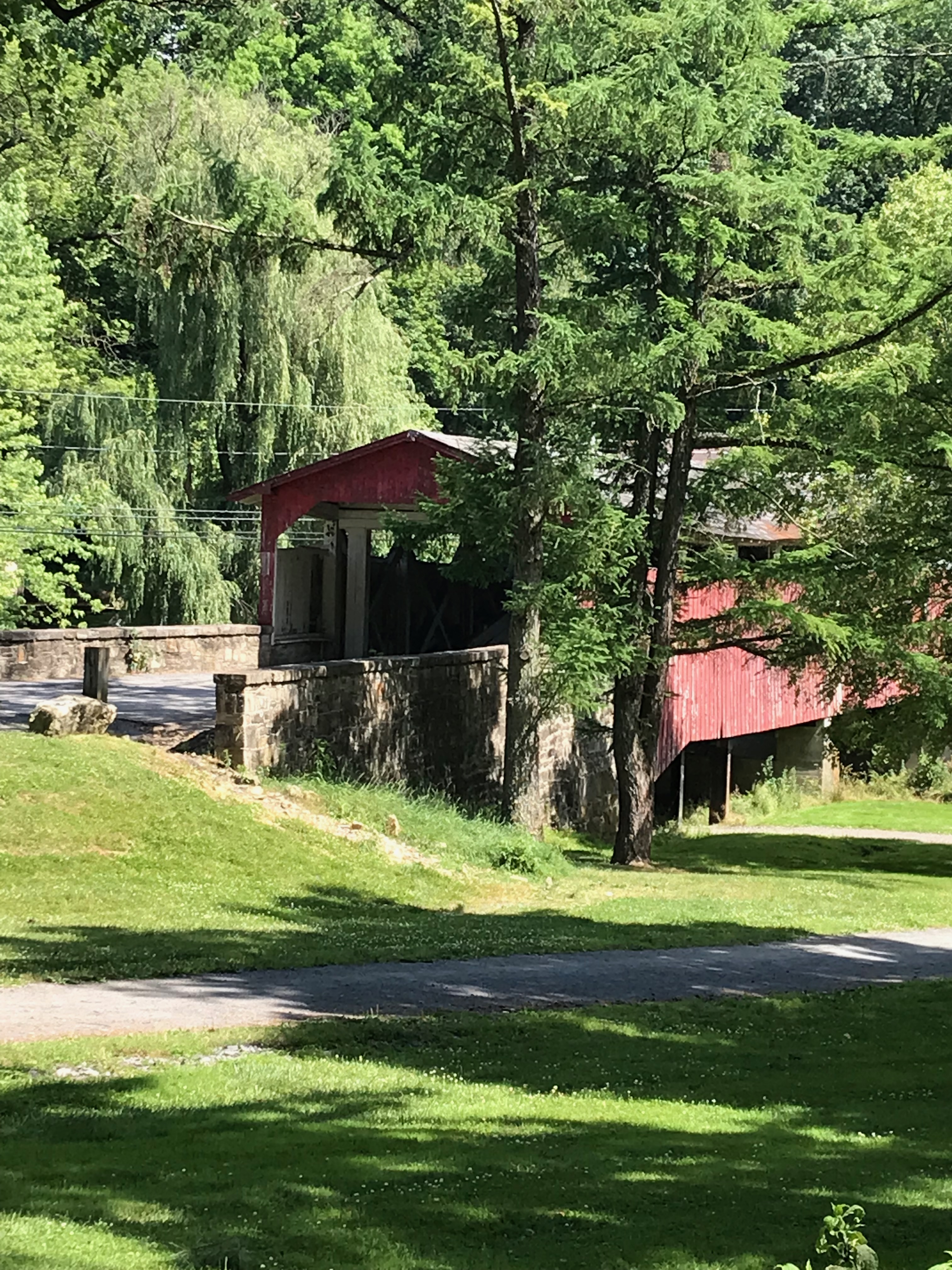
Only recently did I learn that the covered bridge was invented in Pennsylvania and that we have more still standing than any other state.  The current count is about 209.  Now, there’s a romance to covered bridges.  During this summer of staycations, we started to visit some.  You can’t go shopping there, and you can’t stay overnight or even order food, but these old-timey structures are a draw all on their own.  Part of the fascination is that we don’t build them anymore.  We have cars to keep the rain off and our vehicles don’t get spooked by the sight of open water or slip unduly on wooden planks.  Back when we were trying to make up alternatives to Alabama’s charms, I wasn’t aware we had so many covered bridges.  I saw a few growing up, of course, but paid little attention.  Now they’re another part of what makes this a sweet home.


Sudden Monoliths

Okay, so I’ve been captivated by the monoliths.  You know, the ones that even make the New York Times.  These artistic pieces show up, unexpectedly, and unexplainedly, around the world.  The trend began in 2020 in Utah, as far as anybody knows.  These shiny pillars are excellently meme-worthy and are darlings of the internet.  And their history goes back before 2020.  Even before Stanley Kubrick.  You see, most news stories point out that Kubrick’s 2001: A Space Odyssey—one of the most influential movies ever made—established the idea of monoliths as being alien beacons (a favorite kind of beacon).   People instantly know what a monolith symbolizes.  Or at least they think they do.  But monoliths have so, so much more to offer.

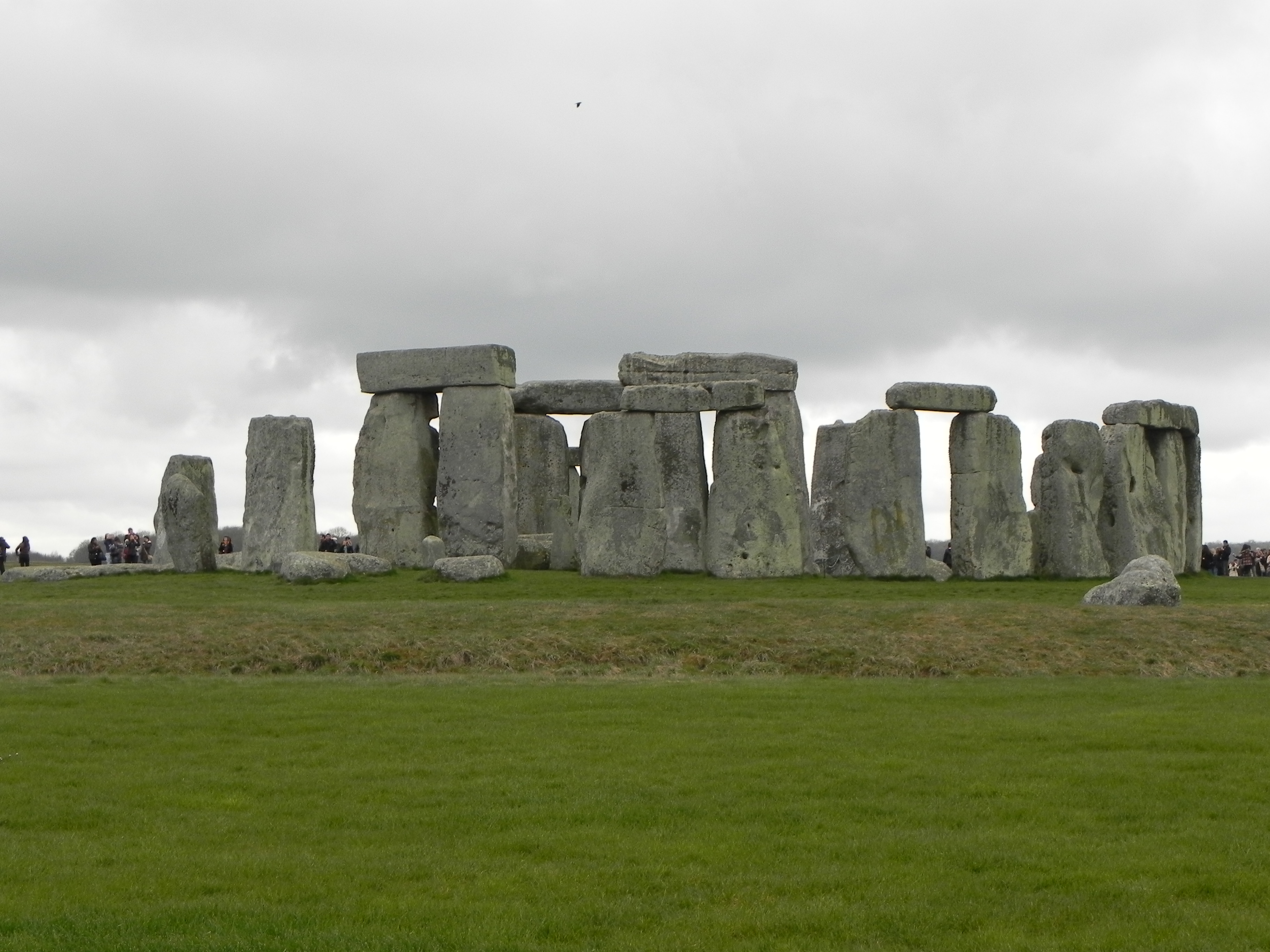
Perhaps the most famous monoliths in the world are found at Stonehenge.  Mysterious and beautiful, this monolithic ring has captured the imagination for generations.  When my wife and I lived in Scotland, we made a point of seeing as many stone circles as we could.  Way up in the Orkney Islands the Ring of Brodgar was probably the most impressive of them, owing to, in large part, its remoteness.  Standing next to these tall monoliths makes you realize how small people are but also what they can achieve when they cooperate.  While the UK may be better known for its monolith circles, even older ones appear elsewhere.  Rujm el-Hiri, for example, in Israel.  Although not a circle, the monolithic pillars at Göbekli Tepe should be rewriting history books.  Why the monolith?

Freudians would point to Tuto Fela in Ethiopia or other phallic architecture, but my mind tends toward Rapa Nui, or Easter Island.  The human being tends to stand taller than wide.  Evolutionary biologists tell us that was to help us see over the tall grass of the savannah.  (And if you doubt grass gets that tall, visit my yard sometime in the summer.)  These monuments seem to symbolize more that the procreative architecture of male human anatomy.  They seem to point to our ability to see over the obstacles in our way.  They seem to say, when people are divided against each other the plains remain barren.  When they decide to work together, Stonehenge emerges.  I don’t know the motivations of these modern artists.  I do admire their ability to put these monoliths into remote locations without leaving evidence of how they did it.  I really appreciate those creatures that stand tall and have a spirit of cooperation, even if others just don’t see the point.


The Teenth of June

It’s only really when they have no choice.  The Wednesday holiday, that is.  No convenient weekend a day away.  So Juneteenth is actually celebrated on Juneteenth.  I believe in holidays.  I think they’re more than just time off work, and Juneteenth celebrates freedom.  And it reminds us that our African-American siblings aren’t yet truly free.  We still have much to learn and having a holiday to underscore that is important.  Capitalism does a good job of disguising freedom, of course.  Your worth is weighed by how much value you add to the company.  Taking a day off from that is an opportunity to reflect on how daily living could be improved for all.  Juneteenth is a necessary holiday.  We need constant reminding.

I don’t see many African-Americans flying flags on their houses declaring themselves “not woke.”  We prefer to believe we’ve reached perfection already.  Capitalism is great at spreading myths like that.  The basic premise behind it is greed, and people are easily divided into groups because of skin tone.  It’s a dangerous combination.  Somewhere along the way, “justice” came to be a swear word.  Particularly among one political party that has decided power, at any cost, is the sine qua non of human existence.  If that means oppressing others systemically, or if it means invading a neighboring sovereign state because you have nukes with which to threaten the rest of the world, it’s all the same.  Power is far more addictive than any opiate, but we  don’t have any laws preventing those unsuited to holding it from doing so.  Juneteenth uncovers a host of problems still to address. 

Slavery was hard to let go because it cut into profits.  Human beings love wealth more than each other.  Ironically, without others to compare with, wealth means nothing.  If money makes someone happy I have no problem with that, but it has to come with responsibility.  One way to handle it responsibly is to insist that only so much can be had before the surplus goes to insure that all people have enough.  Of course, where Supreme Court justices openly accept bribes we can’t wonder that there are legal loopholes to help the wealthy circumvent their civic duty.  We need constant reminders.  We need holidays like Juneteenth.  We need to give our African-American siblings the same rights and privileges all people should have.  It’s appropriate to celebrate small steps in that direction.  Even if it means giving a Wednesday off of work.


Personal History

Being an historian by disposition has its own rewards.  I relate to the chronicling monks of the Middle Ages and their eagerness to record things.  On a much smaller scale, I try to keep track of what has passed in my own small life.  As we all know, most days consist of a stunning sameness, particularly if you work 9-2-5.  Although your soul is evolving, capitalism’s cookie-cutter ensures a kind of ennui that vacation time, and travel in particular, breaks.  Travel is expensive, however.  A luxury item.  It’s also an education.  My wife and I began our life together overseas, living three years in Scotland.  We traveled as much as grad students could afford.  Gainfully employed in the United States, we made regular summer trips to Idaho, and often shorter trips closer to home in Wisconsin.

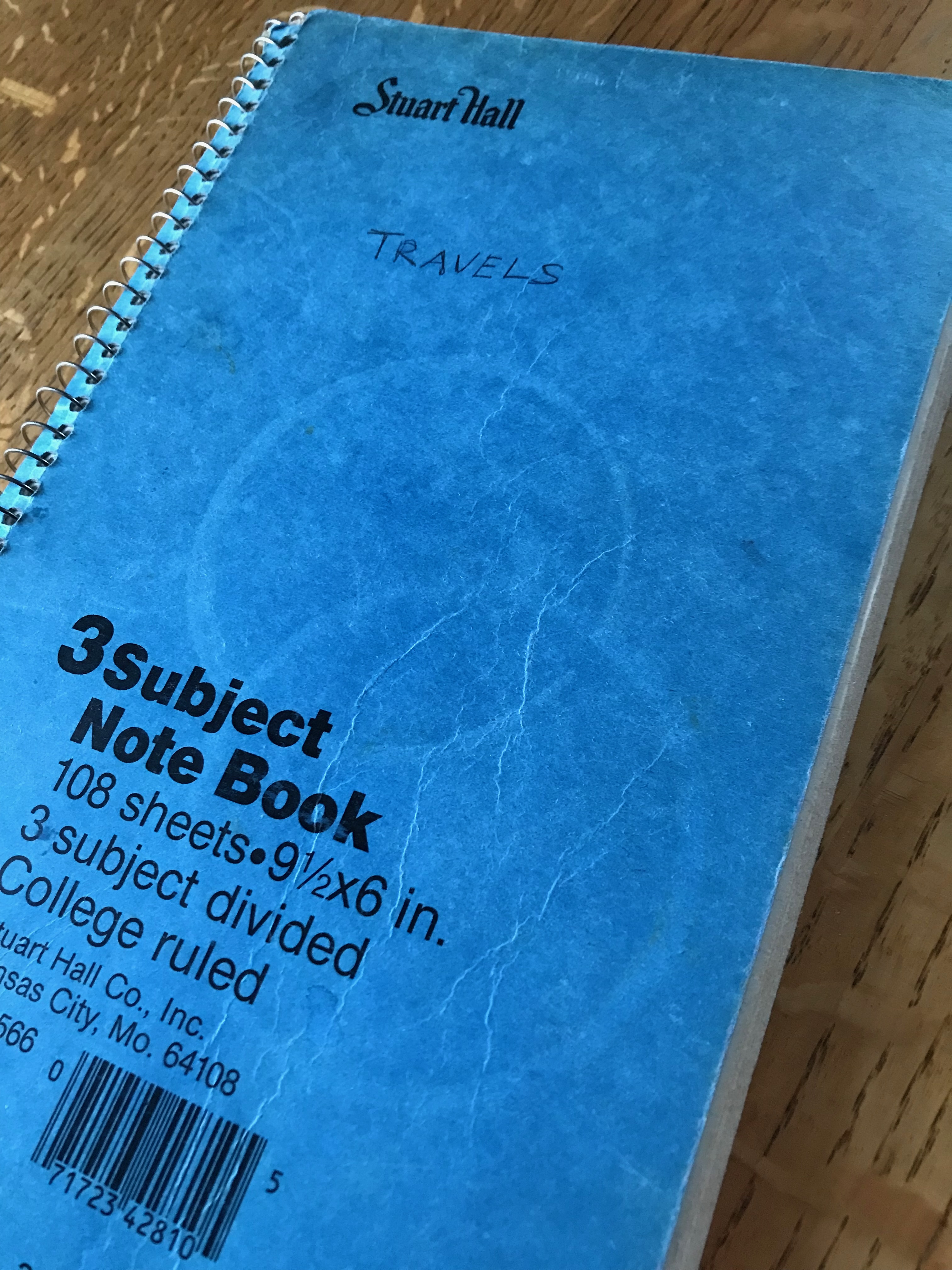
We repurposed an old, spiral bound, three-subject notebook to record our adventures.  It spanned twenty-two years.  When we moved to our house in 2018, this notebook was lost.  (A similar thing happened with an Historic Scotland booklet where we’d inscribed all the dates of properties visited.  It vanished somewhere in central Illinois in 1992.)  Recently, looking for an empty three-ring binder for my wife to use, I unexpectedly came across our old three-subject notebook.  The relief—maybe even ecstasy—it released was something only an historian could appreciate.  Here were the dates, times, and places that I thought had been lost from my life.  In that morass of years after Nashotah House my mind had gone into a kind of twilight of half-remembered forays to bring light to this harsh 9-2-5 world.  I carried the notebook around with me for days, not wanting to lose sight of it.

Those of us who write need to record things.  I’ve never been able to afford to be a world traveler.  The company’s dime sent me to the United Kingdom a few times, but overseas after Scotland has been more a reverie than a reality.  But now, at least, I could remember our domestic trips.  The notebook included ventures I’d forgotten.  You see, when you get back from a trip you have to begin the 9-2-5 the very next day, particularly if your company isn’t fond of holidays.  (This explains why I write so much about them.)  Pleasant memories get lost in the mundane cookie-cutter problems of everyday life.  And yet I could now face them with that rare joy known to historians.  I had a notebook next to me, ready for transcribing.  It was going to be a good day.


Salem Away

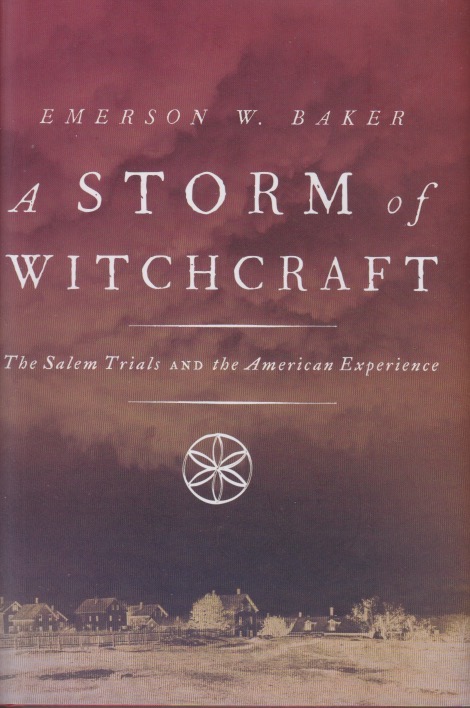
I can’t help but think the term “witch hunt” has been cheapened in recent years as a prominent, wealthy white man has been claiming to be the victim of one.  Nevertheless, America was actually home to an infamous witch hunt some centuries ago.  I’ve read a few books about it and there are many more yet to be read.  The thing Emerson W. Baker’s A Storm of Witchcraft has going for it is the broader context he gives the events.  Not only the events but the town of Salem also.  Older than Boston, and a major city in its day, Salem had more history than the trials for which it is famous.  Baker does a nice job of describing the ambivalence that residents have felt, and still feel, towards its past.  Tragic, yes, but fascinating also.

I fell in love with Boston the first time I set foot in it.  I made quite a few trips to Salem during my years there, drawn in by the history.  So much isn’t recoverable.  One of the aspects that comes clearly through Baker’s treatment is just how much of a Puritan problem witches were.   And not just witches.  Puritans didn’t care for those who differed from them.  Quakers could be just as bad as Devil worshippers.  And the tragedy of Salem illustrates that the Puritans didn’t much care for one another either.  Religion gets that way when it’s weaponized.  Baker points out the many pressures of what was essentially a frontier town on the coast.  War with American Indians was still a reality.  And Salem wouldn’t be innocent of the slave trade some decades later.  But it all seems to keep coming back to 1692.  And the death of the innocent.

Baker also points out how Cotton Mather covered his own tracks, justifying what he knew was wrong in order to keep privilege in its place.  We tend to think of that as a modern trait, but clearly clergy were well aware of it back in the early days of this nation.  Religions always do have a difficult time admitting it when they make mistakes.  I think they’d find that people can be pretty forgiving, though, especially since they often advocate forgiveness themselves.  This book is a thought-provoking treatment of Salem.  The events that took place there have shaped this county in unexpected ways.  They made the case, centuries ago, for tolerance of those who are different.  It’s a lesson we still have trouble learning.


Peak Complexity

I remember being a kid.  Things probably weren’t as simple as some adults seem to remember—society, even as a child, is complex.  You soon learned the important lessons: who the bullies were and how to avoid them.  Cars are dangerous, particularly if they’re moving.  God is always watching you.  Then you start school and you begin to learn things you simply didn’t understand before.  You study math and although addition and subtraction seem pretty easy, division and multiplication require some concentration.  By the time you get to high school the math has become so complex that hours of homework are required to figure it out.  I don’t know about you, but nobody explained to me what jobs you needed this for.  I just hoped it wouldn’t be mine.

I’ve managed to get through so far with only the obligatory mathematical complexity of trying to explain certain problems to my daughter when she was in a similar situation.  Fortunately she understood how things worked better than I ever did.  The complexities, however, also come in other species.  I learned that being an adult meant constantly negotiating complexities.  That’s tricky for a guy like me because I tend to understand things by tracing them to their origins.  (There’s a reason history appeals to me.)  Social complexities often don’t allow such tracing—you need to figure out relationships and their implications and how you fit into the picture.  The same is true of jobs.  I’m sure many of you’ve had a job where the requirements change as circumstances alter.  You may have been hired to do one thing, but now you do another.

Then big life events come in with all their own complexity.  The other day I was wondering if there’s such a thing as peak complexity.  If there is, what happens when we reach it?  Do things in life simply become so intricate that society (I’m thinking here simply in human terms) implodes?  Or do we start to make things simpler again? Is there any going back?  I used to tell my students that my own grandmother was born before heavier-than-air flight.  By the time she died we’d been to the moon more than once.  Yes, rural life had its complexities, but since the industrial revolution the pace has been—what’s more than breakneck?  I know computer engineers and they tell me code is so complex that it’s actually a job to sort it out.  Just because you can fly a helicopter doesn’t mean you can put one together.  If we ever do reach peak complexity I have a suspicion that we won’t be able to tell, until in retrospect.  Childhood’s beginning.


The Problem with History

The problem with history is that it shows foundational views are constantly shifting.  Let me preface this statement by noting that although I taught Hebrew Bible for many years my training was primarily as an historian of religion.  More specifically, the history of a religious idea that shifted over time.  My dissertation on the topic of Asherah required specialization in Ugaritic and in the religions of the ancient world that included Israel.  I have subsequently been researching the history of ideas, and my current, apparently non-sequiturial books on horror and the Bible are simply a further development of that interest.  The focus has shifted more toward the modern period, but the processes of uncovering history remain the same.  Many people don’t like horror.  I get that.  It is, however, part of the larger picture.

History, to get back to my opening assertion, is not fixed.  It’s also tied to the dilemma that I often face regarding religion.  Since Jesus of Nazareth never wrote anything down, and since Paul of Tarsus was writing to specific groups with their own issues, no systematic theology of Christianity emerged during that crucial first generation.  What eventually grew was an evolving set of premises claimed both by Catholicism and Orthodoxy to be the original.  Neither really is.  Then Protestantism made claims that the establishment had it wrong and the Bible, which was a bit ad hoc to begin with, was the only source for truth.  It’s a problematic source, however, and systems built upon it have also continued to evolve.  Herein lies the dilemma.  With stakes as high as eternal damnation, the wary soul wants to choose correctly.  There is no way, though, to test the results.

Eventually a decision has to be made.  Christian history is full of movements where one group or another has “gone back” to the foundations to reestablish “authentic” Christianity.  The problem is that centuries have intervened.  That “original” worldview, and the sources to reconstruct that worldview, simply no longer exist.  The primitivist religions have to back and fill a bit in order to have any foundation at all.  What emerges are hybrid religions that think they’re pristine originals.  Historians know, however, that no originals exist.  We have no original biblical manuscripts.  Teachings of Catholicism, and even Orthodoxy, change in response to the ongoing nature of human knowledge.  History contains no instructions for getting behind the curtain to naked reality itself.  At the same time the stakes have not changed.  The consequences are eternal.  Those who choose must do so wisely. 


You’re History

A story from Inside Higher Ed discusses a study of history majors and their rapid decline.  This occurs during a sudden onset of “job related” majors and the graph accompanying the article shows how STEM has taken over higher education.  These are the fields with actual occupations awaiting them at the end of the degree, while disciplines such as history and religion (also very near the bottom) have less clear career paths.  Indeed, when I’ve been in the job market I find that a religion degree is less than useless, no matter what the department recruiters tell you.  If you’re not bound for the clergy you undertake the study at your own peril.  History, I expect, suffers from a similar dynamic, but the peril in this case is to all of civilization.

We’ve seen over the past two years how a stunning lack of knowledge of history sets a nation on the path to chaos.  Businessmen with no classical education don’t make good national leaders.  Knowing where we’ve been, as Santayana so eloquently stated, is the only thing that keeps us from repeating past failures.  History is our only safeguard in this respect.  Over the Thanksgiving break I spent a little time delving into family history.  Since I don’t come from illustrious lineage, I felt the frustration of finding out what happened to obscure people from the last couple of centuries.  Lack of history on a personal level.  On a professional level, my doctorate is really in the history of religions (ancient religions) and I’ve become keenly aware of just how little history there is to the very popular modern Fundamentalist movement.

Maybe I said that wrong.  They do have a history, but the belief system that is touted as ancient is really quite modern.  Anti-modern, in fact.  When historical knowledge is lacking, however, people can make all kinds of claims based on nothing more than wishful thinking.  History keeps us honest.  Or it used to.  When we’ve outlived the need for history we’ve started down a path unlit by any embers of past human foibles.  We’ve been living in a culture in love with technology but not so much with critical reflection of where such innovations might take us.  Doctors are beginning to complain that they spend more time on their computers than with their patients.  The time freed up by the internet has been taken up by the internet.  And when all of this comes to its natural culmination, we would be well served by historians to make a record of what went wrong.  If we could find any.