
Having felt like an automaton in the realm of higher education, I was occasionally overwhelmed by the number of students and lack of resources. One of my fervent beliefs is that multiple-choice tests do not really demonstrate what a student knows, but playing the numbers, I sometimes had to resort to them. Being an adjunct, I didn’t have access to Scantron, so I devised a method of stacking the sheets precisely and grading them with a power drill. It was my one bit of notoriety at Rutgers—I was the guy who graded with a drill. All the while, however, I knew that a truer method would be to allow students to write for themselves. Even that, however, is going the way of automation. A recent story in the Chronicle of Higher Education reveals that student papers are sometimes being graded by robots. Real robots. The truly scary part of the story is that the robots provide grading almost indistinguishable from the professor, a species quickly becoming obsolete. I tell myself not to panic.
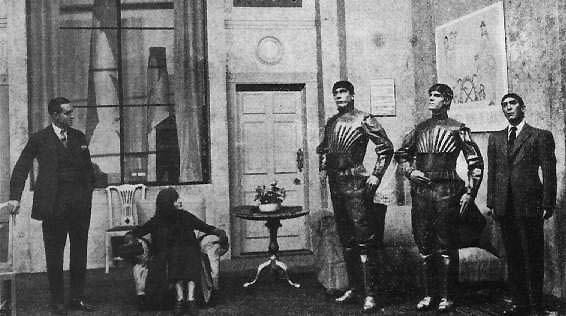
“Don’t panic,” of course, was the catch-phrase popularized by Douglas Adams in the Hitchhiker’s Guide to the Galaxy. In a world overwhelmed by forces we can’t hope to understand, panic is a natural enough reaction. Adams gave us Marvin the Paranoid Android. Higher education has given us the paranoid professor. Parents who pay extraordinary—mythologically high—tuition rates often ask me where all that money goes. It certainly doesn’t line the pockets of humanities professors; indeed, many of the classes are taught by adjuncts who are the penny dreadfuls of academia. I don’t know where the money goes. I do know that university presidents and football coaches are not wanting for material goods, but even their greed can’t account for the entire greenback drain.
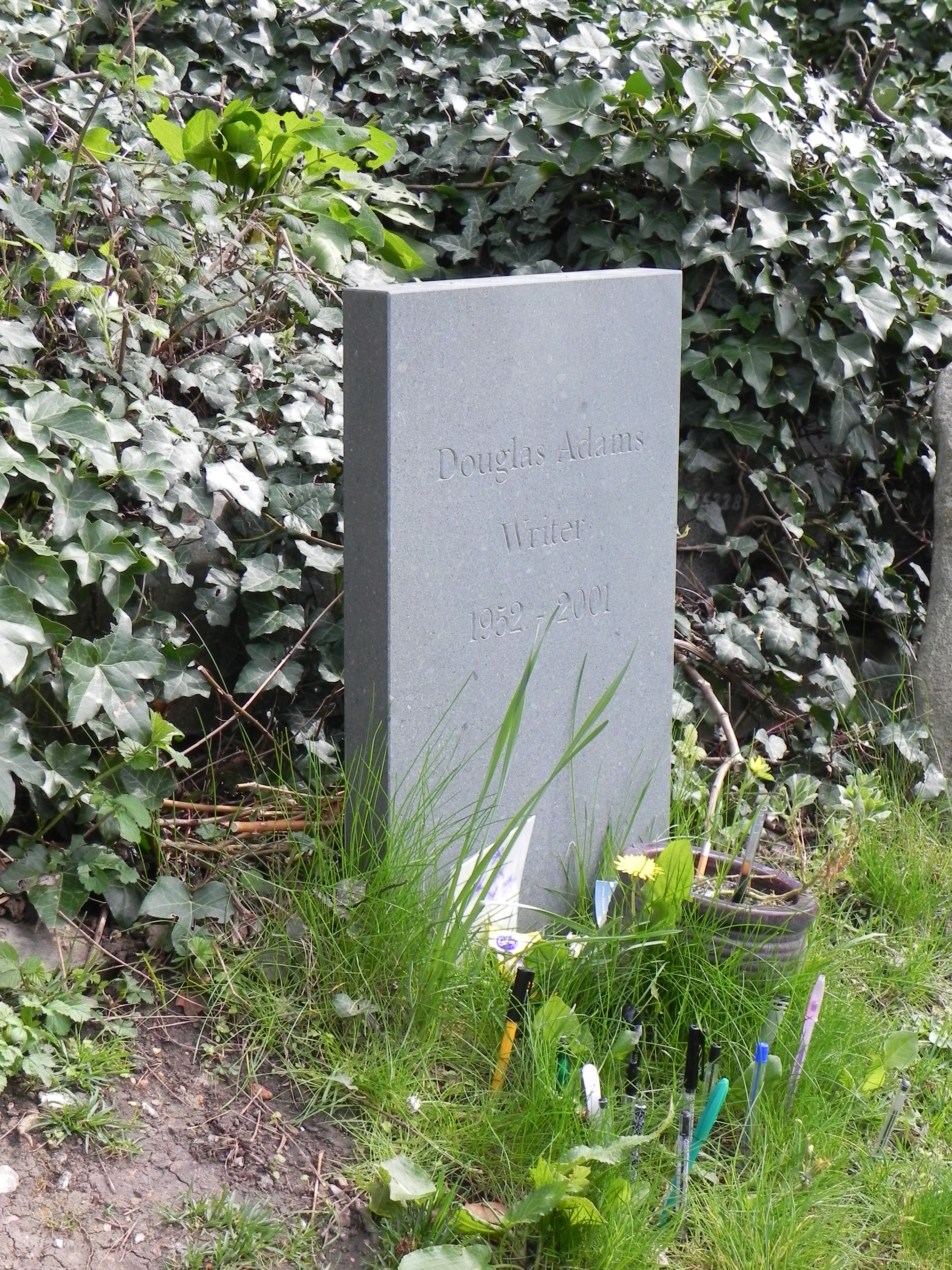
If I were still a professor I’d be tempted to ignore the sage advice of Douglas Adams about now. Courses can be covered by an overwhelming army of competent adjuncts, and grading can be contracted out to robots. Students really don’t even need to come to class any more as distance education has taught us. College becomes little more than an excuse to drink while away from home with a hefty tab being picked up by the folks back home. Higher education may have had the seeds of its own destruction always planted within itself. We’ve confused technology with the desire for increasing comfort and ease of lifestyle. It was only a matter of time before universities caught up. Standing by the grave of Douglas Adams in Highgate Cemetery I’m thinking that his bizarre vision of the future was more sensible than what has actually evolved in our culture. That, and I’m glad I learned to use a power drill.


 Steve A. Wiggins