
Although mildly jetlagged and slightly incoherent, a promise is a promise, so I took my family to Manhattan to see (the upper half of) the Macy’s Thanksgiving Day Parade. Commercial and flashy, it is difficult to conceive of a more American expression of holiday wonder. It kicks off the secular Christmas season and the parade forms the background noise to many a feast preparation in the United States. Not living in the city proper, there are limits to how early public transportation can get one into town, so by the time we reached the Upper West Side, the crowds were pretty intense. We met our friends at West 72nd Street and tried to see the floats and balloons over the heads of a sea of humanity; if you could glimpse the flashing tip of a tuba, we counted that as seeing a marching band. The weather was cool but nice and in the dense crowd I kept my hands shoved in pockets, not always sure they were my own pockets, and waited for the next tall or hovering parade feature. In-between times I stared at the building to our left until a friend informed me that it was the Dakota. The site of John Lennon’s slaying and the exterior used in Rosemary’s Baby, where, presciently, a murder victim was laid out on the sidewalk not far from where Lennon fell. Suddenly the parade took on a profundity that betrayed the levity of the gas-filled characters floating by.

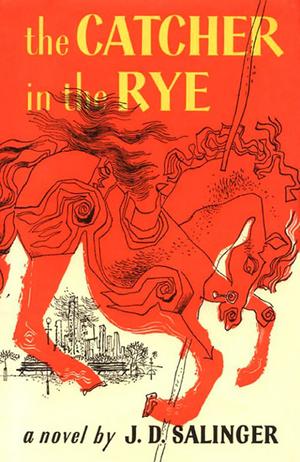
Mark David Chapman, a delusional, born again Christian, had spent many hours waiting about where we were suspended in the crowd. Thinking himself Holden Caulfield of the Catcher in the Rye, he murdered Lennon creating a saint and a demon simultaneously. Perhaps John Lennon’s ashes are still floating about Central Park, and as we walked through, the exterior of the Teutonic Dakota took on a haunting quality. Lennon was a lover and a protestor and an experimenter, and scenes from Rosemary’s Baby of Satanists smoking cigars also hung in the air. The shop window displays on Fifth Avenue drew great crowds, but as we drifted toward 51st Street, we decided to stop into Saint Patrick’s Cathedral, along with the surging mass of the faithful.
Cathedrals are best enjoyed in quiet solitude. Nevertheless, we followed the pilgrims through the long nave, stopping to glance at the numerous chapels with statues along the way, each with a collection box, securely locked, asking for donations. And people say Christmas is commercial! Want to pray through your favorite saint? Please deposit a quarter. Preferably two. Or more. Their budget in candles alone would support many a smaller church throughout the nation. Advent begins this weekend, so the crèche was set up at the front with life-sized figures of the usual players: holy family, shepherds, wise men. And collection box. There was no baby Jesus and when my daughter asked why I said, pointing to the collection box, apparently they were saving up to purchase one. Keeping Christ in Christmas? Indeed. All those bronze, life-size Pope head statues can’t be cheap. John Lennon was cremated and his ashes scattered, leaving no trace. Popes are cast in bronze. Yes, John Lennon was wealthy, and once quipped that the Beatles were more popular than Jesus. What is the truth of the matter? Looking at the façade of the Dakota, I know where I would rather light a candle.
 Steve A. Wiggins