Welcome 2026

I put great stock in holidays, but I’ve never felt a deep connection to New Year’s Day.  I’m more of a morning person than the stay up late sort, and the New Year also seems cold after the coziness of Christmas.  But here we are in 2026 nevertheless.  We’re encouraged to look ahead.  I’m not much of a corporate person and I don’t see much wisdom in devising five year plans in an unpredictable world or any such nonsense.  The way things have been going in the news, it’s hard to have a five-day plan that bears any resemblance to reality.  But New Year’s Day does seem an appropriate season for optimism.  Hope stands here, anticipating better days ahead.  I am, despite appearances, an optimist.  I do believe in progress and the calendar keeps on ticking over regardless.  What will 2026 hold?  Who knows.  Best to take it one day at a time.

For me personally, I’ve got a couple books nearly complete and I do hope to find publishers this year.  And I’ve got many others started as well.  Writing is an act of optimism.  I’m always touched when someone lets me know they’ve found my work interesting, or even helpful.  Someone once contacted me to let me know Holy Horror had helped them through a difficult time.  This made me happy; writing books is a form of connection.  When I read books—a major planned activity for 2026—I’m connecting with people I don’t know (usually).  Writing to me feels like giving back.  The funny thing about it is the tension of having little time to do it seems to make it better.  I always look forward to the break at the end of the year but I find myself using the time to recover rather than for the intensive writing I always plan to do.

I have spent the last several days doing a lot of reading.  That too is a coping technique.  I’ve got some good books that I’m looking forward to finishing in 2026.  And the blog bibliography continues to grow.  Looking ahead I see reading and writing.  That to me is a vision of hope.  I didn’t stay up to midnight last night—that only makes me start out the new year grumpy.  No, instead I woke up early to start the year by writing.  And reading.  What does 2026 hold?  I have no idea.  I’d rather not speculate.  I do believe that as time stretches on some improvements will begin to take place.  I do believe holidays are important, both looking back and looking ahead.


Scary Christmas

A few days ago I mentioned the connection between Christmas and Halloween.  I’m apparently not the only one to be interested in this because Tim Rayborn wrote Scary Book of Christmas Lore.  This little, holiday-themed book is a gathering of (mostly) scary creatures associated with the winter holidays.  Each creature, or tradition, is treated in less than two pages and the book is generous with color illustrations.  While not a research book (it’s set out as an impulse buy in some Barnes & Nobles at least), nevertheless Rayborn, like yours truly, holds a doctorate from a university in the UK and spends at least part of his time writing books on spooky topics.  (More successfully than yt.) In the process of researching Sleepy Hollow as American Myth I gathered stories of scary Christmas creatures, but didn’t include most of them in the book.

Apart from the obvious Halloween connection, a few things stood out to me about this book.  One is that the majority of these tales come from Germanic cultures.  If these branch up into Scandinavia, almost all of the creatures in the book are covered.  There are a few from other regions as well, but this suggests that winters in Northern Europe used to be seriously scary.  Some of the darker visitors around the winter holidays are clearly local variations of others.  Krampus, for example, is having a day and there are other local versions of a monstrous companion to the “good cop” Santa who comes along to dole out punishment.  Some of the other beings associated with the season are a variety of other monsters—some human, others less so.

The long, dark winter suggests itself as a season for scary stories.  It’s unlikely that this book will send anyone shrieking into the closet or under the bed, but it helpfully brings to the light that people have long found both the fear and entertainment value of telling of frightening creatures.  The Teutonic imagination gave us many of our nighttime fears.  The British, inspired by such tales, tended to codify them into the monster stories that gave the modern horror genre its tentative start.  Although, as I discussed with my daughter on Christmas morning, horror stories began in the pre-biblical era (something I wrote about in an article a couple years back).  And, of course, religion and horror have naturally gone hand in glove for longer than anyone has really traced in any level of detail.  So a little book of monsters around Christmas?  Why not?


Quiet Christmas

It has been a busy Christmas season this year.  Busy from my perspective, that is.  Introverts like to spend time alone, recharging.  Those with my kind of neurology, though, crave being with others when we crave it.  Even on a budget we’ve been able to anticipate the peace of Christmas Day.  For me, the rush began with attending my usual conference in November.  It always meets the weekend before Thanksgiving and Thanksgiving was late this year.  The weekend before the conference we attended the Lehigh Valley Vegan s’MAC Down on Sunday afternoon.  Friday I was on a train to Boston.  I returned and spent Thanksgiving with some good friends in New Jersey and December came with the following Monday.  Since work fills in the interstices between weekends I really didn’t have time to catch my introvert breath.

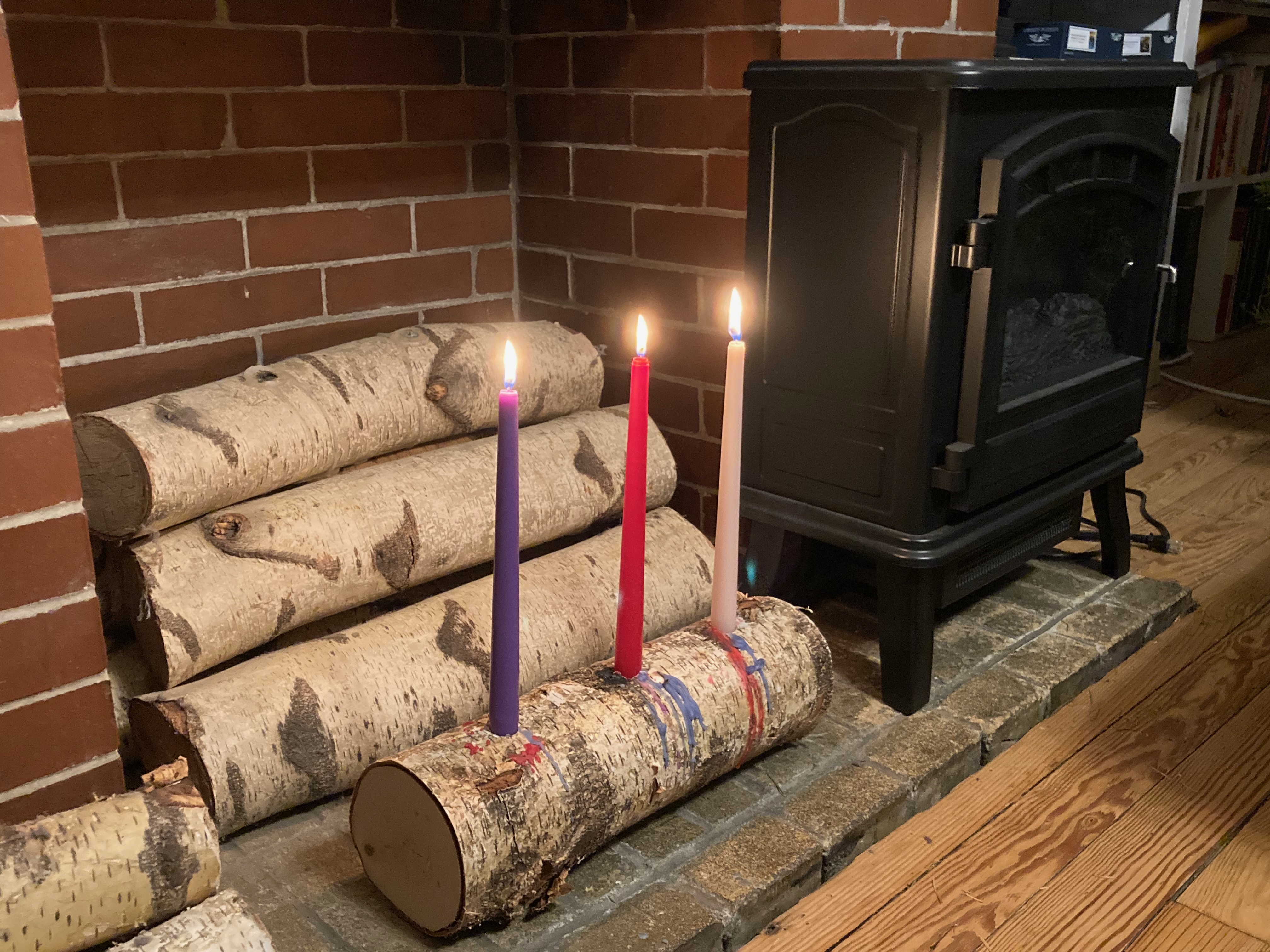
That first December weekend we attended the Lehigh University Christmas Vespers.  This free concert is a gift to the community and was a quiet way to enter the season.  We used to attend a similar event at Princeton University, but Lehigh’s much closer.  Living near Bethlehem (Christmas City), we like to spend a day in the historic downtown, looking for stocking stuffers mostly.  This was the next weekend.  We followed this up with our annual visit to Christkindlmarkt.  By the time I was done counting on my fingers, there was one weekend left before Christmas.  Friends had invited us to dinner that Sunday night, a day after the Lehigh Valley Vegan cookie exchange.  This level of activity is more than I’m accustomed to, although it did remind me of how socially busy the Christmas season was in Britain, even for post-grads.  My wife and I came home from dinner, lit our Yule log, and quietly acknowledged the winter solstice.

So now it’s Christmas Day.  I’m awake at 3 a.m., like a kid.  It is a day when I don’t have to go anywhere.  And, most of all, it’s quiet.  The only sound is a great horned owl hooting in the woods across the street.  I value this day for the opportunity to be still.  A day for recharging.  Before anybody else is awake, I listen.  There will be music later this morning and it will be fine.  And I’m thankful for all the activities that led up to this point.  Tomorrow, it seems, I’ll be out shoveling as yet another winter weather system makes it way here.  But for now it’s quiet.  And a Christmas owl agrees to cease hooting after letting me know I’m not alone.


Symbolic Light

I’m a great believer in symbolism.  I have made a number of symbolic gestures in my life, whether anybody notices or not.  Today is the winter solstice, a day of great symbolic importance.  Not only do we light a Yule log at home, accompanied by poetry reading, but I have another, private symbolic act.  This year I will substitute our usual nightlight for the wicker tree.  Not the one from the movie, thank you.  No, many years ago, when my mother was still alive and working at a local department store, she bought us a small wicker and plastic Christmas tree.  When you plug it in, it shines with white Christmas lights.  Every year I set it on the landing at the turning point in our staircase to substitute for our usual night light.  We have an older house and the nightlight is important for going downstairs when it’s still dark.

The symbolism here is that my mother is bringing light on the shortest day of the year.  The solstice has been observed from time immemorial in northern climes.  We may not have a white Christmas this year but we’ve already had a pretty significant snowstorm (all melted by a significant rain and wind storm), but the solstice is about light, not cold.  You may not have noticed it, but the sun is setting just a bit later these days.  It’s also rising later, as it will continue to do until the second week of January.  The solstice is the day when the number of hours of light is the least, when the longer evenings are offset by the later mornings.  Earth-based religions, which gave us Yule, longed for days of greater light.  This was the symbolic reason for Christmas so near the solstice.

My symbolic switching of nightlights isn’t the only symbolism I realized this year.  As I was thinking about the significance of this day for making the change I realized that the nightlight we normally use dates back to the year my mother passed.  We had one emotionally-wrought morning to sort through her belongings.  One of the little things I picked up was a stained glass lamp.  It’s very small, with a candelabra size mount for the lightbulb.  It took the place of our old stair-top nightlight.  And although today I switch to the tree my mother gave us, the light that we normally have through the night comes from a small lamp I inherited from her.  All of us together await the returning of the light.


Halloween in December

The wind was frigid.  We were still in the cold snap that layered the northeast in its gelid blanket for the first part of December.  We had advance tickets for Christkindlmarkt, a Bethlehem tradition.  As we wandered through the tents I was thinking of one of the few Facebook groups I follow, Halloween Madness.  Most of the posts are repurposed from the internet but the last few weeks, since Thanksgiving, the offerings have been blending Halloween and Christmas.  Most people don’t stop to think how closely related the two holidays are.  (I devote a chapter to Halloween in Sleepy Hollow as American Myth, where I explore this connection in a preliminary way.)  But in this bleak December—we’ve seldom seen the sun for more than a couple hours at a time since the aforementioned Thanksgiving—my thoughts emigrated towards horror.

For those of you who’ve never been to Christkindlmarkt, it’s a germanic themed market consisting of four (or more) large tents, full of vendors.  Many of them are Christmas themed, but not all.  Those that are Christmas themed tend toward the Currier and Ives version of the holiday, but some consider the more ghostly side of the season.  Although I didn’t see any booths explicitly devoted to horror themes or monsters, a few of them had a bit of this aesthetic to them.  I’m no fan of capitalism, but I have to wonder if this isn’t a missed opportunity.  I think there’d be some fans.  I do enjoy Christmas for its symbolism and optimism and coziness.  I really do.  But when I have a few free moments in the holiday season I sneak in reading a scary book or watching a horror movie.  There is a connection, but you have to study the holidays to see it.

I fear that this year I was trying pretty hard to preserve any bodily warmth between the tents and didn’t really have much time to think about it until the next day.  I’m always mindful that Edgar Allan Poe’s “The Raven” is set in December.  And that both Charles Dickens and M. R. James associated Christmas time with ghosts.  I suspect most people, however, prefer the cheerful, happy side of the holidays.  I don’t blame them.  Life can indeed be harsh, as harsh as this windchill, for much of the rest of the time.  There are some of us, however, who do find a little lift by peering into the darker corners, even at this festive time of year.  And with natural light in such short supply, there are a lot of shadows about this chilly December.


Eve of Winter

“You must live like a monk!”  These were the words of one of my bosses.  I really couldn’t deny it.  I try to lead a quiet life of reading and writing and I do try to avoid extravagances.  My contemplative life suits me.  Every now and again, however, busy stretches come and distort my perspective.  Thinking back over this autumn on the eve of December, that season has been one of those times.  So much so that I haven’t been able to watch much horror, which is one of my usual seasonal avocations.  I suppose it started when a scammer emptied out our bank account in early September.  That entire month is a blur of fear, depression, and anxiety.  Those emotions have settled down, but the trauma and financial loss have remained.  

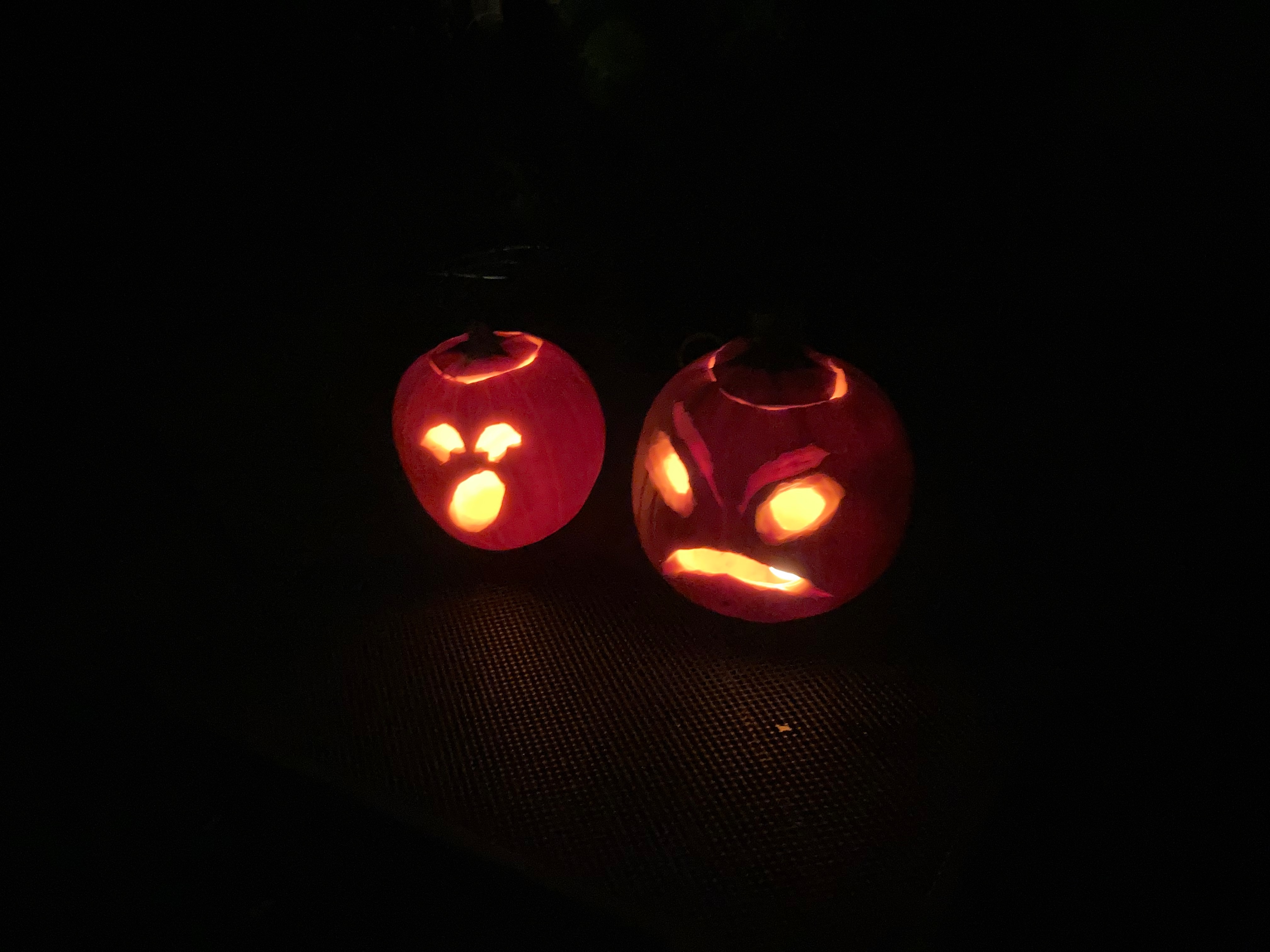
Toward the end of the month, my daughter moved.  Thankfully not too far away, but parents often feel the need to help when their only child is not yet well established in a new area.  October grew so busy that we had no time to decorate for Halloween.  We did manage to carve some pumpkins, but the weekends—the only time anything for real life actually gets done—were all eaten up and I entered November with that crowded head space that accompanies a monk lost in the secular world.  Looking back, I finished fewer books than usual and I’ve already mentioned about the movies.  This year I was pretty sure I’d be attending the American Academy of Religion and Society of Biblical Literature annual meeting in November.  I had missed the past two years, not really mourning the loss, but preparing for the trip occupied part of October.  Halloween came and went, taking the first weekend of November with it.

In November we had guests come and the second weekend disappeared.  The next weekend I had to get into high gear for my trip to Boston.  That was when I had the flu shot that wiped out a weekend.  I awoke groggily on Monday realizing that Friday I’d be on Amtrak’s Northeast Regional.  I’d never been to Metropark before and the conference itself ate up the fourth weekend in November.  After that, we turned around and spent Thanksgiving with some longtime friends in New Jersey.  Then we learned a Pennsylvania friend had spent the holiday alone and decided to make a celebration for them yesterday.  So here I find myself on the eve of winter with a fall that somehow disappeared.  Busy spells can be refreshing, even for the monkish.  But tomorrow is back to work as usual as December sets in.


Thanksgiving Reentry

One of the facets of attending AAR/SBL that I’d forgotten is how international attendees marvel at American Thanksgiving.  While it is far too focused on food for my liking, it is nevertheless an oddity among late capitalism’s sops.  I’m slowly becoming acclimated to the 9-2-5 environment I so desperately wanted to avoid in my career, but I’ve noticed that, at least in my case, the three publishers for which I’ve worked have this in common.  What is “this”?  The only four-day weekend in the entire year is Thanksgiving.  Probably that stems back to the fact that it falls on a Thursday and employers probably don’t want bloated, food-comatose employees trying to keep awake on Friday, and failing.  Perhaps there’s also the kinder motivation in realizing that by this point people have been working hard for many months and the US has comparatively few paid holidays.

I’m thankful for being home after the conference.  My trip to Boston underscored how much of a hermit I’ve become.  Afraid of crowds because of Covid, and not having ready cash as a result of being scammed, staying home has become a comfortable idea.  Being with others, I was glad to find, provided stimulation.  There are colleagues, both in publishing and in academia, that I look forward to seeing.  I’ve been slow to admit, I suppose, that my ouster from the latter is indeed permanent.  It’s wonderful to see friends who remember me when.  Looking back, I was very naive, even as a professor.  And I see many who, pardon my saying so, still are.  Unless you’ve been in the business world where a four-day weekend is a big deal, living in the ivory tower shelters you from much.

So I’m still in the “reentry phase” of conference recovery.  Although I was thankful to have been able to travel to Boston by train, getting home on a rainy night with heavy New Jersey traffic was a test of endurance.  In my hermit’s life I drink a lot of water and even rehydrating after shorting myself for five days takes an effort.  I’m thankful for the opportunity to have been in New England again.  And for friends on both ends of the trip who appear to welcome me for what I am.  What I’ve become.  Even though sleeping in a luxury hotel where the thermostat isn’t kept quite as chilly as we can afford to keep it at home, I’m thankful to sleep once again in my own bed knowing that there is a wider world out there and I can still function in it.


Shaping Halloween

Halloween is the favorite holiday of many.  I suspect the reasons differ widely.  Although the church played a role in the development of this celebration, it didn’t dictate what it was to be about.  It was the day before All Saints Day, which had been moved to November 1 to counter Celtic celebrations of Samhain.  Samhain, as far as we can tell, wasn’t a day to be scared.  It commemorated and placated the dead, but it wasn’t, as it is today, a time for horror movies and the joy of being someone else for a day or a few hours.  There isn’t a preachiness to it.  Halloween is a shapeshifter, and people love it for what it can become.  If December is the month for spending money you haven’t got, October is the month for spooky things.  Halloween is the unofficial kick-off of the holiday season.

For me, it’s a day associated with dress-up and pumpkins.  Both of these bring back powerful childhood memories.  The wonderful aroma of cutting into a ripe pumpkin can take me back to happier times.  I remember dressing up for Halloween as far back as kindergarten.  I could be someone else.  Someone better.  It was a day when transformation was possible.  I’m probably not alone in feeling this, although I’m fairly sure that wasn’t what was behind the early use of disguises this time of year.  I’ve read many histories of Halloween and they have in common the fact that nobody has much certainty about the early days of its inception, so it can be different things for different people.  Even within my lifetime is has moved the needle from spooky to scary, the season of horror movies and very real fear.

There’s a strange comfort in all of this.  A knowledge that if we can make it through tonight tomorrow will be somehow less of an occasion to be afraid.  It is a cathartic buildup of terror, followed by the release of being the final girl, scarred, but surviving.  And people, from childhood on, enjoy controlled scares.  Childhood games from peek-a-boo to hide-and-seek involve small doses of fear followed by relief.  The future of the holiday will be open to further interpretation as well.  As a widespread celebration it is still pretty young.  And like the young it tests its limits and tries new things.  At this point in history it’s settled into the season of frights and fears in the knowledge that it’s all a game.  I wonder, however, if there isn’t some deeper truth if we could just see behind its mask.


Booking Halloween

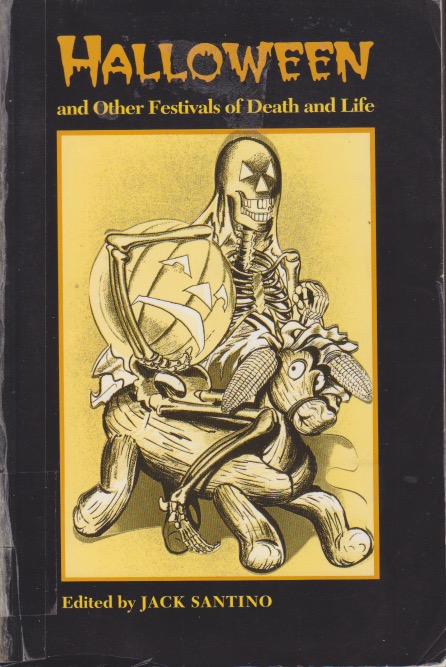
I’ve met several people who say that Halloween is their favorite holiday.  One of the (likely commercially-driven) realities, however, is that not many nonfiction books on Halloween exist.  I mean the kind with a known publisher behind them, the sort that have been vetted.  My recent book, Sleepy Hollow as American Myth has a chapter on Halloween in it, and I’ve often considered writing a book on the topic.  Halloween and Other Festivals of Death and Life is an edited collection brought together by Jack Santino.  It is one of the (few) academic books on Halloween that I hadn’t read.  Although I learned a lot from it, it suffers that inevitable trait of books that are assemblages of essays: they are uneven in focus, scope, and execution.  Santino is known for a couple of influential articles on Halloween, so editing such a book seems a natural development.

Some of the essays in this book were quite helpful to me.  The problem with drawing together anthropologists, however, is that they have discrete regional as well as thematic interests.  In some ways this is very appropriate for Halloween.  The holiday, as most holidays, has regional variations.  Reading about how it’s celebrated elsewhere, or elsewhen, gives you an idea just how lacking it is of any kind of “top-down” authority.  For all of its variations, Christmas has a somewhat “canonical” narrative (although this isn’t the full story).  Halloween grew from folk traditions and when the church got ahold of them it tried to focus them on All Saints Day, and later, All Souls Day.  But Halloween and it adjutants comes the day before All Saints, thus allowing the varied influences of the day to come to light, if they can be found.

The part of this tradition that I’ve always found disturbing, highlighted in this book, is the pranking.  I suppose that growing up poor, the idea that someone could damage your stuff when it’s really what you feel you need to survive, is quite distressing.  A light-hearted prank feels less insidious, but reading what some regional celebrations in North America included made me realize why many local authorities have tried to contain and control celebrations.  Nobody wants to lose everything due to a thoughtless prank.  Trick or treat was sometimes trick and treat.  I recall being in a crowd in England celebrating New Year’s.  Some partiers threw lit firecrackers into the crowd.  My only thought was to the damage or injury this might cause.  Halloween is that way, however.  And it is likely impossible to write a book that captures it in its fullness.


Hello September

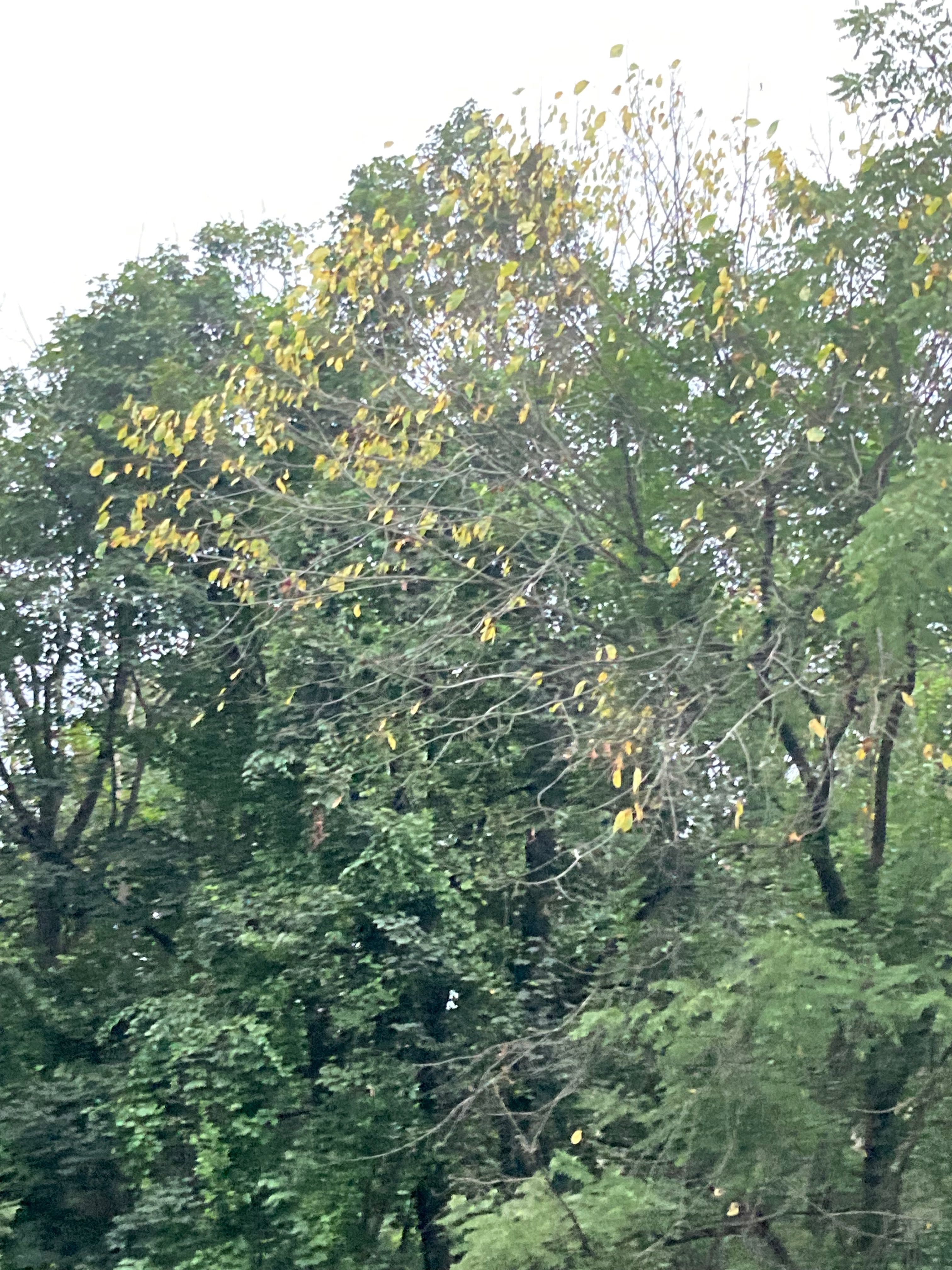
Labor Day is as early as it can possibly be this year and as late as it can possibly be next year.  We live in a time of extremes. In any case, it’s our hello to September and our goodbye to summer.  Since I still think of weather quite a bit, I’m reflecting on how most of the month of August around here has felt like autumn.  A month that I normally think of as consisting of hot dog days as summer reinforces its grip has been one of chilly mornings requiring long-sleeved jogging togs, and even fingerless gloves indoors for a morning or two.  July was hot and rainy.  The kind of hot that saps your strength and energy.  August felt like relief after that, but now we greet September, wondering what might lie ahead.  Many of the trees around here have already started to change, which looked a little odd when it was only August.

A couple weeks ago

Autumn has always been my favorite season, as it is for many people.  It is poignant, however.  Summer has its endless lawn mowing, but trades that off with not requiring a jacket to be outdoors and plenty of sunshine.  More than that, even traditional capitalistic businesses tend to slow down a bit in the summer, if for no other reason, because many employees take vacation time and everything has to put on the brakes a little.  Because we work at breakneck pace for the remainder of the year, this more relaxed season is a welcome respite.  We know, as nights grow cooler and longer, that it is time to put that away for another year.  It’s a season of transitions which is what makes it so melancholy.  Work starts to feel more serious after Labor Day, but the holidays are at least within grasp.  Halloween is really the next on the list.

I sometimes wonder if I’ll ever be able to retire, and if I do, if these day off holidays will be so important to me.  I’ve been interested in studying holidays pretty much all of my professional life.  Never really a fan of the capitalistic ethos, after being thrown into that world I quickly learned to look at holidays as stepping stones to get me through the year.  The first four months are rough.  They do have holidays sprinkled here and there, but March and April and most of May are holiday free zones.  That’s one reason the more relaxed fit summer is welcome.  The pace picks up again tomorrow, but for today, at least, we have one last ounce of summer to live.


Remembering Holidays

Memorial Day is an important stepping stone to get through the capitalistic year.  Not only does it mark the unofficial beginning of summer, it’s also the first holiday after the long, long drought of March, April, and nearly the whole month of May.  That’s a long stretch of unbroken work.  My ideal holiday may be one where I could hole up in my study with books and endless time to write, but that kind of situation isn’t really realistic.  There’s a lot to do.  Around these parts, however, getting outdoors to take care of those weeds has proven difficult.  Every day since last Tuesday (nearly a full week, as of today) it has rained at least a little.  Sometimes a lot.  And the temperatures dropped on Wednesday, back to early April levels, as if May were vying for the title of the cruelest month this year.

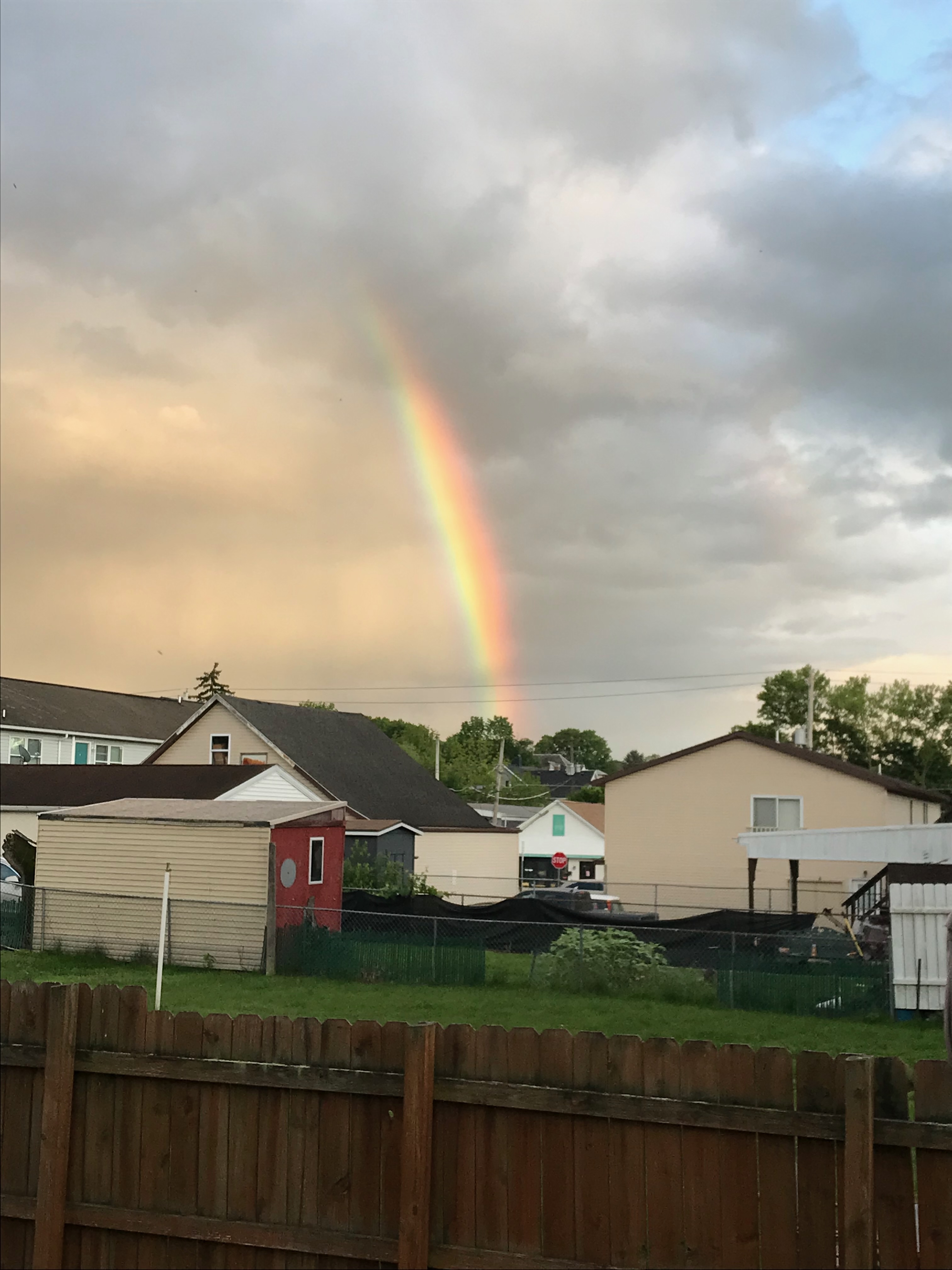
We’ve been making the best of it, getting out to see local attractions while dodging raindrops.  The weeds, I’ve noticed, love this kind of weather.  And I have a visceral reaction to putting on a heavy jacket to go out pulling weeds while watching each passing cloud for a potential downpour.  On the plus side, we have rainbows.  In fact, two nights in a row, about the exact same time, near sunset, we had a rainbow in the exact same spot in the sky.  That’s a sign of hope.  And indeed, the summer takes on a more relaxed atmosphere at work and a few holidays start creeping back in.  Until the stretch of September-October, the second annual drought.  But by then, however, off in the distance I can see the holiday season that starts in November and I know I can make it through to December.

It’s an odd way to live, isn’t it?  Experts talk about how work will be different in the future, but I have a mortgage due in the present, so I step from holiday to holiday, grateful for the time to recover.  With a government trying its best to eliminate benefits to seniors I may have chosen a bad time to reach my sixties.  At least I’m young enough to still pull weeds and push a mower.  (Once the grass dries, that is.)  The main point is not to waste this rare gift of a holiday.  There’s no rain in today’s forecast (but there is for Wednesday, every day through next weekend).  Seeing the sun buoys me up.  And if I can’t have that I can always hope that at least I can have rainbows.


Peace

Mother’s Day should be a time for peace.  In these days when misogyny is in style, it’s an especially important holiday.  The one holiday to explicitly honor women, it’s always been an occasion for reflection for me.  We have 364 days of warring and hatred, and one dedicated to the givers of unconditional love.  I can imagine a different world.  One in which women don’t have to become alt-right to gain positions of authority.  Where compassion and humane treatment would be world priorities.  I can imagine.  Although fathers are necessary too, we have no shortage of men pushing forward their personal agendas.  None of them would be where they are without mothers.  And women are the ones who give us care.  I can imagine a world where Mother’s Day wouldn’t have to feel so politicized, almost polemical.

With all eyes on Pope Leo, I can’t help but think how many treat Mother’s Day like an indulgence.  You know you want to get back to your vices, so why not pay for them in advance?  Celebrate mothers today so we can get back to business as usual tomorrow.  I don’t believe that we’ve lost the ability for transformation.  We can make the world a better place.  Think what it would be like if, before undertaking some cruel action, a person stopped to imagine their mother watching them do it.  Would not the world start to improve?  It is a world where we seem to prefer guns to roses, but it’s also a world with an unwritten future.  Pay attention to your mother.  Maybe things will start to get better.

I believe in the transformative potential of holidays.  We have to take their lessons seriously.  I’m sure I’m not the only working stiff who lives life anticipating the next holiday when things might change for the better.  We have to remember, however, what the holidays teach us.  Not treat them as simply facile days of obligation.  Think of Mom and then get back to the grind.  It doesn’t need to be a grind.  We can learn to cooperate and get along, just like Mom told us to.  Instead of isolating such thoughts to a single day, we could repeat them like a mantra.  I don’t know about you, but looking at the headlines, I could do with a bit of peace and love.  And I still believe that things can, and likely will get better.  And I give the credit to our mothers.


Hoping for 2025

Those who predict, as pollsters repeatedly remind us, can’t really prognosticate.  In ancient times some prophets were thought to be given (usually conditional) views of the future directly from God, but even these weren’t fail-proof.  Nobody knows what 2025 holds for us.  I love holidays, but New Year’s Day is one of the more chancy ones.  I don’t stay up until midnight because if I do I don’t sleep that night (I tend to awake just a couple hours after midnight most days), and I don’t make resolutions since I try to correct errors in my life as soon as I find them.  Maybe New Year’s could stand a makeover.  Something beyond staying up late and drinking.  In my experience, the next year comes anyway.  And it should be an opportunity for hope.

Interestingly, although attempts have been made to Christianize the day, it tends to remain secular.  The current date was established in the west because of the rebranding of solstice celebrations to the birth of Jesus, but the religious elements never really stuck to New Year’s Day.  It marks a clean slate for taxes and other financial resets.  Importantly, it’s a day off work.  Maybe we should rebrand it.  Honestly, I don’t have any suggestions myself—this sounds like a job for a committee.  Who wouldn’t want to be on a holiday committee?  And holidays do evolve over time.  When it was Columbus Day many employers didn’t make it a paid holiday.  Rebranded as Indigenous Peoples Day, some progressive companies did.  See what I mean?  Holidays are what we make them.

The more I think about this, the more I wonder if we shouldn’t reinstate the twelve days of Christmas.  Epiphany (aka Insurrection Day) comes on January 6, and, pre-Adam Smith the twelve days lasted until then.  New Year’s could be one among siblings.  I’m sure that if we tried hard enough we could come up with some branding for each day.  The Brits already have Boxing Day on the 26th.  The Scots make the 31st Hogmanay.  Our task, should we choose to accept it, would be to fill in the 27th through the 30th and January second through the fifth.  If we divide that up and send it to committee I’m sure we could come up with something.  It seems we already have the ten lords a-leaping lined up.  Said lords prefer having two more work days this week, I know.  Perhaps New Year’s, or even the Christmas season, could stand a bit of workshopping so we can really catch up with our sleep.  Here’s hoping, for 2025.

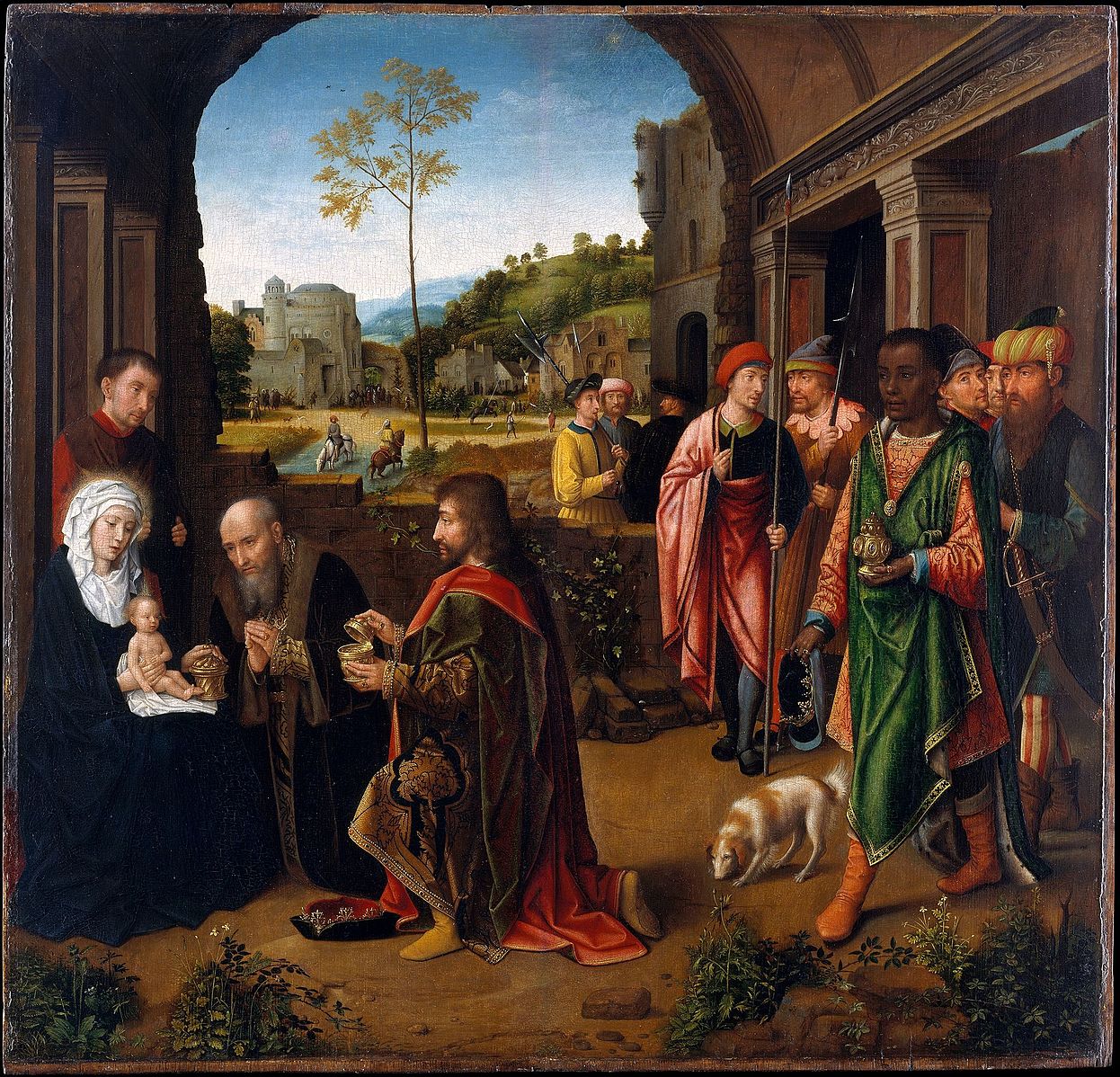
Let’s give them time to arrive! Image credit: The Adoration of the Magi – painting by Gerard David, Creative Commons CC0 1.0 Universal Public Domain Dedication by the Metropolitan Museum of Art

A Christmas Parable

And it came to pass in those days, that there went out a decree from Donald Trump that all the world should be taxed.  2 (And this taxing was first made when American troops were pulled from Syria.)  3 And all were to be taxed, every one to help build a wall.

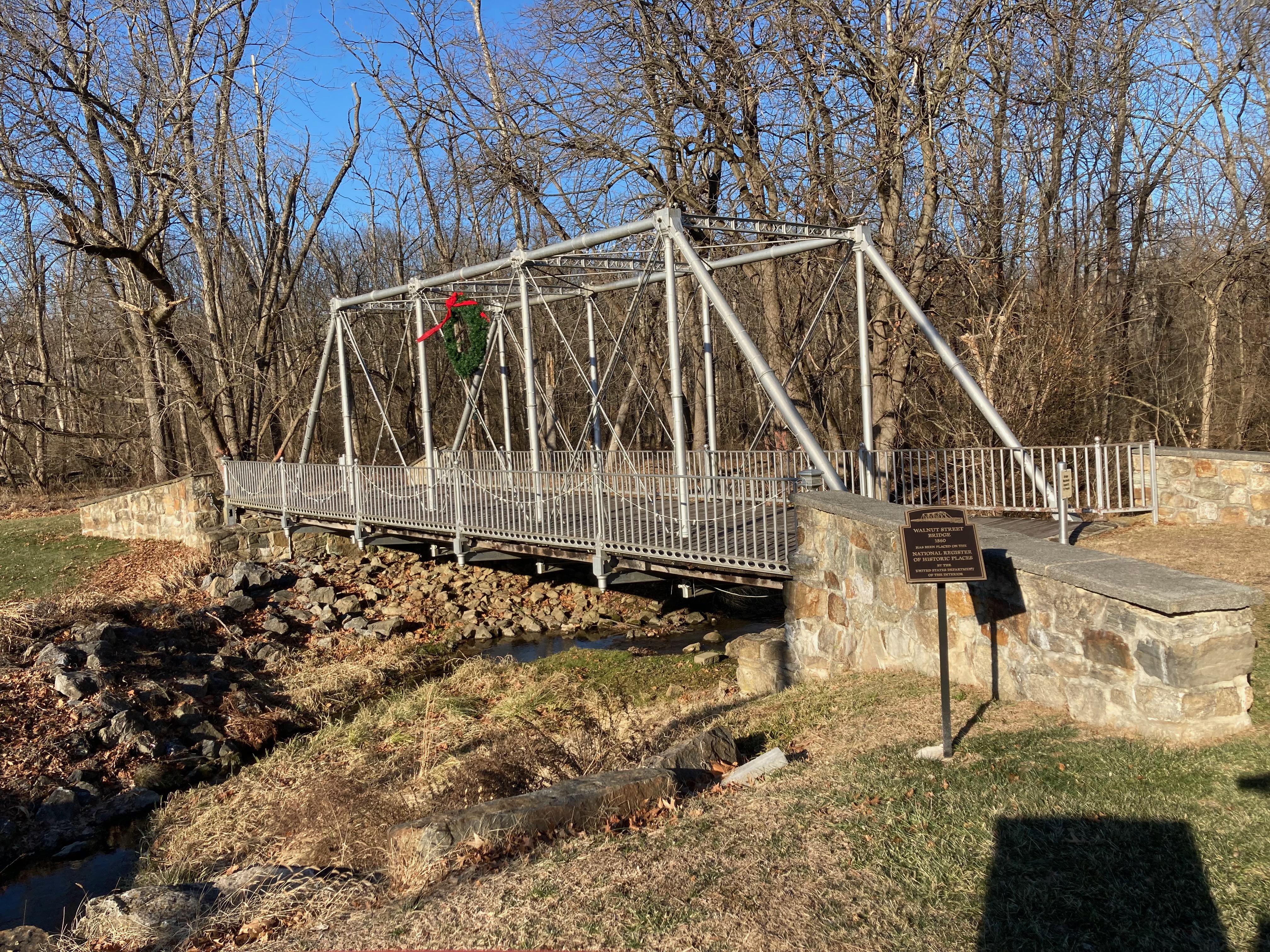
4 And Joseph had just bought a house in Nazareth, but had to go into the IRS office, unto the city of record, which is called Bethlehem; (because he was of the county of Northhampton:)  5 To be taxed with Mary his espoused wife, being great with child but no insurance.  6 And so it was, that, while they were there, the days were accomplished that she should be delivered at St. Luke’s. 7 And she brought forth her firstborn son, and wrapped him in swaddling clothes, and laid him under a bridge; because there was no housing for them in Bethlehem.

8 And there were in the same country soldiers abiding in their bases, keeping watch over their radar by night.  9 And, lo, drones appeared before them, and the glory of aliens shone round about them: and they were sore afraid.  10 And the ETI said unto them, Fear not: for, behold, I bring you good tidings of great joy, which shall be to all people.  11 For unto you is born this day in the city of Bethlehem a Democrat, which is the Prince of Peace.  12 And this shall be a sign unto you; Ye shall find the babe wrapped in swaddling clothes, lying under a bridge in Bethlehem. 13 And suddenly there was with the UFO a multitude of the heavenly host praising democracy, and saying,  14 Glory to the American ideal in the highest, and on earth peace, good will toward women and men.

15 And it came to pass, as the drones were gone away from them into heaven, the soldiers said one to another, Let us now go even unto Bethlehem, and see this thing which is come to pass, which the ETI hath made known unto us.  16 And they came with haste, and found Mary, and Joseph, and the babe lying under a bridge.  17 And when they had seen it, they made known abroad the saying which was told them concerning this child.  18 And all they that heard it wondered at those things which were told them by the soldiers.  19 But Mary kept all these things, and pondered them in her heart.

20 And the soldiers returned, glorifying and praising democracy for all the things that they had heard and seen, as it was told unto them.

Image credit: The Harmsworth Monthly Pictorial Magazine, Volume 1 1898-9; public domain via Wikimedia Commons

Eves and Holidays

If you stop in to this blog for reading about horror movies, don’t worry, there’ll be plenty of that to come.  One thing everyone who knows me knows is that I believe in holidays.  Capitalism has been killing us for centuries, but since I began having to do a 9-2-5 job, I feel the grim reaper’s approach more steadily.  Day after day after day being eaten up by work and leaving so little time to be who I really am.  I invest a lot in holidays because they break, if only temporarily, capitalism’s death-grip around our throats.  And today is Christmas Eve.  Not technically a holiday, I’ve worked for employers who, Scrooge-like, don’t consider this a paid day off.  You want to mentally prepare for Christmas (the only paid holiday in the season), you cash in a vacation day.

Image credit: Sol Eytinge, Jr., The Ghost of Christmas Past. Public domain via Wikimedia Commons

As influential as Charles Dickens’ A Christmas Carol is, late capitalism simply doesn’t get  the message.  Studies show, consistently, that work in this era is more efficient when workers have more time off.  Now, I’m not so naive as to realize that some professions require work on holidays.  After all, I trained for ministry for many years, and Christmas is always a work day in that profession (even if nobody comes to church).  Emergency workers of all sorts have to be at least on call for holidays.  Police can’t assume citizens will behave just because it’s a holiday.  But such professions, I profoundly hope, have other payoffs.  I entered a profession (professoring) partially because of the division of time.  (And it is one of the few things I’m very good at.)  People should have fallow periods.  Why is Christmas Eve still a work day?

Scrooge is clearly still in charge.  I, for one, will not shed a tear when capitalism dies.  I’ll predecease it, I’m pretty sure, but even so, I welcome a world where people’s needs come before the plutocrats’ profits.  A friend of mine always insists on saying that we don’t live in a democracy but a plutocracy.  Seeing the election results last month only confirms that he’s right.  As I recently wrote here on this blog, the howling is most fierce before the new dawn.  And lasting change must take place slowly.  Sudden shifts only lead to more sudden shifts.  Stable growth is slow.  I’m sure influential people don’t read this blog, the humble musings of an unfluencer, but if they do, there’s a simple plea here.  Consider the holidays.  Read Dickens, and have the courage of your convictions afterwards.  And yes, a blog post (unpaid) will appear on Christmas.