Not Tomorrow

Two of the sweetest words I know are, in the context of a vacation, “not tomorrow.”  They’re especially sweet after you’ve had a couple days off and you start feeling anxious that time is running out, only to realize that although work will start again soon it’s “not tomorrow.”  You have another day when you can stay in your pajamas, read, watch movies, or, if you’re a certain personality type, write.  Or play games, put a puzzle together, visit friends.  Whatever it is you do to find meaning in life outside work.  Outside academia I’ve never worked for a company that gave more than one day itself for the Christmas holiday.  (Two, if you count New Year’s Day, but that’s technically on next year’s meager holiday tally sheet.)

Each year I cash in vacation days so that I can feel “not tomorrow” more than a day or two in a row.  One of the more depressing recollections I remember is climbing onto an empty bus well before sunrise to commute to an otherwise empty office my first December working for Routledge since I hadn’t accrued enough vacation to take the week off.  I’ve worked for two British companies and it doesn’t help knowing our colleagues in the UK automatically have that week off.  Colonials, however, have far fewer holidays, and if that means trooping to the office for form’s sake, so be it.  Very few people answer their emails between Christmas and New Year’s.  Her majesty’s realm thrived for my presence, I’m sure.

The pandemic has taught us that many, if not most, workers are self-motivated when not confined to an office.  We also know that the United States has the lowest life span among developed nations, and my guess is that one contributing factor is that we don’t have enough “not tomorrows” until it becomes literally true.  Life is a gift, and spending it doing the things we value is something we tend to deny ourselves in the hopes that someday we might retire.  Many companies have begun to cap the number of vacation days you can accrue at numbers so low that the year looks like a desert from January through late November.  It’s that stretch of “tomorrow is a work day” punctuated by weekends so vapid that they vanish by the time errands you can’t do during the week are done.  Why have we done this to ourselves?  For me personally, I only have two more regular work days off.  I’m beginning to feel anxious about it.  Then I tell myself that, for today at least, although I have to start work again soon, it’s not tomorrow.


Christmas Silence

Christmas seems to have come too fast and not fast enough this year.  Like Halloween, it’s one of those long anticipation holidays.  The older I get, the more I appreciate the silence about it.  Not in a Grinch-like way, I hope.  More along the lines of “Silent Night.”  We spend so much of the year—so much of our lives—hustling about, barely having time to think.  Speaking personally, it takes about a week off work just to begin to get to that phase.  I need time to let the daily onslaught of work and capitalism and angst tune down.  There’s a quietness about Christmas that’s profound.  I suppose that’s why I like to spend it with my small family and not feeling obligated to go anywhere.  It’s like those precious moments before sunrise that I experience daily, only all day long.  That’s truly a gift.

The newspapers and internet sites have been summarizing the year for the last couple of weeks.  That always seems premature to me.  I understand why they do it, but Christmas and the days following are some of the very best of the year, and it makes sense to include those along with the stress, darkness, and ugliness that are the daily headlines.  I can’t help but think of Simon and Garfunkel’s “7 O’Clock News/Silent Night.”  Especially this year.  Christmas is for everyone, and the insistence that we make it exclusive (putting Christ back into it) makes it divisive.  Why some people have to be right all the time I don’t know.  I prefer Hamilton Wright Mabie’s take: “Blessed is the season which engages the whole world in a conspiracy of love.”  Simon and Garfunkel are both Jewish and I think they understood “Silent Night” better than many Christians did back in 1966.

I’ve been writing quite a lot about horror movies this year.  The months and days leading up to Christmas have often been difficult ones.  Such movies are therapy.  They can even fit into the beautiful silence of this day.  That’s my hope, anyway.  May this day include enough silence for you.  The rest of the year has no difficulty filling itself with trouble.  We need holidays.  Christmas has always struck me as the most peaceful of them all.  Ministers, and even those of us who never made the cut, tend to be holiday experts.  Those who don’t get caught up in the dogmatism of it all are the most blessed.  Christmas is for everyone.  And may it be peaceful this year.


Saint Nick

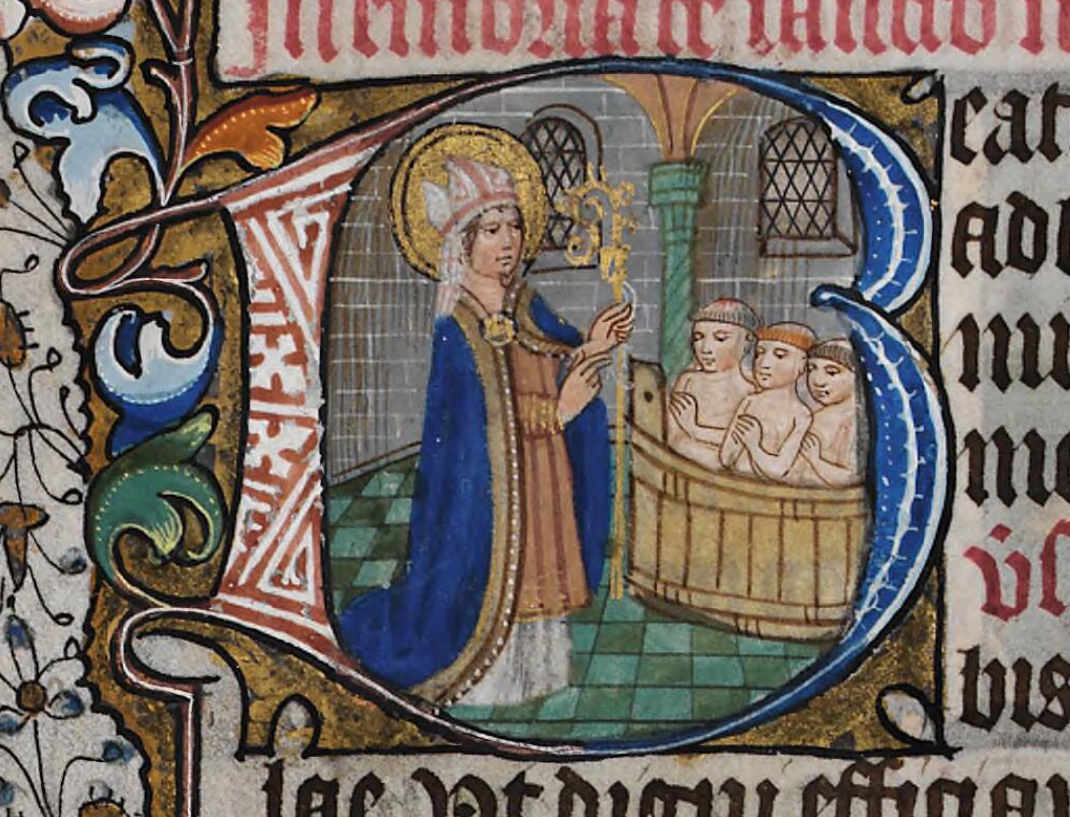
My wife and I have both noticed it.  December has been much busier than usual, and neither one of us works in retail.  We’re at the age when most people are considering retirement, but are both just settling into our careers.  But this is about December, not about us.  Today is December 6, Saint Nicholas Day to some.  What many people don’t realize is that this used to be “Christmas” for particular sets of folks.  You see, St. Nick was one of the many components of what would become Christmas.  His saint’s day was/is today and it was traditional among some early American communities to pass out gifts today because of the tradition that Nicholas was one of the more generous saints.  While at Nashotah House the rather somber Advent atmosphere was broken this day when the Dean would hand out gold coins.  Well, chocolate coins covered in golden foil, but you get the picture.

Image credit: National Library of Wales, public domain via Creative Commons CC0 1.0 Universal Public Domain Dedication

In our capitalistic zeal to get Christmas down to just one day off, if that, we’ve targeted the twenty-fifth.  Saint Nicholas was rolled into Santa Claus and we could keep on working nineteen more days.  “Santa” was known by many names—Father Christmas, Christkindl, and Kriss Kringle, among others.  They were expected at different times in December, even as the Catholic Church had decided on this month to be Jesus’ birthday, to counter Roman celebrations of Saturnalia and Kalends (both of which were more than one day, I might add).  December, in other words, should be a festive month.  Instead, it’s become a busy season for squeezing everything in before taking some time off work.  Do we ever sit back and consider how ridiculous such hectic living is?

Don’t get me wrong—I love the Christmas season.  I save up vacation days every year to give myself a mini semester break.  When I’m feeling exhausted with September’s onslaught, if I can cast my eye as far as December I can feel some relief coming.  And I’m not sure why we don’t get offered a few more days in December.  Remote workers can’t always make it to the office holiday party, so maybe December 6 might be a remote worker’s mini Christmas day off?  The weary struggle to make it to the official Christmas could use a little refreshment just about now.  I don’t recall a December ever being this busy on the work front.  For the economy’s sake, hopefully those in retail aren’t finding themselves bored.  One thing that all of us might wish for, however, is a visit from Saint Nicholas.


Evolving Holidays

Holidays evolve.  I noticed this Thanksgiving that protests against the origins of the holiday have grown.  The same is true concerning the “Christmas Wars” every single year.  Some holidays (of which we have relatively few in this country) are disappearing altogether.  What seems to have been overlooked, or forgotten here, is that holidays change over time.  Public analysts and early holiday promoters encouraged government recognition of holidays as a means of bringing the nation together.  It’s easier to do this if we recognize that holidays evolve and the general trajectory is toward becoming more and more inclusive.  There will always be those who protest the “secularization” of holidays, but they share a large part of the Venn diagram with those that believe the Bible is a science book.  Things change.  Evolution is real.

I’m not just writing this because Thanksgiving and Christmas represent holidays from my tradition.  It’s true that they represent what was the majority religion (Christianity) at the time they were established here, but I would be glad for holidays from other traditions to be added as well.  Americans need more time to rest and recharge.  Anyone who’s studied the history of Christmas, say, realizes that its origins aren’t really Christian.  It’s a combination of a Christian alternative to Saturnalia, the recognition of St. Nicholas (December 6), Germanic Yule, and the festival of Roman Calends to start the new year.  Among other things.  Early Christians didn’t celebrate Jesus’ birthday.  Nobody had any idea when it was, but a tradition grew and as it grew from diverse roots it became more and more inclusive.  Why should we protest a day when we can acknowledge its troubled past and look for ways to make it better?  Something for everyone.

Holidays bring people together.  I’ve been researching them for years and I’m amazed to see how those that survive eventually catch on and bring people together for a common purpose.  Think of Halloween.  Masking disguises who we are.  It’s a day when everyone is welcome.  There are those who protest it, of course.  But holidays need not be seen as triumphal celebrations of some past misdeed.  (Here’s a hint from history: almost no historical event is seen as positive from everyone’s point of view.)  Instead, why not embrace those few red letter days that we have and use them to seek a common purpose?  Why not encourage those in positions to make decisions to consider the good of a few more holidays?  Trouble can always be found, but holidays, if done right, may help heal.  It’s the way of evolution.


Sleep Well

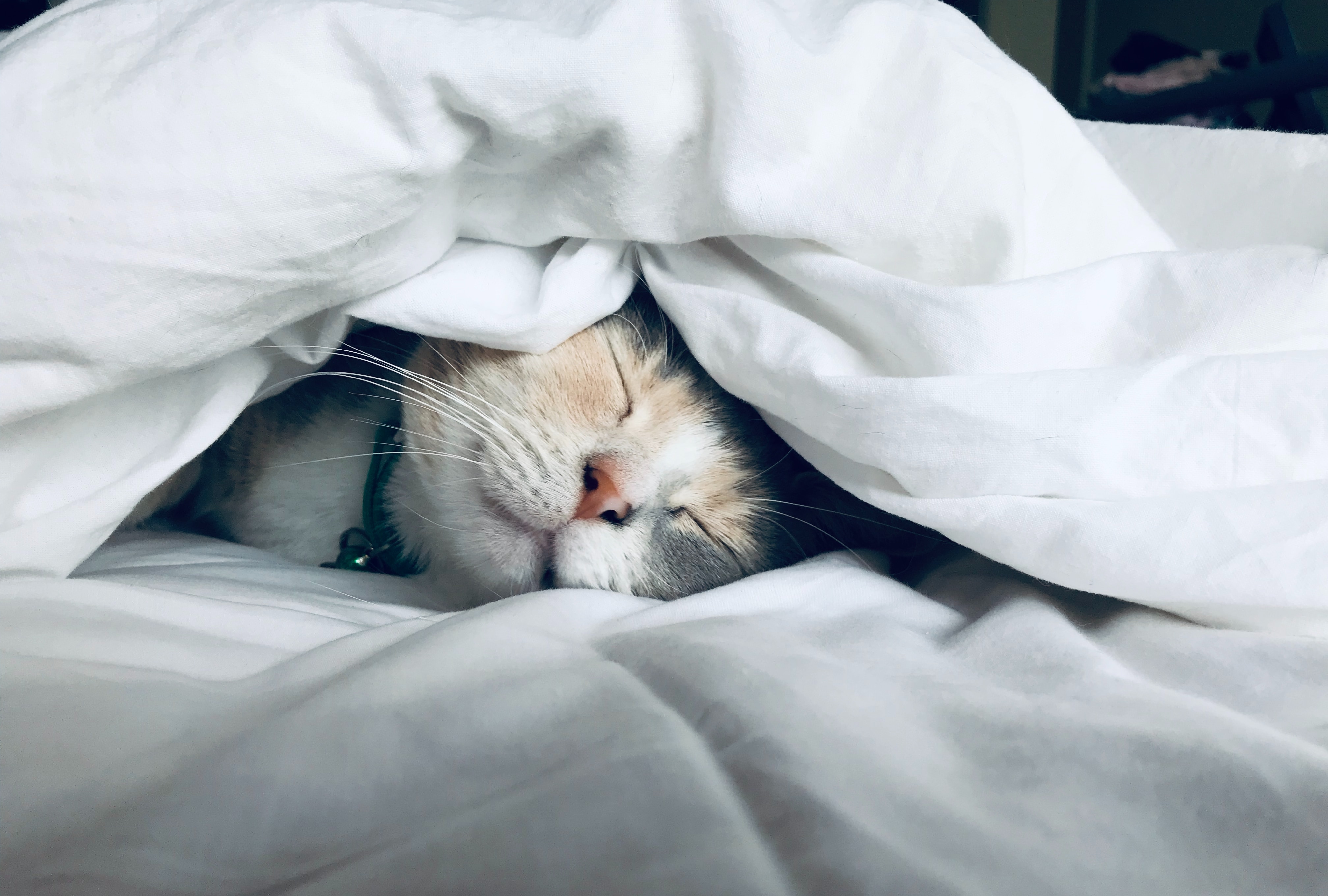
It’s scary, actually.  How you think depends on how you sleep.  I suspect that the degree of this differs individual by individual, but I recently had a couple of consecutive nights where the differences were striking.  To put this in context, it was after ending Daylight Saving Time (it should be kept all year but with Republicans in the House unable to pick a speaker, what chance do we have of them ever passing a simple, but necessary measure?).  Mondays, for some of us, we naturally awake earlier since, well, work.  I happened to wake excessively early that morning and couldn’t get back to sleep, no how.  I functioned alright during the day, but those who work 9-2-5 aren’t allowed naps and some of us aren’t young anymore.  I thought it was a fairly normal day.  That night I slept well.

Photo by Kate Stone Matheson on Unsplash

The next morning it was like my thoughts were supercharged.  I was thinking things I’d failed to pick up on the previous morning.  I was efficient and energized.  What a difference a good night’s sleep makes!  But the herd mentality—work must be eight hours and those hours must be from nine to five (if you work more, that’s great!)—doesn’t allow for bad nights.  It’s ageist, really.  Once you reach a certain age, you don’t sleep as well at night.  Work times are non-negotiable, so you’re forced to keep going through the yawns that a good nap would take care of.  So much depends on a good night’s sleep.

In reading about the history of holidays (I’ve been doing this for years, as The Wicker Man demonstrates), it’s clear that the United States stands out in the dearth of its holidays.  It’s been that way from the beginning.  Most employers don’t give Veteran’s Day off.  None note May Day, which is Labor Day in many parts of the world.  No time to sleep in in this country!  Work while you’re tired, work while you’re wakeful, just as long as you work those sacred eight hours and more.  Of course, all of this may come from that grouchy feeling a poor night’s sleep bestows.  I don’t keep a sleep diary, but I do wonder how many social ills are brought about by a bad night’s slumber.  It’s the darkening time of the year.  Nature’s telling us that reasonable animals hibernate.  The rest of us set alarm clocks to wake us before it’s light, no matter how we fared the night before.


All of Us

All Souls is a democratic holiday.   Since Halloween is really the start of the holiday season, we really should keep it, together with All Saints and All Souls, as a time off work.  (If I had the vacation days to do it, I would.)  I realize these are holidays of Christian origin, and some object to even getting Christmas off because of that—hey, some of us think holidays are a great and necessary part of life!  Of course, I’d be happy having Jewish or Wiccan holidays off too.  Halloween and Christmas are generally secular holidays these days, but that makes them no less meaningful.  In any case, All Souls is the day we commemorate the dead who may not have been recognized as saints.  Like the Day of the Dead, it’s a time to reflect on those we’ve loved and lost.  I always find the naming of our departed especially moving.

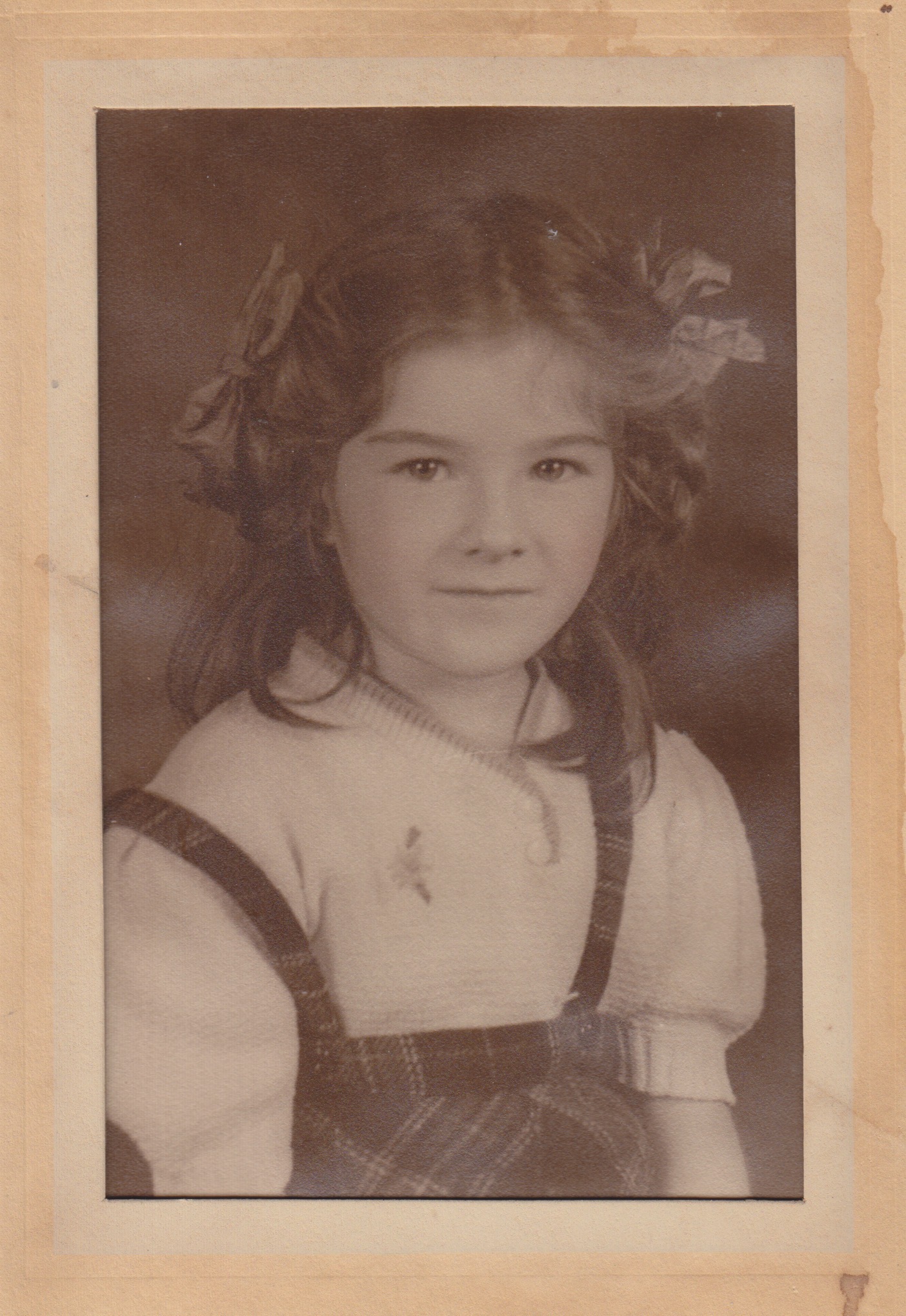
Doris Ruth Miller

Among northern Europeans (they aren’t all bad guys) the steps into November were a liminal time.  The restless dead might attempt to return and the living should pay their respects.  The church tried to address this through All Saints Day with its exalted music and ceremony.  Like an afterthought, it seems, All Souls was a time to remember those who are the majority.  The unrecognized, the non-famous, but often very good folk without whom sainthood would be impossible.  You see, I truly believe that most people try to live the best way they know how.  They struggle, yes, and they may have made bad decisions based on what they knew at the moment.  They were, after all, human.  The church set aside November 2 to pause and consider that death comes to all of us.  Winter is on the way.

Winter, in many ways, defines life.  It’s a time in which disaster comes to those who fail to plan ahead.  Food must be stored in advance since it will be scarce.  Nights will be long.  Even keeping warm will be a challenge.  And it can come at any time now.  Some years snowstorms come on Halloween.  And even if no snow falls we enter that fallow time when we’re forced to sit and wait.  It is nature’s way of saying, “Stop.  Reflect.”  Those already departed on All Souls are missed by those of us who remain.  We put on another layer, or perhaps turn up the thermostat, trying to distance ourselves from the chill.  We look to Thanksgiving, and Christmas soon to follow.  And those who perceive subtleties know that hope of spring begins early in February.  The souls who’ve already gone on know more than we, and the least we can do is remember them once a year on the holiday meant for all.


Early Halloween

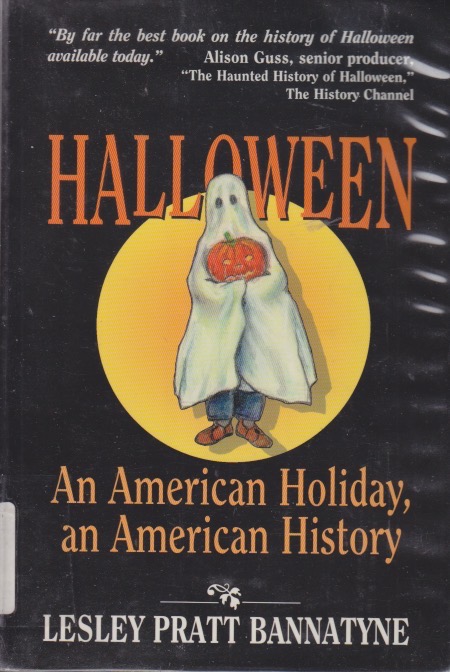
Call it seasonal disorientation syndrome, but I’ve been reading about Halloween.  I’m pretty sure I’m not the only one thinking about it.  Stores will begin Halloween displays next month, if the usual pattern recurs.  So why not do a little advanced study?  Although I’ve written about holidays myself, they’re unruly subjects to handle.  Lesley Pratt Bannatyne is a name familiar to many fans of Halloween.  Her 1990 book Halloween: An American Holiday, an American History kickstarted renewed interest in the holiday and has been followed by other studies, even occasionally with academic presses.  Still, holidays are difficult to pin down.  One of the most obvious reasons for this lies in the fact that before the world became über-connected, holidays were largely local celebrations.  Trends traveled slowly and not everybody agreed on which holidays to celebrate.

The early days of Halloween are the most difficult to piece together.  This is clear in Bannatyne’s book also; we simply don’t have the written sources we’d like.  The ancient Celts, although great strides have been made through archaeology and close examination of ancient writings of outsiders, remain poorly documented.  They didn’t leave archives like the classical writers of Greece and Rome did.  And clearly Halloween has its earliest known celebration as Samhain among the Celts.  Once Bannatyne gets to America, however, there’s a trove of information in her book.  Her chapter on the celebrations among the original thirteen colonies is quite good at demonstrating regional differences not only for religions, but for tolerance for something like Halloween.  Fall festivals predated Halloween as we know it (if we really do know it), and she does a good job of demonstrating how the melting pot effect made Halloween national.

One of the problems with any history is that one event can change everything.  This book was written three decades before Covid-19 and the pandemic was one of those events that did change everything.  It makes it seem as if we were much more carefree back in the eighties when Bannatyne’s book was written.  Halloween was just starting to become an adult holiday again back then.  In the ensuing years it has become even more so.  Communities are seldom what they used to be with the extreme mobility of much of our society, but many still find a way to agree to the terms of Halloween.  Historians of holidays have a difficult task, and we’re still learning about ancient cultures and their modern manifestations.  This is a good book to start that exploration—I know it taught me a thing or two.


Holiday Hopping

Weekends in spring are like touching base.  They’re the only places you can’t be tagged out and you run from one to the next, hoping not to get caught.  Our British colleagues, more secular than we, tend to have both Good Friday and Easter Monday off work.  Religious America grins that Easter’s always on a Sunday so nobody has to be given any time off.  This disparity has long played into my fascination with holidays.  After generously giving you off both Christmas and New Years—within a week of each other!—the typical US company will throw a long weekend or two into January and February, but then won’t let you out of sight until the end of May.  And this is just as the weather is warming up and we’re wanting to be outdoors a bit more.  On weekends only, of course.

Holidays are a religious idea.  We have the various world religions to thank for them.  The idea of sacred time was, once upon a time, taken seriously.  And nothing is more secular than business.  World religions gave us the concept of weekends and the little breaks that we take from doing the same stultifying thing day after blessed day.  The more enlightened of companies have decided, after senior-level employees have accumulated days off with years of service, that adding extra days for every decade of servitude isn’t really fair and stop the practice.  So we find ourselves in that strange day between Good Friday (a work day) and Easter (thankfully, a Sunday), and thinking, “you know I could really use a break about now.”  We cast a weather eye toward Memorial Day while dreaming Beltane dreams.

My personal fascination with holidays really kicked off when beginning 925 work.  I don’t mind long work hours if it’s a vocation rather than a job.  When the relationship’s purely economic, however, you begin to miss the time to regenerate.  We remember someone died yesterday, too—we’re told—liberate us.  Tomorrow amid lily scent we’re informed he came back.  The rest of us, however, look at the clock and know that despite world-changing events we’ll be back at our desks on Monday since, well, what do you think we’re paying you for?  Don’t try pointing across the Atlantic, either.  They’re burdened with holidays and we’ve been liberated to capitalism.  And what are you doing, reading this blog on a Saturday?  I am most honored and grateful.  And I hope you have some time to rest, since it’s still a long way to the last Monday in May.


Of Ewes and Groundhogs

I need more time to prepare for Imbolc.  Or Groundhog Day, whichever you prefer.  Candlemas for you Catholic holdouts.  February 2 has the trappings of a major holiday, but it lacks the commercial potential.  Too many people are still working their way out from under Christmas overspending and tax season is just around the corner.  Still, I think it should be a national holiday.  My reasoning goes like this: since the pandemic our bosses now have our constant attention.  They’re in our bedrooms, our living rooms, our kitchens.  I see those midnight email time stamps!  We’re giving them a lot more time than we used to and seriously, can they not think about giving us a few more days off?  Some companies strictly limit holidays to ten.  

Can’t recall where I found this one…

Others, more progressive, have simply dropped the limits on paid time off.  And guess what?  The work still gets done.  I could use a day to curl up with a groundhog, or to go milk my ewes.  (Being a vegan, perhaps I could just pet them instead.)  What’s wrong with maybe two holidays a month?  (We don’t even average out to one per month, currently.)  I always look at that long stretch from March, April, and nearly all of May with some trepidation.  That’s an awful lot of “on” time.  (Our UK colleagues, of course, get Easter-related days and a variety of bank holidays.  Their bosses, I understand, would rather go with the more heartless American model, but tradition is tradition, you know.)  What if I see my shadow and get scared?  What am I to do then?

Imbolc is part of an old system for dividing the year into quarters that fall roughly half-way between equinoxes and solstices.  I go into this a bit in my book, The Wicker Man, due out in September.  That movie, of course, focuses on Beltane, or May Day, but the point is the same.  Look at what happens when you deny your people their holidays!  You’d think that the message that showing employees that you value them makes them more loyal might actually get through.  Businesses, however, have trouble thinking outside the box.  Take as much as you can and then ask for more.  What have they got to lose by giving out a few more holidays?  Otherwise each day becomes a repetition of a dulling sense of sameness.  Rather like another movie that focuses on this most peculiar holiday.


Not Over

It’s not over, you know.  Halloween, I mean.  We may have made it through the actual night of trick-or-treating with all of its build-up, but like many holidays from olden times, Halloween was, and still should be, part of a complex of holy days.  People have long believed that something was transitioning at this time of year.  Halloween spun off of its more sacred sibling, All Saints Day.  Before Christianization, Samhain perhaps spanned more than one day.  As a result of relentless capitalism with its parsimonious counting of days off, like pre-conversion Scrooge, has made all holidays one-day events.  Sometimes you need some time to sort out what’s happening and this three-day complex is one of those times.  Día de los Muertos begins today—this holiday’s just getting started.

I’ve frequently suggested to the few who’ll listen that we need to take holidays seriously.  Culturally we tolerate them as days of less productivity.  Who actually gets Halloween off work?  And how many of us work in places where “Happy Halloween” is a regular greeting on the 31st?  I don’t know about you, but in all my Zoom meetings yesterday nobody was wearing a costume.  And yet, at Nashotah House I learned that today is a “day of obligation.”  Attending services isn’t optional (of course, it never was optional at Nashotah).  But this one was really serious.  The Catholic Church moved All Saints Day to November 1 to counter Samhain celebrations encountered in Celtic lands.  People are reluctant to give up their religion, however, and the day before All Hallows allowed for Samhain to retain its identity.  And even today’s not the end of the season.  Tomorrow has traditionally been All Souls Day.  But what company’s going to give you three days off at this time of year? We’re gearing up for Black Friday.

Holidays serve to give structure to the passing of time.  Winter with its privations is on its way.  This autumnal complex of holidays, whether celebrated as Samhain, Día de los Muertos, or Halloween-All Saints-All Souls, reminds us to take a pause and ponder what all of this really means.  And not only ponder, but also celebrate.  Halloween is fun with its costumes and candy and spooky decorations, but it’s more than just that.  It’s a season of existential questions and of preparing for the inevitable cold days ahead.  We ignore such things at our own peril.  There are reasons for holidays, but those who find meaning only in mammon see no reason to offer even one day off, amid a season we most deeply, intensely need.


This Halloween

This year I’ve been making a conscious effort to appreciate autumn.  It’s admittedly difficult when you’re forced to sit in an office, even a home office, for most of the daylight hours five days a week.  (At least I have a window here, which I never had on Madison Avenue.)  Seeing the blue skies and colorful leaves, each individual one of which is a singular work of art, or watching the moody, cloudy skies, I wish for freedom.  Every night before falling asleep, if I can remember to do so, the last word I whisper to myself has been “September,” then “October,” to remind myself of the wonder of this time of year in which I’ve been privileged to live.  Since America is driven by money alone, often in the guise of religion, Halloween is practically over before it begins.  Stores have sold their candy and spooky decorations, now it’s on to the more lucrative Christmas season.

Do we really believe that holidays have any power anymore?  Is Halloween really, perhaps, a time when the veil between worlds is actually thin?  Or have we ceased believing in the other world, the one behind all the money and sham?   Holidays are liminal times.  In an ironic way, it’s my heartfelt appreciation of Halloween that led me to write about The Wicker Man, although it’s set half a year away.  Nashotah House was hardly an ideal place to work, but prior to an administration change, it was the best place I’ve ever lived to celebrate Halloween.  A campus with an in-house cemetery, and surrounded (at the time) by cornfields and woods, was adjunct to really believing.  It was a haunted place.

Out on late nights or early mornings, I often felt it.  Trying to photograph a comet down by the lake by myself, woods on either side, in the total dark.  Or dragging a lawn chair through the trees to the edge of a cornfield at 4 a.m. to try to catch a meteor shower.   Hiding in the graveyard on Halloween night, dressed as a grim reaper to follow the hay wagon of kids that the maintenance director would drive through on that night.  Those memories remain as highlights of my foreshortened teaching career.  Since Harry Potter was in the ascendant, students had taken to calling the seminary “Hogwarts,” and, I was told, I was the master of Ravenclaw.  The leaves, miniature Van Gogh’s each one, are fast falling from the trees.  There’s a decided chill in the air.  Something might, just might, really happen this Halloween.


All Things Being

“Equal” and “night,” in their Latin forms, give us the word “equinox.”  Today we enter the darker half of the year.  Interestingly, of the so-called “quarter days”—the equinoxes and solstices—this is the only one for which we have no ancient indications of celebration.  Like a birthday that goes by unnoticed, this feels odd.  Why, among the set of only four days—longest, shortest, and two equal—did this one fail to be noticed?  Well, perhaps noticed, but not celebrated?  The failure of ancient records may be one explanation, and perhaps other, near dates of note subsumed it.  In Judaism, for instance, Rosh Hashanah and Yom Kippur come around this time.  The ancient Celts celebrated August 1 and November 1, or thereabouts.  September is a particularly busy time.

Harvesting, in many places, gets its real start in September.  In more modern times, school starts up again.  Work schedules once more take priority and those “relaxed” summer hours are a thing of the past.  It’s easy to overlook this seemingly insignificant day.  It is important nonetheless.  For those of us who watch horror, it’s now more easily explained—it’s darker and that brings on one of the most primal of fears.  Halloween is coming, and if you haven’t prepared already, discounted pricing on picked-over merchandise will begin in coming days.  More and more houses will prepare for the haunted season.  Around here leaves are just beginning to change, but in more northern latitudes they’re well on their way already.  Pumpkins are already on hand at grocery stores and farm stands.  The days of summer sweet corn are over.

Not all holidays receive equal attention, of course.  Less romantically inclined adults simply work through Valentines Day.  And who even notices May Day anymore?  If you don’t spend money on holidays they don’t seem to count.  Who goes out and buys things for the forgotten autumnal equinox?  Nevertheless, many people say that fall is their favorite time of year.  It has a trickster element to it.  You awake and have to throw on some extra layers, but by mid-afternoon short sleeves may be sufficient.  Hurricanes may come ashore.  Some days will feel like winter, and others summer.  Transitions are like that.  The autumnal equinox signals the inevitability of winter but also the yearning and melancholy of the shortening days when color springs to light once again.  Forgotten or not, today is the harbinger of things to come.


Fight for Mom

The spring holidays come think and fast.  Depending on when you start spring we’ve got Valentine’s Day followed a month later by St. Pat’s.  On it’s roving schedule Easter hops along, with its precursor Mardi Gras.  There’s Earth Day, May Day, and Mother’s Day.  One thing they all have in common, apart from being holidays, is they’re not worthy enough to be days off work.  You have to wait for Memorial Day for that.  Today, in any case, is Mother’s Day.  We stop to think, as if we shouldn’t every day, about our mothers.  Women are pretty poorly represented in the holiday scheme, unless you’re Catholic (and even those aren’t days off).  Mother’s Day always comes on a Sunday so employers are eternally thankful.  A holiday with no consequences.  But should it be?

We’re only just beginning, after being “civilized” for five thousand years, to give women their due.  Only just beginning because capitalist systems are built on male fantasies of growing rich without the female humane element.  It’s not a system friendly to mothers unless we find a way to make people spend money.  Women remind us to look for cooperation and not just competition.  Working together we can make things better for everyone.  Men, left to their own devices, go to war.  Men take what they want and women act as our conscience.  Mothers sacrifice to keep us safe and alive.  Their self-denial resonates better with the Christianity suborned by men into a money-making venture.

It’s Mother’s Day.  It’s a day to put aside our acquisitive, war-like tendencies and think of someone else.  It’s a day to imagine what it might be like if we made a habit of good behaviors.  It’s like those grades they used to give in school for “deportment.”  It wasn’t all just about how well we learned our facts.  Mothers teach us what it means to set aside our own wants for the needs of another person.  Without that the human race simply wouldn’t survive.  Instead of politically stacked courts taking away women’s rights, today we recognize that without women none of us would be here.  The human experiment only succeeds when women are recognized for all that they contribute to life.  To civilization.  To society.  We may not have commodified it, so why not listen to our mothers’ wisdom?  Why not make it every day instead of just the second Sunday of May?  Don’t forget to thank your mother today.  Better yet, fight for her rights.


Love on a Monday

I hope you may find love on a Monday.  I have a feeling that if we took Valentine’s Day more seriously the world would be a better place.  Capitalism, however, abhors interruptions (unless you buy lots of stuff) so many of us are at work this Monday.  I was recently reading how the full, unbroken eight hours’ sleep is a product of the industrial revolution.  I’d never thought of that before.  Everyone is different, of course, but it is natural for our species to wake in the night and be up for an hour or two and then to fall back asleep.  That, of course, interferes with the nine-to-five (925) that capitalism holds so dear.  In response, humans have altered their natural sleep patterns to conform.  The results are predictable: a line at the coffee machine every day at the office.

When I raised this with a friend, I was reminded that much of our life-style has been determined by the industrial revolution.  Certainly the concept of the weekend was.  And the constant feeling of never having enough time to, well, exist.  I awake when my body tells me it’s slept enough.  Generally that’s around 3:00 a.m.  I begin work early because Protestants have this work ethic going, but then I always get sleepy around 8:00 a.m.  Napping on the job is essentially the same as being a communist, so like many others I struggle through the rest of the day, not quite as efficient as I was for the first couple of hours.  In many cultures a nap is built into the after lunch slump.  Intravenous coffee is preferred by capitalists everywhere.

What if love catches you on a Monday?  Is it a sick day?  A vacation day?  A personal day?  Or all of the above?  It’s an opportunity to be human, but less than a true capitalist.  Someone could be making money off your time!  And whoever heard of more than ten paid holidays in a year?  I’m not complaining.  I love weekends and the scattering of holidays I receive, I really do.  Still, I miss the spontaneity of life.  The flight from a predator.  The shutting of the eyes when tired.  The celebration of love when it’s found.  A Faustian bargain was made when Christianity wed capitalism.  We’re encouraged to buy valentines for our sweeties, but show up to work and be there bright and early again the next morning.  May you nevertheless find love on your Monday.


Prolonged Re-entry

It’s a trope as old as holiday decorations themselves.  We all know the house (or plural) where the Christmas decorations remain until it’s warm and light enough to go out and take them down.  The same thing happens inside our house, on a smaller scale.  Bits of the holiday—whether it be Christmas cards on the mantle, or the not quite spent candles from the Yule log—remain, while we reluctantly reenter BAU (business as usual).  It’s a process best taken slowly.  I suspect many of us find AU (as usual) to be not really ideal.  Too many bills, too much Covid, too much of a demand made on that non-renewable resource, time.  I know people happy to see the holidays go, but I’m already counting the days until they come again.

January, whose end is fast approaching, is a waiting time.  Waiting to recover from perhaps a little bit too much holiday spending.  Waiting for a bit more light and warmth.  Waiting for that package to arrive.  Waiting for the plumber to call back.  Waiting for, well, business as usual.  I read about holidays quite a lot.  They wouldn’t be special if they happened all the time, of course.  And we need the supply chain that demands steady production of goods and services from those not actually chained to a desk all day.  Still, I can imagine a different world.  One in which there is time to get the non-work stuff done as well as filling obligations to capitalism, pouring out our libation to the emperor.  Many analysts are suggesting technology has increased efficiency to the point that a four-day work week is optimal.  Who’s going to pay the same for less, however?

Time is a commodity.  I’ve got a lot of projects outside work that I really want to finish.  Some of them, like that junk car in my step-dad’s yard, could turn a profit if only I had the time to spend on them.  Meanwhile there’s work to be done.  Long days in front of the computer knowing there’s something more exciting after it’s all over.  When work’s done I’m too tired to get much accomplished.  It’s like the endless lapping of the waves on the sea shore.  Unchanging.  Persistent.  Aware there’s always a coming storm.  So I’m sitting here with Tom Petty, waiting.  Even if we don’t know what comes next.  Let’s call it a holiday.