Jesus, My Foot

A story going around the internet features pictures of Paula Osuna’s bruised second toe. According to the YouTube story, Osuna fell down the stairs then had her boyfriend rub some sacred dirt from the shrine of El Santuario de Chimayó in New Mexico over the injury. As part of the healing process, an icon of Jesus appeared on her injured toe. Now, New Mexico has a reputation for hiding some potent sites of paranormal import (at least 51 of them), but I had never heard of Chimayó before. It is apparently one of the most visited shrines in the country. Like Holy Hill, a local shrine I used to visit once in a while back in Wisconsin, the site itself is supposed to lead to healing. Healing sites sometimes hold their own irony.

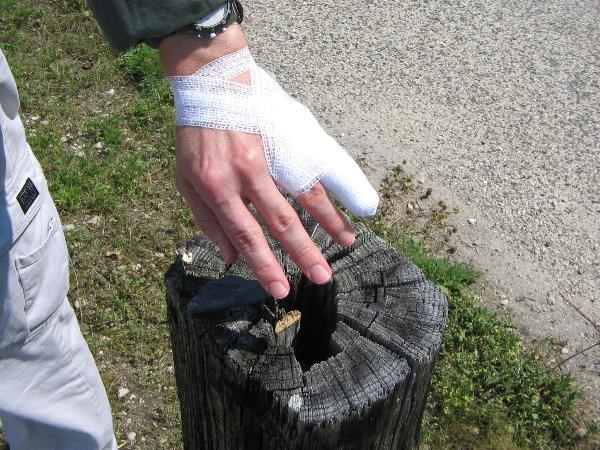
When we lived in Wisconsin, my family used to be avid geocachers. We still go out once in a while to find the little boxes hidden in the woods, but in Wisconsin there were plenty of day trips to be had with minimal traffic (unlike our current setting). One day we drove to Holy Hill National Shrine of Mary, Help of Christians, a discalced Carmelite community built atop a glacial moraine that gives spectacular views of the southeastern corner of the state. Inside there were many abandoned crutches, as I knew from previous visits, but this time we were present to find a small ammo box filled with trinkets, hidden in the wooded grounds. As our GPS narrowed us in on the coordinates, I made the typical error of watching my device rather than my feet. I slipped on a pile of rocks and my left hand slid onto a broken beer bottle, slicing open my little finger. Fortunately our geocaching bag held a small first aid kit, but no amount of gauze and holding my hand over my head could stop the bleeding. After we’d logged our find, we drove to a local emergency room where I received about ten stitches. Although the injury took place on the grounds of a healing shrine, no Jesus appeared on my shredded pinkie. Nor did miraculous healing come because of the location.
DoYouSeeWhatISee

Pareidolia is a most fascinating evolutionary development. One of the first things imprinted on a newborn person is the image of a human face. In remarkably short time the infant can register the intent of various expressions on a human face and will soon learn to mirror them. That desire to find a friendly face never leaves us. We see faces everywhere. There are entire websites dedicated to pareidolia. We like to think there is a watchful parent ensuring that we won’t stumble and fall. Life, however, is full of accidents and injuries. Some of them are even the results of visiting healing shrines. Belief is what makes the difference. Ironically, even when Osuna’s bruise lost the shape of Jesus, she still believed in the healing power of the dirt. Her story has been covered on television and is easily found on the web. It is a fame born of faith. Miracles are always there for the taking.
God in the Shops

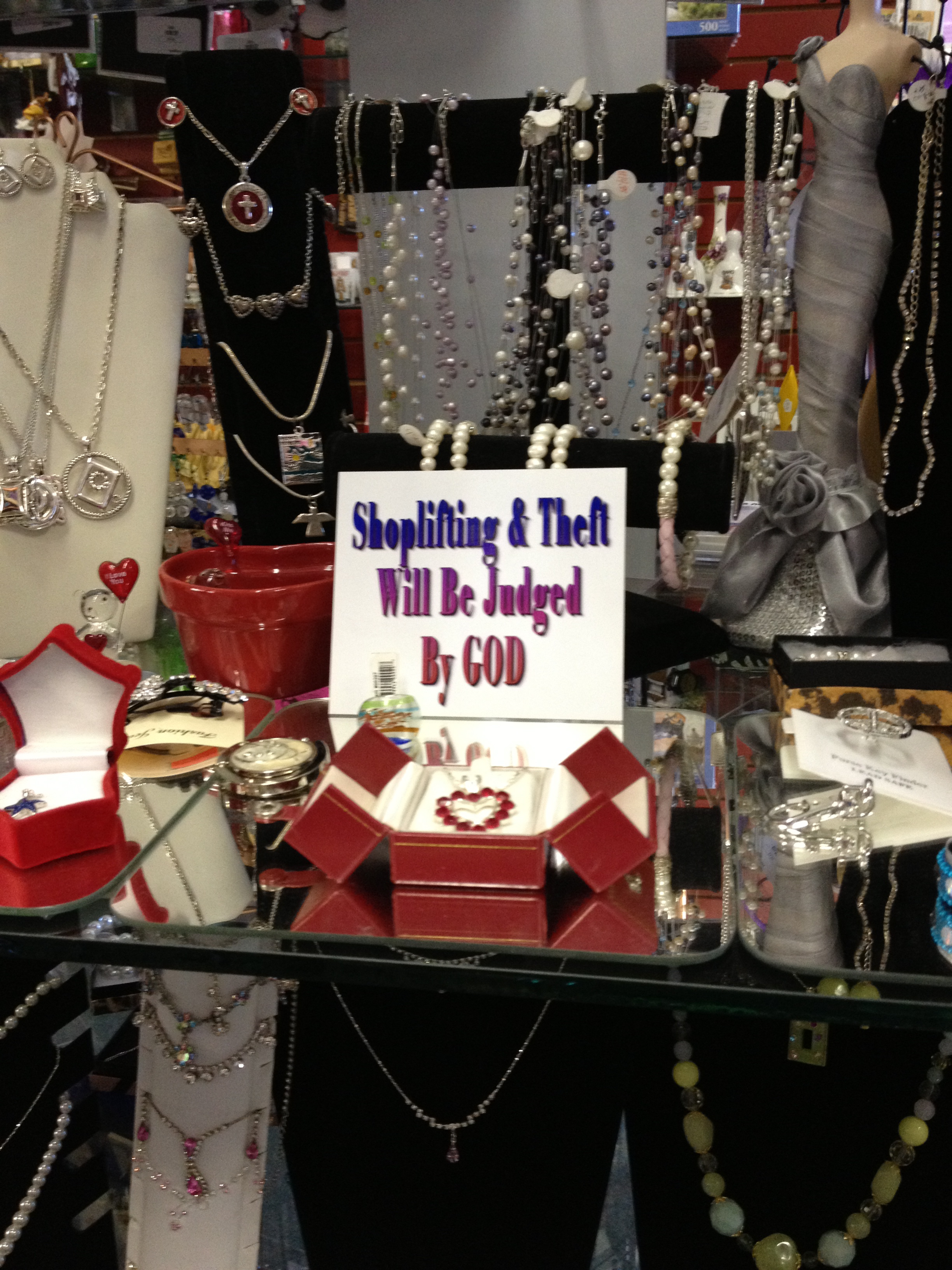
Over the past few weeks, as I’ve been out and about, I’ve been noticing the way that the divine has been utilized by shop-keepers. In a culture where incipient religion is so pervasive, it seems that God is treated much like the NSA in some quarters—always watching, always vigilant. I popped into a shop selling locally made items (I try to support the local economy when I’ve got a greenback or two to spare, although that is rare), where I saw a sign reading “Shoplifting & Theft Will Be Judged By God.” The sentiment gave me pause. Deeply embedded in our society is the idea that without a divine mall cop, we would all run amok with crime. Although religion is pervasive in the world, much of it is non-deistic, and yet highly moral (particularly in east Asian nations). Their cultures have advanced, even beyond western culture in many aspects of technology, and yet gods (and specifically our God) do not figure into the ethical equation. Pillage and plunder do not seem to erupt when God is not in the shop.

IMG_0903

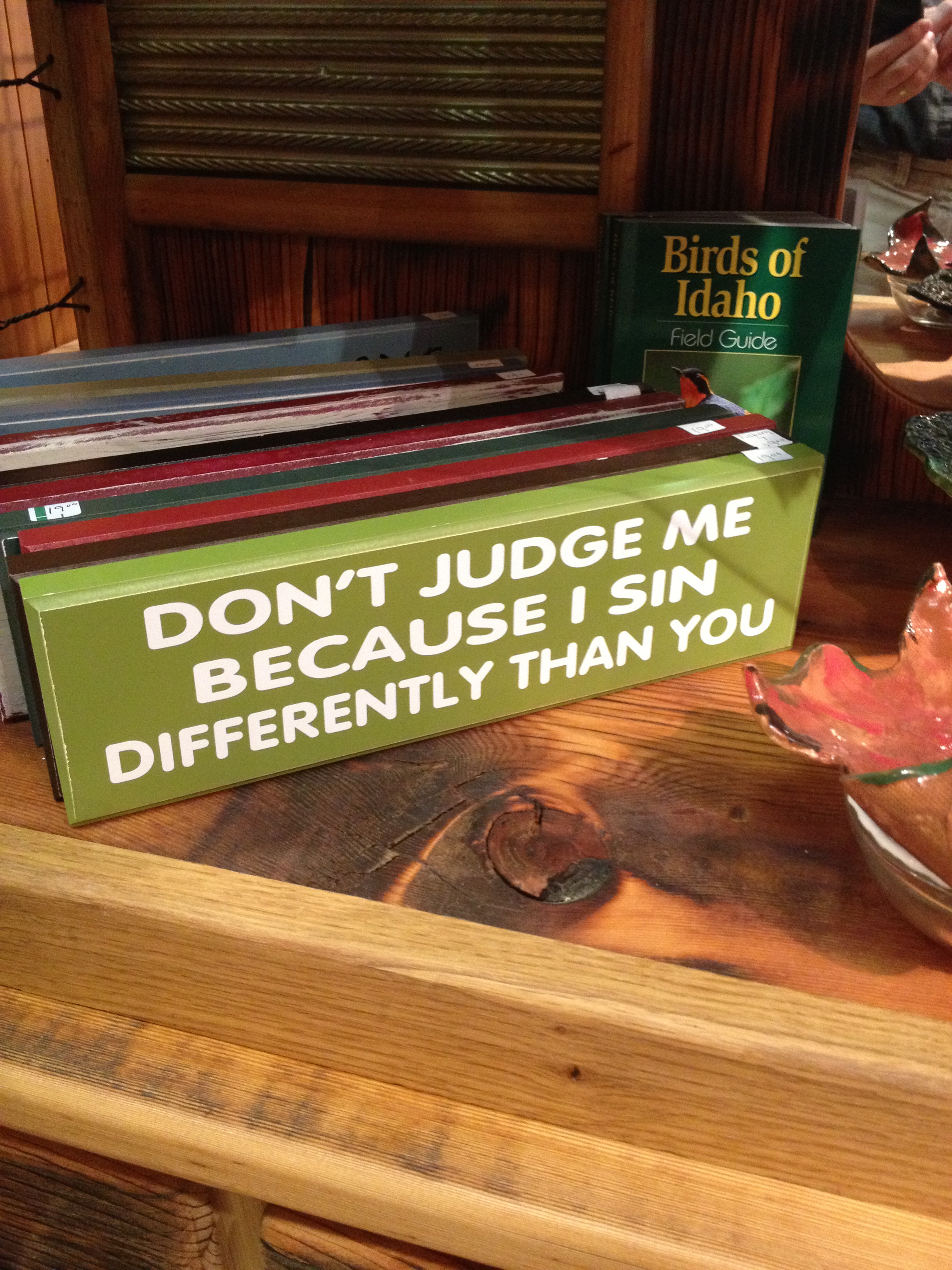
Whimsical signs have been popular decorative items for decades now. The problem with whimsy is that it loses its effectiveness once the initial chuckle is over. Signs reading “no pain, no gain” in fitness clubs may inspire day after day (although I have my doubts), but the cute warning that “the dog is crazy” on your doormat fails to impress after the first reading. (It must be pretty obvious that I don’t entertain much.) Nevertheless, shops stock those impulse-buy signs that are clever and witty, if soon outdated. I found one the other day reading, “Don’t judge me because I sin differently than you.” Even with the strains of self-righteousness, there is valid thought here. When the woman caught in adultery was brought before Jesus, he said, “Let the one without sin throw the first stone.” This disputed passage is one of the most pertinent in all of Scripture. No stones flew.

IMG_0909

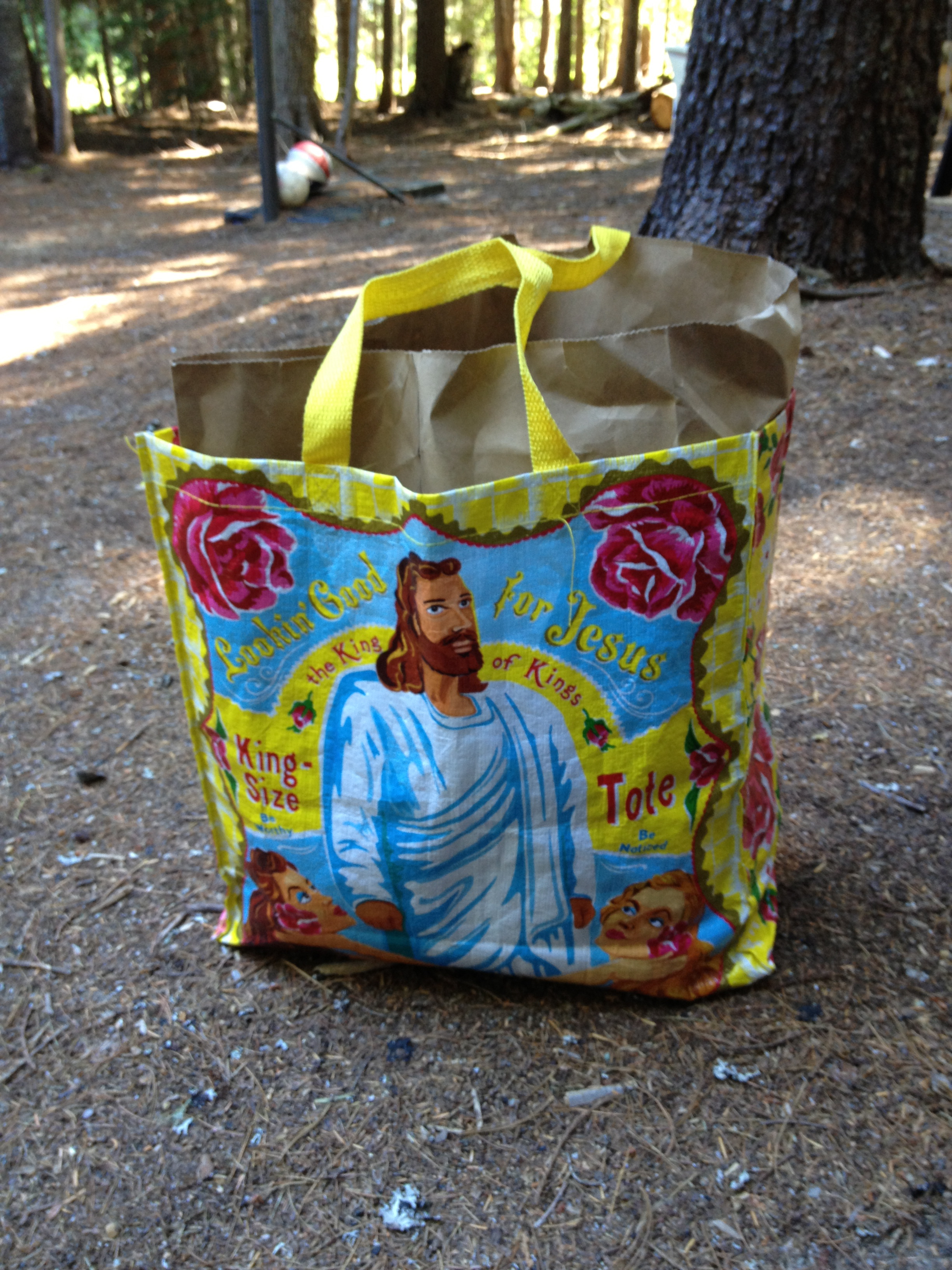
Finally, a friend came in bearing a shopping bag with Jesus on it. “Lookin’ good for Jesus, the King of Kings, King-size Tote” it read. The bag was clearly designed with a heavy dose of irony. I couldn’t help but notice that the bag was full of bottled gas. This portable version of the only begotten is a reminder of how commercial our religion has truly become. Although clearly presented with tongue distending cheek, we know that, as I tried to convince many at Gorgias Press, Sects Sells. People will buy cute knock-offs of their deities. In Wisconsin we used to visit Holy Hill, a Carmelite shrine where all manner of sacred kitsch lined the walls, from glow-in-the-dark rosaries to cheap, plastic saviors. The shop was never empty. Perhaps it is possible to worship both God and mammon after all.

IMG_0908


Material Whirled

With the moon and Jupiter waltzing slowly so high in the sky, radiating such brilliance early in the morning over this past week, it is understandable how ancient people came to see the gods as material objects. The course of progression seems to have been physical gods to spiritual gods: the earliest deities ate, drank, made love, fought. They were of the same substance as humans, or at least of the same psychological makeup. The Egyptians, Zoroastrians, and Greeks all toyed with ideas of beings of “spirit”—non-corporeal entities that did not participate in our material world, but were able to influence it. In the world but not of it. The tremendous gulf between great goddess and material girl was born. Today that concept is taken for granted, especially in western religions. We are locked into physicality while God is free to come and go.

Many religions respond to this by suggesting that we should look beyond the physical to the majesty hidden from biological eyes. And yet, physical creatures that we are, we are drawn back to material means to demonstrate our spirituality. One of the perks of working for a publisher is the constant exposure to new ideas. At Routledge I have been learning about the rising interest in material religion: the manifestation of religion through physical objects and rituals. This aspect of religious life easily devolves into a cheapening of faith into mass-produced, religious knickknacks and kitsch. Some mistake this for the real thing. While living in Wisconsin, my family used to visit the spectacular Holy Hill, the site of a Carmelite monastery atop a large glacial moraine. On a clear day you can see Milwaukee from the church tower. It is a large tourist draw.

No visit to such a shrine would be complete without the obligatory stop at the gift shop. Even the non-believer feels compelled to buy some incredibly tasteless artifact to keep them grounded in reality. Many of the items—giant glow-in-the-dark rosaries, maudlin mini-portraits of the blessed virgin Mary (BVM as the insiders call her, not to be confused with BVD) and the crucified Lord on all manner of crosses, line the walls and shelves. This commercialization is not limited to the Catholic tradition. Evangelical groups realize the importance of branding as well, passing out cheap merchandise (or better, selling it) with Bible verses emblazoned on it. These signs of faith sell themselves, but they blur the sacred distinction between human and divine. Does religion point to a reality behind the physical? This is its claim, but what is the harm in making a bit of cash on the side, just in case?