Biggest Buy

It isn’t really that much of a specialty item. You see, we live in an older apartment and three-pronged outlets were mostly reserved for kitchens the last time the place received any kind of upgrade. I’m not sure which century that was, but here in the twenty-first, we have lots of electrical toys, and of course, they come with grounding plugs. We needed an outlet for a device, but the nearest plug was yards away. Well, it seems that extension cords are now fire hazards, so you need to use a power-strip. Your typical power strip, as I came to learn, has a six-foot cord. (Although I said “yards,” I meant more than a couple.) So I drove to Best Buy. I can’t remember the last time I was in one. These “buy it large,” “consume excessively” kinds of stores aren’t really my style. I never believed the consumer myth, but I figured these large appliances must require surge protectors or power strips, right? And surely not all houses have conveniently located plugs.
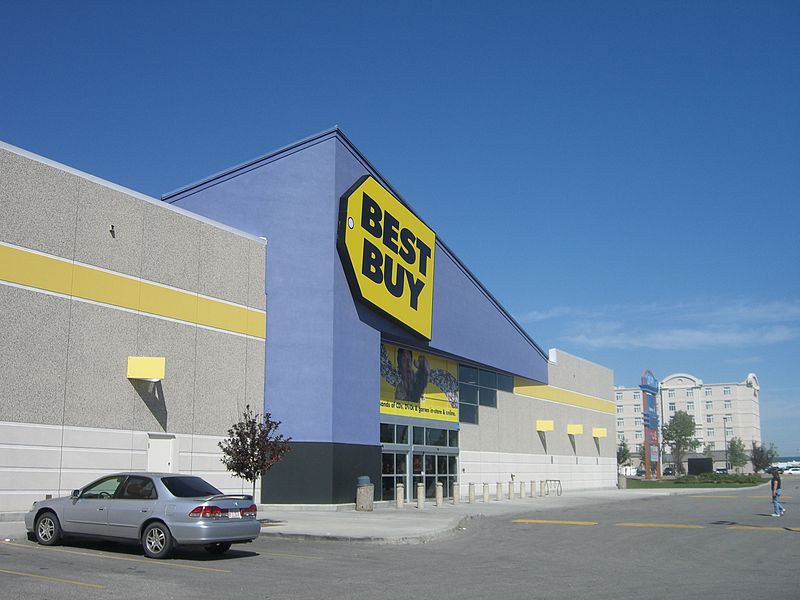
Photo credit: Myke 2020, Wikipedia Commons

Photo credit: Myke 2020, Wikipedia Commons

I am neither a large man nor a fetching woman, but it became clear that I was practically invisible in the store. Trying to get the attention of anyone on the blue-shirted staff was impossible. Even walking right up to someone with purpose wasn’t enough. I did notice, however, that the blue shirts were fairly adept at helping the female clientele. Eventually I found the surge protectors, etc., in their aisle—up to eight feet in length. I tried for another 20 minutes to find help, but the kind of help I need, apparently, doesn’t come in bulk. Maybe on a couch. I went home and within minutes found what I needed on Amazon. I would have it in two days.

Bulk buying, in my humble opinion, is an ethical issue. I’ve stopped going to Home Depot, and even Staples and Barnes and Noble are final resorts. What I’m looking for can’t be found in such places. Besides, nobody wants to stop and direct a bearded, perpetually confused-looking guy. We live in a culture where worth is measured in comestibles and durable goods purchased in bulk. Those with the most buying power are the gods. I can’t even drive by Costco without a substantial delay on a Saturday morning. I don’t need very much to get by. Still, come to think of it, I could use a power source that is conveniently located. And perhaps, some day, a culture more interested in quality than quantity.
Whatever Happened to Whimsy?

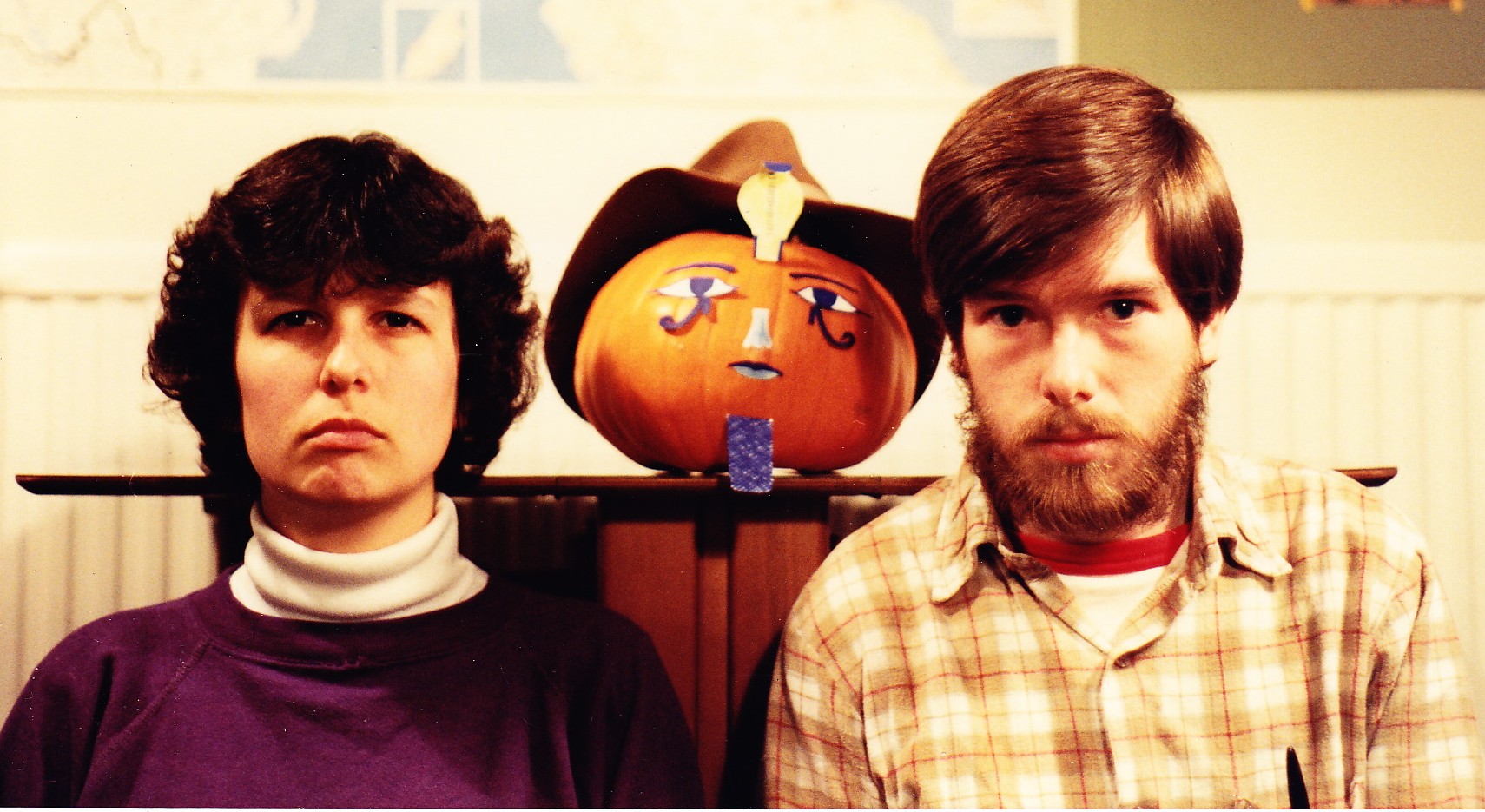
American Gothic is one of my favorite paintings. I’ve never seen the original, and I know of no other paintings that Grant Wood produced, although I’m sure there are some. The mood in what has been called “the most famous American painting” is unsettled. There’s something not quite right here. When one of my authors wanted to use the image on a book cover, it led to quite a bit of serious discussion. I was a bit surprised by the negative impressions—not of the painting, but of its use on a serious academic book. The discussion seemed to turn on money rather than on wit and whimsy. I confess to being a dreamer, and I admit that the aspects of life that truly inspire me are never financial. When I crave wealth it is so that I might free up some time for creativity. That’s not the way business works.

Sometimes I feel a stranger in my own country. The unquestioned triumph of unbridled capitalism means that you can go from city to city to city and not really be able to tell much of a difference. If you want to buy a bit of tubing or a piece of wood, it’s Home Depot or Lowe’s for you. Office supplies—Office Max or Staples are your only choices. If you want to buy intelligent books, well, you’re just plumb out of luck unless you go to Amazon. The big financial corporations have won. Just admit it. Every time I visit my hometown I come away depressed at all the vacant stores and lost hopes of the small businesses that offered something just a little different. Something to tickle my fancy. Something to tempt me to wonder. Something with a tinge of American Gothic.

AmGoth

The messages we receive from every angle echo Madonna’s hit song, “Material Girl.” Only this includes all genders. Reductionistic materialism tells us that we’re just proteins walking. Mind is an illusion. Soul is a myth. I work a job where the money I’m paid is transferred electronically and if I want to see some of it in paper form I face a robotic ATM rather than a human face. I went to the mall last night and wept. Call it a mid-life crisis if you will. Say nostalgia has no place in a forward-looking society. I just want a few more options besides the plastic, the smart-chipped, and the sterile. The world needs more whimsy. Maybe that’s why I insisted on American Gothic on the cover of the first book I put under contract.


Jew Want Some Jesus with That?

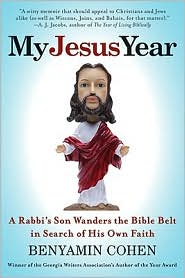
There’s been a trend in the last few years of journalists following a religious lifestyle not their own to learn something of another faith. This often leads to whimsical—occasionally funny—books that generally sell well. I appreciate the effort of those who try to open their minds to other belief systems, but the truly funny thing about religions is that they are very difficult to study objectively. There is a universe of difference between studying the papacy and being a Pope (I am only guessing here). This aspect of the religious explorer came through quite clearly in Benyamin Cohen’s My Jesus Year. Cohen, an Orthodox Jew, without compromising his faith, spent a year of Sundays attending various churches with two goals in mind: to learn more about Christianity and to appreciate his own Judaism more. The result is, for someone raised in the Christian tradition, a little disorienting.

We seldom tell children about other religions since such information would imply that religion is a choice, a marketplace. We prefer to tell our children that our brand is the right one—the only right one—because that is what we believe. By the time most children encounter those of other faiths, the indoctrination of their childhood has congealed. Many Christians will send their children to Christian daycare, often followed by parochial schools. Where would they expect to meet their first Muslim? Unfortunately, it is often on the battlefield. By protecting our children from the dangers of foreign faiths, we endanger everyone involved. So, reading a book written by a Jew, I felt a little strange—as if maybe Christianity wasn’t the majority faith after all. Given the wide diversity of Christianities Cohen cites, this is not so strange after all. Am I more like the evangelical Ultimate Christian Wrestling crowd or the Roman Catholic doing crossword puzzles during mass? Or none of the above?

Cohen notes that evangelical pastors (or laypersons, Christian or not) will sometimes share their secrets of success with those of other religions. Tellingly, he quotes Bernie Marcus, co-founder of Home Depot, explaining to rabbis how they might drum up more excitement: “You’re in the marketing business; you’re selling a product. You’re selling religion. It happens to be something that’s good for people. But you can’t get to them to sell them the religion because you’re in the marketing business and you don’t realize you’re in the marketing business.” Is that what it really comes down to? Religion is frequently described as a marketplace; it is the only paradigm available for the true capitalist. We’ve seen it take over higher education, and now those who give advice to religious leaders are the captains of industry. We have become victims of our own success. There was a time when religion stood outside the ordinary, but now it can be packaged and marketed and sold. An excellent exercise on your way to the store, however, is to stand back and listen to the other customers. If you are lucky, one of them will be Benyamin Cohen.