Slow to Travel

A family friend recently died.  I was in New York City when I received the news, and I mused how recent a phenomenon this speed of information is.  The news wasn’t necessarily a shock—this friend had been experiencing failing health, he was a close friend of my grandfather—but for some reason Samuel F. B. Morse came to mind.  The story goes that Morse invented the telegraph because of his experience of being away from home when his wife died.  By the time he received the news and was able to get home by the conveyance of the day, she’s already been buried.  He set his inventive mind to improving the speed of communication over a distance.  In these days of receiving texts mere seconds after something momentous happens, it’s difficult to imagine that for the vast majority of human existence, personal news traveled slowly.

Feeling in a reflective mood I recalled how when I was in college I wrote letters home.  Yes, the telephone existed by then—don’t be so cynical!—but long distance bore a cost and college students find ways to save their money for girlfriends or spending a weekend in Pittsburgh.  News traveled more slowly.  Back before Morse, the swiftest option was the letter.  The death of a friend might take days or weeks to reach those close.  Distance in time, as well as space, may not have lessened the shock, but the immediacy of a text wasn’t there.  The death had occurred days or weeks ago.  There was nothing left to do but grieve and get on with life.  Like Samuel Morse—perhaps the only point of comparison between us—I was unable to get away immediately.  New York City isn’t easy to escape quickly.

We move swiftly and slowly at the same time.  I know news moments from the event, but this physical mass I inhabit is sluggish takes some time to get around.  Manhattan’s an island, and although it’s not Styx we’re crossing, the Hudson creates barriers enough.  Now my journey includes crossing the entire state of New Jersey before I can even reach home.  Were I to drive back to my original home, it would add another five hours at least in the car.  Sometimes I wonder if the immediacy of knowing is a blessing or a curse.  The shock is immediate and visceral.  But like an injection, the sharpness is quickly over and the dull ache sets in.  Our family friend had been suffering for some time.  Now he’s at peace.  I like to think he’s with my granddad, and that the two of them together won’t judge me too harshly for moving so slowly.
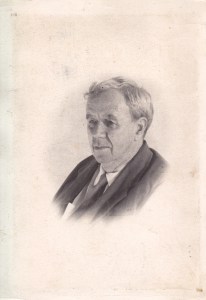

Personal Heroes

I’m not inclined toward hero worship. Sometimes I think it must be a personality flaw on my part. The cult of celebrity is so pervasive that I feel desperately behind the times when I read what web-savvy authors write. Or maybe the truth is that my heroes live closer to home. Or lived. I grew up in a small town as the child of a working-class couple, both of whose sets of parents were not educated beyond high school. We were simple folk. We didn’t have much money and we didn’t have elaborate demands. My mother put up with an alcoholic and then absentee father, raising three children largely on her own for the better part of a decade. (She eventually remarried and the three became four, but I want to focus on the early part of the story today.) She had a rough life. Her hero, not surprising for an only girl with four brothers, was her father. Her admiration for him, whether genetic or via learning, passed on to me. I can’t claim to remember him since my grandfather died just before I turned two and just before he turned 75. As I grew up, however, he became my hero.

HomerSitterley

Today would have been his birthday, and I’m thinking about Homer Sitterley, my hero. He grew up on a farm in upstate New York and tried to better his circumstances. He taught in a one-room schoolhouse, which you could do in those days without a college degree. He also met my grandmother in that schoolhouse, which you could also do in those days. He had to change careers and became a civil engineer—still with no degree. He started and supported a family of five and moved around the country trying to keep his spouse happy. Back in the 1920s and ‘30s they moved from Virginia to Montana and back to the east, eventually settling in New Jersey, where my mother was born. They finally moved to Pennsylvania where my three brothers and I were born. He died there in August of 1964.

Homer Sitterley may have never worn a cape like one of his silly grandsons did in college. He didn’t have any super powers beyond the strong will to survive in a hostile and thankless world. He never grew rich despite hard work and few outside his family knew his name. He is a hero nevertheless. His kids were upstanding people: religious, polite, and kind. Their children—my many cousins—are good people. In a world where superheroes are shown increasingly as flawed, the real heroes are simply human. And my personal hero, although he never knew he was—and is—was a man who cared for his family to the very end. He was only human. And all the more heroic for being so.