Woodwork

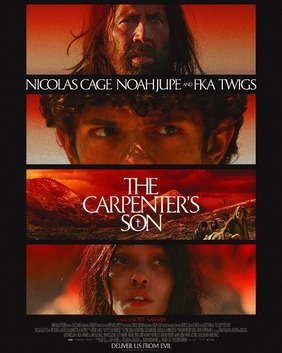
It’s not often that I get to see a new horror movie on opening day, but I managed to swing The Carpenter’s Son with a screener, courtesy of Horror Homeroom.  I’m not going to say much about the movie here, because you should go there to read my response—I’ll let you know when it appears.  But I should try to whet your appetite a bit.  Among those of us who read and write about horror and religion this was a much anticipated movie.  A horror movie about Jesus.  Such things have been done before, but this one is played straight with an interesting premise.  It’s based, loosely, on the Infancy Gospel of Thomas.  This isn’t to be confused with the Gospel of Thomas.  Early Christians, it seems, favored the doubter’s point of view.  The Infancy Gospel is the story of Jesus’ miracles between the ages of five and twelve.  Even among early Christians these accounts weren’t taken as gospel truth.  They make for an interesting movie, however.

I think about horror and religion quite a lot.  Since the late sixties the two appear together frequently and, according to many surveys, make for the scariest movies.  Religion deals with, not to sound too Tillichian, ultimate concerns.  In the human psyche you can’t get much larger than death and eternity.  These are the home turf of religion.  Of course, death can be handled in an entirely secular way, but there’s a reasons hospitals almost always have chapels in them.  Eternity may be slotted in cosmology, but what it means comes from religion.  Forever seems pretty ultimate to me.

One thing I didn’t give in my Horror Homeroom piece about The Carpenter’s Son is my thoughts as to whether it’s a good movie or not.  Did I like it?  To a certain degree, yes.  Although I’ve been impressed with Nicolas Cage in horror movies lately—he can really rise to the occasion—sometimes, as in The Wicker Man, he just becomes, well, Cagey.  This happens once in a while in The Carpenter’s Son too.  When he’s questioning Mary about where “the boy” came from, his voice gets the wheedling, whining, kind of mocking tone that doesn’t set him as his best.  Likewise, when he tries to instruct young Jesus in various ways, it seems far too modern to fit the palette of a period drama.  I watched it a couple of times to write the article and I have my doubts that I’ll watch it again.  I did think the portrayal of Satan was good, and appreciated some of the dialogue about evil.  It wasn’t my favorite horror movie in recent weeks, however, even though I saw it before it opened.


Yes, Yes

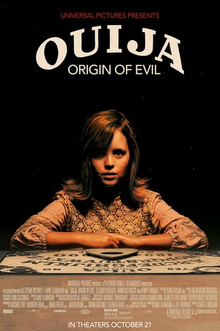
You had to’ve seen this coming.  Ouija: Origin of Evil, with a different director and writer, and the same producer, pulled off the better prequel/sequel.  I don’t give that accolade lightly.  Now, I’m not a professional film critic, and I like to say nice things whenever possible, but even sequels/prequels that professional critics do say are better often find me in disagreement.  In this case I stand with them.  And I have some ideas, apart from natural talent, why it is so in this case.  The problem with ouija, and spirit boards, is that you have no way of knowing who or what may be answering your questions.  In the first movie we just know it’s someone with bad intent, and we need to wait until all the twists are finished to find out who.  The second begins with the premise that we already know who, but we want to know why and how.

But it goes deeper than that.  The first movie left religion out completely.  The prequel scoops it back in by the shovelful.  And if you want to make a movie about ouija work, you need to have demons.  To begin with, the family previously in the house is Catholic.  The kids go to Catholic school.  The headmaster is a priest who wants to help the family.  He quotes the Bible (Holy Sequel, anyone?)  He recognizes that the entity isn’t who it says it is.  Although showing demons is always a bit of a dicey proposition, the prequel opts for the preferred look from the period, and show them only dimly.  It still has to work with the world built by the original, which leads to a strange backstory of a Nazi in the basement operating on homeless people, but you have to work with what you’re given.

So the second movie is scarier and better made.  It didn’t earn as much as the first one did, though.  The idea hadn’t, I don’t think, been tapped out.  Rather, I think once you’ve laid out the premise, viewers have to be enticed back.  If a subject is mishandled, it does require extra work to convince viewers that the next experience will be better.  The critics, however, immediately saw the difference.  You really don’t have to know the story behind Ouija to see this movie, but it definitely helps.  It earned enough that unofficial sequels were released before the official prequel.  One of them only by a matter of days.  It pays to get it right the first time, and if you’re working with a naturally religious topic for your horror, you shouldn’t be afraid of religion.


Not the Witch

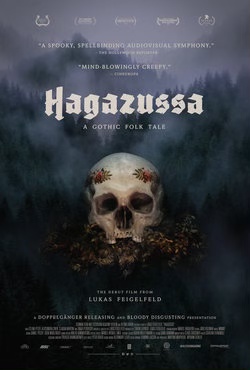
Hagazussa came to my attention from, I believe, the New York Times.  In the autumn normally staid news sources start suggesting horror films to watch.  Subtitled A Heathen’s Curse, this new Euro-horror (filmed in German) immediately reminded me of Robert Egger’s The Witch, but with a lot less plot.  It’s a moody and disturbing story of the life of an outcast young woman in the sixteenth century.  Raised by a poor, goat-herding mother, Albrun watches her mother die of the Black Death, when Albrun’s a tween.  She continues living in her childhood home, with a daughter whose origin, like that of Albrun, is never explained.  The locals shun her as a witch but a seemingly friendly villager befriends her before turning against her and betraying her.  After this neighbor, and then others, die, Albrun drowns her infant daughter after eating a toadstool in the woods.  She then bursts into flames atop a hill in the Alps.

As folk horror, the movie is more about the haunted landscape than about an intricately plotted story.  There’s nevertheless a great deal of symbolism used, including much regarding Eve—apples, serpents, and goddesses all play a part.  Locals fear pagans, and the church interior lined with bones reminded me strongly of St. Stephen’s Cathedral in Vienna, where plague victims’ bones fill the underground vaults.  Seeing such a place reminds you forcefully of your insignificance.  Hagazussa is an art film as well as folk horror, and it appeals to gothic sensibilities.  There’s very little dialogue.  Indeed, the loneliness of Albrun is a major aspect of this moody, atmospheric work.  Such stories always remind me of how difficult life was for those who had to try to scratch a living from the land.  Existence was tenuous at best.  Especially for women alone, as determined by Christian society.

The movie left me reflective.  It also underscored how religion and horror tread the same paths repeatedly.  The village priest tells Albrun that sacrilege must be cleansed, even as he hands her her mother’s skull, polished and decorated.  He wearily admits that he struggles to led the community.  Indeed, Albrun’s new “friend” castigates Jews and heathens, even as she takes part in the robbing of Albrun’s livelihood.  Witches, as “monsters” were invented by the church as fears reached out to point to new sources.  Even if they had to be fabricated at the expense of innocent people.  Fear operates that way still, as anyone who watches political ads knows.  It’s easier to persecute than to educate, it seems.  In the end, Albrun burns up and we realize we’ve just watched a parable.


Teaching Horror

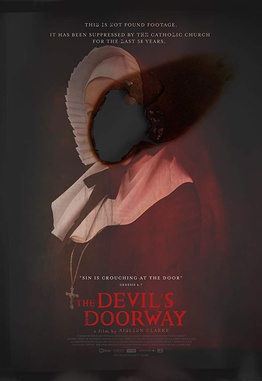
Critics who complain that Aislinn Clarke’s The Devil’s Doorway has nothing new really have no appreciation for parables.  An Irish found-footage film, The Devil’s Doorway is, as it clearly states, a lament over the Magdalene Laundries in Ireland.  I’d never heard of these institutions that existed until less than 30 years ago.  Founded by the Catholic Church, these “asylums” were places where women in trouble were essentially treated as slave labor.  Women, who often have difficulty hiding the results of sexual promiscuity (something men more easily get away with), were put to work in these reformatories.  I don’t know if the conditions were as bad as presented in the movie, but they provide a springboard into a perfectly serviceable horror film.  The horror tropes may be familiar, but that’s true of most horror of these days.

Two priests are sent to a Magdalene Laundry to investigate a reported miracle of a bleeding statue of Mary.  Please pardon my invocation of Alice Cooper here, but “Only Women Bleed” would be appropriate to consider.  Fr. Thomas, older and skeptical, doesn’t believe in miracles while Fr. John, the “techie” (it’s set in 1960) films the proceedings.  The priests uncover layer after layer of hypocrisy and deceit.  The Mother Superior, who shows no deference to the priests, insists that many of the pregnant women that have passed through the asylum were impregnated by clergy.  But there’s more.  As the statues bleed, a young woman, a pregnant virgin, is found kept in a dungeon.  Ghosts of murdered children cavort through the night.  A satanic niche for a black mass is discovered.  And the pregnant virgin is also possessed by a demon.  There’s a lot going on here.

To mistake all of this as “just a horror movie” is to miss the point.  Such is the way with parables.  Clarke, the director, was an unwed mother at 17 who realized that, had this happened a few years earlier, she could well have found herself confined to a Magdalene Laundry.  The movie doesn’t, it seems to me, condemn Catholicism per se.  For example, the two priests documenting the activities seem to be good people.  Fr. Thomas, as it turns out, had been born in this selfsame institution.  Raised as an orphan, he became a priest who, not surprisingly, doesn’t believe in miracles.  He too, was a victim.  Religious horror serves many purposes.  Often the very unfamiliarity of religion itself can drive the fear.  Another purpose, however, is to educate.  The Devil’s Doorway educated me, and I appreciate the parable.


Pearl X

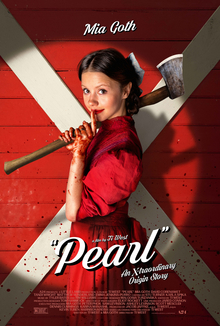
The danger to starting something new is that you’ll get hooked.  I watched the unusual horror film X because it was getting some good press, only to find out that by the time I saw it Pearl, the prequel, was underway.  It took some time before Pearl came to a streaming service within reach, so once it showed up I had to sit down and see it.  Like X, it has a strong element of religion in it but Pearl is really the exploration of a mental imbalance slowly taking over a life.  Set toward the end of World War I, Pearl lives with her parents while her young husband is “over there.”  Her father’s an invalid and her German mother is controlling and critical.  (My grandmother, also of Teutonic stock, had a similar outlook, I recall from her living with us.)  Pearl wants to be in show business, but down on the farm there are always chores and very little opportunity.

Along with her sister-in-law, she tries out for a dance troupe (auditions in the local church), but this is only after she has committed a triple homicide (one of them, arguably, accidental).  In her mind she’s brilliant, but the judges see it more like her late mother warned her.  Perhaps the most stunning shot is the long, uncut confession she makes to her sister-in-law.  Of course, she now has to kill her as well.  Her sister-in-law had won the dancing part, after all.  The progression of Pearl’s madness is set off against a retro filming style that borrows from The Wizard of Oz.  Bright colors and period costumes add to the feel and underscore that something just isn’t right.  In other words, it’s quite a disturbing movie.

I suppose this film might trigger those who feel uncertain of their grip on what we normally consider reality.  It also raises the danger of desiring something that is, in reality, out of reach.  For someone who’s longed for a career that those who know me have always declared the one best suited for me, I felt a tug or two.  My need doesn’t reach as far as murder.  As a pacifist and a vegan I’m not the best candidate for such things.  But I do know what it is to be denied a deeply held dream.  In fact, I do dream about it with some regularity.  (Teaching, for the sake of clarity, not murdering.)  The plot seems to line up a little crookedly with that of X, but the two movies are very different, yet similar.  I hear a third installment’s on the way, and that’s dangerous news.


Night or Curse

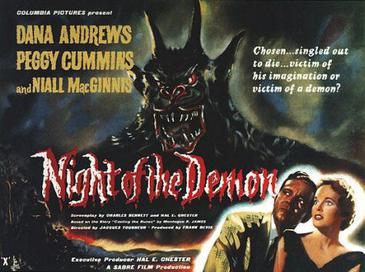
You just never know.  I’ve read lots of books about horror movies, but clearly not enough.  The field only gained academic respectability in recent years, but once the flood gates opened…  So I use my limited time off work both reading and watching horror movies—trying to catch up on what I’ve missed.  Lately I’ve been reaching back to the early stuff, movies from the forties and fifties.  Some of these are what we’ve been led to expect.  Others are not.  I’d heard of Night of the Demon (its American title is Curse of the Demon) but my sources suggested nothing remarkable about it.  As soon as I began watching, however, I realized that this story adapted from M. R. James would be worth the time.  This despite the fact that the monster is shown early and isn’t that great.  (The director, Jacques Tourneur, lost out on this one.)  After I saw it I read that it is considered by many the greatest horror film of all time.

I wouldn’t go quite that far, but I would say that it is very good and, as I learned, extremely influential.  So much so that I was rather stunned after a casual weekend viewing.  The story is about a Satanist whose true motivations are uncertain.  Those to whom he gives runes copied from Stonehenge are killed by the demon we’ve already seen.  The story plays out as a conflict between skepticism and belief—the supernatural is real, but alternative explanations are offered—you can see why the obvious demon scenes are so controversial.  The film makes effective use of jump startles and stingers.  And it’s one of those movies that, in its day wasn’t really appreciated, but reassessment polishes it as the gem that it is.

Proving later influence, such as the wind storm in The Omen, is difficult without a director revealing their sources, like a magician, but others are perfectly obvious.  Kate Bush’s song “Hounds of Love,” plays a clip of a line from the movie.  Richard O’Brien’s lyrics for “Science Fiction/Double Feature” (famous because of the Rocky Horror Picture Show) make reference to Dana Andrews passing the runes.  That line had always puzzled me.  And now I discover that I’ve been missing out on a foundational piece of horror history.  When friends recommend movies, not surprisingly, they tend to be relatively contemporary ones.  The thing is, to appreciate what’s popular now, one must do one’s homework.  And that might must mean hunting down the oldies.  You just never know when you might come across one worth the effort to find.


Opposites?

Not having the money to subscribe, I limit myself to the daily headlines of Publishers Weekly.  When physically in the office in New York City, it circulated among editors in print form.  I do miss that.  The weekly is a great place to stay informed of what’s going on in the book world.  Interestingly, the headlines—which are often linked together newsletter-style—noted that the annual preview of religion books was on the way.  This was followed by “On the exact opposite side of the publishing spectrum, Orbit has launched its fourth imprint, Run for It, capitalizing on the horror boom.”  So there it was staring me in the face.  Religion and horror are exact opposites.  Now, I can’t expect even experts in publishing to be aware of all the trends, but the religion-horror connection has been alive and growing for a few years now and those of us who publish books in it might dispute the “exact opposite side” designation.

Photo by Thomas Park on Unsplash

Horror and religion are closely related.  Many in the religion camp would want to deny that, but those who know horror know that religion quite often wanders in.  More than that, religion often drives the horror.  They’re not so much exact opposites as they are playmates.  Rather like the Bible depicts God being the chum of Leviathan.  (Who is, after all, a perfectly good monster.)  While my own humble efforts are frequently overlooked, the last four books I’ve written explore different aspects of religion and horror.  This includes my forthcoming Sleepy Hollow book.

Even if you’re not a fan of horror movies, if you pay close attention religion is not the opposite of horror.  We have this mental image of religion as a pure and holy thing in and of itself.  We don’t often stop to think that religions are invented by humans.  Yes, they are often in response to what believers see as divine stimuli, but the way that they are conducted is part of our human ingenuity.  They are considered good because of their emphasis on love and positive virtues.  If you watch enough horror you’ll notice that the menace is often a threat to love.  In other words, horror too emphasizes the value of love.  It’s a perception problem that sees horror as the opposite of religion.  Simplistic categories are often necessary to get through life—that’s why we stereotype.  Those of us who like to stop and think through things can gum up the works.  Even a headline in a magazine we like can lead us to wonder about the deeper implications and the biases they perpetuate.


Finding The Exorcist

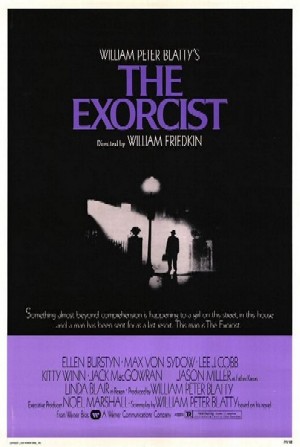
This blog is the closest thing to a diary that I keep anymore.  It’s also the place where I remind myself when I read a book or saw a movie.  I started this blog (actually, my niece did, but I started putting content on) about a decade-and-a-half ago.  Most of the books I’ve read since then (but not all), have been featured here.  It didn’t start out that way with movies.  I watch a lot of films.  The other day I was wondering when I first watched The Exorcist.  I figured that it must’ve been something I’d blogged about, knowing me.  It could be that I watched it before 2009, or it could be that the search function on WordPress doesn’t allow me to find the post, if it exists.  You see, I don’t know what else to search for beyond “The Exorcist,” because I can’t recall what I might’ve written about it.  If I did.

So, in case I haven’t, I do want to say a bit more about that experience.  I was only eleven when the movie was released.  Three movies that I grew up terrified to see were Rosemary’s Baby, The Exorcist, and The Omen.  I finally saw them as an adult.  Since it was the DVD era (preceded by the VHS era, and followed by the Streaming era—all within about three decades) I bought the disc.  In all likelihood this was at FYE, which used to be a thing, just like Blockbuster before it.  Of course by the time I sat down, trembling, to watch it I’d seen many clips, stills, and parodies.  Still, I was afraid.  The movie, some thirty years old, lived up to its reputation.  I was left trembling more than when I started.

Many books have been written about The Exorcist, and although people sometimes laugh at it today, most horror fans I know still speak of it with reverence.  This movie changed horror.  It also changed demons.  Today what we believe about demons derives largely from this movie.  Its explanatory value is that it offers somewhere to turn when nothing else works.  Religion as a last resort.  And, ultimately, religion works where everything else fails.  It is possible, that somewhere in this sprawl of a blog, that I wrote first impressions of seeing it.  It would’ve been 2009, or perhaps I saw it as early as 2006.  I was struggling with my own demons then.  And, as often happens in such cases, precisely when things happened can be a little difficult to determine.


Holy X

It took several years, but we finally closed the X-Files.  It was shortly after we bought the house, I believe, when we decided to watch the series the whole way through.  This was prompted by my wife giving me season eleven as a present, and I was wondering if I’d lost track of the thread.  We recently finished the last episode of the last season, with the movies interjected into the correct locations.  It was an impressive franchise.  I didn’t watch The X-Files when it originally aired.  We didn’t watch TV in those days (Nashotah House didn’t have cable and reception was awful), but another reason was that I was unmercifully teased for being interested in such things as a kid, and now it was trendy.  Once I got started, though, I was hooked.

Copyright: FOX; fair use screen capture

A few things struck me this time through, but one of the bluntest instruments to hit me was just how profoundly religion was interlaced with the series.  Many episodes involve religion directly, and others address faith and belief, even if outside the confines of established religion.  Since I tend to pause to reflect, I come a bit late to the table most of the time.  If I’d been on the ball, and if I’d begun writing books on horror sooner, I might’ve found a project in the religion of the X-Files.  As it is, several books have been written analyzing the series.  Maybe that’s where I’ll turn next.

You see, the original projected end for the series was season seven in 2000.  The mythology was wrapped up, and David Duchovny was leaving the show, which was, in essence, the story of Fox Mulder.  Two more seasons were ordered, however, with Fox on the run.  Things again were wrapped up in season nine.  Season ten came to air in 2016 and we watched it in real time, with primitive streaming.  In 2018, however, moving ended up being chaotic, and any watching would have to wait.  It seems pretty clear that, even with endless resurrections of the Smoking Man—Mulder’s Darth Vader—that the crisis of the world’s end (on which season ten ended) had finally been resolved.  That season, however, was eerily prescient regarding the pandemic.  Season eleven was a strong pushback against the Trump presidency with its “fake news” and constantly shifting facts.  Many of the episodes note how dangerous this is.  At the end it seems that the miraculous son, dead and resurrected, immaculately conceived, survives, as do the father and, if it’s not reading too much into it, a holy spirit.


Panic Inducing

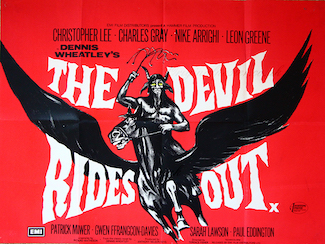
Many movies appreciate in value over time.  The Devil Rides Out (also known as The Devil’s Bride) was not well received initially, but has become a highly regarded horror classic.  One of the few with a G rating, no less.  It’s also hard to see in the US, due to lack of streaming (at least where I stream) and DVDs coded to Europeans viewers.  Anyway, taken from a Dennis Wheatley novel, and screen-written by Richard Matheson, it features Christopher Lee in an heroic role during the days just before public concern about Satanism would become downright panic.  The story itself, effective if long-winded, develops among the aristocracy in England during the 1920s.  It was released, by the way, the same year as Rosemary’s Baby, which helped play into the Satanic panic.  Movies do influence the way we view “reality.”

I’ve never read any Dennis Wheatley novels, but it’s safe to say the story is pretty Manichaean in its outlook.  A coven of Satanists wants a young man and woman to complete their number but the chosen young man has a couple of older friends who quickly comprehend what is happening and attempt to put an end to it.  The Satanists, however, control real power and the movie is pretty much a tug of war between the young man’s friends and the coven.  This is done in such a way that you see very little blood, no gore, and surprisingly for the subject matter, no nudity or sex.  The Satanists here are old school—they want to worship the Devil in exchange for personal power.  It’s pretty clear that some research was done before undertaking all of this, even if the paranoia born of such things was fueled by largely imaginary scenarios. 

I’d been wanting to see this film for some time because of its clear connection between religion and horror.  There’d be no Satan, as we know him, without Christianity.  Indeed, there’s heavy Christian imagery in the film, in keeping with Wheatley’s outlook.  Crosses cause demons to disappear in an exploding puff of smoke.  Interestingly, however, there’s no crucifixes or holy water.  This is a Protestant view of the Dark Lord.  The Satanists, however, are defeated by the spirit of one of their own who refuses to allow them to sacrifice a young girl.  The ending stretches credibility a bit more than the rest of the movie, but still, overall it isn’t bad.  A Hammer production, it never had the box-office draw of its contemporary Rosemary.  Still, The Devil Rides Out was influential in its own right.  Even if finding a viewing copy requires almost selling one’s soul.


A Different Legion

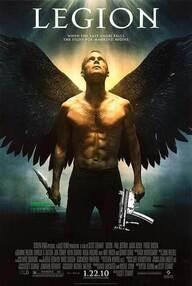
Religion and horror can play well together.  They can also be unevenly matched.  Although Legion has been on my list since shortly after it came out, my impression after having watched it is that the angels are strangely corporeal.  Their fights are physical with very little supernatural involved.  I suppose that’s why it’s generally classified as “action,” but the premise is one that suggests a bit more supernatural would’ve been welcome.  The writing suffers from any number of ailments, and the ending leaves you wondering just how good God is supposed to be in this telling.  I suppose a plot synopsis might help.

A pregnant waitress in a remote diner is nearly at term.  The Archangel Michael has come to earth in Los Angeles (get it?) and has armed himself to protect this unborn baby.  He comes to the diner where the owner and his son, his cook, and four customers are holed up against what they think is a demon attack.  Michael eventually reveals that the arriving hordes are not demons, but humans possessed by angels.  God has decided to wipe out the human race again, this time with angelic mercenaries.  If the waitress’s baby survives, however, the world will be saved.  So there’s lots of shooting, and although a white guy dies first, the only two Black characters are the next victims, of course.  To kill angels, it turns out, you have to shoot them.  Who knew?  In the end, which pits Gabriel against Michael, it’s revealed that God was testing the loyalty of his angels by giving them this task.  Mindless obedience, God thinks, is wrong.  If people have to be killed to prove it, so be it.

The theme of the messianic baby stays intact but goes nowhere.  At the end it’s unclear if the angel attacks are still going on, but the waitress and her boyfriend, along with the baby, drive around heavily armed, ready to fight.  Did the angels get the message that they are being tested by God or are they, like many Republicans, simply following the “leader”?  Seeing the title and knowing nothing of the story, I had assumed this was a movie about demons.  The “Legion,” of course, is angelic but there’s not a lot transcendent about them.  Even the use of wings (which are bulletproof), makes this feel like Dogma without the humor.  I knew religion would be involved in this horror, but I didn’t know how poorly it was played out.  Still, it would fit into Holy Sequel, if it ever happens.


Filming the Void

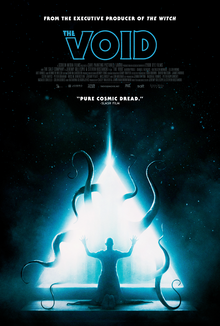
Once you move away from major studios, it turns out that Lovecraftian horror is rather prevalent.  Seeing that The Void was rated higher than many offerings on FreeVee, well, why not.  It was compared to the intellectual works of Benson and Morehead, but to me it matches more closely with Older Gods.  Like many movies in this genre, The Void isn’t easy to follow and having commercial interruptions doesn’t help.  (In movies made for television, directors know to offer cues at specified times to allow for a break.  I’m not sure that those at FreeVee, or Tubi, or Plex, or their ilk, or even Hulu, know how to do this well.)  So there are these mysterious cultists—somehow “new religionists” just doesn’t seem to cut it—who apparently want to bring about the apotheosis of their leader in a rural setting. 

Meanwhile a local sheriff finds a young man fleeing from a couple of guys who are killing people and takes him to the hospital.  This hospital, however, is being closed down and there’s only a skeleton crew there to handle emergencies until it can be decommissioned.  Once the guys trying to kill the young man arrive, the hospital is surrounded by the cultists.  By the way, there will be spoilers—just saying.  It never is adequately explained how these killing guys know who these cultists are, unless it happened so fast that I missed it.  In any case, all trapped in the hospital there’s the problem with a monster that has tentacles (Lovecraftian) that takes over the body of a nurse, then a tries to get a state policeman.  Lots of axes and gunfire, and the numbers in the hospital are reducing.

It turns out that the kindly old doctor is the leader of the cult and he’s trying to raise the old gods so that he can bring his daughter back to life.  The sheriff, who’s been the protagonist all along, knocks said doctor into the eponymous void, leaving only two people alive in the hospital.  It’s not really explained where the cultists, who made it into the hospital, went.  Nevertheless, this is a good example of horror and religion (which is ironically Lovecraftian).  The doctor’s unconventional religion is the cause behind the hospital mayhem, and, apparently the killings being conducted by the interlopers are attempts to stop it.  As a horror film it’s effective, if a bit disjointed.  It seems that there’s still a lot to unpack from films that try to bring Lovecraft’s ideas onto the silver screen, major studio or not.


Look Out Beneath

Rainy weekend afternoons were made for monster flicks.  That’s what I was thinking when I settled on The Devil Below.  I was also thinking, “this is free on Amazon Prime.”  The best word  I can think to describe it is lackluster.  Sometimes I’ll see a movie and a couple weeks later will have trouble remembering what it was about without severe prompting.  This may fall into that category.  We’ll see.  In any case, Arianne—is she Ariadne?—researches and leads groups to inaccessible locations for a fee.  She can find anywhere.  A group of “scientists” want to find a coal mine in Kentucky that caught fire (like Centralia), and explore it for possible high-grade anthracite.  What they don’t know is that monsters live in the mine and they escape from time to time.  The former mine owner has formed a ragtag group of helpers who keep the monsters at bay.  They don’t ask for help.

So far, nothing really stands out.  What makes this movie worth discussing is the dialogue about religion and science that the scientists have.  Unfortunately the writing is poor and that means the dialogue isn’t very sophisticated.  For example, one of the geologists argues that intelligent design isn’t opposed to science.  What said scientist doesn’t know is that intelligent design was intentionally invented by creationists as an alternative to science.  Its roots are clear and unambiguous.  This member of the team doesn’t believe they should really be doing this—the mine is behind an electrified fence and the locals keep trying to chase them off.  And he’s talking about God while there’s, well, devils below.

It’s never really explained why these creatures are considered devils, unless they live close to “Hell,” being underground and all.  We don’t get many clear views of these monsters but they eat what they can get, which makes you wonder what they survived on before miners showed up on the menu.  In the end, all the scientists get eaten—it turns out that their leader was actually working for big industry, not a university, as he’d claimed—and you don’t feel too bad for them.  Arianne survives and decides to stay with the locals to fight the monsters.  There’s some faith talk among them as well, which makes me wonder if the writers maybe had a hidden agenda.  Although the article does score a Wikipedia article, many of those involved, including the writer and the star, don’t have their own entries.  And who has the time to mine the internet for more answers?  There you might find the devil below, I suppose.


A Little Flat

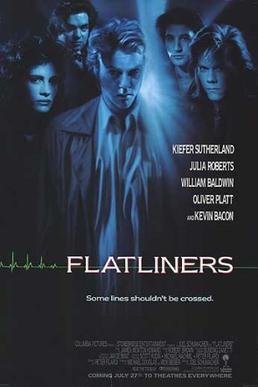
I remember hearing about Flatliners when it came out.  It was during an era when I wasn’t watching many movies and the idea of a movie all about dying bothered me.  Well, I’m older now and I watch movies because I write about them.  So I gave Flatliners a try.  It wasn’t bad—a cut above what I often end up watching on a lazy winter weekend afternoon.  In case your memory’s rusty, here’s how it goes: five med school students decide to experiment with controlled death and resuscitation.  They do this to find out what’s after death.  Confident in both science and their abilities, they one-by-one undergo the procedure to see what awaits beyond.  The experience is different for each of the four that does it.  It can be pleasant, or not.  More not.

Then the experiences from the beyond begin to break through into their alive lives.  But not the good stuff.  The word that these scientists use is, interestingly, “sin.”  The sins of their pasts come back to them.  One of them realizes that to free himself from this haunting, he has to make amends to a person he offended as a child.  The apology—and forgiveness—works.  Eventually the four pay the price and, perhaps, are a bit wiser for it.  This isn’t a great film but it does raise a number of issues that demonstrate how religion and horror relate.  Death is a religious issue, no matter how secular someone is.  As the definition of life becomes more complex, its cessation becomes more fraught.  Here medical students are grappling with their very vocation.  They ease suffering and prolong life.

I suspect one of the reasons the movie failed to make it big was that the “sins” are unevenly repaid.  An accidental death from a childhood of bullying is the worst.  A past of womanizing seems to have a relatively light, and predictable outcome.  And what is the sin in discovering a war veteran parent’s addiction to an opioid?  In a sense it’s classic Sunday school—you get punished for your wrongs.  Some suffer, however, from mistakes that others made.  Or for which others egged them on, and in which others participated.  And for us vegans, even egging someone on might be a sin.  The value of the movie seems to be less how it’s executed and more about the potential for discussion that it raises.  Death is no stranger to cinema, and it can’t fail to make the living curious.  That seems worth talking about. 


Creeping Religion

In a disappointing email, Amazon Prime has announced that its free movie streaming of select titles for members will now be subject to commercials.  I suppose that’s little difference, actually, from the way I watched most movies growing up.  I watched them on television before cable, and commercials were a necessary evil then.  Speaking of evil, I decided to watch a film that I missed in my childhood.  It was better than expected.  The Creeping Flesh suggested itself by star power.  Although not a Hammer film, it features both Peter Cushing and Christopher Lee as a pair of mad scientists.  Interestingly enough, it struggles with the question of evil and, appropriately enough, has an ambiguous ending.  There’ll be spoilers below, but since the movie was released over a half-century ago, I’ll use them with a clear conscience.

Cushing’s character, Dr. Emmanuel Hildern, has discovered a skeleton of pure evil personified.  It will become the end of the world once it’s revivified.  Meanwhile his half-brother, Dr. James Hildern (Lee), runs an insane asylum where questionable treatments are performed.  The brothers are rivals and although not quite estranged, they don’t work together.  It’s actually late in the movie that the corpse of evil is resurrected, but in the meanwhile Emmanuel’s daughter goes insane, like her mother had, after being given a vaccine against evil that her father devised.  Her Ms. Hyde-like exploits make her dangerous to Victorian society and she has to be committed to her uncle’s asylum.  The being of evil attacks Emmanuel and we find him at last in his brother’s asylum.  James is explaining to his assistant that this madman thinks he is his brother and that another patient is his daughter.  The film has been a fantasy in an unbalanced mind.  Except for a suggestion in the final close-up that the story of the corpse may indeed have actually happened.

What particularly intrigues me is the discussion of evil in the film.  Emmanuel claims that it is like a virus, an actual physical pathogen.  He believes it can be prevented by a vaccine.  I’ve actually read some academic work in the past few years that suggests that “sin” is an actual, almost physical thing.  A kind of cosmic force.  More sophisticated, of course, but not entirely unlike what this horror film was suggesting fifty years ago.  The Creeping Flesh isn’t a great movie—it suffers from pacing and a somewhat convoluted plot, but still it demonstrates why I keep at this.  Horror often addresses the same questions religion scholars do.  And occasionally it even seems to anticipate more academic ideas, fed to a viewership making the same queries.  It’s worth watching, even with commercials.