Not Trembling

Tremors is one of those monster movies I just plain missed.  Of course, it was released while I was working on my doctorate in Edinburgh, and although we saw some movies we couldn’t afford many.  We certainly didn’t go to any creature features.  I only found out about it because DVD extras on Alfred Hitchcock’s The Birds had a little debate as to whether that film was a monster movie.  They interviewed Rob Underwood, the director of Tremors, for his opinion.  A short clip was included, so I knew I’d need to see it eventually.  It took a few years, but now I can stake my claim.  Tremors is one of those quasi-funny horror movies, maybe edging into comedy-horror, but not quite.  Although not recalled as an inspiration, the story has some resemblance to Frank Herbert’s Dune.  At least as far as the monsters go.
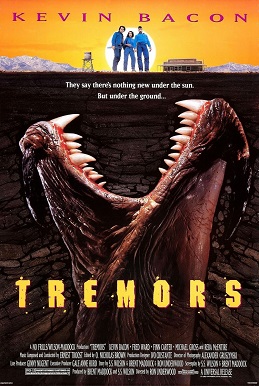
In the remote Nevada town of Perfection, two handymen, Val and Earl, are ready to leave the population of 14 for bigger things.  But then strange deaths begin to occur.  A local seismologist has been noting unusual readings as locals find a dead creature that appears to be some kind of snake.  They want to go for help but find themselves trapped.  The seismologist and handymen try to unravel the mystery of this creature, which the handymen kill.  She (the seismologist) informs them that there are three more.  Warning their fellow citizens of the danger, the underground creatures begin attacking.  As in Dune, they “hear” people walking and use that information to hunt them.  A couple of survivalists manage to kill one of the sand worms, but the surviving townies know they have to escape to the mountains.

One of the final two monsters is dispatched with a homemade bomb, but I’ll let you watch to figure out how the last one is handled.  The movie starts out with folksy humor and nothing too serious.  When the monsters begin to attack, however, they prove relentless and give some scare to the affair.  Although the film didn’t perform especially well at the box office, it led to a franchise with sequels and a prequel (the origin of the monsters is never explained).  Filmed in bright desert sunlight, the movie isn’t typical of horror.  At the same time, it’s built around monsters, so there’s no doubt that it fits.  It probably won’t scare anyone these days, but it has become part of the repertoire, and it remains good fun on a rainy afternoon.
Dark Lovecraft

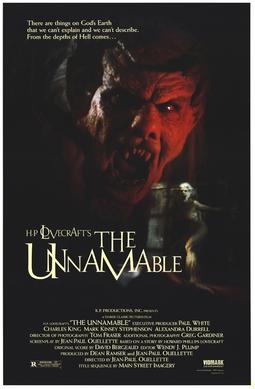
There is no shortage of Lovecraftian horror movies out there.  I watched The Unnamable because I found it on a list of dark academia movies.  And also, well, it’s horror.  I’ve most likely read Lovecraft’s original story at some point in time, but I didn’t remember it at all.  The dark academia part comes in because it involves college students and a haunted house.  A low-budget offering, this is hardly great cinema.  It’s not sloppy enough to qualify as a bad movie.  That puts it somewhere around “meh.”  The film opens with Joshua Winthrop being killed by the monstrous daughter that he keeps locked in a closet of his house.  Then, in the present day (the movie is from 1988) three college guys talk about it and the skeptic decides to spend the night in the house to disprove the monster tale.  He is, of course, killed.  Although his two companions don’t go looking for him, others end up in the house.

A couple of upperclassmen looking to score with freshmen coeds, talk two women into going to the house with them.  As they start to enact their plan, the monster kills them one-by-one, leaving the virginal final girl alive.  Meanwhile, the other two students whose friend was killed, also come to the house.  They manage to rescue the final girl and escape the creature by invoking the Necronomicon’s spells.  The music cues are often comical, suggesting that this isn’t to be taken seriously.  They also spoil the dark academia atmosphere.  For me, a horror film works best if it’s either clearly horror or clearly comedy horror.

It did, however, raise a question in my mind.  Dark academia and horror do have some crossover.  H. P. Lovecraft often had professorial types as his protagonists.  Was he writing a form of dark academia?  It’s difficult to say.  Lovecraft’s work was known as “weird fiction” in his time, and it has become its own kind of genre.  (Just try to publish in the rebooted Weird Fiction without your Lovecraft cap on and see how you fare.)  I’ve been pondering genres for quite some time, and since I watch movies because they’re free or cheap, often, I see some unconventional fare.  There’s no question that The Unnamable is horror.  When the movie ended I was sad for the monster.  She’d been living according to her nature, and really didn’t deserve the treatment she received from a bunch of trespassers.  Not a great movie, it nevertheless made me think.


Meeting Buffy

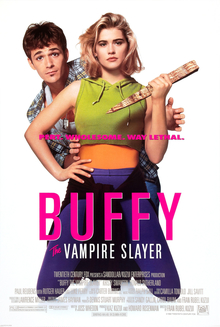
I have a confession to make.  I had never, before just recently, seen any of Buffy the Vampire Slayer.  This is kind of embarrassing because it was being talked about even as I was just starting to teach at Nashotah House.  And it has been discussed in religion and horror books quite often.  I understood that the television series was considered better than the original movie, but I felt that it was important to go to the source, at least to start.  Joss Whedon, it is reported, distanced himself from the film he wrote because it began taking a different direction than he’d envisioned.  The television series, which was praised among any number of critics, was more what he had in mind.  Still, the film isn’t terrible.  The concept of a ditzy blonde being an unwitting vampire hunter is entertaining and Kristy Swanson plays a pretty good Buffy and Donald Sutherland a great Merrick.

Having not seen the series to compare, the movie stands fairly well on its own.  Vampire comedy horrors can be quite entertaining.  The plot here is a bit overwrought and the love story feels tacked on to the vampire narrative.  It lacks the strong through line characteristic of Joss Whedon movies.  So, Buffy doesn’t realize that she’s a slayer, a kind of reincarnated vampire hunter.  Merrick convinces her by telling her what her dreams have been.  And Buffy has preternatural abilities—reflexes beyond human reach.  And the vampires have been awaking in Los Angeles.  The story just doesn’t hold together as well as it should.  I was a bit surprised, however, to find the Bible quoted a time or two.

The charm, which also led me to read about Abraham Lincoln as a vampire slayer, is the unexpected juxtaposition.  A cheerleader, or the best president we’ve managed to elect in this divided country, and vampires?  Even more, vampire slayers?  Vampires, although monsters, are often symbolic and sometimes sympathetic ones.  Buffy’s vampires aren’t charming.  Sometimes funny, yes, but they aren’t the tormented souls that elicit human sympathy.  And Buffy adds its own backstory mythology.  In Dracula Van Helsing was a mortal aware of vampire habits.  Buffy sees this as a predetermined role, specifically female in nature.  I’m not sure if I’ll be able to carve out the time to watch the television series.  But at least, at this point, I have been able to put a bit more flesh on the character of an unlikely vampire foe.  It only took me thirty-three years.


Red Dress

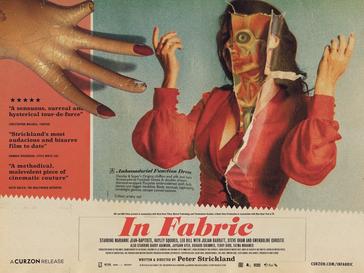
Horror sometimes takes a creative turn.  In Fabric is an art film as well as a horror offering.  The basic premise is that a certain red dress, sold at a bizarre fashion store, causes the death of those who wear it.  Sheila, recently divorced and having trouble with her adult, at home son, buys the dress for a date.  After leaving her with a rash, the dress leads to an arm laceration, a German Shepherd attack, an attack on her son’s girlfriend, and finally, Sheila’s death in an auto accident.  The dress is then picked up by a guy as a stag party prank where the groom has to wear it.  His soon-to-be wife finds it and wears it also.  The man, Reg, loses his job as a washing machine repairman and has no luck finding another.  While Babs, his wife, is shopping at that same strange shop, Reg’s furnace malfunctions, killing him with carbon monoxide.  Babs is trapped in the shop as it catches fire and burns down.  All those killed by the dress are shown working on new ones at the end of the film.

The movie is also called a dark comedy and there are some funny bits.  The sales clerk, Miss Luckmoore, speaks in cryptic, quasi-poetic style, never giving a straight answer to anyone.  The shop’s owner does the same.  And some of the scenarios are amusing.  Although horror, the movie isn’t really scary, but it is stylish.  Unlike some horror comedies, the tone isn’t really funny, but more wry.  And it’s a bit confusing.  The overall story arc is easy enough to follow, but some scenes just confound.  I kept waiting for an a-ha moment when everything would fall into place.  Of course, ambiguity is a hallmark of many intellectual films.

Something that I’ve been noticing, no matter the era that it’s from, is that films really need to justify that last half-hour, if they’re going for 120 minutes.  Maybe it’s just that we’ve become accustomed to the 90-minute feature, but I’ve notice that most two-hour movies (not all) seem to suffer from some pacing issues.  Of course, an art-house movie will defy conventions.  For example, the point of view is Shelia’s for about the first half of the film, then she’s killed and new characters are introduced.  Yes, this shows that the dress goes on killing, but another approach might’ve been to have the protagonist learn about past killings and realize the dress is coming for her.  But then, that might’ve been less creative.


Bodies Cubed

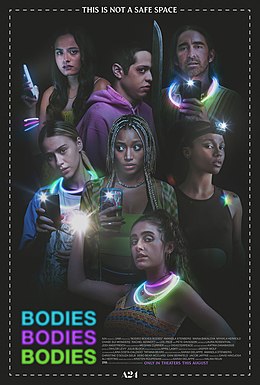
It’s difficult to know where to start with Bodies Bodies Bodies.  It was on my watchlist because it was distributed by A24.  I’ve come to trust them for smart horror, and then I saw that the movie was soon leaving one of the streaming services to which I have access.  Nothing like “leaving soon” to make a decision for you.  An ensemble cast of twenty-somethings (or so they play) gather for a hurricane party at the mansion of one of the group.  They do a lot of drugs and drinking and then decide to play Bodies Bodies Bodies—one of those games where one player is the killer and everyone else has to figure out who the “murderer” is.  They’re about ready to start the next round, but the power goes out in the hurricane.  The accused “killer” in the first game is found, dying for real, outside.  The only car on the property has a dead battery and the friends turn on each other, unsure who the murderer might be. (No bodies are actually cubed.)

All of this is interlaced with internet culture and the panic that ensues when the wifi goes out.  Now, this is categorized as a horror comedy, but the comedy is pretty subdued until the remaining four begin to accuse each other, using trendy jargon to describe relationships and psychological conditions.  The film opens with a couple of girlfriends, Sophie and Bee, who are the last to arrive for the party.  As the morning dawns the two of them are the only survivors, but they have become distrustful of each other because of things said during the hurricane night.  There is a twist ending but the house is full of bodies, bodies, bodies.

Written and directed by women, this horror film again demonstrates how intelligent the genre can be.  As for me personally, I found it pretty good.  I wouldn’t say it’s great.  That’s because of some of my own triggers—one of the trendy words they throw around.  Mainly, in my case, because of the drug scene that makes up the reality of the friends (I’ve never been part of that) and that the game resembles too much my all-time-most-feared childhood game, hide-and-seek.  The friends, convinced that one of them is a murderer, creep around the mansion in the dark, fearful of being found.  This leaves open the potential for jump startles, of course, and I’m not a great fan of surprises.  That having been written, this is a smart movie and the ending does make you think.  And perhaps wonder how well we really know anyone after all.


Some Body

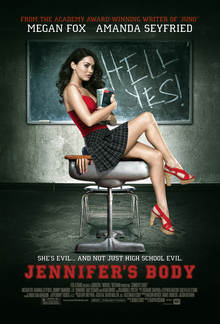
Many period movies are reevaluated and found better than originally critiqued.  (It feels strange to write that about a 2009 movie, but that was a decade and a half ago.)  I’d read about Jennifer’s Body before, but the title put me off from watching it.  Then, of all places, the New York Times recommended it last year during one of their autumnal forays into the horror genre.  Interestingly, it’s a possession movie with a few twists.  Demons are quite malleable monsters, of course.  So Jennifer and Anita (Needy) are best friends.  Jennifer is the girl all the guys want, and Needy, well, isn’t.  One night they go to hear a band at a local bar, and Jennifer leaves with them.  We later find out—spoilers about to appear—that their intention is to sacrifice a virgin to Satan to help them succeed as an indie rock band.  Jennifer’s no virgin, though, and demonic transference took place—i.e., Jennifer is possessed although the band gets their boost.

Then Jennifer has to eat people (high schoolers, of course) to survive.  She eventually tells Needy all of this, and her friend researches the occult and realizes her former friend is seriously dangerous.  And she decides to stop her.  I won’t give away the ending (it was only 15 years ago), but I will say that the overall result is somewhat unusual for a demon movie.  There’s plenty of religious imagery, but nothing really explicitly showcased.  For example, Needy’s mom has religious paraphernalia around the house.  There are no clergy in the story and Needy teaches herself what she needs to know about dispatching demons.  In other words, it’s a strangely secular possession movie.  And in the end demonic ability leads to justice.

The critical reappraisal is largely based on the feminist message and complexity of female relationships in the movie.  Both written and directed by women, those aspects aren’t unexpected.  And the movie is a horror comedy.  The funny parts tend to come from aspects of the dialogue since the acting is played straight.  This isn’t so much a scary movie as it is a smart one, which is probably why the Times critic recommended it.  Demons aren’t always scary monsters in horror, and what you end up being afraid of here is that the relationship between Jennifer and Needy might end since it seems to be the foundation on which two young women’s lives are built.  Is it a good movie?  Well, it’s not bad.  I tend to lean on the side of the reappraisers—it still has something to say. 


Not Murphy’s Mansion

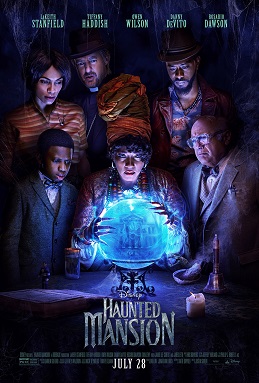
One of the dangers of streaming is that you can be talked into a movie by the fact of its availability.  Curiosity drove me to Disney’s The Haunted Mansion movie and that led to the discovery that there had been a reboot.  I’m drawn to haunted houses but not to theme parks, but well, you wonder how they might’ve thought they could’ve done it better.  The original movie failed to rock the critics, so, as the saying goes, try, try again.  Last year’s Haunted Mansion is over the top.  The story is more complex, with an ensemble cast, and not really funny or scary.  Based on a sad premise—two families with deceased spouses—they’re drawn, with three other New Orleans outsiders, to a, well, haunted mansion.  The main ghost is looking for a soul to harvest but as the two hours wend on, the characters reveal their sadnesses (one doesn’t).  Perhaps the idea is catharsis, but there are too many subplots and too many abrupt shifts of mood.

A movie should know, it seems to me, what it wants to be.  You feel for the sadness and loss of the characters but  I know something about using horror cathartically, and this movie doesn’t do it.  There are jokes and running gags, but they’re not really funny.  There’s religion involved, but it turns out to be fake, with even a faked exorcism.  There are literally 100 ghosts.  And really only one bad guy among them.  There’s drinking to drown sorrows, murders, and even adult humor that is somehow deeply disturbing.  There are a few nods to the original movie but the plot is quite different and it leaves you feeling drained.

With a budget of about $150,000,000, stops were pulled out all over this organ.  It doesn’t, however, have a focus.  In the original film, the Evers family really has a need to reconnect.  The mansion does that for them, through its ghosts.  The reboot implies at the end that two broken families might heal each other and that evil leads to its own punishment.  Still it leaves open the question: what is this movie trying to be?  The more cynical might say it’s only for money (the worldwide gross didn’t reach covering its budget), but I have to think that those who make movies do so for more than just a buck.  Coping with death is a profound human need that begins when a pet or, more seriously, a family member dies.  I’m not sure that Disney is the best authority on the subject.  At least not for those of us who use horror as therapy.


Le Fanu Fans

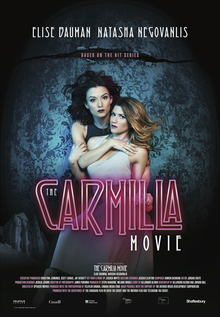
Sheridan Le Fanu is sometimes called “the Irish Poe.”  He was a contemporary of Poe but his name doesn’t bear the same cultural cachet.  He wrote a number of stories that are classified as “horror” in today’s genre settings, and one of the most famous is Carmilla, known as the lesbian vampire story.  Le Fanu didn’t use that terminology himself, that I know of, but Carmilla is a vampire and she does have fondness for other females.  I’ve watched a few lesbian vampire movies (I mentioned Theresa & Allison recently), since they give a distinctive taste to the lore.  I don’t generally research the free movies I watch beforehand, so when I saw The Carmilla Movie, I figured it was likely based on Le Fanu (it is) but I didn’t realize that it was a follow-up to a web series with the same characters.  Nevertheless, it’s a pretty good story.

Set in the modern day, with a cast of young people doing things for a living that weren’t options when I was growing up (internet content provider, starting a paranormal investigation business—I was laughed out of school for admitting I was interested in this stuff before the X-Files made it mainstream), the film updates Le Fanu’s story.   Carmilla has become human and has a girlfriend.  But then Carm starts to revert to vampire status.  (Fortunately there’s soy-based blood for her to drink—did I mention this is comedy horror?)  Although this is comedy horror, it’s not a silly story.  There are plenty of humorous asides, but you still feel for the characters and want them to overcome the evil they face.  Here that evil is a past that has to be rectified.

I found The Carmilla Movie to be intelligent and fun.  There are some genuine horror elements to it, and I suspect that being familiar with the web series might help answer a few head-scratchers for us non-initiated.  In general it seems that such independent films as this serve to raise the bar on movies as a whole.  The flip side is, however, that you can’t easily tell if a movie is a studio release or a television movie, or even a web movie without doing some research ahead of time.  Amazon Prime—my go to service—doesn’t distinguish them.  All I know is that if a movie is one I have on my watch list, I’m going to have to pay for it.  Carmilla was free and worth the time to watch.  And it’s good to see Le Fanu getting some deserved air time.


One Demonic Night

I only discovered after watching Night of the Demons (2009) that it was a remake.  Eventually curiosity got the best of me and I had a spare moment to watch the 1988 original.  It’s still kind of a bad movie, but it is scarier than the remake.  It’s also a horror comedy, but the emphasis is a bit more on the horror here.  A group of ten high schoolers go to Hull House, which used to be a funeral home, for a Halloween party.  When the power goes out they decide to have a séance.  Unbeknownst to them, however, there is a real resident demon.  This demon gets passed on through kissing, and it animates the kids who’ve been killed along the way.  Although the final girl is pretty clear from the beginning, in a usual twist the only surviving guy is African-American, the son of a preacher.

The concept of demons here is explained as entities that were never human.  This is the explanation Ed and Lorraine Warren used, often without making reference to fallen angels.  Since the demons are using the physical bodies of the kids, they can be stopped by locked doors, but killing them doesn’t really help, since they keep coming back.  It seems that there’s really just one actual demon, a dragon-headed entity that lives in the crematorium.  Rodger, the Black man, brings the element of religion to the story.  He objects to the séance in the first place, and suggests that they pray as he and Judy, the final girl, are attempting to escape.

In-between all this is sandwiched the gore and violence that make it pretty typical horror.  The humor involved, however, makes it less intense than a typical slasher.  Although I didn’t walk away thinking this would be a favorite movie, I could see why it’s garnered a cult following.  As is often the case, the original is better than the remake.  For one thing, it understands that religion seasons horror quite well.  Demons are, by definition, religious monsters, at least traditionally.  And the two “good kids” who survive are uncomfortable with messing with spiritual forces to begin with.  Judy just wants to go to the dance, after all.  The movie went on into sequels as its cult fandom grew.  If I ever do a sequel to Nightmares with the Bible I’ll need to include this franchise, I guess.  For a sleepy weekend afternoon, there are worse bad movies to watch.


Out There

While Amazon Prime includes a few A-list horror movies, those that it does I’ve already watched.  Since I can’t afford to pay for this habit, I watch what’s free.  That brought me to the horror comedy There’s Nothing out There.  Written and directed by a twenty-year-old guy, it’s kind of what you might expect.  Its main claim to fame, apart from being a low-budget monster flick, is that it anticipates Wes Craven’s classic Scream.   The latter is famous for being so self-aware.  One of the characters keeps telling the others what happens in horror films and, of course, those things happen.  Although There’s Nothing out There is silly, one of the characters does exactly that.  In the funniest moment in the movie he looks directly at the camera and says “It’s a distinct possibility” in response to one of the girls asking “So you’re saying we’re in a movie?”  Craven didn’t borrow that, but then, Scream is a landmark.

So what’s it about?  There are seven young people who head to a cabin in the woods.  Actually, it’s a regular house, and quite a nice one at that.  The three couples are there for sex but the single guy (Mike) is the horror expert and gets on everyone’s nerves.  He’s right, of course, that there is a monster on the loose.  A slimy green thing with a huge mouth full of pointy teeth, has fallen from space into the neighborhood and it slimes the guys, digesting them, and tries to mate with thee girls.  And if it shoots lasers into your eyes you become its servant, helping out with its mission.  The kids are picked off, of course, with Mike surviving along with one of the couples.  Before they can stop the monster a plumber also gets eaten.

Horror comedy is a strange genre.  It tends to work because there are elements of humor in much of horror.  It’s not all blood and gore—the best examples use that sparingly, in any case.  And horror comedy doesn’t really frighten since it’s pretty clear that it’s being played for laughs.  Sometimes such movies venture into the bad realm—there’s a reason some movies are free on Amazon Prime—but at times they actually have quite a bit to offer.  There’s nothing scary about There’s Nothing out There.  It’s the kind of movie that tends to grow into a cult classic over the years, however.  And while it’s not A-list material, it’s still worth watching for free.


Through the Woods

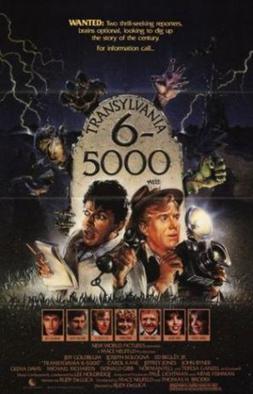
The thing about appreciating bad movies is that it’s difficult to be disappointed.  On a recent weekend I’d watched a horror film that didn’t sit well with me (or maybe it was the last night’s supper), and I decided I needed to see something else.  Something that was free on my streaming service.  I’d read about Transylvania 6-5000 someplace, but I couldn’t remember where.  The list of stars won me over: Jeff Goldblum, Ed Begley Jr., Jeffrey Jones, Geena Davis, Michael Richards—why don’t more people talk about it?  Because even for a comedy it has trouble working.  Well, a horror comedy, to be precise.  Emphasis on the comedy, which tries too hard.  I couldn’t get over the fact that this was a tall guy movie—Goldblum, Begley, Jones, and Richards are all over six feet tall.  Usually other actors literally have to look up to them.

Even though it’s a groaner, it’s not without worth.  It was filmed in what used to be Yugoslavia when it was rare for anything to come from behind the Iron Curtain.  Set in Transylvania, it wasn’t too far off.  (Transylvania is located in Romania, of course.)  Some of the performances aren’t bad, Davis’ vampire nods to Frank-N-Furter in Rocky Horror, and Carol Kane is fun to watch as Lupi.  The male roles are generally the problem.  In case you’re wondering, the plot is that two reporters—Goldblum and Begley—are sent to Transylvania to find a story.  The locals laugh at them, insisting Transylvania’s a modern country with no monsters.

When the classic monsters do appear, they all have rational explanations.  There are riffs off vampires, werewolves, Frankenstein’s monster, swamp monsters, and the mummy.  There’s even a mad scientist.  The problem is the movie really doesn’t give itself over to either comedy or horror.  There are ways to make that combination work.  And, as with C.H.U.D., the title put me off.  I didn’t know until reading about it later that it was also a riff, but from the Glenn Miller song “Pennsylvania 6-5000.”  I’d never heard the song before and was unfamiliar with its title.  Rudy De Luca, the director, had worked with Mel Brooks and perhaps if they’d collaborated on this one the results might’ve been better.  So, it’s a bad movie.  That doesn’t mean it isn’t worth watching.  Movies like this sometimes serve as an homage to the monsters with whom we grew up, and who even met Abbott and Costello in their own lifetimes.  Just be prepared not to take it too seriously and not to laugh too much.


Which Love

Perhaps some content creators use genre as a guide when writing, or when filming a movie.  Some categories are pretty well defined—the western, the romance, or in writing specifically, the literary.  Others are less easily settled.  Horror is particularly slippery.  Although The Love Witch was an interesting story with a feminist message, the horror trappings weren’t entirely obvious.  In fact, it reminded me quite a bit of The Wicker Man.  (Not in any literal way, of course.)  Afterward I read that it is also a comedy and that helped make sense of it.  It gets generally high marks although, to me, the acting seemed pretty wooden.  The Love Witch follows Elaine, a young, present-day witch, who’s moving to a small town in California that tolerates witches.  Her husband has recently died and flashbacks imply that Elaine may not have been entirely innocent in the matter.

Once she settles in Arcata, she starts looking for her “prince charming” as she continues to practice the craft.  She finds an emotionally unstable professor who take her home readily enough, but he quickly proves to be too needy.  Part of this is because he took a love potion she gave him.  He dies that very weekend.  Elaine seems less than distraught as she buries him and begins seeking the next possibility.  The husband of a friend comes over when the friend is out of town and he too proves emotionally immature.  After their affair he dies by suicide.  A policeman investigating the missing professor comes to suspect Elaine, but he too feels drawn to her.  The locals, meanwhile, aren’t as witch-friendly as they seem.  They riot in a burlesque club, chanting, “Burn the witch, burn the witch!”  I won’t spoil the ending.

I was watching all of this with the genre “horror” in my mind.  I’d not seen it labeled as “comedy,” and, as an art film there’s nothing so crude as a laughter track or cheesy and obvious comic music.  Instead, the film is an example of “the female gaze.”  Film analysts, and even religion scholars, have long written about “the male gaze,” which looks at women a certain way.  This movie’s writer, director, and producer, Anna Biller, experiments with the female gaze instead.  The results for some men, I suspect, are disturbing.  They certainly aren’t in control in this film.  Retro in execution, it’s unlike most other horror I’ve watched.  Unusual for the genre, the critics responded well to it.  It was a fun flick, but I’m still not sure how wide “horror” stretches, but I do sense that it’s quite inclusive.  And I applaud the female empowerment on display, even if I’m confused.


Not Making Decisions

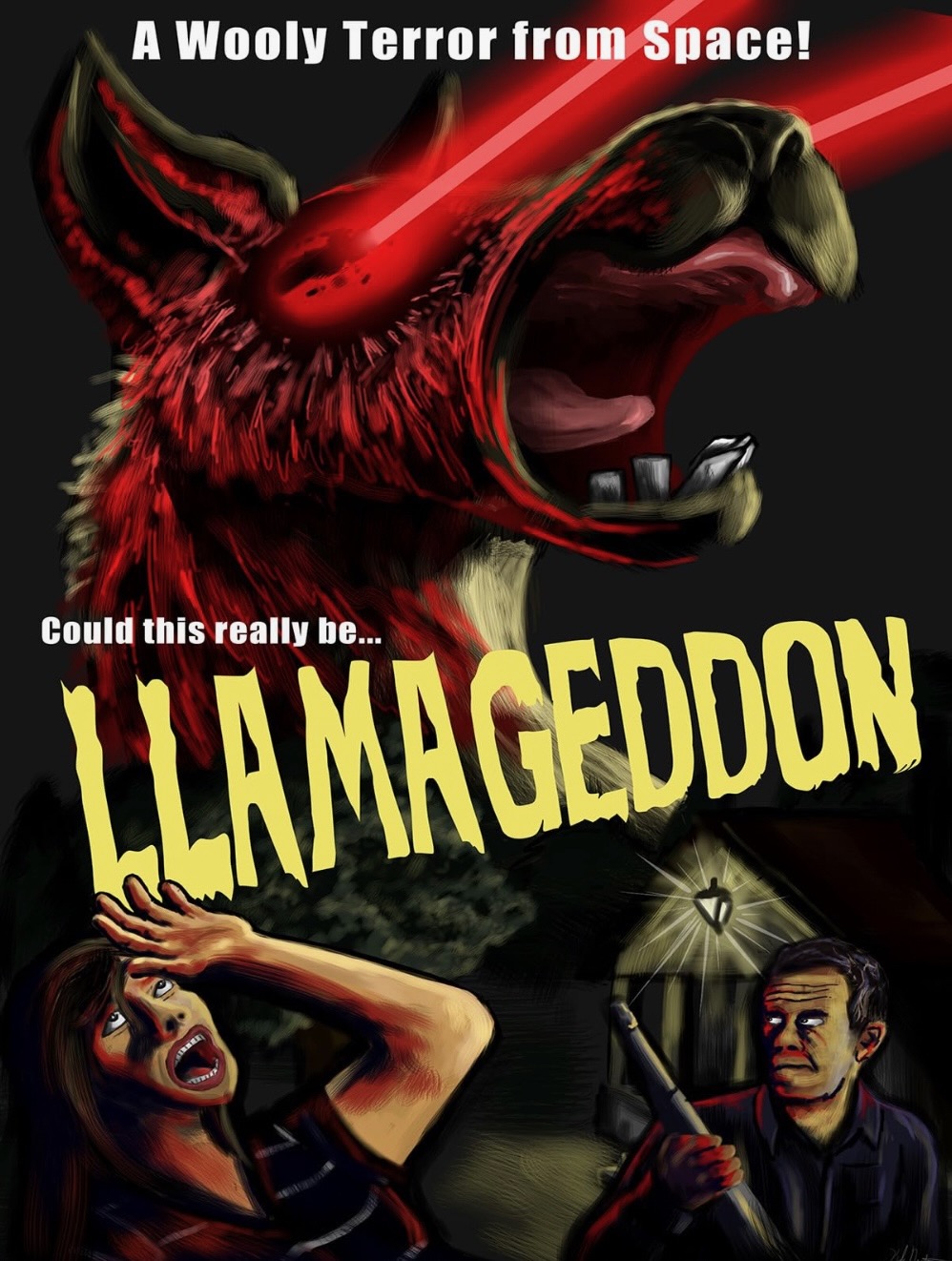
After anesthesia they tell you, “Don’t make any important decisions.”  That’s the excuse I’m using for having watched Llamageddon recently.  That, and it’s free on one of the streaming services to which I have access.  I only found out about it because of such services and I wasn’t in any shape to decide important things like how to spend the rest of the groggy day.  I’m of mixed minds regarding comedy horror.  Or is it horror comedy?  Decisions.  The fact is, quite a few horror movies do involve some amount of fun.  My favorite ones tend to be more serious, but once in a while you find yourself watching movies you know are (or you know are going to be) bad.  I knew this one was.  It’s so bad that it’s got a cult following.  It was, I’m pretty sure, made to be bad.

So a killer llama from another planet is forced to land on earth.  It kills an older couple in Ohio and after the funeral two of their teenage grandchildren, Mel and Floyd, are left to stay in the house.  Mel, who is older and more experienced, contacts all her friends so they can party that night.  Of course, the llama’s still on the loose.  It has laser-beam eyes and it bites and punches people to death and the partiers are picked off, not exactly one-by-one since many of them are electrocuted in the hot tub.  Generally they’re so drunk and/or high that they don’t believe any of this is happening.  Eventually Mel and Floyd’s father arrives and tries to save his kids.  Before dying of llama bite, he kills the quadruped by running it through a combine.

It’s worse than it sounds, but it’s played strictly for laughs.  And, I suspect, it’s one of those movies that’s meant to be watched under the influence.  Since anesthesia is about as close as I’ll ever get to that, I suppose this counts.  Some of the early horror movies have become funny with the passage of time as early special effects age and we become used to better, more convincing fare.     As it is, it’s difficult to find much about Llamageddon apart from IMDb, and the director’s name, Howie Dewin, is a red herring.  I’m fascinated by such films being able to gather a following.  Of course, I confess to enjoying Attack of the Killer Tomatoes when the mood is right.  And a day when decisions are contraindicated, anything can happen.


Not in My House

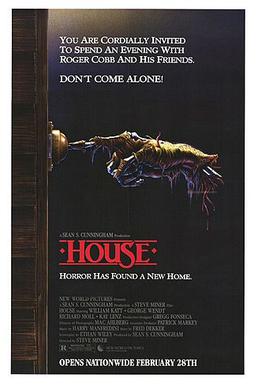
I had a friend in seminary—nameless here because I mention no non-public figures without their permission—who invited me over for movies.  Although he was more of a comedy guy, he liked horror too and I couldn’t help but think of him when watching House (the movie, not the doctor show) recently.  The film looked familiar to me but I couldn’t recall having watched it before.  By the end I was pretty sure I’d seen it with my seminary friend one weekend afternoon.  There was too much I remembered someone else commenting upon.  A comedy-horror, House is one of those not-so-great movies that becomes a cult classic.  The monsters aren’t particularly scary, and the plot’s a bit disjointed, but still it bears repeating once every few decades.  There really isn’t any religious imagery, but it does reflect on American involvement in Vietnam.

Roger Cobb, a divorced horror writer, moves into the house where his favorite aunt died by suicide.  It’s also the house where his young son went missing years ago.  The titular house, which is, of course, haunted, is where Roger plays out his memories of Vietnam while trying to write his next book.  Monsters pop out of closets and show up at his front door as he tries to make sense of what happened to a friend in the war.  I couldn’t help but be reminded of Mark Z. Danielewski’s House of Leaves as mirrors and doors open onto voids that confuse the narrative but make the film like a funhouse ride.  My friend, with whom I must’ve seen it, commented on several of these scenes, which is what convinced me, by the end, that this wasn’t a new film for me.

I watched monster films as a kid—I was a late monster boomer.  Kids talked about prominent horror in school—Rosemary’s Baby, The Exorcist, The Omen—movies I didn’t see until I was an adult.  I watched a few horror movies in college and quite a few in seminary.  I moved away from them until I lost my career and then I came running back.  I’m not really sure what I’m looking for here in this haunted house.  Like most people, I don’t like being afraid, but there seems to be something hidden here.  Horror can convey meaning, even solace.  Very few people understand my use of horror for spiritual development, but it’s something with very deep roots.  And as realities in the quotidian world become more and more untenable, I’ll have at least have had some experience grappling with monsters.  Sometimes even with friends.


Rabbit Years

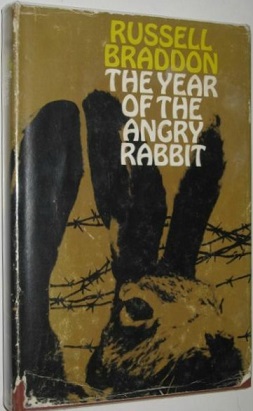
A childhood horror movie that I only recall in the most wispy of fringe memories is Night of the Lepus.  It’s one of those monster movies that involves mutated animals, in this case the unexpected rabbit.  I’m not sure why it’s been on my mind lately, but a little research indicated that it was based on the Russell Braddon novel, The Year of the Angry Rabbit.  This book is out of print and still under copyright, so finding a copy wasn’t easy.  Apart from vague images of giant rabbits, I had no idea what to expect.  The book turned out to be a comedy horror, in that order.  Remembering that the movie wasn’t funny (although it is consistently considered one of the worst cinematic efforts of the time), I wasn’t prepared for this.

You see, I don’t like to read about books before I read them.  I don’t read cover copy.  (I tend not to watch movie trailers either, unless it can’t be helped, like when you’re in a theater.)  I suppose knowing a genre of a book helps, but I just wanted the experience of reading the story behind a movie that won’t completely vacate my memory cells.  The Year of the Angry Rabbit is a satire on government, war, and capitalism.  If you’re not expecting a serious horror story it’s quite funny.  Russell Braddon never became a household name—he was from Australia and a person’s cultural impact tends to be greatest on their own continent—but if you knew this was a satire from the start you’d probably enjoy it as such.  Although written in the sixties, it’s climax takes place at the millennium, now two decades past.  It’s always interesting to see what people thought we might be up to by now.

Although there are elements of humor to our politics, Orwell seems to have been more on the money than Braddon.  Nevertheless it’s important to keep the old stories alive.  There are still people like me who will seek out rather obscure novels from many decades ago.  They might have to have sat on library shelves for years without having been checked out—this used to be the glory of the library, before “evidence-based usage” studies ruined them.  I search for things I want to read in my local small town library and find that my tastes are too obscure.  Besides, old stuff has to be cleared out to make room for the more recent books hoi polloi wish to consume.  I’m glad they’re still reading.  For me, however, I’ll need to stretch back to a time before I was old enough to read to satisfy an unrelenting memory. It was rabbit years ago.