Becoming an Icon

A kid among the Monster Boomers can’t let the death of Christopher Lee go by without comment. How many hours of my childhood were spent watching movies on Saturday afternoon TV with his many personae arresting my attention? And, of course, his prolific output just kept on coming. The Wicker Man, for instance, would never have been among my childhood fare, but his performance as Lord Summerisle is still captivating and sends shivers down my spine. Of course, he wasn’t always a horror movie star. His voice nevertheless conditioned us to be on our guard, for we knew something untoward was about to happen.
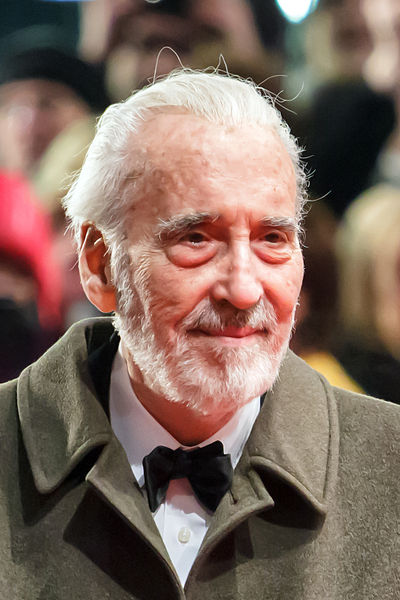
Photo credit: Avda, Wikimedia Commons

Photo credit: Avda, Wikimedia Commons

I often ponder the lure of monster movies. As a young boy, I couldn’t get enough of them. I tried to grow out of this stage, and managed pretty well through my doctoral work, but then when I found myself in a Gothic seminary where my life would be shredded and discarded, I suddenly found myself sitting up late to watch movies my family would not care to see. There was a catharsis happening here. Some would claim that it is puerile and immature—they would be the same people who’ve not been forced from careers and faced with unemployment and been dealt a failing hand by an institution that received full commitment during the formative years of an aborted career. No, those who’ve faced monsters cannot easily leave them alone.

Of course, Christopher Lee was only playing monsters. Now many people around the world can instantly recognize his name, face, or voice. We all face monsters. Our society teaches us to deny that they exist, much to our own peril. Little children, bewildered by this insanely complex world that adults have constructed, may be the ones to see most clearly. We watch the monsters on the screen so that we might figure out how to deal with them on the playground or in the boardroom. Christopher Lee was more than an actor. He was a teacher. And his best students learned something of human nature from him.
The Eerie

Those who have trundled alongside of this blog for any length of time no doubt know of my interest in weird fiction. Somewhere in the mists of my youth this led me to one of the few venues in which a person can get a hook on the eerie, namely, horror films. I am, however, no fan of violence, and quite sensitive to the human condition. What I have always sought is hauntingly summarized in Robert Macfarlane’s Guardian article sent to me by a friend, entitled “The eeriness of the English countryside.” Horror has become, in keeping with the dullness imbued by a society of constant diversion, aggressive and shocking. New levels of nauseating cruelty are required for generations raised with graphic computer games and an internet that is like the subconscious completely unleashed into the waking world. You need more items jammed under the fingernails to elicit any reaction. That’s not what I’m here for. Whatever happened to the uncanny?

As Macfarlane notes, there is a natural eeriness to the landscape left by human activity. Not just in England, but wherever we set foot. The innocent-looking countryside is seething with undisclosed atrocities. It is no coincidence that in America the “Indian burial ground” motif took off for explaining the haunting of the landscape. The eerie is often our retrospective on what we know we really shouldn’t have done. Macfarlane is writing for those who’ve experienced the English countryside and its secrets, but no matter where we look we can find the uncanny cast into the scenery by our selfish actions. There is horror here, but it is subtle. You have to sit quietly and listen to hear it, but it can, like a good eerie novel, induce shivers without a drop of blood being shed. (Well, maybe a drop, but seldom more.)

Many doubt the soul exists. Others of us take a broader view of the question. Our view of the world is colored by what has brought us to where we are. As someone who has been repeatedly passed over for jobs because of the excesses of the white male society in which my ancestors happened to have tacitly participated, I rest on the horns of this dilemma. All of my conscious life I’ve supported equal rights for all races and genders. The landscape I inhabit, however, is haunted. There have been dark deeds undertaken on this soil, and the soul is that which remembers. Macfarlane is no doubt correct that even the eerie can be politicized. Those of us who daily experience it, however, know that England hosts only one of many, many tainted shores.

DSCN0216


Room for One More

Room_237_(2012_film)

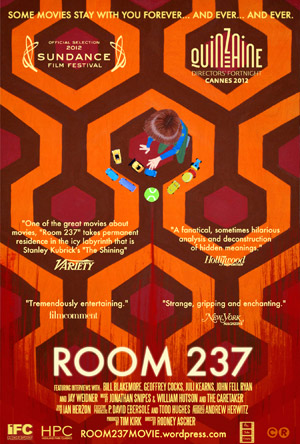
Conspiracy theories have a definite attraction. In a world where governments are more known for keeping secrets than for carrying out the will of the people, they are often easy enough to believe. Elected officials are, of course, human. Humans have recourse to prevarication from time to time, but we do expect that a corporation that takes its secular tithe from our income should be honest about its doings. So it is that I find Room 237 endlessly fascinating. Room 237 is a documentary about Stanley Kubrick’s The Shining. Winter is also an appropriate season to watch The Shining, so I took the ersatz experience of Room 237. This documentary, besides featuring some interesting conspiracies, also shows how religions may come to be.

Stanley Kubrick, as common knowledge goes, was a genius. In a day when movies are often pure escapism, much of it brainless, it might be surprising to consider a film-maker a literal genius, but anyone who’s watched one of Kubrick’s mature films is left in no doubt. The Shining, although based on the Stephen King novel, takes the story in very different directions, and there is much more going on in the film than first meets the eye. Room 237 interviews true Shining affectionados who find the “real” story line to be the genocide of Native Americans, the holocaust, a retelling of the minotaur myth, the faking of the filming of the moon landing, and a variety of other perceptions beyond the norm. Kubrick, known for the care he took in arranging every shot, clearly put subtexts into this film. What really caught my attention, however, was when one of the commentators said that he had his first real religious experience while watching 2001: A Space Odyssey.

2001 has always been one of my favorite movies. Simple and sometimes psychedelic, even with the novelization it is almost impossible to understand. With that haunting monolith, so like an outgrown iPhone, I found myself as a child believing in the evolution Kubrick suggested as a higher power led from ape to space in the instant of a bone toss. The majesty of that film that never lets humanity claim any true superiority still has the power to conjure nightmares that The Shining can’t. With the grand soundtrack of the opening of Also Sprach Zarathustra (himself the founder of a religion), I can understand how this might be a numinous experience. Movies function as modern myths, and, I contend, that is one reason that religious themes emerge so readily in great films. In Room 237 none of those interviewed considered any religious elements for The Shining, but no doubt, if an ape can walk on the moon, they’re there.


Literate Monsters

Skin-ShowsLiterary criticism is not for the faint of heart. Biblical scholars long ago adopted the methodologies of literary criticism since it had become clear that an absolute meaning for any biblical text will always end up being a chimera. Many of us are versed in the techniques of structuralism, post-structuralism, deconstructionism, reader-response, post-colonialism, and any number of other means of parsing hidden truths from texts. Since it is October and monsters have a way of creeping into the psyche about now, I read Judith Halberstam’s Skin Shows: Gothic Horror and the Technology of Monsters. Halberstam is using the word “technology” technically here, so this isn’t the easiest of texts to digest. Still, for those of us haunted by monsters this text does tap into one of the main connective tissue between monsters and religion: meaning. As Halberstam notes, the Gothic suffers from a surfeit of meaning. There is just too much meaning bursting out that we have no choice other than to analyze.

Beginning with Mary Wollstonecraft’s Frankenstein, and up through Bram Stoker’s Dracula into the modern horror film, Halberstam probes deeply into the layered meanings offered by the Gothic discourse. The monster is a transgressive creature, one with indistinct boundaries. I couldn’t help but to think how odd it is to suppose that we end at the limits of our bodies. The things that we do influence our environment, and we are capable (often through science) of a kind of spooky action at a distance (think of drones, HAARP, or fracking—I’m talking literally spooky here). As Halberstam points out more than once we don’t make monsters, monsters make us human.

Skin Shows is all about boundaries. Biological, psychological, sexual—we define ourselves by our boundaries. The monster is no respecter of such boundaries, forcing us to face our own definitions with a certain ambivalence. What do our monsters say about us? Do we really want to know? Monsters can be brutally honest. More honest, at times, than religions are willing to be. As views change over time, so do conceptions of the monster. Religions frequently attempt to hold out against inevitable change. Perhaps such stalwart bravado is admirable, at least until we experience a dark and stormy night of the soul. Here be monsters.


Let It Shine

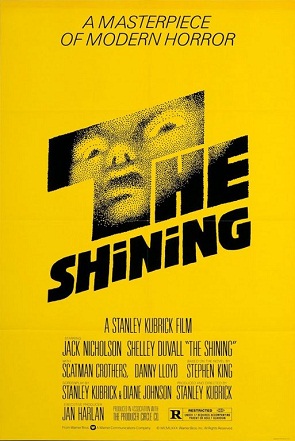
Stanley Kubrick was not the most prolific of movie makers, yet his efforts often create striking impressions. I saw 2001: A Space Odyssey at a young age, and it has remained one of my favorite films ever since. Although I’ve watched horror movies since my college years, I shied away from The Shining until about five years ago. By that point I’d seen enough clips and parodies to kind of know what to expect. Since finally viewing the original, it has become one of my most admired movies as well. Kubrick films may not be easily slotted into a genre, and The Shining is not a typical horror movie. There always seems to be something more going on in addition to the growing menace of Jack Torrance’s insanity. I’ve been hearing about Room 237 for a few months now, and I’m eager to see it. Room 237 is admittedly a movie about a movie, an exploration of how The Shining has inspired multiple interpretations of what most consider to be one of the scariest movies of all time.

The_Shining_poster

An article by Jay Kirk in the June edition of Harper’s Magazine examines this movie of a movie. Kirk is the cousin of Tim Kirk, the producer of Room 237, and offers a personal introspective of a mind under the spell of Kubrickian influence. The article, “The Shining Path: Room 237 and the Kubrick cult,” not surprisingly, keeps turning back to religion. It may be fallout from the Kirk cousins both being children of clergy, or it may be that effective horror films are, as I’ve maintained before, inherently religious. Even the meeting of the Kirk cousins takes place at Gaudi’s Sacred Family cathedral in Barcelona. It seems that there’s no way to get at The Shining without involving religion. Not that it’s a religious movie, but it may take some religion to understand it.

No doubt Stanley Kubrick was a deep man. Even those who try to interpret his movies end up adding a kind of hidden message of their own to the plethora of ideas he eloquently shot. I know nothing of Kubrick’s religious convictions, if any. Any film with the gravitas to inspire continuing hermeneutics over three decades after its release, however, will surely open itself to a kind of sanctification. The penultimate section of Kirk’s introspective focuses on Proverbs 3.5-8, a passage underlined in his grandmother’s Bible. To understand the genius behind The Shining, it seems, religion will have to be part of the discussion.


Trouble Feature

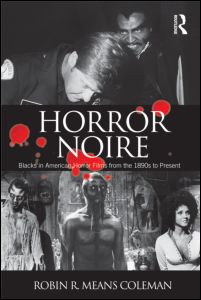
HorrorNoire I must be a glutton for punishment. My fascination with horror films grew more out of enjoying the unsettling mood these movies used to set. That creepy, shadowy world that resembles in such a degree my experience of the everyday world. Like most people I don’t enjoy being scared, and as a pacifist I find violence extremely distasteful. And yet, horror movies. I suppose they serve to remind me that no matter how bad things might seem, they could be worse. This fascination also accompanies reading about scary movies as well. Robin R. Means Coleman’s Horror Noire: Blacks in American Horror Films from the 1890s to Present is a fascinating study of how race perceptions have found expression in horror movies. As Coleman points out, it’s not a pretty picture. I suppose, however, that it could be argued that no one should want to find themselves the subject of a horror film. They tend to be a form of self-punishment, and, psychologically speaking, that makes a lot of sense.

African-American characters, I had noticed, in early horror films are portrayed as easily frightened and their reactions are used for comic effect. I still squirm when I see such representations in early movies: the cultural and racial arrogance rises like bile in the throat. What I hadn’t realized, however, is that the Black role in horror films is frequently tied to religion. Coleman makes this clear—from early films centering on African-American issues to Caucasian efforts to portray Blacks, religion is often the vehicle. Black films make a strong use of Christian themes, while White films not infrequently present Africans as purveyors of voodoo or some mysterious, and dangerous religion. This is a fascinating trend and it shows mixed perceptions of how religion is understood. Christians who dismiss the “superstition” of other faiths should have no fear of “false gods.” Yet it makes for great horror fare.

Despite their low-brow reputation, horror films are among the most successful genre of movies. Many people find them cathartic, I would guess. It is uncomfortable, however, to be faced with how race self-perception is embedded in such films. Like any artistic effort, movies reflect the values of those who write, produce, and direct them. At the same time they reinforce or even channel the expectations of the viewing public. Reading Coleman’s study, I was given a glimpse of the perception of one of my favorite genres from the perspective of “outsiders.” It is not always a comfortable place to be. Horror movies sometimes showcase terrors more frightful than the special effects and improbable beasts flashed upon the big screen. The realities of our own past can be the worst of monsters.


No Play-Thing

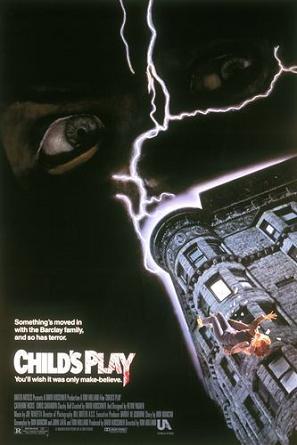
Childs_PlayPossession. It’s one of the scariest concepts in the religious arsenal. The idea that a person could be taken over by a different entity and surrender his or her selfhood to a malevolent saboteur is frightening indeed. Horror films have been deft at exploiting this. As a college student I was slow to watch the latest horror flicks. Some I’m only now beginning to find. Over the weekend I watched Child’s Play for the first time. Like most people who have some sense of popular culture I knew that Chucky was an evil doll, but I never really knew the backstory. Despite the utterly untenable hypothesis of the movie, it still manages to be scary in our CGI world, despite the bogus lightning. The frightening part comes from what is an admittedly creepy doll in the first place becoming possessed by a religious serial killer. Charles Lee Ray, named after three infamous assassins, displays facility with a religion that some identify as voodou, although that association comes primarily from the voodoo doll that Chucky uses to dispatch his mentor.

At least Child’s Play makes the effort to explain what forces exist that might bring plastic and stuffing to life. In true horror fashion, it is not the Christian god, but forces that are somehow more powerful, more malevolent. It would hardly behoove the maker of all the universe to inhabit a Cabbage Patch knockoff. The Lakeshore Strangler has been in training to cheat death and remain alive forever. He takes lessons from a mystical character whose religion is referred to only obliquely, yet whose efficacy is obvious in the malevolent toy. Willful suspension of belief is necessary to make this resurrection story plausible, but that disbelief must include belief in religious powers. The horns of this self-same dilemma hoist all religious believers in a scientific world.

Chucky is participating in one of the oldest of all religious traditions—death avoidance. Some of the earliest evidence that we have showing that hominids were developing religious sensibilities is the burial of the dead. There is really no reason to bury if we are only carrion like every other meat-based product. Whether it is out of fear or reverence, we turn to religion to assure us that there’s something more. It may not be scientific, but that’s largely the point. For many even today, a concluding scientific postscript leaves a body cold. Time for a leap of faith. Horror films are often decried as lowbrow and unsophisticated. Chucky, however, like many mythic monsters, is rapping his inhuman fingers on the door of religion. Specifically resurrection. Although in this case, it might be best to keep that door firmly closed.


The Splice of Life

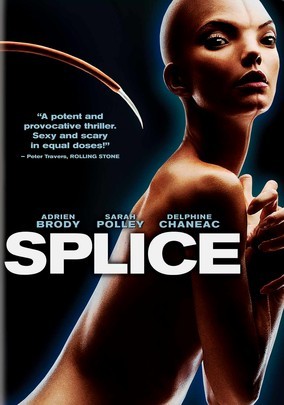
Splice Although not really scary, and although almost attainable with current technology, Dren is a curious monster. Many movies of the horror genre have explicit religious elements, but Splice may be a little too much science fiction for that. Or is it? The story is simple enough: a couple of geneticists have gene-spliced a couple of viable creatures that can be farmed for important chemicals and enzymes to solve diseases. So far, so good. But then the idea occurs to them: if the chemicals that can be used to help cure animal diseases had a human element, couldn’t they be used to cure our own diseases? And here is where the ethical quandaries begin. Adding human DNA to the mix, even when in small portions, suddenly throws open the moral dilemmas. Dren is the somewhat human result of these experiments, but the movie ends with the haunting, unanswered question—what is it to be human?

Although today the field of ethics is largely claimed by philosophers, morality is a measure of beliefs about right and wrong. In many cultures, including our own, religion has quite a lot to say about the issue. Once human DNA is mixed in the creature morphs from a bumpy slug into a creature that looks mostly human. The ethical dilemmas that surround human potential—abortion, stem cell research, cloning, and in past ages eugenics—all focus on the rights of the human person. Once a person is born, however, we almost immediately begin to curtail those rights until most of us become cogs in an unfeeling corporate machine. We are valuable, but for whose purpose? Who, sitting in their cubicle, or on their assembly line, or behind the wheel, says, “For this they defended my right to be born”?

Oddly, we privilege the potential of life without tirelessly working to improve the lot of those who’ve already been born. Perhaps, indeed, this is some form of evolutionary advantage—protect the future of the species at all costs. This idea becomes religious when it is deemed God’s will. In the movie, Dren’s creators ultimately deem her unhuman, a monster who must be destroyed. They, however, nurtured her humanness all along. While not the most profound movie ever filmed, Splice highlights the fact that ethics reflect the values of society. And society sometimes withdraws even humanity from those who’ve lost its favor.


Say Can You See

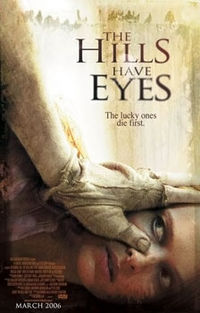
Remakes of classics. It is my sense that a classic has earned its place in its own constellation for a reason. Remakes seldom attain the je ne sais quoi of the original, but sometimes I have trouble telling them apart. I like scary movies—the classics anyway. In recent years various directors think they can improve on the masters and some of us get confused about what’s what. So it was that I came to watch the remake of The Hills Have Eyes without having seen the original Wes Craven version. As is typical for remakes, the writing tends to lack the flare that often characterizes the original vision. The story may be similar (in this case I’m only guessing) but more than the names may have been changed to protect—who? I’m afraid I didn’t care for the film. Graphic violence is seldom as effective as suggested terrors, but it can make you a bit queasy nevertheless.

I decided to stay with the movie to see if my thesis of religious elements and terror would become part of the story. In the remake, in any case, the action is set in a nuclear test zone where people disfigured by the radioactive fallout of American nuclear tests prey upon the victims they can lure into their lair. So an extended family is drawn in and very few of them make it out. The pater familias is a man who trusts his gun and has no fear of walking into the dark desert alone. But before he goes—yes! Religion. The mother of the brood, it turns out, is a devoted Christian and insists on praying before the men-folk set out to try to find help for their stranded vehicle. The eponymous eyes in the hills watch them pray and then begin to prey. The confident father says, “I trust my bullets more than your prayers.” (Or something along those lines.)

Ironically (and I can’t believe it was anything beyond coincidence) both dad and mom end up dead—the father in a crucifixion pose, the mother by being shot. Neither bullets nor begging save them from the mutants who seem to live just to cause others misery. The man who trusts his gun dies in a somewhat religious way, and the woman who trusts prayers is the victim of a gun. Now, in a classic there would be some lingering on the reversal here, but the remake syndrome is eager to add gore and grotesqueness to the screen without pausing for thought. The eerie backdrop of a nuclear testing town with mannequins still intact is effective, but otherwise you know to expect Road Warriors-type action in this small, post-apocalyptic world. The fact that even this wasteland supports a moment of prayer, however, demonstrates that fear and religion are never too far from each other.


Holy Wolves

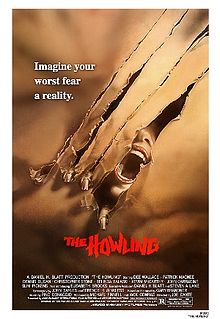
Nothing creates the mood for a werewolf movie like reading a book about real werewolves. The Howling was released the year I was finishing high school. At that time my humble circumstances allowed for very few visits to the movie theater, and certainly never to see horror films. I grew up watching B-films in black-and-white on television, but paying extra to see what was slightly unseemly in a theater stretched the limits for a good Christian just a bit. College was on my mind, and it was while in college that my horror film interest blossomed. All of which is to say, I’ve never seen The Howling before. I remember the movie posters, but the film had to wait until werewolves clawed their way back into my mind. Most of the classic movie monsters have their basis in religion, but The Howling doesn’t really delve into the origin of werewolves as much as it wonders what to do about when their numbers start to become a problem. Those who know about such things note that the special effects were cutting edge for the time, but CGI has spoiled us all.

Although the film doesn’t inquire into werewolf origins, it still gives a nod to the religious. The film’s werewolf population lives in a colony that has a “ritual center,” and since the cover for the colony is a retreat center for a psychologist’s patients, we find seekers amid the crowd. One of the inmates, Donna, explains that before joining the colony she had tried all the new religious movements, without success. And the one character who knows how to dispatch werewolves runs an occult bookstore in Los Angeles that is visited, in a shock-comic moment, but a pair of nuns. The message, so typical of the early 1980’s, is that all religions are just about the same. People are seekers, and any religion will do in a pinch.

In a way, this downplaying of the religious element in werewolves is not unexpected. As society was becoming more obviously secularized in the sixties and seventies, religion was becoming just one of many options available on the path toward self-fulfillment. In The Howling, becoming a werewolf was another. Ironically one of the old-timer werewolves laments the loss of “the old ways.” The werewolf colony lives on cattle that are farmed as politically correct sheep for the wolves, and it just doesn’t satisfy. The same might be said for religions. Accommodations, so necessary to survival in an evolving society, inevitably change the old ways of religion. Religions themselves transform over time. The Howling may not be scary, or believable, but it does serve as a kind of paradigm for worldviews that are undergoing transformation. Shifting shape, after all, is a sure symbol that one is still alive.


Country Roads

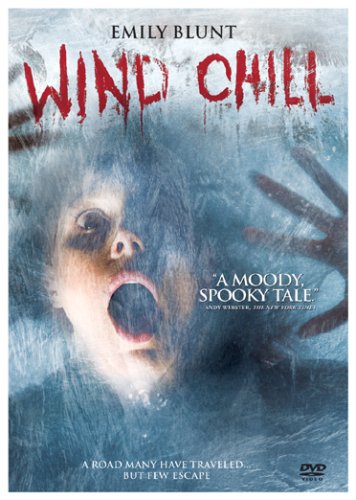
It may be a little too early for winter, but scary movie season has begun in my personal calendar. This weekend I watched Wind Chill. Although critics weren’t always kind to the movie, and the ending is somewhat predictable, it is one of the more decidedly creepy films I’ve seen recently. Since it is set in Pennsylvania there was a bit of a homey touch to the terror. I have driven on similar roads to that in the movie, during snowstorms, and that is one of life’s true terrors. What makes the movie so frightening is its ambiguity. Put a teenage girl alone with a guy in a car on an isolated road and you’ve already got enough elements to make your spine tingle. It becomes clear that the guy hasn’t been honest with the girl all along (the characters are never given names in the movie) and as they spend the night in the broken-down car reality and nightmare become increasingly difficult to parse. Of course, religion plays a role in the show.

The guy is giving the girl a ride home for the holiday break. He’s been watching her, a little too closely, for some time although she doesn’t know that until it’s too late to turn back. As they fumble for conversation it turns out that he is an “Eastern Religions” major and they met in a philosophy class. This just keeps getting scarier and scarier! After they break down (spoiler alert!) and the ghosts start showing up, we learn that some of them are priests. They had come to this haunted road to give the last rites to some accident victims before freezing to death in the poorly insulated cells in a strange little monastery on the hill (this is Pennsylvania, remember). As the night wears on we find the priests condemning the bad cop to a fiery death before light dawns and the girl finally finds salvation.

Of course, this is a variation of the old urban legend of the teenage couple out parking when something scary happens. Having everything in half-light and through smeary, foggy windows makes it more difficult to perceive what is actually going on. A lying religion major, priests complicit in a deserved fatality accident, and Nietzsche’s eternal recurrence give the film a little intellectual heft among the muted special effects and bleary-eyed confusion as the night goes on. Morality is on trial here. Although not the most profound of films, Wind Chill deserves some credit for bringing religion and horror to the same remote location and having them trade cards in the dark of night.


Puppet Master

Usually I resist mentioning books I’m reading on this blog until I have finished them. It is probably because of some misplaced Protestant guilt at taking a small measure of undeserved satisfaction at claiming an achievement that I haven’t legitimately earned. Or maybe it is my innate fear that the author will say, on page 200, “by the way, everything before this is wrong.” In any case, sometimes I forget the important initial stages of a grand argument by the time I reach the final chapters, neglecting any ideas that may have arisen along the way. I just started Victoria Nelson’s The Secret Life of Puppets. I read her Gothicka earlier this summer, and couldn’t wait to get started on Puppets. Besides, when was the last time I saw an academic book with a back-cover sound-byte by Neil Gaiman?

The idea that is so compelling in The Secret Life of Puppets is that in the modern era religion and art have reversed roles. That is to say, people tend to turn to literature (and movies or other media) to discover a sense of transcendence—previously the bailiwick of religion. Religion has transformed into the receptacle of literary imagination instead of remaining the inspiration for it. New Religious Movements grow out of fictional sources—consider Scientology or Jediism or the religions growing from Avatar. But the connection runs to even more profound depths. Quoting a screenwriter she met, Nelson points out that horror movies are often the only genre of film in which God comes naturally into the conversation. Elsewhere God-talk feels high-handed.

Religion has become a kind of fiction while fiction writers preserve the prerogatives of the divine. We suffer from repressing our intuitive way of knowing. Perhaps it is only logical that I select an example from science fiction here. Since the late ’60’s the figure of Mr. Spock has stood sentinel over the neurosis of the flawlessly logical. Just one glimpse and we know this is not homo sapiens sapiens’ behavior. We think with both halves of our divided brains. Scientists sometimes commit the oh so human fallacy of supposing evolution is robbing us of passion. Falling in love would be a lot less enjoyable if it made sense. No, we have not outlived our need for the gods. I think Neil Gaiman would back me up on that.


Parsing an Exorcism

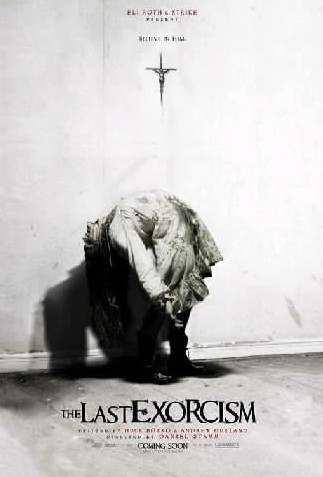
The latest in my spate of scary movie viewings is The Last Exorcism. The press when it was released last year made claims of extreme fright, but my impression was that I’d seen it all before. The “found footage” fantasy is difficult to maintain—although the camera work in the film is good—and the premise of demonic possession is frightening if the viewer is a believer. The hook for this movie, however, is that the exorcist himself doesn’t believe and becomes a victim of his own unbelief. The pattern overall follows The Exorcist, but without the creepy soundtrack and staged lighting effects, The Last Exorcism relies heavily on the viewer’s willingness to believe. The demonic possession is presented as extreme contortionism and self-destructive behavior, as well as the uncharacteristic violence by the victim. When Nell Sweetzer gives birth to a demonic child, a la Rosemary’s Baby, the role of good Christian gone occult feels a little hackneyed.

I’ve tried to analyze what scares so many people with movies of demonic possession. The core fears seem to come down to two: belief in the reality of demonic possession and the fear of being out of control. Historically the concept of possession was originally relegated to the gods with demon possession apparently arising as a pre-scientific attempt to explain epilepsy. The fact that most Christian denominations no longer recognize physical demon possession (a fact exploited by The Last Exorcism) makes it more frightening still. For a generation of media-saturated viewers convinced that cover-ups are common the credibility of the church, struggling with its own metaphorical demons, is suspect. Perhaps demons are out there—a common enough assertion on the reality show Ghost Hunters—and the church has lost control over them. When Jason and Grant explain what demons are, however, they are pretty far afield from Legion being cast into a herd of swine.

If the Internet is any kind of reliable measure of people’s fears, zombies and demons appear to be nearly on a level when it comes to belief. Both are supernatural and neither stretches credulity to the point of humans growing fangs or matted fur. Both participate in the idea that there is more to be feared beyond death. Both fail in the court of science. The Exorcism of Emily Rose raised the ambivalence of demonic possession to the level of the courtroom. One thing I learned on jury duty last week is that the truth is measured on the basis of the judgment of a quorum of rational individuals. The implications of this are frightening indeed: those who accept the reality of non-physical monsters (the jury is still out on ghosts) are fully capable, in a legal setting, of deciding the truth of the matter. The only corrective to witch-hunts and state-sponsored exorcisms would seem to be education. Today education comes via the media where zombies and demons freely roam.


American Haunted

Serendipity, although rare, still occurs in university life. As an adjunct instructor whose livelihood revolves around the number of courses that may be squeezed into a limited number of days, I have been considering online courses. As an avid watcher of horror movies—excellent preparation for adjunct life these days—I have attempted to sample the genre widely. It is therapeutic to see people in fictional situations worse than my own. While attending a training course on constructing online courses earlier this week I was surprised to find out my instructor was Brent Monahan, a versatile and talented individual of whose presence at Rutgers I was unaware. Most famously Dr. Monahan wrote the novel and screenplay for An American Haunting, a movie I had written a post on back in January.

Compulsive in my desire to be on time, I generally show up to all appointments early. For this particular session I was the first person present, so, not recognizing my teacher, we struck up a conversation about my field of studies. (He asked; I try not to lead with my chin.) He was nonplussed about the fact that I am affiliated with the religious studies department—in general this is a conversation stopper since, along with politics, it is a forbidden topic in polite company. Before I realized who he was he suggested that perhaps people go into this field because of their internal struggle with good and evil. It was a perceptive statement and it made sense when it came out that he was a writer of horror films and novels.

Since I’ve been exploring the nexus between religion and horror I have wondered what the deeper connection might be. Clearly fear of the unknown, the overly powerful, and the randomness of life in an uncaring universe play into it, but perhaps it is also the struggle of good and evil. Horror films often present the “what if” scenario: what if the side of evil were allowed free reign? Often the fount of that evil, in horror films, is religion gone awry. Certainly in An American Haunting a pious man is driven by inner demons to the abuse of his own child. That he is a religious man is made plain from the near-constant presence of a clergyman in his house once the haunting starts. While the exact relationship remains to be parsed, it is clear that fear and religion reside very near one another in our brains, perhaps as near as good resides to evil.


Holy Horror

Back in October, in the spirit of the season, I attended a local lecture by a ghost hunter at a nearby public library. This sincere young man struck me as perfectly normal, but haunted by his ghostly encounters. During the question session someone asked about TAPS (The Atlantic Paranormal Society, of “Ghost Hunters” fame). The lecturer indicated that TAPS is not above fabricating evidence for ratings, a disappointing but not unexpected factor when it comes to television. He even gave some evidence to back his assertions. Nevertheless, my wife’s whimsical six-month subscription to the TAPS Paramagazine has continued on well past its expiration date, and when the November/December issue arrived, I was interested to see a piece entitled “Sacramental Horror: What scary stories can tell us about what is real.” Well, this was too good to pass up.

The article, written by Presbyterian minister Jonathan Weyer, discusses the value of horror films. The juxtaposition of a clergyman and horror films is a little unexpected, but believable. After all, many horror films feature religious ideals clothed in monstrous form. Dividing horror films into Uncanny/Unsettling horror, gross-out horror, and torture porn, Weyer goes on to explain how uncanny or unsettling horror underscores the moral order of the universe and is therefore appropriate for Christian contemplation. He even draws the Nicene Creed into it. Gross-out horror serves the function of making the viewer contemplate death and perhaps even helps to make fun of it. This is a less noble, but still acceptable Christian enterprise. Torture porn, on the other hand, simply has no redeeming value. Sacramental horror really didn’t enter the discussion. Douglas Cowan’s Sacred Terror takes this issue on more directly.

I really don’t expect much insight from a fanzine that treats the reality of fairies and the prognostications of tarot cards next to the genuinely mysterious, such as ghosts. Finding morality in horror films is often a matter of eisegesis. The fear in such films often emerges from the sacred, either in pure or distorted form. Even if “the pure of heart or, often the virgin” survives while “Wrongdoers get put to the axe,” as Weyer states, seldom is that the intended point of the movie. John Carpenter denies that there was a moralizing message in his Halloween, often cited as the movie that established the “good girl survives” motif. The fact is that horror relates to the sacred in the element of fear. If people were not afraid, there would be little for religion or horror movies to accomplish.