Oz Undone

Horror is notoriously difficult to define.  Two friends recently suggested that I watch Return to Oz, which, for them, was horror.  Although rated PG, it does shade into horror at several points.  It begins with an eerie soundtrack and a disturbing idea: Dorothy hasn’t been sleeping and really believes in Oz, so she’s to receive electroshock therapy.  She escapes the gothic hospital during a storm and after almost drowning, lands in an Oz gone wrong.  Any number of scary things happen there, and the story is one of constant tension.  First Dorothy encounters the “wheelers,” which equal blue-faced, flying chimps for terror.  She is taken to the residence of a wicked princess who has a collection of heads and changes them at will.  At one point she chases Dorothy with no head on at all, perhaps referencing the headless horseman.  People turn to stone or sand, depending on whether the Gnome King or the deadly desert gets them first.

Dorothy tries to find the Scarecrow but he’s been captured and imprisoned by the Gnome King, who turns people into objects.  When she frees the Scarecrow the gnomes—scary monsters, not bearded little people—attack.  Dorothy and friends are chased to a point that they’re about to be eaten by the Gnome King.  This is dark Disney.  There’s a minor Halloween theme and a living jack-o-lantern.  Fairuza Balk, who plays Dorothy, would go on to play horror and gothic roles.  Even Pumpkinhead, the jack-o-lantern, would be used as the title of a legitimately scary horror movie.  All in all I was impressed with how well this fits into PG horror.  It’s scarier than some other intentional horror with the same rating.

I missed Return to Oz when it came out in 1985.  I’d graduated from college and began seminary that year, so I was a bit distracted.  The movie has gathered a cult following and was praised by Neil Gaiman.  Interestingly, the writer/director Walter Murch noted in an interview that he’d used the book Wisconsin Death Trip, a nonfiction book of unusual events and deaths in a small section of, well, Wisconsin, to get ideas for the script.  This seems a strange inspiration for a Disney film, and indeed, Murch had a rocky time as the director.  The end result is strangely affecting and fits what might be considered horror for children.  The squeaky clean image that Disney has cultivated in recent decades hides a history of films that can legitimately scare the young.  Return to Oz is one of them.  And it has a fascinating back story.


If You Do

Folk horror is particularly open to religion.  The powerful Euro-horror film, The Damned, is nearly worthy of Robert Egger status.  Indeed, the movie reminded me of Egger’s work, so perhaps Thordur Palsson is his Icelandic incarnation.  Set in a fishing station in a remote arctic bay in the 1870s, the owner’s widow oversees the operations of six fishermen and the woman who cooks and keeps the house.  Her husband died at sea the previous year, and the fishing has been very poor, threatening their existence.  They need to eat their catches, as well as their bait, trying to stay alive until spring.  Eva, the young widow, sees a ship foundering on the distant, jagged rocks.  The men insist that if she orders them to help, their food supplies will quickly be depleted, and the rescue operation would put them all at risk.  Lured to the wreck by a food barrel that has washed ashore, they encounter more men than they can keep and have to fight them off of their small fishing boat, killing one in the process.

The helmsman of the boat falls overboard and drowns as the survivors try to climb aboard.  The small boat manages to escape, however.  Helga, the housekeeper, warns Eva of the draugr, a monster of Nordic folklore that is a kind of zombie.  If it gets into your head, she warns, it will led to death.  Skeptical of folktales, Eva begins to change her mind as her small group of companions begins dying off.  Helga disappears.  One of the men dies after being stopped from killing a companion.  Eva is now left with only four men.  One of the men insists they are paying for their sin, and begins erecting a large cross as an act of penitence.  After seeing a man in the mist, the new helmsman dies by suicide.  Now convinced the draugr is real, Eva leads an expedition to find and destroy it.  This leads to the death of yet another crew member.  The three remaining people decide to flee by night in the boat.  Eva, however, encounters the draugr in the cabin and destroys him by fire.  A spoiler follows.

The shocking end reveals that the draugr was actually a survivor of the shipwreck and his presence explains the “supernatural” events they believed the monster caused.  Eva, delusional, kills the man.  The story plays heavily on both the isolation of the fishing station and the guilt the characters all undergo after leaving their fellow sailors to die on the jagged rocks.  Their fear transforms fevers into deadly paranoia as they kill one another and themselves off.  This is set against the stunning arctic scenery of the fjord that houses the station in a stark winter landscape.  And the conflict between religious systems is right there on the surface and deep within the minds of those isolated, far from civilization.


Existing Stance

You know, I’ve referenced eXistenZ several times on this blog without really writing about it.  How rude of me!  Well, the fact is eXistenZ is one of my “old movies”—those that I knew from the days before I started this blog.  I have watched it since 2009, but early on I didn’t review movies unless they had religious elements.  Having recently referenced eXistenZ yet again, I figured it was time to look directly at it.  When I first watched this movie I had no idea who David Cronenberg was.  The film was recommended to me by one of my students at Nashotah House.  In those days there was no streaming so I had to purchase the DVD.  The movie is a science fiction horror film, primarily body horror, which is kind of Cronenberg’s shtick.  It’s also about gaming and I’m not a video gamer at all.  Still, I really like this film.

Perhaps presciently, Cronenberg set the movie in 2030.  Computer gaming has become biological with organic ports that have to be punctured into players’ spines so they can use an “UmbiCord” to connect to the pod.  Rewatching it, this seems almost too plausible.  In any case, as the movie goes on it becomes less and less clear what is real and what is part of the game.  Reality becomes distorted.  eXistenZ came out about the same time as The Matrix (probably why my student suggested it to me).  Given the very high profile of the latter film, eXistenZ never really broke out.  Cronenberg seldom breaks through to the mainstream, but I know a lot of people were talking about his remake of The Fly in 1986.  I even saw that one in the theater with some seminary friends.  In those days I didn’t know enough about horror to know what to expect from a Cronenberg film, which may be why it had such an impact on me.

In any case, eXistenZ remains underrated.  I see more recent films that appear to nod to it.  The horror aspects tend to be the slimy, gooey aspects of the game world which—spoiler alert—is, diegetically, the one in which the viewer resides.  There are indeed a few parallels to The Matrix, but eXistenZ has creatures and horror themes.  Sci-fi horror is a sub-genre that often works.  Critics tend to refer to such things by the older category of “science fiction,” but it is close kin to horror, a genre only separated out in the early 1930s.  Now as AI takes over the world, it might be a good opportunity to watch eXistenZ and ponder just how far you want to let it go.


Woodwork

It’s not often that I get to see a new horror movie on opening day, but I managed to swing The Carpenter’s Son with a screener, courtesy of Horror Homeroom.  I’m not going to say much about the movie here, because you should go there to read my response—I’ll let you know when it appears.  But I should try to whet your appetite a bit.  Among those of us who read and write about horror and religion this was a much anticipated movie.  A horror movie about Jesus.  Such things have been done before, but this one is played straight with an interesting premise.  It’s based, loosely, on the Infancy Gospel of Thomas.  This isn’t to be confused with the Gospel of Thomas.  Early Christians, it seems, favored the doubter’s point of view.  The Infancy Gospel is the story of Jesus’ miracles between the ages of five and twelve.  Even among early Christians these accounts weren’t taken as gospel truth.  They make for an interesting movie, however.

I think about horror and religion quite a lot.  Since the late sixties the two appear together frequently and, according to many surveys, make for the scariest movies.  Religion deals with, not to sound too Tillichian, ultimate concerns.  In the human psyche you can’t get much larger than death and eternity.  These are the home turf of religion.  Of course, death can be handled in an entirely secular way, but there’s a reasons hospitals almost always have chapels in them.  Eternity may be slotted in cosmology, but what it means comes from religion.  Forever seems pretty ultimate to me.

One thing I didn’t give in my Horror Homeroom piece about The Carpenter’s Son is my thoughts as to whether it’s a good movie or not.  Did I like it?  To a certain degree, yes.  Although I’ve been impressed with Nicolas Cage in horror movies lately—he can really rise to the occasion—sometimes, as in The Wicker Man, he just becomes, well, Cagey.  This happens once in a while in The Carpenter’s Son too.  When he’s questioning Mary about where “the boy” came from, his voice gets the wheedling, whining, kind of mocking tone that doesn’t set him as his best.  Likewise, when he tries to instruct young Jesus in various ways, it seems far too modern to fit the palette of a period drama.  I watched it a couple of times to write the article and I have my doubts that I’ll watch it again.  I did think the portrayal of Satan was good, and appreciated some of the dialogue about evil.  It wasn’t my favorite horror movie in recent weeks, however, even though I saw it before it opened.


Witching Season

Tis the season for movies about witches.  The cult classic The Craft is another one of my old movies—I don’t think I’ve written a blog post about it before.  In any case, this autumn felt like good timing for a movie about female empowerment.  Rewatching it, it was difficult to miss how religion and horror are tied together.  Indeed, the Bible appears in the film as well.  This makes sense since the girls attend a Catholic school.  So what is this one about?  Teenage Sarah has moved to Los Angeles and is having trouble fitting in at school.  She is a “natural” witch who catches the attention of the small coven consisting of Nancy, Bonnie, and Rochelle.  They invite her to complete their coven so that they can invoke Manon, a deity larger than God.  Once they attain their powers, they begin redressing personal wrongs, but begin to hurt others as they do so.

Sarah is the daughter of a witch and her mother died in childbirth.  Sarah has difficulties with using powers to hurt others.  She was primarily interested in a love spell, but it too has consequences.  The coven experiments with even more powerful spells, giving the girls very obvious powers.  Especially Nancy.  Nancy is angry and enamored of power.  Sarah decides she wants out of the coven, but they’ve become too powerful.  Since Sarah tried to take her own life before, Nancy tries to force her to do so, only to succeed this time.  She’s backed up by Bonnie and Rochelle, both enjoying their powers.  Their attack, however, brings out the natural power of Sarah’s witch nature.  In the end, all of them lose their powers except Sarah.  

There’s a strong moral streak through the movie.  Unrestrained power leads naturally enough to abuses—something we’re living through daily in real life.  This is played off against a largely ineffectual Catholic Church.  A street preacher, who doesn’t seem very Catholic, also tries to warn Sarah but his method of using snakes is off-putting, to say the least.  He dies off pretty early in the film.  Religious structures of the monotheistic world have historically closed doors to women.  Some still do.  The power of nature encompasses both women and men, and the power that women have often frightens men.  Again, we see the fear of losing power played out.  This is comically addressed in another witch movie, The Witches of Eastwick.  Indeed, it is directly addressed there.  That’s yet another of my old movies, unless I’ve written about it here before but have lost my powers of memory.


The Prom

I had always assumed Prom Night was a knock-off of Carrie, and in some ways it is.  The story is significantly different, however, and the impetus to watch it came from Scream, where it’s referenced a few times.  In case you’re under the same delusion I was, here’s how it unfolds.  Jamie Lee Curtis, after starring in Halloween and The Fog, takes the role of Kim Hammond, older sister of a girl (Robin) accidentally killed at the start of the film.  A kids’ game at an abandoned building leads to the death, in which four children participated.  Six years later, it’s prom night.  The kids present at Robin’s death all receive mysterious phone warnings that they dismiss as crank calls.  Meanwhile, a Carrie-inspired sub-plot is introduced as Wendy, the leader of the killer kids, is outvoted as prom queen by Kim.  She gets a local thug, Lou, and his buddies, to plan a disruption to the crowning of the king and queen.  No pig’s blood, but this isn’t Stephen King.

Meanwhile, yet another subplot is introduced, riffing on Halloween, of an escaped psychopath as suspect.  The police are fearful after finding the body of a nurse he kidnapped at the site of Robin’s death.  He was falsely accused of Robin’s murder and was disfigured in a fire.  They fear he may be targeting the kids there that fateful day.  Nobody except the four kids know what really happened.  There’s a hint that someone saw the accident, however.  If you’re getting confused, apart from my faulty summary, it may be because the movie goes to great lengths to misdirect your suspicions of who the murderer may be.  Since the movie is over 45, there will be a spoiler in the next paragraph.  You are warned!

The killer is Robin’s twin brother, who is also Kim’s younger brother.  He witnessed Robin’s death and tries to murder those he holds responsible on prom night.  He succeeds in killing three of the four.  I’ll leave it at that.  This is one of those teen movies and a fairly early slasher.  The plot is too complex to hold up, however, with characters simply dropping out because the action shifts focus.  Too many false lead-ons and too much disco music make it less than stellar.  Of course, as a very religious kid shy around girls, I never attended my high school prom.  I guess I may have missed out on what was, by then, becoming a night of horror.  At least in the eyes of those exploring the emerging slasher genre.  


Louder

Scream is one of my old movies.  I saw it several years ago but the details had grown hazy so I dusted off the DVD to give it another go round.  I’m glad I did.  This Wes Craven classic was one of the first horror movies to rock the critics because it parodies so many other horror films while remaining a scary plot line.  And it’s intelligent.  I liked it so much that I’d watched Scream 2 as well, and the two had jumbled up in my mind.  In case you’re still in a Halloween mood, here’s the basic premise (I won’t spoil the ending): the opening sequence is so well-known that I’m tempted to skip it, but it sets the scene remarkably well.  A teenage girl home alone answers the phone to find a stranger on the line.  This stranger is watching her as he calls, eventually breaking into her house.  Using horror movie clichés, the ghost-faced intruder catches and kills her.

After that, Sidney Prescott is having trouble getting over her mother’s murder the previous year.  The recent murder triggers her.  When her father has to leave town on business, she decides to stay with a friend.  Ghostface attacks her, leading to the arrest of her boyfriend, who shows up after the slasher attack.  Along with her friends, of which the guys are all horror movie fans, she plays out various scenarios of who the killer might, or “should” be, according to the rules of the genre.  This is very effectively done, keeping the first-time viewer guessing who the killer might be.  When school is suspended because of the killings, the kids have a massive party (of course).  The killer’s there, however, for the most part following the rules.  But the instructions are subverted, making for a wild ride.

Clever and satirical, the movie strikes the right tone.  One thing I noticed the first time was that Ghostface is a little too fast for a psychotic killer.  He runs.  He’s also quite vulnerable, but then again, he’s not a supernatural villain.  After seeing Scream again, I realized that there are still some classics that I’ve missed.  One reason is that I’m not really a slasher fan.  Throughout the movie they avoid using the word “horror,” preferring “scary movie”—the original title for the film.  Scary Movie was picked up by a horror parody that I watched shortly after seeing Scream for the first time.  In many ways Scary Movie is a parody of a parody.  Horror is endlessly self-referential, of course.  And sometime an old movie is just what you need.


Old Horror

One of the early horror movies not in the Universal lineup was Doctor X.  It deals with themes that are perhaps surprising to modern viewers of old movies since the Motion Picture Production Code had not yet taken effect.  The story itself is slow paced, as is typical for the time, and not very scary according to modern standards.  Police are investigating a series of full moon killings and have traced them near to Dr. Xavier’s institution, the Academy of Surgical Research.  There he, along with four other scientists, are conducting advanced, but unorthodox medicine.  Dr. X convinces the police that he will investigate thoroughly and if the killer is among his colleagues, which he does not believe he is, he’ll learn which one.  There’s quite a bit of screwball humor introduced by the investigative reporter and even the butler and maid.  Hooking everyone up to a machine that indicates excitement, Dr. X has the murder reenacted to determine guilt among the watching scientists.  This is an early form of polygraph, apparently.

One of the colleagues, Dr. Wells, is excused because he is missing a hand and the murderer clearly used two.  The lights go out during the experiment and the “guilty” doctor is found murdered.  The solution Dr. X proposes is to do the experiment again, using his daughter (with whom the reporter has fallen in love) as the “victim.”  In order to prevent anyone from moving around, all but Wells are handcuffed to their chairs that are bolted to the floor.  Wells is then shown transforming himself into a monster by using “synthetic flesh” that he’s developed, allowing himself to animate a second hand and also, to disguise his face, freeing him from being identified.  He attacks Dr. X’s daughter, but the scientists are all handcuffed to their chairs.  The comic reporter saves the day by destroying the monster.

These early horror films blazed trails for later monster movies.  The science is a mix of plausible sounding theory and mumbo-jumbo.  I wasn’t sure what to expect since I knew the movie by name only.  Dr. X is a kind of mad scientist, but he’s not evil.  There’s a theme of cannibalism that runs through the story as well, since this is where Wells gets the material for his synthetic flesh.  The themes are scarier than what’s shown on the screen, of course.  These were the days when Boris Karloff in Frankenstein monster makeup could cause viewers to faint.  Doctor X was never as popular as the Universal lineup and although Wells is grotesque enough, he’s no Frankenstein creature.  He is, however, part of cinematic monster history.


Little Girl

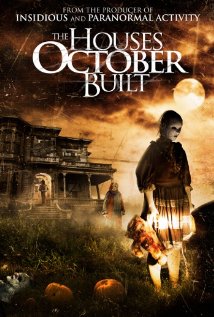
It might be inferred from the fact that I’ve mentioned it once or twice that I’ve seen The Little Girl Who Lives down the Lane before.  On a rainy autumnal afternoon it’s the horror movie that most often comes to mind.  While some find the “horror” designation overkill, it is the genre under which I bought the DVD many years ago.   Besides, it won a Saturn Award for best horror film.  I picked it up at a two-for-one sale not knowing what it was about but I was immediately taken by the atmospheric setting and weather.  A proper New England fall, after the leaves have come down.  It opens on Halloween with one of the most cringy openings ever.  Charlie Sheen plays a pedophile asking 13-year old Jodie Foster (Rynn) probing questions of where her father is when he finds her alone at home.

There will be a spoiler later in this paragraph.  Rynn lives on her own after her father dies by suicide and she murdered her mother and put her body in the basement.  Frank Hallet (Sheen), and his insufferable mother, own the Maine town where Rynn lives.  Befriended by Mario, a high school student who discovers her trying to drive, she eventually confides that Hallet’s mother was killed going down to the basement.  Meanwhile her son Frank keeps trying to insinuate himself into Rynn’s life, and, strongly implied, bed.  The story has some improbable plot elements and a few surprising moments, but not any jump startles.  It’s a slow burn, building to where Rynn attempts to poison herself, but Frank, not trusting her, drinks her tea instead.  Moody, rainy, and played out on a carpet of dead leaves, this is one of those horror movies that gets the season right.

Ironically for October nights, there aren’t a ton of horror films I know of that manage to capture this feeling.  I suppose that’s why I’ve seen this one a few times before.  I’ve gone through many lists of “October movies” and come out thinking that few people must think about this season the way that I do.  Or at least I haven’t found many horror movies that allow the season to pull its own weight.  Little Girl wasn’t welcomed with open arms when first released, but it has become a kind of cult classic.  Foster’s acting is pretty amazing considering her age at the time the film was shot.  But the autumnal weather does it for me, every time, even as we slip into November.


Don’t Stop Moving

Stopmotion is a strangely affecting horror movie.  Body horror as well as Euro-horror, it follows the dream-like world of Ella, a stop motion animator.  She learned the trade from her mother who, suffering from arthritis, has Ella do the work for her.  After her mother has a stroke, Ella continues working on her final film but in a new location.  Tom, her boyfriend, gets her an apartment in a run-down building where Ella meets a precocious and odd little girl who tells her she should film a different movie and proceeds to tell Ella how it should go.  To her chagrin, Ella has to admit that the little girl’s story is better than her mother’s.  With the girl’s help, Ella animates a monster, the Ash Man, who is pursuing a girl lost in the woods.  Then Ella starts receiving visits from the Ash Man, or at least she believes so.  She ends up in the hospital. Spoilers follow.

Tom, who visits her there, is worried that Ella has let this go too far.  He threatens to delete the film while she’s immobile in the hospital.  Ella’s mother dies and with the little girl’s help, Ella gets back to her apartment to finish the film.  When Tom, and his plagiarizing sister, come to return Ella to the hospital, she kills them both.  She then, with the girl’s help, finishes the film.  The film results in her own death, or at least that’s the way she sees it.  The film features quite a lot of stop motion animation although the movie itself is live action.  It’s a very artful, if gross, film.  The little girl is never seen by anyone else, nor explained, suggesting that she’s a younger Ella following her own creativity.  And paying the price for it.

I can’t claim to understand everything that happens in this movie.  That doesn’t make it bad, but worth pondering.  Those of us who live creative lives experience dry patches, and often, self-doubt.  I know that when I compare my writing to that of others, I suffer in the very comparison.  When Stopmotion first ended, I felt both confused and intrigued.  Euro-horror of recent years, to generalize, emphasizes the art of the craft.  There was a lot of symbolism in this movie, some of which I couldn’t connect to the action.  I suspect repeated viewing might bring some of this to light.  My family has often told me that with my focus and interests, I would’ve been a good stop motion animator.  I certainly have the creating monsters part down pat.  It’s just a matter of deciding which narrative to follow.


Not Frightening

Years ago a friend, which I define as someone who wishes me no specific bodily harm, suggested I watch The Frighteners.  It finally came to a free streaming service (with commercials), so I gave it a go.  I really enjoyed parts of it, but on the whole, there was too much going on to make it an effective film.  It’s a horror comedy, and once films like that stretch beyond 90 minutes they tend to need a lot of magic juice to keep the engine running.  So, here’s the basic idea: Frank can see ghosts.  With the help of a couple of ghosts he makes a living driving spirits from peoples homes, after setting them up.  Unfortunately there’s a serial killer ghost actually killing people.  Since Frank tends to be the last one the victims see, there is some suspicion that he’s involved in their deaths.  

A young widow, Lucy, is a doctor and is trying to help a woman (Patricia) who seems to be abused by her mother.  It turns out that Patricia is associated with a serial killer from many years ago, and it’s unclear whether or not she’s innocent.  Meanwhile, a neurotic FBI agent comes to town and decides Frank is guilty and tries to kill him without due process.  Meanwhile, more and more people are dying.  It’s probably a spoiler to say that the serial killing ghost is the same as the serial killer that Patricia was in love with and she’s still helping him to get to a record number of deaths.  Frank ends up dying twice but is brought back to life at the end, after Patricia and the serial killer are taken to Hell.

The movie is stylish and a bit of fun, but if you’re watching it on a streaming service with commercials it ends up being over two hours long.  Some parts are funny, but not hilarious.  Some parts are spooky, but not really scary.  The plot is complex and takes its time unfolding.  The serial killers attempting to break a record is disturbing and not exactly in good taste.  The acting is good but the viewer’s left feeling a bit confused as to what the message is and how they ought to feel.  It’s the kind of movie that I might find myself in the mood to watch again, someways down the road, but in the short term, I’m glad to have seen it once.  I’m not sure my friend and I share taste when it comes to movies, but at least he’s not wishing me any harm.


Mirroring Reality

I watched Oculus for two reasons: it kept coming up as a “freebie” on a service I use, and I’d been thinking about haunted mirrors.  Well, three reasons—I also liked the sound of the title.  (Not all decisions are a matter of science.). I was pleasantly surprised that it turned out to be pretty good.  I’ll probably throw in a spoiler or two, so if it’s on your list, you’ve been warned.  Kaylie and her brother Tim were attacked by their parents, but Tim was being framed by the mirror.  Both parents attempt to kill the children, but end up dead instead.  Tim is sent to an institution since he pulled the trigger, and Kaylie has spent eleven years researching the mirror.  When her brother is released she convinces him that they have to keep their promise to destroy the mirror.

The problem is, the mirror messes with perceptions of reality.  The two go back to their childhood home where Kaylie has set up a device to drop an anchor onto mirror.  This is set to happen with a wind-up timer since the mirror can control electronics.  She’s also set up the room so that everything is being recorded.  If she can prove the mirror is what she believes it to be, her father will be exonerated and her brother proven innocent.  The movie gets a little tricky to follow since their current story is intercut with flashbacks as to what happened when they were children.  Also, the mirror records events on the cameras that didn’t really happen.  Add to this the fact that Tim has undergone therapy for eleven years and he’s convinced that his sister is delusional.  It’s one of those movies that messes with your perception of reality.

When Tim doesn’t see his sister in front of the device meant to destroy the mirror, he accidentally kills her.  The police arrive, believing he has repeated his murderous attack from eleven years before.  The ending is rather nihilistic, but the scares are effective.  There are a few gross-out scenes and some jump startles, but overall it is the story that conveys the fear.  For me, the mental issues were almost triggers.  But then again, I watched it on a day when I was a bit fuzzy-headed because of waking up too soon.  I really didn’t know what to expect when I hit “play.”  I’ve done that enough times and ended up with films that were wastes of time, so I was glad to have found a competent one this time.  These are my reflections, in any case.


Hungry Madness

It’s been on my wishlist of movies to watch for a few years, In the Mouth of Madness.  A tribute to Lovecraftian horror, as well as a probing of insanity, it is a heady mix.  In keeping with my usual rules for movie watching, I hadn’t pre-read anything about it that would give away the plot.  Coming to it fresh, a number of things stood out.  There were some very good scenes and parts of the movie made me want to like it a lot.  It is a great movie for religion and horror analysis, and in that regard it’s much better than Prince of Darkness (despite Alice Cooper).  In fact, had I been able to see it years ago, it would’ve been included in Holy Horror.  That itself is noteworthy since two of John Carpenter’s other movies were in it: The Fog and the aforementioned Prince.  I suppose I should provide a little summary (if possible) in case you haven’t seen.

Trent is an insurance investigator, and a hardened skeptic.  A horror writer who outsells Stephen King, Sutter Cane, has gone missing and Trent’s sent to investigate.  He discovers that Cane is in a town that doesn’t exist (Hobb’s End) and that his books are not fiction.  In fact, Trent is a character in one of his novels.  When people read his latest book, In the Mouth of Madness (a title adapted from Lovecraft), they go insane and begin killing others.  The plot gets a bit busy because people are starting to transform into slimy, Lovecraftian monsters and this reality, if the book is read, or movie watched, will spread to all of humanity, leading to our extinction.  A bit too ambitious, the plot can’t hold all this weight, but it really isn’t bad.  There’s just too much going on.

The religion elements come in because Cane has holed himself up in an unholy church.  He refers to his latest novel as the “new Bible.”  “More people,” he says, “believe in my work than believe in the Bible.”  He later refers to himself as God.  I haven’t seen all of Carpenter’s films, but there seems to be a trajectory of his earliest major films being his best.  Halloween and The Thing are classics.  The Fog isn’t bad.  When he brings religion into his stories, as in The Fog, things begin to cloud over a bit.  Prince of Darkness doesn’t deliver a believable Devil.  In the Mouth of Madness doesn’t quite hang together well enough.  It’s not a bad movie, though.  It has given me some ideas for another book, if I can stay sane long enough to write it.


Colorful Space

Lovecraftian horror translates to film unevenly.  Even when it’s successful, as in Color Out of Space, it really isn’t that close to reading Lovecraft.  “The Colour Out of Space” is among my favorite Lovecraft stories.  To me, it feels perhaps his closest to Poe, and Poe is my personal muse.  I knew that it couldn’t be made cinematic without changing things a bit, and that it would be pretty gnarly.  I was correct on both counts.  In very broad brush strokes, the movie follows the story: a colorful meteorite on an isolated farm begins changing the crops and the people who live there.  Instead of crumbling, however, they are struck by the color and become other.  The mother and her youngest son, for example, are fused together creating one of the most cringe-worthy scenes I’ve watched in a long while.  The movie emphasizes family, even when things go horribly awry.

Defying Lovecraft’s well-known avoidance of focus on female characters, the movie’s focal point in Lavinia accords with Poe’s concern for threats against beautiful women.  She’s the teenage daughter of the family and the film opens with a scene where she uses Wicca to try to heal her mother of cancer.  The love between Nathan (Nicolas Cage) and his wife is movingly shown.  The movie was recommended to me during a conversation about Nicolas Cage in horror.  Maybe it’s because he’s in so many movies in total, I’d never really considered him a scream king, but he’s nailed the role quite capably, with the notable exception of The Wicker ManColor Out of Space is pretty extreme body horror but the movie is artistically done.  You almost don’t mind feeling violated in that way because of the visual appeal of the non-horror focused parts.

The acting is uniformly strong.  In a nod to Lovecraftian fans, Lavinia uses the Necronomicon as the basis for her Wiccan rites.  Some of the scenes seem to reference Evolution and others eXistenZ.  Transforming the action from Lovecraft’s setting in the early twentieth century to the early twenty-first is done pretty well.  The family is isolated when the meteorite prevents electronics, including cars, from working.  The movie does offer some alien creatures, unlike Lovecraft’s basic story.  And these creatures point to a planet with tentacly beings that naturally tie this story into the Cthulhu mythos.  Lovecraft’s own story doesn’t make this move, but of course, the Cthulhu mythos only really developed among his fans.  In all, Color Out of Space exceeded my expectations, even though it was a box office flop. 


Aging

M. Night Shyamalan’s horror is thoughtful.  Old is a little difficult to accept because it’s very difficult to keep artificially aging actors at a steady rate, either by make-up or substitution.  And it seems that the mysterious beach that ages people but also heals them should, in some way, make exploring its medical possibilities somewhat difficult.  Still, it is a noteworthy day-light horror offering that has an underlying ethical question.  I will need to include a spoiler to discuss that ethical issue, but before I get there, a vacation brochure.  Individuals, and families, are brought to a resort where everything’s perfect.  Then they are driven to a remote beach and discover that they really can’t leave.  And they age at a rapid rate.  (This may make you think of a Gilligan’s Island episode, but this one has no laughs.)  The aging is first noticed with the children and by the time the adults realize what is happening, it’s too late.

Here comes a spoiler.  Old was released during the pandemic’s second year, so I suspect it wasn’t widely seen.  If you’re still waiting, here’s your chance.  Ready?  Okay.  So, this island’s aging properties have been tapped by a pharmaceutical company to test new drugs on patients with various diseases.  Instead of waiting years for results, they can know in a day whether a treatment, unwittingly taken by the clients when they first arrived, worked.  If a “client” has no symptoms for a day, it is the equivalent of years.  The company, although it is responsible for the deaths of the people in the trial, give the results away, saving many lives for free.  Here is the ethical dilemma—do you save thousands, or millions, by having one person die to test the drug?  The real issue is that it’s done without consent.  Those aging have no idea they’re test subjects. 

Consent is an ideal, but in fact life happens to us and we seldom have the right of refusal.  Perhaps that’s the more insidious message here—giving consent furthers the illusion that we’re in charge of our lives.  I’m sure all of us can think of things that happened to us not because we chose them, but because we were at the right or wrong place at the wrong or right time.  When some such thing transpires, it often takes us considerable time to regain our balance, to feel like we’re “in control” again.  I chose to watch Old, perhaps when it wasn’t a good time to do so.  Or did I choose it?  And whose morals are these?