Bodies Cubed

It’s difficult to know where to start with Bodies Bodies Bodies.  It was on my watchlist because it was distributed by A24.  I’ve come to trust them for smart horror, and then I saw that the movie was soon leaving one of the streaming services to which I have access.  Nothing like “leaving soon” to make a decision for you.  An ensemble cast of twenty-somethings (or so they play) gather for a hurricane party at the mansion of one of the group.  They do a lot of drugs and drinking and then decide to play Bodies Bodies Bodies—one of those games where one player is the killer and everyone else has to figure out who the “murderer” is.  They’re about ready to start the next round, but the power goes out in the hurricane.  The accused “killer” in the first game is found, dying for real, outside.  The only car on the property has a dead battery and the friends turn on each other, unsure who the murderer might be. (No bodies are actually cubed.)

All of this is interlaced with internet culture and the panic that ensues when the wifi goes out.  Now, this is categorized as a horror comedy, but the comedy is pretty subdued until the remaining four begin to accuse each other, using trendy jargon to describe relationships and psychological conditions.  The film opens with a couple of girlfriends, Sophie and Bee, who are the last to arrive for the party.  As the morning dawns the two of them are the only survivors, but they have become distrustful of each other because of things said during the hurricane night.  There is a twist ending but the house is full of bodies, bodies, bodies.

Written and directed by women, this horror film again demonstrates how intelligent the genre can be.  As for me personally, I found it pretty good.  I wouldn’t say it’s great.  That’s because of some of my own triggers—one of the trendy words they throw around.  Mainly, in my case, because of the drug scene that makes up the reality of the friends (I’ve never been part of that) and that the game resembles too much my all-time-most-feared childhood game, hide-and-seek.  The friends, convinced that one of them is a murderer, creep around the mansion in the dark, fearful of being found.  This leaves open the potential for jump startles, of course, and I’m not a great fan of surprises.  That having been written, this is a smart movie and the ending does make you think.  And perhaps wonder how well we really know anyone after all.


Hunting

Every once in a while, I see a movie I should’ve seen a long while ago.  The Night of the Hunter is one such film.  Knowing little about it, I watched and was floored.  Not only could I have used it in Holy Horror (oh boy, could I have!), it uncovered a bit of cinema history for me.  Even just the words “love” and “hate” tattooed on Harry Powell’s knuckles have been referenced in so many places that I felt like I’d been missing a vital clue all along.  Since the movie’s now available on free streaming services, there’s no reason not to see it.  Although not generally considered horror, it is one of the genuinely scary movies of the period.  And it’s a strong blend of religion and horror, even if classified as a “thriller.”

Taking inspiration from a true story, the “Bluebeard” character of Harry Powell is a serial killer.  Styling himself as “the preacher,” he murders widows for their money.  An avowed misogynist, he’s driven purely by greed and love of violence.  Yet everyone accepts him—except children—for what he says he is during the Depression era.  He gives sermons, sings hymns, and leads revivals and even his victims come to believe what he says about himself.  This is such a good commentary on the thoughtless acceptance of religion that it’s no wonder that it was a flop in the fifties.  Since then it has become considered one of the greatest movies of all time by many.  The seamless weaving of terror and religion hearkens once again to the wolf in sheep’s clothing.  Some lessons we never seem to learn.  Nobody likes to admit to having been fooled.

In character, the closest comparison I could make would be Cape Fear, which stars the same Robert Mitchum as villain.  That movie I saw in time to include in Holy Horror.  In this one, the only adult who seems capable of seeing through Powell’s lies is a religious widow who informally adopts stray kids during the Depression and raises them with the Bible.  She also keeps a shotgun handy, just in case.  The image of the preacher slowly approaching, singing “Leaning on the Everlasting Arms,” is the stuff of nightmares.  I suspect that one reason that seminaries developed in the first place is that the laity weren’t encouraged to trust self-proclaimed religious teachers.  Of course, the town turns on the preacher once they learn, because of the children, who he really is.  If, like me until today, you haven’t seen Night of the Hunter, I can recommend it.  Especially if you have an interest in how horror and religion cooperate so nicely.


Not Fantasy

There’s a reason I watch horror.  One of the many things you can’t find online is how popular movies were before the internet days.  This is an issue for me because I only just now found out about Phantasm, which was released in 1979.  Granted, I lived in a small town, but I did know about The Amityville Horror—everyone knew about The Amityville Horror.  The films were released the same year, but Phantasm was an indie production and probably didn’t have reach into my local region.  Nobody talked about it at school and I only became conscious of it a few weeks ago.  I learned that it was quite a box office success, but the critics didn’t care much for it (and I can see why).  It was, however, rediscovered and has become a cult classic.  I can see that too.  The thing is, it is a bad movie.  I’m learning to appreciate such things.

Part of the reason the film bothered me is that I really dislike “but it was all a dream” endings.  Even though there’s a final suggestion that some of it “really happened,” or Michael is dreaming within a dream, such endings always make me shrug.  Horror, to really work, has to be in that liminal zone between believability while on screen and the deeper knowledge that it’s fiction.  Phantasm just had too many strikes against it to be believable.  The dwarves were lifted straight from Star Wars’ Jawa.  The Tall Man isn’t scary (this is from a current-millennium perspective, granted) and while you’re just trying to get into the horror mood (the music is appropriate) a flying ball of death, a sudden sci-fi element, is thrown in.  Of course, the plot takes a kind of sci-fi turn near the end.  It didn’t, however, do any heavy lifting.

I was surprised to learn that it became a franchise, no members of which I’d ever heard.  It is interesting that speculation exists that the creepypasta stalwart, the Slender Man, was developed from the Tall Man concept.  Given that I was seventeen when this movie came out it might be someone of my vintage—but from a different vineyard—would find Tall Man scary.  Of course, if I’d seen it when it was first out, and in a theater, I might’ve gotten some chills from it.  I could have included it in Holy Horror since there is some Bible in it, but it isn’t used to its full extent for a movie that mostly takes place in and around a funeral home.  There is some comfort in knowing that even if your work isn’t great, it can still be rediscovered if enough time passes.  And there’s good reason to watch it.


Alien Invaders

I’ve been pondering genre for some time now.  And since Stephen King assures me (not personally) that Earth Vs. the Flying Saucers is horror, I figured I’d give it a try.  In fact, given the various themes of the movie, I’m surprised I hadn’t seen it before.  The title pretty much gives it away—aliens try to take over Earth with a swarm of flying saucers.  Two scientists figure out how to make their saucers stall, and even though the aliens have a disintegration ray that pretty much destroys anything, the earthlings prevail.  Having summarized it all in less than a hundred words, is there really anything worth comment here?  I think so.

Like many older movies this one makes use of stock footage to fill in action sequences and to keep the budget reasonable.  So there are big guns going off and rockets being launched.  (This was a pre-Sputnik movie and it depicts America having eleven satellites in orbit.)  But the additional footage that stayed with me was a scene of two planes colliding and crashing.  It was clear these weren’t models and the footage was authentic, apart from the flying saucer shooting the planes.  It turns out that this scene was indeed real, and that the pilots of both planes died in the crash.  During an air show outside Spokane, Washington in July 1944 this collision was caught on film by a Paramount news crew and it was reused in this film.  This got me to thinking about war footage—something that really only became possible in the Second World War.  And what we now see today in real time on the internet because the world is wired.

It’s as if those who wage war are fine with it as long as people with a conscience don’t know what happens.  There’s even a phrase used to excuse unspeakable barbarism during combat: the haze of war.  This we know about our species—there’s a tipping point beyond which rationality shuts off and we’re no longer responsible for our behavior.  We also know that war puts people in that zone.  It was fine as long as only surviving warriors were left to tell the stories of their bravery.  Photographing, particularly in motion pictures, combat revealed a much darker truth.  Well, at least in Earth Vs. the Flying Saucers the enemies under attack were fictional.  Except.  Except, some of the casualties were real people whose final moments were caught on camera.  Be sure to get out and vote today, if you’re in the United States.  There’s a party even less understanding than aliens out there, desiring to take over.


Vampire or Not?

I’d heard that Martin was a depressing movie but I felt I should watch a Romero film that wasn’t about zombies.  I’d read bits and snatches of what happens, but I didn’t know the storyline in total.  Now that I’ve seen it, I’m still not sure what to make of it.  Martin is a young man who believes himself to be a vampire.  He does drink blood, murdering his victims, but there are no fangs, no “magic stuff” as Martin himself calls it.  It seems pretty clear that he’s mentally unbalanced, but he’s brought into his older cousin’s house in Braddock, Pennsylvania.  Cuda, his cousin, believes him to be a vampire, calling him “Nosferatu.”  He has protected his house with garlic and crucifixes, but Martin demonstrates that such things (magic stuff) doesn’t work.  

Daylight and eating regular food don’t bother him.  His cousin gives him a job at the grocery store he runs, while constantly warning Martin about looking for victims in Braddock.  Shy around women, he only has sex with his victims, after he has drugged them.  (This is a pretty violent movie, and the tone is downbeat throughout.)  Since he has no friends, he calls into a radio talk show to discuss the problems of being a vampire, and people love listening to him.  Meanwhile, Cuda arranges for an exorcism on Martin, which doesn’t work.  There are black-and-white sequences that aren’t really explained—either as fantasies or as past memories for a real vampire.  After his cousin becomes too suspicious, he stakes Martin to death and buries him in his back yard.

There are many unanswered questions about this movie.  If Martin is a vampire just about everything in traditions about them is wrong, apart from needing to drink human blood.  When Martin begins an affair with a troubled housewife, his bloodlust lessens, but he still gets “shaky” and has to find victims.  For those of us who tend to find ambiguity both beguiling and confusing, this is a vexing movie.  It makes you wonder what a vampire really is, and, as with most of Romero’s work, there’s a fair bit of social commentary—intentional or not.  Life itself has its fair share, perhaps more than its fair share, of ambiguity.  The only real certainty that Martin gives is that his victims die and he himself dies in the end.  Is his cousin correct?  Is Martin himself correct?  He may be mentally ill, but society is too.  And the working-class people of Braddock should know who the real vampires are.


Premature

The last, for me (but actually the third), Roger Corman Poe Cycle film is The Premature Burial.  Released the same year as Tales of Terror, it departs from the other Poe films in not starring Vincent Price.  Indeed, this is because it was originally not an American International film, but was later brought into the fold.  This particular story by Poe doesn’t have the superstructure of this film at all.  Indeed, Poe’s tale is spare, beginning with reported events of premature burial and ending with a first-person fictional account.  The movie does have a quote or two from the story, as well as the elaborate preparations that the narrator, in the movie the protagonist Guy Carrell, undertakes to be able to escape his mausoleum.  In the movie Carrell has to be an aristocrat, so as to afford such a fancy contrivance.

Although the screenplay was written by Charles Beaumont, a frequent Twilight Zone contributor, it lacks pacing and contains some improbabilities.  The theme of grave-robbery is also prominent and doesn’t fit well with what actually happens in the plot.  Since the movie is over sixty years old it’s safe to say that it involves a twist ending.  The marriage—missing in Poe—of Emily Gault to Guy is a ruse to get the family fortune by murdering Guy by fright.  Emily exploits his fears of premature burial (his father suffered catalepsy)  to lead to his own premature burial.  The grave-robbers, however, visit Guy that night, not realizing that he was only catatonic.  Guy then takes his revenge, only to be shot by his sister when he attempts to kill an innocent family friend.

Fitting for the Victorian era, Poe used the theme of premature burial in a number of his stories.  “The Premature Burial” is the tale that contains Poe’s famous quote, “The boundaries which divide Life from Death, are at best shadowy and vague.”  This remains true even going on two centuries later.  Accounts of Near Death Experiences (NDEs) complicate our simple binary of life and death.  The movie is, of course, coded as horror and is part of the suggestive string of interpretations that cast Poe as a “horror writer.”  Corman had been growing a reputation as a director of horror (but he, like Poe, worked in other genres) and it was this recasting of Poe into what was developing into a mature cinematic genre that partially solidified the writer’s reputation.  Premature Burial isn’t the best of the series, but I do feel as though I’ve accomplished something by finally having watched all of them.  Or have I?


International Horror

As someone who has written a couple pieces on Jewish horror for Horror Homeroom, I have developed a natural interest in international horror.  I was one of those who scrambled hard to find The Golem (2018) when it came out, but was able to see it only in 2020.  When I learned about New Israeli Horror, by Olga Gershenson, I knew I had to read it.  The subtitle, Local Cinema, Global Genre, pretty much captures how she approaches the subject.  It also helped me understand a bit better the way filmmaking works.  I once, rather naively, asked a film scholar how many movies had been made.  He responded, “It’s impossible to know.”  Even experts in cinema can’t see every movie, and those of us who watch horror can’t see every horror film.  (I wouldn’t want to.)  I hadn’t realized, however, until reading this book, that in places like Israel it often comes down to state funding.

I’ve written quite a lot about Euro-horror over the past few years.  Often cooperative ventures, these are horror films that aren’t part of the Hollywood system, and they are frequently quite good.  Those of us who enjoy movies may not often think of who pays for them.  It’s kind of like book publishing—someone’s got to pay for all this, and hopes to make their money back in the process.  In Israel many movies are funded by official agencies.  And such agencies tend not to like horror.  New Israeli horror, by Gershenson’s reckoning, began only about 2010.  One of the reasons I’ve turned to writing about horror is that its history isn’t so long as, say, ancient West Asian studies, which reaches back thousands of years.  Reading about something not even two decades old, but still history, is fun.

I learned a tremendous amount from this book.  Of the films discussed I’ve only seen one, the aforementioned Golem.  Before writing Holy Horror, I paid no attention to where films were produced.  I’d seen some international movies, sometimes obvious because of subtitles, but my usual fare is homegrown.  I gather that I’ve been missing a lot by not seeing more Israeli horror.  When you add Jewish horror (Jewish-themed horror, in my way of seeing things) to the mix, there’s a new angle to take on religion and horror.  Many of the films Gershenson reads are about Israel’s army and critique of the militarism that has become part of life in Israel.  I confess to not keeping up on politics because to me it tends to be scarier than horror.  But I can see, from this book, that I’ve been missing some interesting cinema.


More Poe

Having admitted to not having seen the entire Roger Corman Poe cycle, I figured I’d better get to work.  I had two movies left to watch and I found Tales of Terror for free on a commercial television streaming service.  As the title indicates, it is an anthology film, bringing together four of Poe’s stories in a three-featurette format.  At the same time, I am trying to catch up on Poe tales that I’ve never read.  More on that to come.  Tales of Terror begins with “Morella,” one of those stories I’ve not read.  There is a danger, of course, in watching a movie first since Corman loved to sensationalize.  I’ll need to wait until I find the time to read “Morella” to know just how much invention there is.  The movie version is an undeserved revenge from beyond the grave story.  Of course it stars Vincent Price.

Although “The Black Cat” gives Price top billing, the story focuses on Peter Lorre’s character, Montresor, borrowed from “The Cask of Amontillado,” with which it’s interlaced (The Cat of Amontillado?).  Montresor is an alcoholic who hates both his wife and cat.  Taking his wife’s money to buy alcohol (something I personally witnessed as a child), he eventually stumbles into a wine tasting convention where he meets Fortunato (Price).  When Fortunato begins an affair with Montresor’s wife it becomes an excuse to wall them both up in the basement.  Lorre plays his Poe characters funny and that makes this segment more a comedy.  Also, there’s a black cat.  The last featurette, “The Facts in the Case of M. Valdemar,” also stars Basil Rathbone.  I haven’t read this story either, so I’m not sure of its fidelity to Poe.  Yet.

The “Poe Cycle” was part of American International Pictures (AIP’s) collaboration with Corman.  Most of the movies were produced quickly and cheaply, although Richard Matheson did write the script for this anthology.  Of course, I hope I haven’t spoiled the two Poe stories I hadn’t read.  I do own an anthology of all of Poe’s fiction, and sometimes it takes movies to make me remove the ponderous tome from my shelf.  (Yes, I’m aware that Poe’s tales are also available for free online, but Poe deserves to be read from an actual book.)  As I’ve mentioned before, I never kept a record of the movies I saw, particularly on television, as a child.  Since the Poe Cycle was still being shown in theaters for part of my youth, I likely missed most (but not all of them) when they were aired on television.  I do remember seeing The Raven decades ago.  At least the internet does allow for a strange kind of resurrection since most of the cycle can be found for free online.


Another Frankenstein

It’s a persistent bias.  Hollywood and the general public (at least critics) still downgrade the work of female directors.  I watched Lisa Frankenstein and loved it.  It’s a movie that was recommended both by a friend and the New York Times.  Okay, so it’s a comedy horror, but it’s well done and again, told from a female point of view.  It reminded me quite a lot of Edward Scissorhands and a bit of Frankenweenie.  But let’s step back a second.  Lisa is a high school senior whose mother was murdered by a maniac with an axe.  She lives with her father, step mother, and step sister in a new town and she’s got Goth sensibilities.  She hangs out in the overgrown cemetery, particularly at the grave of a Frankenstein.  A lightning strike brings the Victorian-era corpse back to life and since Lisa had said she wanted to be with him, he comes to her.

Missing some body parts, including his tongue, he begs Lisa for help restoring them.  This they do through murders (at first, accidental) so fresh parts can be sewn on.  After each addition an electric shock revitalizes the organ and makes the creature more human.  Of course, Lisa goes through the usual high school difficulties and her relationship with her bubbly, cheerleader step-sister keeps her going.  Especially since the step-mother is wicked.  With plenty of nods to classic horror, and an innovative story arc, I found it quite enjoyable.  It isn’t a perfect movie, but it is a very good one.  It shares a writer with Jennifer’s Body, which I discussed not long ago.  The movies have a bit in common, but are distinctly different while dealing with issues of girls becoming women.

I have a soft spot for gothic tales, as regular readers know.  Lisa Frankenstein manages to be gothic while also being funny.  Like Stranger Things, it revels in the culture of the 1980s and the sound track is quite good.  Written and directed by women, it falls into that category of movies that should’ve received more advertising.  I wouldn’t have known about it had not a friend recommended it.  While comedy horrors may be an acquired taste (I still prefer straight-up gothic tales), they often work well.  Another tie-in is clearly Corpse Bride.  There’s a healthy dose of Tim Burton aesthetic here.  Mixed with that pathos we all remember as high school.  The period when our chrysalis begins to crack painfully and we start to take our first steps as adults.  No matter what the cultural bias says, women’s experiences are just as valid as men’s.  And Lisa Frankenstein understands that.


Whence Evil?

I’m at a stage where horror-comedy, or comedy-horror is becoming appealing.  This sub-genre is really perfect for those horror fans who like to laugh and still get something of substance.  Tucker and Dale Vs. Evil is a great example of the dangers of stereotyping.  Like Scream, it is very aware of horror tropes, but it makes fun of them in creative ways.  At points it’s laugh-out-loud funny, but it is pretty gory.  It begins with the usual folk gothic scenario of a group of college kids going camping deep in rustic country.  At the last gas station, they encounter Tucker and Dale, whom we’ve been primed to think of as potentially murderous hicks.  In reality, they’re a couple of hapless but nice guys on their way to fix up a cabin they bought as a vacation house.

The college kids end up camping nearby and interpret everything Tucker and Dale do through the lens of assuming hillbillies are inbred evildoers.  It’s kind of a reverse Deliverance.  So it sets up a love story between one of the coeds, Alison, and Dale, who rescues her from drowning.  Meanwhile Alison’s friends assume Tucker and Dale have kidnapped Alison and plan to attack to set her free.  Of course, mayhem ensues.  Dale, who is big and shy, and who suffers from an inferiority complex, keeps on making missteps in trying to convince the other kids that his intensions are good.  That’s the most brilliant part of the movie—it cautions against reading people in the light of our biases.  Often when I find myself in areas where we see lots of Trump signs, the locals, in non-political contexts, are very nice.  I feel sad that one man has decided hatred is the only way to power.  Making people distrust and hate each other so that he can win.

People, overall, are pretty descent.  There are some bad ones out there, for sure, but the number of times I’ve encountered helpful strangers—in both rural and urban settings—reinforces my underlying belief that if we don’t try to set people against one another their natural goodness will come through.  It’s hard to do when all the campaigning, and even the rhetoric from 2016 to 2020 was of distrust of others and personal superiority.  The real hero of Tucker and Dale Vs. Evil is Dale, the one with an inferiority complex.  Those who humbly assume that others are better than they are seldom try to hurt other people.  And yet, those who don’t know “salt of the earth” types, who may live in less-than-ideal circumstances, frequently approach them with fear.  It’s a horror-comedy in the making.


Why, Cathy?

Learning to appreciate bad movies is a skill like any other.  It takes practice.  “Why?” I hear you ask?  Why climb a mountain?  Actually, there is a motive for seeing bad movies, apart from the good feeling they can leave you with.  (I might’ve actually done it better!)  That’s because they’re often free streaming.  If I had an endless budget I might well be able to avoid bad movies, but what’s the fun in that?  I found out about Cathy’s Curse because I was looking for a movie about a cursed doll.  (Don’t ask.)  I’ve seen many, of course.  Child’s Play and the whole Annabelle series.  But I felt I was missing something.  Wikipedia actually has a page on haunted doll movies, and Cathy’s Curse stood out to me.  Yes, I was forewarned, but I was also curious.

A Canadian horror film from 1977, Cathy’s Curse has become a cult classic.  The story line decidedly makes no sense.  Cathy, a young girl, moves into her grandparents’ house with her father and mother.  Her father’s father had died in a car crash with his daughter Laura, about Cathy’s age, some 30 years earlier.  Cathy’s parents are troubled, her mother having recently had a nervous breakdown.  Laura’s vengeful spirit possesses Cathy through a doll the latter finds in the attic.  For some reason, Cathy kills the housekeepers and attacks other children.  She tries to drown herself.  She kills the handyman’s dog.  The dog, which is clearly male, is explicitly said to be female in the movie, perhaps because one of the favorite words of the writer is “bitch.”  After about an hour and a half of running around screaming, the opening of the cursed doll’s eyes suddenly brings normalcy to the house.

There are some genuinely good things about the movie.  The late fall-early winter mood is nicely framed.  Why people hang out outdoors without coats in freezing weather is never really explained, though.  Neither the writing nor the acting are stellar.  And have I pointed out that the story makes no sense?  But still, there’s something there.  The idea of possession, a young girl under threat, the scary old mansion—these are classic tropes.  It’s unclear why, when Cathy’s father is fixing breakfast, he immediately sends her to bed and it’s suddenly night.  Or why the detective calls him by the wrong name.  Or why nobody can take a doll away from a little girl.  Ah, but that’s it, you see.  The haunted doll.  You have to learn how to appreciate these things, you know.


May I?

The thing about horror is that it’s an intensely personal preference.  Some people really like a movie while others find it, well, meh.  When the nights begin to lengthen you get lots of curated lists (I’ve never been asked to do any, but I’m working on one anyway) suggesting October viewing.  One such list that a friend sent me appealed to me because it was for movies on Netflix.  Since that’s one of the few streaming services to which I have access, it makes the movies seem free.  This particular list recommended May the Devil Take You, a 2018 movie from Indonesia.  The almost polite title suggests it wasn’t named in English.  In any case, I didn’t really find this one particularly scary and in part that was because of the apparent incongruity of the culture and the monster.  I knew that Indonesia was a highly Muslim majority country, and I know Islam also recognizes the Devil.  Still, Satanism feels kind of out of place here.

The story isn’t terribly deep: a man makes a deal with the Devil, through one of his dark concubines, to become rich, in exchange for the souls of his family.  His wife is the first to go, but he remarries a retired actress who has three children, two young adult.  His only biological child, from his first marriage, Alfie, feels herself estranged.  (It’s unclear to me whether the youngest daughter of the second wife was also biologically his, but it seems so.)  When the father falls into a serious, undiagnosed illness, the children, and actress, all converge on the house where the pact was made.  Of course they open the basement door—locked and with warnings posted—where the Devil’s concubine waits.  The actress becomes possessed and the two older daughters, Alfie and her stepsister, try to fight it off, only to have the stepsister become possessed.  She kills her brother and intends to kill Alfie and her own young sister as well, but the latter two manage to overcome her.

The plot is a bit convoluted but the basic story is maybe too familiar—make a deal with the Devil and all Hell will break loose.  I also wonder if some of the lack of real impact here comes from the subscript translation.  I don’t know how this is done, but I suspect it’s not dissimilar from Google translate.  That may be fine for academic purposes, but it does seem to lead to stilted dialogue among a group of twenty-somethings trying to fight the Devil in Indonesia.  My personal October list is more moody.  Seasonal.  And by no means complete.  The only way to find the movies, it seems, is trial and error via curated lists.


How Many Zombies?

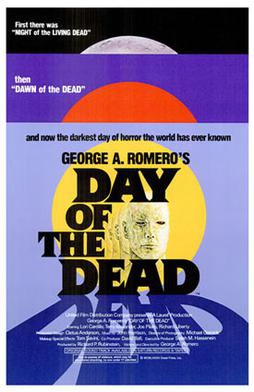
The first thing to note about Zombi 2 is that there’s no Zombi 1.  Except that in Italy George Romero’s Dawn of the Dead was released under the title Zombi.  And Zombi 2 is also called Zombie.  It’s kind of a 1970s classic, but instead of a spaghetti western, it’s an Italian movie filmed in America.  This is one of those movies that has grown in reputation over the years and when revisited by critics is considered better than it was initially assessed.  All that discussion of the title clued you in that it’s about zombies, but what, specifically?  Well, it does take the concept back to its Caribbean roots.  A woman accompanied by a reporter, is trying to learn what happened to her father on the mysterious island of Matul.  Another couple who own a yacht reluctantly agree to take them to the island.

Meanwhile Matul is increasingly facing reanimated dead (one of whom escaped to New York City).  The local doctor can’t accept that voodoo is actually involved and has stubbornly remained to try to find the “actual” cause.  The two couples from the yacht learn from the doctor that the woman’s father had become a zombie.  The doctor knows to shoot zombies in the head, but the new-comers haven’t quite figured that out yet.  The zombie infection is passed on by a bite, but anyone who has died can come back.  And return they do.  They storm the hospital where doctor is trying to hold out.  In the end, everyone but the original couple has been bitten or killed, and the zombies have taken over the streets in New York City.

This isn’t bad for a zombie movie, but it’s not up to Romero standards.  Of course, few are.  I had only recently learned about it from a friend, and it was old enough to be free on a commercial streaming platform.  Zombies have some inherent contradictions, of course, and unless they’re handled well they can look a little silly.  That’s my overall assessment, not bad but a little silly.  Part of the draw of zombie movies is that they deal with inherent contradictions.  Bodies that lack the intricate biological structures required for walking, digesting, indeed, for doing what living people do, simply can’t walk around eating people.  And yet here we are.  George Romero gave the cinematic world the modern zombie, and his superior efforts have led to many attempts at bringing believable undead back to life.  If, like me, you overlooked this one, it’s worth catching, especially for free.


Another Ghost Story

Quiet horror films are sometimes thoughtful little gems.  I’d completely missed Lake Mungo when it came out.  An Australian indie, it’s a mostly gentle ghost story that leaves you with an eerie feeling, and perhaps a little sad.  Ghosts can be so resonant.  Yet the Poe-esque death of a beautiful woman—a teen, in this case—makes it kind of poetic.  The Palmer family is having a Christmas picnic (remember, southern hemisphere) at Ararat, where there’s a dam that allows for swimming.  The two teens, Mathew and Alice, go into the water but only Mathew comes out.  It takes some time for search and rescue divers to locate the body.  Filmed as a mockumentary, the movie slowly adds details that make it all seem much more complex than an accidental drowning.

Alice, it turns out, has a life that her family knew nothing about.  As various family members see her ghost, and even try to document it with cameras, their own motivations emerge.  Mathew, wanting to help his parents cope, fakes a couple of photos and films suggesting his sister is still at the house.  Everyone in the family experiences ghostly noises and a presence and they even consult a psychic, but nothing definitive comes to light.  They do learn that Alice was more troubled than she ever let on.  It was while at camp at the eponymous Lake Mungo that her own ghost came to her in a premonition of her death.  Finally, the Palmers decide to move but in their final photograph of the house, a shadowy Alice can be seen remaining inside.

Ghosts are, by their very nature, religious.  The deal with that universal that all religions address—what happens after death.  The Palmer family is traumatized, but as the closing credit scenes make clear, Alice has really been there.  The one church scene has some of their religious friends say that they don’t know how to comfort a family that doesn’t attend church.  There’s a lot going on here.  Even the name Ararat and the dam have meaning.  This quiet, haunting film is not dissimilar from A Ghost Story, in some respects.  Both reflect on the loss that a death has on loved ones, making them quite poignant because this is so very true of being human.  Horror films can be a source of wonder rather than the slashers they’re generally assumed to be.  I learned about Lake Mungo by word of mouth and I’m glad to have learned of it since, although fiction, it has something true to say.


Like Twilight

The weird thing about watching The Similars is that I’d convinced myself that the movie was from the late sixties.  It’s set in 1968, and the use of desaturated colors gave it an antique feel.  The movie is actually from 2015, a fact that jarred me when it was over.  As I watched it my first thought was, “this is like The Twilight Zone.”  It is, very much so.  It begins with a voiceover and it follows a group of eight people in a bus station during a preternatural hurricane.  By the way, there will be spoilers here.  It’s pretty difficult to discuss the movie without them.  Please be warned.  Also, the film is in Spanish, so you may need subtitles.

Ulises, a youngish man, is trying to get to Mexico City where his pregnant wife is giving birth in the hospital.  A native woman, a shaman, avoids Ulises, while Martin, the ticket seller, doesn’t trust him.  The bus isn’t coming because of the hurricane which, the radio announces, covers the entire world.  Another pregnant woman, Irene, is fleeing her abusive boyfriend, but odd things have begun to happen.  A bathroom attendant and the shaman have seizures.  A mother and her ill son arrive.  Martin insists Ulises is a witch, and Martin has covered his face with bandages.  What soon becomes clear is that everyone is taking on Ulises’ face.  They assume he’s either a government agent and they are being experimented upon, or he’s somehow a supernatural being.  Then the Twilight Zone twist comes: it’s the ill boy who’s the one with special powers.  He is following the plot of a horror comic book he read, where everyone is transformed to look alike and they lose their identities.  That part was borrowed directly from the Zone.  The shaman reveals that aliens gave the boy his powers and this is an extraterrestrial plot.

There’s a lot going on in this movie.  Isaac Ezban, the director, apparently wanted it to be a character-driven drama, like Twilight Zone.  Indeed, the film nods to more than one episode of Rod Serling’s series.  Although it’s derivative, it’s artfully done.  The retro feel to it adds to the effect.  And when Irene’s baby is born it’s pretty clear that we’re firmly in the world of horror.  There’s a certain amount of humor here, but the parts are played straight.  The idea of a child with unlimited power is terrifying, as even ancient stories of Jesus as a boy show.  It does seem to be, however, an alien plot while the camera stays firmly focused down here.