Hallowed Tradition

The more I learn about the movie industry the more complex I realize it is.  Take Trick ‘r Treat, for example.  It was released to some film festivals—and backed by a major studio—in 2007.  I wondered why I’d never really heard of it, and the reason seems to be that it never had a theatrical release.  Until this month.  It is now playing in theaters.  The thing is, it’s already available on streaming services because it gained a cult following when it was initially released fifteen years ago.  I came to know about it by wandering into one of those Halloween pop-up stores recently.  There were plenty of Sam costumes so I did a little research and discovered a Halloween movie I’d never seen.

I have to say, the first time watching it was confusing.  I didn’t realize it was four or five separate, but interlaced stories.  I kept waiting for a central plot to emerge, but it didn’t.  At the same time, I wasn’t aware that it was a comedy horror either.  I have no problem with comedy horror, of course.  I just like to know that before I get into it.  Once I’d figured these things out, I could see the draw.  It is fun and seasonal.  Clearly it’s holiday horror.  In fact several websites list it as being essential October viewing.  It’s certainly different from many Halloween movies in refusing to be taken seriously.  It’s like adults having fun instead of kids enjoying the holiday.

Perhaps the most self-aware Halloween film, it constantly reinforces that you need to obey Samhain etiquette.  Those who are killed (and there are many) die for having violated the rules of the holiday.  I appreciate the fact that it insists that we do these things for a reason.  Wearing costumes, handing out candy, carving and lighting jack-o-lanterns, these all serve a purpose.  The movie suggests we need to do these things to stay safe from Sam.  Sam, of course, can’t be killed which means that a sequel may be in the works.  Trick ‘r Treat gets full marks for staying focused on the holiday.  Holiday horror has been a fascination of mine for some time and this movie has it in spades.  Even if it’s a little confusing at times, it’s a fun way to celebrate the season.  And this year you have your choice of seeing it in the theater or streaming it on your most convenient device.


Monster Gods

“I would go to Catholic Church and the saints made no sense.  But Frankenstein made sense, The Wolfman made sense, The Creature from the Black Lagoon made sense.  So I chose that as my religion.”  Famed writer/director Guillermo del Toro said these words.  They’re not exactly gospel but they do demonstrate the connection between religion and horror that is only now beginning to be explored.  Del Toro and I are of the same generation, and some of us in that time frame found meaning in the monsters we saw as kids.  They were coping techniques for living in an uncertain and difficult world.  A world with hellfire on Sundays and often hell for the rest of the week.  Fears of bullies and alcoholic fathers and lack of money.  Fears of an unknown infraction sending you to eternal torment, even if you didn’t know or mean it.

Image credit: Manuel Bartual, Creative Commons Attribution 2.0 Generic license, via Wikimedia Commons

I didn’t choose horror as my religion.  I didn’t grow up Catholic like del Toro either.  I haven’t seen all of his movies, but he does evince a kind of religious devotion to his monsters.  Pan’s Labyrinth was distinctly disturbing.  Pacific Rim was intense.  Crimson Peak is one it’s about time I watched again.  The Shape of Water offered a lovable monster.  Many of these films don’t follow standard horror tropes.  They’re thoughtful, emotive, and often wrenching.  These are, of course, traits shared in common with religion.  I suspect my own attempts to articulate this would benefit from conversation with someone like del Toro.  There’s no doubt that monsters give me the sense of Rudolf Otto’s mysterium tremendum et fascinans.

Religion and horror share a common ancestor.  Fear is an emotion that we apparently share with all sentient beings.  How we deal with it differs.  While a bunny will run away a rattlesnake will strike.  Horror is a way of dealing with fear.  So is religion.  We can’t avoid fear because, honestly, there’s much to be afraid of.  Many choose to believe their clergy, taught by people like me, and assume religion has all the answers.  Others, like del Toro, seek wisdom elsewhere.  When the credits roll at the end, you know it was all just a show.  When you walk out of the church, synagogue, or mosque, you know daily life awaits with its peaks and valleys.  Some may substitute one for the other, while others require the support of both.  And both, as odd as it may seem, can be addressed with conviction.  If you don’t believe me, just ask Guillermo del Toro.


Free to Listen

It was a delightful conversation, as always.  Robin and Debra from The Incarcerated Christian podcast always amaze me with both their program and their enthusiasm.  I’m still bit nonplussed that they find my work interesting.  They invited me back for an October discussion around Nightmares with the Bible, located here.  Although the book has not yet sold enough copies to have earned any royalties (i.e., it hasn’t covered the cost of its own publication yet), it has nevertheless led to four interviews and even had a Choice review.  Granted, a good part of the lack of enthusiasm is its Elon Musk price point, at least that’s what I tell myself.  I’m still hopeful that a paperback will be out next year.

I suspect people are interested in demons.  Considering that movies keep on being made about them and doing well, I hope it’s only a matter of time.  While I’m waiting, however, I’ve got some good listening over at The Incarcerated Christian.  The podcast addresses a couple of issues: one is spirituality and the other is the effects of being raised in a religion that boxes or cages a person in.  The proprietors are among the few who realize that there’s a spirituality to horror.  I’m reading a book just now that considers thzt question.  And I know of others, active ministers among them, who find spirituality in horror.  I don’t know their backgrounds well enough to know their carceral status, but to me the connection makes sense.

Photo by Marco Chilese on Unsplash

I’ve written before that I’ve come to rely on experience as a source of knowing.  Not entirely, of course, but it’s clear that those who don’t trust their experience end up incarcerated.  My experience of organized religion suggests that it has many issues that require professional help.  That’s one aspect of having been a seminary teacher, and administrator, that has fed into my experience.  Having seen how that happens, and knowing the kinds of people who rise to the top—just look at politicians, particularly on the right-hand side—my experience suggests that ecclesiastical corruption is far more common than most people suspect.  In order to accomplish big things humans have to organize.  And in any organizational structure there will be climbers.  In general you don’t get to be clergy (apart from those non-denominations that’ll hire anyone making certain claims) without seminary.  And seminary isn’t what it seems.  To me, watching horror makes far more sense than befriending the jailer.  Take a moment to listen; it’s free.


Halloween Mothers

There’s an irony in seeing Samhain returning back to Ireland as Halloween.  One movie that ties its Celtic roots in particularly well with the denizens of the Otherworld is You Are Not My Mother.  Written and directed by Kate Dolan, it’s an intensely creepy film set in Dublin as Halloween approaches.  A dysfunctional family of grandmother Rita, mother Angela, and daughter Charlotte have a family history of changelings.  As the tension grows in the family the viewer, and Char, must decide whether to believe her mother or her grandmother.  Particularly disturbing are the actions of Char’s classmates as they bully and threaten her in truly horrific ways.  All of this happens as Halloween nears and adds to the uncertainty.

I really don’t want to give too much away as this is a movie well worth watching.  It satisfies an October itch.  It’s also a fine example of both “elevated” horror and folk horror.  Although filmed in Dublin, the landscape—particularly the river, plays an important role in the story.  The film even helps us out by having a museum tour explain what liminal spaces are and although much of the action takes place indoors, these outdoor places are essential.  There’s an awareness of landscape and what it implies regarding the Otherworld.  As with much intelligent horror, there’s little bloodshed but plenty of tension.  And the moody atmosphere of overcast Irish skies makes it possible almost to feel the chill in the air.

The families shown in the movie are working class, which adds to their emotional resonance.  Houses are lived in and not spic-n-span.  Work provides enough to get by but not much else.  In a strange way, having the Otherworld break through in such circumstances isn’t all that unusual.  Here is something to anticipate, to look forward to.  Something that might lift you out of the mundane workaday life.  Folklore began long ago and served a similar function, I suspect.  Surviving is difficult work.  Even the tradeoff in modern times of giving most of our waking time to our jobs is a reflection of this.  It’s not difficult to believe that there’s something a bit more stimulating, if dangerous, out there.  Something we want to avoid but that we can’t help but be fascinated by when we encounter it.  Horror offered by women directors is often thoughtful in that way.  You Are Not My Mother will help to set the mood for Halloween, as it’s done in the old country.  In its own way, it’s a changeling.


Flavor of Childhood

Giant, telepathic crabs whose molecular structure make them impervious to bullets, explosives, and fire, and that know how to use dynamite and who plan to take over the human world?  A group of scientists trapped on an irradiated Pacific island that is slowly sinking into the ocean?  This must be Attack of the Crab Monsters!  I was born during what is generally considered the dearth  period of the American horror industry.  Roger Corman, however, was working hard outside of the studio system to cater to that new demographic—teens with spending money.  Drive-in theaters were big and for about $100,000 you could shoot a double-feature and bring in ten times that much.  If you shoot quickly enough you can produce several of these in a year and not have to worry about the big studios.

It’s been fashionable to laugh Corman off, but he knows how to live the teenage dream.  Monster movies were part of the childhood of many of us during this “dearth.”  Yes, sophisticated frights were yet to come, but these creature features were full of creativity and escapism.  And so many unanswered questions.  How did those giant crabs chop all the radio wires to bits with those indelicate giant claws?  If they could smash through the outside wall of a house, why couldn’t they break through a light-weight door once inside?  And why, knowing that bullets and grenades can’t possibly hurt them, do scientists keep firing away?  What was that oil subplot all about anyway?  And how do you end a film with the lines “He gave his life,” followed up by “I know”?  This is stuff, like Strawberry Quik, I couldn’t get enough of as a kid.

No, this wasn’t intelligent horror—it was often laughable—but it made an impression.  As an adult I can’t recall which of these movies I’ve seen before and I suspect it would take a lifetime to watch all the films Corman directed or produced.  Along with his contemporary indie director/producer William Castle, Corman may be inordinately responsible for my tastes as an adult.  I’ve grown more sophisticated (I hope) in some ways, but I’m at a pay grade where free on Amazon Prime often decides a weekend’s entertainment.  Besides, these movies struggle to top out an hour’s running time.  You can still get a lot done in a day and still have time for a monster crab, giant leech, or wasp woman.  With enough radiation, and imagination, anything can happen.


Novelization

It must be both difficult and easy writing the novelization of a movie.  I suppose it depends on the movie as well.  Sleepy Hollow is a film based on a story already, but Washington Irving’s tale isn’t a novel and the movie was a collaboration between Irving’s original, re-envisioned by Kevin Yagher, Andrew Kevin Walker, and Tim Burton.  The novelization was done by Peter Lerangis and it, naturally enough, follows the movie.  As a novelizer, however, you need to try to make sense of some scenes where a film only implies what’s going on.  Now, in this case I’ve seen the movie many times and any deviations come across as “that’s not the way it goes” moments.  Still, it’s competently done.  It  even helped me make sense out of some things that had me puzzled since the start of the millennium.

In the “book or movie” debate I tend to think a book should be read first.  Sometimes it should go the other way around.  Novelizations are, of course, intended to increase the profits for a film.  You’ve got the box office take, and if there are advertising tie-ins or other merch, you can add to the haul.  A novelization can also help.  In this case, the movie has a somewhat complex plot with revenge and double-crossing, and so a novel helps to make all that clear.  However, when the novelist asks you to accept what a character is thinking you may have already come up with your own ideas on that point and any postmodernist would tell you that your opinion is just as valid as that of the writer.

Movie scripts tend to be a bit short for novels—if the movie isn’t based on a novel, of course—and sometimes extra material is needed.  This novelization includes the public domain story by Irving as well, even though the movie completely recasts all the characters into unfamiliar roles.  Brom, for example, is a minor part, whereas Katrina is a witch and Ichabod a constable from New York City.  All of that having been said, there really aren’t many surprises here.  I read this because I’m interested in the life of “The Legend of Sleepy Hollow.”  Its many retelling and re-envisionings.  The original story was published less than fifty years after American independence and has memories closer to the time.  It tells us something of what it was like in those early days.  And this novel both retells and redacts a movie already a couple decades old itself.


Who’s Calling?

The first twenty minutes are impossibly scary.  I didn’t see When A Stranger Calls back in 1979, when it came out.  I prefer my monsters in non-human form, thank you.  But still, to be writing books on horror movies without ever seeing what is widely regarded as being the scariest opening ever?  Although the first twenty minutes were indeed scary, and extremely tense, for me the scariest part came after that because I didn’t have any idea what else would happen.  Of course I knew the initial calls were coming from inside the house.  That urban legend seems to have been around since I was a kid.  I wasn’t sure who survived, if anyone.  And psychopaths are scary in real life, let alone in fiction where they can break into locked houses pretty easily.

The story, as laid out, is better than most critics give it credit for being.  The only part that seemed difficult to believe (and don’t get me wrong—I love Charles Durning) was that an overweight John Clifford could do all that running (particularly up stairs).  It’s believable that the criminally insane can escape—Michael Myers seems to do it every couple of years—and even that they could blend in on the streets of any city.  I do have to agree with the critics that the writing isn’t great, but those who say it’s not scary enough, well, they’re made of sterner stuff than me.  Or perhaps they lack empathy, which is a scary thing in itself.

Curt Duncan, perhaps because he’s clearly killed at the end of the movie, never became the serial boogyman that the aforementioned Myers, or Jason Voorhees, or Freddy Kruger, or Hannibal Lecter became.  Although sequels were made, once you’ve seen that first twenty minutes of Stranger, you get the sense that they’re not going to be able to do it any better.  Snopes tells us the legend began in the sixties.  It was clearly a reaction to the proliferation of telephones and the potential to abuse such technology.  That’s an object lesson we still haven’t learned.  We now seem never to be more than inches away from a device at all times.  Except maybe when in the shower, but that’s a scary story for another time.  Although I won’t be going back to rewatch or analyze this one over and over, still I feel I somehow earned a stripe or bar for watching it.  And I now feel even more appreciative of caller ID.


Things that Appear

As a movie, Apparition fails on many levels.  One way that it passes is being free on Amazon Prime, which is how I found it.  The trick with Prime, of course, is that really good movies tend to be available for a limited time, keeping you on the website.  Time is money, after all.  I was drawn into Apparition from the “based on real events” tagline, even though I should know better.  It was a hot, sleepy weekend afternoon, and I’m not a good napper.  I’m not going to worry too much about spoilers here, so if you’re into penance, you might want to wait until after you’ve seen it.  Set at the real life Preston School of Industry—a boy’s correctional institution in California—the boys are tortured and sometimes murdered by the warden and guards.  This is one of the few real-life parts: a housekeeper at the facility was murdered in an unsolved crime at the site.

Fast-forward two decades.  The former warden (the place has been closed), is hosting the lavish rehearsal dinner for his son’s wedding.  The son is unloved (his father is a sociopath, after all), and doesn’t treat his fiancée very well.  Meanwhile a younger son is a nerd who’s developed an app called Apparition.  Through some unexplained technological wizardry, it allows the user to connect to the dead.  Another couple, son and daughter of two of the former prison guards, decide to try it and discover that it works.  When the bride gives it a try it leads the five young people to the Preston School.  There various ghost-hunter startles are used as the ghosts of the murdered boys take their revenge on the offspring of the warden and guards.  The bride discovers her father was a “good cop” and that’s why she wasn’t killed.  The younger son is actually the son of the murdered housekeeper, another of his father’s dark secrets.  The parents come and get what’s due to them.

What makes this unremarkable film (and very little comment has been given on it) worth discussing here is that during the opening credits a Bible is shown open to Exodus.  The verse called out is 20.5: “Thou shalt not bow down thyself to them, nor serve them: for I the Lord thy God am a jealous God, visiting the iniquity of the fathers upon the children unto the third and fourth generation of them that hate me.”  This isn’t referenced per se in the film, but the warden does suggest the school is a righteous place.  That’s a fairly brief reward for watching, but I hate to waste even a lazy weekend afternoon when it’s too hot to work outdoors.


Social Horror

Some books get you thinking in ways you don’t expect.  That’s one of the pleasures of reading.  Lindsey Decker’s Transnationalism and Genre Hybridity in New British Horror Cinema may sound terribly specific—there are a lot of qualifiers in that title—but it actually has some very broad implications.  I was reading it specifically from the horror angle for a project I’m currently working on, but I was surprised at the social commentary I found while doing so.  One of Decker’s main ideas is to show that British horror is, well, transnational while maintaining its Britishness.  She focuses mainly on five films in the book, only two of which I’ve seen.  Very aware of the history of British cinema, she points out many characteristic features and situations that make British horror what it is.

The social commentary comes in when discussing “hoodie” horror films.  These are movies showing how the working class, particularly the youth, are dangerous and anti-society.  The more I read the more it occurred to me that imperialist, capitalist systems are built on the corpses of the poor.  Even good kids from bad situations have difficulty getting ahead in life and those above them on the “social ladder” more or less despise them and make policies to keep them in poverty.  This leads to anger and resentment, and often, in reality, this spills over into violence.  It all comes down to those who benefit from the system refusing to make it more equitable.  When the inevitable happens—those pressured without sufficient means boil over—they are blamed for their own circumstances.

Having grown up in a working class system and having struggled all my life to somehow maintain a comfortable existence for my family, I know the kinds of obstacles faced.  In my particular case, retirement is not a likely outcome.  I’ve worked, except for (and often even) when I was in higher education, since fourteen.  I’ve seen others with connections, educated parents or influential friends, get ahead.  I’ve also watched while many of us get shunted aside because, well, who are you?  Some people wonder why I watch horror.  There are many reasons for it, and at times I think maybe I’ve seen enough.  But then I look around at the corpse-strewn foundations of our current system and I see how reality plays into that fear.  Decker, I’m pretty sure, was meaning for her words to apply to mainly the fiction of horror, but there was a different kind of hybridity there as well, at least for me.


Wicker Back

The dilemma of my eclectic interests sometimes runs up against the natural slowness of publishing.  My book on The Wicker Man has been given the green light by Auteur Publishing and should be out next year.  I just received the readers’ reports and they were positive enough to make me blush.  The thing is, I submitted the manuscript back in January and I’ve nearly finished writing my next book since then.  It’s on a different topic for which I’ve been collecting sources since January.  I really hope this next one won’t publish with an academic press.  The endless rounds of revision from peer review can wear a body out.  Reviewers, you see, have university jobs.  Libraries at their fingertips.  Sabbaticals.  (I work with authors who won’t write unless they have one of the latter.) Now my reading shifts back to Summerisle.

For those of us with 925s that get a paltry number of holidays per year (which are spent holidaying) and paid like most working stiffs, with no academic library access, this can present somewhat of a challenge.  I see peer reviews all the time.  Academics so deeply into the subject that they don’t (can’t) think of the practicalities.  When I see a reviewer write that a book is ready for publication, but if the author could only restructure the whole thing and approach it from this angle instead… I have to chuckle.  During my teaching career I worked in situations that didn’t allow for sabbaticals.  Even among academia those given such rare benefits are privileged.  It’s a wonder that so many books get written, all things considered.

Like waking from a dream world, I suddenly have to downshift to a previous project.  I haven’t really thought much about the Wicker Man since January.  My next book, which is eclectic, has been slowly gestating over the months.  My reading has been geared towards it and is financed personally.  I’ve tried contacting the local college and university libraries.  I can’t borrow, or do inter-library loan, so the weird resources I need I have to buy.  Preferably used.  One thing reviewers like to do is point out new resources.  And yes, I have to agree that my argument would be stronger with them.  I have a strategy to the way I write my books, now that I’ve found a receptive readership, so none of this is mishap, I hope.  (Ironically, now I get quite a few readers of my revised dissertation asking me questions about ancient West Asian studies.)  That trireme paddled from shore long ago.  I’ve moved my current project to another burner, and you’ll be hearing more about The Wicker Man in coming weeks.  Next year is the film’s fiftieth anniversary, so I have a deadline that I just can’t miss. It’s time to get reacquainted with an old friend.


October Early

Still feeling that August is the new October, although that particular day happened to reach over ninety degrees, I watched Halloween.  Not the John Carpenter original; I’ve seen that one a few times before.  No, I watched the 2018 version only to learn it’s a retcon.  If you’re like me you’ll wonder what a retcon is.  It’s a portmanteau of “retroactive continuity.”  That’s where a sequel goes back and makes adjustments, or simply ignores, story elements from the original to take the story forward.  I haven’t followed the Halloween franchise.  There are too many movies I want to see that are original, with fresh ideas, to be spending my time trying to find my way through an emerging mythology of a serial killer.  Michael Myers, as horror fans know, inexplicably killed his sister as a child.  As an adult he terrorized Haddonfield, Illinois  one Halloween and Laurie Strode was the final girl.

What drew me to this sequel was that Jamie Lee Curtis was back as Strode, all grown up.  Michael predictably escapes again and goes for an even higher body count in Haddonfield.  Laurie, meanwhile, has gone NRA and booby-trapped her entire house in anticipation of this day.  You can see the draw, I hope.  You kind of want to see how this ends.  The original had Michael’s apparently dead body disappear at the end.  In the retcon he was arrested after that and re-institutionalized.  The thing is, you can never really kill a monster.  Original scenes and scenarios are revisited, and those familiar with the Carpenter story are rewarded by situations that subvert expectations.  Where is he hiding this time?  You always watch the credits roll wondering how “the authorities” don’t realize that a guy shot, stabbed, and incinerated and keeps coming back might be something other than human to be put in an asylum.

I should know better than to watch these kinds of movies when I’m home alone, but I don’t.  So it’s a good thing that I try to piece all these things together.  We have three strong women—three generations of final girls here, and the obligatory basis for a sequel.  (At least two, in fact, bringing the franchise up to thirteen movies.)  Laurie’s granddaughter is among the virginal, non-drinking final-girl prototypes.  Her less Puritan friends are killed off, although her worthless boyfriend survives the night.  You’ve got to love the endless self-references of such situations.  That’s why we keep on coming back.  We’ve seen it before but we still want more.  Even if it’s only August.


Yep, Nope

I can honestly say that I’ve never seen a movie that starts with a quote from Nahum.  I also honestly admit that Nope left me scratching my head, but very glad to have seen it.  I trust Jordan Peele implicitly as both a screenwriter and a director, and I know I need to see Nope again to make it all fit (if that’s possible).  His movies are the most Twilight Zoneish things out there, and despite Peele’s reported reason for naming the film Nope, I’m going to keep watching the skies.  It’s clear he had done his ufological homework.  Even the idea that—SPOILER ALERT—have you seen it yet?  Are you going to?  You might want to finish this later, if you haven’t—they are biological entities has been widely discussed.  

Although classified as horror, Nope has mercifully few jump startles.  In fact I noticed (there were maybe only 10 of us in the theater) that one couple had brought their kids.  I can imagine they had some interesting discussions on the car ride home.  For me, driving home alone, I felt like I’d watched Close Encounters, Twister, Signs, and Arrival simultaneously.  Peele set out to film a spectacle and he did indeed.  Horror has become more intelligent of late, and there’s so much going on here that I’ll need some time to sort it out.  The online nattering suggests the Nahum quote (“I will cast abominable filth upon you, make you vile and make you a spectacle”) reflects Peele’s thoughts on the Bible.  A more literal take might see the evacuation of waste creating a spectacle, which it does.  How to explain the angel form of the creature?

Alien horror works.  Alien sees them deep in apace, but many films, such as Fourth Kind, see them closer to home. Fourth Kind, also by an Africa American director (Olatunde Osunsanmi) never received critical acclaim, but I thought the first half was impossibly scary.  It’s natural enough to fear those we don’t understand.  Perhaps that’s one reason we tend to deny their existence.  If we deal with them in fiction we can call it horror and go home happy.  Nope asks us to consider whether our differences matter so much in the face of a non-discriminate predator that eats any human that enters its territory.  Even if they were there first.  I still have a lot of questions about the movie.  Some of them will likely never be answered.  One that will is “Do you plan on seeing it again?”  The answer is yep.


Nope, Not Yet

It’s perhaps this summer’s most hotly anticipated movie, but I’m not sure when I’ll get to see it.  Jordan Peele’s Nope opened in theaters this weekend but I’ve been busy.  For many Peele may have seemed to come out of left field with his 2017 directorial debut, Get Out (it took me a couple years to see that one), but he’d been working in films prior to that.  Then Us appeared in 2019 and instantly established him as the auteur of black horror films.  Like many in horror, Peele has a strong element of humor as well.  His films feature black actors falling into circumstances that whites have tended to claim for themselves—being the victims of monsters (often human).  I unfortunately missed Peele’s attempted reboot of The Twilight Zone in 2019-20.  Nevertheless, I know he’s a kindred spirit.

I try not to watch trailers before seeing a movie.  They give away too much.  I don’t need any enticement to see a Peele movie.  Even as I await a free weekend, I think about how horror has been a field accepting of auteurial diversity.  Women have directed horror since at least the eighties.  James Wan has been a major player in the genre since the early new millennium.  M. Night Shyamalan had his start shortly before that.  Good horror is good horror.  Often such films are quite smart as well.  Get Out drew attention for its social commentary—something for which Rod Serling was famous, and thus the naturalness of The Twilight Zone.  But when will I have time to get out and see Nope?  Perhaps I need to cash in a personal day so I can take in a matinee.

The trick will be, of course, to be on the internet without reading about it before that can happen.  Taking time off work is punished with skyscrapers of emails when you return.  But when I start having dreams about my boss coming to my messy house and helping me do necessary repairs, I think maybe I’ve been working too hard.  Movies, in such a life, seem like superfluous luxuries.  Of course, I’ve long accepted the thesis that films are our modern mythology.  They are our cultural referents, and not infrequently the source of meaning.  They explain our world.  And they require taking at least an hour-and-a-half out of the mowing, painting, hammering, and hauling that never seem to end.  Nope, I won’t have time to see the movie this weekend.  Yep, I’ll be looking forward to the first opportunity to do so.


Keeping Your Head

Horror is a gift that keeps on giving.  Not many horror fans are among my regular readers, but I like to keep a finger in the pie nevertheless.  Just earlier this month it was announced that Paramount has hired Lindsey Beers to direct a new big screen Sleepy Hollow.  It’s early days, of course, and the movie hasn’t been titled, let alone filmed.  Beers is just wrapping up a prequel for Pet Sematary (not yet titled) that I’ll be eager to see.  Women horror directors tend to bring refreshing angles to the genre—and why shouldn’t they?  Women writers were crucial in developing the Gothic genre that evolved into horror as we know it.  No matter what the Supreme Court says, they are just as important—probably more—than males.

I’ve been reading quite a lot about Sleepy Hollow over the past several months, which is how I came across the intelligence about this new movie.  It’s nice to know that the Hudson Valley is evergreen.  My visits there have offered brushes with the uncanny, but nothing explicit.  A weekend near the ice caves of Sam’s Point, geocaching in the woods outside Poughkeepsie, a visit to Sleepy Hollow itself to visit Irving’s grave and tip my hat to the Old Dutch Church.  With deep family roots in upstate New York, I’ve always thought it would be a great place to live.  Alas, not on an editor’s salary.  It’s been too long since I’ve given the area a visit.

John Quidor, The Headless Horseman Pursuing Ichabod Crane, via Wikimedia Commons

There have been many takes on Washington Irving’s “The Legend of Sleepy Hollow.”  Even in the silent era movies were made of it.  In retrospect, it seems odd that it took so long for Tim Burton to bring it back to the big screen.  There were some television movies, usually with plodding plots to draw the story out to commercial length.  Disney had early on devoted half a feature to it, as if the story couldn’t support its own weight.  For better or worse, that film was probably the first introduction to the tale that many people had—the story itself was written for adults.  Of course, many written kids’ versions have come out since then.  The satirical original was meant for a somewhat sophisticated readership with a sense of humor.  The story lends itself to horror treatments, however, if they’re done well.  It may have been an early viewing of the Disney tale that set me moving in this direction.  I like to think I’ve kept my head over it, however.


Free Research

I’ve lost track of how many times it’s happened, but it has been relatively few.  Someone I don’t know will approach me and ask me to post about something on my blog.  Sometimes they’ll even send me a book to highlight.  Perhaps not the most effective way to build a library, I’ll admit.  And some of the books haven’t been great.  I admire them nonetheless.  It takes great effort to write a book.  And not a small amount of faith, too.  Many books—perhaps most—never get published.  A great many are self-published.  (Those who work in publishing can be a stuck-up lot sometimes.)  Even those professionally published can use a push from time to time.  On this blog I’ve actively resisted the urge to make it about one thing.  Why?  Is life just one thing?

In a recent conversation I laid out for someone new what had been my research agenda as a young professor.  It had a direction still reflected in some of the categories you’ll find on the right column of this blog.  After writing on Asherah, I was going to give similar treatment to the other ancient goddesses attested at Ugarit.  This was perhaps ambitious for an academic waif at Nashotah House, but it was well underway.  My book on Shapshu was making good progress when the market (that dragon to every St. George) led friends to suggest turning biblical, which led to Weathering the Psalms.  A new research agenda—explore the weather terminology (the meteorotheology) of other biblical books—arose.  There were storms, after all, becalmed over lakes.  Horror entered in the jobless period and beyond.

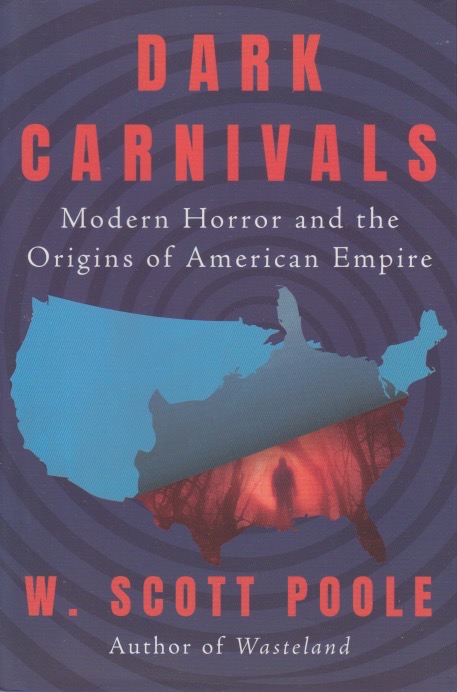
And social justice.  I’m not a thrice-failed minister for nothing!  In fact, a recent freebie was a book on social justice.  I have a colleague as interested in monsters as me.  This particular scholar had decided to focus on the cause of the poor.  Even economists are starting to say the unequal distribution of wealth is hurting us.  While the rich fly to space on personally owned rockets, the rest of us have trouble filling up at the service station, even if we have jobs.  So it is that this blog is eclectic.  A friend told me early on that it would be more popular if I just stuck to one topic.  That’s probably true, but my mind can’t settle down like that.  And when people send me things to talk about, I’m happy to do so, if it fits somewhere in my mind.