Next Books

The other day an older friend asked about my writing.  My answer was brief because it’s complicated.  Not because I do it from three to four a.m.  Not because many of my older friends don’t know what a blog is.  No, it was complicated because my next book is about a movie few Americans know, especially many of my friends.  I really don’t know many horror fans.  Academics, yes, but normal folk, no.  This is a little odd because statistically most adults like horror.  I feel I always need to explain why I bother writing such books.  (There is a reason and there’s even a book I’m working on to try to explain it.)  It’s easiest, in such circumstances, just to say “I’m keeping busy with it.”

The fact is the draft of my book on The Wicker Man is done.  It has been for a few weeks.  None of my published books are the same as their drafts initially were.  (This is the difference, say, between a dissertation and a first monograph.  Let those seeking advice take note.)  The draft follows the approved proposal pretty closely, but I now kind of do research backwards.  Or at least while the book is in process.  Unlike a professor with a library and sabbatical and summers off, I find my sources as I write.  My books, despite what might seem a narrow focus, range pretty widely.  My reading goes in directions not even I anticipated when I began.  Ideas lead to other ideas.  Soon there’s enough of them for an entirely new book.  So I’m reading my draft and reading other books and creating the Frankenstein monster that will be a codex.

Every time I reach that point where I say, “this will be the last book I need to read for this project,” only a matter of days later I find another.  And another.  Book writing involves both creativity and distillation.  It takes a lot of books read to make one book written.  All writers know that.  Some have trouble knowing when to cut off the research because, and this is a truth for all of life, there’s always one more.  The very month of my doctoral defense a new book on Asherah was published.  The external examiner brought it to my viva.  Obviously he knew that I couldn’t have read it by then (it had to be in German, of course).  It ended up on my bibliography.  So I plod along with my book already written, but not yet begun.  I said it was complicated.


Everything’s a Nail

Taking my first, tentative steps into horror analysis, I had read a great many monographs on the subject.  I had watched many horror films over the years, but since my family has no love of the genre, and since habitually under-employed I can’t afford to pay for many, my quota is fairly modest.  I’ve missed out on many.  When I could afford it, I started out with either movies I’d heard of when younger but had never watched, or packs of ultra-cheap B (C or D maybe) movies that nobody has ever heard of.  As I lamented recently, British films were rare—Hammer, which held the English reputation for horror, was the undiscovered country.  Then I saw that Peter Hutchings’ Hammer and Beyond: The British Horror Film had come out in a second edition.  (The new edition contains three of Hutchings’ other articles as well as the original text.)  I had to read it.

Although I’ve not seen many of the movies discussed in the book (again, access issues) it was fascinating nonetheless.  Hutchings considers the elements of gender and Britishness in his readings of the films and there’s quite a lot there.  Horror is generally seen as a conservative genre (it tends to uphold typical social values) and for many Hammer and other films this meant that male prerogative was important.  Equally important, however, is that horror often disrupts this hierarchy.  There are strong, and even fatal, women here.  Horror embodies the acting out of the complex world of fear between women and men.  The study, as befitting a revised dissertation, is laid out chronologically for the most part.

Some readers of this blog have kindly pointed out ways to access Hammer films in the US.  Now all I need is the time.  I’ve been able to keep up with my reading, at least.  And this was a worthwhile book to read, even without having seen much Hammer.  It surprised me, however, that their list of classic horror wasn’t longer.  Having read about Hammer for many years,  I suspected their output was massive.  Instead it was mostly just impactful.  The essays following the main body of the book make the point that British horror was/is distinctive.  These days a lot of international cooperation takes place in the movie industry, and national cinema is becoming more global.  We could use a little less nationalism just about now.  So I’ll continue my quest for Hammer and try to make my way through the movies I really should add to my repertoire.  It’s a good book that can make you want to do that.


Horror Show

The horror film history narrative runs something like this: although there had been some scary movies in the silent era, the term “horror” was first used to describe Universal’s 1931 release of Dracula and Frankenstein.  Some other studios got in on the action and creature features were a staple of US cinema until the fifties when they began to peter out.  By that point a UK horror industry took off, largely due to Hammer Studios.  While these Hammer offerings often remade the standard creature features, they also branched out into less commonly explored areas such as films set in contemporary times focused on the occult.  This phase faded in the sixties just as “modern horror” was taking off with classics like The Night of the Living Dead and Rosemary’s Baby.  Modern horror quickly grew.  Further divisions can of course be made, and the modern period has gone through several transformations as well.  It’s a rich coffer.

There’s a real problem with this, however, for those who might’ve missed a decade or two somewhere in there.  Many of the UK films are still not available in the US for anything like a fair price.  Part of the reason for this is copyright law, but another is apparently the ignoring of demand.  I saw maybe one Hammer film (on TV) growing up.  Saturday afternoon fair was more often American B movies like Zontar the Thing from Venus.  I’ve got a hankering to watch some of those Hammer films, but even in the 2020s they’re difficult to find.  Even with the internet.  Often the DVDs are (because of differing copyright laws) coded so they can’t be viewed in North America.  You can buy a player to see them, but when you think of the inevitability of streaming it hardly seems worth the cost.

Streaming might be the solution, but much of the Hammer oeuvre doesn’t stream in the US, at least not that I’ve found.  If I’m wrong please let me know in the comments!  You see, I spend time reading about horror and when you do this recommendations often arise.  Some Hammer classics are as expensive as the academic books that discuss them.  Is it possible to be a horror connoisseur?   And can you truly be a connoisseur without sampling what’s on offer overseas?  We tend to forget that the world is culturally divided by copyright laws.  If nobody’s watching the movie anymore what’s the harm in making it free?  If people do want to see it, why not sell it to them at industry standard price?  Even trying to watch horror, it seems, has become a horror show.

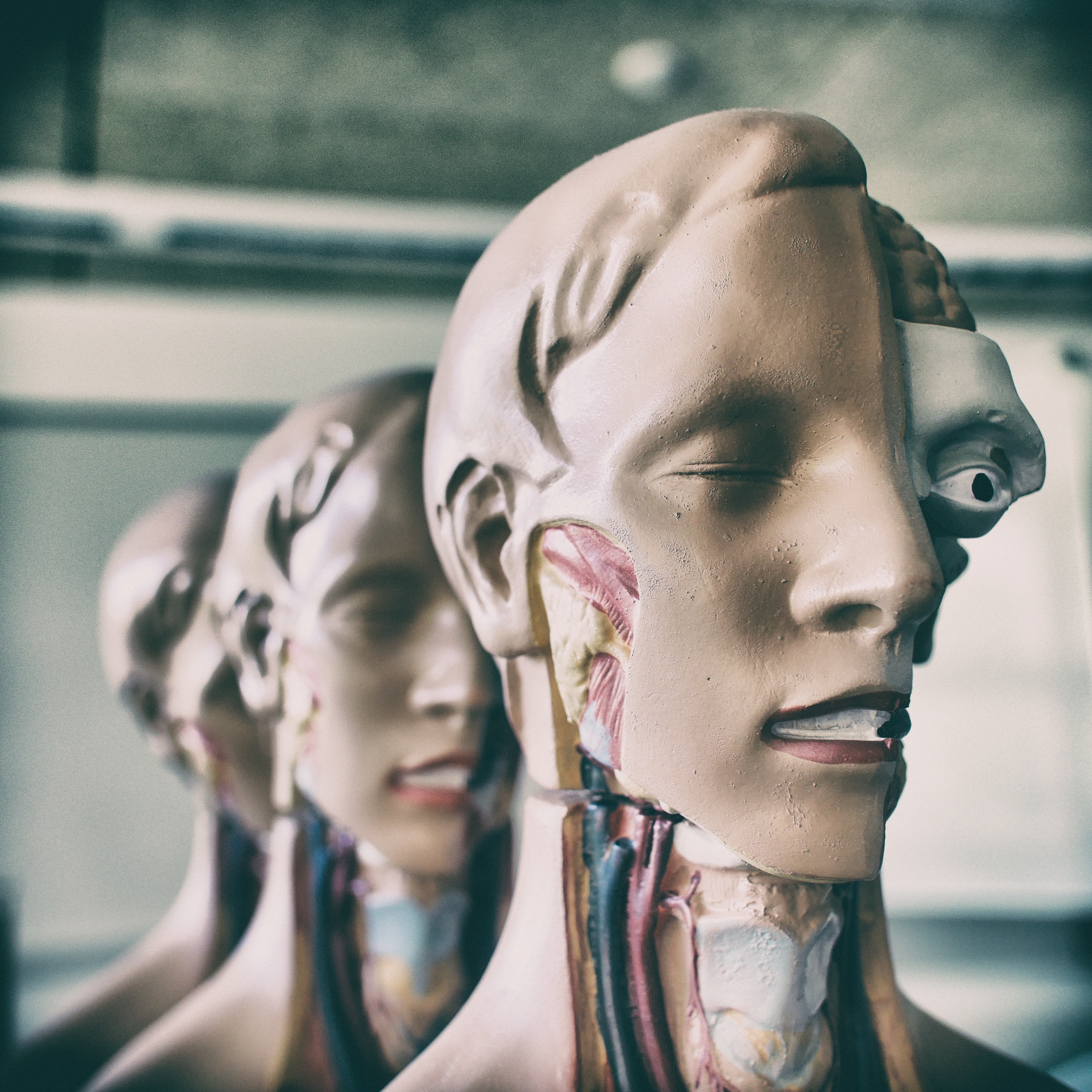
Photo by Michael Mouritz on Unsplash

Author Talks

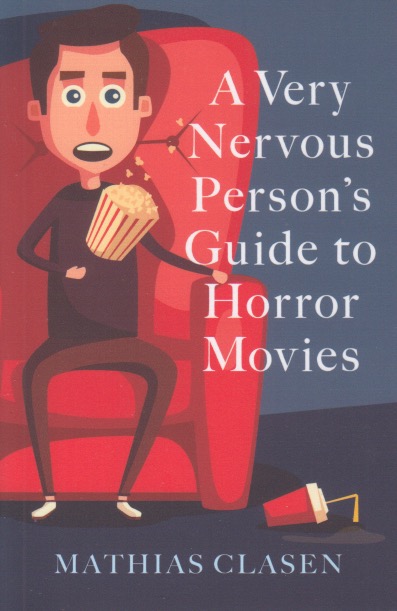
Author talks are one of my favorite perks.  While work obligations mean I often can’t attend, I was glad to have caught this week’s visit by Mathias Clasen.  Clasen has been writing books on horror movies for Oxford University Press, and his talk strangely made me feel less alone.  Let me explain.  First of all, lots of people came.  Yes, Halloween is merely days away, but I get accustomed to thinking I’m the only one who watches horror.  Nobody close to me does.  Learning that many colleagues enjoy the genre was a boost.  Clasen runs the Recreational Fear Lab at Aarhus University.  Their survey of Americans found that 55 percent liked horror films.  I’m actually in the majority, which felt affirming.  

The Recreational Fear Lab studies various aspects of why people seek things that make them afraid.  This ranges from thrill seekers to those who cower in the corner of a theater to watch the latest slasher.  There were several takeaways from his talk.  One was that two main types of people subject themselves to horror: “adrenaline junkies” and “white knucklers.”  Adrenaline junkies are pretty self-explanatory—they like getting scared for the rush of it.  White knucklers, on the other hand, enjoy steeling themselves from fear while subjecting themselves to it.  They try not to scream, but keep control.  I was putting myself in the latter category when he mentioned that further research had revealed a third personality type: the dark copers.

Dark copers are those who use horror as therapy for themselves.  I immediately knew this was my group.  Some people, for whatever psychological reasons, find horror movies therapeutic.  They help us cope.  Interestingly, and in line with other materials Clausen has published, horror is good for people.  It has many benefits and if we deprive children from any stressful situations in their young lives they tend towards neurotic behaviors when they’re faced with stress as adults.  The Recreational Fear lab is a place for the scientific study of voluntary fear experiences.  They operate by grants and have many programs of study from a variety of disciplines.  And some of them watch horror.  Perhaps because when I started this blog I tended to write mostly about religion, I suspect many of my readers don’t really care for the horror posts.  They’ve been there from the beginning, however; my first month I wrote about werewolves, zombies, and Barnabas Collins.  Religion and horror are closely related, even if it makes me feel a bit alone to say so.


Skin In

It took me back to my younger years.  Tanya Krzywinska’s A Skin for Dancing In: Possession, Witchcraft and Voodoo in Film.  Wide ranging and insightful, this book was a delight to read.  Published in 2000, it discusses many movies that I watched in the eighties and which had somehow managed to be overrun by other stimuli since then.  I like to think that, even if recall isn’t instant, that we never truly lose the books we’ve read or movies we’ve watched.  (Some we may wish to forget, but that seems a sure way not to achieve that goal!)  As her subtitle says, Krzywinska’s book analyzes possession, witchcraft, and voodoo.  Since there are so many examples of these the discussion has to be selective, but she’s got a keen eye for choosing evocative films.

As any of my regular readers know (both of you!) I don’t really review the books in my “reviews.”  I limit myself to about 500 words and I don’t like to give spoilers.  A Skin for Dancing In would require quite a few words even to summarize.  Krzywinska covers demonology, possession, sacrifice, paganism, witchcraft, voodoo, and more, in several movies.  What really struck me in reading this was that she comes to a similar conclusion to what I’ve found—people learn about these things through film.  Scholars tend not to write much about such things (although this has improved somewhat since the turn of the millennium).  The average person doesn’t read academic books, and since culture has become “rational” there’s not much talk about such things from discoursing heads.  Still, movies.

These topics make for great movies.  One of the points I’ve made in my own work is that what we know about demons comes from the cinema.  It seems that we should pay close attention to what movies tell us.  They’re the “public intellectuals” that many academics want to be.  A Skin for Dancing In is a good example—it’s compelling, if a little academic, but very hard to find.  It’s difficult to lead public discussion if your book is limited to university libraries and those who have access to them.  Of course, you don’t need a talented scholar to tell you how to watch a movie, but I was reminded here of many films I thought I had forgotten.  And what’s more, I have a deeper understanding of how they fit into the larger world of cinematic possession.  This is one of those books I wish I’d found sooner.


New Monster

The Babadook is a horror film about loneliness.  Written and directed by Jennifer Kent, it has an arthouse cinema feel to it.  I missed it when it came out in 2014—it didn’t receive major billing and publicity in the United States—but it gained critical acclaim as intelligent horror.  It follows the small family of Amelia and her son Samuel, who has special needs.  I’ll try to avoid too many spoilers here because I think you should see it if you haven’t already.  Amelia’s husband died in a car crash taking her to the hospital to have their first child.  That haunting tragedy drives the film.  And when you throw a monster called the Babadook into the mix, loneliness and sleeplessness make the dark something to fear again.

With wonderful acting, the story of childhood monsters highlights the continuing plight of single mothers.  How are you supposed to survive when you have a child that requires constant supervision and yet you need to make ends meet?  And if sleeplessness begins to distort your sense of reality all kinds of things seem possible.  

Hollywood hasn’t been a friendly place for female directors.  This film was shot in Australia.  I’m not sure that sexual parity is better there, but this movie is a great example of what can happen when a woman shows what horror means to her.  Not too many horror movies have female directors, yet.  It seems to me that women have many things to fear and have much to show us about what horror can be.  It seems to me that loneliness, although often part of horror, isn’t often the focus.  We would rather look away than to see it because it’s too painful.  Horror compels us to look at what we’d rather not see.

Aside from all of this, the film gives us a new monster.  The Babadook was invented for this film and although we don’t have to worry about whether it’s real or not, the issues it brings to the fore certainly are.  There is darkness inside people.  Even those of us who try to do what is right struggle against it.  Often it takes quite a lot even to admit as much.  This movie lets the dark out and finds a new narrative path through which it might flow.  Although a box office success—earning more than it cost—The Babadook is still little known.  It should be discussed more because intelligent horror has some important lessons to teach us.


Next Trick

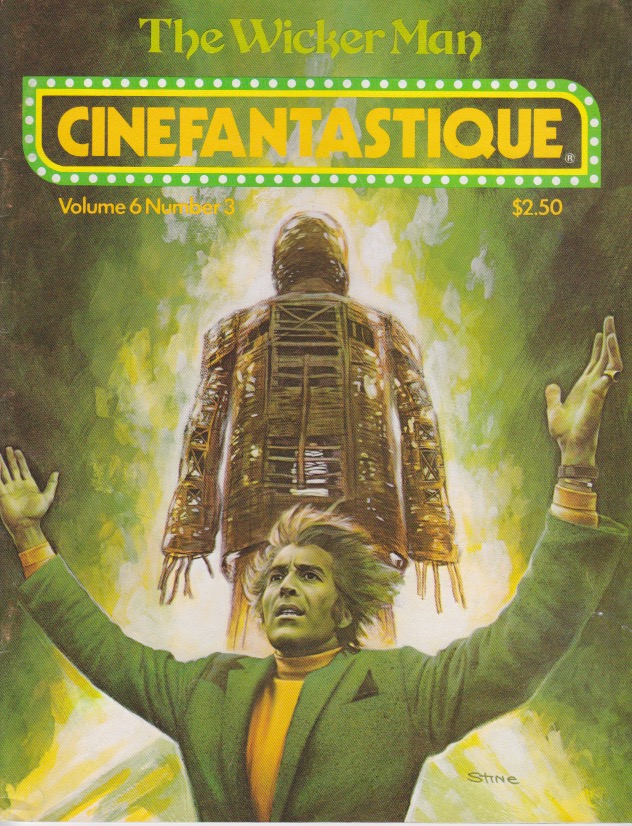
Book contracts make me happy.  For my next trick, I’ll be writing a book on The Wicker Man for the Devil’s Advocate series.  This will be a short book, and hopefully priced down where individuals can afford it.  The Devil’s Advocate series was initiated by Auteur Publishing some years ago.  The series covers individual horror films in about 128 pages.  I pitched the idea of The Wicker Man for a couple of reasons.  One, Auteur didn’t have one in the series.  And two, I’ve been working on holiday horror for some time.  Holiday horror encompasses movies where a holiday features in the story, generally in a significant way.  Think Halloween, or April Fool’s DayThe Wicker Man takes place during a pagan celebration of May Day, falling neatly into the category.  You may see, in coming weeks, posts about various Wicker Man books.

While still in the horror genre, this next book will be a departure from the supernatural horror of Nightmares with the Bible.  Demons are frightening, no doubt, but Wicker Man is more about how religion can motivate people toward evil.  It is part of what has been termed the “unholy trinity” of early folk horror, classed with Witchfinder General and The Blood on Satan’s Claw.  This “unholy trinity” overlaps in time another famous threesome: Rosemary’s Baby, The Exorcist, and The Omen.  There can be little doubt that modern horror really began in 1968, which also gave us Night of the Living Dead.  Folk horror utilizes both folklore and the landscape—generally rural—as the basis for its fear.  And you can’t get much more isolated than Summerisle.

The hope is to get this book out in 2023.  That will be the fiftieth anniversary of the release of The Wicker Man.  Although it came out when I was eleven, I didn’t see it for another thirty years at least.  By that point in time I’d watched and read about enough horror to find out about and appreciate this particular, indeed, peculiar movie.  I was blown away the first time I saw it.  It is quirky but stunning.  Christopher Lee maintained throughout his career that it was his best movie.  I haven’t seen all of Lee’s movies (who has?) but I’m inclined to agree.  I’ll be getting to know this movie in some depth over the next several months.  Having watched it many times already, I’m drawing a map for a journey to Summerisle. You’re welcome to come along.


Reduce, Reuse

Today’s trash day in my neighborhood. I suspect I’m not alone in having a soft spot for bad movies.  Perhaps it’s because I don’t like to see things wasted.  That, mingled in with my dislike of A-list culture where the people with all the advantages get all the notice.  I appreciate those who struggle.  Maybe that’s why I picked up Guy Barefoot’s Trash Cinema: The Lure of the Low.  That, and because I’ve read other books in the Short Cuts series and found them intelligent and informative.  And yet again, many horror movies are considered “trash”—indeed, Barefoot mentions quite a few of them—which makes me curious.  You see, even back when I was a grad student it was still thought, among some, that film wasn’t sufficiently intellectual to justify academic treatment.  The fact that media now dominates culture gives the lie to that assertion, especially since so many cerebral movies exist now.

In any case, Barefoot takes the subject seriously, using great care to define “trash.”  Given that the series stipulates brief books, this isn’t a comprehensive treatment, but it has a big takeaway for me.  Trash is simply what the majority of people don’t want.  As our landfill crises show, it never really goes away.  (We began composting when we bought our house, and the amount of trash dropped precipitously.  Food scraps can also become something useful.)  There are any number of reasons a producer or director might attempt trash—it’s quick and cheap, it shocks viewers, or it says something about our society.  Yes, even trash can teach us about ourselves.  Really, there’s a value to keeping things and trying to find the beauty where others see only garbage.

From my youngest days experiencing cinema (it was a rare treat then), I realized this was a powerful medium.  I still remember movies I saw as a child, imperfectly no doubt, even today.  And they still speak to me.  Some of them are great and others were almost forgettable.  Some are like gems while others seem like trash.  That doesn’t mean they shouldn’t be watched, however.  A great number of trash films have become cult classics.  They may not reach the esteemed halls of academy award winners, but they are sometimes honest efforts without the money behind big studios.  I tend to root for the underdog.  Having said that, I haven’t seen most of the films discussed here.  Another way of looking at it is that my wishlist has grown.  


Following It

Perhaps while I was sleeping (or busy keeping to myself), several horror movies of the “intelligent” variety appeared.  Those scare quotes aren’t to imply the films aren’t actually intelligent, but rather that many people assume horror can’t be smart.  Yes, there have been some cheap scare phases in the genre when viewers didn’t need too much intellectual capacity to figure out someone else was about to get snuffed, but since the late 1960s many cerebral movies have appeared.  It has only recently become acceptable for academics to address horror, and now that they have begun to do so several more provocative films have become part of the discussion.  I’m now trying to catch up (as I can afford to) with those more intellectual movies.  One of them was It Follows.

Of course, seven years ago, when it was released, it didn’t get much press.  It did, however, impress the critics.  A movie about sexual awaking, it wouldn’t make Puritans very happy, but it is pretty scary.  The premise itself is frightening: “it” (never defined) follows young people after a sexual encounter with someone already “infected”—it is visible only to intended victims and although it follows slowly, it is persistent and unrelenting.  It will eventually catch up.  It can take the shape of anyone—stranger, friend, family.  The only way you can tell “it” is that it’s walking slowly straight toward you and nobody else can see it.  To get it off of your trail, you have to pass it along to someone else.  It starts killing and working back to the previous victims, so once it starts you’re never safe.

Part of the visual appeal of the movie is the urban decay around Detroit, where the film was shot.  Another is the lack of adults.  A few are shown here and there, but this is a young persons’ dilemma and the young people have to sort it out.  Bleak and contemplative, the movie has a literary streak to it.  This isn’t just horror for screams—there’s an existential element as well.  The only place that adults really play a role is when it finally catches up to its victims, it appears as their parent.  Various critics have suggested it is a movie about STDs, but to me it felt more like a movie about struggling to cope with the complications sexuality brings.  Unlike most horror I discuss here there really isn’t an element of religion to It Follows.  It may be some kind of demon, but never defining it makes the viewer stop and think.  And that makes it intelligent.


Scary States

You can usually tell, if you look close, when I’m on the trail of a new project.  This blog ranges fairly widely at times, but when lots of posts concentrate in a single area it’s likely something much larger is going on behind the scenes.  I’ve been writing quite a bit about horror lately.  Quite apart from the Republican Party, scary things are on my mind often.  I recently came across an article on KillTheCableBill that made me feel less weird.  It’s a story covering a survey showing the favorite horror movie per state.  Now, I won’t be able to fit all fifty into my usual daily word limit (wouldn’t want to arouse the word count police), so I’ll just add a few words about some of the interesting connections I noticed.  As in my books, if you see something, say something, right?

It’s kind of embarrassing that I haven’t seen the movie most often mentioned: The Devil’s Backbone.  I have to admit falling behind on my Guillermo del Toro movies.  I was surprised at the number of states’ favorites that I hadn’t seen.  I’ve been thinking about this quite a bit lately: if you have a full-time job which doesn’t include movie watching, it can be pretty difficult to make the time.  A number of classics don’t show up on the list, while some states have somewhat obvious favorites: Massachusetts’ Jaws, Colorado’s The Shining (it was filmed there), New Mexico’s Alien (think about it), and Maine’s The Lighthouse all fit into state self image in some way.  Horror preferences, in other words, may reflect who we are.  

A number of states, more conservative ones mostly, favor older films.  The Abominable Dr. Phibes, Pennsylvania’s favorite, I haven’t seen.  Like most aspects of my home state it’s a mix of things.  It comes from the early seventies, just as modern horror was getting started, but not too far into it.  Studies like this end up giving me homework.  When I can find the time I have a lot of viewing to do to catch up with my fellow Americans. I was surprised that The Exorcist isn’t on anybody’s list of favorites, not even Washington, DC’s.  It may be that films that are too real are too scary for many people.  Another finding, as noted in the article, is that the southeast states like horror the least.  I can’t help but wonder if things would be better, politically, if more people there watched horror and pondered the implications.  


Screening the Dark

We’re spoiled.  The intensity of our media experiences makes it nearly impossible to imagine the truth of stories that viewers fainted at films such as Frankenstein even less than a century ago.  This change in outlook, this sense of being over-stimulated, occurred to me while reading Kendall R. Phillips’ excellent A Place of Darkness.  In keeping with the subtitle (The Rhetoric of Horror in Early American Cinema) Phillips primarily addresses pre-Dracula films, beginning in 1896 and demonstrates how horror themes emerged early and evolved along with society’s norms.  There is so much insight here that it’s difficult to know where to begin.  For me one of the big takeaways was how Americans at this stage were eager to appear non-superstitious and how they used that concern to keep the supernatural out of early ghost films.

Phillips isn’t afraid to address the role of religion in horror.  Other cultural historians note this as well, but many pass over it quickly, as if it’s an embarrassment.  Since my own humble books in the field of horror are based on the religious aspects of such movies, I’m always glad to find specialists who are willing to discuss that angle.  As America grew more and more enamored of the idea of rationalism, less and less energy was put into suggesting that anything supernatural might be at work.  Supernatural was considered foreign and cinema followed society’s lead.  This led to—and I want to add that this isn’t Phillips’ terminology—the Scooby-Doo Effect where every seeming monster had to be revealed as a hoax.  As a kid I watched Scooby-Doo in the vain hope that the mystery might turn out to be real.

Studies of horror films generally acknowledge that the first real member of that genre is Tod Browning’s Dracula of 1931.  Phillips demonstrates the valuable pre-history to that and does an excellent job of explaining why Dracula was such a singular movie.  Horror elements had been around from the beginning, but Browning’s film made no excuses—the vampire is real.  Audiences were shocked and thrilled by this and other studios didn’t quite know whether they should follow Universal’s Depression-Era success or not.  Mostly they decided not to.  The Universal monsters seem innocent enough today, but we go to theaters where the floors shake when heavy footsteps fall and the sound of a door creaking open comes from behind us.  Special effects make the horror seem real.  No excuse is made for religion and its monsters.  We’re spoiled. 


More Conjuring

It was an almost surreal experience.  First of all, it’s been well over a year since I’ve been in a movie theater.  Secondly, I’ve never been to this particular theater before.  And in the third place, I’m absolutely alone in here.  I didn’t rent the theater out or anything, but I’ve been wanting to see The Conjuring: The Devil Made Me Do It since June 4.  Actually, since September when it’s initial release was delayed due to the pandemic.  Everyone else around here must’ve seen it already.   I knew the story of Arne Johnson and the Warrens, having found and read Gerald Brittle’s book, The Devil in Connecticut.  Loosely based on that event, this story focuses on the actual fact that this was the first time not guilty by reason of demonic possession was proffered in a US courtroom.  The story is a strange one and the movie, as movies do, makes it even stranger.

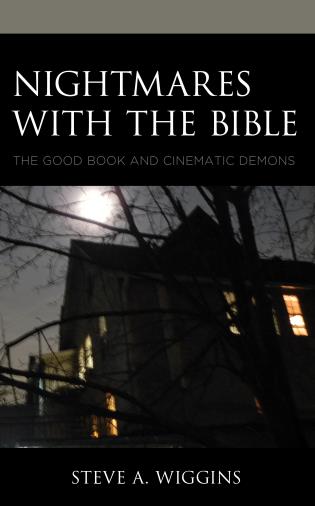
I’ve been anticipating The Conjuring: The Devil Made Me Do It, despite the title, for a few years now.  If you’re familiar with Nightmares with the Bible you’ll know that an entire chapter is devoted to The Conjuring franchise.  You may also know that it is the most lucrative horror series of all time, apart from Godzilla in its many, many iterations.  One of the points in Nightmares was to try to make sense of the demonic world presented in the Conjuring universe.  The franchise, for the most part, deals with actual case files from Ed and Lorraine Warren.  Some of the episodes are pure fiction, however, and the explanations given in the films are all, well, conjured for the big screen.  The movies call attention to the Warrens’ work, but in a way that requires an entire chapter to untangle.

My initial impression is that this isn’t the best movie in the series.  I can’t replicate my previous work here, and I’ve only seen the movie once, so there are details I certainly missed.  The demon isn’t named this time.  Indeed, the backstory proposed is drawn from the spin-off film Annabelle.  A fictional satanic group called Disciples of the Ram is posited as causing the trouble.  Like the demon behind Annabelle, they’ve placed a curse on the Glatzel family for some unknown reason.  During the opening exorcism Arne, in an Exorcist move, asks the demon to take him instead of the young David, the brother of his girlfriend.  The movie leaves the Warrens to find out who put the curse on the Glatzels in the first place, and break it.  With some time for pondering I’ll likely come back to this movie again.  I do have to say that the book was probably scarier, although sitting in a theater alone to watch a horror movie is not something I hope to make a habit of doing.


Reviewing Nightmares

If you’ve wanted a copy of Nightmares with the Bible but the cost is a little dear, I might recommend you look on the Reading Religion website where, as of my last look, a free review copy is available.  The catch is you have to write a review.  This is, of course, first come, first served service.  I tried, more than once, to get Holy Horror listed on their website for review, so I’m glad to see one of my books finally made it.  The idea of the horror hermeneutic seems to be catching on.  Technically speaking, however, what I’m doing is more history of religions than hermeneutics.  History of religions, at least part of it, examines whence ideas arise.  Nightmares asks that question specifically about demons.

The specific focus on horror in religion is a fairly new field of study.  Biblical scholars—indeed, those who specialize in very old fields of study in general—must keep looking for new angles.  Unlike any other piece of literature, the Good Book has been the target of scholarly interest from the very beginning of the western academic tradition.  It’s easy to forget, when looking at many secular powerhouse schools, that the very idea of higher education arose from what is now the discipline of the lowest paid of academic posts.  Being so old, religious studies, known at the time as theology, is hardly a venerated field.  I tend to think it’ll come back.  If you look at what’s happening in politics in this country, it’s bound too.  And yes, there will be horror.

Horror studies in the field operates by recognizing that horror and religion share common ground.  Like religion, horror is considered backward and uninformed.  Neither is really true of either horror or religion, but perception becomes reality for most people.  Finding themselves in remedial class together religion and horror have begun to speak to one another.  Horror has quite a following, even if those who like it keep mostly quiet about it.  The same is true of religion.  Many of the most effective horror films bring religion directly into the mix, often making it the actual basis of the horror.  The first books that I know of that brought the two explicitly together only began appearing at the turn of the millennium.  At first there were very few.  Now an increasing number of tomes have begun to appear.  For better or worse, two of mine are in the mix.  If you’d like to review the most recent one, you might check out Reading Religion, and maybe spare a kind word or two for what are, after all, baby steps.


Scary Thoughts

The kinds of places I hang out, online, dictate my reading.  It’s not that I like to be scared, it’s just that I’m honest.  Besides, even when hanging out in person was possible I didn’t do much of it.  So I became aware of Peter Counter’s Be Scared of Everything: Horror Essays.  Like me, Counter’s a blogger (among other things), but unlike me his blog is themed horror.  (This blog has an element of horror but is very roughly themed religion.)  Counter’s book is a fascinating collection of thoughts.  Some of the essays are funny, some are sad, and a few are downright profound.  It’s clear that what gave Counter his crisis was watching his father get shot.  Even those of us who grew up not knowing our dads can see how that experience would traumatize a life.  My own traumas were less focused than this, but we learned the same lesson—it pays to be afraid.

When I was young I never met a phobia I didn’t like.  As I grew older and left home, I came to bring them under control.  You can only get so far in life hiding under your blanket, secretly afraid you might suffocate.  I learned that if I wanted to be a minister—something that never happened—I had to overcome my fears.  Being a parent did it even more.  In order to try to teach your child not to be afraid, you find yourself doing things like scooping up bugs in your bare hands to show that they won’t hurt you.  Like putting a brave face on a truly scary situation.  Like carrying on when everything you’ve built crumbles around you.  Counter’s essays don’t shy away from the difficult things in life.  He’s right: there are many.

I was a monster boomer, but I only really came back to horror after losing my long-term teaching post and longed for career.  Horror helps you cope with trauma.  It gets a bad rap, but mostly from people who don’t understand its therapeutic value.  I don’t like being scared.  Horror, however, reminds me of that cozy childhood feeling of watching monster movies and knowing when it was over the threat would be gone.  Only it never was.  Not really.  Sleepless nights and their febrile dreams may’ve been triggered by the movies, but the realities happening behind the scenes were their real source.  I couldn’t know that at the time, and most of the time I’m not conscious of it now.  Still, I read books like Be Scared of Everything and I think maybe I’m on the right track.


Helpful Horror

It’s pretty obvious when you meet one.  A horror fan, that is.  For one thing, they’re mostly decent people who often feel like outcasts for their tastes.  They also tend to have a well-developed critical sense for films.  While I’ve never actually met S. A. Bradley, I feel like I know him after reading Screaming with Pleasure: How Horror Makes You Happy and Healthy.  This is a must-read for horror fans and it comes with enticing descriptions of movies you’ll want to see afterward.  Bradley’s range is truly exceptional.  Not only that, but his taste in films leads to an inherent trust that he won’t steer you wrong.  The movies he recommends—the ones that I’ve seen—wholly bear him out.  The man’s a connoisseur.

Perhaps it was because I, like Bradley, was raised in a very religious household, but his recognition that horror and religion are closely related really spoke to me.  With a similar radar toward the religious impact of horror, he notes at several points how the two interact. His discussion includes horror in music and literature as well as cinema.  The benefits of the genre are unapologetically discussed, including the relatively high proportion of women who direct horror compared to other genres.  Unlike other movie genres, horror suffers from a perennial bad image.  Bradley confronts why this is so and also why it is misguided.  The bias is deep and undeserved.  Ironically, many of the same kinds of criticisms are now being leveled at religions as well.

Bradley’s book isn’t about religion and horror.  As someone raised in a religious household and who used horror to cope, however, he understands how the two are related.  Horror can heal.  When those of us in similar settings come to realize that horror is offering a means of getting along in a cruel world, it answers questions in a way that theodicy can’t.  Horror can be an intellectual experience.  It can be thoughtful.  But what comes through here is that it is also honest.  Life is complex and difficult.  Horror doesn’t shy away from that, but brings it out into the open.  I’ve read many books that analyze horror, and there are many more yet to read.  Bradley does something a bit different from many of them—he writes from a broad experience both in life and in the genre and comes up with an eloquent statement about a genre often dismissed.  And those willing to read it come away the better for it.